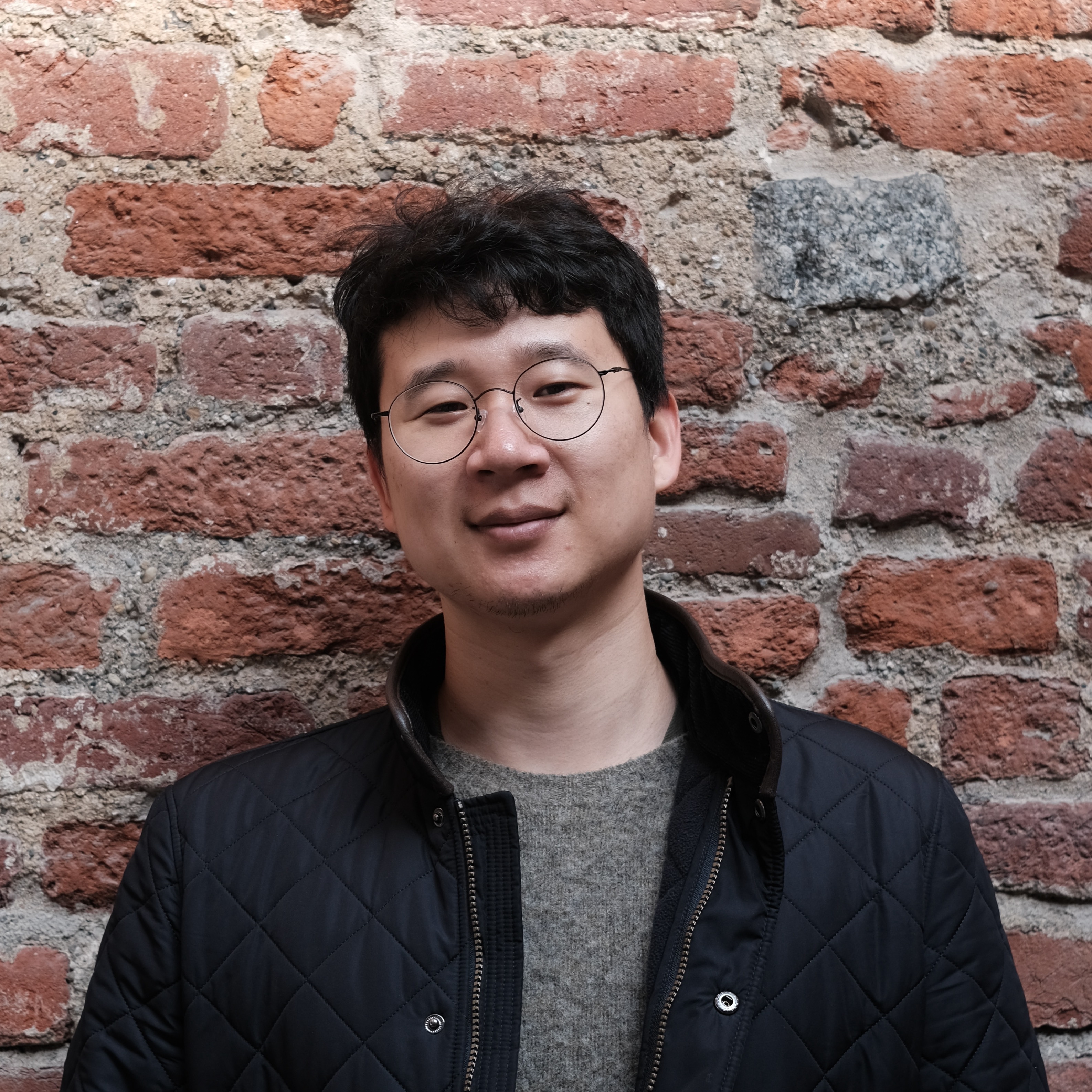
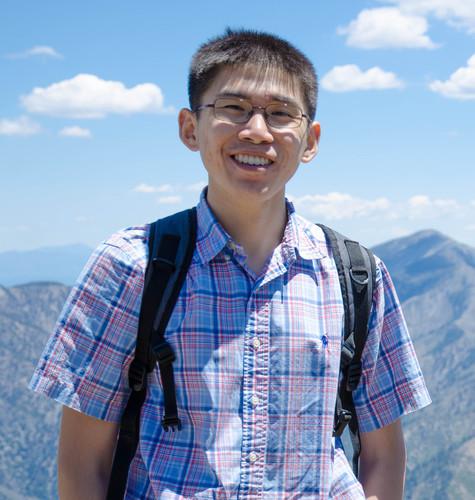
Ying Cai is an Associate Professor in the Department of Computer Science at Iowa State University, joining in 2003 after earning his Ph.D. in Computer Science from the University of Central Florida (2002). His research focuses on AI, machine learning, data science, cybersecurity, privacy protection, and database systems. He leads projects funded by the Air Force Research Laboratory, including work on authentication data structures for rank-aware queries, requiring U.S. citizenship and expertise in linear algebra/cryptography. Dr. Cai’s work spans cybersecurity (e.g., adversarial example defense, secure secret sharing), spatio-temporal systems (e.g., traffic risk prediction, check-in time modeling), and healthcare AI (e.g., cervical spine diagnosis with transformers). His publications emphasize practical applications of ML in privacy, security, and distributed systems. Professional roles include Associate Editor for Multimedia Tools and Applications (since 2009), Co-chair for COMPSAC TAIN/NCIW symposium (2014–2017), and TPC Chair for Mobilware 2010. His service includes contributions to INFOCOM, ICDCS, and MDM conferences. Current research opportunities exist for graduate students with strong programming/math skills, particularly in cryptography and linear algebra. He emphasizes interdisciplinary work, such as bridging AI with social sciences via large language models.
Nicholas Antipa is an Assistant Professor at the University of California San Diego's Jacobs School of Engineering, in the Electrical and Computer Engineering department. His research focuses on the co-design of optical systems and algorithms to develop advanced computational imaging systems, leveraging innovations in 3D printing, sensors, machine learning, and AI. He holds a PhD in Computational Imaging from UC Berkeley and previously worked at the Lawrence Livermore National Lab on optical metrology for the National Ignition Facility. His work includes pioneering projects like the DiffuserCam and Miniscope3D, which enable high-dimensional optical signal capture and 3D microscopy. Education: PhD in Computational Imaging, UC Berkeley (2020) MS in Optics, University of Rochester Institute of Optics BS in Optical Science and Engineering, UC Davis Research Interests: Computational imaging systems, single-shot high-dimensional optical capture, lensless imaging, and applications in neuroscience and marine science. His lab explores novel optical designs, compressed sensing, and AI-driven imaging techniques to push the boundaries of conventional systems. Scientific Awards: Best Paper at ICCP 2019, 2016 Best Demo at ICCP 2017 No. 2 in Optica 15 Top-Cited Articles (2020) Affiliations: Director of the Computational Imaging Systems Lab at UCSD. Collaborates with institutions like Lawrence Livermore National Lab and the Scripps Institution of Oceanography for projects in marine sediment mapping and underwater object detection. His lab emphasizes open-source tools, such as the DiffuserCam Raspberry Pi tutorial.
Robert Likamwa is an Associate Professor at Arizona State University, affiliated with the School of Arts, Media and Engineering and the School of Electrical, Computer and Energy Engineering. His research focuses on the intersection of mobile computing, augmented reality, and sensor design through Meteor Studio. Ph.D., Rice University M.S., Rice University B.S., Rice University His work spans three core research arcs: (i) advanced visual capture systems, (ii) hybrid virtual-physical immersion through sensory augmentation, and (iii) data-driven frameworks for AR/VR storytelling. He explores mobile operating systems, low-power architectures, computational imaging, and holographic computing. Recent publications analyze multi-resolution visual sensing, geospatial cross-virtuality collaboration, planetary data visualization, spatial audio optimization, and multi-sensory virtual environments. His 2013 paper on energy-proportional image sensors received the Best Paper Award at ACM MobiSys. Best Paper Award, ACM MobiSys 2013 LiKamWa advises graduate students through research and thesis courses and leads grants related to mobile vision systems, haptic interfaces, and energy-efficient sensor design. He directs Meteor Studio, a research group focused on immersive technology innovation.
Laura Toni is an Associate Professor in the Department of Electronic and Electrical Engineering at University College London's Faculty of Engineering Sciences. She serves as the leader of a research team focused on advanced signal processing and machine learning applications, documented at https://lasp-ucl.github.io . Additionally, she holds prestigious affiliations as an ELLIS (European Laboratory for Learning and Intelligent Systems) Member and Turing Fellow Alumni. PhD in Electrical Engineering, University of Bologna (2009) MS in Electrical Engineering, University of Bologna (2005) Professor Toni's research spans theoretical and applied aspects of machine learning with particular emphasis on graph-based approaches. Her work integrates signal processing techniques with modern AI methodologies to address complex problems in communication systems, multimedia processing, and scientific discovery. She has made significant contributions to reinforcement learning theory, graph signal processing, and their applications across diverse domains including drug discovery and immersive technologies. Analysis of her recent publications reveals a strong focus on graph-based machine learning approaches, with increasing emphasis on reinforcement learning applications. Her work demonstrates a progression from theoretical foundations to practical implementations, particularly in multimedia processing, network science, and drug discovery applications. Many of her recent papers combine graph neural networks with diffusion models and reinforcement learning for complex prediction and generation tasks. Professor Toni has received notable recognition through her ELLIS membership and Turing Fellow Alumni status, which represent significant achievements in the European AI research community. ELLIS (European Laboratory for Learning and Intelligent Systems) Member Turing Fellow Alumni As an academic leader, Professor Toni supervises postgraduate students and leads a research team at UCL, focusing on cutting-edge projects at the intersection of signal processing and machine learning. Her team has secured research funding through various channels including European initiatives and industry partnerships, enabling them to pursue ambitious projects in graph learning, reinforcement learning, and multimedia processing. The team actively collaborates with institutions worldwide, including previous connections with UCSD and EPFL. Professor Toni leads the LASP research group at UCL (https://lasp-ucl.github.io), which focuses on Large-scale Adaptive Signal Processing for intelligent systems. The team comprises researchers working on graph signal processing, reinforcement learning, and multimedia applications, with strong connections to both theoretical foundations and practical implementations across various domains including healthcare, communications, and immersive technologies.
Jeong Joon (JJ) Park is an Assistant Professor in the Department of Computer Science and Engineering at the University of Michigan. His research focuses on computer vision, graphics, and artificial intelligence with applications in 3D/4D reconstruction, generative modeling, robotics, and medical imaging. He holds a position in the College of Engineering and actively seeks PhD students and postdoctoral researchers aligned with his research interests. Dr. Park’s work emphasizes interdisciplinary approaches, combining geometric deep learning with generative models to address challenges in scene understanding, novel view synthesis, and multi-modal perception. His lab explores both foundational techniques and applied systems, often collaborating with industry and academia on real-world problems. Key research directions include diffusion models for sparse data restoration, trajectory-conditioned 4D generation, and uncertainty-aware sensor fusion for autonomous systems. His publications span top-tier conferences like CVPR, ICCV, and NeurIPS, reflecting a strong publication record in computer vision and graphics. He teaches courses in computer vision and advises students on advanced projects requiring significant weekly commitments. Prospective applicants are encouraged to apply through the U-M CSE PhD program and contact him directly for collaboration opportunities.
Mihaela van der Schaar is the John Humphrey Plummer Professor of Machine Learning, Artificial Intelligence, and Medicine at the University of Cambridge, leading the van der Schaar Lab. She holds dual affiliations with the Department of Applied Mathematics and Theoretical Physics (DAMTP) and the Centre for Mathematical Imaging in Healthcare. Her research focuses on healthcare AI, machine learning, and operations research. She has authored over 250 journal articles and 275 conference papers, with notable contributions to synthetic data for privacy, causal inference, and clinical decision-making. Her work has led to 35 U.S. patents, including foundational innovations in streaming video compression (MPEG-4 standards). Awards include the Oon Prize (2018), IEEE Fellow (2009), and recognition as the UK's most-cited female AI researcher (2019). Leadership roles include Director of the Cambridge Centre for AI in Medicine and Co-Director of the European Laboratory for Learning and Intelligent Systems. She has mentored global academic leaders and pioneered initiatives like the Inspiration Exchange for early-career researchers. Key projects include predictive models for hospital resource allocation during pandemics and AI tools for personalized medicine. Publications span machine learning theory, healthcare applications, and interdisciplinary fields like network science. Her lab's impact includes tools like AutoPrognosis (automated ML for clinical prediction) and SynthCity (synthetic healthcare data generation).
Ralf Bierig joined Maynooth University's Computer Science Department in 2017, teaching topics including information retrieval, software testing, interaction design, and virtual reality. He is the programme director of the Higher Diploma in Human-Computer Interaction (HCI) and User Experience (UX). He earned his BSc (2002) from University of Furtwangen and PhD (2008) from Robert Gordon University. Research Interests His work spans information retrieval, interactive information retrieval, personalisation, information search behavior, usability (UX), and virtual reality (VR). Recent publications focus on multimodal concept indexing, hybrid IR approaches, and contextual adaptation in search systems. Publication Trends His research combines statistical semantics, graph modeling, and multimodal data analysis across academic collaborations in Austria, Germany, and international venues like ECIR and SIGIR.
Joachim Weickert is a Professor of Mathematics and Computer Science at Saarland University where he heads the Mathematical Image Analysis Group since 2001. He received his diploma and Ph.D. in mathematics from the University of Kaiserslautern (1991, 1996), and a habilitation degree in computer science from the University of Mannheim (2001). Prior to his current position, he worked as a research assistant at the University of Kaiserslautern, as a post-doctoral researcher at the universities of Utrecht and Copenhagen, and as an assistant professor at the University of Mannheim. His research focuses on image processing, computer vision, and scientific computing, with special emphasis on techniques based on partial differential equations, variational principles, wavelets, morphological and nonlocal methods, as well as neuroexplicit approaches. He has developed mathematical models and efficient numerical algorithms for image restoration, enhancement, segmentation, compression, optic flow computation, stereo reconstruction, shape from shading, and signal processing methods for tensor fields. These ideas have been successfully applied in industry, biomedical image analysis, and other fields. Analysis of his recent publications reveals a strong trend toward combining traditional PDE-based methods with modern deep learning approaches, particularly in the areas of image inpainting and compression. His work increasingly explores the connections between numerical algorithms for partial differential equations and neural network architectures, demonstrating how mathematical foundations can inform cutting-edge AI techniques while maintaining strong theoretical guarantees. Gottfried Wilhelm Leibniz Prize (2010), considered the most important research award in Germany ERC Advanced Grant (2017) for "Inpainting-based Compression of Visual Data" Elected member of Academia Europaea - The Academy of Europe Jan Koenderink Prize for Fundamental Contributions in Computer Vision (2014) Multiple DAGM Prizes and Best Paper Awards throughout his career AAIA Fellow (2021) and Highly Ranked Scholar (2024) distinctions Professor Weickert has supervised over 250 bachelor's and master's theses and initiated the Master Programme in Visual Computing at Saarland University, the first of its kind in Germany taught in English. He has established numerous interdisciplinary collaborations with colleagues from medicine, bioinformatics, pharmacy, physics, mechatronics, and mechanical engineering. As Principal Investigator for Visual Computing within the Multimodal Computing and Interaction Cluster of Excellence, and former dean of the Faculty of Mathematics and Computer Science (2008-2010), he has played a significant leadership role in advancing visual computing research and education. He heads the Mathematical Image Analysis Group, which has been at the forefront of developing mathematical methods for image analysis. The group maintains strong connections with both theoretical mathematics and practical applications, bridging the gap between fundamental research and real-world implementation across various domains including medical imaging, industrial inspection, and multimedia processing.
Graham Neubig is an Associate Professor at the Language Technologies Institute (LTI) within Carnegie Mellon University (CMU). His research focuses on advancing artificial intelligence, particularly in natural language processing (NLP), multimodal reasoning, and large language models (LLMs). He explores topics such as AI safety, generative AI, and human-AI interaction, with an emphasis on practical applications like machine translation and web-agent systems. His work often involves developing frameworks for evaluating AI systems, such as OpenAgentSafety and BehaviorBox, which assess real-world agent performance and model behavior. Neubig's research also delves into improving LLM capabilities through reasoning analysis, hallucination detection (e.g., ZINA), and culturally aware systems (e.g., CAIRe). He has contributed to open-source projects like Pangea (a multilingual LLM) and frameworks such as Cmulab for model deployment. His recent work addresses challenges in agentic tasks, self-improving agents (Skillweaver), and benchmarking across domains like visual reasoning (VisualPuzzles) and software engineering. Notable achievements include advancing evaluation methodologies for LLMs, developing tools for ethical AI, and creating benchmark suites that test systems under realistic conditions. His lab collaborates on projects like the BrowserGym ecosystem and OpenHands platform, which aim to standardize web-agent research and AI-driven software development. Neubig's contributions span theoretical advancements and practical implementations, bridging the gap between cutting-edge research and real-world applications. He advises students such as Apurva Gandhi and actively publishes in top venues, addressing topics from instruction-following improvements to the societal impacts of AI. His work frequently emphasizes the importance of transparency, controllability, and cultural awareness in AI systems.
M. Omair Ahmad is a Professor and Tier I Concordia Research Chair in Multimedia Signal Processing at the Department of Electrical and Computer Engineering, Concordia University. He has held leadership roles, including Chair of his department from June 2002 to May 2005, and active involvement in IEEE committees. Education: Ph.D. in Electrical Engineering, Concordia University (1978) B.Eng. in Electrical Engineering, Sir George Williams University (Montreal, QC, Canada) Dr. Ahmad's research spans diverse areas of signal processing, including speech, image, and video processing, biomedical imaging, computer vision, and VLSI signal processing. His work addresses both theoretical and applied challenges in these domains, with applications in communication systems, object detection, and biometrics. Dr. Ahmad has contributed extensively to academia through leadership roles in conferences and editorial work. He served as an Associate Editor for the IEEE TRANSACTIONS ON CIRCUITS AND SYSTEMS PART I and held chairs in IEEE symposia, including the Local Arrangements Chairman for the 1984 IEEE International Symposium on Circuits and Systems. Scientific Awards and Honors: Wighton Fellowship from the Sandford Fleming Foundation Induction to Provosts Circle of Distinction for Career Achievements Award of Excellence in Doctoral Supervision IEEE Fellow
Desmond Elliott is an Associate Professor in the Natural Language Processing section at the Department of Computer Science, University of Copenhagen (UCPH). His research focuses on multimodal and multilingual models with specific emphasis on vision-language integration and tokenization-free NLP approaches. He teaches Bachelor and Master's level courses including Advanced Topics in Natural Language Processing (since 2019), Grundlæggende Data Science (since 2023), and previously Data Science (2021-2023). His research interests center on building and understanding multimodal and multilingual models , particularly exploring vision and language interactions through billion-parameter systems. Current work investigates cultural representation disparities in vision-language models, parameter-efficient captioning, and multimodal distributional semantics across diverse domains including food culture and medical imaging. His methodology emphasizes real-world applicability in non-English contexts and ethical considerations in multimodal systems. Elliott's recent publications (2025) demonstrate leadership in multimodal NLP, with significant contributions to vision-language pretraining, multilingual evaluation frameworks, and clinical NLP applications. His work spans theoretical advancements in model architectures and practical implementations addressing challenges in low-resource languages and domain adaptation. Best Long Paper Award at EMNLP 2021 Best Poster Award at COLING 2019 As an active educator, Elliott contributes to courses on Fair and Transparent Machine Learning and previously taught Information Retrieval. His research collaborations span international institutions with particular focus on European and non-English language contexts, reflecting UCPH's recognition as Europe's #1 institution for HCI research over the past decade.
Dr. Frederick Li is an Associate Professor in the Department of Computer Science at Durham University, UK. He holds editorial roles as Associate Editor of Frontiers in Education (Digital Education) and Editorial Board Member of Virtual Reality & Intelligent Hardware. His research focuses on Computer Graphics, Machine Learning, Geometric Modelling, Collaborative Virtual Environments, Visual Aesthetics, and Educational Technologies. He earned his B.A. (Hons) and M.Phil. from The Hong Kong Polytechnic University and his Ph.D. in Computer Graphics from City University of Hong Kong. Prior roles include Assistant Professor at HK PolyU and project manager of a Hong Kong Government ITF-funded project. **Education**: B.A. (Computing Studies) and M.Phil. from HK PolyU; Ph.D. in Computer Graphics (CityU Hong Kong). **Research Interests**: His work spans mesh saliency detection, human-object interaction recognition, cloud modeling, face beautification, and educational technology. Recent achievements include awards for papers (e.g., Best Paper at ITiCSE 2014) and recognition such as EPSRC Peer Review College membership. He leads Durham's Undergraduate Board of Examiners and has been an external examiner at Northumbria University. **Awards**: Best Paper (ACM ITiCSE 2014), Outstanding Paper (ICALT 2013), EPSRC Peer Review College (2024), Outstanding BMVC 2024 Reviewer. **Grants & Labs**: His research is supported by grants from EPSRC and others. He collaborates with the Centre for Vision and Visual Cognition, VIViD, and AIHS group at Durham.
Professor Moncef Gabbouj is a distinguished academic and researcher currently serving as Professor of Signal Processing at the Department of Computing Sciences, Faculty of Information Technology and Communication Sciences, Tampere University, Finland. Previously, he held the same position at Tampere University of Technology before the merger in 2019. He has also held visiting professorships at prestigious institutions including Hong Kong University of Technology and Science, University of Southern California, and Purdue University. Ph.D. and MSc. in Electrical Engineering from Purdue University, USA (1989 and 1986) B.Sc. in Electrical Engineering from Oklahoma State University, USA (1985) Prof. Gabbouj's research spans multiple domains within signal and image processing, with a strong focus on machine learning applications. His primary research interests include artificial intelligence, machine learning, Big Data analytics, multimedia content-based analysis, indexing and retrieval, nonlinear signal and image processing, voice conversion, and video processing and coding. His work bridges theoretical advancements with practical applications across various industries, particularly in multimedia communications and biomedical applications. His extensive publication record demonstrates a clear evolution from traditional signal processing techniques toward more sophisticated machine learning and deep learning approaches. Recent work shows increasing focus on convolutional neural networks for various applications including ECG classification, video processing, financial time-series analysis, and image recognition tasks, reflecting the broader trend in the field toward deep learning methodologies while maintaining strong foundations in signal processing theory. IEEE Fellow (2011) Member, Finnish Academy of Science and Letters (2014) Knight, First Class, of the Order of the White Rose of Finland (2006) Nokia Foundation Recognition Award (2005) Nokia Foundation Visiting Professor Award (2012) Finnish Cultural Foundation for Art and Science Award (2017) TUT Foundation Grand Award (2015) Prof. Gabbouj has supervised 64 doctoral and 72 Master's theses, demonstrating his significant contribution to academic mentoring. His research has been supported by substantial funding, including research grants totaling 8.5 million Euro (2001-2015). He has served as Academy of Finland Professor during 2011-2015 and has been involved in numerous EU research projects including Horizon, ESPRIT, HCM, IST, COST, Tempus and Erasmus programs. As Editor, Guest Editor or member of the Editorial Board of 6 international scientific journals, he has significantly influenced the academic discourse in his field. He leads the Signal Analysis and Machine Intelligence (SAMI) research group at Tampere University and serves as the Finland Site Director of the NSF IUCRC funded Center for Visual and Decision Informatics. His research unit focuses on applying advanced machine learning techniques to solve complex problems in signal processing, computer vision, and multimedia analytics, with applications ranging from healthcare to multimedia communications and financial analysis.
Chen Sun is an Assistant Professor of Computer Science at Brown University and a part-time Staff Research Scientist at Google DeepMind . His research bridges computer vision, machine learning, and artificial intelligence , focusing on multimodal representation learning, visual commonsense, and controllable video generation . He directs the PALM🌴 research lab , which explores scalable models for robotic planning, video understanding, and human activity recognition . Chen Sun earned a Ph.D. in Computer Science from the University of Southern California (2016) , advised by Professor Ram Nevatia , and a Bachelor of Science in Computer Science from Tsinghua University (2011) . His lab's work has been supported by Adobe, Honda, Meta, NASA, and Samsung , and he is affiliated with the NSF AI Research Institute on Interaction for AI Assistants . His research spans multimodal transformers, embodied agents, and physics-informed video generation . Key trends include Learning from unlabeled videos for human activity recognition Developing controllable generation techniques using motion trajectories and physics-based signals Advancing scalable frameworks for video-language tasks Scientific awards include the Brown University Richard B. Salomon Faculty Research Award and Samsung Global Research Outreach Award . He has served as Workshop Chair (CVPR 2025) , Action Editor (TMLR) , and Area Chair for top conferences like ICLR, CVPR, and NeurIPS . Chen Sun mentors a dynamic team including Ph.D. students Apoorv Khandelwal (Presidential Fellow) Calvin Luo (Research Mobility Fellow) Nate Gillman (Math Department) Shijie Wang Tian Yun (co-advised with Ellie Pavlick) Yuan Zang Zilai Zeng Zitian Tang and alumni now pursuing Ph.D. programs at Princeton, Cornell, UBC, and UNC . His teaching portfolio includes graduate-level courses on Deep Learning (CSCI 2470) , Advanced Topics in Deep Learning (CSCI 2952N) , and a short course on Multimodal Transformers at ICASSP 2022 and AAAI 2023 .
Dr. Siwei Lyu is a SUNY Distinguished Professor and SUNY Empire Innovation Professor in the Department of Computer Science and Engineering at the University at Buffalo. He serves as Co-Director of the Center for Information Integrity (CII) and Director of the UB Media Forensic Lab (UB MDFL). His research focuses on digital media forensics, computer vision, and machine learning, with significant contributions to counter-deepfake technologies. Education includes a PhD in Computer Science from Dartmouth College (2005), MS from Peking University (2000), and BS in Information Science from Peking University (1997). He has held academic positions at the University at Albany and New York University. His work spans media forensics, adversarial machine learning, and AI security. Notable achievements include developing the Celeb-DF dataset, leading NSF-funded projects, and testifying before U.S. and NYS legislative bodies on disinformation threats. Over $11.3M in grants have supported his research on AI-generated media detection, including a $5M NSF Convergence Accelerator grant. Key awards include IEEE and IAPR Fellowships, Google Faculty Award, and SUNY Chancellor's Research Award. He has authored 230+ papers, 4 patents, and serves on editorial boards of top journals and conferences (e.g., CVPR, ICCV).