Dr. Asif Karim is a Research Active Lecturer in the Department of Information Technology at the Faculty of Science and Technology, Charles Darwin University, Australia. He has been a full-time lecturer since August 2021, following a sessional role from 2018 to 2021. Prior to his current position, he served as a lecturer at Daffodil International University and Uttara University in Bangladesh. His research focuses on the application of machine intelligence in health informatics and blockchain technologies. He has significant industry experience in Software Engineering and actively supervises postgraduate research students. Machine Learning Health Informatics Blockchain Applications Smart Contracts Deep Learning Anomaly Detection The recent publications of Dr. Karim span a diverse range of applications in artificial intelligence, particularly in healthcare and secure computing. His work includes developing efficient deep learning models for medical diagnosis, privacy-preserving classification of diseases from medical images, and anomaly detection in cybersecurity. He also explores applications in mobile cloud computing and agricultural technology, demonstrating a broad interdisciplinary approach to solving real-world problems using machine learning. Dr. Karim actively contributes to research projects and supervises postgraduate students. He led the project "Machine Learning Diagnostics System for Bronchiectasis" and has extensive experience in teaching undergraduate and postgraduate courses in computer science, including Machine Learning, Operating Systems, and Software Engineering. He is involved in organizing academic events, such as a digital awareness workshop for rural indigenous communities, reflecting his commitment to community engagement and technology outreach.
Ola Jetlund is an Associate Professor at the Faculty of Technology, Art and Design, Department of Mechanical, Electrical and Chemical Engineering, Oslo Metropolitan University. His work focuses on electronics, signal processing, and digital education. Education: Doctor Engineer (PhD) in Electronics and Signal Processing Research Interests: Jetlund's research spans adaptive multimedia streaming, channel coding optimization, and digital pedagogy. He contributes to the ADvanced hEalth intelligence and brain-insPired Technologies (ADEPT) research group. Publication Trends: His recent works emphasize community-based digital teaching methods and historical contributions to adaptive coded modulation schemes for wireless networks. Administrative Roles: Currently serves as Head of Studies in Electronics and Electrical Engineering.
William Donnelly is a professor at Waterford Institute of Technology in Waterford, Ireland, with a distinguished research career spanning over three decades. His work demonstrates a clear evolution from traditional telecommunications and network management to bio-inspired computing approaches, and more recently to precision agriculture applications and computer graphics. His primary research interests focus on Computer Networking , Bio-inspired Computing , and Precision Agriculture . Early in his career, he specialized in telecommunications management networks (TMN) and service management. He then pioneered work applying biological concepts like chemotaxis and quorum sensing to networking problems, developing bio-inspired routing protocols and service management frameworks. In the 2010s, his research shifted toward precision agriculture applications, particularly dairy farming, where he applied wireless sensor networks, fog computing, and edge analytics to monitor animal behavior and optimize farming practices. Most recently, he has transitioned into computer graphics, focusing on real-time rendering techniques with publications in 2023-2024 on spatiotemporal sampling methods. Analysis of his publication trends reveals a researcher who consistently identifies emerging technological challenges and applies innovative cross-disciplinary approaches to solve them. His work demonstrates remarkable adaptability, moving from telecommunications standards to biological metaphors, then to agricultural technology applications, and finally to computer graphics - always maintaining a focus on optimization, efficiency, and practical implementation. Throughout his career, Donnelly has maintained strong collaborative relationships, particularly with Sasitharan Balasubramaniam and Dmitri Botvich, with whom he has co-authored numerous papers exploring bio-inspired networking approaches. His recent collaborations in computer graphics include Alan Wolfe, Judith Bütepage, and Jon Valdés.
Floriano Scioscia is a researcher at the Polytechnic University of Bari, Department of Electrical Engineering and Information Technology, with extensive contributions to the Semantic Web, Internet of Things, and knowledge-based systems. His work focuses on developing frameworks for semantic reasoning, resource discovery, and intelligent systems in ubiquitous computing environments. His research interests span multiple domains within computer science: Semantic Web technologies and ontology reasoning Internet of Things and Cyber-Physical Systems Cloud-Edge computing architectures Knowledge representation and semantic matchmaker systems Mobile and ubiquitous computing applications Analysis of his recent publications (2023-2025) reveals a strong focus on edge-based semantic reasoning, with significant work on the Tiny-ME and Cowl frameworks for lightweight OWL reasoning on resource-constrained devices. His research has increasingly incorporated blockchain technologies into IoT systems and explored the concept of "Internet of Conscious Things" with social capabilities for smart objects. The interdisciplinary nature of his work bridges computer science with healthcare applications, particularly in clinical decision support systems. Dr. Scioscia has collaborated extensively with researchers including Michele Ruta, Eugenio Di Sciascio, Giuseppe Loseto, and Filippo Gramegna across numerous projects spanning more than 15 years of research output.
Ali Cengiz Beğen is a Professor in the Computer Science Department at Ozyegin University in Istanbul. He is also the founder of Networked Media , a technology consulting firm specializing in IP video systems. His career includes technical leadership roles at Comcast and Cisco , where he developed advanced video delivery solutions. Education: PhD in Electrical and Computer Engineering (Georgia Tech, 2006), BSc in Electrical Engineering (Bilkent University, 2001) Research Interests focus on network support for real-time media , including optimized content encoding, low-latency live streaming, and protocol innovation for IP video. His work bridges academic research with industry standards like ISO/IEC JTC1/SC29 (MPEG/JPEG), where he serves as Head of the Turkish National Body . Current projects explore Media-over-QUIC transport , multi-CDN streaming , and reinforcement learning for adaptive streaming. His scientific contributions include 40+ US patents and publications in IEEE Transactions on Multimedia , IETF RFCs, and ACM SIGMM. Awards highlight his impact: Emmy® Award for Technology and Engineering (2020) ACM SIGMM Test of Time Award (2021) SVTA Industry Fellow (2021) ACM Distinguished Member (2020) IEEE Senior Member (2019) Microsoft Bandwidth Estimation Grand Challenge Runner-up (2021) Professional Service includes IEEE Communications Society Distinguished Lecturer (2016-2020) and keynotes at conferences like IEEE ICME and SVTA Webinars . He actively consults for media-tech companies and law firms on video transport standards.
Michel Crucianu is a Professor at the Conservatoire national des arts et métiers (CNAM) in Paris, France, affiliated with the CEDRIC laboratory (Centre d'Études et de Recherche en Informatique et Communications). His research spans computer vision, machine learning, and multimedia information retrieval, with a focus on developing advanced techniques for image and video analysis. Crucianu's research interests include computer vision, deep learning, generative models, zero-shot learning, and cross-modal retrieval. His work often addresses fundamental challenges in representation learning, with applications ranging from fashion recognition to disaster monitoring. He has made significant contributions to GAN-based techniques, particularly in semantic editing and attribute control within latent spaces. His research combines theoretical insights with practical applications, demonstrating strong interdisciplinary connections between computer vision and machine learning. Analysis of his recent publications reveals a strong focus on generative models (particularly GANs), zero-shot learning, and compositional visual reasoning. His work shows an evolution from traditional image retrieval techniques toward more sophisticated deep learning approaches, with increasing emphasis on interpretability, multimodal representations, and efficient learning strategies. The breadth of his research spans theoretical advances in representation learning to practical applications in areas like flood detection and fashion recognition. While specific awards are not mentioned in the available information, Crucianu's extensive publication record in top-tier conferences and journals demonstrates significant recognition within the computer vision and machine learning communities. His consistent publication output over two decades reflects sustained research excellence and impact. Crucianu has collaborated extensively with researchers at CEDRIC and other institutions, particularly with colleagues like Hervé Le Borgne, Nicolas Audebert, and Marius Ferecatu. His work often involves interdisciplinary collaborations spanning computer vision, machine learning, and domain-specific applications. His research has been supported by various projects addressing multimedia indexing, content-based retrieval, and advanced learning techniques. As a member of the CEDRIC laboratory, Crucianu contributes to one of France's leading research centers in computer science and communications. The laboratory's research axes include complex data analysis, machine learning representations, data mining and statistics, and information decision systems, all areas where Crucianu has made substantial contributions through his research and collaborations.
Ali Dziri is a permanent researcher at CentraleSupélec's Cedric Laboratory , focusing on wireless communications, signal processing, and embedded systems. His work spans 2004–2023 with key contributions in UWB communication, IoT networks, video/image transmission, and real-time tracking algorithms. His research interests include: Wireless Communications Signal Processing Embedded Systems Machine Learning IoT Networks Video/Image Compression Recent publications highlight trends in neural networks for channel equalization, MIMO relays for WSNs, and 5G D2D communication protocols. He has no listed scientific awards or advisees.
Anthony Adeyemi-Ejeye is an Associate Professor in the Department of Music and Media at the Faculty of Arts, Business and Social Sciences, University of Surrey. His research focuses on technical and creative aspects of video quality, streaming technologies, immersive media experiences, and video compression methodologies. Key research areas include: Development of immersive media systems Video quality assessment and optimization Streaming protocol innovations Advanced video compression techniques
Konstantin Nikolaevich Kasyan serves as Associate Professor at the Department of Computer Systems and Networks within the Faculty of Computer Science and Technologies at Zaporizhzhia National Technical University, where he has maintained academic activity since 1998. He graduated with honors from Zaporizhzhia Machine-Building Institute's Faculty of Electronic Engineering in 1993, specializing in Radio Engineering with qualification as Radio Engineer. His Candidate of Sciences degree (defended 1998/1999) established his expertise in diagnostic methodologies for electronic systems. His research spans three core domains: automating design and diagnosis of information systems, computer graphics methodologies, and web technologies. This interdisciplinary focus manifests in practical applications ranging from hardware diagnostics to smart home systems. His work demonstrates consistent evolution from foundational electronics reliability research in the 1990s toward contemporary IoT and computer vision applications. His publication trajectory reveals distinct chronological phases: 1990s-2000s concentrated on electro-radio diagnostics and reliability engineering; 2000s-2010s expanded into computer graphics and text recognition; while 2010s-2021 shifted toward IoT integration, smart home technologies, and machine learning applications. This progression reflects both technological advancements and his adaptability across computing subfields. Kasyan teaches modern Internet technologies, computer graphics, computer systems design, and computational methods in scientific research, directly translating his research into pedagogical practice. His academic presence is maintained through Scopus, Web of Science, Google Scholar, and ORCID profiles, indicating active scholarly engagement despite the absence of formal awards or documented grants in available records.
Bjørn Jonny Villa serves as Associate Professor at the Norwegian University of Science and Technology (NTNU), specializing in computer networking with emphasis on adaptive video streaming and Quality of Experience (QoE) optimization. His research addresses critical challenges in home networks, public WiFi security, and bandwidth management, as evidenced by publications spanning 2010-2014 in top venues including IEEE, Springer, and international journals. Villa earned his PhD from NTNU in 2014 with the dissertation "Enhancing Quality Aspects of Adaptive Video Streaming in Home Networks," establishing foundational work for his subsequent research. His academic journey reflects deep specialization in network performance optimization for multimedia delivery systems. Core research interests include adaptive HTTP video streaming, QoE measurement and optimization, network security vulnerabilities (particularly in public WiFi), and active probing techniques for bandwidth estimation. Villa employs experimental user studies and traffic analysis to develop practical solutions for improving streaming fairness and network resource allocation, with significant contributions to understanding how burst durations and traffic shaping impact user-perceived quality. Analysis of Villa's publication timeline reveals consistent focus on video streaming challenges: early work (2010-2011) established monitoring frameworks and home gateway optimization, mid-period research (2012-2013) advanced fairness algorithms and traffic shaping, while his 2014 output expanded into security implications of public networks. His collaborative approach is evident through recurring partnerships with Poul Einar Heegaard and Anders Instefjord across multiple publications. No scientific awards are documented in the available records. Similarly, no information regarding research grants or student supervision appears in the provided materials. Villa actively engages with the research community through conference presentations including Forskningsdagene (2013) and NIK conferences, and contributes to public discourse through media appearances in Aftenposten and Inside Telecom. His work operates within NTNU's telecommunications research ecosystem, focusing on practical implementations of network optimization techniques for real-world video delivery systems.
Amy Csizmar Dalal is a Professor of Computer Science at Carleton College, where she has been a faculty member since 2003. She previously served as Chair of the Computer Science Department (2013-2016) and as Director of the STEM Board (2019-2022) and Summer Science Fellows Program (2017-2023). Her research focuses on improving the usability and user-friendliness of computer networks through human-computer interaction (HCI) and quality of experience (QoE) analysis. Education: PhD and MS in Electrical Engineering from Northwestern University, BS in Electrical Engineering from the University of Notre Dame. Her work explores technical support relationships , self-healing home networks , and ethical academic civic engagement in software engineering education. Key projects include analyzing home network troubleshooting terminology, designing community-partnered capstone projects, and developing systems for real-time video QoE assessment. She emphasizes user-centered network design and equitable technology education , contributing to pedagogical frameworks like the NCWIT Member Activity and Change Tracker . Recent publications highlight community-engaged learning in computer science (2022), strategies for ethical software engineering education (2025), and foundational work on streaming media quality metrics (2003-2011). She holds patents for Streaming Media Quality Assessment Systems and Secure Content Download Methods .
Dr. Yoana Ivanova is an Associate Professor at the Department of Telecommunications of the New Bulgarian University (NBU), where she has taught since 2016. Her academic career began at the Institute of Information and Communication Technologies of the Bulgarian Academy of Sciences (2014-2018). Education BSc in Engineering Physics , specialization in Communications and Electronics (2000-2004), Faculty of Physics, Sofia University MSc in Communication and Information Systems in Security and Defense (2012-2013), Military Academy "G. S. Rakovski" PhD in Automated Systems for Information Processing and Management (2020), Military Academy "G. S. Rakovski" Research Interests: Focus on cybersecurity for critical infrastructure, 3D modeling for aerospace engineering, microwave technology , and artificial neural networks for steganalysis and digital recognition. Her work bridges digital transformation with security applications in telecommunications and defense. Publications: Authored a 2024 monograph on crystal optimization for telecommunications , 10+ peer-reviewed papers in Web of Science journals (IJITS, MATEC Web of Conferences), and conference proceedings in NATO and defense-related symposia. Key topics include cyberattack simulations , 3D printing for radio devices , and AI-driven security solutions .
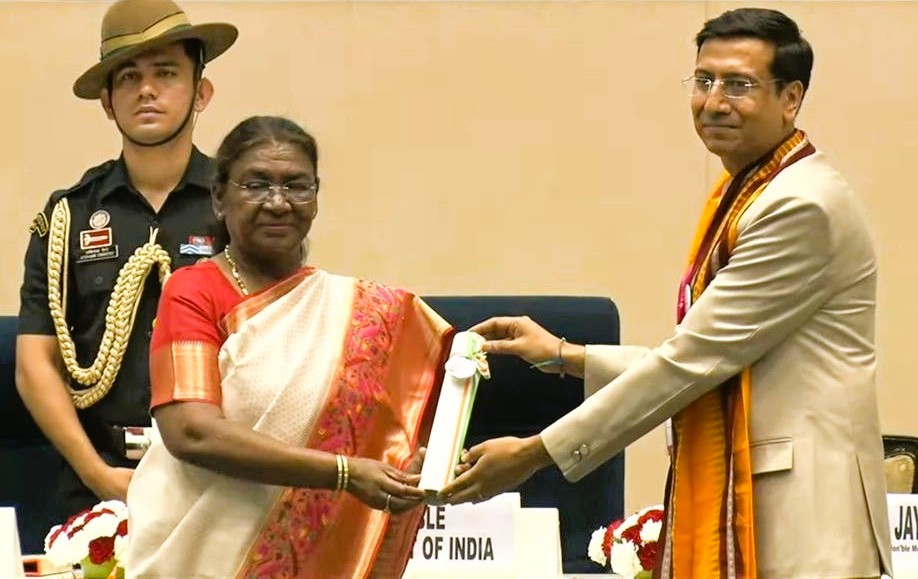
Prof. Kapil Ahuja is a Full Professor in the Department of Computer Science & Engineering at the Indian Institute of Technology Indore (IIT Indore), where he heads the Mathematics of Data Science and Simulation (MODSS) research lab. After completing dual Master's degrees and a Ph.D. from Virginia Tech (USA) followed by postdoctoral work at the Max Planck Institute in Germany, he has held visiting positions at UT Austin, IMT Atlantique, Sandia National Labs, TU Dresden, and TU Braunschweig. His administrative roles include founding Dean of International Affairs and former Head of Computer Science & Engineering at IIT Indore. Education: Ph.D. in Mathematics, Virginia Tech (2011) M.S. in Mathematics, Virginia Tech (2009) M.S. in Computer Science, Virginia Tech (2007) B.Tech. in Mechanical Engineering, IIT (BHU) Varanasi (2001) Research Focus: Prof. Ahuja's work bridges theoretical advances with real-world applications, emphasizing machine learning algorithms for plant/cancer studies, game-theoretic poverty reduction models, exascale climate modeling solvers, and drone trajectory optimization. His interdisciplinary approach integrates numerical linear algebra with network science to solve complex systems problems across healthcare, agriculture, and climate science, supported by 4.85 Crores INR in external funding. Publication Trends: Recent work demonstrates growing emphasis on AI-driven optimization for physical systems (drones, climate models) and biomedical applications (cancer classification). His publications increasingly feature cross-disciplinary collaborations between computer science, biology, and economics, with notable contributions in explainable AI for healthcare and resource allocation algorithms for social networks. Scientific Recognition: National Teacher's Award (2024) from the President of India Five-time recipient of IIT Indore's Best Teacher Award (2013-2023) Best Poster Award at International Workshop on Game Theory & Networks (2019) Steeneck Graduate Research Fellowship (Virginia Tech, 2011) Multiple SIAM travel awards for international conferences Mentorship & Service: Prof. Ahuja has graduated 5 Ph.D. and 4 M.S. (Research) students while mentoring 75 B.Tech. projects. He serves as Associate Editor for Applied Intelligence Journal (Springer Nature) and Knowledge and Information Systems, organizes international conferences, and reviews for 35+ academic sources. His administrative leadership significantly expanded IIT Indore's global partnerships through the Research Park initiative. Research Infrastructure: The MODSS lab maintains active collaborations with Oak Ridge National Lab, Sandia National Labs, and European institutions. Current projects include AI-optimized drone swarms for agricultural monitoring and game-theoretic models for poverty intervention, utilizing high-performance computing resources for large-scale simulations.
Wendy St. Laurent-Coutts is a Continuing Lecturer in the Department of Nursing at Lakehead University. With over 35 years of frontline clinical experience as a Registered Midwife and Primary Health Care Nurse Practitioner, she specializes in health promotion, disease prevention, and inter-professional education. Her teaching integrates multimedia methods and emphasizes compassionate, client-centered care. Education: PhD in Education (ongoing, Cognition and Learning Stream), Lakehead University; Master in Public Health with Nurse Practitioner certification (2012); Registered Midwife (Ontario 1998, UK 1985); Post-RN BScN (St. Francis Xavier University, 2008); RN Diploma (UK, 1983). Research interests include knowledge translation for population health outcomes, women's health, socioecological impacts on health literacy, storytelling in health research, and work-life balance for healthcare workers. Her clinical background spans hospital NICUs, community health, and family birthing care across England, Geraldton, and Thunder Bay. Teaching experience encompasses informal education (clients, families, consumer groups) and formal programs for MDs, RNs, and RTs, including preceptorship roles and current involvement in Lakehead’s BScN program.
Yu Cao, Ph.D., is a tenured full professor at the Miner School of Computer & Information Science, University of Massachusetts Lowell, where he also serves as Director of the UMass Center for Digital Health. His academic journey includes faculty positions at The University of Tennessee (2010-2013) and California State University (2007-2010), followed by a Visiting Fellowship at Mayo Clinic. Dr. Cao holds a Ph.D. in Computer Science from Iowa State University (2007), where he also earned his M.S. (2005), along with an M.Eng. from Huazhong University of Science and Technology (2000) and a B.Eng. from Harbin Engineering University (1997), all in Computer Science. His educational background includes: Visiting Fellow, Biomedical Engineering, Mayo Clinic (2007) Ph.D., Computer Science, Iowa State University (2007) M.S., Computer Science, Iowa State University (2005) M.Eng., Computer Science, Huazhong University of Science and Technology, China (2000) B.Eng., Computer Science, Harbin Engineering University, China (1997) Dr. Cao's research spans multiple domains of knowledge discovery from complex data, with particular focus on Medical Imaging, Multimodal Deep Learning, Computer Vision, Artificial Intelligence, and Digital Health. His work emphasizes intelligent, multi-modal, and data-intensive medical image analysis and retrieval; motion tracking, analyzing, and visualization; and intelligent data analysis for electronic medical records and pervasive healthcare monitoring. His research program has produced over 150 peer-reviewed publications with more than 8,000 citations and an h-index of 40+, appearing in top venues including IEEE CVPR, IJCAI, ICLR, ACM MM, and IEEE ICME, as well as prestigious journals like IEEE TNNLS, TBME, TPAMI, TSC, and JBHI. Analysis of Dr. Cao's recent publications reveals a strong focus on applying deep learning techniques to medical imaging problems, particularly in endoscopy and diagnostic imaging. His work spans multiple subfields including polyp detection in colonoscopy videos, tuberculosis detection in chest X-rays, diabetic retinopathy analysis, and food recognition systems for dietary assessment. The publications demonstrate a consistent pattern of applying cutting-edge AI techniques to solve practical healthcare challenges, with increasing emphasis on multimodal approaches and real-world deployment considerations. Dr. Cao has received numerous accolades for his work, including Best Paper Awards from ACM/IEEE CHASE (2023), IEEE IJCNN (2020), and IEEE NAS (2015). His paper was the most downloaded from Smart Health Journal by Elsevier (2017-2018), and he was recognized for having the highest number of peer-reviewed publications among faculty members in the College of Sciences (2017-2018). He was named a Senior Member of IEEE in 2013, an honor granted to only 8% of IEEE members worldwide. His research has been supported by dozens of NSF/NIH/Industry sponsored grants totaling approximately $10 million. Notable projects include NIH/NSF Award #1R01EB021900 ($1.29 million) as Principal Investigator, NSF Award #1547428 ($500,000) as Co-PI, and NSF Award #1541434 ($1 million) as Co-PI. Dr. Cao has successfully mentored numerous graduate and undergraduate students, with current advisees working on medical image retrieval, data analysis for body sensor networks, and motion tracking and visualization. He has served on organizing committees for over 30 international conferences and workshops, demonstrating strong leadership in the academic community. As Director of the UMass Center for Digital Health, Dr. Cao leads a multidisciplinary team focused on developing innovative solutions for healthcare challenges using digital technologies. His lab maintains active collaborations with medical institutions including Mayo Clinic, Harvard Medical School, and Erlanger Hospital, facilitating the translation of research findings into clinical practice. The center's work spans multiple research areas including medical video/image analysis, motion tracking and visualization, context-aware data analysis for body area sensor networks, and risk analysis for acute coronary syndromes.