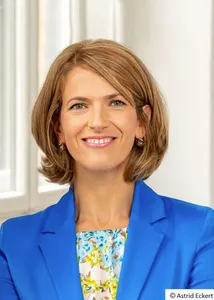
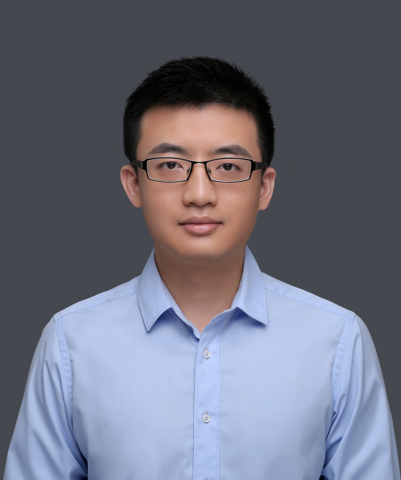
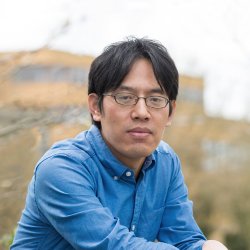
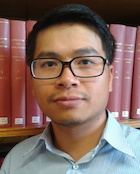
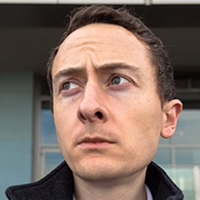
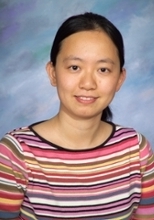
David Palmer is an Affiliate Associate Professor in the Department of Astronomy and Astrophysics. He is affiliated with Los Alamos National Laboratory (LANL). His research focuses on speech recognition, natural language processing, and multilingual systems, with particular emphasis on information extraction from audio and speech data. His work bridges computational linguistics and machine learning, addressing challenges in automated systems for audio comprehension and cross-language processing. Key research interests include robust information extraction from speech transcriptions, error detection in speech recognition, and multilingual processing for operational users. He has contributed to advancements in speaker identification, text preprocessing techniques, and domain adaptation in speech processing systems. His publications span over two decades, reflecting a consistent focus on improving automated systems for handling audio and text data in dynamic environments. While no specific awards or grants are listed, his extensive publication record highlights sustained contributions to the fields of speech technology and computational linguistics. His work at LANL likely involves collaborative research in applied computational sciences, though specific lab affiliations or teams are not explicitly mentioned.
Prof. Dr. Enkelejda Kasneci is a Distinguished Professor at the Technical University of Munich (TUM), leading the Chair of Human-Centered Technologies for Learning. She holds dual affiliations within TUM School of Social Sciences and Technology and TUM School of Computation, Information and Technology. Her research integrates AI, eye-tracking, and immersive technologies to advance educational paradigms. She directs the TUM Center for Educational Technologies and chairs the MSc program 'AI in Society.' Education: PhD in Computer Science from University of Tübingen (2013), M.Sc. from University of Stuttgart (2007). Earlier roles include Assistant Professor and Dean of Studies at University of Tübingen. Research Focus: Human-centered AI applications in education, multimodal interaction design, and privacy-preserving eye-tracking. Her work bridges technology and pedagogy through projects like AI tutor PEER, VR Classroom, and Privacy-Preserving Eye-tracking. Key Projects: Leads EU-funded projects VIVA (€1.125M), DigiProMIN (€163K), and SARA Kids (€244.8K). Active in policy initiatives like Europe’s AI Imperative. Awards: TUM Heinz Maier-Leibnitz Medal (2024), Liesel Beckmann Distinguished Professorship (2022), and Südwestmetall Research Prize (2014). Grants & Advising: Over €5M in secured funding across 12+ projects. Supervises 14+ PhD researchers and mentors postdocs in AI education and HCI. Labs & Teams: IT-Stiftung EdTech Lab houses advanced VR/eye-tracking setups. Research group includes 20+ members spanning AI, HCI, and educational technology.
Kede Ma is an Associate Professor in the Department of Computer Science at City University of Hong Kong (CityUHK). He received his B.E. from the University of Science and Technology of China (USTC) in 2012, and MASc and Ph.D. degrees from the University of Waterloo in 2014 and 2017, respectively. From 2018 to 2019, he was a Research Associate with the Howard Hughes Medical Institute and New York University. Prof. Ma has been named to the Highly Cited Researchers list by Clarivate Analytics in 2024 and currently serves on the editorial boards of IEEE Transactions on Image Processing, IEEE Transactions on Information Forensics and Security, and IEEE Signal Processing Letters. Prof. Ma leads the Multimedia Analytics (MA) Laboratory, an interdisciplinary research group focused on computational vision, computational modeling of human visual perception, perceptual multimedia signal processing, quality assessment, and multimedia forensics. His research spans computational photography, high dynamic range imaging and rendering, omnidirectional video analysis, camera processing pipeline design, and artificial intelligence safety in multimedia systems. His work integrates machine learning techniques including reinforcement learning, generative modeling, self-supervised learning, and continual learning for multimedia signal processing applications. His recent publications demonstrate a strong focus on image quality assessment, deep learning for multimedia processing, and multimedia forensics. His work bridges theoretical computer vision principles with practical applications in multimedia systems. The research trends show increasing integration of foundation models with specialized multimedia processing tasks, particularly in quality assessment and security applications. Highly Cited Researchers list by Clarivate Analytics (2024) Best Paper Award at IEEE International Conference on Virtual Reality and Visualization (2021) Best Paper Runner-Up at International Joint Conference on Artificial Intelligence Workshop (2021) Top 10% Award at IEEE International Conference on Image Processing (2015) Finalist for the Governor General's Gold Medal, University of Waterloo (2017) Spotlight presentation at NeurIPS (2022) Highlight paper at ICCV (2025) Oral presentation at ICLR (2025) Prof. Ma advises numerous PhD students and postdoctoral fellows in the MA Laboratory. His research is supported by various grants enabling work in multimedia analytics, image processing, and computer vision. The laboratory maintains active collaborations with researchers at institutions including SUSTech, ZJU, and HIT. Current projects focus on advancing image quality assessment methodologies, developing more robust deep learning techniques for multimedia forensics, and exploring new approaches to HDR imaging and omnidirectional video processing. The Multimedia Analytics Laboratory maintains a strong focus on both theoretical foundations and practical applications of multimedia processing. Current research directions include integrating large language models with image quality assessment, developing more robust deepfake detection methods, and advancing techniques for continual learning in multimedia applications. The lab emphasizes rigorous evaluation methodologies and maintains multiple datasets for multimedia quality assessment research.
Professor Zoheir Sabeur is Professor of Data Science and Artificial Intelligence at Bournemouth University (2019–present) and Head of the Processes and Behaviour Understanding (PRO_BU) Research Group. He concurrently serves as Visiting Professor of Data Science at Colorado School of Mines (2017–present) and held the position of Science Director at the IT Innovation Centre, University of Southampton (2009–2019). Over three decades he has led more than 30 large-scale projects as Principal Investigator, securing over £12 million of funding from the European Commission, UKRI, DSTL, NERC, EPSRC and industry. Education PhD in Theoretical Physics, University of Glasgow (1990) MSc in Theoretical Physics, University of Glasgow (1986) BSc First-Class Honours in Physics and Applied Mathematics, Université d'Oran (1984) Advanced Leadership Programme, Ashridge Business School (2011) Research Interests Professor Sabeur’s research focuses on the fundamental theory and application of data science and artificial intelligence to understand complex human, natural and industrial processes and behaviours. His work spans multi-modal sensing, big-data analytics and machine-learning algorithms that extract actionable knowledge from large heterogeneous datasets. Application domains include: Healthcare: AI-driven diagnostics and prognostics for chronic diseases such as COPD, asthma and cancers through omics and phenotypic data integration. Environmental & Climate: Earth-observation analytics for wildlife migration and climate-change impact assessment using satellite data and global grid systems. Maritime & Cyber-Physical Security: Real-time risk assessment for shipping in extreme environments, smart-city safety and critical-infrastructure protection using computer vision and sensor fusion. Recent research has produced novel AI classifiers that analyse lung-auscultation audio signals to grade COPD severity, as well as digital-twin frameworks for detecting malicious behaviour in urban spaces. Scientific Awards & Recognition Fellow of the British Computer Society (FBCS) Fellow of the Institute of Marine Engineering, Science & Technology (FIMarEST) Chartered Engineer (CEng) and Chartered Physicist (CPhys) Multiple ORS Awards (1987, 1988, 1989) Grants & Doctoral Supervision Professor Sabeur has secured and led more than 40 funded projects since 1996, including recent grants such as INSIGHT (NIHR, 2024) and S4AllCities (H2020, 2020). He currently supervises three ongoing PhD students at Bournemouth University and has successfully graduated three others, covering topics from computational hydrodynamics to AI-based respiratory-disease analytics. He welcomes enquiries from prospective postgraduate researchers interested in data science, AI and interdisciplinary applications under schemes such as UKRI and Horizon Europe.
Dr. Shahram Shirani is a Professor and holds the L.R. Wilson/Bell Canada Chair in Data Communications in the Department of Electrical & Computer Engineering at McMaster University. He also serves as Acting Chair of the department. His research focuses on multimedia communications, image/video processing, medical imaging, and hardware architectures. He teaches courses like Image Processing (COMPENG 4TN4) and 3D Image Processing and Computer Vision (ECE 736). Shirani earned his B.Sc. from Isfahan University of Technology (1989), M.Sc. from Amirkabir University of Technology (1994), and Ph.D. from the University of British Columbia (2000). His achievements include the Faculty of Engineering Leadership Fellowship (2014–15) and leadership roles in editorial boards for IEEE Transactions on Multimedia and Circuits and Systems for Video Technology. Research interests include video quality assessment, biomedical signal processing, and edge computing for traffic monitoring. His lab develops algorithms for multimedia representation, compression, and hardware implementation. Recent work includes AI-driven medical sound datasets, real-time noise removal in MRI, and efficient CNN pruning techniques. He advises over 15 graduate students and collaborates on projects like the HLS-CMDS dataset and cardiac segmentation reviews. His lab’s contributions span biomedical engineering, autonomous systems, and smart sensor technologies.
Doug L. James is a Full Professor of Computer Science at Stanford University since 2015, following roles as Associate Professor at Cornell University (2006-2015) and Assistant Professor at Carnegie Mellon University (2002-2006). He holds a PhD in Applied Mathematics from the University of British Columbia (2001), alongside earlier degrees from the same institution and the University of Western Ontario. His research focuses on computer graphics, sound synthesis, and physically-based modeling, with notable contributions to fluid simulation, cloth animation, and medical modeling. Key achievements include the 2012 Technical Achievement Award from the Academy of Motion Picture Arts and Sciences for 'Wavelet Turbulence,' and the 2013 Katayanagi Prize. He serves as a consulting Senior Research Scientist at Pixar Animation Studios and has led roles like Technical Papers Chair at SIGGRAPH 2015. His work integrates physics-based principles with interactive systems, emphasizing real-time applications and data-driven methods. Research interests span sound synthesis for animations (e.g., cloth, water, impact sounds), deformable models for medical simulation, and tools like 'svMorph' for virtual surgery planning. His publications reflect a blend of algorithmic innovation and practical applications in film, gaming, and healthcare.
Professor Xue Li is a faculty member in the School of Electrical Engineering and Computer Science at the University of Queensland. His research focuses on machine learning, data mining, and their applications in healthcare, materials science, and computer vision. He has authored over 300 publications, including seminal works on knowledge graph completion, video quality enhancement, and alloy design using machine learning. His work bridges theoretical advancements with real-world applications, such as clinical diagnosis andTinyML systems. Key research interests include graph representation learning, medical informatics, and efficient algorithms for multimedia data. Notable contributions include developing commonsense-enhanced relation extraction models and frameworks for compressed video reconstruction. His research also addresses challenges in federated learning and privacy-preserving genomics. Prof. Li has collaborated extensively with industry and academia, contributing to projects in RFID systems, electronic nose pattern recognition, and cybersecurity. His work is published in top-tier venues like IEEE Transactions and ACM conferences. Despite no listed awards, his prolific output underscores academic impact.
Shujun Li is a Professor of Cyber Security and Head of the Cyber Security Research Group at the School of Computing, University of Kent. He also holds a Visiting Professorship at the Department of Computer Science, University of Surrey. His research focuses on cyber security, privacy, AI applications, and human-centric computing. He leads the Institute of Cyber Security for Society (iCSS), a university-wide interdisciplinary research centre. Education: PhD in Information and Communication Engineering (Xi'an Jiaotong University, 2003), followed by postdoctoral research at City University of Hong Kong, Humboldt Research Fellowship at FernUniversität in Hagen, and a 5-year Zukunftskolleg Research Fellowship at Universität Konstanz. Research interests include cyber security (usable security, digital forensics, misinformation), AI safety, human factors, and socio-technical systems. He has published over 100 papers, with awards including the IEEE Guillemin-Cauer Best Paper Award and EPSRC recognition. Awards: Includes IEEE Transactions Best Paper Awards, EPSRC peer review recognition, and multiple conference best paper awards. Active in interdisciplinary projects like MACRO (cyber risks in mobility systems) and ACCEPT (reducing human-related cyber risks). Labs/Teams: Directs iCSS, co-founded Kent & Medway Cyber Cluster, and leads the Kent Interdisciplinary Research Centre in Cyber Security (KirCCS). Collaborates with industry and government agencies on cyber resilience and AI ethics.
Abhinav Dhall is an Associate Professor in the Department of Data Science & AI at Monash University. His research focuses on computer vision, affective computing, and human-centered AI, with a particular emphasis on deepfake detection, multimodal analysis, and ethical AI applications. He is actively involved in organizing workshops like the Multimodal and Responsible Affective Computing (MRAC) and chairs conferences such as ACCV. Dhall accepts PhD students and has contributed significantly to datasets like AV-Deepfake1M and EmotiW challenges. His work spans topics including HDR imaging, facial expression recognition, and AI ethics in multimedia systems.
Tasos Dagiuklas is a Professor in the Department of Computer Science and Technology within the School of Engineering and Technology at the University of Bedfordshire. With over 168 publications spanning from 1995 to 2025, he has established himself as a leading researcher in telecommunications and network systems. His extensive publication record demonstrates continuous scholarly contribution across multiple decades in the field. Professor Dagiuklas' research focuses on wireless communications, edge computing, 5G/6G networks, quality of experience (QoE), and federated learning . His work bridges theoretical networking concepts with practical applications, particularly in multimedia delivery and security. He has developed significant expertise in video streaming optimization, network security mechanisms, and resource management in emerging network architectures. His research consistently addresses the evolving challenges of modern communication systems, with recent work increasingly focusing on AI integration in networking. Analysis of his recent publications (2023-2025) reveals a strong trend toward edge computing, federated learning, and security applications in next-generation networks. His work demonstrates a strategic shift from traditional networking concerns to more complex systems involving AI integration, energy efficiency, and heterogeneous environments. The publications show consistent collaboration with researchers across multiple institutions, with particularly strong partnerships with Muddesar Iqbal, Ilias Politis, and Stavros Kotsopoulos. Professor Dagiuklas has made substantial contributions to the academic community through his extensive publication record in high-impact venues including IEEE journals and conferences. His work has evolved from foundational networking research to cutting-edge investigations of AI-enhanced communication systems, reflecting the broader trajectory of the field itself. His research demonstrates both technical depth in specific networking challenges and breadth across multiple application domains.
Rajesh M. Hegde is a Professor in the Department of Electrical Engineering at the Indian Institute of Technology Kanpur. He holds a PhD in Computer Science from IIT Madras (2005), an M.E. in Electronics Engineering from Bangalore University (1988), and a B.E. in IT Engineering from Mysore University. His research focuses on Machine Learning , AI , and multimodal systems, with applications in wireless networks, IoT, and speech/audio processing. Specific interests include federated learning, WSN, and information fusion for ASR/VR systems. His lab is located in ACES 203-204. Publications predominantly explore signal processing techniques for multimedia and speech applications, showing consistent focus on feature extraction, multimodal fusion, and real-time system design across 15+ years of research. Awards & Honors: P.K Kelkar Research Fellowship (2009-2013) Undergraduate design mentorship award, UC San Diego ISCA Grant at INTERSPEECH-ICSLP 2004 IBM Best Thesis Award recommendation Teaching excellence commendation
Minh Hoai Nguyen is an Assistant Professor in the Department of Computer Science at Stony Brook University. He received his PhD in Robotics from Carnegie Mellon University and a Bachelor of Engineering from the University of New South Wales. Prior to Stony Brook, he was a post-doctoral research fellow at Oxford University and a Kurti Junior Research Fellow at Brasenose College. Education: PhD in Robotics, Carnegie Mellon University Bachelor of Engineering, University of New South Wales His research focuses on computer vision , machine learning , and time series analysis , particularly in developing algorithms for human action recognition , gesture detection , and expression analysis in video data. Applications include video surveillance , human-computer interaction , and medical diagnosis of behavioral disorders . His work integrates computer vision for video processing, time series analysis for modeling human behavior, and machine learning for training complex algorithms. Notable awards include: CVPR 2012 best student paper award Winner of PASCAL VOC 2012 Challenge for Human Action Recognition He teaches courses such as Video Analysis (CSE 594) and Introduction to Robotics (CSE 525) .
Jonathan Ragan-Kelley is the Esther and Harold E. Edgerton Assistant Professor of Electrical Engineering & Computer Science at MIT and an Assistant Professor of EECS at UC Berkeley. He leads the Visual Computing group at CSAIL, focusing on high-efficiency visual computing, compilers, and architectures for image processing, machine learning, and 3D rendering. His research bridges systems, compilers, and hardware design, emphasizing scalable solutions for computational challenges. Education: PhD in Computer Science from MIT (2014), postdoc at Stanford University, and visiting researcher at Google. He co-created the Halide language and has developed multiple domain-specific languages (DSLs) and compiler systems. Research interests include compiler optimization, scheduling languages (e.g., Exo), and efficient computing frameworks. He has received awards such as the NSF CAREER Award and ACM SIGGRAPH’s Significant New Researcher Award. Awards: ACM SIGGRAPH Award, NSF CAREER, Intel Outstanding Researcher Award Key Contributions: Halide compiler framework, Exo scheduling language, machine learning acceleration techniques Labs/Teams: Visual Computing at MIT CSAIL
Enrico Magli is a Full Professor at the Department of Electronics and Telecommunications (DET) at Polytechnic University of Turin, Italy. He serves as Director of the Image Processing and Learning group and Coordinator of the 'ICT for Smart Societies' M.Sc. degree program. Additionally, he is a committee member of the PhD program in Electrical, Electronic and Communications Engineering and a member of the Interdepartmental Center SmartData@PoliTO - Big Data and Data Science Laboratory. Professor Magli's research focuses on applying machine learning and deep learning methods to satellite imaging, with applications to onboard processing and image analysis on the ground. His work spans deep learning for image and video analysis, image and video compression, compressive sensing, satellite imaging, and graph signal processing. He has published over 90 journal papers with 5900+ citations and an h-index of 40 on Google Scholar. His recent publications demonstrate a strong focus on developing deep learning architectures for satellite image processing, particularly for onboard applications. His research addresses challenges in hyperspectral image compression, super-resolution, change detection, and efficient neural network architectures suitable for resource-constrained satellite environments. There's also significant work on secure authentication systems using deep learning techniques and neural network optimization for edge devices. Elevated to IEEE Fellow (2017) 'for contributions to compression and communication of remotely sensed imagery' IEEE Geoscience and Remote Sensing Society 2011 Transactions Prize Paper Award IEEE Multimedia 2019 Best Paper Award Best Paper Awards at IEEE ICIP (2015, 2019) ERC Starting grant (consolidator type) and ERC Proof-of-Concept Grant recipient Multiple Best Paper Awards Francesco Carassa (2011, 2013, 2014) Professor Magli actively supervises numerous PhD students working on cutting-edge topics in deep learning for satellite imaging, image processing, and secure authentication systems. His research is supported by significant grants including ERC projects and multiple commercial contracts with space agencies and technology companies. He leads the Image Processing and Learning (IPL) Group at Politecnico di Torino, which focuses on developing innovative solutions for satellite image analysis and compression.
Lin Cai is a Professor in the Department of Electrical & Computer Engineering at the University of Victoria, Canada. She holds prestigious fellowships including NSERC Steacie, IEEE, CAE, and Royal Society of Canada. Her research focuses on wireless communications, networking, and mobile computing, with emphasis on protocols for multimedia and IoT systems. She has led projects in vehicular networks, UAV-assisted systems, and federated learning for edge intelligence. Dr. Cai has advised over 20 students, many of whom have received awards and prominent roles in academia and industry. She has authored numerous high-impact papers, secured grants from NSERC, CFI, and industry partners, and serves in leadership roles at IEEE and educational institutions. Notable contributions include work on congestion control, network security, and autonomous systems. Education: BEng (Nanjing U. of Sci. & Tech.), MASc/PhD (University of Waterloo) Affiliations: IEEE Vehicular Technology Society Board of Governors, IEEE ComSoc Distinguished Lecturer Awards: 2020 IEEE N2Women 'Star in Networking', RSC Fellow 2024, Best Paper Awards (ICC 2008, WCNC 2011) Research Labs: Connected Autonomous Vehicles (CAV) Lab, AI-driven Networking Group Her work integrates networking, AI, and control theory to address challenges in 6G, IoT, and smart transportation. She actively promotes diversity through initiatives like the 'Riko-chan' STEM manga series.