Hicham Bellafkir is a Research Fellow at Philipps-Universität Marburg, affiliated with the Department of Mathematics and Computer Science (Fb12) and the Distributed Systems group (AG Freisleben). He initiated his PhD in 2021 under Prof. Bernd Freisleben's supervision, focusing on deep neural networks and the analysis of multimedia data. His work integrates advanced machine learning techniques with applications in biodiversity monitoring, wildlife data analysis, and sensor networks. Current research interests include leveraging neural networks for image and audio recognition in ecological contexts. Contact: Office 04C02 (H|04 Institutsgebäude), reachable at hicham.bellafkir@uni-marburg.de . Research contributions span bioacoustics, camera trap image processing, and disruption-tolerant networking, with publications emphasizing interdisciplinary applications of AI in environmental science. Education: M.Sc. in Computer Science (exact degree not specified) Key Projects: Nature 4.0 sensor systems, QUICL networking protocols, bird species recognition frameworks Labs/Teams: AG Freisleben's Distributed Systems Group
Francisco M. Delicado Martínez is an academic researcher specializing in telecommunications, wireless networks, and IoT applications. His work focuses on Quality of Service (QoS) mechanisms, Software Defined Networks (SDN), and blockchain integration in fog computing environments. He has contributed to optimizing resource allocation in OFDMA and IEEE 802.16 networks, and developed IoT-based systems for environmental monitoring (e.g., glyphosate detection, agrochemical spray drifts, and Aedes aegypti surveillance). His recent research emphasizes low-cost IoT ecosystems and blockchain-driven e-government services for public administration and construction management. Research interests span across wireless communications, network optimization, and distributed computing architectures. His publications address challenges in contention resolution, bandwidth request mechanisms, and machine learning integration for disease vector monitoring. Collaborations include projects on fog computing orchestration, SDN-based network enhancements, and multimedia transmission over TDMA/TDD wireless networks. Key contributions include the S-HIDRA architecture (blockchain & SDN for fog computing), DriftGLY and SpectroGLY IoT systems, and the MosquIoT framework for mosquito population monitoring. His work bridges theoretical network protocols with practical applications in agriculture, public health, and smart infrastructure.
Dr. Zhidong Xiao serves as Principal Academic (Associate Professor) at Bournemouth University's National Centre for Computer Animation within the Faculty of Media and Communication. With over ten years of leadership experience including roles as Programme Leader, Head of Education, and Deputy Head of Department, he drives academic strategy and research innovation in computer animation and digital media. His work bridges technical excellence with creative industry applications through extensive collaborations across the UK and China. Dr. Xiao's educational foundation includes a PhD in Computer Graphics (2010) and postgraduate certificates in Education Practice (2010) and Research Degree Supervision (2011) from Bournemouth University, complemented by a BEng (Hons) in Thermodynamics from Taiyuan University of Technology, China (1994). PhD in Computer Graphics, Bournemouth University (2010) PGCE in Education Practice, Bournemouth University (2010) PGCE in Research Degree Supervision, Bournemouth University (2011) BEng (Hons) in Thermodynamics, Taiyuan University of Technology (1994) His research spans Computer Graphics, Motion Capture, Artificial Intelligence, and Virtual Reality with focus on physics-based simulation, sign language recognition, and motion synthesis. Recent work integrates partial differential equations with machine learning to solve animation challenges in facial realism, deformation simulation, and 3D reconstruction. His interdisciplinary approach connects computer science with creative industries, healthcare applications, and educational technology while advancing core techniques in neural rendering and motion analysis. Analysis of his 15 most recent publications reveals consistent innovation in physics-based animation techniques (40%), motion capture processing (25%), and neural approaches to 3D reconstruction (35%). Key trends include the fusion of analytical physics models with deep learning architectures, development of efficient real-time simulation methods, and expansion into accessibility applications through sign language recognition systems. Scientific recognitions include: Fellow of British Computer Society (2023) Fellow of Higher Education Academy (2011) Best Poster Award at Pacific Graphics 2014 He maintains active peer review roles for EPSRC, ESRC, IEEE Transactions on Multimedia, and ACM SIGGRAPH conferences. Dr. Xiao has supervised seven PhD students to completion while currently guiding Alexandra Sergeeva Alexdottir's research on Phantom Touch phenomena. His grant portfolio demonstrates strong industry-academia collaboration: Principal Investigator Capturing and representing sign language (British Council, 2025) VE Communication Programme (Erasmus+, 2020) Co-Investigator Rehabilitation Enhancement via Motion Capture (BU Fusion Fund, 2013) Cross-Channel Film Lab (Interreg, 2012) Digital Beijing Opera Project (2010) As a core member of Bournemouth's Computer Graphics and Visualisation Research Group and Centre for Digital Entertainment, he leads initiatives in motion capture technology through AccessMocap Studio. His international outreach includes invited lectures across China on computer animation education and visual effects techniques, strengthening global partnerships in creative technology development.
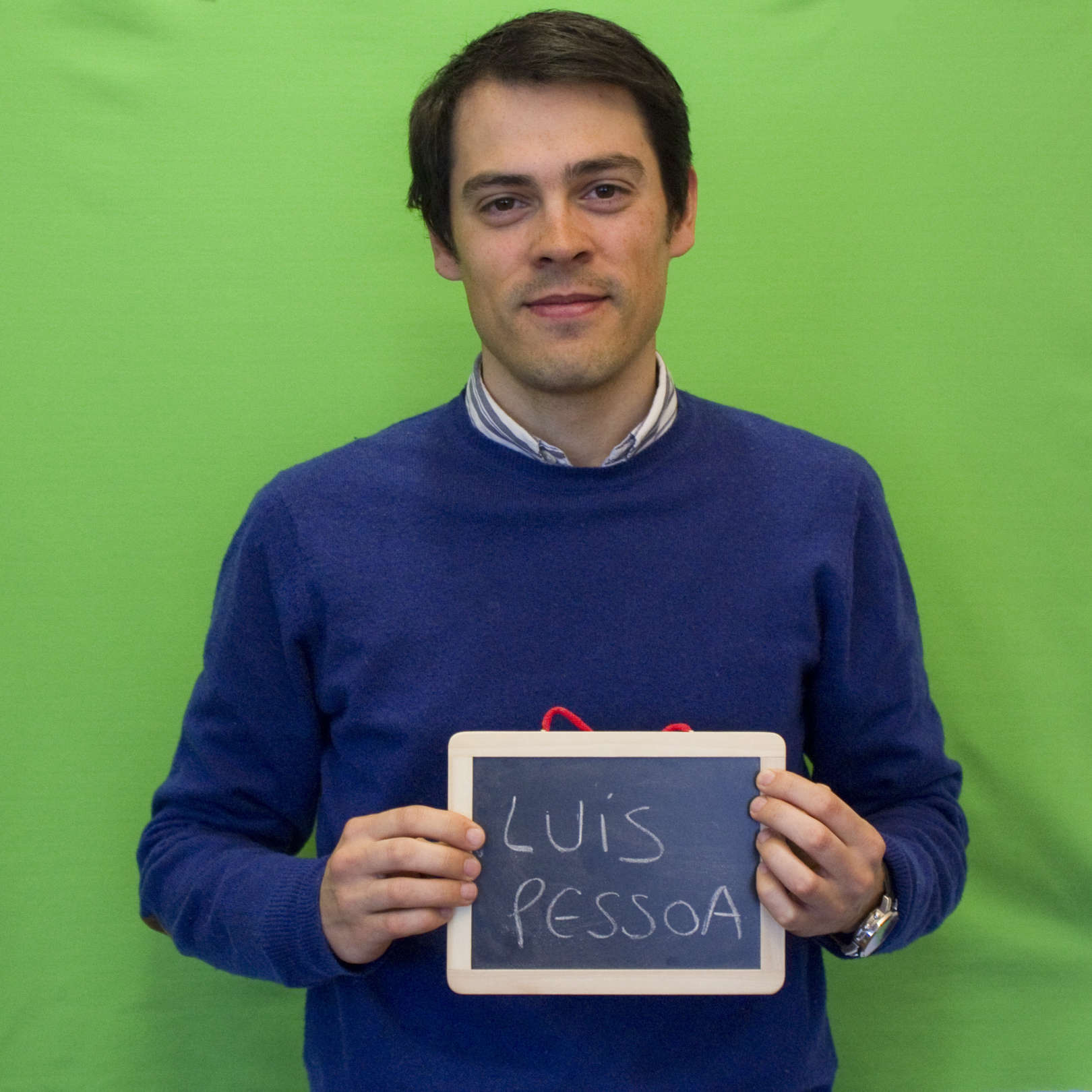
Luís Manuel Pessoa is a Senior Researcher and Coordinator of the Optical and Electronic Technologies area at the Centre of Telecommunications and Multimedia of INESC TEC. He holds a Licenciatura (2006) and PhD (2011) in Electrical and Computer Engineering from the Faculty of Engineering of the University of Porto. Previously, he taught RF/microwave engineering and optical communications as an invited assistant professor at the University of Porto. His research focuses on coherent optical systems, radio-over-fiber, RF/microwave devices/antennas, underwater wireless power/communications, and 6G technologies like THz communications and Reconfigurable Intelligent Surfaces (RIS). He has authored/co-authored >50 publications and 1 European patent, coordinating multiple R&D projects and EU initiatives such as SUPERIOT for sustainable IoT systems. His work emphasizes industrial applications and standardization efforts for future networks. **Education:** Licenciatura in Electrical & Computer Engineering (2006), University of Porto PhD in Electrical & Computer Engineering (2011), University of Porto **Research Interests:** Terahertz (THz) communications and 6G systems RIS hardware design and signal processing RF/microwave antennas and devices IoT sustainability and printed electronics Underwater wireless power transfer **Publications:** Recent work highlights industrial THz use cases, sustainable IoT systems, and RIS innovations for 6G. His articles address technical challenges like spectrum utilization, energy efficiency, and hardware scalability. **Projects & Grants:** Coordinates EU projects like SUPERIOT and TERRAMETA, managing R&D contracts with industry. Leads teams in developing prototypes for RIS, IoT nodes, and anechoic chambers. **Labs/Teams:** Active in INESC TEC’s Telecommunications and Multimedia Centre, fostering collaborations across academia and industry.
Prof. Stefania Cecchi is an Associate Professor at the Department of Information Engineering (DII) within the Faculty of Engineering at the University of Marche (UNIVPM). Her research focuses on audio signal processing, nonlinear systems, and biomedical engineering applications. She holds office hours on Mondays from 9:30–12:30 in DII or via Microsoft Teams. Her work spans innovative audio technologies such as binaural systems, real-time noise cancellation, and spatial audio rendering. She also explores interdisciplinary applications like bee hive monitoring through acoustic analysis and physiological response measurement to sound stimuli. Recent projects include developing low-cost medical devices for stress detection and optimizing automotive audio systems. Key research areas include: Head-Related Transfer Function (HRTF) interpolation for 3D audio Real-time audio processing for driver monitoring and health applications Nonlinear system identification in audio devices Acoustic-based fault detection in drones and vehicles Her publications highlight trends in immersive audio systems, bioacoustic analysis, and adaptive filtering techniques. She actively contributes to advancing audio engineering and its biomedical applications through interdisciplinary collaborations.
Lucia Migliorelli is a Research Fellow at the Polytechnic University of the Marche, Italy. She completed her Master of Science in Biomedical Engineering (cum laude) in 2018 and has been pursuing a PhD since 2018 under Prof. Emanuele Frontoni. Her research focuses on AI-driven monitoring systems for healthcare applications, leveraging multimedia data analysis without wearable sensors. Key areas include human action recognition, medical record analysis, and non-invasive patient monitoring for populations like preterm infants and elderly patients. Education highlights include a Master’s thesis on machine learning for diabetes management and ongoing PhD work on intelligent spaces for automated behavior analysis. Current projects involve federated learning for medical imaging (e.g., MRI-to-CT synthesis) and edge AI for real-time surveillance systems. She is based at the Polytechnic University of the Marche, contributing to interdisciplinary research at the intersection of biomedical engineering and artificial intelligence. Her publications span medical image analysis, AI in digital humanities, and ethical considerations in healthcare AI. She actively develops prototypes for neonatal intensive care units, emergency vehicle detection, and groundwater level prediction. No scientific awards are explicitly listed, though her work reflects strong contributions to AI-driven healthcare innovation. Current advising and grants are not detailed in the text, but her research aligns with lab efforts in environmental AI, rehabilitation robotics, and telemonitoring systems for neurological disorders. She collaborates with multidisciplinary teams to advance ethical, sustainable AI solutions for clinical and societal challenges.
Ifigeneia Mavridou is a Researcher at Bournemouth University's Faculty of Media and Communication , affiliated with the Centre of Digital Entertainment and collaborating with Emteq Ltd. Her work focuses on Virtual Reality and Affective Human-Computer Interaction (HCI) , leveraging physiological signals like EEG, EMG, and PPG for emotion detection. Education : MA in Art, Virtual Reality and Multi-user Systems (University Paris-8 & Athens School of Fine Arts, 2014); PhD in Affective State Recognition in Virtual Reality (Bournemouth University, 2021) Her research explores the intersection of New Media Art and VR to identify emotional features that enhance immersive experiences and VR content re-playability . Current projects involve developing OCOsense™ smart glasses for facial expression recognition and AVEL (Affective Virtual Environment Library) for emotion analysis. Recent publications highlight trends in VR-based emotion detection , wearable sensor integration (optomyography, EMG, PPG), and applications in mental health and clinical research . She is supported by an EPSRC grant for her work on affective VR systems. Collaborative efforts include supervision by Dr. Emili Balaguer-Ballester, Dr. Alain Renaud, Dr. Anna Troisi, Dr. Ellen Seiss, and Dr. Charles Nduka. She has participated in over 20 new media art exhibitions across Europe since 2005.
Maria De Marsico is an academic affiliated with Sapienza University of Rome, Italy, specializing in biometrics, computer vision, and pattern recognition. She actively contributes to conferences such as ICPRAM, serving as editor for multiple proceedings. Her research focuses on gait and facial recognition, wearable sensor applications, and multimodal interaction systems. She collaborates with institutions like SCITEPRESS and Springer, publishing extensively in journals like Pattern Recognition Letters and IEEE Transactions . Her work addresses challenges in biometric systems, emotion recognition, and accessibility through AI-driven solutions. Maria co-organizes workshops on Games-Human Interaction (GHItaly) and contributes to fields like e-learning accessibility for deaf students via SignWriting tools. Her projects include developing applications such as VQAsk for visually impaired users and exploring gait recognition via smartphone accelerometers. She also investigates robust machine learning models for facial expression analysis and dataset rebalancing to reduce bias in demographic classification. Her research spans from theoretical contributions, such as surveys on image integrity methods, to applied systems like the Biopen-Fusing authentication framework. She collaborates with global researchers on topics ranging from microplastics detection to UAV joystick interfaces, demonstrating interdisciplinary impact.
Dr. Naseer Al-Jawad is a Senior Lecturer in Computing at the School of Computing, part of the Faculty of Computing, Law and Psychology at the University of Buckingham. He holds a BSc from Basrah University (Iraq), an MSc from Baghdad University (Iraq), and a PhD in Computer Science from the University of Buckingham (UK). His teaching spans foundational computing courses, including Data Structures, Object-Oriented Programming, and Research Methods for Postgraduates, alongside project supervision at both undergraduate and postgraduate levels. His research interests focus on image and video processing, medical imaging (e.g., breast cancer and melanoma detection), biometric systems (face/gait recognition, Arabic handwriting analysis), and IoT-driven Smart Home systems. He has pioneered work in deep learning for video compression, fusion of audio-visual data for authentication, and steganography techniques. Recent projects include developing adaptive multi-user Smart Home frameworks and enhancing content-based video indexing with wavelet transforms. Dr. Al-Jawad’s publications span topics like facial expression recognition using 3D Kinect data, indoor localization via smartphone networks, and secure real-time video transmission. His work emphasizes practical applications in healthcare, cybersecurity, and disaster management networks. His academic contributions include overseeing student projects and collaborating on interdisciplinary initiatives such as UNILS (indoor localization) and sosMesh (disaster communication frameworks). He actively contributes to conferences like SPIE and MIUA, addressing challenges in multimedia processing and biomedical image analysis.
Dr. Athar Ali is a Senior Lecturer in Computing at the University of Buckingham's School of Computing, part of the Faculty of Computing, Law and Psychology. Prior to this role, he served as an Associate Professor at Aligarh Muslim University, India, and held a Research Associate position at Loughborough University, UK. He holds a PhD in Computer Science from Loughborough University, alongside Bachelor’s and Master’s degrees in Computer Engineering from Aligarh Muslim University. His research focuses on image and video coding , multimedia information security , systems engineering , system-of-systems , and machine learning . Notable contributions include advancements in medical imaging classification, vehicle recognition in video surveillance, and digital watermarking techniques for multimedia content protection. Dr. Ali’s work spans theoretical and applied domains, with publications in conferences like the International Conference on Automation and Computing (ICAC) and journals such as the International Journal of Computer Applications. His recent research emphasizes machine learning applications in healthcare and multimedia security, reflecting his interdisciplinary approach to computing challenges. No scientific awards are explicitly mentioned in his profile. He has advised students in his roles at Aligarh Muslim University, though specific names are not listed. His affiliation with the School of Computing at the University of Buckingham underscores his commitment to advancing computing education and research.
Christopher Biggs is an Associate Professor of Music Composition and Technology at Western Michigan University's Irving S. Gilmore School of Music. He specializes in integrating live instrumental performance with interactive audiovisual media, and directs the SPLICE Institute, a summer program for composers and performers in music and electronics. His work spans compositions for ensembles, soloists, and electronic media, with performances across the U.S., Europe, Latin America, and Asia. Education: D.M.A., Music Composition, University of Missouri-Kansas City (2010) M.M., Music Composition, University of Arizona B.A., Print Journalism, American University Biggs’ research focuses on electronic music performance, multimedia art, and digital signal processing. His compositions are featured on labels like Ravello Records and SEAMUS CD Series, and he has collaborated with groups like Ensemble Dal Niente and the Western Brass Quintet. He has received numerous awards, including grants from the Kalamazoo Artistic Development Initiative and recognition from SEAMUS/ASCAP. Teaching & Leadership: Developed Western Michigan University’s Multimedia Arts Technology - Music program Revised the music theory curriculum and B.M. in Music Composition Teaches courses in electronic music composition, effects processing, and visual programming Awards & Grants: 2008 Missouri Music Teachers Association Composer of the Year 2013 & 2016 KADI Grants SEAMUS/ASCAP 1st Place Award (2009) Biggs is also a co-founder of the Kansas City Electronic Music and Arts Alliance and has given guest lectures at institutions like Indiana University and Columbia College.
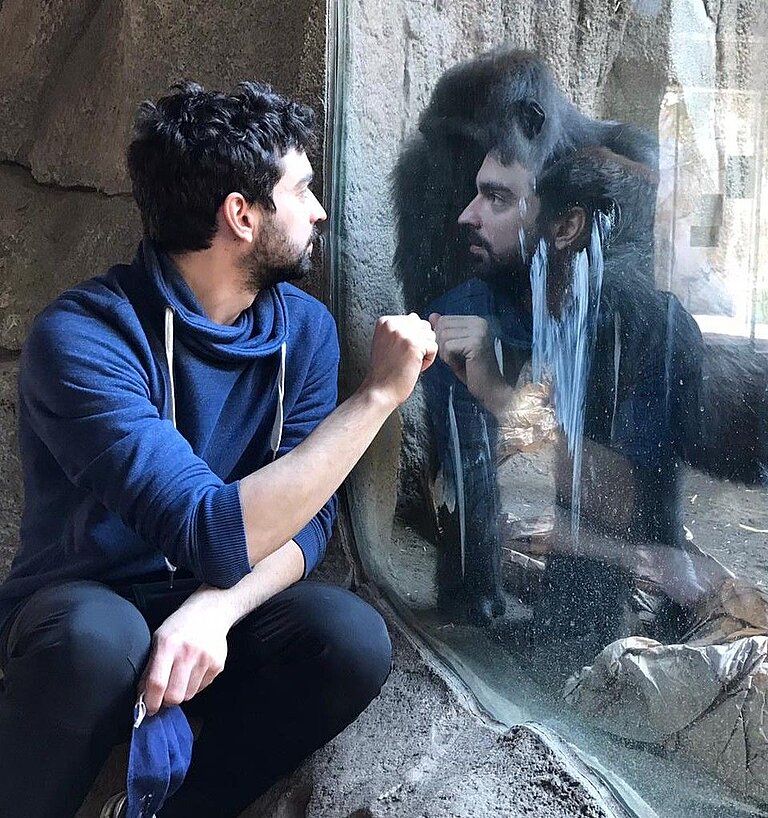
Roles & Affiliations: Pierre-Etienne Martin is a Postdoctoral Researcher & Tech Development Coordinator at the Max Planck Institute for Evolutionary Anthropology (MPI-EVA), Department of Comparative Cultural Psychology. He applies computer vision tools to study human and non-human animal cognition through projects like Zoo Cam Set-Up and BioTIP. Prior to this, he held roles as an ATER (Temporary Teaching and Research Associate) and PhD student at the University of Bordeaux, specializing in spatio-temporal neural networks for action classification in sports like table tennis. Education: PhD in Computer Science (2020): University of Bordeaux, Thesis on fine-grained action detection using spatio-temporal CNNs M.Sc. in Image Processing & Computer Vision (2017): Erasmus Mundus program across Budapest, Madrid, and Bordeaux B.Sc. in Mathematical Engineering (2015): University of Bordeaux Research Interests: Focuses on computer vision applications in psychology and animal behavior, including thermal imaging analysis, fine-grained action classification, and non-invasive data acquisition. Projects include automated primate tracking (Zoo Cam Set-Up), thermal facial/nose segmentation (ApeTI dataset), and child behavior analysis (Quantex project). Publications: Over 20 peer-reviewed papers in journals like Signals and conferences like MediaEval, focusing on CNN-based action recognition in sports and animal studies. Notable contributions include the ApeTI thermal dataset and techniques for stroke classification in table tennis. Grants & Outreach: Scientific advisor at DeepMove (2021-2022). Active in public outreach via YouTube, science festivals, and competitions like Ma thèse en 180 secondes . Engages schools through discussion programs like Declics. Labs & Teams: Leads tech development for MPI-EVA's Comparative Cultural Psychology lab, collaborating on projects like CASE (animal self-testing environments) and BioTIP (thermal imaging tools for behavioral research).
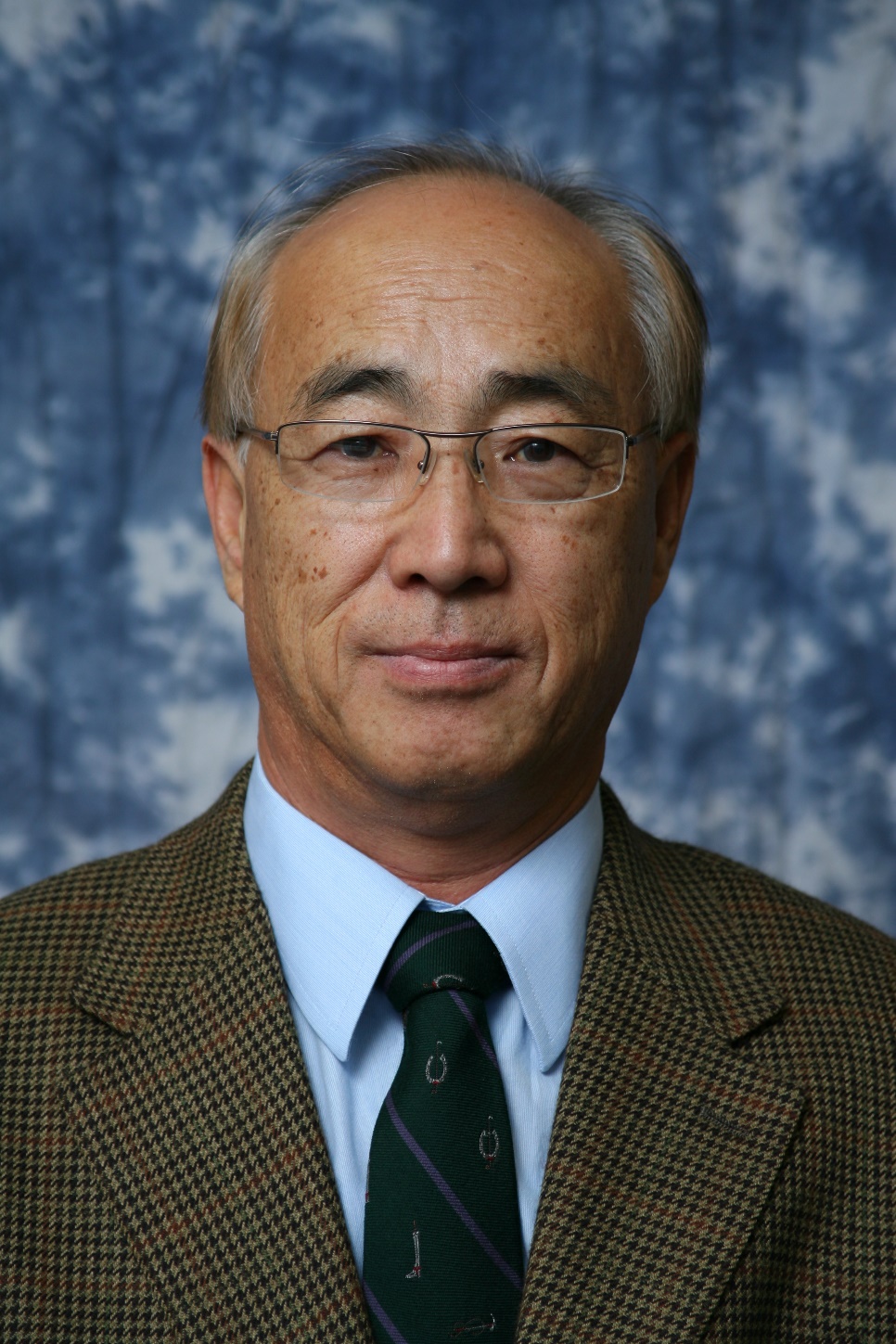
Junghwan Kim is a Professor in the Department of Electrical Engineering and Computer Science at the University of Toledo's College of Engineering. His research focuses on advanced communication systems, including satellite architectures, wireless sensor networks, and anti-jamming technologies. He also explores physical layer encryption and digital multimedia broadcasting (DMB). His work emphasizes practical applications such as improving bit error rate (BER) in wireless systems through innovative modulation techniques like APSK-TCM and LDPC coding. Recent contributions include secure physical layer key generation for autonomous vehicles and machine learning approaches to face detection in noisy channels. Publications highlight advancements in satellite communication synchronization, cooperative localization in cellular networks, and error correction techniques for CDMA systems. His research bridges theoretical foundations with real-world challenges in telecommunications and cybersecurity.
Javier Montoya is a Senior Lecturer at the Lucerne School of Computer Science and Information Technology, part of the Lucerne School of Applied Sciences and Arts (HSLU). He holds a PhD in Computer Vision and Machine Learning from ETH Zurich (2016), with earlier Master’s degrees from INRIA/Grenoble Institute of Technology (France) and UNICAMP (Brazil). His research focuses on Deep Learning, Machine Learning, and Computer Vision, particularly in healthcare applications such as medical image processing and digital health solutions. Education: PhD: Swiss Federal Institute of Technology (ETH Zurich), 2016 Master’s: INRIA/Grenoble Institute of Technology (France), 2010 Master’s: University of Campinas (UNICAMP, Brazil), 2007 Montoya’s professional expertise spans Machine Learning & Deep Learning, Image Processing & Computer Vision, and Digital Health. His work bridges academic research with applied projects, including roles as Senior Research Scientist at Zurich University of Applied Sciences (ZHAW, 2020–2021) and Research Scientist at ETH Zurich (2017–2019). His recent publications emphasize medical imaging advancements, motion artifact mitigation, and deep learning applications in healthcare. His research trends highlight innovations in medical image segmentation (e.g., polyp detection, cardiac imaging) and cross-disciplinary projects like solar energy systems and road network analysis. While no specific grants or awards are listed, his extensive publication record underscores contributions to both healthcare and engineering domains.
Tsichrintzis Georgios is a Professor at the Department of Informatics, University of Piraeus, where he has served for over 23 years. He was Chair of the Department from 2016-2020, Vice-Chair from 2008-2012, and Director of the Postgraduate Program 'Advanced Computer Systems' from 2008-2016. He holds a Diplom from the National Technical University of Athens (NTUA) and both MSc and PhD degrees from Northeastern University, USA. Current research focuses on Pattern Recognition and Machine Learning Applications in Multimedia Interactive Services and Human-Machine Interaction He leads editorial roles for the International Journal of Computational Intelligence Studies (Inderscience) and Intelligent Decision Technologies (IOS Press), and has co-founded Springer book series on intelligent systems and AI-enhanced software engineering. As an active academic leader, he has chaired over 30 international conferences. International best paper awards Keynote speaker invitations at major conferences