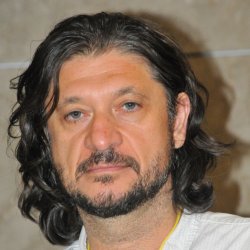
Dr. Christos Chousidis is a Senior Lecturer in Audio Electronics at the University of Surrey 's Institute of Sound Recording (IoSR) within the School of Arts and Social Sciences. His research focuses on Biomedical Acoustics and Wireless Audio Networks , with additional expertise in Machine Learning, Audio Signal Processing, and Human-Computer Interaction.
Brian McFee is an Assistant Professor of Music Technology and Data Science at New York University's Music and Performing Arts Professions school. He specializes in machine learning applications for music and multimedia data, with particular focus on structure analysis and audio processing. Director of Graduate Studies, MS Researcher at Center for Data Science Research interests: McFee pioneers methods in music information retrieval, recommender systems, and multimedia signal processing. His recent work explores event-based metrics for music structure, hierarchical embedding learning, and sound event detection technologies. Key awards: ISMIR Best oral presentation and best poster presentation awards (2014) Academic contributions: McFee has advised multiple students including Qingyang (Tom) Xi (Music Technology) and Elena Georgieva (Data Science). His research spans both theoretical developments and practical software implementations like resampy and librosa libraries.
Dr Andrew Abel is a Lecturer at the Department of Computer and Information Sciences, University of Strathclyde, specializing in Human-Centered AI technologies that enhance educational inclusion and accessibility. His work bridges artificial intelligence with multimodal signal processing to address real-world challenges in speech perception and human-computer interaction. Education : PhD in Computer Science (Speech Processing), University of Stirling (2007-2012) Research Focus : Dr Abel leads the Human-centred AI Technologies for Inclusion in Education and Society project (2023-2027), focusing on AI-driven educational accessibility. He also contributed to AV-COGHEAR (2016-2019), developing cognitively-inspired hearing aid technologies that combine audio-visual inputs for speech enhancement. Publications span affective computing, speech reconstruction, multimodal fusion, and educational technologies. Recent works include valence-arousal prediction systems, lightweight lip-to-speech models, and automated programming assessment frameworks. Awards : Strathclyde Chancellor's Fellowship Collaborations : Dr Abel collaborates across biomedical engineering and computer science domains, with emphasis on explainable AI and sustainable educational technologies aligned with UN SDG4 (Quality Education).
Sergio Canazza is an Associate Professor at the Department of Information Engineering , University of Padova, Italy. He holds key roles in academic leadership as advisory editor for the Journal of New Music Research and as founder of the Sound and Music Processing Lab . His work bridges music technology , audio restoration , and cultural heritage preservation . Degree in Electronic Engineering, University of Padova CEO, AudioInnova (University spin-off) Research Interests : Expressive information processing in music Auditory displays and cross-modal interaction Preservation of musical cultural heritage Interactive multimedia systems for education AI-driven audio restoration Digital philology for time-based media Scientific Contributions span 20+ years of European/National projects and 200+ publications. His recent work focuses on: Generative AI for IoT sound communication Standardization of audio preservation (ARP technology) Reactivation of historical computer music systems Visual anomaly detection in audio tapes Interactive environments for music education 3D reconstruction of ancient instruments Awards : StartCup Veneto 2010 (Sound and Music Lab) StartCup Veneto 2012 (TechnoTale project) Start Cup 2006 (ARCHIMEDES project) Leadership Roles : Project Manager, EU Culture Program Director, University of Padova's Multimedia Center (2013-2016) Owner of audio preservation patents
Slavko Šajić serves as an Associate Professor in the Department of Telecommunications at the Faculty of Electrical Engineering, University of Banja Luka. His academic career spans over a decade with continuous research contributions in wireless communications and signal processing. He teaches telecommunications courses at both undergraduate and graduate levels while leading research initiatives in advanced communication systems. His research interests focus on telecommunications engineering with specialization in wireless communication systems , speech recognition technologies , and secure communication protocols . Current work emphasizes practical implementations of frequency hopping spread spectrum, visible light communication, and data augmentation techniques for speech processing. His departmental role includes developing curriculum for telecommunications engineering programs. Analysis of his 15 most recent publications reveals strong trends in real-time communication systems (60% of works), signal processing innovations (35%), and security applications (25%). Notable thematic clusters include VHF synthesizer optimization (2025), audio quality assessment in visible light communication (2024), and FPGA-based synchronization for FH-SS systems (2022). His work consistently bridges theoretical algorithms with hardware implementations. Professor Šajić actively participates in research funding initiatives including the national Smart City project (2018) addressing Banja Luka's infrastructure, and the Erasmus+ project (2017-2021) focused on modernizing telecommunications engineering education. He mentors graduate students through thesis supervision and research projects within the Department of Telecommunications laboratory environment.
Dr. Ahmad Akbari Azirani is a Researcher at the Telfer School of Management (University of Ottawa) within the Knowledge Discovery and Data Mining (KDD) Lab. Prior to this, he served as an assistant and associate professor at the School of Computer Engineering, Iran University of Science and Technology (IUST) from 1996-2006, and as a visiting associate professor at the University of Waterloo in 2022. Ph.D. in Telecommunications and Signal Processing (University of Rennes I, 1995) His expertise lies at the intersection of Machine Learning , Artificial Intelligence , and Signal Processing , with a focus on Communication and Information Technologies . His recent work explores applications in network management, cybersecurity, and hybrid data processing systems. Dr. Akbari Azirani's publications include 2022: Outlier detection in high-dimensional CNNs 2022: Trust models for social IoT 2021: Density-based subspace selection
Dr. Athanasios Ap. Nikolaidis is a Professor at the International Hellenic University (IHU) . His research focuses on interdisciplinary domains within cognitive systems and digital technologies. Contact: Tel: +30-23210-49342 | Email: nikolaid@ihu.gr Office Hours (Spring 2024-2025): Tuesdays 8:30-9:00, Fridays 8:30-9:00 & 11:00-12:00, and by appointment Research Interests: He specializes in Cognitive Multimedia Systems , with technical expertise in Digital Image Processing and Digital Signal Processing .
Univ.-Prof. Dr. Christian Beecks is a full Professor at the Faculty of Mathematics and Computer Science, FernUniversity in Hagen, and heads the Intelligent Data Analysis research group at the Fraunhofer Institute for Applied Information Technology FIT. His work bridges theoretical advancements in machine learning with practical applications across industry and biomedicine. Education: PhD in Computer Science (RWTH Aachen University, 2007-2013) Diploma in Computer Science (RWTH Aachen University, 2001-2007) As a leading figure in data science, Beecks specializes in machine learning and big data analytics , focusing on scalable algorithms for complex data spaces. His research has produced over 100 peer-reviewed publications and notable contributions in time series analysis , clustering methods , and IoT data processing . Recent work explores Gaussian process modeling for anomaly detection and spatiotemporal signal analysis. His publications demonstrate expertise in automated pattern discovery and interpretable AI systems . Key themes include: clustering validation , time series representation , industrial applications , and knowledge ontologies . Technically, his team leverages Ptolemaic geometry , skyline queries , and component mining for real-world data challenges. 2021 SIAM Best Research Paper Award 2018 Warwick Workshop Best Poster Award 2015 & 2011 Best Paper Awards Through leadership roles at FernUniversity and Fraunhofer FIT, Beecks drives initiatives in competency-based education and AI workforce empowerment . His research groups develop frameworks for edge-to-cloud AI orchestration and automated model inference , with applications in manufacturing, biomedicine, and digital humanities. Current projects focus on data pooling, zero-touch orchestration, and educational AI tools like virtual tutors.
Dr. Xin Yang is an Assistant Professor in the Department of Computer Science at Middle Tennessee State University (MTSU) . With a focus on Machine Learning , Deep Learning , and Neuroimaging Data Analysis , he bridges computational methods with biomedical applications. His teaching responsibilities include CSCI-2170 Computer Science II , CSCI-3080 Discrete Structures , and CSCI-4410 Web Technologies . PhD, MTSU (2016) MS, MTSU (2014) ME, North China University of Technology (2012) BE, Qingdao University (2008) Dr. Yang’s research explores Autism Spectrum Disorder (ASD) classification using functional MRI data, image fusion techniques (visible and infrared), and imbalanced data handling . His work applies methods like Group ICA , Dictionary Learning , and Spearman’s Rank Correlation to analyze brain networks. Recent publications span 2024 to 2010 , with a focus on ASD classification , fMRI analysis , and image processing . Trends include convolutional neural networks , adversarial defense , and signal processing for biometric applications. USDA grant ($181,819, Co-PI, 2023) MT-IGO award ($10,000, PI, 2022) MTSU URECA and CBAS Scholar Week awards NSF EPSCoR and REU Site grants He mentors students in machine learning research and software development , including projects like Dijkstra’s algorithm for pathfinding and web-based calculators . His lab emphasizes hands-on AI applications and interdisciplinary collaboration in healthcare and data science.
Maria Wirzberger is an Assistant Professor at the University of Stuttgart, specializing in Teaching and Learning with Intelligent Systems (LLiS). She serves as Spokesperson of the Stuttgart Research Focus IRIS and Co-Director of the AI Software Academy, focusing on adaptive teaching systems, cognitive modeling, and human-AI interaction. Her work bridges cognitive psychology, educational technology, and human-computer interaction, with a strong emphasis on self-regulation and attention control. Research Interests: Modeling human cognition, statistical analysis of behavioral data, distraction/interruption handling in digital environments, development of AI-driven educational tools, multimodal cognitive load assessment, and trust in AI systems. Scientific Contributions: 15 recent articles explore topics like AI feedback mechanisms for focus, emotion-performance dynamics in tutoring systems, sustainable behavior cognition, and neuroergonomic approaches to workload analysis. Grants & Collaborations: Involved in projects like the AI Software Academy and interdisciplinary studies on sustainability personas and cognitive pathways. Labs & Teams: Affiliated with the Stuttgart Research Focus IRIS and University of Stuttgart's LLiS department.
Prof. Dr. Wolfgang Funk is a full-time Professor in the Business Information Systems program at the Faculty of Business, Baden-Württemberg Cooperative State University Villingen-Schwenningen. With a doctorate in Computer Science from Technische Universität Darmstadt and extensive experience in applied research, he specializes in software engineering, digital watermarking, and biometric recognition systems. PhD in Engineering from TU Darmstadt (2008) Diploma in Physics from University of Würzburg (1994) His research focuses on: Digital watermarking techniques for multimedia data Biometric system security and liveness detection Software engineering for business applications Image compression algorithms in recognition systems Publications demonstrate expertise in: 3D CAD model watermarking Multimedia security frameworks MPEG-4 compression impacts Biometric anti-spoofing methods Scientific achievements include: Joseph von Fraunhofer Prize (1998) Three granted European patents in digital watermarking and biometric systems
Professor Jialie Shen is a leading academic in computer vision and machine learning at City St George's, University of London . With a PhD from UNSW Sydney (2006) , he transitioned from a Reader at Queen's University Belfast (2018–2022) to his current role as a full Professor since 2022. His research spans artificial intelligence , focusing on computer vision , deep learning , and data science , with over 100 publications in top journals like IEEE Transactions on Multimedia , Pattern Recognition , and ACM TOMM . Education: PhD in Computer Science, UNSW Sydney, 2006 Research Focus: Computer Vision Deep Learning Data Science Machine Learning Scientific Awards: Lee Foundation Fellowship for Research Excellence Singapore Microsoft Mobile Plus Cloud Computing Theme Research Program Award Best Reviewer Awards (IP&M 2019, ACM Multimedia 2020) Test of Time Reviewer Award (IP&M 2022) Associate Editor with Honourable Mention (Pattern Recognition 2023/24) Editorial Roles: Associate Editor, IEEE Transactions on Big Data (2025–present) Associate Editor, IEEE Transactions on Circuits and Systems for Video Technology (2022–present) Editorial Board Member, ACM TOMM and others Publications: 15 most recent articles (2025–2021) across biomedical engineering , AI , and graph representation learning
Lakshmi Babu Saheer is a Senior Lecturer at the Faculty of Science and Engineering, Anglia Ruskin University , specializing in Computing and Information Science . She leads the Computing, Informatics and Applications Research Group. Research Focus : Applications of AI in Climate Change, NetZero, Healthcare, Air Quality, IoT, and NLP Leadership : Director of research group, course leader for MSc AI programs Funding : Multiple EU grants including FP7, Hasler Innovation (150,000 CHF), ARU-QR funds Research Expertise spans: Climate Change Mitigation using AI Healthcare Innovations with IoT integration Computer Vision for environmental monitoring Speech & Audio Processing in affective computing Sustainable Food Supply Chains Deep Learning for public health compliance detection Scientific Recognition : Google Anita Borg Award recipient Hasler Innovation start-up funding VC-PhD funding at ARU Best Student Paper Award nomination Academic Contributions include: Supervision of 5 active PhD students and 1 completed PhD Editorial role at MDPI Sustainability Journal Reviewer for NIHR, IEEE, and Eurasip Teaching leadership in AI, Data Science, and Machine Learning
Alessandro Ortis is a Fixed-term Assistant Professor (RTDb) in Computer Vision at the Department of Mathematics and Computer Science, University of Catania . He teaches Programmazione 2 (Computer Science BD) and Statistical Laboratory (Data Science MD). As director of the IPLAB Biometric Research Group (BioRG) , he leads work in Computer Vision , Deepfake Detection , and Biometric Security with applications in Forensic Analysis and Medical Imaging . He is an IEEE Senior Member and active participant in international scientific events as organizer and reviewer. Education: PhD in Mathematics and Computer Science (2019, University of Catania; Imperial College London collaboration), MSc in Computer Science (summa cum laude, 2015) His research focuses on adversarially robust models , multimodal analysis , and physiological signal processing . Current projects include SIAM (Multimodal AI) and SAFE-IA (AI Reliability & Robustness). He has authored/co-authored over 20 journal papers and 40 conference proceedings, including a Best Poster Award at IMPROVE 2021. Key Research Areas: Computer Vision Biometric Security Adversarial Machine Learning Medical Imaging Analysis Forensic Vision He holds editorial/reviewer roles at IEEE Access , Journal of Imaging , and Springer LNCS . The BioRG team under his leadership explores explainable AI , edge computing frameworks , and privacy-preserving learning for biometric applications.
Douglas E. Geers is a Professor at the Conservatory of Music within Brooklyn College, part of the City University of New York (CUNY) . He serves as Director of the Center for Computer Music and the MFA program in Sonic Arts , while also contributing to the Graduate Center's Music faculty. B.A. in English and Music, Xavier University (1990) M.Mus. in Composition, University of Cincinnati College-Conservatory of Music (1994) D.M.A. in Music Composition, Columbia University (2002) Geers' research spans electroacoustic composition , interactive performance systems , music technology , and sound art . His work integrates multimedia collaborations , live digital signal processing , and laptop orchestra innovations . Notable projects include the Spark Festival of Electronic Music and Arts , which he founded during his tenure at the University of Minnesota. 2015-16 Tow Professorship 2009 Bush Foundation Fellowship Finalist 2008 Argossy Commission Award 2007 McKnight Composer Fellowship Jerome Foundation Composers Commissioning Project Prizes (2007, 2001) His 15 most cited works cover interactive computer music , electroacoustic composition , and technology-enhanced performance practices . Key themes include sound spatialization , algorithmic music generation , and cross-disciplinary collaborations with visual artists and technologists.