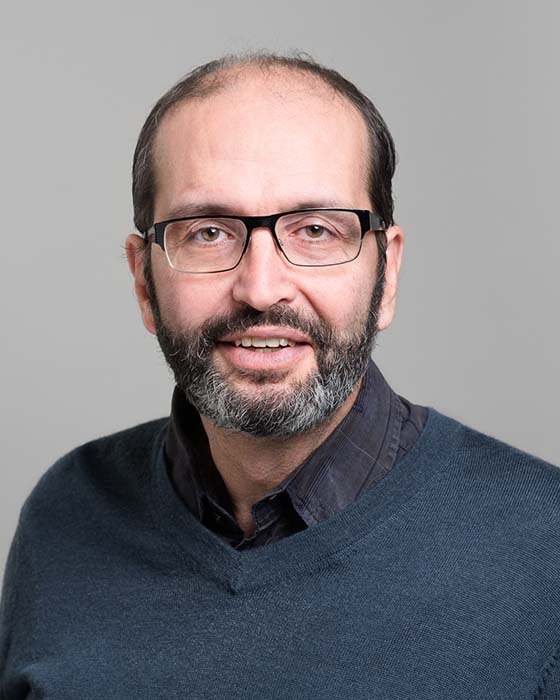
Eugenia-Ana CAPOTA is a Teaching Assistant at the Department of Computer and Information Technology, Politehnica University of Timișoara. Her research focuses on cyber-physical systems, real-time distributed systems, and mixed-criticality scheduling. Research Fields: Cyber-Physical Systems, Distributed/Multiprocessor Systems, Embedded Systems, Real-Time Systems, Signal Processing and Multimedia Interests: Real-Time Task Scheduling; Schedulability Analysis of Mixed-Criticality Systems Contact: Office in rooms B513, B417; phone: (0256 40) 3271
Edward Alexandru Todirica is an Associate Professor at the Department of Applied Mathematics and Computer Science, Technical University of Denmark. His research focuses on multimedia applications, embedded systems, and software engineering, with a particular emphasis on distributed multimedia and real-time systems. He has contributed to the development of virtual seminar room technologies and educational curriculum design for IT programs. His work spans digital signal processing, internet of multimedia things, and system components. Key collaborations include industry partners like Siemens and Danfoss. Publications highlight trends in educational innovation, multimedia systems, and real-time software engineering. No scientific awards are explicitly mentioned in the available data.
Chao Yin is a researcher at Shanghai University , Department of Computer Engineering and Science. His work spans multiple domains including Machine Learning, Cloud Computing, Fault Diagnosis, and Supply Chain Optimization. Key research areas: Machine Learning , Cloud Computing , Quantum Computing , Supply Chain Systems , Network Security Scientific Contributions (2024-2025): Developed heterogeneous graph neural networks for automotive supply chain analysis Created MSDF-VAE cloud-edge fault diagnosis framework using transfer learning Proposed quantum metrology methods with Heisenberg-limited precision Designed LARP pseudonym protocol for V2X communication Optimized fog computing resource scheduling with hybrid metaheuristics Prior Work (2012-2023): Contributed to fluid animation feature preservation from single images Developed label distribution learning for facial age estimation Designed erasure coding storage systems for big data Created multi-agent manufacturing networks in cloud environments
Pina Marziliano is the Executive Director of the Centre for Biomedical Imaging (CIBM) at École Polytechnique Fédérale de Lausanne (EPFL), a leading interdisciplinary research center involving five major institutions: HUG, UNIGE, EPFL, UNIL, and CHUV. She is affiliated with the School of Engineering and the Department of Electrical Engineering at EPFL, where she holds the academic rank of Associate Professor. Her leadership roles include Director and Deputy within the CIBM-GE and CIBM-AIT units under the VPA-AVP-CP structure at EPFL. Bachelor of Science in Applied Mathematics, Université de Montréal (1991–1994) Master of Science in Computer Science and Operations Research, Université de Montréal (1994–1996) Doctoral School in Communications Systems, EPFL (1996–1997) PhD in Communications Systems, EPFL (1997–2001) Her research focuses on biomedical signal and image processing , with deep expertise in digital signal processing , finite rate of innovation , and medical imaging . She has pioneered perceptual quality metrics for multimedia and developed advanced signal reconstruction techniques. Her work bridges engineering with clinical applications, particularly in ophthalmology and radiology. The available article highlights her foundational work in sampling non-bandlimited signals, a breakthrough in signal processing theory. This research has broad implications in communications, imaging, and data acquisition, influencing both academic and industrial developments, including technology transfer to Qualcomm Inc. IEEE Signal Processing Society 2006 Best Paper Award 2009 Honourable Mention Women in Engineering Affinity Group of the Year Award (IEEE WIE Committee, USA) Pina Marziliano has supervised graduate students, including Amrish Nair, CEO of BIORITHM. She has secured significant research funding, including a US$200K grant from Qualcomm and over SGD$3M in joint medical research funding. She has served as Associate Editor for IEEE journals and as a leader in IEEE Singapore’s Women in Engineering group. Her leadership extended to organizing the 9th International Conference on Sampling Theory and Applications at NTU in 2011. She co-founded two companies: PABensen , a design firm integrating art, science, and technology, and BIORITHM , a biotech spin-off developing the fetal heart monitoring device FEMOM. Her role at CIBM leverages a unique ecosystem of clinicians, academics, and state-of-the-art technology to advance biomedical imaging globally.
Dimitrios Hatzinakos is a tenured Professor in the Department of Electrical and Computer Engineering at the University of Toronto . He has held significant roles, including Chair of the Communications Group (1999–2004) and the Bell Canada Chair in Multimedia (2004–2014). He co-founded and has served as Director of the Identity, Privacy and Security Institute (IPSI) since 2009. Diploma, Electrical Engineering, University of Thessaloniki (1983) MASc, Electrical Engineering, University of Ottawa (1986) Ph.D., Electrical Engineering, Northeastern University (1990) His research spans Multimedia Signal Processing , Multimedia Security , Multimedia Communications , and Biometric Systems . Recent work includes biometric authentication using Transient Evoked Otoacoustic Emissions ("Earprint"), contributing to Cyber Security and Information Forensics . Selected publications include "Earprint: Transient Evoked Otoacoustic Emission for Biometrics" (2015), which was featured in the Science of Security Index of Significant Research in Cyber Security. His work intersects signal processing , multimedia security , and biometric systems . Fellow of the IEEE (2016) Fellow of the Engineering Institute of Canada (2012) University of Toronto Inventor of the Year Award (2012) World’s Top 2% Scientists, Stanford University (2020) Best Paper Awards at ICASSP (2012), Cyberworlds (2020), and WUN CogCom (2014) He leads the IPSI Institute at the University of Toronto, focusing on identity, privacy, and security research. His career includes collaborations with institutions like Fudan University , where he held an Honorary Professorship (2002–2005).
Xue Yang is a Professor in the Department of Computer Science and Engineering at Shanghai Jiao Tong University's School of Electronic Information and Electrical Engineering. With an extensive publication record spanning from 2023 to 2026, Dr. Yang has established herself as a prominent researcher in multiple interdisciplinary fields at the intersection of computer science and practical applications. Dr. Yang's research interests span a wide spectrum of cutting-edge computational fields including Artificial Intelligence , Machine Learning , Quantum Computing , Image Processing , and Healthcare Applications of AI . Her work demonstrates a remarkable ability to bridge theoretical computer science with practical applications across diverse domains such as biomedical informatics, oceanography, and e-commerce. The interdisciplinary nature of her research is evident in publications that combine computer vision with medical applications, quantum computing with image processing, and machine learning with environmental monitoring. An analysis of Dr. Yang's recent publications reveals a strong focus on developing novel algorithms and computational frameworks that address complex real-world problems. Her work shows particular strength in generative models , feature learning architectures , and data-driven optimization approaches. The consistent publication output across multiple high-impact venues demonstrates sustained research productivity and influence in her fields of expertise. Exponential stability analysis for nonlinear systems Advanced machine learning architectures for biomedical applications Quantum-classical hybrid computing models Blockchain applications for network security Computer vision techniques for specialized imaging scenarios
Dr. Mohammad Awrangjeb is a Senior Lecturer at the School of Information and Communication Technology , Griffith University, with over 15 years of experience in academia and research. He holds a PhD from Monash University (2008) and has held academic positions at Federation University Australia (2014-15), Monash University (2012-13), and the University of Melbourne (2008-12). Education: PhD in Computer Science, Monash University (2008) MSc in Computer Science, National University of Singapore (2004) BSc (Engineering) in Computer Science, Bangladesh University of Engineering and Technology (2001) His research focuses on remote sensing data processing , including automated 3D city modeling, power line corridor monitoring, solar potential estimation on buildings, forest biomass estimation, hyperspectral image processing, multimedia security, EEG signal processing, and medical image analysis. He has co-authored over 80 publications and secured $435,000 in research funding, including an Australian Research Council (ARC) Discovery Early Career Researcher Award (DECRA, 2012-15) and grants from CRCSI and Griffith University. His work has been applied in environmental monitoring, energy planning, and infrastructure safety. Scientific Awards: Discovery Early Career Researcher Award (DECRA Fellow) (2012-2015) The Len Curtis Award (2017) Dean’s Highly Commended Certificate, Griffith Sciences (2020, 2019) He actively supervises PhD students in areas like hyperspectral imaging , forest biomass estimation , intrusion detection , and medical image segmentation . He serves on editorial boards and committees, including IEEE and the Remote Sensing and Photogrammetry Society, and has contributed to software development at CRCSI.
Yan Yan is an Associate Professor at the University of Illinois at Chicago , affiliated with the Department of Computer Science. Her research spans Computer Vision , Machine Learning , and Multimedia with a focus on model optimization, interpretability, and diffusion-based techniques.
Dr. C.-C. (Jay) Kuo is a Dean’s Professor in Electrical Engineering at the University of Southern California (USC) Viterbi School of Engineering, where he has been affiliated since 1989. He serves as Director of the Multimedia Communication Lab and has held editorial leadership roles, including Editor-in-Chief of the IEEE Transactions on Information Forensics and Security (2012–2014) and the Journal of Visual Communication and Image Representation (1997–2011). National Taiwan University (BS, 1980) Massachusetts Institute of Technology (MS, 1985; PhD, 1987) His research focuses on multimedia compression and communication , multimedia content analysis , and computer vision , with a career spanning over 30 years in academia. His work bridges theoretical advancements with practical applications in multimedia technologies. Dr. Kuo has received numerous accolades, including the Edward J. McCluskey Technical Achievement Award (2019) and the Taylor L. Booth Award (2016). He is recognized for excellence in teaching and research, with additional awards such as the Northrop Grumman Excellence in Teaching Award (2014) and the Okawa Foundation Research Award (2007). Edward J. McCluskey Technical Achievement Award (2019) Taylor L. Booth Award (2016) Northrop Junior Faculty Research Award (1994) Okawa Foundation Research Award (2007) Electronic Imaging Scientist of the Year Award (2010) As an educator, Dr. Kuo has guided 134 PhD students and supervised 25 postdoctoral research fellows. His contributions extend to professional communities, including serving as President of the Asia-Pacific Signal and Information Processing Association (APSIPA) in 2013–2014.
Dr. Marcin Ziembicki serves as an Assistant Professor at the Institute of Radioelectronics and Multimedia Technology within the Faculty of Electronics and Information Technology at Warsaw University of Technology. His research integrates experimental particle physics with advanced detector development, focusing on neutrino interactions and nuclear phenomena through major international collaborations. His primary research interests include: Neutrino oscillation physics and cross-section measurements Development of photomultiplier-based detection systems for water Cherenkov experiments Analysis of hadronic final states in deep-inelastic scattering Spin-dependent asymmetries in polarized targets Real-time FPGA-based data acquisition systems Recent publications demonstrate concentrated activity in T2K and Hyper-Kamiokande neutrino experiments, with significant contributions to oscillation parameter measurements, neutron capture studies in oxygen targets, and detector calibration techniques. His work spans theoretical modeling and hands-on hardware implementation, particularly in FPGA-based readout systems for particle detectors. With 168 publications and an h-index of 49 (Scopus), his experimental work has advanced precision measurements in neutrino physics. He has supervised 7 promoted theses and participated in 14 research projects, including the T2K Near Detector upgrade and Hyper-Kamiokande photosensor development. Dr. Ziembicki maintains active roles in the COMPASS spin physics collaboration and the AMBER experiment, where he develops specialized electronics for hadron spectroscopy. His technical expertise bridges particle physics with electrical engineering, particularly in signal processing and detector electronics design for high-radiation environments.
Jordi Mongay Batalla serves as Associate Professor in the Department of Computer Network and Services at Warsaw University of Technology's Faculty of Electronics and Information Technology, while concurrently holding the position of Deputy Director of Research at Poland's National Institute of Telecommunications. His professional influence extends to critical national and international advisory roles including technical membership in the European Blockchain Services Infrastructure, Polish Government adviser for 5G cybersecurity legislation, and technical adviser to the Ministry of Infrastructure for autonomous automotive systems. M.Sc. in Telecommunications Engineering (2000, Universitat Politecnica de Valencia) Ph.D. in Telecommunications (2009, Warsaw University of Technology) Habilitation in Telecommunications (2017, Warsaw University of Technology) His research program centers on next-generation network technologies with dual focus on infrastructure (5G/6G radio systems, O-RAN architectures, SDN/NFV) and applications (IoT ecosystems, Smart Cities, multimedia services). Recent work demonstrates expanding interdisciplinary reach into human-centric domains including metaverse applications for elderly populations and psychological aspects of technology adoption, reflecting his completion of postgraduate studies in psychology and social sciences. Methodologically, he integrates artificial intelligence techniques across wireless networking domains with particular emphasis on security and reliability. Analysis of recent publications (2023-2025) reveals three dominant research trajectories: (1) O-RAN optimization through machine learning-enhanced beamforming and security validation, (2) resilient UAV network architectures for disaster scenarios featuring novel clustering algorithms, and (3) IoT-cloud integration for healthcare and smart city applications. His work consistently addresses practical implementation challenges while maintaining strong connections to standardization efforts through ITU-T SG-12 and European regulatory frameworks. Dr. Mongay Batalla leads the Next Generation Mobile Networks Team at Warsaw University of Technology and has coordinated over 30 national/international research projects including four EU ICT Programme initiatives. His technology transfer activities span two patents (Polish and European) and active participation in the vINCI platform for clinically-validated assisted living solutions. As an IEEE Member since 2010, he maintains strong industry connections through roles in Polish normalization committees and international technical groups.
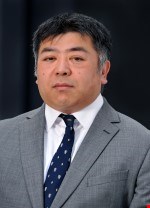
Dr. Takebumi Itagaki serves as a Senior Lecturer in Communications and Computer Technologies within the Electronic and Electrical Engineering Department at Brunel University London's College of Engineering, Design and Physical Sciences. He holds the position of Programme Manager for the Brunel-CQUPT Transnational Education program and serves as TNE-CQUPT Manager. His international research leadership is exemplified by his role as coordinator of the ITU-T Focus Group on Audio Visual Accessibility – Working Group D. Dr. Itagaki earned his academic credentials through a BEng from Waseda University (Japan), a Postgraduate Diploma from City University London, and a PhD in Engineering/Music from Durham University (UK) in 1998. His professional affiliations include membership in IEEE, IET, and the Audio Engineering Society. His research program spans digital television systems (DVB, ISDB), digital signal processing, parallel processing architectures, computer music, and computer architecture. Recent work demonstrates significant expansion into IoT applications for disaster management and healthcare analytics. His research methodology consistently bridges theoretical signal processing with practical implementation in broadcast and communication systems. Analysis of his publication record reveals an evolution from foundational work on transputer networks and granular synthesis in the 1990s to contemporary applications in digital television accessibility, mobile broadcast technologies, and IoT systems. His work maintains consistent focus on multimedia systems while adapting to emerging technological landscapes and societal needs. Dr. Itagaki has secured significant research funding through multiple EU projects including SAVANT (as prime contractor and administrative coordinator), INSTINCT (as project manager), and DTV4All (as coordinator). His current research portfolio includes ICT collaboration between China and Europe, with particular emphasis on IoT techniques for disaster prediction and climate change mitigation. His research group IEHS (Integrated Electronic Health Systems) works at the intersection of communication technologies and healthcare applications, developing systems for emergency response and medical diagnostics. The group's work on the Emergency TeleOrthoPaedics m-health system demonstrates practical implementation of wireless communication links for specialized medical care.
Bécsi Tamás is an Associate Professor at the Department of Control for Transportation and Vehicle Systems, Faculty of Transportation Engineering, Budapest University of Technology and Economics. His academic career spans from PhD student (2002-2005) to Professor's Assistant (2005-2009), Senior Lecturer (2009-2014), and finally Associate Professor (2014-present). His research primarily focuses on autonomous vehicle control systems, reinforcement learning applications, and transportation automation across road, rail, and air domains. His research interests center on Autonomous Vehicle Control and Reinforcement Learning methodologies for transportation systems. Key areas include sensor fusion for automotive perception, motion planning algorithms, particle filtering techniques, and multi-agent traffic control systems. His work bridges theoretical control theory with practical implementations in vehicle mechatronics and transportation infrastructure. Analysis of his 15 most recent publications reveals a dominant focus on reinforcement learning applications (80% of works), particularly in autonomous driving (path planning, lane keeping) and traffic management (signal control, highway platooning). Recent trends show increasing integration of Rapidly-exploring Random Trees (RRT) with RL, particle filtering innovations for localization, and multi-object tracking advancements for automotive perception systems. His research maintains strong connections to real-world validation through field tests and industrial collaborations. His academic journey includes an MSc in Transportation Engineering (2002) and PhD (2008) from BUTE. Teaching responsibilities cover Computing Science I-II and Control Theory I-II courses, alongside specialized Erasmus programs in Intelligent Solutions in Transportation and Transportation Automation Research Techniques.
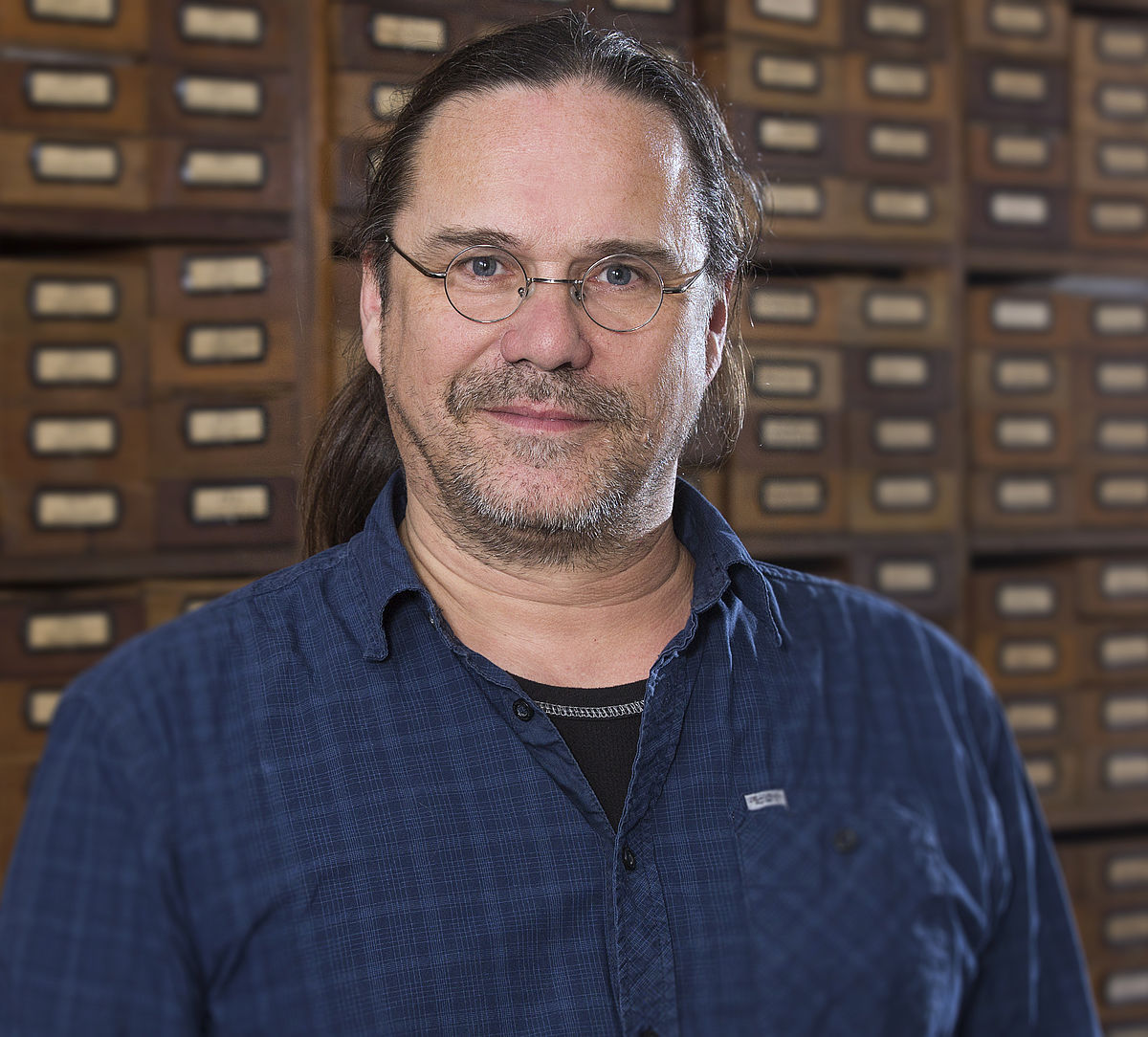
Dr. Holger Meyer is a faculty member at the University of Rostock's Faculty of Computer Science and Electrical Engineering, specifically in the Institute of Computer Science. He is based at the Konrad Zuse House on Albert-Einstein-Straße 22, Room 332, and can be reached at phone number 0381-498 7597 or via email at hme@informatik.uni-rostock.de. Dr. Meyer teaches a variety of database-related courses including Database Application Programming (Bachelor), Databases for Users (Bachelor), Databases III (Master), and Digital Libraries and Multimedia Information Retrieval (Master). He also supervises projects under KSWS/Project/NEidI. His research focuses on database systems, digital libraries, information retrieval, data science, and XML database technologies. Dr. Meyer has made significant contributions to the development of digital archive systems, particularly through the Hydra.PowerGraph System, which enables building digital archives with directed and typed hypergraphs. His work also extends to applying crowdsourcing techniques in cultural heritage projects like the Mecklenburg Field Name Archive and developing SQL-based approaches for machine learning and signal processing tasks. Dr. Meyer's recent publications (2017-2019) demonstrate a strong emphasis on practical applications of database technologies across diverse domains including environmental monitoring (particulate matter analysis), automotive engineering, digital humanities, and historical geography. His work bridges theoretical database concepts with real-world applications, particularly through SQL-based implementations of machine learning operations and signal processing techniques. Throughout his career, Dr. Meyer has collaborated extensively with colleagues at the University of Rostock, particularly with Professor Andreas Heuer, Meike Klettke, and other researchers in the database and information systems group. These collaborations have resulted in numerous publications in prestigious venues including Datenbank-Spektrum, LNI proceedings, and international conferences.
Andrea Randazzo is a Full Professor in the Department of Naval, Electrical, Electronic and Telecommunications Engineering (DITEN) at the University of Genoa, Italy. Specializing in Electromagnetic Fields (IINF-02/A), he teaches multiple courses including Antennas, Electromagnetic Fields, and Electromagnetic Monitoring Techniques across various engineering programs such as Internet and Multimedia Engineering, Electronic Engineering, and Engineering for Natural Risk Management. Professor Randazzo's research spans several interconnected domains within electromagnetic theory and applications: Antenna Systems : Specializing in antenna array diagnosis, fault detection, and advanced antenna engineering Medical Applications : Developing microwave-based techniques for stroke detection and monitoring, particularly for pediatric patients Remote Sensing : Applying FMCW radar technology for sea wave dynamics, coastal monitoring, and hydrological sensing Nondestructive Testing : Creating microwave imaging methods for plant diagnostics and structural monitoring Mathematical Methods : Innovating in inverse scattering problems using Lebesgue-space approaches and data-driven inversion techniques His publication record demonstrates a clear trajectory toward increasingly sophisticated data-driven approaches to electromagnetic imaging, with recent work emphasizing machine learning integration, particularly CNNs for antenna array diagnosis. A significant portion of his research focuses on medical applications, especially stroke detection using microwave technologies, showing consistent development from theoretical approaches to practical implementations and numerical assessments. His work bridges theoretical electromagnetic theory with practical applications across healthcare, environmental monitoring, and industrial processes. Professor Randazzo has supervised numerous academic projects reflected in his extensive teaching portfolio across multiple engineering programs. His research likely involves collaboration with medical institutions given the healthcare-focused applications of his work, though specific grant information is not provided in the available materials. His laboratory work appears to focus on electromagnetic sensing and imaging systems, with particular emphasis on developing practical implementations of theoretical approaches, as evidenced by projects involving low-cost FMCW radar sensors and microwave moisture content sensors for food industry applications.