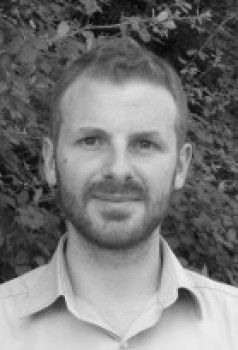
Simon S.Y. Shim is a Professor in the Computer Engineering Department at San Jose State University (SJSU). He holds a PhD in Computer Science from the University of Minnesota (1997). His research focuses on Internet Computing, Database Management, Machine Learning, and Information Retrieval. He has extensive industry experience as a Director at SAP Labs, working on in-memory database systems. Shim has served on the editorial board of IEEE Computer, including a 5-year tenure as Area Editor for Internet Computing. He has guest-edited special issues on High-Speed Security (2004), CAP Theorem (2012), and Next-Gen Memory (2013). He co-authored one technical book and holds multiple patents. His professional contributions include organizing IEEE Data Engineering workshops, IEEE Mobile Commerce, and IEEE Electronic Commerce events. Shim has published over 50 peer-reviewed articles and actively participates in academic service roles. His work emphasizes interdisciplinary applications of computer science in e-commerce, distributed systems, and multimedia technologies.
Dr. Maarouf Saad is a Lecturer in the Department of Electrical Engineering at École de Technologie Supérieure (ÉTS), Université du Québec. He holds a B.Sc.A. and M.Sc.A. from Polytechnique Montréal and a Ph.D. from McGill University. His research spans robotics, control systems, and sustainable energy applications, with a focus on nonlinear control, UAVs, exoskeleton rehabilitation systems, and smart grid technologies. Education: B.Sc.A., M.Sc.A. (Polytechnique Montréal), Ph.D. (McGill) Research Units: GREPCI (Power Electronics), SYNCHROMEDIA (Telepresence), INIT Robots (Haptic Interfaces) His work integrates adaptive control algorithms with artificial intelligence in robotics, particularly for rehabilitation and aerospace systems. He has pioneered fixed-time sliding mode controllers for quadrotors and developed impedance-based methods for distribution system monitoring. In smart grids, he focuses on voltage stability analysis and distributed generation optimization. Key research trends include nonlinear control of electrohydraulic systems, modeling of flexible manipulators, and cooperative control strategies for multi-agent systems. His publications emphasize practical implementations in real-world scenarios, from autonomous airships to exoskeletons for upper-limb rehabilitation. Dr. Saad supervises numerous graduate students across diverse projects, including UAV control, cable robot rehabilitation systems, and energy management in hybrid microgrids. His collaborations extend to institutions like CAE Inc. and laboratories in telepresence and robotics.
Dr. Lorenzo Ferrarini is a Lecturer in Visual Anthropology at the University of Manchester, affiliated with the Granada Centre for Visual Anthropology. He holds a PhD in Social Anthropology (2014) and a postgraduate degree from the University of Milan-Bicocca (2008). His research focuses on Mande Africa, particularly Burkina Faso, exploring themes like hunting, ecological perception, sound, and embodiment. He is renowned for his work in documentary film, photography, and sound recording, with notable projects including Kalanda: The Knowledge of the Bush (2015) and Living the Weather (2016). Education: PhD in Social Anthropology with Visual Media, University of Manchester, 2014 Postgraduate Degree, University of Milan-Bicocca, 2008 Research Interests: West African hunter-gatherer knowledge systems Sensory ethnography and sound studies Collaborative filmmaking methodologies Cultural heritage in Southern Italy Awards: ICTM Book Prize (2021) for Sonic Ethnography John Collier Jr. Award for Still Photography (2021) Best Ethnographic Film (2015) Teaching: Modules on Mande Africa and visual anthropology MA course Beyond Observational Cinema Ethnographic documentary short course Labs/Teams: LEAV - Ethnomusicology and Visual Anthropology Lab (University of Milan) Granada Centre for Visual Anthropology Leverhulme Trust project on weather experiences
Kyle Steinfeld is an Associate Professor of Architecture and Director of the Master of Design program at the University of California, Berkeley, College of Environmental Design. His work bridges computational design methods and architectural practice, emphasizing critical engagement with software and data. He teaches design studios, visualization courses, and seminars in digital design theories. Master of Architecture, MIT (2004) Bachelor of Design in Architecture, University of Florida (1999) Steinfeld's research explores the intersection of architecture and computational design, focusing on bioclimatic information design, software development, and the social implications of digital tools. His creative work has been exhibited at NeurIPS workshops and published in Towards Data Science . He has received notable awards including the IDEA Studio Fellowship (2013), Hellman Fellowship (2012), and multiple research grants like the Faculty Research Grant for "Decod.es" (2013) and the Research Enabling Grant for "Dhour" (2011). Steinfeld has taught core architectural design courses and contributed to software development for design computation.
Katerina Perdikaki is an Associate Teaching Fellow at the University of Surrey's Centre for Translation Studies, part of the School of English and Languages within the Faculty of Arts, Business and Social Sciences. She holds a PhD in Translation Studies (2016), an MA in Audiovisual Translation (2013), and a BA in English Language and Literature (2012). Her research focuses on audiovisual translation, semiotics, film adaptation, and the interplay between cultural transformation and creative translation. Notable works include studies on subtitling sensitive content, the emotional impact on subtitlers, and case analyses of film adaptations like Baz Luhrmann’s The Great Gatsby and Silver Linings Playbook . She teaches advanced modules in audiovisual translation and professional translation practice. Her empirical research bridges theoretical frameworks with practical challenges in translation, emphasizing interdisciplinary methodologies. Education: PhD: 'Adaptation as Translation: Examining Film Adaptation as a Recontextualised Act of Communication' (University of Surrey, 2016) MA: Audiovisual Translation (University of Surrey, 2013) BA: English Language and Literature (National and Kapodistrian University of Athens, 2012) Research Interests: Audiovisual translation, intersemiotic translation models, film adaptation as cultural transformation, translation of humor, and the emotional dimensions of translation work. Future research includes exploring subtitlers’ psychological experiences with sensitive material. Teaching: Leads MA modules on Audiovisual Translation and Professional Translation Practice (Greek), and has taught undergraduate courses on translation and interpreting skills. Awards & Grants: None explicitly listed, but her extensive publication record reflects sustained academic engagement. Labs/Teams: Active in the Centre for Translation Studies, contributing to interdisciplinary research on translation in the creative industries.
Konstantinos Zachariadis is a Professor of Financial Economics at Queen Mary University of London's School of Economics and Finance (SEF). He is also a Research Associate at the Financial Markets Group and Systemic Risk Centre at the London School of Economics (LSE). Previously, he held roles as an Associate Professor (UK Reader) and Assistant Professor (UK Lecturer) at LSE's Department of Finance, affiliated with the Paul Woolley Centre. His research focuses on Market Design, Corporate Governance, and Institutional Investors, with publications in top journals like the Journal of Finance and Journal of Financial Economics . He holds a PhD in Managerial Economics and Strategy from Northwestern University's Kellogg School of Management, an MSc from Northwestern, and a Diplome in Electrical and Computer Engineering from Aristotle University of Thessaloniki. Notable awards include the Fulbright Scholarship and RSA Fellowship. Zachariadis teaches extensively in Investments, Corporate Finance, and Hedge Funds across academic and executive programs. His research explores strategic interactions in financial markets, including mechanisms for corporate governance, institutional investor behavior, and market microstructure. Recent work examines exit strategies of blockholders and persuasion dynamics among large investors. His engineering background informs interdisciplinary studies on signal processing and network optimization, though current focus remains on financial economics. Zachariadis collaborates with institutions like the Systemic Risk Centre and contributes to policy discussions through Queen Mary Policy Briefs. His academic leadership includes directing research at SEF and advising on corporate governance frameworks. Ongoing projects involve AI agents in market games and knowledge market design.
Prof. Dr. Renato Pajarola is the Head of the Visualization and MultiMedia Lab at the Department of Informatics, University of Zurich. His research focuses on computer graphics, scientific visualization, and geometric processing, with applications in 3D scanning, point cloud analysis, and real-time rendering. He leads a team developing advanced visualization techniques for high-dimensional data, parallel rendering frameworks, and interactive systems for complex datasets. Key research areas include: 3D reconstruction of indoor environments Tensor approximation for volume visualization Interactive ray tracing and point cloud processing Parallel rendering frameworks (e.g., Equalizer) Scientific computing and sensitivity analysis His recent publications emphasize: High-dimensional data exploration using tensor methods Efficient rendering techniques for large-scale point clouds Integration of citizen-reported weather data for environmental analysis Prof. Pajarola’s lab collaborates on projects like VIAN (visual annotation tool for film analysis) and Terrender (web-based terrain visualization). His Erdős number is 3, reflecting interdisciplinary research connections in mathematics and computer science.
Dr. Ignacio De Castro Arribas is a Lecturer in Data Analytics at the School of Electronic Engineering and Computer Science, Queen Mary University of London. His research focuses on social computing, internet economics, internet measurements, and web systems. He chairs the Research and Analysis of Standardisation Processes (RASP) Research Group at the IRTF. Teaching responsibilities include the postgraduate Cloud Computing module, covering virtualization technologies, service paradigms, and ethical/security considerations. He is affiliated with the Centre for Networks, Communications and Systems, contributing to interdisciplinary research on decentralized systems and online moderation. Research highlights include studies on Fediverse migrations, Mastodon social network dynamics, and content moderation in decentralized platforms. He has received grants from EPSRC for projects like 'Understanding Transitions when Tackling Online Harms' and 'Fediverse Observatory.' Grants: £339k EPSRC grant (2022–2025), £15k Fediverse Observatory grant (2024) Key Projects: Analysis of IPFS storage optimization, toxicity detection in decentralized web platforms, and editor curation in news ecosystems Affiliations: Centre for Networks, Communications and Systems
Dr. Miles Hansard is a Senior Lecturer at Queen Mary University of London's School of Electronic Engineering and Computer Science. His research focuses on 3D scene reconstruction, multi-view imaging, depth cameras, radar localization, and human vision. He specializes in geometric aspects of vision, image processing, and robotics applications. His teaching includes modules on Computer Graphics (for both postgraduate and undergraduate students) and Introduction to Multimedia Systems. These courses cover topics like 3D graphics algorithms, human perception of color, and multimedia system fundamentals. Dr. Hansard's work integrates sensor technologies such as time-of-flight cameras and millimeter-wave radar to improve 3D reconstruction and robotic systems. He contributes to projects like the GRIP software framework for robotic grasping and has published extensively in journals like IEEE Transactions on Image Processing and the International Journal of Neural Systems. He is affiliated with the Centre for Multimodal AI, where he collaborates on research involving sensor fusion, autonomous systems, and visual perception. His expertise bridges computer vision, robotics, and multimedia engineering.
Associate Professor Wong Kok Sheik is the Deputy Head (Research) at the School of Information Technology, Monash University Malaysia. He holds a Doctor of Engineering from Shinshu University (Japan) and advanced degrees in Computer Science and Mathematics from Utah State University (USA). His research focuses on multimedia signal processing, cybersecurity, and digital health, with contributions to data hiding, encryption, and smart grid security. He leads a EU-funded WAge project on post-pandemic workplace health interventions. Education: PhD in Engineering, Shinshu University, Japan (2009) Masters in Computer Science & Mathematics, Utah State University, USA (2005-2004) Bachelor of Science, Utah State University, USA (2002) Professional Roles: Associate Editor, IEEE Signal Processing Letters Member, IEEE Signal Processing Society’s IFS Technical Committee Board Member, APSIPA Multimedia Security and Forensics (MSF) Committee His research interests span multimedia forensics, encrypted domain processing, and cybersecurity frameworks. Notable projects include recovery of missing coefficients in compression standards and HDR imaging enhancement. Recent work integrates digital health, addressing workplace mental/physical health in post-pandemic environments. Publications reflect expertise in watermarking, encryption, and biometric security. Key contributions include encryption-resistant data embedding and secure smart grid analytics. Awards include IEEE CES Service Awards (2015, 2016) and Best Paper recognitions. He supervises over 20 PhD/MSc students, focusing on topics like biometric recognition, data hiding, and anomaly detection. Grants include a €2M EU Horizon 2020 project (IDENTITY) and a RM146k smart grid initiative. His teaching emphasizes foundational IT research methods and theoretical computer science.
Jaclynn Clark is a Lecturer at the University of Arizona's College of Information Science, specializing in technology-enhanced learning, cognitive load, and digital literacy. She holds a Ph.D. in Information Science and an M.A. in Educational Psychology, both from the University of Arizona. Dr. Clark designs interactive, student-centered curricula integrating emerging technologies like AR/VR, emphasizing gamification and project-based learning. Her research explores sensory processing in immersive environments, with contributions to IEEE and Springer publications. Her teaching spans courses in Game Design, ESociety, and Information Science, focusing on autonomy and strategic planning. She previously supervised the Extended Reality and Games Laboratory (XRG Lab), conducting studies with EEGs and eye-tracking to analyze user experience in AR/VR. Dr. Clark also evaluates AI-generated responses for instructional effectiveness as a chatbot trainer. Key areas of research include bridging theory/practice gaps in VR applications, spatial ability enhancement through interaction design, and digital literacy in educational gaming contexts. Her work prioritizes practical application of research to improve technology-driven education.
Ilaria Caiazzo is an Assistant Professor at the Institute of Science and Technology Austria (ISTA), where she conducts research in high-energy astrophysics, focusing on compact objects such as white dwarfs, neutron stars, and black holes. She earned her Ph.D. from the University of British Columbia and was a Burke-Sherman Fairchild Fellow at Caltech before joining ISTA. Her work integrates theoretical modeling with observational data from major surveys and space missions. B.Sc. in Physics, University of Genoa M.Sc. in Physics, Università degli Studi di Milano Ph.D. in Astrophysics, University of British Columbia Her research interests lie at the frontier of extreme physics in stellar environments. She investigates white dwarf evolution, X-ray polarization from neutron stars, gravitational wave sources, and stellar dynamics in globular clusters. Using data from missions like IXPE, Gaia, and JWST, she explores how compact objects serve as natural laboratories for fundamental physics. Her work often combines multi-wavelength observations with theoretical modeling to understand emission mechanisms, magnetic fields, and stellar evolution. The recent publications reflect a strong focus on observational astrophysics, time-domain surveys, and mission-driven science. Key themes include the use of Gaia and ZTF for stellar dynamics and binaries, IXPE for X-ray polarimetry, and the development of future missions like Colibrì. Her research spans both stellar remnants and broader cosmological implications, including LIGO follow-up strategies and planetary system evolution around dead stars. Ilaria Caiazzo is actively involved in science policy and education. She co-developed a framework for Canadian space mission funding and has taught advanced astrophysics courses. She also organized the Simulating Stars Summer School in Beijing, engaging nearly 100 students. While no formal scientific awards are listed, her leadership in the Colibrì mission and her outreach efforts highlight her impact beyond research. She leads the Colibrì mission concept as Project Scientist—a Canadian-led X-ray telescope initiative aiming for high spectral and timing resolution to probe neutron stars and black holes. She collaborates with international teams, including the IXPE mission scientists, and mentors students in astrophysics and data analysis. Her interdisciplinary work also extends to filmmaking, where she produces science-inspired art through her company Sukiyaki Studio.
José Ignacio Olmeda Martos is a Professor at the Computer Science Department of the University of Alcalá, Spain. His research focuses on artificial intelligence, neural networks, financial modeling, and applications in tourism and e-learning. He leads the CSRG-UAH Cognitive Science Research Group and the AUDITAI Group for AI Software Development. He earned his Ph.D. in 1996 with a thesis on nonlinear financial models under Dr. Sergio Barba-Romero. His work bridges computational methods with real-world challenges in finance, tourism, and education. Research interests include predictive analytics, algorithmic optimization (genetic algorithms, SOMs), and accessibility in digital systems. His contributions span hybrid models in credit scoring, volatility forecasting using neural networks, and e-commerce adoption analysis. Over 25 years, he has published extensively on topics like tourism demand prediction (PLAZA project), web accessibility metrics, and financial market predictability. Key projects include developing internet-based tourism reservation systems for Castilla-La Mancha and applying wavelet filtering in financial time series. His research emphasizes interdisciplinary applications, integrating AI with tourism management and financial engineering. Education: Ph.D., Universidad de Alcalá, 1996 Publications reflect his expertise in computational finance, tourism technology, and machine learning. Despite no listed awards, his work demonstrates sustained impact in both academic and applied domains. Advising and grant activities are not detailed in the provided texts.
Tom Fincham Haines is a Senior Lecturer in the Department of Computer Science at the University of Bath. He is affiliated with the UKRI Centre for Doctoral Training in Accountable, Responsible and Transparent AI, the Centre for Mathematics and Algorithms for Data (MAD), and multiple interdisciplinary institutes including Visual Computing, IAAPS, the Bath Institute for the Augmented Human, and the Institute for Digital Security and Behaviour (IDSB). He is actively accepting doctoral students and maintains a strong research presence in machine learning and its applications. Research Interests: Dr. Haines applies machine learning to computer vision and graphics, with a focus on graphical models, Bayesian non-parametric models, directional statistics, and active learning. His current interests include developing tools for artists, machine learning for education, online/real-time machine learning, causality, and scaling non-parametric methods for big data. His work contributes to several UN Sustainable Development Goals, particularly in health and security domains. Recent Research Trends: His recent publications (2024–2025) reflect a strong interdisciplinary focus, combining machine learning with applications in sonar imaging, drug detection, and creative media. He leverages deep learning and hybrid spectroscopic techniques for portable forensic devices and explores tangible interfaces for virtual film production, demonstrating a blend of technical innovation and societal impact. Scientific Awards: No specific awards mentioned in the provided text. Advising and Grants: Dr. Haines supervises doctoral students and has contributed to 8 supervised works. He is actively involved in multiple funded research projects, including as Principal Investigator (PI) on a Defence Science and Technology Laboratory project for synthetic opioid detection, and as Co-Investigator on EPSRC, MRC, Innovate UK, and National Police Chiefs' Council projects related to healthcare, chronic pain, and radicalization. His grant portfolio reflects strong collaboration across engineering, health, and security sectors. Labs and Teams: He is embedded in several research centers at the University of Bath, including the Centre for Mathematics and Algorithms for Data (MAD), the Institute for the Augmented Human, and the Institute for Digital Security and Behaviour (IDSB), where he contributes to AI, machine learning, and visual computing initiatives. His work spans collaborative teams in healthcare technology, digital forensics, and creative computing.
Prof. Ralf Steinmetz is a Full Professor of Multimedia Communications at Technische Universität Darmstadt since 1996 and head of the Multimedia Communications Lab. His research focuses on adaptive multimedia systems, self-organizing networks, mobile/sensor networking, and educational technologies. He has held leadership roles at IBM's European Networking Center and Fraunhofer IPSI. His work spans cybersecurity, IoT, disaster communication systems, and industrial networking. Education : Dr.-Ing (PhD) in Electrical Engineering, TU Darmstadt (1986) Habilitation in Computer Science, Goethe University Frankfurt (1994) Research Interests : He pioneers innovations in networked multimedia systems , including fault-tolerant communication, aerial-ground disaster monitoring (e.g., CAMON system), and 5G/Industry 4.0 infrastructure. His work emphasizes resilience, adaptive protocols, and cyber-physical integration. Recent Work Trends : Publications from 2022-2025 highlight advancements in: Wireless communication protocols (ESP-NOW, LoRa) Cybersecurity (intrusion detection via machine learning) Disaster response networks (aerial-ground cooperation) Time-sensitive networking for industrial applications Key Contributions : Developed Nature 4.0 sensor systems for biodiversity monitoring Pioneered P4-programmable network hardware solutions (P4-CODEL, P4-BNG) Advanced UAV-based emergency communication frameworks