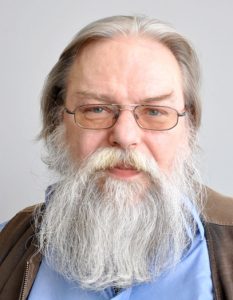
Mariusz Grzegorz Ausz is a Professor at the Department of Social History and Education within the Faculty of History and Archaeology at Maria Curie-Skłodowska University (UMCS) . His career spans decades of research and leadership in historical and educational studies. His academic journey began with a Master's degree in History (1996) from UMCS, followed by a PhD (2000) and Habilitation (2014) . He serves as President of the Lubelskie Towarzystwo Genealogiczne and holds leadership roles in organizations like the Towarzystwo Historii Edukacji . His research focuses on the history of Piarist schools , educational reforms , and multimedia in historical education . Recent work explores the 250th anniversary of the National Education Commission and virtual reality in teaching history . He has pioneered projects like www.praktyki.wh.umcs.pl , integrating modern technology with historical pedagogy. His publications include books on 18th–19th century Piarist education , co-edited volumes on regional education , and articles analyzing interwar pedagogy and religious tolerance in schools . He collaborates internationally, with studies on Lithuanian and Belarusian educational networks .
Dr. Renata Kołodziejczyk serves as Assistant Professor in the Department of Special Education at the John Paul II Catholic University of Lublin's Faculty of Social Sciences. Her work focuses on inclusive education, speech therapy for hearing-impaired individuals, and the Cued Speech method (Fonogestów), with particular emphasis on language accessibility and communication support systems. Department of Special Education, Institute of Pedagogy Faculty of Social Sciences, John Paul II Catholic University of Lublin Her research explores: Development of communication skills in deaf individuals Implementation of Cued Speech across educational settings Universal design for learning environments Teacher training for inclusive education Educational accessibility for hearing-impaired students Deaf community integration strategies Recent publications demonstrate trends in: Cued Speech methodology advancements Inclusive curriculum design Assistive communication technologies Life course analysis for hearing-impaired individuals Educational policy implementation Interdisciplinary rehabilitation approaches Scientific contributions recognized through: 4th Degree Team Award (2019) Bronze Cross of Merit (2015) Editorial roles in 'Logopedia' journal Leadership in Polish Cued Speech Association Key projects managed: Cued Speech Europa (EU-funded) Language Creativity of Hearing-Impaired Youth (KUL-funded) Postgraduate Training in Communication Support (Ministry-funded) Integrated Development Program (EU-funded)
Morris Siu-Yung Jong is a Professor at The Chinese University of Hong Kong's Faculty of Education, Department of Educational Administration and Policy. With over 100 publications from 2006 to 2025, he has established himself as a leading researcher in educational technology, particularly focusing on innovative applications of virtual reality, artificial intelligence, and game-based learning in formal education settings. His work bridges theoretical frameworks with practical classroom implementations, making significant contributions to how technology enhances teaching and learning experiences. Professor Jong's research interests span multiple cutting-edge domains in educational technology. He has pioneered work in spherical video-based virtual reality (SVVR) applications for education, developing frameworks for immersive learning experiences that transform traditional classroom instruction. His research on AI in education, particularly examining ChatGPT's impact on student engagement and language learning, positions him at the forefront of understanding how emerging technologies reshape educational practices. Additionally, his extensive work on game-based learning, flipped classroom methodologies, and STEM education integration demonstrates a comprehensive approach to technology-enhanced learning across multiple educational contexts and age groups. Analysis of Professor Jong's recent publications reveals a clear progression from foundational work in game-based learning to more sophisticated applications of immersive technologies. His research increasingly focuses on AI integration in educational settings, with a significant portion of his 2023-2025 publications examining ChatGPT's educational applications. The methodological approaches in his work have evolved from basic implementation studies to more sophisticated designs incorporating hierarchical linear modeling, longitudinal analyses, and systematic reviews, demonstrating growing methodological rigor and impact across the educational technology field. Professor Jong has made substantial contributions to educational research through his extensive publication record in top-tier journals including Computers & Education, British Journal of Educational Technology, and Educational Technology & Society. His work has significantly influenced how educators implement virtual reality, AI, and game-based approaches in classrooms worldwide. His research on teacher concerns, implementation challenges, and pedagogical frameworks provides crucial insights for successful technology integration in formal educational settings. Through his supervision of numerous research projects and collaborations with scholars worldwide, Professor Jong has fostered a robust research ecosystem focused on advancing educational technology. His work on design-based research approaches has provided valuable methodological frameworks for studying technology implementation in authentic educational contexts. His recent focus on AI in education positions him as a key contributor to understanding how emerging technologies can be effectively integrated into teaching and learning processes. Professor Jong's research laboratory focuses on immersive learning environments, with particular emphasis on spherical video-based virtual reality applications. His team has developed several innovative frameworks for implementing VR in educational settings, addressing both technical and pedagogical challenges. Current projects appear to focus on AI integration with immersive technologies, exploring how generative AI can enhance virtual learning experiences and support student engagement across various subject areas.
Popescu-Belis Andrei serves as an Associate Professor at the University of Applied Sciences and Arts Western Switzerland (HES-SO), specifically within the Institute of Information and Communication Technologies (IICT) at HEIG-VD campus in Yverdon-les-Bains. His academic work spans teaching computer science fundamentals and advanced natural language processing concepts across both undergraduate and graduate programs. His research interests focus on Natural Language Processing , Machine Translation , and Human-Machine Dialogue systems, with particular emphasis on low-resource language scenarios. His work addresses challenges in speech-to-speech translation, subword tokenization, neural machine translation optimization, and creative applications like poem generation. Recent publications through 2025 demonstrate his ongoing contributions to the field, particularly in multilingual NMT training schedules and low-resource language processing pipelines. Analysis of his 15 most recent publications reveals consistent focus on practical solutions for language barriers, with increasing attention to reinforcement learning applications and creative language generation. His work on GPoeT demonstrates the intersection of traditional literary forms with modern language models, while his research on low-resource translation pipelines addresses real-world community interpreting needs. He has led significant research projects including Digital Lyric (2019-2020), a collaboration with UNIL (University of Lausanne) to develop systems for aiding poem generation for a public exhibition at Morges Castle. This project demonstrates his interdisciplinary approach bridging computational linguistics with creative applications. His academic contributions include: Development of specialized training pipelines for low-resource neural machine translation Innovative approaches to speech-to-speech translation for community interpreting Novel methods for constrained language model applications in creative writing Significant contributions to understanding subword tokenization mechanics Popescu-Belis maintains active research collaborations across institutions, as evidenced by his work with UNIL and various international conference publications. His teaching portfolio includes courses in natural language processing, data preparation, unsupervised machine learning, and computer science fundamentals, demonstrating his commitment to both theoretical and practical aspects of the field.
Assoc. Prof. Drahomira Cupar is an Associate Professor at the Department of Information Sciences and Technologies, University of Zadar. She specializes in information organization, digital humanities, and reading habits research. Her work focuses on classification systems, open access publishing, and cultural heritage preservation. She actively participates in projects like TRIPLE, OPERAS-PLUS, and CRAFT-OA. Consultation hours are Wednesdays 10:00–12:00 via email. Her research spans over 60 publications covering digital transformation of historical texts, metadata strategies, and literacy promotion. Key projects include digitization of Glagolitic texts and development of multilingual taxonomies. She teaches courses on information organization, research methodology, and library science. Awards section is currently unspecified. Grants involve EU-funded initiatives focusing on open science infrastructure and digital preservation. She leads the Thesaurus.hr initiative and contributes to the OPERAS network.
Henrik Engström is a Professor of Informatics at the University of Skövde, affiliated with the School of Informatics and Department of Information Technology. He holds a PhD in Computer Science from the University of Exeter. His research focuses on game development processes, serious games, and interdisciplinary collaboration in game design. Engström has led multiple projects, including the Game Tech Academy and Sweden Game Arena initiative, aiming to leverage game technology for societal challenges in health, education, and industry. He coordinates the Game Development Master's Programme and has published extensively on topics like game analytics, inclusive design, and mobile game publishing strategies. His work often bridges academia and industry, emphasizing practical applications in training simulations and healthcare. Education: PhD in Computer Science (University of Exeter) Key Projects: Sweden Game Arena, Game Hub Scandinavia, Digital Parental Support Tools Research Interests: Game design processes, serious games for health, inclusive game development, and mobile game business models Engström’s research outputs span over two decades, with notable contributions to understanding game development challenges, stress detection in games, and the application of AI in game narratives. His book Game Development Research (2020) synthesizes empirical insights from industry practices. He collaborates internationally, including with Japanese and Scandinavian institutions, to advance educational game models and industry-academia partnerships. His articles highlight trends in data-driven decision-making for indie game publishers, the psychological impact of game design on player experiences, and leveraging game jams for addressing heavy societal topics. Engström also leads grants focused on digital health tools for expecting parents and sustainable urban planning via game-based participation. Labs/Teams: Key contributor to the Sweden Game Conference and collaborator with Game Tech Academy, fostering innovation in game-based solutions for societal challenges.
Christian Berger, MA, is a faculty member at the Vienna University of Education (Pädagogische Hochschule Wien), affiliated with the Department for Media Education, Information Technology Education, and Digitality. He coordinates the Media Lab and Maker Lab and has been active in teacher training since 1992. His work focuses on integrating new media into education, media literacy, and open educational resources. Education: Master's in Applied Knowledge Management (2007). Former roles include part-time lecturer at the University of Vienna and freelance project manager. Current roles include membership in the Center for Learning Technology and Innovation (ZLI) and involvement in projects like HOORCH (educational game) and media archive development. Research interests: Media pedagogy, digital education innovation, podcasting in education, and copyright issues in schools. Active in organizing conferences like the Free Media Conference and contributing to initiatives like Medienbildung JETZT! Publications include work on audio production in classrooms, maker culture in schools, and digital literacy initiatives. He co-founded Vienna's alternative schools and has extensive experience in educational radio and podcasting through platforms like podcampus and PH.ON.Wien.
Ilhan Aslan is a researcher affiliated with the University of Augsburg and DFKI GmbH , focusing on Human-Computer Interaction , Machine Learning , and Affective Computing . His work explores emotional speech interfaces , tangible interaction , and playful multimodal systems . Research Themes : Speech emotion recognition, proxemic-aware interaction, AI ethics, and user experience design. Recent Contributions : 2025 studies on proactive AI agents , voice emotion conversion , and solo role-playing AI ; 2024 work on audio enhancement and emotional trajectory modeling . His publications with Elisabeth André , Timothy Merritt , and Niels van Berkel demonstrate cross-institutional collaboration. Current projects emphasize sustainable creativity support , haptic feedback systems , and bias detection in speech AI .
Dr. Bhargavi Goswami is a lecturer at the School of Computer Science, Queensland University of Technology (QUT), with over 14 years of teaching experience in higher education. Her expertise spans communication networks, network security, and software-defined networks (SDN), where she integrates cutting-edge research into postgraduate teaching. Previously, she served as Assistant Professor and Head of Department (HOD) at CHRIST University and Garden City College in India. Education: PhD in Computer Science from QUT; professional certifications including CCNA and CCNP from Cisco. Dr. Goswami's research focuses on communication networks and network security, with a particular emphasis on Smart Grid Communication Networks, Software Defined Networks (SDN), Cryptography, Cybersecurity, Mathematical Modeling, and Congestion Control in Data Networks. Her current work explores the intersection of Quantum Computing, Machine Learning, and Network Programming to enhance communication security and efficiency. Her 15 most recent publications highlight trends in Smart Grid , SDN , and network security . Key subfields include latency optimization , load balancing , handoff methods , Wi-Fi Mininet , and Beacon controller scalability . Dr. Goswami has led multiple funded research projects, including work on low-latency communication for Smart Grids and P4-based network policies in SDN. She holds two patents and has authored monographs in her field. Her technical certifications and industry engagement underscore her practical contributions to communication systems and network security. She emphasizes ethical technology development and societal impact in her research and teaching.
Yongliang Yang is a Senior Lecturer in the Department of Computer Science at the University of Bath, affiliated with the Centre for the Analysis of Motion, Entertainment Research & Applications (CAMERA). His research spans computer graphics, shape understanding, and computational design with applications in 3D vision and geometric processing. His primary research focuses on developing shape analysis and optimization algorithms for geometric structures, with recent work emphasizing neural radiance fields, point cloud processing, and generative adversarial networks. Key contributions include novel approaches to dynamic scene representation, facial inpainting, and surface approximation techniques. Recent publications demonstrate strong trends in neural rendering for dynamic scenes and generative image synthesis, bridging geometry processing with deep learning for practical 3D reconstruction applications. Scientific recognition includes: Computer Aided Geometric Design Most Cited Paper Award (2011) Computer Aided Geometric Design Most Cited Paper Award (2012) Dr. Yang serves as Principal Investigator for Dynamic Human Reconstruction and Editing with Neural Radiance Fields (Royal Society, 2024-2026) and is Co-Investigator on CAMERA 2.0 (EPSRC, 2020-2025) and EU Horizon 2020 projects. He has supervised 9 students and serves as Associate Editor for Computer Graphics Forum (2025-2028). He actively contributes to CAMERA's research ecosystem focused on motion capture, virtual reality, and entertainment applications, driving innovation in motion analysis and digital content creation.
Cenk Gursoy is a Professor in the Department of Electrical Engineering and Computer Science at the College of Engineering and Computer Science, Syracuse University. He previously served as a faculty member at the University of Nebraska-Lincoln from 2004 to 2011. He holds a Ph.D. in Electrical Engineering from Princeton University and a B.S. from Bogazici University, Turkey. His research spans wireless communications, information theory, signal processing, and networking. Key areas include 5G/6G technologies, millimeter-wave communications, UAV-assisted networks, energy efficiency, intelligent reflecting surfaces, and machine learning for networking. He has made significant contributions to finite blocklength communications, QoS provisioning, and secure wireless transmissions. The recent publications highlight a strong trend in integrating machine learning—particularly deep reinforcement learning—into wireless resource allocation, network slicing, UAV trajectory planning, and anomaly detection. His work increasingly bridges theoretical information-theoretic models with practical implementations in emerging wireless systems such as RIS-aided networks, NOMA, and edge computing. NSF CAREER Award, 2006 2020 IEEE Region 1 Technological Innovation (Academic) Award IEEE Green Communications & Computing Technical Committee Best Journal Paper Award EURASIP Journal of Wireless Communications and Networking Best Paper Award IEEE PIMRC Best Paper Award Maude Hammond Fling Faculty Research Fellowship All-University Doctoral Prize (awarded twice to his students) Dr. Gursoy has advised over 20 Ph.D. and M.S. students, many of whom now hold positions at leading universities and tech companies. His research has been funded by multiple National Science Foundation grants as Principal or Co-Principal Investigator, focusing on fundamental limits of wireless systems, millimeter-wave networking, and green cloud platforms. He serves as an Area Editor for IEEE Transactions on Vehicular Technology and as an Editor for several other IEEE Transactions journals. He leads the Wireless Communications & Networking Lab and the Smart Vision Systems Lab at Syracuse University, fostering interdisciplinary research in smart networks, IoT, and intelligent sensing systems.
Dr. Bevan Smith is a Senior Lecturer at the School of Mechanical, Industrial & Aeronautical Engineering at the University of the Witwatersrand (Wits), where he also completed his BIng(Mech), MSc(Eng), and PhD. His research bridges machine learning and engineering systems, with a focus on optimization through simulation and AI. His research interests include: Machine Learning and Reinforcement Learning Causal Machine Learning and Causal Discovery Graph Neural Networks Explainable AI (XAI) Digital Twins Application of AI in Education and Industrial Systems His recent publications demonstrate a strong trajectory in applying causal inference and machine learning to both industrial optimization (e.g., inventory management, air quality monitoring) and educational challenges (e.g., at-risk student prediction, online video interventions). He utilizes simulation-based methods and counterfactual reasoning to evaluate treatment effects and improve decision-making. His work spans journals in industrial engineering, artificial intelligence in education, and computational applications. Notable scientific contributions include: Developing AI-driven solutions for low-cost air quality monitoring (AI_r) Evaluating X-Learner performance under confounding and non-linearity Applying Pearl’s counterfactual framework to assess explanation validity Designing personalized interventions for engineering students using model-agnostic explanations Dr. Smith has contributed to curriculum development through the creation of online educational videos and has explored structural design in mechanical engineering, notably in carbon fibre swingarm development. While no formal advising or grant information is available, his work reflects an interdisciplinary approach combining mechanical engineering principles with cutting-edge AI methodologies. He is actively publishing and remains engaged in both technical and educational research domains.
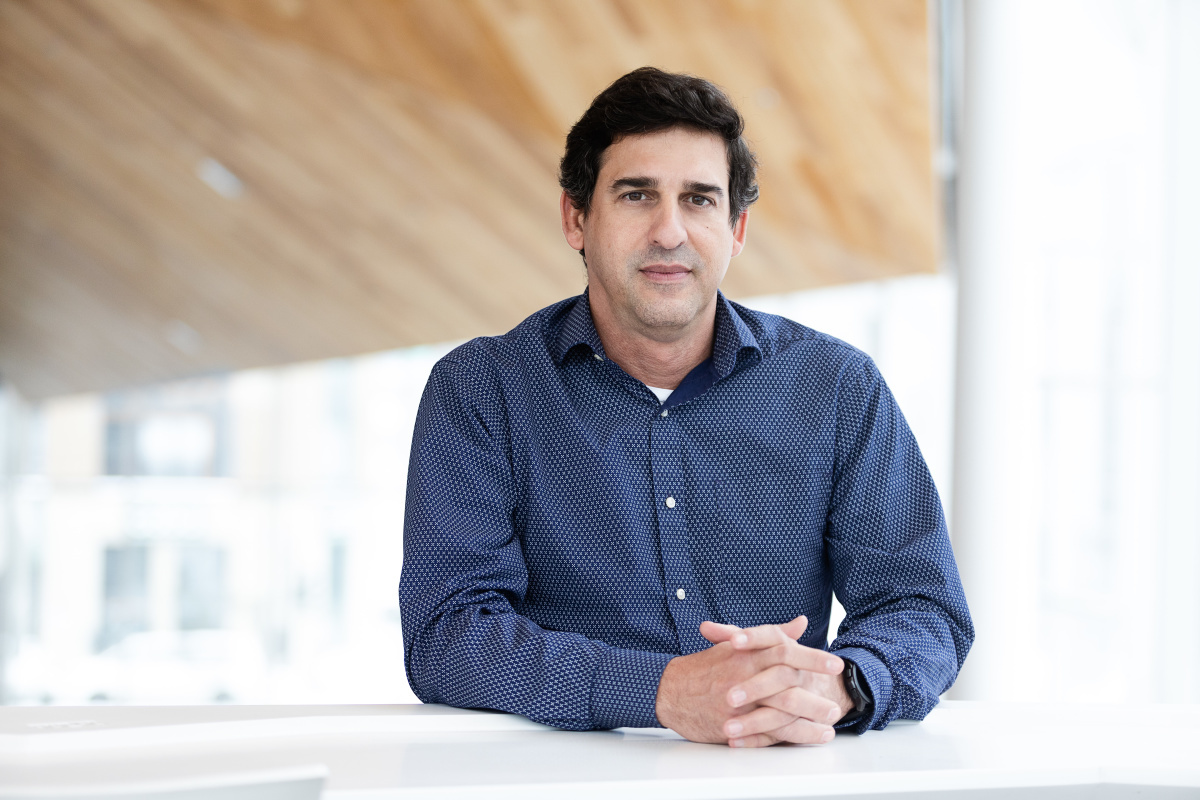
Carlos Vázquez is a Professor at the Department of Software Engineering and IT, École de technologie supérieure (ÉTS). He holds a B.Eng. and M.Sc. from ISPJAE, Cuba, and a Ph.D. from INRS, Montreal. His research focuses on computer vision, medical imaging, 3D reconstruction, and immersive video technologies. He co-leads the Summit Tech Research Chair in Immersive and Interactive Video and is affiliated with the Multimedia Research Laboratory (LABMULTIMEDIA) and the Open Innovation Laboratory in Health Technologies (LIO-ÉTS). His expertise includes stereoscopic imaging, multi-view video coding, and GPGPU programming. Notable research axes are software systems, multimedia, cybersecurity, and health technologies. He has supervised numerous doctoral and master’s theses, including works on 3D spine reconstruction, personalized femur modeling, and immersive video compression. Key contributions include advancements in medical imaging analysis, 3D reconstruction from biplanar radiographs, and efficient video coding for virtual reality. His work bridges clinical applications and engineering, with implications in surgical planning, patient rehabilitation, and multimedia systems optimization.
Pablo Cesar is Professor holding the Human-Centered Multimedia Systems Chair at Delft University of Technology and leads the Distributed and Interactive Systems (DIS) group at Centrum Wiskunde & Informatica (CWI), the Netherlands' national research institute for mathematics and computer science. His work bridges academic research at TU Delft with applied innovation at CWI. Education: Doctorate (2005) from Helsinki University of Technology, Department of Computer Science and Engineering Master's (2002) from Universidad Politécnica de Madrid His research pioneers human-centered multimedia systems focusing on modeling and controlling distributed media collections across time and space, integrating real-time media streams and sensor data to enable novel remote collaboration scenarios. This work directly addresses challenges in distributed human interaction through system-level innovations in media orchestration. Scientific Awards: 2020 Netherlands Prize for ICT Research (recognized for scientific impact and communication) ACM Distinguished Member (top 10% of ACM members) IEEE Senior Member (top 10% of IEEE members) No specific student advising details or grant funding information appears in the source text, though his leadership of the DIS research group implies supervisory responsibilities. His inaugural lecture 'Human-Centered Multimedia: Making Remote Togetherness Possible' (May 20, 2022) featured a dedicated two-day symposium highlighting his research vision. The DIS group at CWI serves as his primary research laboratory, driving innovation in distributed interactive systems with applications spanning remote collaboration, telepresence, and context-aware media environments.
Dr. Haeryun Choi is a full-time faculty member in the College of Education, Information and Technology at Long Island University (LIU). She holds a Ph.D. in Philosophy of Education from the University of Illinois at Urbana-Champaign and teaches undergraduate and graduate courses in philosophy of education, foundations of education, and contemporary philosophy of education. Her educational background includes a B.A. from Seoul National University (South Korea), an M.Ed. from the State University of New York at Buffalo, and a Ph.D. from the University of Illinois at Urbana-Champaign. Dr. Choi's research centers on Socrates, Rousseau, moral education, aesthetic and arts education, and ethnic identity. She explores philosophical and ethical dimensions of teaching, democratic learning environments, and the role of art and dialogue in education. Her work often bridges classical philosophy with contemporary educational challenges such as globalization, digital learning, and racial identity. Her recent publications and presentations reflect a strong trend in integrating philosophical inquiry with practical educational policy, particularly in arts integration and multicultural understanding. She has contributed to journals like Teachers College Record and Arts Education Policy Review , and presented at major conferences including AERA, PES, and AESA. Scientific Awards and Grants: National Endowment for the Humanities (NEH) grant (2005–2009) for developing a website using Rembrandt’s art in education Consultant on a Department of Justice-funded project (2006) on aesthetic education and academic skills Dr. Choi is actively involved in advising academic discourse through her roles in professional organizations. She serves as treasurer and on the program proposals committee for the Mid-Atlantic States Philosophy of Education Society (MASPES) and as a member of the yearbook review board for the South Atlantic Philosophy of Education Society (SAPES). While no formal advisees are listed, her collaborative projects suggest mentorship and leadership in research teams focused on curriculum innovation and diversity in education. She has contributed to several research teams and projects, particularly those centered on aesthetic education and digital humanities, including the 'Teaching Rembrandt in America' initiative. These efforts highlight her engagement with interdisciplinary, grant-funded educational research aimed at enriching teacher training and student learning in diverse urban settings.