Alessandro Ragano is a Postdoctoral Researcher at the Insight Centre for Data Analytics , where he has been investigating Quality of Experience (QoE) aspects of audio archives and developing data-driven approaches for QoE estimation and audio restoration using deep learning since 2018. Education: MSc in Computer Science and Engineering from Politecnico di Milano (Italy) BSc in Computer Engineering from Università Degli Studi di Salerno (Italy) His research integrates machine learning , audio signal processing , and multimedia quality assessment to improve speech enhancement, audio restoration, and perceptual modeling. Recent trends in his publications focus on self-supervised learning , objective quality metrics , and audio dataset generation with applications in speech separation, music representation, and audio inpainting. He actively contributes to open-source tools like Binamix and AQP for audio research and quality evaluation.
Thomas C Henderson is a tenured Professor at the School of Computing within the College of Engineering at the University of Utah. His research focuses on autonomous systems , computational models , and intelligent machine systems , with specific interests in biosystem simulation, distributed systems, and adaptive algorithms. He has contributed to Bayesian sensor networks , UAS traffic management , and probabilistic logic frameworks for intelligent agents. Current academic appointments since 1989 Adjunct roles in Biomedical Engineering Active in IEEE committees (2024-2025) Research trends in recent publications emphasize autonomous aircraft coordination , probabilistic reasoning , and multi-sensor integration . Key subfields include lane-based airspace modeling, reinforcement learning for UAS, and pseudogradient navigation techniques. His work has received recognition through a Best Paper Award (IEEE 2008) and the US Air Force Summer Faculty Fellowship . Strategic deconfliction protocols Dynamic data-driven applications Structural health monitoring systems He actively mentors undergraduate research through courses like Deep Learning Capstone and Senior Capstone Design . Current grants include "Deep Learning in AI and Robotics" (2024-2029) and "Robust Reasoning using Geometric SAT/PSAT" (2022-2023).
Angelica Duran is a Professor of English, Comparative Literature, and Religious Studies at Purdue University, with a courtesy appointment in Critical Disability Studies. She holds a Ph.D. from Stanford University (2000), an M.A. (1988) and B.A. (1987) from the University of California, Berkeley. Her research spans 16th–21st century comparative literature, focusing on English and Spanish traditions, religious studies, disability studies, and translation theory. She has published extensively on Milton, including monographs and edited volumes exploring his global reception, visual adaptations, and pedagogical applications. Her recent publications examine Milton’s transnational influence, the role of prosthetic sign systems in literary interpretation, and intersections of disability, movement, and theological discourse. She bridges early modern and contemporary analyses, addressing issues of translation, cultural adaptation, and digital humanities. Duran has received two Irene Samuel Memorial Awards for her edited volumes Milton in Translation (2017) and Milton Across Borders and Media (2023). She serves on editorial boards and academic committees, including the Renaissance Society of America's Conference Chair (2022–27). As a comparative literature scholar, she connects European, American, and global traditions, emphasizing religious, diasporic, and pedagogical dimensions. Her work explores how texts traverse ideological, physical, and disciplinary boundaries.
Dr. Anna-Lena Demi is a Researcher at the Department of Education and Psychology , specifically in the Didactics of German - Linguistic and Cultural Education at the Free University of Berlin . Since 2024, she has focused on integrating digital media and inclusive practices into primary school German didactics. Education: M.Ed. in Primary School Pedagogy (2015-2017), B.A. in Primary School Education and German Philology (2011-2015), and Diploma in Protestant Religious Pedagogy (2007-2011), all from Free University of Berlin. Research: Specializes in symmedial and inclusive literature instruction , children's cultural expression in digital environments , and multimodal learning . Her 2024 monograph Inklusiver und symmedialer Literaturunterricht in der Grundschule explores innovative teaching frameworks. Recent Articles: Her publications address digital storytelling with Scratch , memes as literary tools , and transdisciplinary makerspaces , emphasizing pedagogical adaptation to postdigital cultures. Projects: Leads the Kinderkultureller Selbstausdruck in Digitalität project and contributed to the Promotionsprojekt ISLU (2019-2024). Teaching: Offers seminars on multilingual and multimodal literacy , postmigrant literature education , and digital teaching in seriality contexts at Free University of Berlin and Humboldt University.
Brenda M. Farnell is a Professor in the Department of Anthropology and the American Indian Studies Program at the University of Illinois Urbana-Champaign. With a professional background in modern dance and dance education in England, she bridges anthropological theory with embodied practice, critically examining the marginalization of movement in Western academic thought. Her educational background includes: Ph.D. in Social Cultural & Linguistic Anthropology, Indiana University Bloomington (1990) M.A. in Anthropology of Human Movement, New York University (1984) Advanced Diploma in Dance and Human Movement Studies, Laban Dance Center, Goldsmiths College, London University (1977) B.Ed. in Dance Studies & Physical Education, I.M. Marsh College, Liverpool University (1969) Dr. Farnell's research centers on embodiment across three interconnected domains: the anthropology of dance (focusing on choreographic processes and performance arts), linguistic anthropology (analyzing gesture/speech integration and signed languages), and Indigenous epistemologies (particularly Plains Nations storytelling traditions). Her fieldwork with Nakota, Crow, Kiowa, and Comanche communities informs her decolonial approach to embodied knowledge systems. Recent publications demonstrate consistent thematic focus on Indigenous performance practices (e.g., 2023 monograph Chocolate Woman Dreams the Milky Way ) and foundational embodiment concepts (e.g., 2018 encyclopedia entries on Mindful Body and Techniques of the Body ), reflecting sustained engagement with semiotic anthropology and movement literacy.
Kusumoto Noriaki is a Professor at Waseda University's School of Education within the Faculty of Education and Integrated Arts and Sciences. With a Doctor of Science degree from Waseda University, he maintains an active research profile with teaching responsibilities for 2025 including Seminar in Cultural Sciences, Introduction to Information Processing, Cultural Sciences: Maps, Information Society/Information Ethics, and Application of Information Technology and Career courses. His academic work bridges educational technology and biological sciences, reflecting a unique interdisciplinary approach. Professor Kusumoto's research interests focus on educational technology and science education, particularly e-learning and Web-Based Training (WBT) systems. His work demonstrates significant contributions to language learning technologies, including mobile learning applications for English vocabulary acquisition, learning history analysis for personalized instruction, and corpus development for language proficiency assessment. He has also maintained a parallel research line in photosynthetic reaction centers of green sulfur bacteria, with publications dating back to the 1990s that examine electron transfer mechanisms and ferredoxin interactions. His publication record shows a clear evolution from biological research toward educational technology applications, with recent work (2003-2008) predominantly focused on language learning systems, data infrastructure for educational research (VALIS project), and information ethics. The 15 most recent publications reveal a strong emphasis on practical applications of technology in language education, with particular attention to mobile learning, learning analytics, and networked systems for language data collection and analysis. His work consistently addresses the intersection of technology, pedagogy, and practical implementation challenges. Professor Kusumoto has been involved in numerous research projects funded by the Japan Society for the Promotion of Science, including 'Data Collection and Annotation of Relatively Spontaneous Utterances by Japanese Learners of English' (2009-2013) and 'English learning with handheld devices' (2007-2009). His professional memberships include the Biophysical Society of Japan, Japanese Society for Biology Education, Japan Society for Educational Technology, and Information Processing Society of Japan, reflecting his dual expertise in both biological sciences and educational technology. As a concurrent researcher at the Waseda Research Institute for Science and Engineering and affiliated with the Global Education Center (2024-2026), Professor Kusumoto maintains an active research presence. His work on information ethics, particularly in educational contexts, demonstrates his commitment to addressing the social and ethical dimensions of technology in learning environments. His early research on photosynthetic reaction centers continues to inform his approach to science education methodology and biological curriculum development.
Hiroyuki Tanaka is a Professor at Waseda University's Faculty of Education and Integrated Arts and Sciences since 2009, with prior roles at Osaka Kyoiku University (1994–2009). His research focuses on education, curriculum development, classroom management, active learning, AI integration in pedagogy, and moral education innovations. He has led 15+ JSPS-funded projects, including AI-driven inquiry learning models and classroom competency frameworks. Education: Master of Arts (Osaka University) Key affiliations: Waseda University, Japan Society of Educational Technology Research interests include AI applications in education , self-development learning models , and multimedia-based teaching . Notable trends in his publications involve cross-disciplinary inquiry-based learning , generative AI tools , and ethical digital practices for K-12 education. Books and manuals like "Theory and Practice of Moral Education Lesson" (2025) and "Useful in the classroom! How to use ChatGPT for teachers" (2024) highlight his work bridging technology with traditional pedagogy. His grants from Japan Society for the Promotion of Science focus on curriculum innovation and classroom competency systems .
Wendy Woodson serves as the Roger C. Holden Professor of Theater and Dance at Amherst College and the Five College Dance Department, where she has taught since 1987. Founder and Artistic Director of Present Co. Inc., she has created over 100 interdisciplinary performance works presented globally at venues including the Kennedy Center, Jacob's Pillow, and LaMaMa theaters in NYC and Melbourne. Her research centers on interdisciplinary performance , exploring tensions between individual voices through mediation, reconciliation, and translation across media. She emphasizes kinesthetic empathy and collaborative improvisation, developing frameworks where movement, text, and video interact to examine belonging and identity. Her artistic practice consistently investigates how individuals navigate relationships within specific cultural and physical contexts. Analysis of her 15 most recent works reveals an evolution from stage-based choreography toward video installations addressing displacement ( NELA , DORA ) and environmental change ( Shore ), while maintaining core interests in multilingual expression and psychological archetypes. Her pieces frequently engage refugee narratives, memory reconstruction, and cross-cultural dialogue. Prestigious Recognition: Fulbright Senior Scholar (2006-07), multiple international film festival Grand Prizes Major Residencies: Rockefeller Bellagio Center, Bogliasco Foundation, Royal Melbourne Institute of Technology Foundation Support: National Endowment for the Arts (6 fellowships), Massachusetts Cultural Council (12 awards) Woodson has mentored through guest artist residencies at 15+ institutions worldwide while developing innovative curricula like The Art of Noticing seminar. Her Present Company Inc. has sustained 40+ years of collaborative production with over 50 associate artists across dance, theater, and visual media, creating experimental works that challenge conventional performance boundaries through interdisciplinary integration.
Mustafa Sert , currently serving as Associate Professor at Başkent University's Department of Computer Engineering and as Vice Dean of the Faculty of Engineering, has made significant contributions to audio signal processing, machine learning, and semantic multimedia. He earned his PhD (2006), MSc (2001), and BSc (1997) in Computer Engineering from Gazi University, supervised by prominent academics. PhD: Gazi University (2006) MSc: Gazi University (2001) BSc: Gazi University (1997) His research focuses on audio-visual content analysis , multimodal information fusion , and machine learning applications in semantic multimedia systems. He leads projects at the intersection of deep learning , speech processing , and acoustic pattern recognition , with work appearing in venues like IEEE Access, ACM Multimedia conferences, and Signal Processing and Communications Applications Conference (SIU). Recent publications demonstrate trends in automated audio captioning , medical speech analysis , and educational data mining , with applications spanning mental health detection, chatbot development, and reviewer selection systems. His work integrates transformer architectures , convolutional networks , and fuzzy decision-making models . Scientific Recognitions: Best Paper Award (7th Eurasian Congress on Emergency Medicine 2021) Outstanding Reviewer Awards (IEEE ICME 2020, 2021) Outstanding Area Chair Award (ACM Multimedia 2024) Academic Leadership includes roles as Senior IEEE Member, technical committee board positions in IEEE CTSoc divisions, and ACM membership. He supervises over 20 graduate students in topics ranging from depression detection through speech to geothermal permeability estimation , while maintaining active involvement in conference organization and journal reviewing for top-tier publications.
Kendall Jennifer Jessica Harteel is an Assistant Professor at the University of Alicante, affiliated with the Faculty of Philosophy and Letters II and the Department of Translation and Interpretation. She holds a PhD in Translation Studies, Professional Translation, and Audiovisual from the University of Alicante (2023), alongside specialized certifications in accessibility, institutional translation, and audiovisual localization. Her academic focus revolves around phraseological units in translation processes, particularly in audiovisual media and accessibility contexts. She explores how idiomatic expressions and cultural-specific phrases are adapted across languages and media formats, emphasizing pedagogical applications and cross-cultural communication challenges. Her recent publications analyze phraseology in series like La casa de papel , films like Nueve Reinas , and comic adaptations like Astérix et Obélix , highlighting techniques for preserving linguistic and cultural nuances. These studies emphasize audiovisual subtitling, dubbing ethics, and the role of phraseology in regional dialect representation. Harteel is part of the Phraseology and Multilingual Translation research group (FRASYTRAM), contributing to interdisciplinary projects on translation pedagogy and accessibility standards. She actively participates in curriculum design for audiovisual translation courses and has conducted workshops on creating inclusive digital materials.
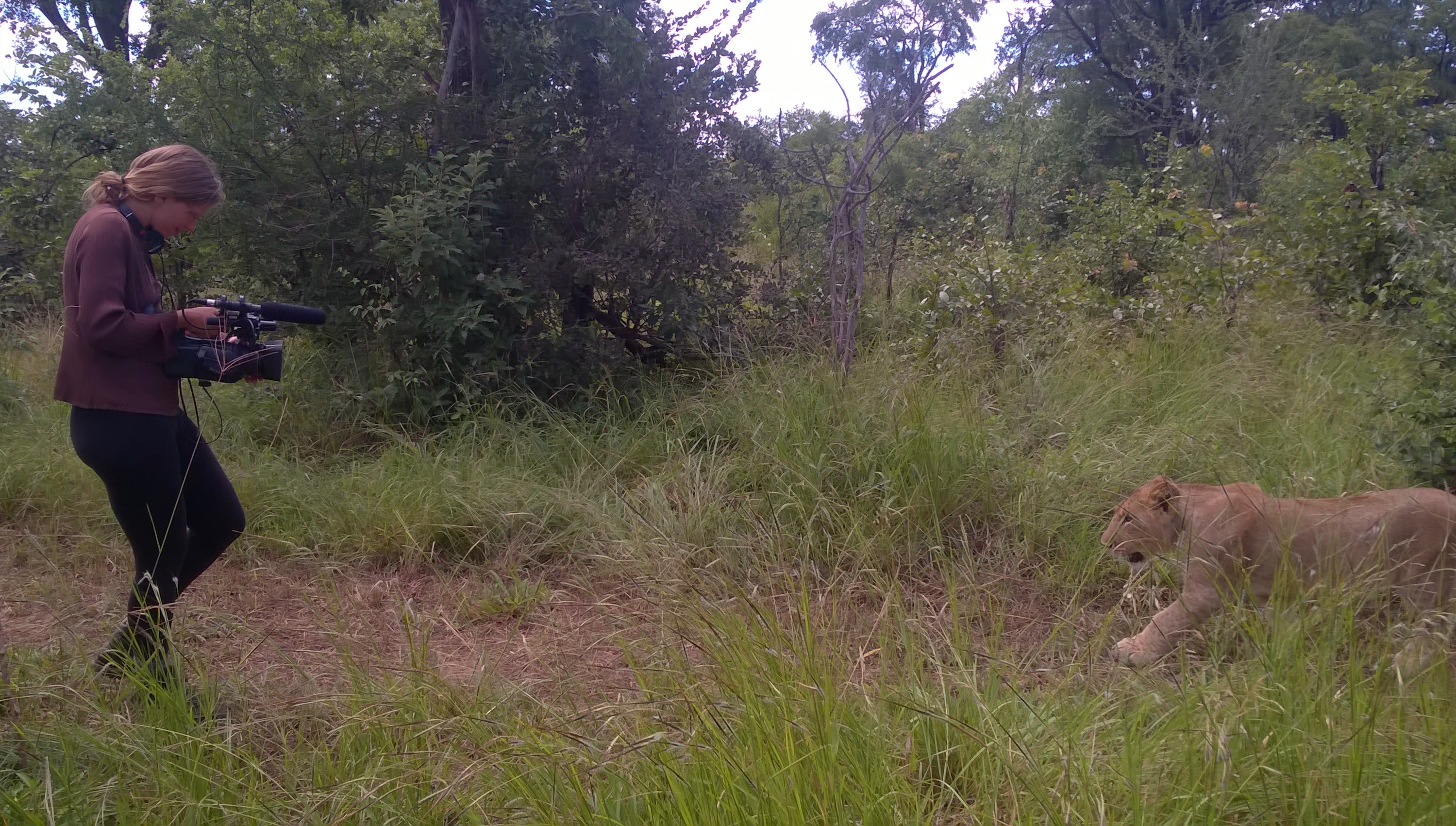
Vanessa Wijngaarden is an academic researcher at the University of Liège's Laboratory of Social and Cultural Anthropology (LASC). She leads the five-year ANICOM research project, funded by the European Research Council (ERC), which explores intuitive communication with animals to develop dialogic multispecies research methods. Her work bridges social anthropology, environmental governance, and biosemiotics, aiming to redefine human-animal relationships in academia. Key Affiliation: University of Liège, Laboratory of Social and Cultural Anthropology (LASC) Research Focus: Intuitive Interspecies Communication (IIC), Dialogic Multispecies Methods (DMM), Posthumanism, Indigenous Studies Collaborations: Working with six expert animal communicators, three PhD students, and 36 individuals from 12 animal species across Europe, Africa, Asia, and North America The ANICOM project (2024–2029) employs participant observation, Q method, interviews, and audiovisual techniques alongside natural science approaches to create transdisciplinary frameworks for nonhuman animals as active research participants. This work challenges traditional academic methodologies by integrating indigenous knowledge systems and modern biosemiotic insights. Scientific Recognition: Recipient of the 2023 ERC Consolidator Grant for ANICOM Vanessa combines ethnographic research with filmmaking, and her work has produced multimedia documentaries that support the Maasai community in Tanzania through proceeds from her publications and exhibitions.
Dr. Imran Ahmed serves as a Senior Lecturer in Artificial Intelligence at Anglia Ruskin University's Faculty of Science and Engineering, School of Computing and Information Science. With over 100 research publications exceeding 250 JCR impact factor and an h-index greater than 30, he represents a distinguished academic in computer science and engineering fields. Dr. Ahmed's research spans multiple domains of artificial intelligence, with particular expertise in machine learning, deep learning, computer vision, and data science. His work focuses on medical imaging applications including brain tumor detection, Covid-19 detection, pulmonary nodule classification, and liver lesion detection. He also pioneers research in surveillance systems, IoT-enabled environments, anomaly detection, and AI applications for sustainability in environmental monitoring and precision farming. His recent publications demonstrate a strong trend toward practical AI applications in healthcare, environmental sustainability, and intelligent transportation systems. The research shows increasing emphasis on explainable AI, edge computing implementations, and interdisciplinary approaches that bridge computer science with medical, environmental, and industrial applications. His work consistently addresses real-world challenges with innovative technical solutions. World's top 2% scientists by Stanford University (2021, 2022) Double Gold Medallist Certificate of merit for brain MRI analysis for tumor detection Numerous awards for teaching, research, and administrative excellence Dr. Ahmed supervises research across multiple domains including medical imaging, healthcare informatics, surveillance systems, environmental monitoring, agricultural technology, recommender systems, anomaly detection, cyber security, public health, urban planning, smart cities, augmented reality, and human-computer interaction. His research projects include Human Surveillance and Activity Recognition, Data Analytics during Covid-19, Sustainable Healthcare applications, Deep Learning in Medical Imaging, and Sustainable Environmental Control frameworks. As Principal Investigator, he has led multiple funded projects integrating IoT and AI technologies for practical applications. He is actively involved in organizing technical sessions and workshops for IEEE conferences, particularly focusing on cybersecurity issues of IoT in Ambient Intelligence environments, connected intelligence for IoT applications, and real-time data processing in industrial contexts. His professional memberships include Fellow of the Higher Education Academy, Senior Member of IEEE, Member of ACM Computer Society, and Senior Member of the Institute of Research Engineers and Doctors.
Yingfei Dong is a Professor in the Department of Electrical and Computer Engineering at the University of Hawaii at Manoa, College of Engineering, where he joined in August 2003 after completing his academic training in China and the United States. His educational background includes: B.S. in Computer Science from Harbin Institute of Technology (1989) M.S. in Computer Science from Harbin Institute of Technology (1992) Doctor of Engineering from Tsinghua University (1995) Ph.D. in Computer and Information Science from the University of Minnesota (2003) Professor Dong's research centers on computer and network security/privacy with strong emphasis on emerging threats in AI systems, drone/UAS networks, and IoT ecosystems. His work bridges theoretical foundations with real-world applications across cloud infrastructure, anonymous communications, smart grid protection, and infrastructure security, maintaining relevance through continuous adaptation from past projects in QoS and multimedia streaming. He has secured substantial research funding including: NSF 2439007 (2025): SFS AI + Cybersecurity ($4,112,287, 2026-2028) DCL EPSCOR: SaTC Frontier (2024): AI-Enabled Cyber-Physical Systems Security ($199,973, 2024-2026) GenCyber Hawaii Coalition 2025 ($412,794, 2024-2025) ROTC Cyber Security Research: Consumer Drones ($249,415, 2021-2023) ROTC Cyber Security Research: Countering Drones ($239,957, 2019-2021) National CAE-R Center (2019-2024) Scholarship for Service Program ($5,168,370, 2017-2023) Professor Dong actively mentors ROTC cadets and EE students through cybersecurity research projects while leading the Vertically Integrated Projects (VIP) team for Cyber Security and UAS applications, and directs the NSF SFS program supporting 24+ cybersecurity scholars.
Fabian Jogl is a PreDoc Researcher at the Vienna University of Technology (TU Wien) within the Faculty of Informatics, holding dual affiliations in the Department of Databases and Artificial Intelligence (Institute E192) and the Department of Machine Learning (Institute E194). His work centers on theoretical and applied aspects of graph neural networks under the StruDL (2023–2027) and VHH (2019–2023) research projects. His research focuses on the expressivity limits of graph neural networks, particularly investigating whether enhanced expressivity translates to better predictive performance. Key areas include outerplanar graph analysis, path-based GNN architectures, global feature integration, and connections to the Weisfeiler-Lehman hierarchy. He examines structural properties of GNNs through homomorphisms and graph transformations to advance graph representation learning. Recent publications reveal trends toward unifying theoretical expressivity frameworks with empirical validation across diverse graph datasets. His work bridges geometric deep learning for cell complexes and practical applications like historical film analysis via the Historian dataset. Jogl actively contributes to major conferences including NeurIPS, ICML, and LoG while co-supervising student projects in machine learning algorithms. As a core member of the StruDL project, he investigates deep learning model structures for graph data, extending prior work on historical film annotation under the VHH project. His technical contributions include novel GNN simulation techniques and methods for enhancing message-passing architectures through graph transformations.
Min-Yen Kan is an Associate Professor and Vice Dean of Undergraduate Studies at the National University of Singapore (NUS), with a focus on the Department of Computer Science. He earned his Ph.D., M.Sc., and B.S. in Computer Science from Columbia University. Associate Professor, NUS Department of Computer Science Vice Dean of Undergraduate Studies, NUS School of Computing His research spans Natural Language Processing , Large Language Models , Digital Libraries , and Information Retrieval , with applications in Human-Computer Interaction , Web Systems , and Recommendation Technologies . He leads the Web, Information Retrieval, and NLP Group (WING.NUS), driving projects in scholarly document analysis, dialogue systems, and AI ethics. Recent publications highlight his work on LLM alignment , multimodal deception detection , and evaluation frameworks . Key trends include ethical NLP, knowledge aggregation in vision-language models, and combating misinformation through AI. Scientific Awards: Best Paper Award, CIKM 2019 Distinguished Service Awards, ACL Vannevar Bush Best Paper Award, JCDL 2012 As a PhD advisor , his students have secured roles at institutions like Google and USTC. He also serves on the ACL Ethics Committee and as associate editor for Information Retrieval and JAIR .