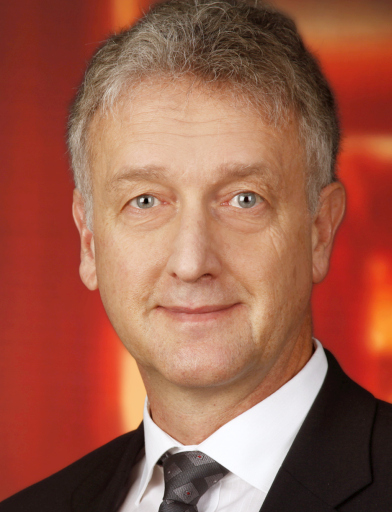
Michael Bleyer is a Researcher in the Department of Computer Vision at the Technische Universität Wien (TU Wien), affiliated with the Faculty of Informatics. His work focuses on advanced imaging technologies, particularly in stereo matching, sensor design, and applications in augmented/mixed reality. He has contributed to projects funded by the Vienna Science and Technology Fund (WWTF), Austrian Science Fund (FWF), and the Federal Ministry of Transport, Innovation, and Technology (bm:vit). Education: Diplom-Ingenieur (Dipl.-Ing.) from TU Wien (2002), followed by a Dr.techn. (PhD) thesis on 'Segmentation-based stereo and motion with occlusions' (2006). He has supervised four students, including Armin Haßlacher (2012), Gregor Braun (2011), Roman Gross (2009), and Christian Rhemann (2005). Research Interests: Bleyer’s work bridges theoretical computer vision and practical sensor engineering. Recent trends emphasize SPAD-based imaging systems for low-light environments and head-mounted displays, addressing challenges like dark current compensation and temporal filtering. Earlier contributions include global stereo matching algorithms, optical flow estimation, and 3D scene reconstruction. Grants and Advising: Projects include Temporal-Consistent Stereo Matting (2009–2015, WWTF) Energy Functions for Global Stereo Matching (2007–2012, FWF) Video Engine Design Methodology (2006–2015, bm:vit) His advising spans topics like color in stereo matching and image filtering optimization.
Asmaa Farouk Mohammed is a researcher at Vienna University of Technology's Department of Software Technology and Interactive Systems. Her work focuses on computer vision, stereo matching, and real-time algorithms, with a strong emphasis on cost-volume filtering and adaptive support weight techniques. She holds a PhD in computer science and has contributed significantly to 3D video technology and interactive video segmentation. Key research areas include: Efficient stereo matching algorithms for real-time applications Spatio-temporal filtering for video processing Interactive systems for object segmentation Geodesic-based image processing methodologies Her publications demonstrate a clear trajectory in advancing both theoretical and applied aspects of visual correspondence and 3D reconstruction. Collaborations with researchers like Michael Bleyer and Margrit Gelautz highlight her role in interdisciplinary projects. While no specific grants or awards are listed, her extensive publication record reflects sustained contributions to the field of computer vision since 2009. She is affiliated with the Network Lab at TU Wien, contributing to cutting-edge research in interactive systems and algorithm optimization.
Prof. Matthias Harders is a Professor at the Department of Computer Science, University of Innsbruck. His work focuses on medical imaging, haptic systems, virtual reality, and data-driven simulation. He leads research in interactive visualization tools, medical device development, and machine learning applications in healthcare and environmental engineering. Research areas include haptic augmented reality for surgical training, deformable medical image registration, and synthetic data generation for retinal imaging. Notable projects include SPBView for eye movement analysis and the PoRi device for post-stroke rehabilitation. His work bridges computer science with biomedical applications, emphasizing real-world impact in healthcare technology. Publications span medical simulation, machine learning for biogas prediction, and perceptual interfaces. He collaborates on EU-funded projects involving VR/AR systems and has contributed to open-source tools for point cloud analysis and surgical planning.
Heinz Hofbauer is a Senior Scientist at the University of Salzburg specializing in Artificial Intelligence and Human Interfaces, with research concentrated in computer vision, biometrics, and multimedia forensics. His work focuses on face detection systems, anti-spoofing for biometric security, and image/video encryption techniques, demonstrated through extensive publication and project leadership. His research spans computer vision, biometrics, artificial intelligence, and image processing, with notable contributions to cultural heritage analysis (e.g., face detection in the Wenceslas Bible), biometric sensor forensics, and visual security assessment. Recent work increasingly addresses cross-disciplinary applications in biomedical imaging and material science. Analysis of his 2023-2025 publications reveals three dominant trajectories: (1) AI-driven cultural heritage preservation through manuscript analysis, (2) biomedical image processing for single-cell segmentation, and (3) practical security/quality assessment for smartphone-based material classification and video encryption systems. Hofbauer has secured funding for six major research projects including: IDENTITY: Computer Vision Enabled Multimedia Forensics (2016-2019) Biometric Sensor Forensics (2014-2018) Visual Security Metrics for Image/Video Encryption (2015-2018) Traceability of Roundwood via Digital Imaging (2012-2017) Anti-Spoofing Software Evaluation for Facial Recognition (2018) Unspecified 2011 research project He actively participates in the academic community through peer review for the Journal of Visual Communication and Image Representation and conference presentations at IEEE ICIP, while collaborating closely with Andreas Uhl's research group on biometric security applications.
Laszlo Böszörmenyi is Full Professor of Computer Science and Head of the Institute of Information Technology at Alpen-Adria University Klagenfurt, Austria. His research specializes in distributed multimedia systems with emphasis on self-organizing architectures and intelligent video content analysis. Research focuses on: Self-organizing content delivery networks Interactive video browsing and exploration Medical video analysis (endoscopic and surgical) Video content summarization and retrieval Distributed systems for multimedia applications He leads several research projects in medical multimedia and traffic surveillance systems. Dr. Böszörmenyi has published extensively on video analysis techniques, particularly for medical applications including: Surgical phase recognition in laparoscopic videos Endoscopic video compression and archiving Instrument detection in surgical workflows Specialized browsers for medical video exploration He serves as Associate Editor for Multimedia Systems Journal and participates in numerous program committees for multimedia conferences.
Chen Chang-Wen is a Chair Professor of Visual Computing at The Hong Kong Polytechnic University (2021–present). Previously, he was Empire Innovation Professor at the University at Buffalo (2008–2021) and held leadership roles including Dean of the School of Science and Engineering at CUHK Shenzhen (2017–2020). His research focuses on multimedia systems, signal processing, and communication. He is a Fellow of IEEE and SPIE, and has received numerous awards including the Alexander von Humboldt Research Award (2010) and the SUNY Chancellor's Award (2016). Chen has authored over 420 publications and holds three US patents. His work emphasizes interdisciplinary applications in visual computing, including contributions to autonomous systems, edge networks, and video quality assessment. He currently serves as Editor-in-Chief of IEEE Transactions on Systems, Man, and Cybernetics: Systems and leads initiatives in global university rankings and accreditation for engineering programs.
Bernd Münzer is a researcher at the Institute of Information Technology at Alpen-Adria-Universität Klagenfurt. His work focuses on medical multimedia, video retrieval systems, and human-computer interaction, particularly in endoscopic and laparoscopic video analysis. He contributes to projects involving deep learning for content identification, interactive exploration tools, and medical data visualization. Medical video analysis and retrieval Human-computer interaction in multimedia systems Endoscopic imaging and surgical skill assessment Dynamic content descriptors for video processing Collaborative video search frameworks Temporal analysis of clinical multimedia data His research includes developing tools like ECAT for endoscopic annotation, diveXplore for interactive exploration, and datasets such as Cataract-101 for surgical analysis. Projects emphasize medical multimedia applications, efficient video encoding, and augmented interfaces for clinical workflows.
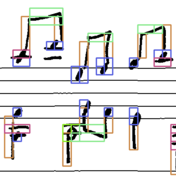
Horst Eidenberger is an Associate Professor at the Technische Universität Wien (TU Wien), affiliated with the Institute for Visual Computing and Human-Centered Technology within the Faculty of Informatics. He holds part-time status at the university. His research focuses on computational perception of audiovisual media, forensic biometrics, multimedia systems, machine learning, and virtual/augmented reality. He leads projects like the Virtual Jumpcube and Vreeclimber hybrid systems, integrating sensory stimuli in VR environments. Eidenberger supervises numerous student theses, covering topics from AI political agents to plant detection with machine learning. He teaches courses on deep learning, VR design, and multimedia retrieval. His work bridges technical innovation with practical applications, including cybersecurity, healthcare, and immersive storytelling. Roles: Associate Professor, Expert Witness in IT/Sigproc, VR Project Lead. Research Interests: Biometric media analysis, hybrid VR systems, optical music recognition, and machine learning. Projects: Vreeclimber climbing wall, Virtual Jumpcube, DeepOMR, and forensic biometrics. Publications span over 50 peer-reviewed articles, emphasizing multimedia retrieval, VR systems, and cognitive modeling. His Handbook of Multimedia Information Retrieval (2012) remains a foundational text. Eidenberger actively mentors students and contributes to interdisciplinary collaborations in AI, HCI, and digital media.
Robert Sablatnig is an Associate Professor and Head of the Institute for Visual Computing and Human-Centered Technology at TU Wien (Vienna University of Technology). His roles include leading the Computer Vision research unit and serving on the Faculty Council. His research focuses on 3D Vision, Computer Vision applications in Cultural Heritage preservation, and Machine Learning. He holds a doctoral degree and has extensive expertise in image processing, object recognition, and multispectral imaging. Key research interests include 3D reconstruction, range finding, stereovision, robot vision, and applications in industry and cultural heritage. He leads projects funded by the Austrian Science Fund (FWF), EU, and industry partners, such as the 'Etruscan Mirrors in Austria' and 'Visual History of the Holocaust' initiatives. Sablatnig has authored over 200 publications, with recent work emphasizing synthetic data generation for handwritten text detection and deep learning for cultural heritage analysis. His lab develops tools for document enhancement, bomb crater detection in historical aerial imagery, and forensic footwear impression retrieval. He collaborates internationally on initiatives like the Time Machine Project to digitize global cultural heritage.
Dr. Benedikt Lorch is a researcher currently affiliated with the Security and Privacy Lab at the University of Innsbruck, Austria. His professional journey includes roles as a Postdoctoral Fellow (2023–2024) and Research Assistant (2022–2023) at the same institution, preceded by research and academic roles at Friedrich-Alexander-Universität Erlangen-Nürnberg (FAU), Germany, including a Ph.D. in Computer Science (2018–2023) focused on cybercrime and forensic computing. He has also held visiting researcher positions at Dartmouth College (USA) and Imperial College London (UK). His research interests center on steganography, steganalysis, multimedia forensics, and machine learning applications in digital security. Notable work includes analyzing JPEG image directionality for security implications, improving steganalysis techniques using leaked cover thumbnails, and developing reliable machine learning models for forensic image analysis. His contributions address challenges in digital forensics, such as detecting image tampering, authenticating multimedia content, and enhancing degraded license plate recognition. Key academic awards include the ASQF award for outstanding studies (2019) and a DAAD scholarship for international research (2017). His work spans projects like UNCOVER and emphasizes compliance with regulations like the Artificial Intelligence Act in forensic analysis. Beyond technical contributions, Lorch has explored medical imaging applications, including motion artifact detection in MRI and heart rate estimation using wearable sensors. His research trends reflect a focus on leveraging probabilistic methods and deep learning to enhance forensic reliability, with a particular emphasis on JPEG-based steganalysis and digital image security. Collaborations with institutions like the Pattern Recognition Lab and Biomedical Image Analysis Group highlight interdisciplinary engagement in computer science and medical imaging.
Sanjit K. Mitra is a Distinguished Professor Emeritus at the University of California, Santa Barbara (UCSB), and a Life Fellow of the IEEE. He holds memberships in prestigious academies including the U.S. National Academy of Engineering, European Academy of Arts & Sciences, and Bavarian Academy of Sciences and Humanities. His career includes roles as Distinguished Professor and Professor at UCSB, UC Davis, and Cornell University, alongside contributions at Bell Labs. Key Positions: Distinguished Professor Emeritus (UCSB), Member of Technical Staff (Bell Labs), 1962–2006. Education: Not explicitly detailed in texts, but his academic lineage spans decades of mentorship. Research focuses on digital and analog signal processing, filter design, and image/video compression. He authored 14 books and over 700 publications, cited 31k+ times (h-index 73). His work has been translated into multiple languages and influenced global engineering curricula. Awards include the IEEE Education Medal (2006), Golden Jubilee Medal (1999), and recognition as a 'Pioneer in Signal Processing' (1998 & 2017). His 48 Ph.D. students include 9 IEEE Fellows and a U.S. NAE member.
Prof. Silvia Miksch is a full professor in the Department of Visual Analytics at TU Wien. Her research focuses on visual analytics, time-oriented data visualization, and human-computer interaction. She leads projects in cultural heritage analysis, fraud detection, and pandemic data visualization. Her work bridges computer science with digital humanities, emphasizing user-centric design and uncertainty modeling. Key contributions include guidance systems for VA environments and network visualization frameworks for art history. Affiliations: TU Wien (since 2000+) Research Labs: Network Lab, Visual Analytics Research Group Recent projects explore temporal patterns in artist exhibitions, parameter space exploration, and pandemic data communication. She has advised over 20 PhD/Master’s students, many contributing to VA systems like COVIS and NEVA. Awarded the VGTC Visualization Technical Achievement Award (2024) for foundational work in temporal visualization. Active in IEEE VAST and serves on journal editorial boards. Her labs develop open-source tools for interactive data exploration.
Tao Dacheng is a Professor of Computer Science at the University of Technology Sydney (UTS) since 2010, also serving as an ARC Future Fellow since 2013. His research focuses on deep learning, multimedia, applied statistics, neural networks, computer vision, and data mining. He has published over 400 papers in top journals and conferences, earning multiple best paper awards, including the ICDM 10 Year Highest Impact Paper Award (2014). Affiliations: Faculty of Engineering and Information Technology (implied by department). Research Contributions: His work bridges applied mathematics and data analytics, with applications in image processing, video surveillance, and geoinformatics. He has authored a monograph and contributed to 5 books. Awards & Honors: Elected Fellow of IEEE, OSA, IAPR, SPIE, IET, and BCS. Recipient of the 2015 Australian Scopus-Eureka Prize, ACS Gold Disruptor Award, and UTS Vice-Chancellor’s Medal. Professional Activities: Editor of 10+ journals (including 7 IEEE Transactions), guest editor of 10+ special issues. Delivered 50+ research talks, chaired 60+ conferences, and served on 150+ conference committees and 60+ journal review boards.
Jan Steinbrener is an Associate Professor at the University of Klagenfurt's Institute for Intelligent System Technologies and serves as Vice Rector for Research and International Affairs, leading the Research Council. His roles include overseeing research strategy, international collaborations, and faculty research activities. Research Interests: Steinbrener focuses on robotics, artificial intelligence, and autonomous systems. His work emphasizes sensor systems, UAV navigation, and embedded AI applications. Projects include drone-based wind turbine inspection and AI-driven control systems for industrial robotics. Grants & Projects: He leads initiatives funded by the Austrian Research Promotion Agency (FFG), including 'Wind Turbine Blade Inspection Using Multimedia Drones' and 'Embedded AI - Shaping the Future of Power Electronics.' Collaborative projects with Carinthian Economic Development Fund and Infineon Technologies highlight his industry-academia partnerships. Academic Contributions: Steinbrener's research spans robotics, control systems, and sensor technology. Key publications include studies on UAV navigation algorithms, light-field imaging, and reinforcement learning applications in robotics.
Dieter W. Fellner is a distinguished Professor of Computer Science at Technical University of Darmstadt, Germany, where he serves as Director of the Fraunhofer Institute of Computer Graphics (IGD). He also holds a concurrent position as Professor of Computer Science and Founding Director of the Institute of Computer Graphics and Knowledge Visualization at Graz University of Technology, Austria. With a career spanning over three decades, Fellner has established himself as a leading figure in computer graphics, digital libraries, and related fields. Education: Diploma in Technical Mathematics, Graz (1981) Doktorate (Ph.D.) in Technical Mathematics, Graz (1984) Habilitation, Graz (1988) Professor Fellner's research spans multiple domains within computer science, with a primary focus on computer graphics and its applications. His work encompasses computational geometry, 3D modeling and rendering, virtual and augmented reality, and digital libraries with emphasis on cultural heritage preservation. He has made significant contributions to algorithms for integrating modeling and rendering processes, efficient visualization techniques, and generative modeling approaches. His research extends to practical applications in internet-based multimedia systems, where he coordinated a strategic initiative funded by the German Research Foundation that supported approximately 50 researchers across 21 groups from 1997 to 2005. An analysis of Professor Fellner's publication record reveals a consistent trajectory of innovation in computer graphics and digital document systems. His early work focused on foundational graphics algorithms and videotex systems, evolving toward more complex 3D document modeling, visualization techniques, and digital library architectures. A notable trend is his interdisciplinary approach, bridging computer graphics with applications in cultural heritage, bioinformatics, and brain-computer interfaces. His research demonstrates a progression from theoretical algorithms to practical implementations addressing real-world challenges in information visualization and knowledge management. Scientific Awards: Fellow of the Eurographics Association (2000) Member of the IST Advisory Group for the European Commission (ISTAG) (2007) Best Technical Paper Award (Günther Enderle Award) at Eurographics'98 Conference Honorary Doctorate from the University of Rostock (2019) Throughout his career, Professor Fellner has supervised numerous students and researchers, though specific names are not documented in the available sources. His leadership extends to significant grant activities, most notably coordinating the German Research Foundation's strategic initiative on distributed processing and mediation of digital documents from 1997 to 2005. This major project provided funding for approximately 50 researchers annually across 21 research groups, demonstrating his capacity to lead large-scale collaborative research efforts. He has also served on editorial boards of leading journals and program committees of international conferences, shaping the direction of research in his fields of expertise. Professor Fellner directs the Fraunhofer Institute of Computer Graphics (IGD) in Darmstadt, a prominent research institution focused on applied computer graphics. He also founded and chairs the Institute of Computer Graphics and Knowledge Visualization at Graz University of Technology. These institutions serve as hubs for interdisciplinary research, bringing together computer scientists, domain experts, and industry partners to advance the state of the art in visualization, digital libraries, and knowledge management systems. The teams under his leadership have produced influential work in 3D document processing, cultural heritage digitization, and advanced visualization techniques.