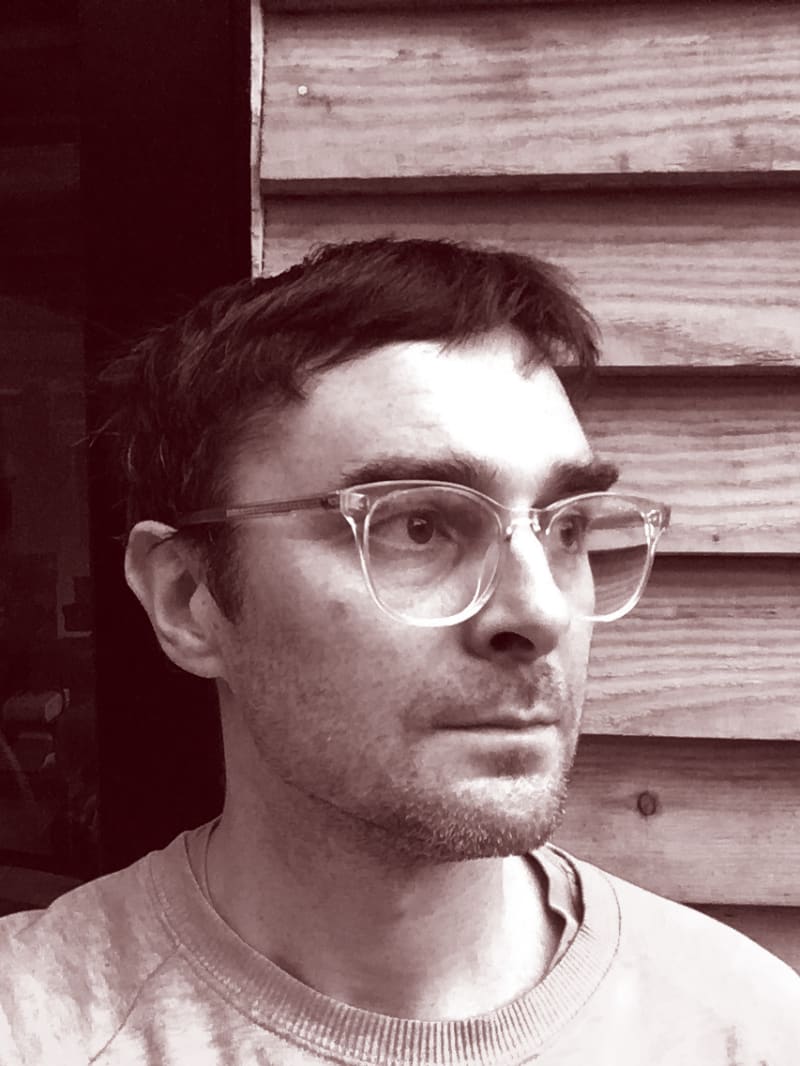
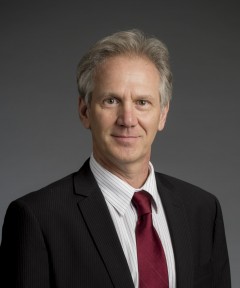
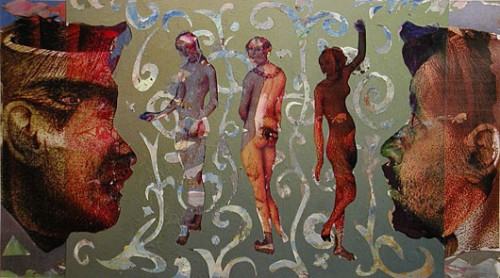
Sylvain Marchand is affiliated with Lab-STICC at the University of Western Brittany. His research focuses on enabling interactive engagement with media through informed analysis, combining signal processing and information theory to address inverse problems. Key contributions include the ANR DReaM project, which explores imperceptible watermarking to enhance interactivity in audio and visual media. Research Highlights: Active media manipulation via encoded metadata, cross-disciplinary applications in education, museography, and digital preservation. Key Projects: ANR DReaM project, NewsEye team's CLEF-HIPE-2020 competition win. He participates in academic events such as the IAPR International Workshop on Document Analysis Systems (DAS 2022) and organizes seminars on multimedia systems. His work spans conferences from 2015 to 2024, emphasizing innovation in interactive media technologies.
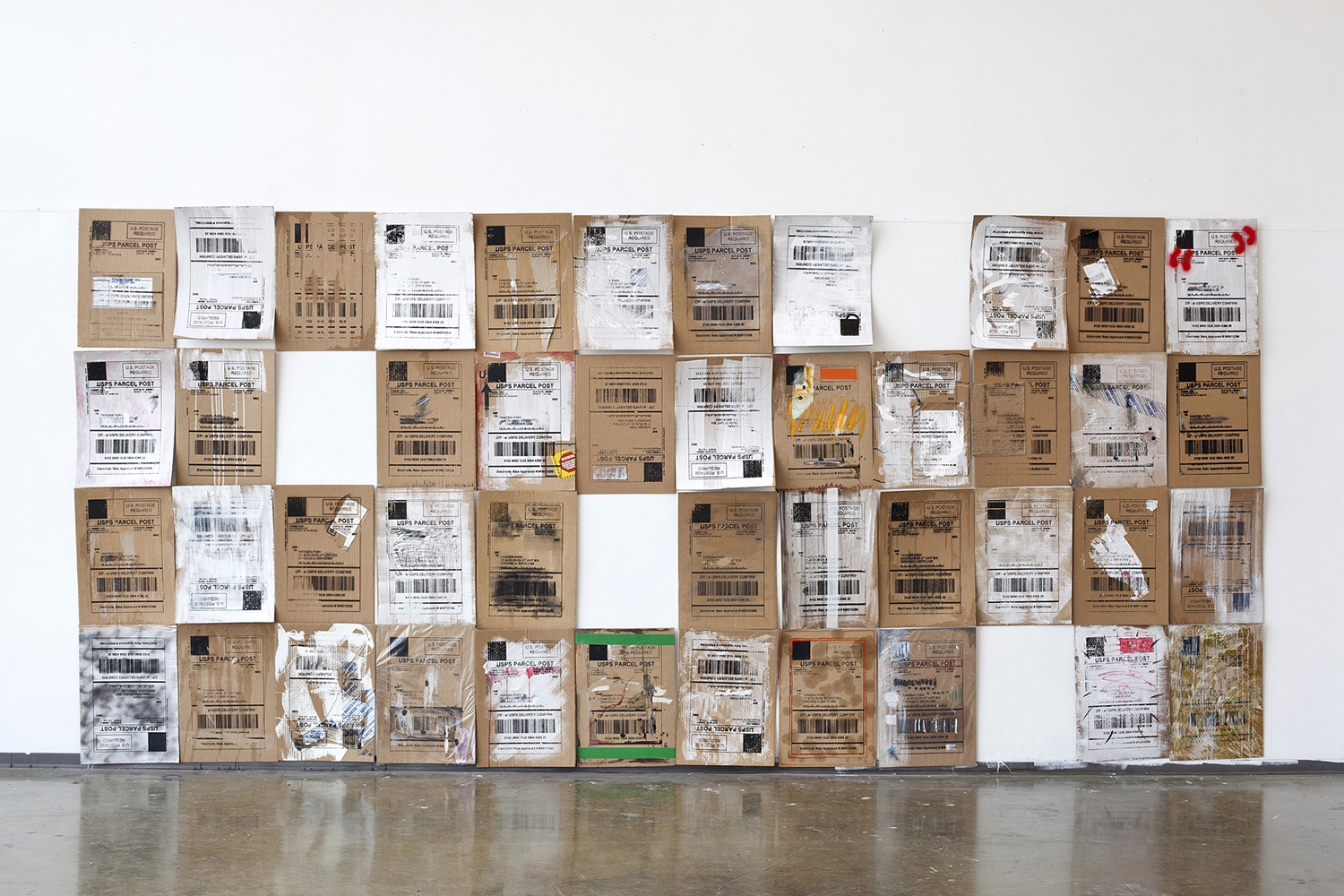
Yangbin Park is an Assistant Professor of Art and Design at the University of Memphis, specializing in printmaking and installation art. He holds a BFA from the School of the Art Institute of Chicago (2011) and an MFA from Tyler School of Art & Architecture, Temple University (2013). His academic roles include Studio Coordinator, Graduate Studies instructor, and leadership in the Printmaking Program's curriculum and outreach. Current research focuses on critical cartography, cultural boundaries, and bilingual identity through experimental printmaking and installation. Teaching: Leads courses in Printmaking (I-III), Two-Dimensional Media, and Graduate Seminars Service: Oversees Printmaking studios, guest speaker programs, and graduate reviews Key research interests include social engagement through art, mapping as human documentation, and intercultural visual dialogues. Recent exhibitions include solo shows at CICA (2024) and UAH (2023), and group shows in Memphis, Puerto Rico, and South Korea. Awards include Directangle Press Residency (2025), CICA Studio Program (2024), and recognition at The Print Center and Janet Turner Museum. Active in international residencies and curatorial committees, including the International Symposium on Electronic Arts (ISEA). Advises 18 students across BFA/BA programs, mentoring exhibitions like 'Collective Expressions' (2024) and 'For the Love of Ink' (2022). Grants include $2,925 CCFA Seed Grant (2024-25) and $1,650 Art Department Travel Fund (2024).
Jingao Xu is a Research Fellow in the Computer Science Department at Carnegie Mellon University's School of Computer Science, based in room 9120 of the Gates and Hillman Centers. His research bridges computer vision, robotics, and edge computing with a focus on real-world applications in drone systems and mobile sensing. His work addresses critical challenges in resource-constrained environments through innovative sensor fusion techniques. Xu's primary research centers on event camera technology , where he pioneers applications in drone navigation, SLAM, and environmental monitoring. His contributions include deraining algorithms using state space models (PRE-Mamba), mmWave radar-event camera fusion for drone landing, and multi-robot gas source localization (SniffySquad). He specializes in extracting value from high-frequency event streams under challenging conditions like rain, low light, and high-speed motion, with significant work in fall detection systems and urban air quality monitoring through mobile crowd-sensing (CatUA). Analysis of his 15 most recent publications (2024-2025) reveals three dominant trends: (1) Adoption of state space models (particularly Mamba variants) for efficient event stream processing, (2) Integration of event cameras with complementary sensors (mmWave radar, depth, IMU) for robust perception, and (3) Development of edge-assisted frameworks for real-time drone operations in wildfire suppression and autonomous navigation. His work consistently targets practical deployment on mobile platforms with severe computational constraints. No scientific awards or honors were mentioned in the available information. Details regarding student advising, research grants, laboratory affiliations, or team structures were not provided in the source material.
Michael Hall is an Associate Professor of Fine Arts Practice at California State University East Bay (CSUEB), specializing in painting, video, and interdisciplinary art. He holds an MFA from Mills College and a BFA from California College of the Arts. His work explores themes of personal objects, parenthood, family dynamics, and the interplay between art and history. Notable exhibitions include solo shows at Catharine Clark Gallery and the Townsend Center for the Humanities, UC Berkeley. Hall has been recognized with awards such as the Joan Mitchell Foundation Grant and Alameda County Arts Leadership Award. He has held teaching roles at UC Berkeley, Mills College, and Creative Growth Art Center, where he founded their video production program. His curatorial work includes exhibitions at CSUEB’s University Art Gallery and Montalvo Arts Center. Education: MFA in Painting/Video, Mills College, Oakland, CA (2008) BFA in Painting, California College of the Arts, San Francisco, CA (1996) Awards: Joan Mitchell Foundation Painters & Sculptors Grant (2010) Alameda County Arts Leadership Award (2014) SECA Award Nominee (2023, 2022, 2017, 2012) Research Focus: Contemporary art practices, historical reinterpretation, video production, and the role of everyday objects in artistic narrative. His artistic practice integrates painting, video, and installation to examine human experiences through mythological, historical, and domestic lenses. Recent projects include For Real Life (2024, Catharine Clark Gallery) and A Course of Action (2012-2015, participatory installations). Hall’s work critiques societal norms while emphasizing mindfulness and observation. Teaching and mentorship are central to his career, with over 13 years at Creative Growth Art Center and contributions to programs at UC Berkeley and Pont Aven School of Contemporary Art. He has curated exhibitions such as The Then in Now (2018) and StARTup Art Fair (2015).
Nichole DeWall is a Professor of English at McKendree University, serving as Director of the Honors Program and a Provost Fellow. She holds a Ph.D. from Northeastern University (2008), an M.A. from the University of Nebraska-Lincoln (2001), and a B.A. from St. Olaf College (2000). Her research focuses on innovative pedagogical strategies, Shakespeare studies, and the intersection of digital media with humanities education. DeWall frequently publishes in The Teaching Professor , emphasizing practical teaching advice, classroom climate optimization, and bias mitigation in student evaluations. Her work also explores historical texts like John Davies’ Triumph of DEATH and George Herbert’s poetry, contextualized through modern challenges like pandemic teaching. She advocates for trust-based assessment practices and integrates classical literature into contemporary educational discussions. Education: Ph.D., English, Northeastern University (2008) M.A., English, University of Nebraska-Lincoln (2001) B.A., English, St. Olaf College (2000) Research Interests: DeWall’s work bridges early modern literature and modern pedagogy. She examines how Shakespearean themes inform teaching strategies, champions the use of course packs and audiobooks in curriculum design, and develops frameworks to address bias in student evaluations. Her writing often blends personal anecdotes with scholarly insights, offering actionable advice for educators. Recent Article Trends: Her 2023-2024 articles prioritize actionable teaching advice, bias-aware assessment, and leveraging historical texts for modern pedagogical innovation. She consistently advocates for educator well-being and student evaluation transparency. Labs/Teams: She led program notes for McKendree University’s 2009 production of Love’s Labour’s Lost , demonstrating her commitment to integrating theater into literary education.
Hansjörg Mixdorff is a Professor of Digital Audio and Video Processing, Speech Communication at Beuth University of Applied Sciences Berlin, where he has been teaching since April 2001. He is affiliated with the Faculty of Computer Science and Media, Department of Multimedia Technology (Audio/Video) / Technical Speech Processing. Prior to his professorship, he worked as a lecturer in Digital Signal Processing at the same institution from April 1999 to March 2001. Professor Mixdorff's educational background includes: 1983-1990: Electrical Engineering studies at Technical University Berlin, specializing in software engineering, digital speech processing and radio-frequency engineering 1990-1993: Additional studies in Japanese, Chinese and phonetics at Free University Berlin May 1998: Earned his D.Eng. in Electrical Engineering from TU Dresden July 2002: Completed his habilitation (D.Eng. habilitatus) at TU Dresden His primary research interests focus on the modeling of prosodic features of speech , particularly in cross-language comparison, and Text-to-Speech systems . More recently, he has been active in the area of speech perception , especially in auditory-visual settings. His work extensively utilizes the Fujisaki model for analyzing and synthesizing F0 contours in speech. Professor Mixdorff has conducted significant research on German intonation patterns, as evidenced by his D.Eng. thesis "Intonation Patterns of German - Quantitative Analysis and Synthesis of F0 Countours," which presents a model elaborating on the tone switch approach to form a quantitative description of intonational events. Professor Mixdorff has demonstrated international research collaboration, having worked with institutions in Japan (Science University of Tokyo, University of Tokyo), Thailand (Chulalongkorn University), and Taiwan (National Chiao Tung University). His habilitation work involved supervisors from TU Dresden, University of Tokyo, and University of York. With exceptional linguistic abilities, Professor Mixdorff is fluent in German (native), English, French, Spanish, Russian, Japanese, Chinese, and Thai. This linguistic diversity likely informs his cross-linguistic speech research. Beyond academia, he is an active musician with several albums released under his name.
Dr. Markus Mühling is a Research Fellow in the Department of Mathematics and Computer Science at Philipps-Universität Marburg, working under Prof. Bernd Freisleben. His research focuses on deep learning applications for audio/video content analysis and biomedical data interpretation. He joined the group in 2015 and has contributed to projects involving wildlife monitoring, medical imaging, and heritage digitization. His work spans sensor networks, neural network architectures, and edge computing solutions for real-world challenges. Key research areas include: Deep learning for bioacoustic and visual species recognition Automated analysis of biomedical and histological images Edge-based AI systems for resource-constrained environments Content-based retrieval in video and image archives Publications highlight advancements in biodiversity monitoring (e.g., acoustic sensor networks), medical imaging (e.g., blood cell counting), and cultural heritage (e.g., organ tablature transcription). His work bridges theoretical machine learning with practical ecological and biomedical applications.
Rosa María Manchón Ruiz is a Professor of Applied Linguistics at the University of Murcia, Spain. She holds an affiliation with the Faculty of Arts and Humanities and the Department of English Philology. She completed her doctoral studies at the University of Murcia with a thesis on psycholinguistic and pedagogical aspects of language learning (1989). Her research focuses on second language acquisition, particularly in the areas of second language writing and cognitive dimensions of multilingual text production. She has been actively involved in editorial roles, serving as editor of the Journal of Second Language Writing (2008–2014) and associate editor of the Modern Language Journal . Manchón’s theoretical contributions include distinguishing between writing-to-learn (WL) and learning-to-write (LW) dimensions in L2 contexts. Her work emphasizes cognitive processes in writing, such as restructuring strategies, temporal allocation of writing tasks, and the interplay between psycholinguistic factors and pedagogy. She has authored/co-authored influential books like Writing in Foreign Language Contexts (2009), Handbook of Second and Foreign Language Writing (2016), and edited volumes on task-based language learning and multimodal composition. Professional service includes membership in the Executive Board of the International Association of Applied Linguistics (2011–2014) and participation in academic events such as the Campus Mare Nostrum summer course on scientific writing in English (2012). Her research has been published in prestigious journals like Language Learning , Annual Review of Applied Linguistics , and International Review of Applied Linguistics . Her academic contributions span pedagogical frameworks, empirical studies on L2 writing processes, and advancements in theoretical models linking cognitive psychology with applied linguistics. Current research interests include multimodal composition, task complexity effects, and the integration of technology in L2 writing instruction.
Dr. Longin Jan Latecki is a Professor in the Department of Computer and Information Sciences at Temple University. His research focuses on computer vision, medical imaging, digital geometry, and artificial intelligence. He has held editorial roles, including Associate Editor-in-Chief of Pattern Recognition and roles on the editorial boards of Computer Vision and Image Understanding and Journal of Imaging . He has organized events like the Asian Conference on Pattern Recognition and chaired the PhD Track in Artificial Intelligence. His research spans topics such as shape-based object detection, video mining, and robot mapping. Notable projects include the Shape-Based Image Search Engine and work on Well-Composed 3D Images . He has authored over 300 publications and advised numerous PhD students in areas like medical imaging, computer vision, and data mining. Dr. Latecki has collaborated on projects such as ClimatePub4KG for climate modeling and SciDMT for scientific mention detection. His work emphasizes practical applications, including dental imaging analysis, autonomous robotics, and multimedia transmission optimization. He teaches courses like Mathematical Concepts in Computing and Artificial Intelligence .
Luke Best is a Lecturer in Illustration at Camberwell College of Arts. He is also the Creative Director of Peepshow Collective, a multidisciplinary group producing installations, workshops, live events, and animations. His professional work spans illustration and motion design for clients like BBC, The New York Times, and Victoria & Albert Museum. Best’s Emmy Award (2015) recognizes his motion design contributions to PBS’s ‘How We Got to Now.’ His creative practice extends to experimental material processes such as screenprinting, woodblock printing, and appliqué, resulting in exhibited works including artist books, textiles, and costumes shown globally. Awards: Emmy Award for Outstanding Motion Design (2015) Labs/Teams: Active with Peepshow Collective, collaborating on multimedia projects.
Samuel Kozaitis is a Professor at Florida Institute of Technology in the Department of Electrical Engineering and Computer Science, College of Engineering and Science. His expertise spans Image Processing, Higher-order Statistics, and Infrared Imaging. He has contributed extensively to robotics, mechatronics, and environmental engineering through his research. Research interests include advanced image denoising techniques, robotic kinematics, nuclear energy applications, and environmental protection strategies. His work bridges theoretical foundations with practical implementations in fields like medical imaging and space exploration. Notable research trends include contributions to: Robotic systems and Stewart platform kinematics Nuclear fusion and energy sustainability Medical and thermal imaging enhancement Social media-driven traffic analysis Sensor fusion and multimodal imaging His publications span over two decades, with recent focus on space technology, renewable energy management, and autonomous systems.
Senior Lecturer Daniel Fredriksson is affiliated with Dalarna University's School of Culture and Society, specializing in Sound and Music Production. He serves as Programme Director for the Master’s Programme in Audiovisual Studies (KAVPA) and the One Year Master Programme in Audiovisual Studies (HMASA), and Course Coordinator for courses including Audiovisual Production Processes (ABQ2AZ). His research focuses on intersections between music production, cultural policy, and traditional music studies, with particular attention to Swedish folk music history, audiovisual technologies, and subcultural musical movements like black metal. Recent projects include studies on the Mora-oud hybrid instrument, the cultural implications of music festivals, and the role of music in post-industrial communities. Research interests span ethnomusicology, music industry dynamics, gender studies in the music sector, and the application of resonance theory to audiovisual art. He actively contributes to international conferences such as the International Council for Traditional Music (ICTM), producing conference reports and collaborative research outputs. His work frequently bridges traditional practices with contemporary digital media, exemplified in projects like 'Evangistrum' and audiovisual storytelling initiatives. Teaching responsibilities emphasize knowledge production through design methodologies and cross-genre music studies. Advising and grant-related activities are not explicitly detailed in available records. Fredriksson collaborates on interdisciplinary projects involving musical instrument innovation and cultural heritage preservation, reflecting his commitment to both academic rigor and applied creativity.
Ireneusz Olszewski is an academic professor at the Academy of Art and Design in Wrocław, Poland, affiliated with the Media Art Department under the Faculty of Graphics and Media Art. His expertise spans intermedia art, digital media, animation, and experimental visual practices. He graduated in 1985 from the same institution with a major in Painting and an annex in Animated Film. Education: 1985: Bachelor of Painting with Animated Film Annex, State Higher School of Visual Arts (now Academy of Art and Design), Wrocław. Research Interests: Focuses on intermedia graphics, animated film, video installations, experimental structures in art, and creative applications of new media. He explores rationalization of visual messages, aesthetics of intermedia, and hybrid techniques merging traditional and digital methods. Awards & Honors: 1986: First Prize and Audience Award (Experimental Film Category), Mons, Belgium. 1986: Minister of Culture and Art Scholarship. 1985: Rector’s Award, Academy of Art and Design. Teaching & Activities: Teaches Intermedia Activities, Multimedia, Animated Film, and related courses. Organized over 5 conferences for the Best Media Art Diploma Competition and participated in multimedia festivals globally. Active in open-air multimedia events and exhibitions in Poland and abroad. Exhibitions & Publications: Featured in exhibitions like Permutation (China, 2018) and Wrocław Animation (2009). Authored monographs on intermedia and experimental animation, including works like Raz, dwa, trzy and Metamorfopsje .
Mehwish Nasim is a Lecturer in Computer Science at The University of Western Australia (UWA) and holds adjunct positions at the University of Adelaide and Flinders University. She is an Associate Investigator at the ARC Centre of Excellence for Mathematical and Statistical Frontiers and a member of the Equity and Diversity Committee. With 17+ years in technology, she has served as a Research Scientist at the University of Konstanz and a lecturer at the National University of Sciences and Technology (Pakistan). Her PhD from the University of Konstanz focused on inferring social relations in partially observable networks. Research Interests Her work spans social network analysis, machine learning, medical image processing, and health analytics. Current projects include predicting population-level events in Australia, detecting misinformation, modeling social media polarization, and improving decision-making via complex systems approaches. Grants & Funding Key grants include a Defence AI Research Network grant (~$100K), a Defence Innovation Partnership grant ($150K), and Flinders Impact Seed Funding ($10K) targeting vaccine misinformation in migrant communities. She also secured ACEMS grants for social media polarization studies and led proposals in wargame modeling and transnational research. Teaching She teaches courses such as Algorithms, Agents & AI (UWA), Data Engineering (Flinders), and Database Modelling. Past roles include lecturing at NUST and tutoring network dynamics at Konstanz. Media & Outreach Featured in 'Women in STEM' series (2022), Flinders News (2022), and CSIRO's Data61 spotlight (2021). She has been interviewed on disinformation campaigns and podcast discussions on 'fake vs fact' (ACEMS, 2020).
Jonna Vuoskoski is a professor at the University of Oslo, holding a dual position in the Department of Musicology and the Department of Psychology (50/50 split). She leads the Interaction & Pleasure research cluster at the RITMO Centre for Interdisciplinary Studies in Rhythm, Time and Motion. Her research focuses on music cognition, emotion, social bonding, and entrainment. She earned her doctorate from the University of Jyväskylä (2012) and held a postdoctoral fellowship at the University of Oxford (2012–2017). Notable projects include studies on music-induced sadness, crossmodal perception in performance, and the role of empathy in musical engagement. Education: PhD in Musicology, University of Jyväskylä, 2012 Postdoctoral Research Fellowship, University of Oxford, 2012–2017 Research Interests: Music and social bonding, entrainment, music-induced emotions, individual differences, and music performance anxiety. Her current projects explore entrainment, social bonding, and pleasure in music. Publications: Over 50 peer-reviewed articles in journals like Music & Science , Psychology of Music , and Frontiers in Psychology . Recent work examines audience musical absorption, fantasy empathy, and aversive music experiences. Labs/Teams: Leader of the Interaction & Pleasure cluster at RITMO; collaborates with the fourMs Lab and the Being Moved research group. Active in projects such as 'Entrainment, Social Bonding, and Pleasure' and 'Bodies in Concert.'