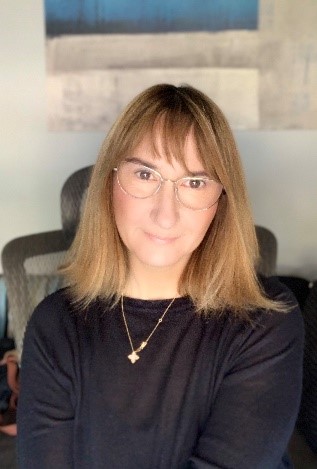
Yoana Minkova is an Assistant Professor in the Department of Informatics at New Bulgarian University, where she has taught since 1999. Her academic responsibilities include directing the 'Computer Media Technologies' program and previously leading the Multimedia and Computer Visualization Studio (2000-2006) and Center for Electronic Materials (2006-2007). Her research specializes in: E-learning systems and multimedia educational tools Automated knowledge assessment methodologies Computerized testing frameworks and optimization Educational software development and authoring tools She has participated in international collaborations including SOCRATES ERASMUS teaching mobility (2001-2012), STELLA (2008-2009), and STENCIL (2011-2013) projects, with annual lectures at Germany's University of Applied Science in Wurzburg (2001-2014). She has supervised bachelor's students on multimedia application development projects and developed educational products including interactive atlases, multimedia catalogs, and automated testing systems.
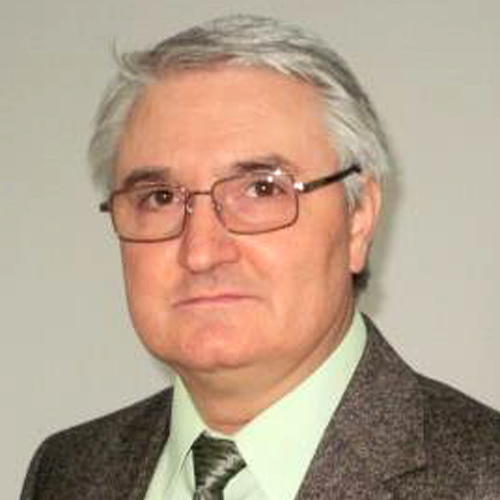
Associate Professor Dan Laurentiu Lacrămă is a faculty member at Tibiscus University of Timisoara with active research and teaching commitments. He previously served as President of the University Senate from 2012 to 2018, demonstrating significant institutional leadership. His educational qualifications include a PhD in Electronics (1999) and a graduate degree from Politehnica University of Timisoara (1987). Dr. Lacrămă's research spans interdisciplinary technical domains: Image Processing Computer Graphics Database Systems Object-Oriented Programming Advanced Multimedia Applications Internet and Intranet Technologies His scholarly output comprises 52 scientific articles and 7 research-design contracts, reflecting consistent contributions to computational sciences and engineering education. Recognition: Medal 'Merit for Education' 3rd class (2004) He has developed and taught 6 university courses including Image Processing, Computer Graphics, and Object-Oriented Databases. His administrative tenure as Senate President underscores dual expertise in academic governance and technical instruction within Timisoara's higher education ecosystem.
Christos Georgiadis is a Professor in the Department of Applied Informatics at the University of Macedonia, Thessaloniki, Greece, specializing in E-Commerce Technologies, Web Services, and Security frameworks. His academic credentials include: B.Sc. in Mathematics from Aristotle University of Thessaloniki (1987) Postgraduate scholarship in Informatics at Universita' di Pisa, Italy (1989) Ph.D. in Information Systems Security (Access Control in Web Databases) from Aristotle University of Thessaloniki (2002) His research integrates E-Commerce Security, Mobile Commerce, and Context-awareness with practical applications in Web Services & e-Transactions. Current investigations focus on personalization algorithms and e-commerce application development within team-based collaborative environments, addressing critical gaps in secure transaction processing and multimedia database management. Professional recognition includes: ACM Professional Member ACM Senior Member (2014) He actively supervises research within the Software and Data Engineering Lab, directing projects on DevOps frameworks and technical debt management while mentoring graduate students in e-commerce system design.
Dr Esperança Amengual Alcover serves as a Tenured Contract Senior Lecturer in the Department of Mathematics and Computer Science at the University of the Balearic Islands (UIB), where she has maintained continuous faculty affiliation since 2000. Her institutional presence spans teaching, research, and laboratory leadership across multiple engineering programs. Her research portfolio centers on six interconnected domains: software process improvement, human computer interaction, facial expression recognition, artificial intelligence, explainable AI, and e-health serious games. This interdisciplinary work converges at the intersection of computer science and healthcare innovation, particularly through her involvement with the Institute for Research in Health Sciences (IUNICS). Academic contributions are amplified through three research entities: the Computer Graphics and Vision and AI Group (UGiVpOeIA), Multimedia Information Technologies Lab (LTIM), and Behaviour And Technology LABoratory (BATLAB). These platforms facilitate her applied research in medical AI systems and therapeutic gaming environments. Teaching responsibilities encompass core computer science courses across multiple engineering degrees, with current focus on Databases I and Software Engineering and Databases. Student engagement follows structured appointment protocols through her Anselm Turmeda building office. Professional profiles: ORCID, ResearcherID, Scopus, Dialnet Contact: Room 111, Anselm Turmeda Building, +34 971 172676 Research nexus: Computer science applications in healthcare technology
Dr. Marit Kastaun serves as Lecturer for special tasks in the Didactics of Biology at the University of Kassel since November 2023, with continuous affiliation to the department since 2013. She is a core researcher at the FLOX Teaching and Learning Laboratory and contributes to the outdoor education site Freilandlabor Dönche. Her educational background includes: First State Examination for Gymnasium Teaching (Biology/History), University of Kassel (2017) Cumulative PhD in Biology Didactics, University of Kassel (2024) Dr. Kastaun's research pioneers the integration of AI tools in biology teacher education, focusing on adaptive feedback systems for scientific hypothesis formation and diagnostic competence development. Her work bridges digital learning environments with hands-on experimentation, particularly through video-based resources and eye-tracking studies of cognitive processes during scientific inquiry. Current projects emphasize context-aware AI applications in both classroom and outdoor laboratory settings. Her funded research includes: Shift project (2023-present): AI-driven hypothesis feedback systems ProfiLL (2020-2023): Intelligent systems for teacher professionalization Digital Media Handling (2020-2022): Baseline digital competencies for biology students At the FLOX Teaching Laboratory, she develops and tests digital learning scenarios that merge theoretical knowledge with practical experimentation, with recent focus on Mimosa pudica movement studies and photosynthesis measurement techniques. Her approach emphasizes inclusive design principles for diverse learner needs in science education.
Dr. Maira Kotsovoulou serves as Assistant Professor in the Department of Information Technology at Deree College and Graduate School, The American College of Greece, a position she has held since February 1, 1996. Her academic journey spans over 25 years of teaching and research in software systems and educational technology. Educational background includes: Doctorate in Technology Enhanced Learning, University of Lancaster (2011–2019) MSc in Human Computer Interaction, Heriot-Watt University (1994–1995) BSc in Computer Information Systems, The American College of Greece (1990–1994) Her research centers on the Software Systems and Databases Research Group, where she investigates visual programming applications for undergraduate education, automated assessment tools, and database optimization techniques. This work bridges theoretical computer science with practical pedagogy, focusing on how technology enhances student motivation and learning outcomes in programming courses. Her methodology combines empirical classroom studies with software development expertise gained through industry projects. Recent publications (2013–2018) reveal an evolving focus from collaborative resource tagging to sophisticated e-assessment systems, consistently addressing challenges in computer science education. The trajectory demonstrates increasing sophistication in analyzing instructor experiences and student perceptions while maintaining practical applicability in real classroom settings. Professional recognition includes: Oracle Certified Professional (OCP) in Database Administration Her industry engagement as a freelance solution architect complements academic work, with notable projects including Greece's national e-prescription system (IDIKA), COSMOTE retail software, and medical decision support systems. This dual expertise creates unique opportunities for students to engage with both academic research and enterprise-scale development challenges. As leader of the Software Systems and Databases Research Group, she fosters collaboration between academic theory and industry practice, emphasizing agile methodologies and practical implementation of educational technologies in real-world software development contexts.
Demosthenes Akoumianakis serves as Professor in the Department of Electrical and Computer Engineering (ECE) at the School of Engineering, Hellenic Mediterranean University (HMU), Crete, Greece, and has been Scientific Responsible of the iSTLab research group since 2006. He holds a BA (Hons) in Computing in Business (1990) from the University of Huddersfield, UK, and MSc (1995) and PhD (1999) degrees in Human-Computer Interaction from the University of Kent at Canterbury, UK. His research spans Human-Computer Interaction, Collaborative Technologies, and Database Systems, with significant contributions to virtual communities and social interactive technologies. His work appears in top-tier journals including Human Computer Interaction , International Journal of Human Computer Interaction , and ACM/IEEE conference proceedings, reflecting expertise in digital interfaces and collaborative systems. His scientific awards include: The High School Graduate’s award from the Municipality of Heraklion, Crete (1984) 1st IBM Prize for Final year Dissertation, University of Huddersfield (1990) Prof. Akoumianakis has supervised 10 master's theses at HMU and three PhD graduates across the Hellenic Open University and KU Leuven. He has held key administrative roles including Head of Applied Informatics & Multimedia Department (2007-2009) and Director of the 'Informatics & Multimedia' postgraduate program (2012-2014). He leads the iSTLab research group at HMU and previously directed the Latice laboratory (2015-2019), focusing on collaborative computing and information systems development.
Marius Călin serves as a Lecturer in the Department of Exact Sciences at the Faculty of Horticulture, University of Agricultural Sciences and Veterinary Medicine of Iasi, Romania. His academic profile bridges computational science with agricultural applications through expertise in Information Technology, Applied Mathematics, and E-learning systems development. His research portfolio centers on five core domains: Soft Computing in Agricultural Sciences: Pioneering fuzzy logic applications for plant breeding and greenhouse management Decision Making under Uncertainty: Developing models for agricultural scenarios with incomplete data Decision Support Systems: Creating tools for land suitability assessment and resource optimization E-learning Applications: Designing specialized platforms for agricultural education Graph Databases: Implementing knowledge representation systems for agricultural data Analysis of his publication trajectory reveals an evolution from foundational fuzzy decision models (2000-2007) toward increasingly interdisciplinary work. Recent publications (2015-2022) demonstrate strong convergence between e-learning infrastructure development and agricultural informatics, particularly through Moodle-based systems for remote education during the pandemic and computational models for soil management. His work consistently emphasizes practical implementation of grid computing and soft computing techniques in agricultural contexts. Dr. Călin has secured significant research funding through seven major contracts, including leadership as USAMV Iasi responsible for the CEEX 1801 grid computing project (2006-2008) and contributions to sustainable soil management initiatives (ECOSEUMET, CNCSIS 738). His grant portfolio demonstrates sustained focus on translating computational research into agricultural solutions. Within the university ecosystem, he serves as Moodle platform administrator and coordinates Informatics discipline activities, fostering cross-departmental collaboration. His professional affiliations include ESNA (European Society for New Methods in Agricultural Research) and ROMAI (Romanian Society of Applied and Industrial Mathematics), reflecting his commitment to interdisciplinary scientific exchange.
Bjarni Gunnarsson is a composer and computer scientist from Iceland currently serving as faculty at the Institute of Sonology, Royal Conservatoire The Hague. He teaches algorithmic composition and computer music courses including Programming and Music 1, Programming and Music 2, and Composing with Algorithms. His academic work bridges the technical field of computer science with artistic composition practices. His educational background includes computer science studies at the University of Reykjavík and composition training with Gerard Pape, Trevor Wishart, Agostino Di Scipio, and Curtis Roads at CCMIX in Paris. He completed his master's degree in Sonology under the guidance of Paul Berg, Kees Tazelaar, and Richard Barrett. Gunnarsson's research focuses on the intersection of sound and computational processes, with particular interest in process-based sound, digital synthesis, and algorithmic composition. His work explores how sound emerges from interacting behaviors and the relationship between algorithms and musical behavior. He creates compositions that foreground behaviors, actions, and fuzzy materials, often developing systems where sound materials form, shift, and dissolve through interaction, memory, and transformation. His recent research projects demonstrate a trajectory toward increasingly sophisticated integration of computational methods in musical creation, with significant emphasis on live coding, persistent synthetic environments, database systems, and machine listening applications for sound synthesis. These projects reveal his consistent exploration of how computational processes can generate and transform sound in novel ways. Presented work at major international conferences including ICMC, ICLC, SMC, and xCoAx Performed at notable festivals such as Tectonics, Rewire, Today's Art, Sonar, and Présences Électroniques Music released on respected experimental labels including SUPERPANG, SØVN, 3LEAVES, Flag Day Recordings, Tartaruga, and Shipwrec Gunnarsson actively contributes to the academic community through teaching, research projects with the Lectorate Music group, and participation in the Joint Research Day events. His work demonstrates a sustained commitment to exploring the generative potential of sound through computational processes, creating environments where sound materials evolve through interaction with complex systems.
Grzegorz Nawrot serves as a Professor at the Department of Residential and Public Architecture Design within the Faculty of Architecture at Silesian University of Technology in Gliwice, Poland. His academic career includes earning his doctorate in 2000 and achieving habilitation (higher doctorate) in 2016, qualifying him as 'Dr. hab.' in the Polish academic system. Professor Nawrot's research specializes in Architecture and Urban Planning, with particular emphasis on: Space design in architectural contexts Urban planning and development Housing design and living spaces Architectural renovation and restoration Urban space structure and organization Place-making in Polish urban environments With 111 publications contributing to a ministerial score of 651, his scholarly work demonstrates consistent focus on the relationship between architectural design and human habitats, particularly within the Gliwice region. His research output includes multimedia projects, architectural works, and academic activities that bridge theoretical concepts with practical applications. Professor Nawrot has supervised 2 doctoral promotions and maintains scholarly profiles across major academic databases including ORCID (0000-0002-2704-4957), Google Scholar, and Scopus. His professional achievements include 11 documented accomplishments though specific award details aren't provided in the available information.
Marta Somoza Fernández is a Professor in the Department of Library Science, Documentation and Audiovisual Communication at the Faculty of Information and Audiovisual Media, University of Barcelona. With over two decades of academic experience since 1999, she has established herself as a prominent figure in information science and library studies. Dr. Somoza Fernández holds a degree in Contemporary History (1989), Cultural Anthropology (1995), and a doctorate in Documentation (2009), all from the University of Barcelona. Her academic journey reflects a deep commitment to the evolution of information management and scholarly communication. Her research focuses on documentary databases, information retrieval systems, bibliometric studies, and user training methodologies. She has pioneered approaches to evaluating interactive tutorials developed by academic libraries, analyzing journal visibility in emerging citation indexes, and identifying predatory journals in bibliographic databases. Her work bridges theoretical frameworks with practical applications in library science. Analysis of her recent publications reveals a consistent focus on bibliometric evaluation of scholarly communication, particularly regarding Spanish journals in international databases. Her research demonstrates growing interest in journal evaluation systems like MIAR (Matrix for Information and Journal Evaluation) and the Emerging Sources Citation Index (ESCI). She has also maintained a strong commitment to information literacy through her studies on interactive training materials for academic libraries. Dr. Somoza Fernández has participated in significant research projects including "i-VIU: Grup d'estudis mètrics sobre el valor i ús d'informació" (2005-2014) and studies on the identification and evaluation of journals in Spanish humanities and social sciences research. Her work has been supported by institutions including the Department of Universities, Research and Information Society of the Catalan Government (DURSI) and the Ministry of Education and Science. Her teaching portfolio spans multiple disciplines within information science, including information sources for scientific research, nursing research methodology, user support and training, and communication techniques. She has developed specialized courses on web tutorials, information retrieval in scientific databases, and bibliography management tools.