Stefanie Größbacher is a Junior Researcher at the Institute of Creative Media/Technologies within the University of Applied Sciences St. Pölten, Austria. She is affiliated with the Department of Media and Digital Technologies and actively contributes to the Media Computing Research Group . Her work focuses on innovative applications of digital technologies across diverse fields including healthcare, education, and cybersecurity. Größbacher holds a BSc and Dipl.-Ing. in engineering, and her research spans visual analytics , AI-driven systems , and user-centered design . She leads projects such as the Josef Ressel Center for Knowledge-Assisted Visual Analytics (industrial data analysis) and the FIVE Project (youth social media empowerment). She also collaborates on initiatives like Smart Companion (AI for autonomous living) and IoT4LAC (smart community solutions). Her technical contributions include designing museum apps , developing cybersecurity training games , and creating AI tools for content documentation . She has authored over 20 peer-reviewed publications since 2019, with a focus on usability testing, mixed reality education, and healthcare technology. Key Projects: Josef Ressel Center, FIVE, IoT4LAC, Smart Companion, MIRACLE Research Areas: Visual Analytics, Mixed Reality, Cybersecurity, Healthcare Technology Teaching Roles: Contributes to study programs in Creative Computing, Media Technology, and Digital Healthcare
Dieter W. Fellner is a distinguished Professor of Computer Science at Technical University of Darmstadt, Germany, where he serves as Director of the Fraunhofer Institute of Computer Graphics (IGD). He also holds a concurrent position as Professor of Computer Science and Founding Director of the Institute of Computer Graphics and Knowledge Visualization at Graz University of Technology, Austria. With a career spanning over three decades, Fellner has established himself as a leading figure in computer graphics, digital libraries, and related fields. Education: Diploma in Technical Mathematics, Graz (1981) Doktorate (Ph.D.) in Technical Mathematics, Graz (1984) Habilitation, Graz (1988) Professor Fellner's research spans multiple domains within computer science, with a primary focus on computer graphics and its applications. His work encompasses computational geometry, 3D modeling and rendering, virtual and augmented reality, and digital libraries with emphasis on cultural heritage preservation. He has made significant contributions to algorithms for integrating modeling and rendering processes, efficient visualization techniques, and generative modeling approaches. His research extends to practical applications in internet-based multimedia systems, where he coordinated a strategic initiative funded by the German Research Foundation that supported approximately 50 researchers across 21 groups from 1997 to 2005. An analysis of Professor Fellner's publication record reveals a consistent trajectory of innovation in computer graphics and digital document systems. His early work focused on foundational graphics algorithms and videotex systems, evolving toward more complex 3D document modeling, visualization techniques, and digital library architectures. A notable trend is his interdisciplinary approach, bridging computer graphics with applications in cultural heritage, bioinformatics, and brain-computer interfaces. His research demonstrates a progression from theoretical algorithms to practical implementations addressing real-world challenges in information visualization and knowledge management. Scientific Awards: Fellow of the Eurographics Association (2000) Member of the IST Advisory Group for the European Commission (ISTAG) (2007) Best Technical Paper Award (Günther Enderle Award) at Eurographics'98 Conference Honorary Doctorate from the University of Rostock (2019) Throughout his career, Professor Fellner has supervised numerous students and researchers, though specific names are not documented in the available sources. His leadership extends to significant grant activities, most notably coordinating the German Research Foundation's strategic initiative on distributed processing and mediation of digital documents from 1997 to 2005. This major project provided funding for approximately 50 researchers annually across 21 research groups, demonstrating his capacity to lead large-scale collaborative research efforts. He has also served on editorial boards of leading journals and program committees of international conferences, shaping the direction of research in his fields of expertise. Professor Fellner directs the Fraunhofer Institute of Computer Graphics (IGD) in Darmstadt, a prominent research institution focused on applied computer graphics. He also founded and chairs the Institute of Computer Graphics and Knowledge Visualization at Graz University of Technology. These institutions serve as hubs for interdisciplinary research, bringing together computer scientists, domain experts, and industry partners to advance the state of the art in visualization, digital libraries, and knowledge management systems. The teams under his leadership have produced influential work in 3D document processing, cultural heritage digitization, and advanced visualization techniques.
Dr. T.J. Thomson is a Senior Lecturer in Visual Communication and Digital Media at RMIT University, and an Australian Research Council DECRA Fellow (2023–2026). His research focuses on visual communication, particularly the production and consumption of visual journalism, digital media innovation, and media literacy. He has secured over $1.32M in external research funding from organizations including the Australian Research Council and the Australian Academy of the Humanities. T.J. holds leadership roles in global associations such as the National Communication Association and serves on editorial boards for journals like Visual Communication Quarterly . Research Interests: Visual journalism, AI in media, media production processes, visual culture, and journalism ethics. His work emphasizes under-represented identities and innovative methods to enhance research dissemination. Awards: Max Crawford Medal (2023), Diane S. Hope Book of the Year Award (2020), and election to the Queensland Academy of Arts and Sciences (2022). His book To See and Be Seen explores the social dynamics behind news imagery. Industry Experience: Former visual journalist and designer for outlets like The Washington Post and The Associated Press. Current collaborations include projects on AI verification in newsrooms and media literacy initiatives. Teaching: Courses include Principles of Journalism, Visual Editing, and Multimedia Design. Awarded for teaching excellence by the AEJMC (2021) and the Linda Shockley Award (2022).
Zois Boukouvalas is an Assistant Professor in the Mathematics and Statistics Department at American University. His research focuses on interpretable machine learning models for analyzing multi-modal data, integrating information geometry, statistics, and optimization. He applies these methods to biomedical imaging, social/linguistic trends, and chemical data for drug discovery. Boukouvalas holds a PhD in Applied Mathematics from UMBC (2017) and has received grants from the Energetics Technology Center for projects on machine learning in energetic materials and misinformation detection. Education: BS in Mathematics (University of Patras, Greece), MS in Applied and Computational Mathematics (Rochester Institute of Technology), MS and PhD in Applied Mathematics (UMBC). His work bridges theoretical foundations with practical applications, emphasizing ethical AI and underrepresented student inclusion. Recent contributions include panel discussions on AI in energetic materials and co-organizing conferences on latent variable methods in machine learning. Research interests span misinformation detection, multimodal learning, and algorithmic transparency. He has published extensively on topics like hate speech detection, stock market prediction via news data, and data fusion techniques for high-impact events. Awards highlight his innovation in human-assisted machine learning and materials discovery.
Constantine Muravnik is Senior Lector II and Language Program Coordinator in Slavic Languages and Literatures at Yale University. His research examines Nabokov's aesthetic philosophy, Russian poetry, and second language acquisition methodologies. Education includes a Ph.D. (2010) and M.A. (2002) from Yale University, and a B.A. from Moscow State University (1989). Awarded the Kuzmanovich Family Prize for best Nabokov dissertation (2016). Publications analyze mathematical aesthetics in Nabokov's works, philosophical approaches to literature, and Russian historical narratives. Language textbooks include Essential Russian and Complete Russian Course: The Basics. Teaches intensive Russian language courses and content courses on Russian literature/history.
Juan Manuel Rodriguez is an Assistant Professor in the Department of Computer Science at Aalborg University, Denmark. His affiliation is within The Technical Faculty of IT and Design, specializing in Data, Knowledge, and Web Engineering. Dr. Rodriguez holds a PhD in Computer Science and has a strong focus on research areas including Recommender Systems, Web Services, Deep Learning, and Social Media Analysis. His work often intersects with applications in information retrieval, healthcare systems, and crisis management. His research explores topics such as misinformation detection, transformer-based news recommendation, and clinical data analysis using knowledge graphs. He has contributed to projects like HEREDITARY (2024–2027), which integrates heterogeneous data for gut-brain research. Rodriguez has also engaged in media collaborations, including work highlighted in 'Udforsker Mars: Studerende fra Aalborg samarbejder med NASA' (June 2024). Key technical interests include leveraging neural networks for user behavior modeling, optimizing retrieval systems, and addressing ethical challenges in AI. His recent publications (2020–2025) span domains from pandemic mental health tracking to parking availability prediction, reflecting a multidisciplinary approach to computational challenges.
Anneli Dyrvold is an Associate Professor at the Department of Science and Mathematics Education at Umeå University and a Research Fellow at the Umeå Mathematics Education Research Centre (UMERC). She holds a Docent title in Mathematics Education, reflecting her advanced academic standing. Her research focuses on digital teaching platforms, semiotic resources in mathematics education, and the interplay between multimodal texts and student learning. Her educational background includes a doctoral thesis titled Which textual features are difficult when reading and solving mathematics tasks? (2016), highlighting her expertise in analyzing textual and cognitive challenges in mathematical tasks. She has also authored or co-authored numerous peer-reviewed articles in journals such as the Scandinavian Journal of Educational Research , Nordisk matematikkdidaktikk , and LUMAT . Dyrvold’s research emphasizes digital learning environments, particularly the role of dynamic and interactive elements in fostering student engagement and problem-solving skills. She employs methodologies like eye-tracking and stimulated recall interviews to study cognitive processes. Her work on the IRIS model offers a framework for interpreting representations in educational materials, aiming to improve task design and assessment validity. Her funded projects include Constructions in mathematical text (2025–2028) and Mathematics teaching material in a digital environment (2020–2023), addressing critical gaps in digital pedagogy and multimodal content analysis. She collaborates with institutions like Stockholm University and the Swedish Society for Research in Mathematics Education (SMDF), contributing to both theoretical advancements and practical educational tools. Labs/Teams: Affiliated with the Umeå Mathematics Education Research Centre (UMERC), she participates in interdisciplinary teams exploring cognitive science, educational technology, and multimodal learning. Her work bridges theory and practice, influencing curriculum design and teacher training in mathematics education.
Constantine Kotropoulos is a Professor at the Department of Informatics, School of Informatics, Aristotle University of Thessaloniki. He holds a PhD (1993) and a Diploma in Electrical Engineering (1988), both from Aristotle University. His professional journey includes roles from Lecturer (1997) to current Professor (2015–present), with extensive postdoctoral and research experience in electrical and computer engineering fields. His research focuses on Digital Signal Processing , Audio/Music/Speech Processing , Pattern Recognition , and Human-Centered Multimodal Interaction . Recent work emphasizes forensic applications (e.g., source device identification), medical diagnostics (speech pathology classification), and explainable AI (face aging, camera model identification). Key research themes include electric network frequency analysis for audio authentication, multimodal fusion for media forensics, and optimization techniques for non-negative machine learning problems. His publications span signal processing, multimedia, and healthcare technology, with a focus on practical applications of advanced algorithms. He maintains active collaborations in interdisciplinary areas such as agricultural disease detection via hyperspectral imaging and route recommendation systems leveraging image-driven data. His work often bridges theoretical computer science with real-world challenges in security, healthcare, and environmental monitoring.
Dr. Hanadi Haddad is a Lecturer in the School of Arts and Humanities at Edith Cowan University (ECU). She holds a PhD from Curtin University (2006) and multiple design-related qualifications including a Bachelor of Arts (Design) with First Class Honours (2000). Her research focuses on design education, healthcare design, data visualization, and interdisciplinary collaboration. Key projects include the HD Magazine series exploring science, health, and politics through innovative art direction, and co-design initiatives in healthcare such as the wheelchair seating project funded by the Disability Services Commission WA (2016–2019). Her scholarly work spans design pedagogy, interactive media effectiveness, and strategic design applications. Notable outputs include studies on advergames’ marketing impact (2014), healthcare user engagement via needle exchange program design (2018), and collaborative approaches to wheelchair seating frameworks. She has supervised PhD candidates in areas like data visualization aesthetics and Disney’s cultural influence on artists, demonstrating her commitment to fostering interdisciplinary research. Dr. Haddad’s creative outputs include exhibitions like The Happiness Project (2014) and academic journals such as The International Journal of the Image . She actively engages with industry through student collaboration projects and strategic design initiatives that bridge academic and applied contexts.
Prof. Dr. André Bresges is a leading academic in physics education at the University of Cologne, where he serves as Managing Director of the Institute for Physics Education within the Faculty of Mathematics and Natural Sciences. His work focuses on digital education, teacher training, and inclusive pedagogy, bridging universities and schools through innovative projects like Hollywood on the Rhine . He is a member of the Department of Mathematics and Science Education and has pioneered the integration of technology in classrooms, including tablets and augmented reality. 2021: Archimedes Prize for commitment to physics education His recent research explores AI-supported data analysis, animated video methodologies, and road safety education, with publications in journals such as Frontiers in Communication and The Physics Teacher . He also contributes to open-access academic publishing and participates in international competitions like MakeX Spark and STEAMEX. Students are advised to contact him directly for thesis-related submissions.
Hermann Maurer is Full Professor of Computer Science at Graz University of Technology (since 1978), with additional roles as Honorary Visiting Professor at Danube University and Honorary Research Fellow at University of Auckland (till 2012). He has held leadership positions including Dean of Computer Science (2004-2007) and Chair of Informatics Section in Academia Europaea (2007-2012). Key Institutions: Graz University of Technology, Austria-Forum, JOANNEUM RESEARCH, Academia Europaea Academic Honors: Member of Finnish Academy of Sciences, Cross of Honour for Arts and Science (Austria), multiple honorary doctorates Research Focus: Networked Interactive Digital (NID) Books, Austria-Forum (1.1M entries), hypermedia systems, anti-monopoly digital frameworks, and societal impacts of technology. He pioneered second-generation web systems and co-founded conferences like ED-MEDIA and I-KNOW. Key Trends in Publications: Recent works emphasize NID systems, interactive encyclopedias, web reliability, and the future of digital libraries. His research spans e-learning, information integration, and combating web-based plagiarism. Scientific Awards: Honorary Doctorates (St. Petersburg, Karlsruhe, Calgary) AACE Fellowship (2003) Integrata Prize (2000) Enter Prize (1999) Advising & Grants: Supervised over 400 M.Sc. and 50 Ph.D. theses. Led multimillion-dollar projects including Hyperwave AG, COSTOC, and Austria-Forum. His work on optical storage and color-graphic microcomputers (MUPID) exemplifies technological innovation.
Haimonti Dutta is an Associate Professor in the Department of Management Science and Systems at the University at Buffalo School of Management. Her research focuses on machine learning, distributed inference, optimization, and large-scale computing with applications in healthcare informatics, electrical grid analysis, and cultural heritage technology. She holds a PhD and has contributed to projects involving clinical data analysis (e.g., predicting hospital stays using EHRs), fraud detection in financial reporting, and developing recommendation systems for folk art. Her work integrates distributed algorithms and graph neural networks to solve real-world problems in edge computing and healthcare. Her research outputs span topics like consensus-based machine learning, data cleaning during pandemics, and optimizing neural network training through creative architectures. Despite no listed awards, her extensive publications reflect impactful contributions to interdisciplinary computational methods.
Fabio Persia is a researcher affiliated with the University of Naples Federico II , with a focus on Semantic Computing , Multimedia Recommender Systems , and Event Detection in Video Surveillance . His work spans interdisciplinary applications in Healthcare , Robotics , and Social Network Analysis , often collaborating with co-researchers like Daniela D'Auria, Mouzhi Ge, and Giovanni Pilato. His research interests include leveraging Artificial Intelligence and Complex Event Processing to enhance patient monitoring and healthcare systems . He has contributed to frameworks for social sensing , surveillance , and personalized recommendations . Publications highlight his expertise in semantic indexing , multimedia analysis , and intelligent systems . Key works involve AI-driven patient monitoring , risk-aware route planning , and social network behavior modeling . As a co-author in numerous journals and conferences, he has co-edited special issues in the International Journal on Semantic Computing and contributed to Clinical and Collaborative Robotics advancements. His current role remains active, with recent 2025 publications indicating ongoing research.
Pekka Sillberg is a Postdoctoral Researcher at Tampere University's Computing Sciences school within the Information and Knowledge Management department. He holds a Doctor of Science (Technology) from Tampere University (2024) and a Master of Science (Technology) in Information Technology (2009). His research focuses on IoT systems, data processing models, AI tools, and sustainability solutions. Key contributions include the development of the Kahvibotti digital twin application and studies on EU AI regulation gaps. He has been awarded the 2024 Certificate of Best Paper for work on ChatGPT-driven report generation. Active in reviewing for MIPRO and ICSOB conferences, he also engages in media outreach for IoT innovations. Research interests span IoT prototyping, generative AI applications, and hybrid data integration strategies. His work addresses challenges in energy efficiency, crowdsourced environmental monitoring, and sustainable ICT practices in SMEs. Recent projects explore AI tool ecosystems and regulatory compliance frameworks for emerging technologies. Collaborations include interdisciplinary teams focusing on software reusability and smart infrastructure design.
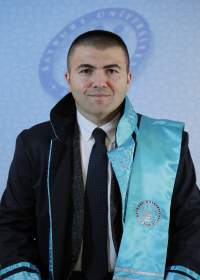
Prof. Dr. Sedat MADEN is a Professor of Turkish Education at Bayburt University's Faculty of Education and currently serves as the Dean of the Faculty. He holds a PhD from Atatürk University on the impact of drama methods in Turkish language education. His research focuses on basic language skills, teaching methodologies, digital literacy, and Turkish as a foreign language. MADEN has authored over 90 journal articles, 30 books, and 6 encyclopedia entries, with his work cited over 2,000 times. He has held roles including Deputy Dean, Research Center Manager (BAYÜTÖMER), and editorial positions at journals like Karadeniz Sosyal Bilimler Dergisi. His administrative leadership includes managing academic departments, faculty boards, and representing Turkey in international educational organizations such as TÜBİTAK and ÖSYM. Education: BEd (Summa Cum Laude) from Atatürk University's Education Faculty (2004), MA (2007) and PhD (2010) in Turkish Education. His teaching career began in 2004 as a secondary school teacher, progressing through academic ranks to Professor at Bayburt University since 2016. Research Interests: Combines traditional pedagogy with modern digital tools. Key areas include curriculum design, multicultural education, media literacy, and innovative assessment methods. His recent articles analyze global issues in textbooks, chatbot applications in language learning, and digital storytelling for teacher trainees. Publications: Over 90 peer-reviewed articles in indexed journals (Web of Science, TR Dizin), 30 books on educational theory/practice, and 6 encyclopedia entries. His work emphasizes practical solutions to Turkish language education challenges, such as improving listening/speaking skills through active learning strategies. Awards: Recognized as one of Turkey's top 2,700 most cited academics. His contributions to educational policy and teacher training have earned institutional accolades and leadership roles in national education councils. Grants & Advising: Managed numerous educational projects funded by national agencies. Advised on curricula for foreign language learners and digital literacy initiatives. Supervised dozens of MA/PhD theses focusing on Turkish language pedagogy and educational technology integration.