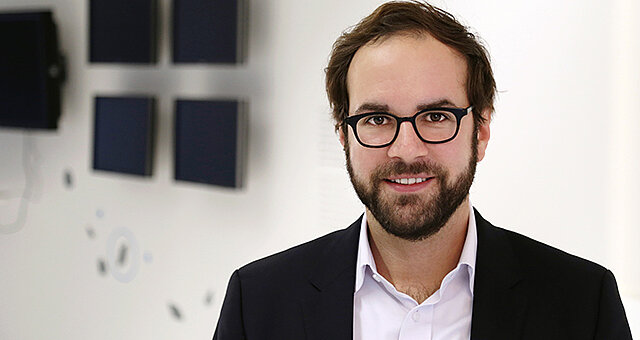
Benjamin Bross is a part-time lecturer at HTW University of Applied Sciences Berlin and heads the Video Coding Systems group at Fraunhofer Heinrich Hertz Institute. He specializes in video coding standards, including HEVC (H.265) and VVC (H.266), contributing to their development and standardization. His work emphasizes open-source implementations like VVenC and VVdeC, deployed in broadcast and streaming systems. Education: Dipl.-Ing. in Electrical Engineering (RWTH Aachen University, 2008). Active in ITU-T VCEG and ISO/IEC MPEG since 2010, leading core experiments and editing key standards. Recognized with IEEE Best Paper (2013), SMPTE Merit (2014), and an Emmy (2017) for HEVC contributions. Research focuses on advanced compression techniques, machine learning integration, and real-time encoding. His team develops VVC tools for 4K/UHD, low-latency streaming, and adaptive bitrate systems. Recent work includes optimizing partitioning strategies and reducing encoding complexity in VVC implementations. Awards highlight his impact on video technology: IEEE Consumer Electronics Best Paper (2013), SMPTE Journal Certificate (2014), and an Emmy for HEVC (2017). Teaching emphasizes practical coding standards and their applications in multimedia systems.
Professor Kwon Oh-jin is affiliated with Sejong University , where he serves in the Department of Electronic Engineering . His academic career spans over three decades, including a PhD in Electrical and Computer Engineering from University of Maryland (1994) and MS in Signal/Image Processing from University of Southern California (1991). His research focuses on image/video analysis , compression algorithms , watermarking systems , and steganography . Recent work explores machine learning-driven compression , 360-degree imaging , and JPEG standards implementation . His 15 most recent articles address topics like cybersecurity using CNNs , dynamic gesture recognition , and novel multimedia platforms for emerging standards. Professor Kwon leads the Visual Communication Research Lab (Chung923), supervising numerous PhD and MS students working on point cloud coding , JPEG privacy , and AI-based image coding . He has received multiple government and industry grants from organizations including the Agency for Defense Development and Ministry of National Defense .
Maria G. Martini is a Professor at Kingston University London, UK, with an extensive research portfolio spanning over two decades in multimedia quality assessment, video compression, and medical imaging. Her work demonstrates strong international collaboration, particularly with European researchers including Péter A. Kara (31 publications) and Nabajeet Barman (30 publications). Her primary research interests focus on Video Quality Assessment , Medical Imaging , Light Field Displays , Neuromorphic Vision Sensors , and Quality of Experience modeling. Recent work has centered on medical image quality assessment, neuromorphic vision sensor data compression, and gaming video streaming applications, reflecting her ability to adapt to emerging technologies while maintaining core expertise in quality metrics. Analysis of her recent publications (2022-2025) reveals a strong trend toward specialized quality assessment methodologies for emerging visual technologies, including neuromorphic sensors, light field displays, and medical imaging applications. Her work bridges theoretical quality metrics with practical implementation challenges, often addressing standardization needs and dataset documentation to improve research reproducibility. Martini has contributed significantly to quality metric standardization efforts, particularly regarding the Bjøntegaard Delta metric and SSIM-PSNR relationships for compressed content. Her recent publications in IEEE Transactions and other high-impact journals demonstrate continued research leadership in the field. Her research methodology consistently combines objective quality metrics with subjective evaluation frameworks, addressing both technical implementation challenges and human perception aspects. This dual approach has positioned her work as influential in both academic and standardization contexts.
Peter Schelkens is a Professor at the Department of Electronics and Informatics (ETRO), Vrije Universiteit Brussel (VUB). He holds additional roles including Department Chair and Head of Research Group, focusing on technology transfer and innovation in electronics and informatics. His research spans fundamental signal processing, holography, medical imaging, and standardized multimedia coding frameworks like JPEG Pleno. Education and Academic Background: Postdoctoral Fellowship (2002–2011) funded by the Research Foundation – Flanders (FWO). His work bridges theoretical advancements with applied domains such as eHealth, bio-informatics, and cultural heritage preservation. Research Interests: Holography and digital signal processing dominate his focus, including holographic compression, Fourier-based techniques, and light field imaging. Strategic projects involve error-resilient coding, computer architectures (e.g., GPU/GPGPU), and quality assessment metrics. His applied research addresses medical imaging, 3D media broadcasting, and immersive technologies. Article Trends: Recent work emphasizes holographic video codecs (e.g., INTERFERE), high-throughput hologram generation, and JPEG Pleno standardization. He explores computational methods for 3D metrology and deep learning applications in hologram optimization. Scientific Awards: Gauss Award (2000), ERC Consolidator Grant (2014), Best Associate Editor Award (2014), and multiple industry accolades. Grants/Projects: Leads major initiatives like the SRP-Onderzoekszwaartepunt LSDS (2022–2027) and GEAR (2021–2025), focusing on health tech and learning-based systems. Labs/Teams: Active in ETRO, the interdisciplinary research group at VUB, collaborating globally on holography, multimedia standards, and biomedical imaging systems.
Professor John Cosmas is a leading academic in digital media and broadcast networks at Brunel University London, within the College of Engineering, Design and Physical Sciences. He earned a BEng in Electronic Engineering (1978) from Liverpool University and a PhD in Image Processing (1987) from Imperial College, following industrial roles at Tube Investments and Fairchild Camera. His research spans 5G, Internet of Radio Light (IoRL), and convergence of broadcast/telecom networks. 2006-2008: PLUTO (530K EU project) 2004-2005: INSTINCT (750K EU project) 2000-2001: SAMBITS (250K EU project) His work integrates architectural and electronic design for radio-light networks in smart homes/museums, with recent focus on tactile internet and tele-surgery applications. Over 150 publications and supervision of 20+ PhD students highlight his impact in: 5G/Tactile Internet Antenna & Coverage Optimization Cultural Heritage Multimedia He has served as Associate Editor for IEEE Transactions on Broadcasting since 2006 and chairs IEEE symposia globally. His students now lead projects in 5G, IoT, and network management.
Ravi Prakash is a Professor in the Department of Computer Science and the Hobson Wildenthal Honors College at the University of Texas at Dallas. He holds a Ph.D. in Computer and Information Science from The Ohio State University (1996), with research focused on 360-degree video streaming, wireless networking, mobile computing, and distributed systems. His work addresses challenges in field-of-view prediction, edge caching, and coexistence of wireless technologies in unlicensed bands. He teaches courses ranging from discrete mathematics to advanced operating systems and internet policy. Education: Ph.D. (1996) and M.S. (1991) from Ohio State University; B.Tech. (1990) from Indian Institute of Technology, Delhi. Research Interests: 360-degree video optimization (caching, editing) Wireless MAC protocols (WiFi, cognitive radio) Mobile ad hoc networks (MANETs) Distributed system algorithms Legal/ethical implications of computing Professional Service: Co-chair (ICDCS 2025), General Co-chair (MASS 2025), IEEE Transactions on Mobile Computing associate editor, and UT Dallas Senate member. Awards: NSF CAREER Award (2001), multiple teaching excellence awards, and best paper recognitions. Labs/Teams: Active in wireless networking testbeds (ASSERT), mobile computing optimization, and 360-video streaming frameworks (CooPEC, 360RAT).
Professor Maria Martini is Course Director for MSc Network and Data Communications and MSc Mobile Networks and Media Streaming at Kingston University's Department of Networks and Digital Media. She leads the Wireless Multimedia Networking Research Group and holds a Laurea in Electronic Engineering (University of Perugia) and a PhD in Electronics and Computer Science (University of Bologna). Research interests include wireless multimedia networks, video quality assessment, machine learning, and medical applications. Recent articles focus on light-field visualization, medical imaging quality, and neuromorphic sensor data compression. Awards include recognition as a top 2% global scientist by Stanford University. Stanford University Top 2% World Scientist Extensive editorial experience includes IEEE Signal Processing Magazine and IEEE Transactions on Multimedia. Serves on boards for NetWorld2020 ETP and Video Quality Expert Group (VQEG).
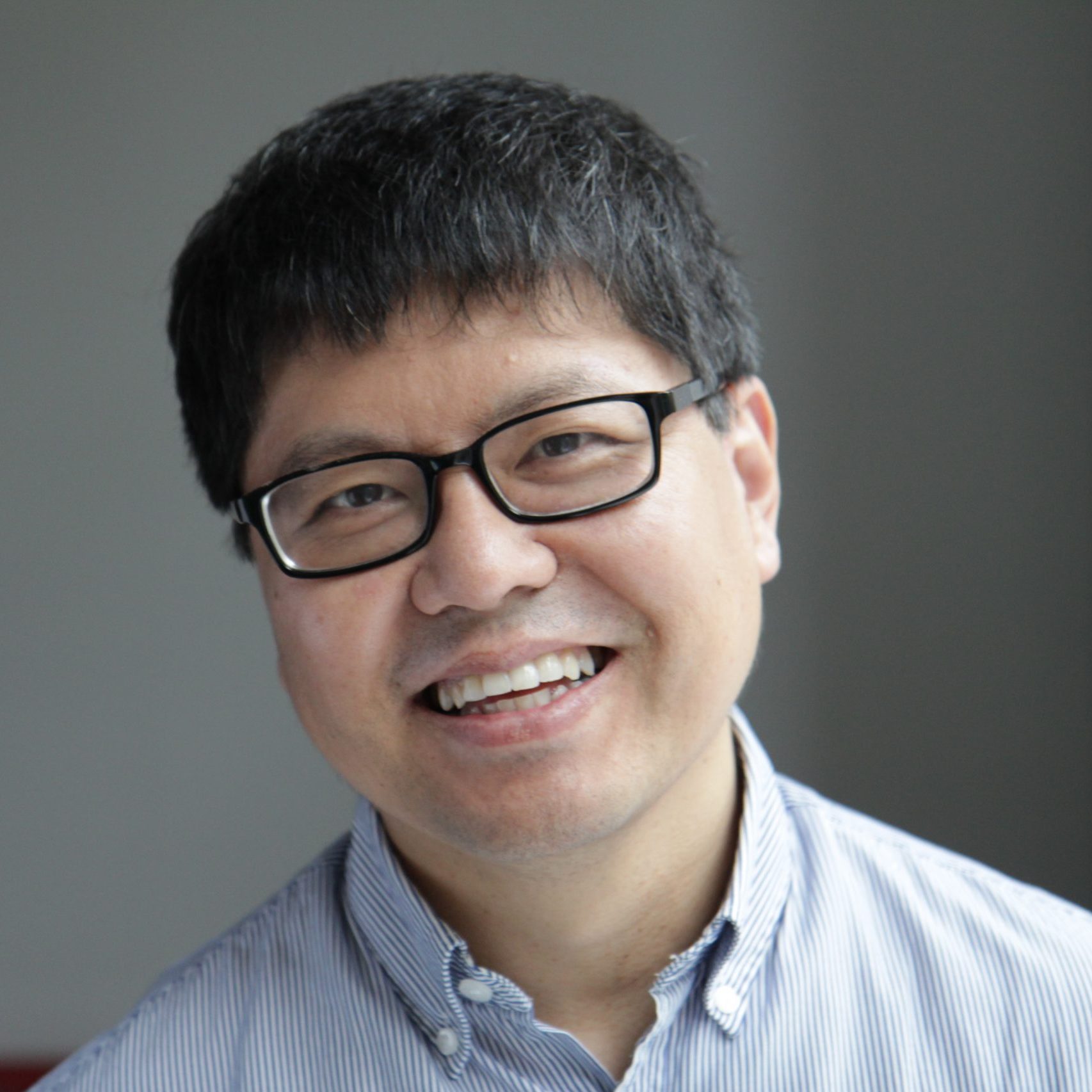
Haibo Li is a Full Professor of Media Technology at KTH Royal Institute of Technology, affiliated with the School of Electrical Engineering and Computer Science and Digital Futures Faculty. His roles include leading the Media Lab in MID, directing Master’s programs in Media Technology, and teaching courses like Generative AI for Media Technology and Video Technology. He holds a Technical Doctorate from Linköping University (1993) and received the Nordic Best PhD Thesis Award (1994) and Docent title in Image Coding (1997). Research focuses on digital media technologies, including image/video compression, human-computer interaction, and AI-driven media systems. He pioneered the Digital Media Lab at Umeå University and co-founded UCIT. His work spans blind image deblurring, thermal comfort sensing, and multimodal emotion recognition. Over 250 publications and six patents highlight contributions to multimedia, AI, and signal processing. Key projects include developing contactless thermal measurement systems for smart buildings, real-time gesture recognition for wearable devices, and advanced neural networks for image restoration. Awards include the Nordic Best Thesis and leadership in EU projects. He chairs conferences and actively participates in MPEG standardization efforts.
Wojciech Samek is a Professor in the Department of Electrical Engineering and Computer Science at the Technical University of Berlin and Head of the AI Department at Fraunhofer Heinrich Hertz Institute (HHI), Germany. He holds a joint appointment, bridging academic research and industrial application in artificial intelligence. He is a Fellow at BIFOLD and ELLIS Unit Berlin, and a Principal Investigator in several DFG projects including DeSBi and BIOQIC. PhD (Dr. rer. nat.) with distinction, Technical University of Berlin, 2014 Studies in Computer Science, Humboldt University, Heriot-Watt University, University of Edinburgh His research centers on Explainable AI (XAI) , Trustworthy Deep Learning , and Efficient AI . He pioneered Layer-wise Relevance Propagation (LRP), a foundational method for interpreting deep neural networks. His work spans model interpretation, robustness against adversarial attacks, neural network compression, federated learning, and applications in healthcare, communications, and multimedia. The recent articles highlight a strong trend toward extending explainability beyond deep models , with research on concept-level explanations, unsupervised learning interpretability, and XAI-driven model improvement. There is a consistent focus on robustness, privacy, and efficiency in distributed learning settings, particularly for federated and edge AI. Applications in medical AI and neuroscience are prominent, emphasizing safety and interpretability in high-stakes domains. Best Paper Award, Pattern Recognition (2020) Digital Signal Processing Best Paper Prize (2022) Fellow, BIFOLD - Berlin Institute for the Foundation of Learning and Data Member, Germany's Platform for Artificial Intelligence Senior Editor, IEEE TNNLS; Associate Editor, Pattern Recognition, Digital Signal Processing, PLoS ONE Area Chair, NeurIPS, ICML, NAACL Program Chair, IEEE MLSP 2023 Contributor to ISO/IEC MPEG-17 NNC standard Prof. Samek advises a large group of PhD students and leads a vibrant research team at Fraunhofer HHI and TU Berlin. His group has secured significant funding through DFG, BIFOLD, and industrial collaborations. He has co-authored over 200 peer-reviewed papers, many of which are ESI Hot or Highly Cited. He is deeply involved in organizing workshops and tutorials on XAI, federated learning, and neural compression at top venues like NeurIPS, ICML, CVPR, and IEEE conferences. His lab develops open-source tools such as the LRP Toolbox , Keras Explanation Toolbox , DeepCABAC , and Quantus , promoting reproducibility and adoption of interpretable and efficient AI methods. The team is actively working on next-generation AI that is not only accurate but also transparent, robust, and trustworthy.
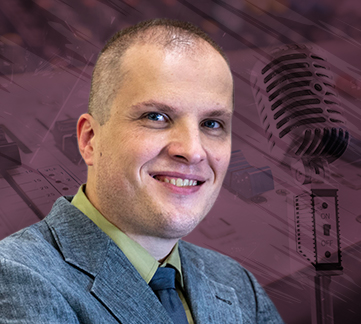
Vladimir Živković is an Assistant Professor at the Faculty of Contemporary Arts in Belgrade, where he teaches Sound Design and Music Production since 2021. He holds bachelor’s and master’s degrees from the Department of Sound Recording and Design at the Faculty of Dramatic Arts, Belgrade (2007), where he was recognized as the top graduating student. Education : Faculty of Dramatic Arts, Belgrade (2007, B.A./M.A.) Awards : Multiple sound design accolades (2004–2012) His research interests focus on audiovisual arts , film and television sound , music production , and applied music for multimedia installations . His recent projects (2020–2024) include collaborations with international production houses like This and That Productions and Horopter Film , emphasizing sonic storytelling across documentaries, TV series, and experimental art. Articles highlight trends in cross-cultural sound design , interactive audio environments , and modern music engineering . Scientific Awards 2012: Belgrade Documentary and Short Film Festival (Film 'Gagarin i ja') 2010: Belgrade Documentary and Short Film Festival (Film 'Bez traga') 2007: Best Graduating Student, Faculty of Dramatic Arts, Belgrade 2006: Third 'Neda Depolo' Award, Radio Belgrade 2004: Best Student, Department of Sound Recording and Design As an educator and practitioner, Živković bridges academic instruction with industry applications , mentoring students in music communication and contributing to high-profile regional projects. His work spans film , radio drama , art exhibitions , and television , with a technical emphasis on mixing , post-production , and creative acoustics .
Sergio Tejeda Pastor is a Researcher at the Fraunhofer Heinrich Hertz Institute , specializing in the Video Communication and Applications department. His work focuses on interactive streaming of volumetric video within multimedia communications. Education: M.Sc. in Telecommunications Engineering from Universidad Carlos III de Madrid (2012) Research Interests: Interactive volumetric video streaming 5GXR and 5G Hybrid ARQ Feedback Prediction Versatile Video Coding (VVC) standards Machine learning applications in video compression Professional Affiliations: Member of the Multimedia Communications group at Fraunhofer HHI since 2021 Active participant in projects like VoluProf and SPIRIT Contact: Mailing Address: Einsteinufer 37, 10587 Berlin, Germany Visitor Address: Salzufer 15/16, 10587 Berlin, Germany
António Pinheiro is an Associate Professor in the Department of Physics at Universidade da Beira Interior and researcher at Instituto de Telecomunicações. He specializes in image processing, multimedia quality evaluation, emerging 3D imaging technologies, and medical image analysis. Research interests span: Multimedia quality assessment methodologies Point cloud compression and processing Medical image analysis for diagnostic applications JPEG standardization and emerging imaging formats 5G multimedia streaming technologies He has received multiple scientific awards including: 2022 Best Paper at 3D Imaging and Applications 2020 Award-winning ETRI Journal Papers 2014 Top 10% Paper Award at IEEE MMSP As director of the 'Eletrónica Digital: Circuitos e Sistemas' program, he teaches courses on digital systems, microprocessors, and signal/image processing. He actively contributes to ISO/IEC JPEG standardization as Communication Subgroup chair.
Robert Bregovic holds the position of Assistant Professor (tenure track) in Computing Sciences. He earned his Engineer degree from the University of Zagreb, Croatia (1998) and a Doctor of Science (Technology) in Information Technology (2003). His research focuses on Light Field Engineering, Signal Processing, 3D Displays, and Filter Design. Key contributions include advancements in light field reconstruction techniques (e.g., Shearlet Transform applications), datasets like the CIVIT dataset for integral microscopy, and editorial roles in journals such as IEEE Transactions on Multimedia. He actively reviews for prestigious conferences and journals, including ISPA and ICASSP. His work spans over 90 publications since 2000, with recent emphasis on projection-based light field displays and anti-aliasing solutions. Education: PhD in Information Technology (2003) Engineer in Technology (University of Zagreb, 1998) Research Contributions: Light Field Displays 3D Scene Rendering Signal Processing for Imaging Systems Activities: Guest Editor for Signal Processing: Image Communication (2024) Reviewer for multiple top-tier journals and conferences
Wang Yufei is affiliated with Xiamen University, China, holding positions across the School of Informatics, Institute of Artificial Intelligence, Center for Digital Media Computing, and School of Film. The research spans interdisciplinary domains, integrating artificial intelligence, robotics, and multimedia systems for real-world applications. Wang Yufei's research primarily focuses on artificial intelligence , computer vision , robotic interaction , and multimedia systems . Key areas include 3D scene modeling using Gaussian splatting, diffusion models for storytelling and image generation, reinforcement learning for interactive instruction, and AI applications in healthcare, agriculture, and urban planning. The work emphasizes robustness, real-time feedback, and human-centered design. The recent publications demonstrate a strong trend in deep learning applied to vision and multimodal systems , with increasing focus on interactive AI , embodied environments , and domain adaptation . Topics such as differentiable trajectory optimization, backdoor attacks in compression models, and context-aware assistance systems reflect both technical depth and societal relevance. Wang Yufei has not been mentioned in relation to any scientific awards in the provided text. No information is available regarding student advising or research grants. However, the breadth and volume of publications suggest active research leadership and likely involvement in funded projects. Research is conducted in collaboration with teams at Xiamen University, particularly within the Institute of Artificial Intelligence and the Center for Digital Media Computing, focusing on intelligent multimedia and robotic systems. The integration of AI with cultural and educational applications, such as piano instruction and heritage preservation, highlights a unique interdisciplinary lab environment.
Touradj Ebrahimi is a Full Professor at École Polytechnique Fédérale de Lausanne (EPFL), where he heads the Multimedia Signal Processing Group (MMSPG) within the School of Engineering's Institute of Electrical Engineering. He holds a Ph.D. in Electrical Engineering from EPFL and serves as the Convenor of the JPEG standardization committee. His research spans AI-powered imaging, multimedia signal processing, and media security. Research Interests: Professor Ebrahimi's work focuses on next-generation image/video compression (including JPEG AI and DNA-based storage), quality of experience in immersive media, trustworthy media authentication (JPEG Trust), and explainable AI for biometric systems. His group pioneers methods for point cloud compression, deepfake detection, and privacy-preserving multimedia. Publication Trends: Recent articles emphasize AI-driven compression standards, quality assessment for emerging media (point clouds, HDR), and explainability in computer vision. Key themes include JPEG AI standardization, DNA storage for visual data, and robustness evaluation of deepfake detectors. Awards & Honors: IEEE Star Innovator Award in Multimedia IEEE and Swiss National ASE Awards ISO Certificates for MPEG-4/JPEG 2000 contributions Best Paper Award (IEEE Trans. Consumer Electronics) Fellow of IEEE and SPIE Leadership: He founded RayShaper SA, Genista SA, and Emitall SA. Represents Switzerland in ISO/IEC JTC1/SC29 and ITU, advising European Commission initiatives and venture capital firms on multimedia technologies. Facilities: Leads the MMSPG lab at EPFL, focusing on intelligent multimedia systems. The group collaborates globally on standardization (JPEG, MPEG) and EU projects.