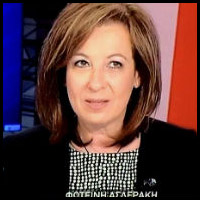
Foteini Asderaki is a Professor at the Department of International and European Studies, University of Piraeus, specializing in European Integration Theories and European Educational Policy. She holds a Jean Monnet Chair (2016) and serves as Chair of the European Security and Defence College Doctoral School in Brussels (2019-2025). As Director of the Laboratory of Education Policy Research Development and Interuniversity Cooperation (ERDIC) and co-director of the East-Med Jean Monnet Centre of Excellence (EXCELEM), she bridges academic research with EU policy implementation. PhD in Political Sciences (University of Athens, with distinction) Focus on EU governance, security policies, and education policy Europeanization Coordinator for multiple Erasmus+ and Jean Monnet programs Her research spans European integration theories, security policy, and higher education reform, with publications analyzing the Bologna Process's impact on Greek quality assurance systems, EU crisis responses, and talent mobility dynamics. She has contributed to over 25 academic works and coordinated international projects addressing democratic education, migration policy, and post-Brexit EU differentiation. Recent publications (2010-2021) examine EU's Eastern Mediterranean strategy, securitization of migration, and education policy in crisis contexts. Her work emphasizes regime complexity theory and EU institutional evolution. Jean Monnet Chair on EU Education Policies Honorary Grant from National Bank of Greece (Theodoros Karatzas) State Scholarship Foundation awards Academic coordinator for European Parliament Ambassador Programme Asderaki's leadership in EU education initiatives and policy development demonstrates her pivotal role in shaping academic responses to contemporary European challenges.
Dr Yuchan Zhang is a Lecturer in Graphic, Digital and Communication Design at the School of Design, University of Leeds. With an international educational background spanning China, France, and the UK, Zhang contributes to undergraduate and master's-level teaching while serving as Deputy Programme Leader of MA Design. PhD in Typography and Information Design (University of Reading, 2022) MA in Visual Communication Design (Jiangnan University, China) BA in Product and Exhibition Design (LuXun Academy of Fine Arts, China) Exchange studies at École supérieure d'art et de design d'Orléans, France Zhang's research focuses on improving wayfinding experiences in multilingual environments through typographic presentation and digital technologies like AR/VR. Their doctoral work addressed Chinese-English road sign legibility, while current projects explore stress mitigation in navigation and digital wayfinding innovation. As a peer reviewer for journals including Human Factors and Heliyon , Zhang applies interdisciplinary methodologies combining qualitative and quantitative approaches to design challenges.
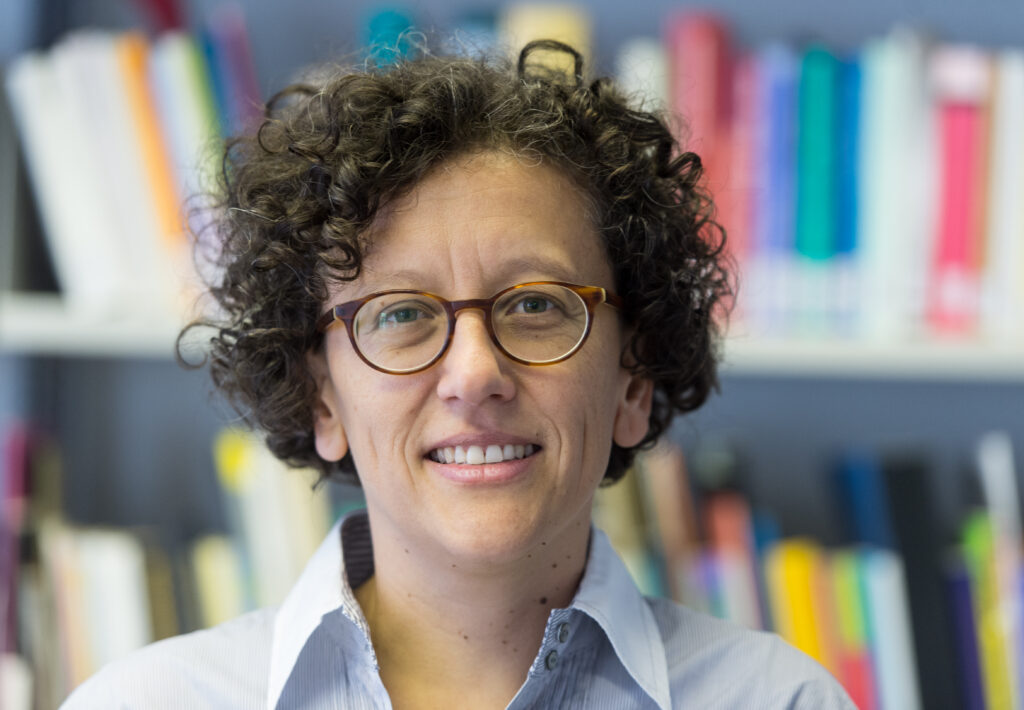
Prof. Dr. Anelis Kaiser Trujillo is a Professor for Gender Studies in MINT (Mathematics, Informatics, Natural Sciences, and Technology) at the Department of Computer Science, Faculty of Engineering, University of Freiburg since 2017. She holds affiliations with the NeuroGenderings network and has held visiting roles at institutions including Uppsala University and the Technical University of Berlin. Her research focuses on sex/gender in neuroscience, intersectionality, and feminist critiques of neuroscientific practices, emphasizing interdisciplinary approaches that bridge natural sciences and social sciences. Educational Background: PhD in Gender Studies (Postgraduate Programme Science “Gender” – Symbolic Order, University of Basel, 2005) Visiting PhD studies at the London School of Economics (2005) Research Interests: Neurogender studies, feminist neuroscience, intersectionality, language processing in multilingualism, and critical analyses of race and gender bias in science. She critiques neuroscientific methodologies that essentialize sex/gender differences and advocates for more inclusive interdisciplinary frameworks. Awards: Recipient of the Emma Goldman Award 2021 for contributions to feminist and inequality studies. Active in international networks like NeuroGenderings, emphasizing global collaborations. Grants & Projects: Marie Heim-Voegtlin fellowship (2013–2016) for research on language processing and brain plasticity. Collaborations on NIH policy critiques and feminist STS responses to societal challenges like the pandemic. Labs/Teams: Leads interdisciplinary projects at the intersection of computer science, neuroscience, and gender studies, fostering critical dialogues in STEM fields.
Samantha Curle is a Reader in the Department of Education at the University of Bath, serving as Director of all MRes Programmes in the Humanities and Social Sciences Faculty. She also holds roles as Institutional Academic Lead for the South West Doctoral Training Partnership and Director of Studies for the MRes in Advanced Quantitative Methods. Her research focuses on English Medium Instruction (EMI) in global higher education, particularly its academic and linguistic outcomes, technology integration, and psychological dimensions. Career highlights include a PhD from the University of Oxford (2018) on stakeholders’ attitudes toward EMI in Japanese higher education. She has extensive editorial roles, including guest editorships at Frontiers in Educational Psychology and Data in Brief . Her expertise spans quantitative methods, applied linguistics, and bilingual education, contributing to UN Sustainable Development Goal 4 (Quality Education). Education: PhD (University of Oxford, 2018) MSc Research Methods (University of Oxford, 2014) Bachelor of Education (Open University of Hong Kong, 2010) Grants and Projects: Leading projects on EMI in Saudi Arabia, Brazil, and Hong Kong-UK collaboration Focus on educational inequalities in Spain using CART models Awards: Adjunct Professor (2024) Her research has yielded 88+ publications, emphasizing EMI’s role in STEM, teacher professional development, and sustainable education. She advises doctoral students on quantitative EMI studies and advocates for evidence-based policy in multilingual education.
Zeynep Onat-Stelma is a Lecturer at the Manchester Institute of Education, University of Manchester, and Programme Director for the MA TESOL programme. She teaches on the BSc Education programme and has trained as a language teacher in Turkey, with ten years of experience before pursuing her PhD in Language Teacher Education and Development at the University of Leeds. Her work bridges pedagogical theory, technology integration, and multilingual education. PhD: University of Leeds (Language Teacher Education and Development) Research interests include Language Teacher Education , Bilingualism/Multilingualism , Teaching Languages to Young Learners , and Developing Researcher Skills . Her recent projects focus on metacognition training (EEF-funded ReflectED project), ecological perspectives in TESOL, and technology use in adult language education. Key themes across her publications include reflective practice, digital innovation, and systemic transitions in education. She has collaborated internationally (Turkey, UK) and contributed to journals like Reflective Practice and Working Papers in Applied Linguistics & TESOL . Her email address is Zeynep.Onat-stelma@manchester.ac.uk .
Juho Leinonen is an Academy Research Fellow at Aalto University's Department of Computer Science, Finland, specializing in AI-enhanced computing education. His work focuses on leveraging large language models (LLMs) to transform programming instruction through personalized learning analytics and educational technology. Education Background: PhD in Computer Science, University of Helsinki (2019) Docent (Adjunct Professor) in Computer Science, University of Helsinki Postdoctoral research at The University of Auckland, Aalto University, and University of Helsinki Research Focus: Leinonen's work centers on three interconnected pillars: (1) developing fine-grained learning analytics to decode student programming behavior; (2) applying LLMs to create adaptive educational tools for diverse learners; and (3) implementing learnersourcing strategies for scalable resource generation. His research particularly addresses challenges in multilingual programming education and responsible AI integration, with emphasis on non-native English speakers and novice programmers. Publication Trends: Recent publications (2024-2025) reveal a concentrated exploration of generative AI in computing education, with 85% focused on LLM applications. Key themes include synthetic data generation for educational research, multilingual prompting systems, and ethical frameworks for AI feedback. His work demonstrates both practical implementations (e.g., autocompletion quizzes) and critical analyses of AI limitations in educational contexts. Awards & Recognition: ACE2024 Best Paper Award for LLM-generated worked examples study UKICER 2023 Best Paper Award for achievement goals research ACE 2023 Best Practitioner Paper ICER 2022 Best Paper Award for programming exercise generation SIGCSE TS 2022 Best Paper in Computing Education Research ACE 2021 Best Paper Award for contextualized problem descriptions Research Leadership: As principal investigator of the Academy of Finland-funded project 'Advanced Student Modeling and Tailored LLMs for Personalized Learning', Leinonen supervises PhD students and postdocs while leading international collaborations with institutions including The University of Auckland and University of Helsinki. His grant portfolio focuses on ethical AI deployment in education and cross-cultural computing pedagogy. Collaborative Networks: He maintains active partnerships with leading computing education researchers like Paul Denny (Auckland), Arto Hellas (Aalto), and Andrew Luxton-Reilly (Auckland), evidenced by 90% co-authored publications. His work appears consistently in top venues including ACM SIGCSE, ICER, and ACE conferences.
Jim McKinley is a Professor of Applied Linguistics at University College London (UCL), specifically within the IOE - Culture, Communication & Media. His career spans 25+ years across the UK, Japan, Australia, Uganda, and the US, focusing on the interplay between globalization, language education, and higher education. Education : PhD from Victoria University of Wellington, MA and BA (Hons) from the University of Sydney and Susquehanna University, respectively. His research bridges applied linguistics and higher education studies, emphasizing English Medium Instruction (EMI), teacher training, and the teaching-research nexus. Funded by the Economic and Social Research Council (ESRC), British Academy, British Council, and John Fell Fund, he explores linguistic challenges in EMI and Content and Language Integrated Learning (CLIL). Recent publications address EMI policy in Ethiopia/Poland/Japan, academic literacy in EMI, and systematic review methodologies. He is Editor-in-Chief of System and co-Editor of Cambridge Elements: Language Teaching . Scientific Awards : Senior Fellow of the Higher Education Academy (2020-present), Honorary Research Fellow at the University of Oxford (2021-2023). Leadership Roles : Former Director of Studies for PhD in Education at UCL, Head of Programme, and leadership in academic organizations.
Stefan-Michael Newerkla is a University Professor of West Slavic Linguistics at the Department of Slavonic Studies, Faculty of Philology and Cultural Studies, University of Vienna. He has served as Head of the Institute of Slavic Studies since 2022, following previous leadership roles as Deputy Head (2018-2022) and Head (2005-2008). His academic leadership extends to significant positions including Member of the Academy Council of the Austrian Academy of Sciences (2022-2026), Member of the International Board of Palacký University Olomouc (2022-2026), and Member of the Scientific Council of the Czech Academy of Sciences (since 2013). Professor Newerkla earned his doctorate in 1998 with a dissertation on "Intended and actual linguistic reality in Bohemia. Diglossia in the school system of the Czech-speaking countries of the Habsburg Monarchy 1740–1918 using the example of the West Bohemian district town of Plzeň (Pilsen)" and completed his habilitation in 2003 on "Language Contacts Czech – German – Slovak. German Loanwords in Czech and Slovak: Historical Development, Evidence, Previous and New Interpretations." His academic journey began with studies in Slavic Studies, English Studies, and American Studies at the University of Vienna from 1992-1998. His research focuses on West Slavic linguistics with particular emphasis on contact linguistics, areal linguistics, linguistic geography, and historical sociolinguistics. He investigates the development of linguistic contacts between German, Hungarian and Slavic languages, examining Central Europe as a linguistic area with special attention to Austriazisms and Internationalisms research. His work also explores the school system and language teaching in the Habsburg Monarchy, analyzing language legislation versus language reality and diglossia or polyglossia in the educational system. Additional research interests include the National Renewal in the Bohemian Lands, Vienna's role in the Czech National Renewal, the Slovak national awareness process, and the grammatology and grammarography of West Slavic languages. Analysis of his recent publications (2023-2025) reveals a continued focus on historical language contact in Central Europe, particularly examining multilingualism in the Habsburg Monarchy and linguistic heritage. His work increasingly incorporates interdisciplinary approaches, connecting linguistic analysis with historical, educational, and cultural studies perspectives. Recent publications show particular attention to Czech language in Austria, language teaching methodologies, and the reconstruction of historical language contact phenomena, with several multilingual publications reflecting his expertise in cross-cultural communication. Professor Newerkla's scientific achievements have been recognized with numerous prestigious awards: Medal of the Minister for Foreign Affairs of the Czech Republic (August 7, 2024) for Services to Diplomacy Premia Bohemica for 2023 for outstanding contribution to promoting Czech literature abroad Josef-Dobrovský-Ehrenmedaille of the Czech Academy of Sciences (April 25, 2017) Full member of the Austrian Academy of Sciences (since 2018) Corresponding Member of the Austrian Academy of Sciences (since 2014) Member of the Academic Assembly of the Czech Academy of Sciences (since 2010) Award from University of Vienna for Innovative Teaching (June 22, 2001) As an academic leader, Professor Newerkla has supervised numerous theses across various levels of study. His research is supported by significant grants, most notably his role since 2016 as consortium member and board member of the Special Research Programme "German in Austria. Variation – Contact – Perception" (SFB F 60-G23), where he heads Task Cluster C and subprojects 05 and 06. He also led the research project "Slavists in Exchange: Austria and Russia 1849-1939" (2021-2025). His administrative roles have included Chairman of the Curricular Commission of the Senate of the University of Vienna (2010-2016) and Member of the Senate of the University of Vienna (2009-2016). Professor Newerkla is actively involved in multiple international research teams and collaborations, including the Permanent Conference of Austrian and Czech Historians on Common Cultural Heritage (SKÖTH), which he has co-chaired since 2009. His research group at the University of Vienna's Institute of Slavic Studies focuses on West Slavic linguistics, with particular expertise in historical language contact phenomena and the linguistic heritage of Slavic languages in Central Europe. He has also served as editor for numerous publications including the Vienna Slavic Yearbook (New Series) since 2013.
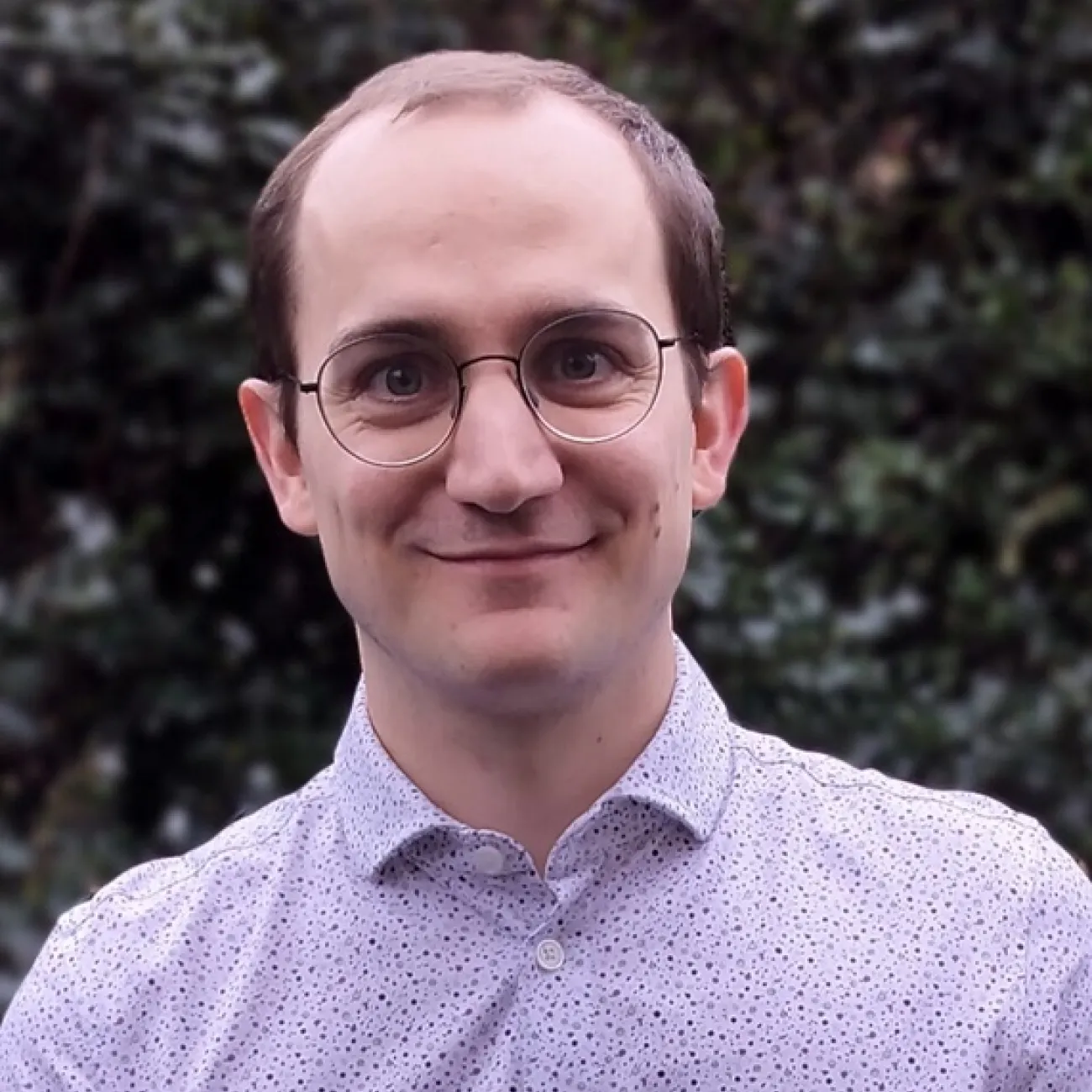
Dr. Eike Schneiders is a Lecturer at the School of Electronics and Computer Science, University of Southampton. He holds a PhD in Computer Science from Aalborg University and is a recipient of the UKRI Trustworthy Autonomous Systems Hub Early Career Researcher Award. His research focuses on autonomous and AI-infused systems, investigating how to ensure their trustworthiness and responsible interaction with humans and other agents through interdisciplinary collaborations across art, law, and medicine. His recent work explores the societal impact of Generative AI, particularly examining its influence on legal services accessibility for non-experts through the REGALS project (Principal Investigator) and its effects on creative communities via the ART-I project (Co-Investigator). Dr. Schneiders emphasizes public engagement to enhance AI literacy and employs both qualitative and quantitative methods to study human-computer interaction and ethical implications. Dr. Schneiders teaches courses including COMP6251 (Web and Cloud Application Development), ELEC6259 (Research Methods and Project Preparation), and ELEC6200 (Group Design Project). His pedagogical approach integrates foundational technical skills with critical research methodologies. He has led several interdisciplinary projects including ARTificial Intelligence: Show Me a Story about AI (ART-I) and Responsible Employment of Generative AI for Legal Services (REGALS), and contributes to the Agents, Interaction and Complexity research group. His Cat Royale project received the 2024 Webby Award for Best Integrated Experience. Honors include the Best Paper Award at ACM CHI 2024, multiple Honourable Mentions at CHI and TAS Symposiums, and membership in the Foundation for Science and Technology's Future Leaders Programme.
Professor Annelies Kusters is a sociolinguist specializing in sign language ideologies, deaf mobilities, and communication practices at Heriot-Watt University (School of Social Sciences). She holds a PhD from the University of Bristol (2012) and previously worked at the Max Planck Institute. Her research integrates ethnography, film, and visual methods to explore multilingualism, transnational deaf spaces, and media representation. Key projects include the ERC-funded MobileDeaf initiative (2017–2023), focusing on deaf mobilities and translanguaging. Research interests span sign language ideologies, deaf media, transnationalism, and ethnographic methodologies. She leads SIGNS@HWU, fostering interdisciplinary research on sign languages and deaf communities. Awards include the European Research Council Starting Grant (2016) and the Francis Maginn Award (2023). Teaching focuses on Deaf Studies and sociolinguistics, with a commitment to mentoring deaf scholars. Notable grants include £1.5M ERC funding and collaborations with the British Sign Language Broadcasting Trust. Publications emphasize International Sign, deaf media representation, and family language policy. She advises on policy, interpreter training, and media production, contributing to UN Sustainable Development Goals. Leadership roles include Co-Director of Engagement (School of Social Sciences) and Programme Director for the MA British Sign Language (Interpreting, Translating, and Applied Language Studies).
Pia Mikander is a University Lecturer in the Department of Education at the University of Helsinki, specializing in diversity, multilingualism, and social justice in education. She supervises the Doctoral Programme in School, Education, Society, and Culture. With a PhD, her work focuses on critical educational studies, particularly analyzing how social studies textbooks construct identities, citizenship, and societal relations. Her research addresses colonialism, racism, democracy education, and global citizenship in Nordic contexts. Her research interests include postcolonial discourse analysis, textbook content evaluation, and the intersection of education with power structures. Notable projects include investigating anti-pluralist narratives in classrooms, democracy education during remote learning, and reframing human-nature relationships in worldview education. She has received the 'Top three most read article' award in 2023. Mikander has been involved in over 90 academic activities, including conferences and media engagements, discussing topics like colonialism in board games and teacher neutrality. She leads or participates in initiatives such as the 'Tween Democracy Sustainability' project and the 'Nature in Worldview Education' study. Her work emphasizes actionable pedagogical strategies for addressing systemic inequalities in education systems.
Dr Anna Charalambidou is the Director of Media Programmes at Middlesex University, based in London. She holds a position in the School of Design within the Faculty of Arts and Creative Industries. Her work focuses on discourse analysis, sociolinguistics, and the intersection of language with identities, particularly among older populations and diasporic communities. Her research explores topics such as social ageing, food discourses, and linguistic hybridity in migrant contexts. Notable projects include the ‘Grenglish’ study on Cypriot Greek speakers in London and collaborations examining post-Brexit and pandemic impacts on migrant food cultures. Dr Charalambidou teaches language and communication, research methods, and entrepreneurship. She has supervised numerous postgraduate researchers, including successful PhDs on topics ranging from digital journalism in Nigeria to experimental fiction in constrained writing. Her publications span academic journals and books, with a focus on identity construction through language and cultural practices. She collaborates across institutions such as the Universities of Westminster, Salerno, Goldsmiths, and Ohio State on interdisciplinary projects. Her work bridges sociolinguistics, cultural studies, and applied linguistics, contributing to understanding diasporic identities and societal changes.
Despina Kalessopoulou serves as Assistant Professor of Museum Education in the Department of Early Childhood Education and Care at the University of West Attica. With over two decades of professional experience, she has held leadership roles at the National Archaeological Museum (Athens), Hellenic Children's Museum, and Museum of Contemporary Art "Skironio Museum Polychronopoulos," where she specialized in educational programming and exhibition development for diverse audiences including children and vulnerable groups. Her academic credentials include: Archaeology and Art History studies at the National and Kapodistrian University of Athens Museology degree from the University of Leicester, UK PhD in psycho-pedagogical design of child-centered museum exhibitions from the University of Thessaly Dr. Kalessopoulou's research centers on museums' educational, social, and communicative functions, with particular emphasis on child-centered exhibition design, children's interaction with museum environments, critical pedagogy, and experiential learning. Her work consistently advocates for museums as transformative spaces that foster social responsibility and inclusive learning experiences for young audiences. Analysis of her recent publications reveals a strong focus on contemporary museum challenges including social justice awareness in children's play, multilingual approaches to museum education, and strategic development of museums for major anniversaries. Her scholarship frequently examines the National Archaeological Museum as a case study for understanding evolving visitor experiences and institutional transformation. She actively contributes to academic discourse as a reviewer for international journals and member of scientific museum associations. Her institutional collaborations span the Interinstitutional Postgraduate Programme "Museum Studies" (National and Kapodistrian University of Athens/University of West Attica), Interdepartmental Postgraduate Programme "Pedagogy through Innovative Technologies & Biomedical Approaches" (University of West Attica), and the Training Institute of the National Centre for Public Administration. Dr. Kalessopoulou maintains significant professional engagement through frequent invitations as lecturer at multiple Greek universities (National and Kapodistrian University of Athens, University of Thessaly, University of Ioannina, University of the Aegean, Economic University of Athens, Athens University of Applied Sciences) and the Ionian University (2017-18 academic year). She currently serves on the Scientific Committee of the Hellenic Children's Museum, continuing her lifelong commitment to advancing museum education for children.
Dr. Mohd Aidil Subhan serves as a Senior Lecturer and Programme Leader for Higher Degree courses at the Asian Languages & Cultures Academic Group, National Institute of Education, Singapore. With over 30 years of academic experience, he specializes in bilingual scholarship focusing on Malay language education and policy development within Singapore's multilingual context. His research expertise spans: Language Policy and Planning Curriculum Design and Development Pedagogical Approaches Values Teaching Malay Language Education Dr. Aidil holds significant advisory roles including consultant for the Singapore Islamic Religious Council's Malay Language Centre for Excellence and Collaboration, MOE's Steering Committee for Malay Language Instructional Material, People's Association Talent Assessment Panel, National Library Consultative Panel, and Mediacorp's Malay News and Current Affairs Advisory Panel. His scholarly contributions include two authoritative books on Malay language planning in Singapore, featuring his '6 Big Ideas' framework for Malay language pedagogy and forward-looking analysis of the language's trajectory toward 2065.
Min-Hsiu Liao is an Associate Professor in the School of Social Sciences at Heriot-Watt University, with a dual affiliation in the Languages & Intercultural Studies department. Their research focuses on translation studies, multimodal discourse analysis, and intercultural communication with particular emphasis on museums, heritage sites, and urban linguistic landscapes. They hold a PhD in Translation Studies from Heriot-Watt University and have extensive academic credentials including degrees from the University of Geneva and National Tsing-Hua University. Education: PhD in Translation Studies, Heriot-Watt University MAS in Interpreter Training, University of Geneva MA in Applied Translation Studies, University of Leeds BA in Foreign Literature and Languages, National Tsing-Hua University Key Research Interests: Multilingual museum spaces and placemaking Translation in heritage and memory studies Cultural geography and community translation practices Linguistic landscape analysis in urban contexts Funded Projects: "Facilitating Linguistic Flows in Cities" (2024, British Association for Applied Linguistics) "Counter-translating the City" (2023, Royal Society of Edinburgh) "Translating Taiwan" (2022, Chiang Ching-Kuo Foundation) Awards: BAAL Applied Linguistic Funds (2024) Royal Society of Edinburgh Research Grants (2023) Chiang Ching Kuo Foundation Research Grants (2021) Teaching and Roles: Programme director of MSc Intercultural Business Communication and member of the IATIS training committee. Teaches English-Chinese Translation, Research Methods, and supervises PhD candidates in museum and heritage translation. Labs/Teams: Collaborates with key institutions including Edinburgh & Lothian Regional & Equality Council, Historic Environment Scotland, and Taipei National University of the Arts to advance research on language, space, and community.