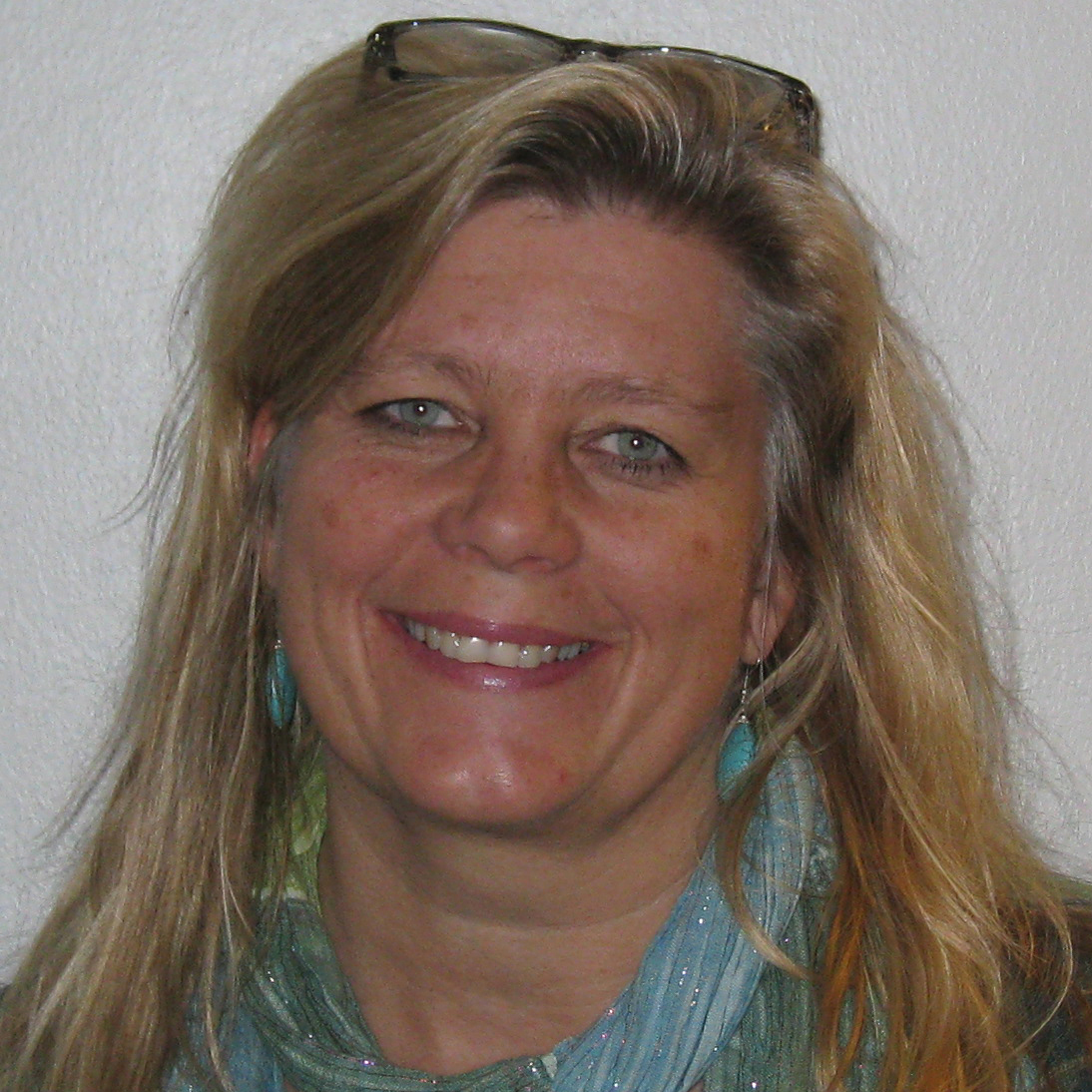
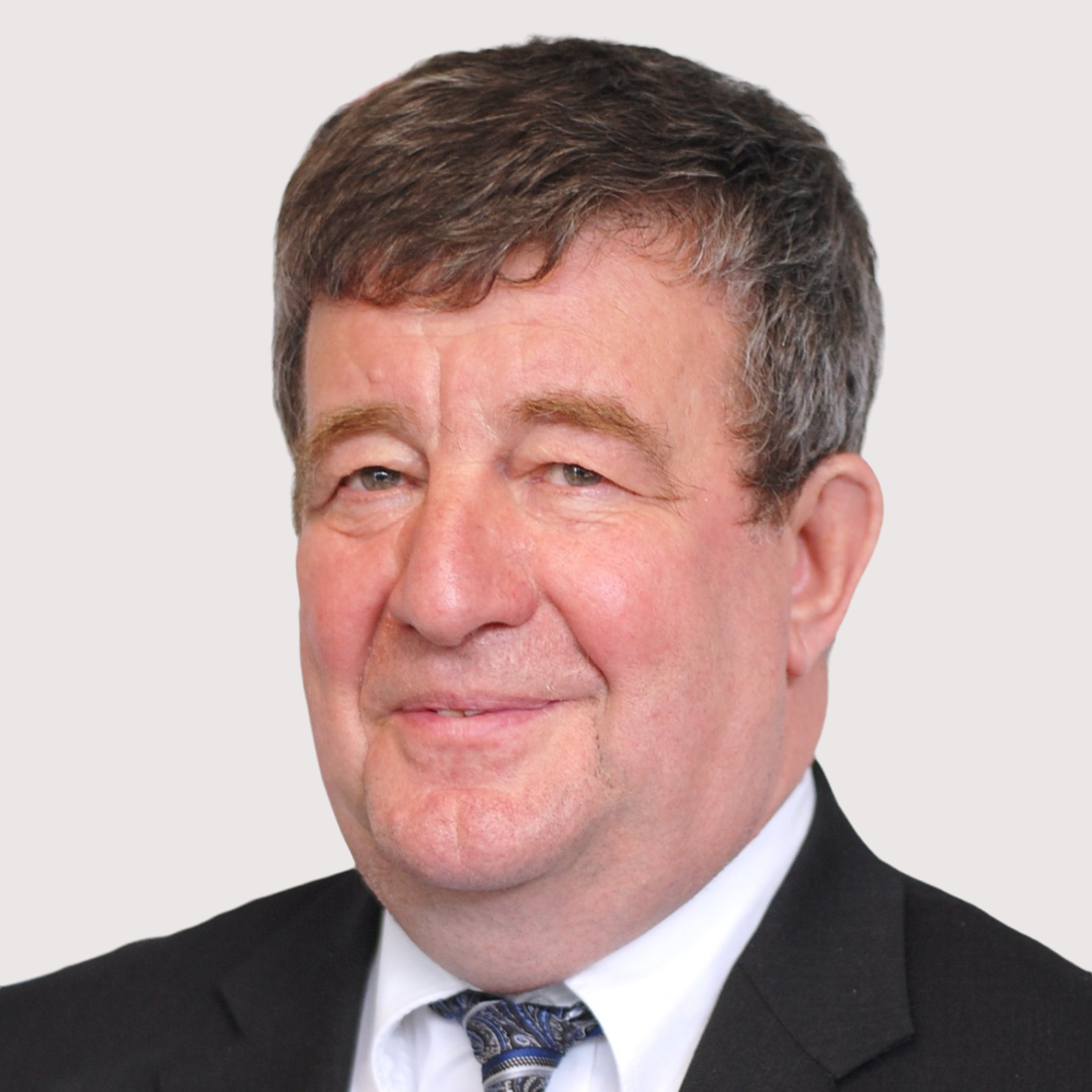
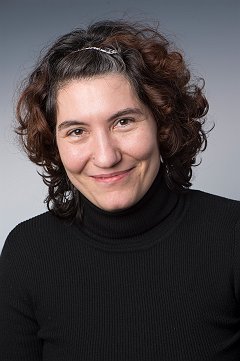
Marianne Ødegaard is a Professor at the Department of Teacher Education and School Research , University of Oslo. Her research focuses on science education , particularly inquiry-based teaching , drama integration , and sustainability education . She has led significant projects like the TEDS-instruct instrument validation and COSER (Challenges of Sustainability in Educational Research), working extensively in Norwegian primary/lower-secondary schools and international contexts including Tanzania. Key Research Areas : Science teacher education, inquiry pedagogy, drama-based instruction, literacy integration, educational equity Methodology : Video-based classroom studies, textbook analysis, cross-cultural comparative research Publications Trend : Recent work explores teaching quality instruments (2025), textbook constraints (2024), and drama for sustainability (2023). She frequently examines how inquiry practices and language policies affect science learning in diverse educational settings. Projects : Currently involved in the ETOS (Bilingual Education Evaluation) and LISE (Instruction-Student Experience Linking) initiatives, with completed work on REDE (Representation/Participation in Science) and PISA+ (Longitudinal Science Teaching Study).
Deniz Yuret is a Professor in the Department of Computer Engineering at Koç University , Istanbul, and the founding director of the KUIS AI Center . Previously, he spent 12 years at the MIT AI Lab and co-founded Inquira, Inc. His research focuses on Natural Language Processing and Machine Learning , with significant contributions in dependency parsing , language modeling , grounded language learning , and character-level NLP . He has pioneered frameworks like Knet , a deep learning library in Julia, and AutoGrad.jl for automatic differentiation. Deniz's academic work spans neural architectures for language-robot interaction, transfer learning in low-resource NMT, and context embeddings for grammatical category acquisition. His recent publications emphasize transformer models , multimodal systems , and efficient language modeling . He has supervised multiple graduate students, including Emre Can Açıkgöz (PhD, UIUC), Onur Kuru (M.S. 2016), Saman Zia (M.S. 2016), and Osman Baskaya (M.S. 2015). His projects include the TUBITAK 1001 (2016-2018) and ReGROUND (2015-2018) in collaboration with international institutions.
Shlomo Weber is a prominent economist serving as President of the New Economic School (NES) in Moscow since 2013. Previously, he was Rector of NES from 2016 to 2018. His academic affiliations include being an Honorary Professor at Southern Methodist University (USA), a Corresponding Member of the Saxon Academy of Sciences (Germany), and a Visiting Professor at the Hong Kong University of Science and Technology. He also serves as co-director of the China-Russia Center for Eurasian Studies (CREC) and Scientific Director of the Laboratory for the Study of Social Relations and Diversity of Society (LISOMO) at NES. Educational Background: PhD in Mathematical Economics, Hebrew University of Jerusalem (1980) Graduated with honors from the Mechanics and Mathematics Department of Lomonosov Moscow State University (1971) Weber's research spans multiple areas of economics with a particular focus on the intersection of language, culture, and economic behavior. His work combines rigorous mathematical approaches with real-world policy applications, examining how social diversity affects economic outcomes. The professor has developed innovative frameworks for understanding language economics, political economy of diversity, and social choice mechanisms in heterogeneous societies. His approach integrates game theory with empirical analysis to address complex economic phenomena. Analysis of his recent publications reveals a consistent focus on diversity economics, particularly linguistic and cultural diversity, and its impact on economic decision-making. His work demonstrates a progression from theoretical foundations to practical applications in policy-making, with increasing attention to global challenges like migration, integration, and international cooperation. The interdisciplinary nature of his research bridges economics, political science, and sociology. Scientific Recognition: Humboldt Research Prize for Outstanding Foreign Scientists (2002) As an academic leader, Weber has overseen significant growth at NES, expanding its international partnerships and research output. He has secured substantial research funding, including a megagrant for the Laboratory for the Study of Social Relations and Diversity of Society. His leadership has positioned NES as a leading economics institution in Russia and Eastern Europe. The Laboratory for the Study of Social Relations and Diversity of Society (LISOMO), which Weber directs, has become a hub for interdisciplinary research on social diversity, hosting numerous international conferences and summer schools. The laboratory's work has influenced policy discussions on diversity management, language policy, and social integration in multiple countries.
Robert Mikael Östling is a Docent (Associate Professor) in Computational Linguistics at Stockholm University's Department of Linguistics. His research spans natural language processing with a multilingual perspective, computational typology, and applications of NLP to psycholinguistic investigations. Position: Docent (Associate Professor) Institution: Stockholm University Department: Linguistics Workplace: Room C 338, Universitetsvägen 10 C, plan 2-3 Östling's research focuses on natural language processing applications including part-of-speech tagging, machine translation, and word alignment from a multilingual perspective. He also utilizes NLP tools in computational typology to understand global language structures and to automate psycholinguistic investigations. His work bridges theoretical linguistics with practical NLP applications. His recent publications reveal consistent focus on multilingual language models, language representations, and cross-linguistic patterns. The research demonstrates strong connections between computational approaches and linguistic theory, with applications ranging from sign language analysis to machine translation systems. Östling serves as principal investigator for the Swedish Research Council funded project "Structured multilinguality for natural language processing" and is involved in the National Graduate School in Digital Philology (DigPhil) and Swe-CLARIN initiatives. His technical expertise spans neural language models, multilingual processing, and computational analysis of linguistic structures across diverse language families.
Daisuke Kawahara is a Professor at Waseda University's Faculty of Science and Engineering and a Visiting Professor at the National Institute of Informatics. He holds a PhD in Informatics from Kyoto University (2005) and has previously served as Associate Professor at Kyoto University and Senior Researcher at NICT. His research spans natural language processing, computational linguistics, and AI infrastructure. Education: Ph.D. in Informatics, Kyoto University (2005) Graduate Studies in Intelligent Informatics, Kyoto University (1999–2002) M.Eng. in Electronic & Communication Engineering, Kyoto University (1997–1999) B.Eng. in Electrical Engineering, Kyoto University (1993–1997) Research Focus: Kawahara specializes in NLP, including syntactic parsing, semantic role labeling, language resource development (e.g., JGLUE benchmark), and multilingual corpus construction. His work integrates machine learning with linguistic theory to improve text understanding systems, error correction tools, and dialogue agents. Publication Trends: His recent articles emphasize Japanese and Chinese NLP, neural network-based parsing, and practical applications like educational tools and pandemic information systems. Common themes include benchmarking, corpus annotation, and cross-lingual adaptation. Awards: 情報処理学会 自然言語処理研究会 優秀研究賞 (2025) 言語処理学会最優秀論文賞 (2024, 2023) 科学技術分野の文部科学大臣表彰 (2017) Multiple Best Paper Awards from NLP conferences (2000–2025) Projects & Advising: He leads JSPS-funded projects like Building General Language Understanding Infrastructure (2021–2025) and Acquisition of Knowledge Frames (2018–2021). No student advisees are listed. Labs & Teams: Collaborates with RIKEN Center for Advanced Intelligence Project and maintains ties to Kyoto University's NLP lab. Focuses on large-scale language modeling and collaborative AI-human intelligence frameworks.
Volodymyr Abashnik is a Full Professor at V.N. Karazin Kharkiv National University in Kharkiv, Ukraine, where he works in the Department of Theoretical and Practical Philosophy. His academic career spans multiple international collaborations, notably through the Humboldt Research Fellowship Programme which he joined in 2007, facilitating research at Ludwig-Maximilians-Universität München and Universität Bremen. Professor Abashnik specializes in the history of philosophy, with particular expertise in German Idealism including extensive work on Kant, Hegel, Fichte, and Schelling. His research also encompasses philosophy of law, history of philosophical logic, and the reception of German philosophical traditions in Ukraine and Eastern Europe. His scholarly output demonstrates consistent engagement with historical philosophical figures and concepts, particularly examining how German philosophical ideas were transmitted to and interpreted within Ukrainian academic circles. Professor Abashnik's publications from 2018-2022 reveal thematic continuity in his research interests while also addressing contemporary concerns. His work shows strong engagement with both historical philosophical figures and their contemporary relevance, particularly in areas like human dignity, tolerance, and the role of philosophy during times of conflict. The multilingual nature of his publications (Ukrainian, German, Russian, English) reflects his position at the intersection of multiple philosophical traditions. His notable recognition includes: Humboldt Research Fellowship (2007) Professor Abashnik maintains an active research profile with substantial scholarly output, demonstrating both depth in specialized areas of philosophy and breadth across multiple philosophical subfields. His work bridges Eastern and Western philosophical traditions, contributing to a more comprehensive understanding of European philosophy as a transnational intellectual enterprise.
Laura Dietz is a tenured Associate Professor in the Department of Computer Science at the University of New Hampshire, where she leads the TREMA lab. Her academic journey began with a PhD from the Max Planck Institute for Informatics in Saarbruecken, Germany (2011), followed by postdoctoral positions at the University of Massachusetts Amherst (2010-2015) and University of Mannheim (2015-2016). Her educational background includes PhD studies at both the Max Planck Institute for Informatics (2007-2011) under Prof. Gerhard Weikum and Prof. Tobias Scheffer, and earlier research at Humboldt University in Berlin. She has built a distinguished career bridging theoretical computer science with practical applications in information retrieval and machine learning. Dietz's research primarily focuses on the intersection of information retrieval, natural language processing, and knowledge graphs, with a parallel research initiative in watershed data science. She is particularly known for her work on entity-aspect linking, complex answer retrieval, and the vision of automatic Wikipedia construction. Her approach integrates fine-grained knowledge annotations with text understanding to create comprehensive information systems that go beyond traditional 10-blue-links search paradigms. In watershed data science, she applies similar machine learning techniques to environmental data streams, focusing on solute transport analysis during storm events. Her recent publications reveal a strong trend toward fine-grained semantic understanding, particularly in entity-oriented search tasks. She has pioneered methods for entity-aspect linking that significantly improve retrieval accuracy by capturing different contexts in which entities appear. Her work increasingly integrates knowledge graphs with neural architectures, showing sophisticated understanding of how to leverage both structured and unstructured information for better search experiences. Best paper award at JCDL 2018 for work on entity-aspect linking NSF CAREER Award (2019-2023) for "Utilizing Fine-grained Knowledge Annotations in Text Understanding and Retrieval" OSSI Award 2013 from UMass ICB3 for open-source hardware/software Dietz actively mentors PhD and Masters students through the TREMA lab, with current research focusing on entity ranking, topic extraction, conversational search, and watershed forecasting. Her grant portfolio includes the NSF CAREER award and funding from the Northeast Big Data Innovation Hub for forecasting salinity in rivers during storm events. She has also coordinated the TREC Complex Answer Retrieval track (2017-2019), creating important benchmarks for the IR community. The TREMA lab (Text Retrieval, Entity Modeling, and Applications) serves as the hub for Dietz's research activities, bringing together students and collaborators to work on cutting-edge problems in information access. The lab's work spans both theoretical contributions to information retrieval and practical applications in domains ranging from environmental science to scientific publication analysis.
Pirjo Aunio is a Professor of Special Education at the University of Helsinki's Department of Educational Sciences since 2013, where she leads the Helsinki Special Education Research Community (Helsinki SEN). She serves as Director of the Doctoral Program in Cognition, Learning, Teaching and Communication, and as a supervisor in the Doctoral Program in School, Education, Society and Culture. Additionally, she holds a distinguished visiting Professor position in Early Childhood Education at the University of Johannesburg, South Africa. Professor Aunio's research focuses on mathematical skills development, learning difficulties in mathematics, assessment of mathematical performance, and evidence-based interventions. Her work examines the multifactorial nature of early numeracy skills, the development of assessment tools like the FUNA-DB and FUNA-JR, and the interplay between motor skills, executive functions, and mathematical development in children. She has published over 120 peer-reviewed articles and has developed practical assessment and intervention tools used by educators worldwide. Her recent research output shows a strong focus on systematic reviews and meta-analyses of mathematical interventions, particularly examining word problem-solving skills, early numeracy assessment tools, and the relationship between physical activity and mathematical development. Her work demonstrates an interdisciplinary approach connecting educational psychology, cognitive science, and practical classroom applications. Proposal for Nomination for the best PhD thesis for Association for Finnish Education (2007) The best PHD thesis in Faculty of Behavioral Sciences (2007) Professor Aunio has supervised numerous doctoral students and leads major research projects including a multi-country study across South Africa, Tanzania, Kenya and Namibia focused on children's mathematical, language, executive functions and motor skills development. She also leads a research consortium with University of Helsinki, Åbo Akademi, University of Turku and University of Jyväskylä developing digitalized assessment tools for children aged 5-16 years. Her work has significant impact on educational practice through evidence-based instruments for identifying children with mathematical learning difficulties and supporting their learning. She leads the Helsinki research community of Special Educational Needs (Helsinki SEN) and has developed the ThinkMath online service, which provides research-based support for children's mathematical and thinking skills development. Her research consortium has created assessment tools like the FUNA-DB and FUNA-JR that are used internationally to identify and support children with mathematical learning difficulties.
Zi Wang serves as an Instructor in the Department of Computer Science at the University of Copenhagen, located at Universitetsparken 1, 2100 København Ø, with contact via ziwa@di.ku.dk and institutional website https://diku.dk/. Her research concentrates on Natural Language Processing and Computational Linguistics, specializing in multilingual compositional generalization and cross-lingual model evaluation. Key interests include machine translation robustness, language model generalization across linguistic structures, and dataset translation methodologies for NLP benchmarking. Her 2023 ACL publication demonstrates expertise in analyzing how language models handle compositional structures across languages using translated datasets, contributing to advancements in multilingual AI evaluation frameworks. No scientific awards were documented in the source material. No advising relationships or grant funding details were provided. No affiliated research labs or collaborative teams were mentioned.
Sussi Olsen is an Academic Research Staff member (Researcher) in the Department of Nordic Studies and Linguistics at the University of Copenhagen, employed at the Center for Sprogteknologi (CST) since 1997. Her work centers on developing and validating linguistic resources for language technology applications. Education: Masters degree in Spanish and Computational Linguistics, University of Copenhagen Her research spans technological language resources, morphological/syntactic/semantic annotation, computational lexicography, corpus linguistics, and resource validation. She specializes in Danish language processing and EU-level language technology infrastructure, with expertise in historical Danish (19th century) and multilingual resource integration. Her work bridges theoretical linguistics and practical NLP applications. Recent publications (2023-2025) reveal a strategic focus on semantic resource development for Danish, including formal lexicons (COR.SEM), language model evaluation frameworks, and sign language-spoken language integration. These works demonstrate convergence between lexical semantics, benchmarking methodologies, and European language equality initiatives, particularly through EU-funded projects like the European Language Equality agenda. She actively contributes to EU language technology projects including the Central Word Register for Danish (COR), European Language Grid, Federated TermBank, and ELEXIS. Her project portfolio shows sustained engagement with terminology management, semantic annotation standards, and resource validation since 2008. She has presented extensively on historical Danish language processing and semantic annotation methodologies. Olsen is affiliated with the Center for Sprogteknologi and participates in the DigHumLab project. She holds governance roles as Member of the Board of Representatives and Board of Directors of the Danish Language Council, and formerly chaired the Society of Lexicographers in Denmark.
Rafal Rzepka is an Associate Professor at Hokkaido University's Faculty of Information Science and Technology, where he leads the Language Media Lab and serves as Associate Editor for Information Processing & Management. With a prolific research output of 322 publications and significant citation impact, his work bridges theoretical NLP with practical applications in ethical AI systems. His research interests span multiple interconnected domains in artificial intelligence, with primary focus on Natural Language Processing, Machine Ethics, Common Sense Knowledge acquisition, and Affect Processing. He has pioneered work in Artificial Humor, Metaphor Understanding and Generation, Cyber-bullying Detection, and recently expanded into Speciesism analysis in language models. His approach combines computational linguistics with cognitive science to develop systems that better understand human behavior and values. Analysis of his recent publications reveals a strong trend toward ethical AI applications, with significant work on bias detection (including fame bias and speciesism), cross-cultural ethics, and moral decision-making frameworks. His research increasingly focuses on practical implementations of ethical AI in security contexts, medical diagnostics through speech analysis, and regulatory compliance systems. Rafal Rzepka's work demonstrates consistent innovation in extracting meaningful patterns from language to address complex social and ethical challenges. His research bridges theoretical advances in NLP with real-world applications that improve AI safety, fairness, and human-AI interaction. As an active researcher, he collaborates across multiple institutions and disciplines, with recent work spanning Japanese, English, Polish, French, and Chinese language contexts. His contributions to developing evaluation datasets like JETHICS provide important resources for the broader AI ethics community.
Dr. Karol Chlasta serves as an Assistant Professor in the Faculty of Management in Networked and Digital Societies at Kozminski University in Warsaw. He earned his doctoral degree in engineering and technical sciences from the Polish-Japanese Academy of Information Technology in 2023, defending his dissertation "Neural Simulation Pipeline for Liquid State Machines" with distinction (summa cum laude). His academic journey includes a Master's degree in Economic Computer Science from the University of Economics in Krakow (2008) and postgraduate studies in Business Analytics at Warsaw University of Technology (2015). Dr. Chlasta's research spans artificial intelligence, particularly neural networks and machine learning, human-computer interaction, and information management. His recent publications demonstrate expertise in AI applications for mental health screening through eye-tracking and speech analysis, sentiment analysis of social media data for migration studies, and innovative virtual reality interaction techniques. He has published consistently from 2020-2024 across multiple high-impact venues, with his work appearing in journals like Frontiers in Psychology, European Psychiatry, and Telematics and Informatics Reports, as well as conferences including ACM DIS and IEEE VR. His scientific contributions form several interconnected research threads: AI-based diagnostic systems for depression, anxiety, and dementia through biometric analysis Computational neuroscience tools including the Neural Simulation Pipeline deployable in cloud environments Sentiment analysis of social media data to understand migrant experiences during the pandemic Novel interaction techniques like VXSlate for virtual reality environments Dr. Chlasta has received notable recognition including the Scholarship of the Minister of National Education and Sport (2006) and the "Outstanding Leader" award from Aviva's global CIO (2017). His interdisciplinary approach bridges technical AI expertise with practical applications in healthcare, migration studies, and human-computer interaction. With over fifteen years of industry experience at major organizations including HP, IBM, and Aviva, Dr. Chlasta brings substantial real-world perspective to his academic work. Since 2022, he has served as Head of Technicus Poland, where he established and manages the Polish branch while developing the company's global IT and cybersecurity functions. He is also a certified specialist across multiple enterprise technologies and a member of several professional organizations including ACM and IEEE. His research approach integrates academic rigor with practical problem-solving, focusing on developing tools that address real-world challenges in mental health screening, migration support, and virtual interaction environments.
Marta Urszula Chyb-Winnicka is an Assistant Professor at the University of Opole, working at the Institute of Polish Language and Culture Studies. She holds a doctorate obtained in 2021 and specializes in linguistics, with a particular focus on Polish language didactics both as a native and foreign language. Her research interests primarily revolve around effective listening skills development in language education. Key areas include: Diagnosis and prophylaxis of effective listening in Polish as a native language Active listening skills development in multilingual educational environments Textual mediation in teaching Polish as a second language Development of interactive skills through listening activities Listening comprehension in primary and secondary education Dr. Chyb-Winnicka has published extensively on these topics, with a monograph titled "Effective listening in Polish as a native language – diagnosis and prophylaxis" (2024) being one of her major contributions. Her research shows a consistent focus on practical applications of listening skills in educational settings, with particular attention to diagnostic methods and teaching techniques that enhance students' auditory perception abilities. She has analyzed numerous textbooks and curricula to understand how listening skills are developed across different educational stages. Her scientific achievements include 18 publications and a ministerial score of 571, though her h-index remains at 0 according to both Scopus and Web of Science citations. This may reflect the relatively recent completion of her doctorate in 2021 and the specialized nature of her research within the Polish academic context. Dr. Chyb-Winnicka actively contributes to the field through empirical research involving primary school students, with studies examining listening skills in fourth graders and eighth graders. Her work bridges theoretical linguistics with practical language teaching methodologies, making significant contributions to Polish language education pedagogy.
Marcin Sawiński is a Researcher and Teaching Assistant at the Department of Information Systems within the Institute of Informatics and Quantitative Economics at Poznań University of Economics and Business. With expertise spanning computer and information sciences (75%) and management and quality studies (25%), his work focuses on developing AI tools for addressing misinformation and enhancing fact-checking processes. His primary research interests include: Artificial Intelligence applications for fake news detection Natural Language Processing techniques for misinformation analysis Machine learning approaches to credibility assessment Persuasion techniques detection in social media content Development of robust language models for fact-checking systems Analysis of political narratives during crisis events like pandemics Dr. Sawiński's recent publications (2023-2025) demonstrate a concentrated research trajectory focused on applying transformer-based models to misinformation challenges, particularly in Slavic languages. His work spans multiple dimensions of the fake news problem, from detection of persuasion techniques to cross-lingual transfer learning for check-worthiness assessment. He has been actively involved in international competitions like CheckThat! Lab at CLEF, where his team (OpenFact) has developed innovative approaches to fact-checking challenges, including adversarial text generation to test model robustness. His scientific contributions include 15 publications with over 50 citations, reflecting his growing impact in the field of AI for misinformation detection. His research often involves collaboration with colleagues including Krzysztof Węcel, Witold Abramowicz, and Ewelina Księżniak.
Miyuki Sasaki is a Professor at Nagoya City University's Faculty of Education and Integrated Arts and Sciences, School of Education, specializing in second language writing, language assessment, and the effects of study abroad experiences. With a PhD in Applied Linguistics from UCLA and extensive research experience, she has made significant contributions to understanding L2 writing development and assessment. Educational Background: PhD in Applied Linguistics, University of California, Los Angeles MA in English Education, Hiroshima University BA in English Education, Hiroshima University Additional studies at Georgetown University in Teaching English as a Second Language Professor Sasaki's research focuses on the longitudinal development of second-language writing ability, the effects of raters' values and belief systems on composition evaluations, and sociocultural factors affecting L2 writers' motivation. Her work takes an ecological-historical approach to understanding multilingual writing development, examining how learners' experiences across different languages and contexts interact to shape their writing abilities. Recent research has increasingly incorporated technology, exploring AI tools like ChatGPT in writing assessment and the impact of machine translation on writing instruction. Her publication trends show a consistent focus on longitudinal studies of writing development, with increasing attention to technology-mediated language learning and assessment. The research demonstrates a progression from examining individual writing processes to investigating broader sociocultural and technological influences on L2 writing. Recent work has particularly emphasized the ecological context of writing development and the intersection of writing with other language skills. Scientific Awards: Special Grant for the Promotion of Research (2019) Nagoya City University Highest Ranked Paper Award (2018) Abe Fellowship for international research (2016) UCLA Nida Award for best qualifying paper (1990) Rotary International Foundation scholarship (1984) Ministry of Education scholarship for University of Michigan (1980) Professor Sasaki has served on numerous editorial boards including the Journal of Second Language Writing, Language Testing, and TESOL Quarterly. She has coordinated AAAL conference strands and served on TOEFL and TOEIC technical panels. Her research projects have been consistently funded by Japanese academic institutions, with current work examining third-language study abroad effects and multilingual writing development. She teaches courses in second language writing, applied linguistics, and English communication, mentoring the next generation of language education researchers.