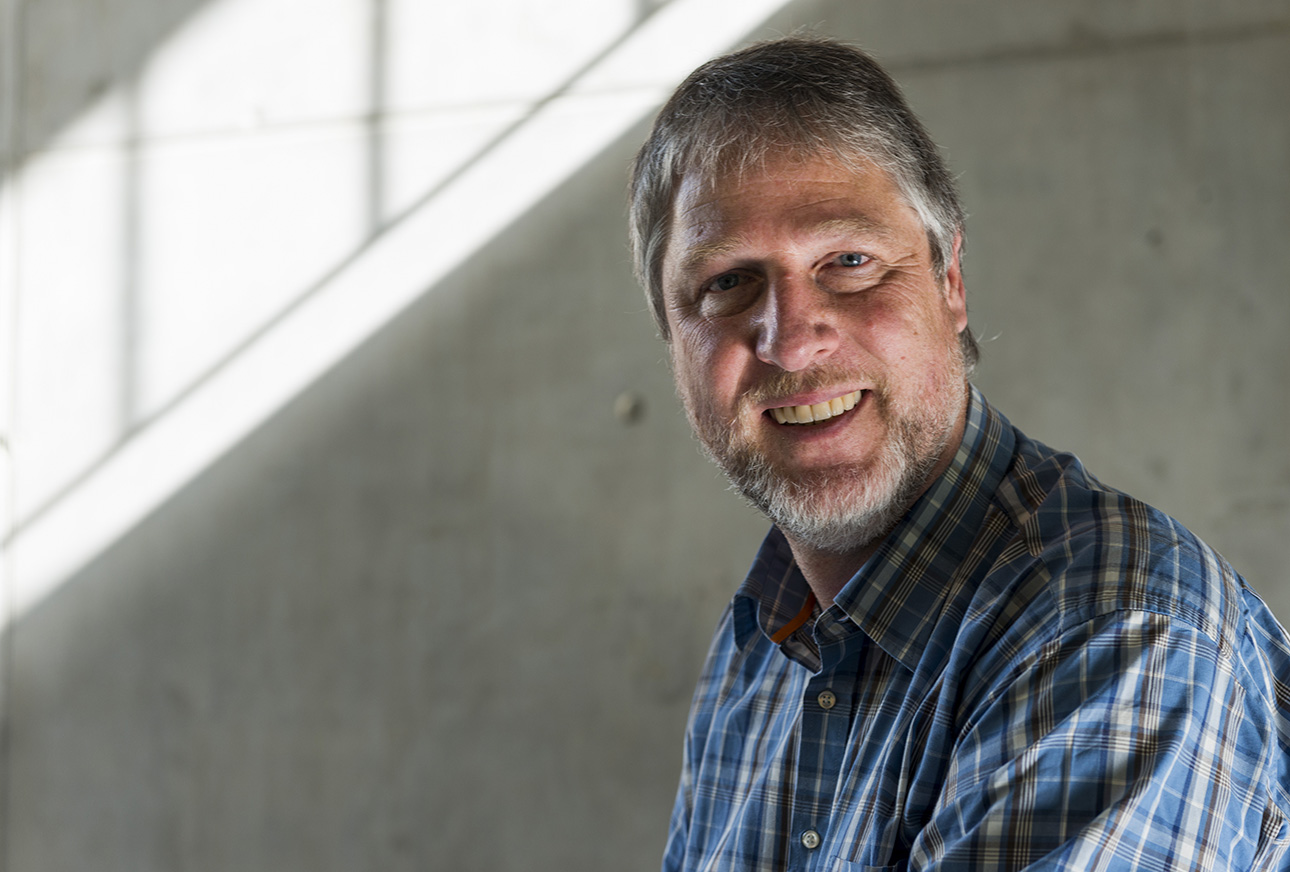
Professor Bernd Möbius is a leading academic in Phonetics and Phonology at the Department of Language Science and Technology, Saarland University. His research bridges phonetic theory with speech technology applications, focusing on text-to-speech systems, prosody modeling, and computational simulations of speech processes. Current research projects: DFG SFB 1102, C1: Information density and phonetic structure predictability DFG SFB 1102, C4: Slavic intercomprehension and surprisal theory (INCOMSLAV) Research Themes: Key areas include text-to-speech synthesis, speech prosody analysis, experimental methods in speech production/perception, information density in phonetics, and cross-linguistic studies of Slavic-Germanic languages. Scientific Contributions: Recent work explores Parkinson-induced dysarthria detection, breath noise acoustics, surprisal-driven speech behaviors, multilingual BERT models for idiomaticity, and perceptual consequences of acoustic adjustments.
Ekaterina Shutova is an Associate Professor at the Institute for Logic, Language and Computation (ILLC) within the Faculty of Science at the University of Amsterdam. She concurrently holds a Visiting Associate Professor position in the Computer Science Department at Stanford University. She leads the Amsterdam Natural Language Understanding Lab and heads the NLP & Digital Humanities research unit at ILLC. An ELLIS Scholar, she earned her PhD from the University of Cambridge Computer Laboratory and Pembroke College. Her research has been funded by ERC, Innovate UK, British Academy, Leverhulme Trust, Google, Meta, and Deloitte. Her research spans natural language processing and machine learning, with core interests in: Few-shot learning for NLP Multilingual and cross-lingual systems Joint modeling of language and vision Cognitive processing and semantic representation Figurative language interpretation Computational social science applications Her recent publications (2024-2025) predominantly focus on multimodal learning, cultural alignment in AI, metaphor processing, and evaluation methodologies for language models. These works reflect a trend toward integrating cognitive science with multilingual systems and ethical considerations. Awards & Fellowships: ERC Consolidator Grant (2025) ELLIS Scholar Outstanding Paper Award at ACL 2023 Finalist for Outstanding Certification by TMLR Runner-up Best Paper Award at NAACL-HLT 2016 Research Leadership: She directs the Amsterdam Natural Language Understanding Lab, supervising 8 PhD students, 1 MSc student, and 34 alumni. Her projects include an ERC-funded initiative on globally accessible language technology and an AI Democratization grant for hate speech detection.
Schloss Dagstuhl - Leibniz Center for InformaticsGermany
Teruko Mitamura is a prominent researcher at Carnegie Mellon University with over three decades of contributions to natural language processing, computational linguistics, and artificial intelligence. Her work spans from foundational research in event representation to advanced applications in multimodal systems and question answering. Her research interests focus on event detection and understanding, question answering systems, information retrieval, and multimodal processing. She has made significant contributions to event coreference resolution, timeline construction, and cross-document event analysis, developing methodologies that have become standard in the field. Her work often bridges theoretical advances with practical applications, particularly in complex information environments requiring deep semantic understanding. Natural Language Processing : Specializing in event extraction, coreference resolution, and narrative understanding with over 179 publications Question Answering Systems : Developing advanced techniques for complex question answering, particularly through NTCIR QA Lab and PoliInfo tasks Multimodal Processing : Integrating textual, visual, and temporal information for richer understanding in systems like ProMQA Evaluation Methodologies : Creating robust frameworks for assessing NLP systems through TAC KBP Event Tracks Her recent publication trends show a strong focus on leveraging large language models for event understanding, multimodal question answering, and timeline construction. She has expanded her research into specialized domains including patent analysis and novelty examination, demonstrating the breadth of her research impact across academic and practical applications. Active participant in major NLP conferences including ACL, EMNLP, NAACL, and AAAI with consistent publications Long-standing collaborator with researchers at CMU's Language Technologies Institute including Eduard H. Hovy and Eric Nyberg Contributor to shared tasks that have shaped research directions in event processing and question answering Organizer of multiple NTCIR QA Lab tasks focused on political information question answering Dr. Mitamura has mentored numerous researchers who have gone on to make their own contributions to the field, as evidenced by her extensive co-authorship network and the progression of her former students and collaborators into faculty and research positions. Her work continues to evolve with the field while maintaining her focus on deep semantic understanding of events and narratives.
Max Planck Institute of Colloids and InterfacesGermany
Shrikanth (Shri) Narayanan is University Professor and Niki & C. L. Max Nikias Chair in Engineering at the University of Southern California (USC), with appointments spanning Electrical & Computer Engineering, Computer Science, Linguistics, Psychology, Neuroscience, Pediatrics, and Otolaryngology-Head & Neck Surgery. He serves as Research Director of the Information Sciences Institute and Director of the Ming Hsieh Institute. PhD in Electrical Engineering (UCLA, 1995) Engineer and MS in Electrical Engineering (UCLA, 1992 and 1990) BE in Electrical Engineering (Anna University, India, 1988) His interdisciplinary research focuses on human-centered signal processing and machine intelligence , addressing societal challenges in health, education, defense, and media arts. Key areas include: Behavioral signal processing Affective computing Multimodal signal processing Computational speech science Biomedical applications Scientific Awards : IEEE James L. Flanagan Speech and Audio Processing Award (2025) Edward J. McCluskey Technical Achievement Award (2024) ISCA Medal for Scientific Achievement (2023) Claude Shannon-Harry Nyquist Technical Achievement Award (2023) ACM ICMI Sustained Accomplishment Award (2020) USC Distinguished Faculty Service Award With over 1,000 publications and 19 patents , his work has been commercialized through startups like Behavioral Signals Technologies and Lyssn . He leads transformative university initiatives and has served in editorial roles for top journals including Computer Speech and Language and IEEE Transactions on Affective Computing .
Inho Hong is an Assistant Professor at the Graduate School of Data Science, Chonnam National University (Gwangju, Korea), leading the Computational Social Science and Complex Systems Lab (CSL). His research explores socio-spatial systems through data science and complex systems methods, focusing on urban dynamics, human mobility, and AI's societal impact. Education: Ph.D. in Physics (2019), Pohang University of Science and Technology (POSTECH) M.S. in Physics (2012), POSTECH B.S. in Physics (2010), POSTECH Research Interests: Urban Data Science : Analyzing urban scaling laws and innovation pathways Human Mobility : Modeling intra-city movement patterns Social Impact of AI : Ethical and societal challenges Natural Language Processing : Text embedding for policy analysis Complex Systems : Network approaches to protests and epidemics Recent Work Trends: Over 2020–2022, his articles centered on pandemic control, protest networks, and urban green spaces' psychological impact. Recent 2023–2025 work extends to vocational education analysis and mobility laws within cities. His methods combine network science with large-scale data analytics. Awards: Young Statistical Physicist Award (Korean Physical Society, 2021) Best Paper Award (Korea Computer Congress 2021) Global Ph.D. Fellowship (NRF, 2014–2017) Grants & Labs: Current lab focuses on socio-spatial systems. Past roles include Associate Research Scientist at Max Planck Institute for Human Development (2020–2023) and Postdoctoral Fellowships at POSTECH and APCTP.
Elena Simperl is a Professor of Computer Science and Deputy Head of Department for Enterprise and Engagement at King's College London's Department of Informatics. She co-directs the King's Institute for Artificial Intelligence and serves as Director of Research for the Open Data Institute. As a Hans Fischer Senior Fellow at the Technical University of Munich's Institute for Advanced Study, she leads the Trustworthy Knowledge Graphs focus group and contributes to advancing human-centric AI research across European institutions. Professor Simperl obtained her doctoral degree in Computer Science from the Free University of Berlin and her diploma from the Technical University of Munich. Prior to joining King's, she held academic positions in Germany, Austria, and at the University of Southampton, and was a Turing Fellow. Her career trajectory demonstrates consistent leadership in bridging academic research with practical applications in data ecosystems. Her research sits at the critical intersection of AI and social computing, focusing on human-centric approaches to building sociotechnical systems that integrate data, algorithms, and human capabilities. She investigates how to make knowledge engineering more accessible, how to leverage collective intelligence for data quality improvement, and how to design participatory AI systems that address societal challenges like misinformation. Her work spans knowledge graphs, semantic technologies, crowdsourcing, and open data, with particular emphasis on the social dimensions of data-intensive systems and the governance frameworks needed for trustworthy AI deployment. Analysis of her recent publications reveals a strong evolution toward integrating large language models with traditional knowledge engineering practices while maintaining human oversight. There's a clear trajectory from foundational work on knowledge representation toward increasingly applied research addressing real-world challenges in media ecosystems, citizen science, and data governance, with growing attention to policy implications of AI technologies. Fellow of the British Computer Society Fellow of the Royal Society of Arts Hans Fischer Senior Fellow at TUM-IAS (2023) Ranked among top 100 most influential scholars in knowledge engineering of the last decade Included in Women in AI 2000 ranking Professor Simperl has led 14 major European and national research projects totaling millions in funding, including MediaFutures (a Horizon 2020 program tackling online misinformation), QROWD, ODINE, Data Pitch, and ACTION. She currently co-chairs the Croissant working group in ML Commons developing data standards for AI, and serves as president of the Semantic Web Science Association. Her research has directly influenced the development of data ecosystems supporting startups and citizen science initiatives across Europe, demonstrating exceptional ability to translate theoretical advances into practical impact. As Director of Research at the Open Data Institute, she oversees initiatives connecting data entrepreneurs with artists and civic organizations. Her leadership in the MediaFutures project established a data-driven innovation hub that supported 51 startups/SMEs and 43 artists through three open calls, creating a sustainable model for arts-technology collaborations addressing media challenges. Her work with the ODINE project helped create a European ecosystem for data-driven startups, demonstrating her commitment to building practical applications of open data principles.
Max Planck Institute for Security and PrivacyGermany
Yangruibo Ding is an incoming Assistant Professor in the Department of Computer Science at the University of California, Los Angeles (UCLA), and currently serves as a Postdoctoral Scientist at AWS Agentic AI. He has held significant research positions at Google DeepMind, Amazon AWS AI Labs, and IBM Research, establishing himself as a leading researcher in software engineering with a focus on large language models for code. His research focuses on developing large language models (LLMs) and agentic systems for software engineering. He specializes in training LLMs with advanced symbolic reasoning capabilities for debugging, testing, program analysis, and verification. His work aims to build efficient, collaborative agentic systems for complex software development and maintenance tasks, with particular emphasis on code generation, vulnerability detection, and execution-aware pre-training techniques. Dr. Ding's publication record reveals a strong trajectory toward enhancing code intelligence through comprehensive semantics reasoning and self-refinement approaches. His research spans multiple dimensions of software engineering including code completion, vulnerability detection, model evaluation, and cross-file context understanding, with applications across various programming languages and development environments. Dr. Ding has received numerous prestigious awards recognizing his contributions to the field: IBM Ph.D. Fellowship Award (2022-2024) ACM SIGSOFT Distinguished Paper Award (2023) IEEE TSE Best Paper Award Runner-up (2022) Ph.D. Service Award, Columbia CS (2025) NSF Student Travel Award for ESEC/FSE'23 (2023) ACM SIGSOFT CAPS Travel Grant (2023) NSF Travel Award for ICSE'22 (2022) As he establishes his research group at UCLA, Dr. Ding is actively seeking students with strong coding skills and experience in large language models, program analysis, verification, or security. He serves on program committees for major conferences including ICSE (2026), ASE (2024, 2025), and ESEC/FSE Artifacts Track (2023), and regularly reviews for top-tier conferences and journals in AI and software engineering. His research is conducted through collaborations with leading industry teams including AWS Agentic AI, Google DeepMind's Learning4Code team, and IBM Research's AI for Code team, creating a robust network of industry-academia partnerships that drive innovation in software engineering research.
Thomas Riechert is a Professor at the Leipzig University of Applied Sciences (HTWK Leipzig), specifically within the Faculty of Computer Science and Media. He serves as Dean of Media Informatics, Chairman of the Media Informatics Study Commission, and Academic Advisor for Media Informatics. Additionally, he is a Member of the Faculty Council, Faculty representative in the IT committee, and Library Commission. He also acts as Spokesperson of the Institute of Computer Science at the HTWK. Appointed in 2014 in the field of information systems and data management, Riechert holds a doctorate from the University of Leipzig (2012, magna cum laude) and graduated as a computer scientist from TU Dresden in 2000. Professor Riechert's research focuses on information systems, data management, Semantic Web technologies, knowledge engineering, and Linked Data. His work bridges computer science with digital humanities, particularly in creating knowledge graphs for historical research. He has made significant contributions to RDF vocabulary management, ontology editing tools, and academic history databases. His research demonstrates a strong emphasis on practical applications of semantic technologies in information management systems. Analysis of his recent publications reveals a consistent trajectory in semantic web technologies applied to knowledge representation and historical data. His work shows progression from foundational semantic technologies toward increasingly sophisticated applications in digital humanities, particularly in academic history research. The Heloise project appears to be a major focus, developing common research models for collaborative historical research using Linked Open Data. His publications span both technical aspects of semantic technologies and their application in humanities contexts. Professor Riechert actively contributes to academic community building through conference organization and student engagement. His leadership roles in the Faculty of Computer Science and Media demonstrate his commitment to shaping computer science education. His research integrates practical software development with theoretical advancements in knowledge representation. As Dean of Media Informatics, Riechert oversees academic programs and research initiatives in this field. His work with the Heloise network demonstrates leadership in interdisciplinary research connecting computer science with historical scholarship. His office hours are held on Mondays from 10:00 to 11:00 in room ZU 407 at HTWK Leipzig.
Helmholtz Centre for Environmental ResearchGermany
Joakim Nivre is a Professor at Uppsala University's Department of Linguistics and Philology. He is a leading researcher in computational linguistics, with a focus on dependency parsing, Universal Dependencies (UD) framework development, and multilingual NLP applications. His recent work explores LLMs in climate change discourse analysis, pharmacovigilance explainability, and historical text processing. Key research areas: Dependency parsing theory, Universal Dependencies standardization, LLM evaluation Collaborations: SweSAT-1.0 benchmark development, ClimateEval project, PARSEME integration His 2025-2023 publications demonstrate expertise in explainable AI for healthcare, synthetic data generation for idioms, and multilingual benchmark design. Notably, he co-developed SweSAT-1.0 to evaluate Swedish LLMs and contributed to typology-informed UD revisions. Despite extensive work in NLP, no scientific awards are mentioned in available texts.
Slava Jankin is a Professor of Data Science and Government at the University of Birmingham’s School of Government, where he also serves as Deputy Director of the Institute for Data and AI and Founding Director of the Centre for Artificial Intelligence in Government. He is concurrently a Fellow and Founding Director of the Data Science Lab at the Hertie School in Berlin. Previously, he held a Professorship at the University of Essex and has worked at University College London (UCL) and the London School of Economics (LSE). His research bridges computational methods, governance, and climate policy, with a focus on AI applications in public institutions, climate-health surveillance, and misinformation resilience. Jankin earned a PhD in Political Science from Trinity College Dublin (2009), a Postgraduate Diploma in Statistics (2006), and a BSc from Belarus State Economic University (2002). **Education**: • PhD in Political Science, Trinity College Dublin (2009) • Postgraduate Diploma in Statistics, Trinity College Dublin (2006) • BSc Econ with Distinction, Belarus State Economic University (2002) **Research Interests**: Jankin’s work integrates AI and computational methods with governance challenges, including climate policy, health surveillance, and institutional effectiveness. He leads initiatives like the Lancet Countdown’s climate-health monitoring and the CATALYSE project on climate impacts. His research also explores digital twins for governance systems and the role of cultural diversity in societal resilience against misinformation. **Grants & Collaborations**: He advises the UN and EU on AI and data science, co-leads the Lancet Countdown, and collaborates with institutions like the Alan Turing Institute. His applied work includes developing AI tools for public service optimization and policy simulations. **Labs & Teams**: Directs the Centre for AI in Government (University of Birmingham) and the Hertie School’s Data Science Lab, fostering interdisciplinary teams to advance computational methods in public policy.
Rhenish Friedrich Wilhelm University of BonnGermany
Prof. Robert Fuchs holds the Frommann Professorship of Applied English Linguistics at the University of Bonn, leading the Chair of Bonn Applied English Linguistics (BAEL) within the Department of English, American and Celtic Studies. His research focuses on World Englishes, corpus linguistics, sociolinguistics, and the impact of artificial intelligence on linguistic analysis. He actively supervises PhD students in topics aligned with his research group's interests, emphasizing empirical work and data science. Recent research explores language change in varieties like Hong Kong English, Trinidadian prosody, and intensifier usage across cultures. Fuchs frequently presents at international conferences, including ISLE, ICAME, and Sociolinguistics Symposium, and publishes extensively in journals like World Englishes and Language and Speech . His teaching includes advanced courses on corpus linguistics and language in culture, with a focus on climate change discourse analysis. He maintains an active academic presence through ResearchGate, Academia.edu, and LinkedIn. Research Interests: Fuchs investigates sociolinguistic variation, AI applications in linguistics, and the structural features of postcolonial Englishes. His work addresses topics such as vowel mergers in Hong Kong English, lexical stress perception in Indian English, and the role of gender in language use. He also explores diachronic changes in aspects like stative progressives and the perfect-past alternation across Asian Englishes. Advising & Grants: Fuchs oversees PhD student recruitment through research associate positions and self-funded scholarships, prioritizing applicants with strong empirical and analytical skills. His funded projects include studies on pandemic discourse (DisCOVIndUK) and linguistic trends in Caribbean English. His lab, BAEL, collaborates internationally, with ongoing work on Trinidadian prosody and Northeast Indian linguistic ecology. Labs/Teams: The Bonn Applied English Linguistics (BAEL) group, part of the University of Bonn's IAAK institute, focuses on cutting-edge research in global Englishes and computational linguistics, hosting international workshops and fostering interdisciplinary collaboration.
Sergiusz Michalski is a Professor at the Institute of Art History within the Faculty of Philosophy at the University of Tübingen, where he has held his position since 2001. Previously, he served as Managing Director of the Art History Institute at TU Braunschweig from 1996-2001 and completed his Habilitation at Goethe University Frankfurt in 1995. His distinguished academic career spans multiple European institutions including universities in Munich, Leipzig, Frankfurt, Kiel, Fribourg, Zurich, and Torun. Michalski's research focuses encompass Reformation and Art, Mannerism, 16th and 17th century Dutch and Flemish painting, Art theory, 18th century French painting, 20th century art, Public monuments, and Methodological questions in art history. His scholarly output includes approximately 270 publications with notable books such as 'The Reformation and the Visual Arts' (1992), 'Public Monuments' (1998), 'L'art de l'Europe Centrale' (2008), and 'Einführung in die Kunstgeschichte' (2015). His recent publications demonstrate continued engagement with contemporary issues in art history, particularly in public monument discourse, digital methodologies, and Central European art traditions. Michalski has edited several prominent art history journals including Ars Artibus et Historiae, Folia Historiae Artium, and Ikonotheka. Member of Royal Swedish Academy for Literature and Humanities Member of Polish Academy for Sciences and Arts Member of Göttingen Academy of Sciences Member of Academia Europaea / The Academy of Europe London Member of Latvian Academy of Sciences Member of Council of Experts of European Science Foundation Michalski maintains an active research profile with recent publications addressing digital methodologies in art history, contemporary monument discourse, and Central European art traditions. His international scholarly network is reflected in his editorial roles and academy memberships across Europe.
Prof. Dr. Heiko Paulheim is a Professor of Data Science and currently serves as University Vice President at the University of Mannheim. He leads the Data and Web Science Group (DWS), which focuses on Web Data Mining, Knowledge Graphs, and Semantic Web technologies. His research group contributes to open source knowledge graphs like DBpedia and develops new knowledge graphs such as WebIsALOD and DBkWik. As of October 1, 2024, he has limited teaching capacity due to his vice presidential duties. Prof. Paulheim's research interests span Knowledge Graphs, Semantic Web, Web Data Mining, Machine Learning, and Natural Language Processing. His work particularly focuses on knowledge graph refinement, embedding techniques (notably RDF2vec), and applications in various domains including news recommendation, biomedical informatics, and environmental monitoring. His group develops practical tools like the RapidMiner Linked Open Data Extension and RDF2vec for knowledge graph applications. His recent publications demonstrate a strong focus on knowledge graph embeddings, with particular attention to RDF2vec variants, applications in news recommendation systems, biomedical data integration, and spatio-temporal knowledge graphs for environmental monitoring. His work bridges theoretical advances in knowledge representation with practical applications across multiple domains. Among his notable achievements are a nomination for the Best Paper Award at CAiSE 2025 and securing an Open Science Grant for the SpatialBenchRAG project. His research has significant impact in both academic and industrial contexts, with multiple papers accepted at top conferences like ISWC and ESWC. Prof. Paulheim has supervised numerous PhD students including Alexander Brinkmann and Michael Schlechtinger, and has led several research projects including the DFG Project Mine@LOD, State of BW Project SyKoW², and BMBF Project DS4DM. His group maintains strong industry connections with partners like SAP AG, Daimler AG, and IDS.
Stefan Riezler is a full professor of Statistical Natural Language Processing at Heidelberg University's Department of Computational Linguistics (since 2010), affiliated with the Faculty of Mathematics and Computer Science. Prior to this, he worked in Silicon Valley at Xerox PARC and Google Research. He holds a PhD in Computational Linguistics from the University of Tübingen (1998) and conducted postdoctoral research at Brown University (1999). His research spans machine learning, NLP, and medical informatics, focusing on interactive statistical learning. He co-leads the Interdisciplinary Center for Scientific Computing (IWR) and serves on the editorial boards of Computational Linguistics and Transactions of the Association for Computational Linguistics . Key research areas include neural machine translation, healthcare AI (e.g., sepsis prediction), data augmentation, and reproducibility in ML. He develops tools like JoeyNMT and explores ethical challenges in clinical machine learning. Notable recent work includes advancements in time series analysis, multimodal interfaces (e.g., NLMaps for OpenStreetMap), and ethical frameworks addressing validity in healthcare ML. His publications emphasize practical applications of NLP in healthcare, speech translation, and cross-lingual systems. Grants and collaborations include interdisciplinary projects on medical data science and training next-gen NLP researchers. He actively contributes to open-source toolkits and reproducible research practices.
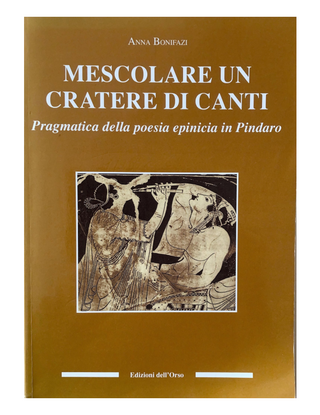
Prof. Anna Bonifazi holds a Professorship in Discourse Studies at the Department of Linguistics, University of Cologne. Her research spans Discourse Analysis, Pragmatics, Cognitive Linguistics, and Multimodal Communication with a focus on Ancient Greek Linguistics and Oral Epic traditions. She investigates phenomena like anaphoric cohesion in long texts, multimodal storytelling in film and oral traditions, and ancient Greek particles' discursive functions. Her work explores how multimodal elements (e.g., visual, musical, gestural) interact in communication, particularly analyzing films (e.g., mystery genres), ancient texts (e.g., Homeric epics), and South Slavic oral narratives. She examines cross-modal iconicity, viewpoint blending, and the cognitive underpinnings of discourse structures. Recent publications address topics like anaphoric strategies in crime stories and syntactic patterns in ancient Greek conversational frameworks. Prof. Bonifazi's research often bridges classical philology and modern cognitive theories, emphasizing embodied cognition and the interplay between language and other semiotic systems. She collaborates internationally on projects involving gesture analysis in storytelling and ancient papyrological studies. Her interdisciplinary work integrates linguistics with musicology, film studies, and cognitive science. Administratively, she oversees the Discourse Studies research group at Cologne and mentors assistants like Dr. Sandra Debreslioska and Madeleine Frings. Her lab focuses on multimodal discourse analysis using experimental and corpus-based methods.