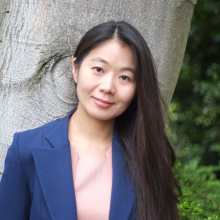
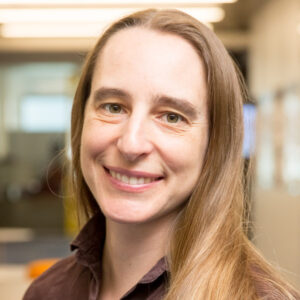
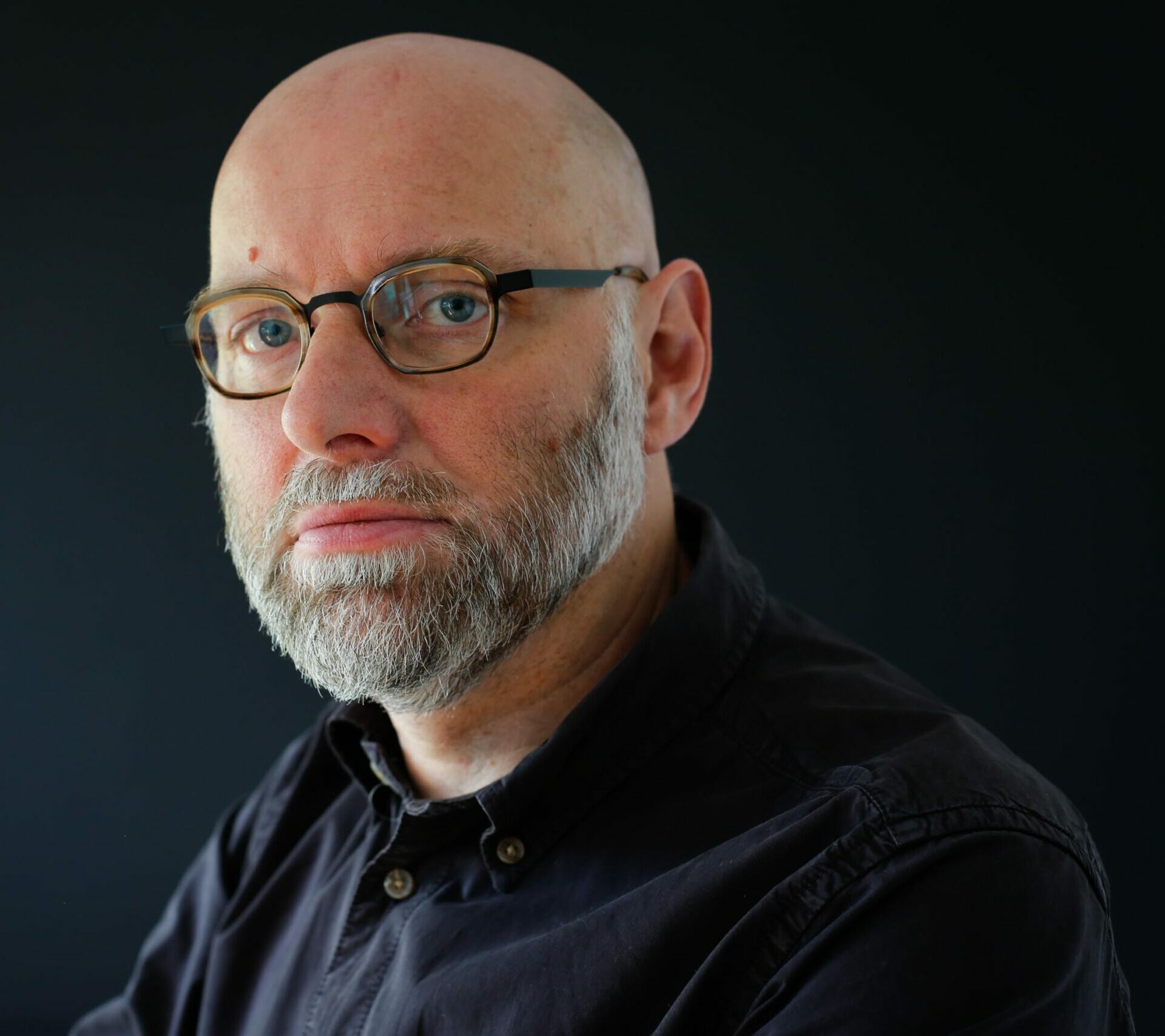
Ken Hyland is an Honorary Professor at the University of East Anglia (School of Education & Lifelong Learning) and an Honorary Professor at Jilin University in China. With over 29 books and 280 papers, he is recognized as the world's leading scholar in language and linguistics by the Stanford/Elsevier Top 2% of World Scientists analysis. Former Director of the Centre for Applied English Studies at the University of Hong Kong Former Professor at UCL Institute of Education, London Foundation Fellow of the Hong Kong Academy of the Humanities His research spans academic discourse , writing pedagogy , language education , and metadiscourse analysis , with a focus on second language writing , feedback practices , and AI's role in writing . Recent projects explore ChatGPT's rhetorical strategies and digital literacy in writing evaluation. His publications demonstrate expertise in corpus linguistics , genre analysis , and cross-cultural communication . Articles show trends in analyzing AI-generated texts, medical discourse, and evolving academic writing conventions. 2022: Most Influential Scholar in Global Applied Linguistics Co-editor of Applied Linguistics and founding co-editor of Journal of English for Academic Purposes Ken has taught in Sudan, Saudi Arabia, Malaysia, Papua New Guinea, New Zealand, and Hong Kong. He contributes to projects like the LIT Educational Hub (2021–2023), enhancing digital university experiences in BRI countries.
Cecilia Robustelli is a Full Professor at the University of Modena and Reggio Emilia, based in the Department of Linguistic and Cultural Studies. Her research focuses on gender and language, Italian linguistics, language policy, and the sociocultural dimensions of communication. She is actively involved in initiatives promoting gender-inclusive language and non-discriminatory administrative communication. Teaching includes courses such as Administrative Writing in Italian and Linguistic Strategies for Institutional Communication , addressing professional and gender-aware writing skills. She also teaches Language, Speech, and Gender , exploring the historical and sociolinguistic intersections of gender and language. Her research highlights the role of language in reflecting societal changes, particularly regarding women’s roles and gender equality. Recent work examines digital tools in linguistics, inclusive language policies, and the impact of gender diversity on language systems. She collaborates with institutions like the Accademia della Crusca and contributes to EU-funded projects on multilingualism and language policy. Publications span over 50 works, including monographs like Lingua italiana e questioni di genere (2018) and articles on topics such as gender-neutral language in administrative texts and the linguistic representation of non-binary identities. She advises governmental bodies on language reform and participates in international conferences on language policy and gender studies.
Marc Orlando is a Professor and Director of the Translation and Interpreting Program in the Department of Linguistics at Macquarie University's Faculty of Medicine, Health and Human Sciences. His expertise spans translation and interpreting studies, with a focus on pedagogy, technology integration, and industry collaboration. He holds a PhD from Monash University (2014), a Master's in English Studies from Bordeaux Montaigne University (1996), and a postgraduate degree in multilingual education from the French Ministry of Education (1998). Research Interests : Orlando's work emphasizes training methodologies for translators/interpreters, the role of new technologies (e.g., digital pens, AI/MT), and synergies between practice, research, and education. He advocates for graduate employability and has built partnerships with organizations like AIIC, CIUTI, and Multicultural NSW. Key Contributions : His 2016 monograph Training 21st Century Translators and Interpreters is foundational in the field. Recent projects include studies on healthcare interpreting accessibility, AI literacy for professionals, and crisis management in language services. Awards : AUSIT National Award for Excellence in Translating (2007), multiple Dean's Awards for Teaching (Monash University), and the Gutenberg Teaching Council Grant (2013). Advising & Engagement : Supervised over 10 HDR students on topics like interpreter skill development, Auslan-English interpretation, and subtitling in education. Served on NAATI's Technical Reference Committee (2016–2021) and led AIIC's Research Committee (2017–2022). Leadership Roles : Vice-President of CIUTI, editorial board member of Interpreting and Society , and active conference interpreter (AIIC member). His work bridges academia and industry, fostering global T&I standards through policy and practice.
Dr. Antonio Andriella is a Postdoctoral Researcher at the Institut de Robòtica i Informàtica Industrial (IRII), a joint research center of the Spanish National Research Council (CSIC) and Technical University of Catalonia (UPC). He is an incoming Tenured Scientist at IRII expected to start by the beginning of 2026. Previously, he was a Research Scientist at Pal Robotics awarded with a Marie Skłodowska-Curie cofund fellowship in the H2020 project PRO-CARED (no.801342), and a Postdoctoral Researcher at the Artificial Intelligence Research Institute (IIIA) working on the Value-Aware Artificial Intelligence (VALAWAI) project. His educational background includes: PhD in Control, Robotics and Vision (2022) from Institut de Robotica i Informatica Industrial, CSIC-UPC MEng in Artificial Intelligence (2009) from Sapienza, University of Rome BSc in Computer Engineering (2006) from Sapienza, University of Rome Dr. Andriella's research focuses on creating proactive, personalized robots that can tailor their behavior to individual needs and preferences. His work spans Human-Centered Robotics , Socially Assistive Robotics , Robot Personalisation , Proactive Behaviour , and Explainable Robotics . He investigates how robots can explain their decisions to help users build clearer mental models of these systems, ultimately making robots more transparent and understandable. His research has significant applications in healthcare, particularly for elderly care and cognitive training. His recent publications demonstrate a strong focus on applying robotics to healthcare challenges, particularly in cognitive training for elderly patients with cognitive impairments. His work bridges theoretical AI approaches with practical applications in real-world environments, emphasizing user experience, personalization, and explainability across various contexts including frailty assessment, customer service interactions, and therapeutic applications. His scientific achievements have been recognized with prestigious awards: Georges Giralt award for the best European PhD thesis from euRobotics AIHUB.CSIC prize for the best AI PhD Thesis from the AI Hub of the Spanish National Research Council (CSIC) Dr. Andriella has been actively involved in multiple research projects including SWEET (Social aWareness for sErvicE roboTs), ROSPIA, FRAILWATCH, and DEMETER 5.0. He has organized workshops on trust, AI, ethics and personalization at major conferences including HRI, RO-MAN and ICSR, and has served as guest editor for journals such as International Journal of Social Robotics, Frontiers in Robotics and AI, and Paladyn Journal of Behaviour and Interaction Studies. His research group focuses on developing the CARESSER framework (aCtive leARning agEnt aSsiStive bEhaviouR) for in situ learning of robot social assistance, with applications in cognitive training therapy and elderly care. Current projects are exploring robot-assisted frailty assessment systems, dataset reliability for HRI research, and multilingual intent recognition on social robots, demonstrating his commitment to both theoretical advancements and practical implementations in the field.
Anna Kim is an Associate Professor at McGill University's Desautels Faculty of Management, specializing in Strategy & Organization with a focus on sustainability and social innovation. She holds a PhD from the University of Cambridge and a BBA from Seoul National University. Her research explores organizing for sustainability, Indigenous entrepreneurship, and linguistic inclusiveness, with fieldwork spanning Kenya, Uganda, Canada, and post-Soviet Kazakhstan. She has pioneered frameworks like 'long-present perspective' and 'scaling deep' for sustainable development. Education: PhD in Management Studies (University of Cambridge), BBA in Business Administration (Seoul National University). Research interests include: Sustainable development strategies in global contexts Ethnographic studies of fair trade organizations Linguistic inclusivity in multinational workplaces Indigenous enterprise resilience Impact evaluation frameworks Awards include the 2024 Responsible Research in Management Award and 2023 ONE-SIM Outreach Award. She teaches courses like Organizing for Sustainability and led McGill's Managing for Sustainability academic programs. Recognized for innovative case studies (e.g., PlayPumps in Africa, Russophone banks in Kazakhstan) and media engagement through Harvard Business Review and Forbes features. Grants and funding include Scale Deep Grants in Kansas City and the Fetherstonhaugh Teaching Award. She co-authored influential papers on temporal perspectives in sustainability and mobile money innovation. Currently serves as a William Dawson Scholar and former Director of Sustainability at Desautels.
Dr Chia-Ying (Annie) Yang is a Teaching Fellow in Language Education and Programme Director of the MSc Language Education at the Moray House School of Education and Sport, University of Edinburgh. She holds a PhD in Education and dual MSc degrees in Applied Linguistics and Linguistics, all from the University of Edinburgh. Her research focuses on language maintenance, heritage language education, and teacher agency, with a sociolinguistic and psycholinguistic lens. Educational Background : MSc in Applied Linguistics, University of Edinburgh MSc by Research in Linguistics, University of Edinburgh PhD in Education, University of Edinburgh Research Themes : Her work explores language attitudes, bilingualism, code-switching, and language policy, emphasizing decolonisation and technology's role in education. Current projects include storytelling's impact on mental wellbeing in language maintenance (funded £1,500) and supporting students with disabilities (Co-I, £2,469). Teaching & Supervision : Course organizer for 'Languages, Society and Education' and supervisor for MSc and PhD students. Open to PhD supervision starting February 2026 in areas like heritage language policy and EFL classroom pragmatics. Affiliations : Member of the CREID and CEID research groups, and staff liaison for the Language Education Society .
Diana Franklin is an Associate Professor in the Department of Computer Science at the University of Chicago. She holds a Ph.D. from UC Davis (2002) and has held academic roles at California Polytechnic State University and UC Santa Barbara before joining UChicago in 2015. Her primary research focuses on computer science education and quantum computing education, emphasizing equity and inclusion for underrepresented groups. She leads the CANON Research Lab and co-leads the Q-12 Partnership, advancing K-12 quantum education. Franklin's educational background includes a transition from computer architecture to education research in 2008. Her work bridges theoretical and applied domains, developing curricula like Scratch Encore and quantum education tools such as Quander and Collapsing Qubits. She has authored influential publications and received prestigious awards, including the NSF CAREER Award and ACM Distinguished Membership. Her research interests span computational thinking education, quantum computing pedagogy, and diversity initiatives in STEM. She actively contributes to labs like EPiQC (NSF Expedition) and has published widely in venues like SIGCSE, ICER, and ACM Transactions. Her teaching includes courses on quantum computing and computer science education. Franklin's awards reflect her impact in both research and teaching, including honors for mentoring, paper awards, and recognition for educational outreach. She has advised numerous projects and grants, shaping policies and curricula to democratize access to computing education. Labs/Teams: CANON Research Lab (Director), EPiQC (Co-PI), Q-12 Partnership (Co-Lead). Past roles include Director of Computer Science Education at UChicago STEM Education (2015–2020).
Linda Fälth is a Professor of Education at Linnaeus University, Sweden, affiliated with the Faculty of Social Sciences and the Department of Education. She currently serves as Deputy Vice-Rector for Teacher Education and leads the Research in Inclusion, Democracy, and Equity (RIDE) group. Her work focuses on reading acquisition, dyslexia, and educational interventions for diverse populations. Key roles: Professor, Deputy Vice-Rector, Editor for Special Issue: Students with Special Educational Needs in Reading and Writing Research groups: Literacy and Teaching, RIDE Her research emphasizes inclusive education strategies, assistive technology for students with disabilities, and literacy development in multilingual contexts. Notable projects include LegiLexi (digital assessment tools for reading) and RYE (phonological training interventions). Publications span over two decades, with recent work addressing RtI models, speech-to-text interventions, and pandemic impacts on reading development. She collaborates internationally, particularly in Nordic countries, and has contributed to policy and teacher training initiatives.
Prof. Dr. Franciska de Jong is a Full Professor of e-Research for the Humanities at Utrecht University's Department of Languages, Literature and Communication. She serves as senior advisor to CLARIN ERIC, Europe's language resources infrastructure, following her tenure as its Executive Director (2015-2022). Her career includes roles as Full Professor of Language Technology at the University of Twente (1992-2022) and affiliations with Erasmus University Rotterdam. She has led national and international initiatives including the Dutch 'Driven by Data' program and Horizon Europe's EOSC Focus project. Key roles: CLARIN ERIC Senior Advisor NWO Standing Committee Member (2018-present) Open Science-NL Steering Board (2023-present) Education: PhD Theoretical Linguistics (Utrecht University), MA Dutch Language & Literature. Early career included machine translation work at Philips Research. Research focuses on digital libraries, cultural heritage digitization, text mining, and cross-language retrieval systems. Recent projects emphasize FAIR data principles, open science infrastructure, and sustainability of the European Open Science Cloud. Active in governance bodies like Netherlands eScience Center (2014-2023) and Lorentz Center's Computational Science Advisory Board (2016-2021).
Dr. Suman Kumar Ghosh is a Lecturer in Data Science and Computer Science at the London campus of York St John University, affiliated with the York Business School. His research focuses on computer vision, machine learning, natural language processing, and large language models, with over a decade of experience in these domains. His work spans applications in handwritten character recognition, scene text analysis, and document processing. His research contributions include advancements in word spotting techniques, segmentation-free CNN models, and the development of datasets for historical document analysis. He has published in leading conferences such as ICDAR and CVPR, as well as journals like Pattern Recognition Letters and the International Journal on Document Analysis and Recognition (IJDAR). Dr. Ghosh’s expertise bridges academic research and practical industry applications, particularly in areas such as scene text understanding for advertisements and cultural heritage digitization. His teaching includes modules on machine learning and artificial intelligence concepts.
Mehwish Alam is an Associate Professor of Language, Knowledge, and Artificial Intelligence at Télécom Paris, part of the Institut Polytechnique de Paris. She leads the Data, Intelligence, and Graphs (DIG) team at the Laboratoire Traitement et Communication de l'Information (LTCI). Her research focuses on machine/deep learning, language models, knowledge graphs, and natural language processing. She is actively involved in organizing workshops such as DL4KG and chairs roles at major conferences like EKAW 2024 and ECAI 2025. Education includes a Ph.D. in informatics from LORIA, INRIA, Nancy Grand-Est, France, and an Erasmus Mundus MSc in Language, Communication & Technology. She has held postdoctoral roles at institutions including Karlsruhe Institute of Technology, CNR Rome, and University of Bologna. Research interests span neurosymbolic AI, knowledge graph embeddings, and applications in cultural heritage and materials science. She supervises multiple PhD students and has mentored interns across institutions like BNP Paribas and Nokia Bell Labs. Her work bridges deep learning and symbolic methods, emphasizing interdisciplinary collaborations.
Neil Murray is a Professor of Applied Linguistics at the University of Warwick's Centre for Applied Linguistics. With 30 years of international experience in Japan, Australia, and the UK, he specializes in English-medium higher education, academic literacy, and language policy. He holds a PhD from the University of Cambridge (1996) under Henry Widdowson. His research focuses on post-enrolment English assessments, widening participation strategies, and pragmatic competence development in global contexts. Key contributions include conceptualizing decentralized English language support models and leading projects on non-traditional student retention. His work spans over 80 publications in journals like TESOL Quarterly and Language Teaching Research . Current grants include British Council-funded projects on teacher professional development in China. He has held roles such as Head of Language and Literacy at the University of South Australia and Programme Director at King's College London. His teaching includes MA/BA modules in applied linguistics and ELT methodologies. Research trends emphasize digital communication dynamics, pragmatic competence in EFL contexts, and equity-focused language policies. Major grants include a 2022-2023 project on sustainable teacher development in Yunnan Province and a 2019 study on IELTS admissions criteria. His lab teams focus on Asia-Pacific language education ecologies and pedagogical innovation.
Dr. Patrick Cadwell is an Assistant Professor of Translation Studies at Dublin City University's School of Applied Language & Intercultural Studies, where he also contributes to the Centre for Translation and Textual Studies. His research focuses on the sociocultural dimensions of translation, particularly in crisis and disaster contexts, exploring how language and cultural mediation shape societal interactions and risk reduction efforts. He has supervised PhD projects examining translation practices among local government employees in Japan, development workers in Vietnam, and queer subtitling communities in China, emphasizing sociological and ethnographic methodologies. His work bridges translation studies with disaster management, sociology, and terminology research, advocating for multilingual crisis communication frameworks. He actively promotes training programs for citizen translators and advocates for ethical practices in crisis response. Dr. Cadwell has contributed to international initiatives such as INTERACT (Crisis Translation Network) and COST Action IS1201 (Disaster Bioethics). His recent publications address topics like disaster risk reduction policy alignment, crisis translation maturity models, and ethical challenges in online ethnography. He welcomes PhD applicants exploring translation communities of practice, disaster risk reduction, and non-professional translation contexts.
John Quarles is a Professor at the University of Texas at San Antonio, specializing in Virtual Reality (VR) and Human-Computer Interaction. His research focuses on accessibility in immersive technologies, cybersickness mitigation, and inclusive design. He has contributed over 100 publications across top venues like IEEE VR, ISMAR, and IEEE Transactions on Visualization and Computer Graphics. His work addresses challenges faced by users with disabilities, such as balance impairments and mobility limitations, through innovative feedback systems and adaptive algorithms. Quarles has co-authored influential papers on cybersickness prediction, VR accessibility for persons with Multiple Sclerosis, and disability simulations to reduce societal bias. He has held leadership roles including Program Chair for IEEE VR 2023, demonstrating his influence in academic and industrial VR communities. His research spans interdisciplinary applications in healthcare, education, and rehabilitation, with notable collaborations on datasets like 'Mazed and Confused' and frameworks like SmoothRide. Key themes include multimodal feedback methods, user-centric design principles, and leveraging AI for personalized VR experiences.
Ryan Cordell is an Associate Professor in the School of Information Sciences at the University of Illinois at Urbana-Champaign and an affiliated faculty member in the Department of English. He is also a Core Founding Faculty Member of the NULab for Digital Humanities and a Senior Fellow at the Andrew W. Mellon Society of Critical Bibliography. His research focuses on how technologies shape textual circulation, with a specialization in 19th-century American newspapers and computational methods. Cordell co-leads the Viral Texts project, which uses data mining to trace text reuse in historical archives. He previously directed the Huskiana Experiential Letterpress Studio at Northeastern University. Education: PhD in English Language and Literature from the University of Virginia (2010). Research Interests: Digital humanities, textual analysis, history of print culture, computational social science, and cultural analytics. His work bridges literary studies, media history, and information science to explore how texts circulate and gain authority through networks. Awards & Honors: ACLS Digital Innovation Fellowship (2015-2016) NEH Digital Humanities Start-Up Grant (2013-2014) Outstanding Teaching Award, Northeastern University (2014-2015) Andrew W. Mellon Fellow in Critical Bibliography (2013-2016) Advising & Grants: Served as Project Director for multiple grants, including a Mellon Fellowship and NEH funding. Advises on interdisciplinary projects combining humanities and computational methods. Labs & Collaborations: Leads the Viral Texts initiative and collaborates with scholars in History, Computer Science, and Library Science. Affiliated with the NULab for Digital Humanities, focusing on computational social science and digital scholarship.