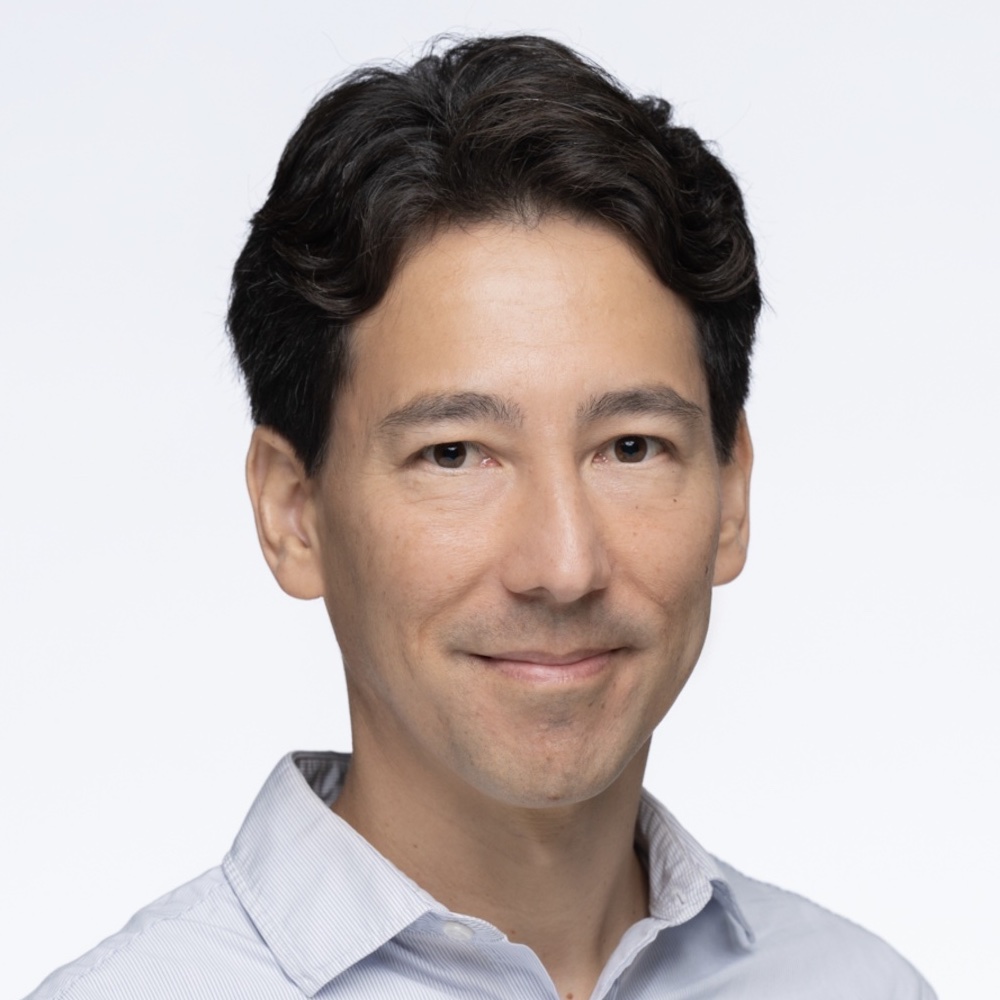
Mark Steedman is Professor of Cognitive Science at the University of Edinburgh's School of Informatics, with adjunct appointment at University of Pennsylvania. His research spans computational linguistics, AI, and cognitive science, focusing on Combinatory Categorial Grammar (CCG) and its applications. His research examines: Combinatory Categorial Grammar parsing and semantics Language model capabilities and limitations Cross-linguistic semantic inference Brain modeling of language processing Recent publications analyze hallucination sources in large language models, cross-linguistic entailment graphs, and brain-computer parallels in structure-building. He develops computational models integrating symbolic and distributional approaches to semantics. Honors include ACL Lifetime Achievement Award (2018) and George E. Davis Medal (2001). He serves on editorial boards of major linguistics journals and has authored influential books including 'The Syntactic Process' and 'Taking Scope'.
Emily M. Bender is the Thomas L. and Margo G. Wyckoff Endowed Professor in the Department of Linguistics at the University of Washington. She also holds adjunct appointments in the School of Computer Science and Engineering and the Information School. Her research spans multilingual grammar engineering, computational linguistics, societal impacts of language technology, and sociolinguistic variation. She directs the Computational Linguistics Laboratory (The Treehouse) and leads the CLMS program. Bender is a Fellow of the AAAS (2022) and previously served as Howard and Frances Nostrand Endowed Professor (2019–2022). She has authored influential textbooks on NLP fundamentals and pioneered work on data statements to mitigate bias in NLP systems. Her work integrates linguistic theory with computational methods, emphasizing ethical AI and language documentation. Education: PhD in Linguistics from Stanford University (advisor: Ivan A. Sag), AB in Linguistics from UC Berkeley, with studies at Tohoku University. Past roles include NAACL Executive Board Chair (2016–2017) and current roles in the Association for Computational Linguistics leadership. Her Erdős number is 4. Research focuses on the LinGO Grammar Matrix, automatic grammar inference from interlinear glossed text (AGGREGATION project), and societal implications of NLP technologies like large language models. She co-leads the RAISE initiative and contributes to labs like the Tech Policy Lab and Value Sensitive Design Lab. Over 30 advisees have completed PhD and MS degrees under her mentorship. Teaching includes courses on syntax for NLP, societal impacts of language tech, and computational linguistics. Her 2020 ACL paper on form-meaning distinctions in NLP has been influential in ethical discussions. Current projects include The AI CON (2025) on combating tech hype.
Yan Cong is an Assistant Professor at Purdue University, focusing on Chinese linguistics and computational linguistics. Their work bridges natural language processing (NLP), semantics, and pragmatics, with applications in artificial intelligence (AI), language education, and healthcare. Research Focus: Developing text analysis models to quantify and improve language learning, assessing semantic/pragmatic competence in language models, and applying computational methods to speech and language fluency. Background: Former NLP researcher at the Feinstein Institutes, with a PhD in Linguistics from Michigan State University. Research Themes: Yan Cong integrates linguistic theory with AI to explore language understanding in humans and machines. Key areas include Computational modeling of semantics and pragmatics Application of NLP to second language acquisition Development of interpretable AI systems for education and healthcare Analysis of speech disturbances in clinical contexts (e.g., schizophrenia, aphasia) Awards: No specific honors mentioned in the provided text.
Kathleen R. McKeown is the Henry and Gertrude Rothschild Professor of Computer Science at Columbia University and the Founding Director of Columbia's Data Science Institute (2012-2017). She has been a faculty member since 1982 and served as Department Chair (1998-2003) and Vice Dean for Research in the School of Engineering and Applied Science. Her research focuses on natural language processing , text summarization , natural language generation , and social media analysis . Current projects include neural methods for extractive/abstractive summarization, electricity usage message generation via reinforcement learning, and social media sentiment analysis in low-resource languages like Uyghur. She leads the Columbia NLP Group and developed the long-running Newsblaster system (2001-present) for automated news tracking and multi-document summarization. Key scientific awards include NSF Presidential Young Investigator (1985) NSF Faculty Award for Women (1991) AAAI Fellow (1994) ACM Fellow (2003) ACL Founding Fellow (2012) Columbia Great Teacher Award (2010) Anita Borg Woman of Vision Award (2010) She has held leadership roles in major academic organizations: President of the Association for Computational Linguistics (1992), Vice President (1991), Secretary-Treasurer (1995-1997), and board member of the Computing Research Association with secretary role.
George T. Heineman is an Associate Professor of Computer Science at Worcester Polytechnic Institute (WPI). He holds a BS from Dartmouth College (1989), an MS (1990), and a PhD (1996) from Columbia University. His research focuses on software engineering, component-based systems, and modularity, with notable contributions to type-safe modular software evolution through the CoCo design pattern. Heineman emphasizes professional software engineering practices in teaching, challenging students with industry-relevant projects to foster best practices. His work has been published in leading venues like ECOOP, with a 2021 paper on CoCo gaining attention for its impact on Java language design. He received the WPI Trustees' Award for Outstanding Teaching in 2022, reflecting his dedication to education. His research spans algorithm design, system architecture, and cybersecurity, with publications ranging from foundational theory to practical applications in automated assessment and network security. Education: BS in Computer Science, Dartmouth College, 1989 MS in Computer Science, Columbia University, 1990 PhD in Computer Science, Columbia University, 1996 Research interests include software evolution, design patterns, and modular software systems. His recent work addresses challenges in maintaining stable APIs and enabling cohesive extensions in object-oriented systems. Collaborations with institutions like the University of Copenhagen and TU Dortmund highlight his international academic engagement. Beyond research, Heineman contributes to curriculum development, including WPI's new graduate programs in computing and workforce development initiatives.
University of Illinois Urbana-ChampaignUnited States
Hyun-Sook Kang is an Associate Professor at the University of Illinois at Urbana-Champaign with multiple affiliations across the institution. She holds appointments in the College of Education's Department of Education Policy, Organization and Leadership, as well as the Center for East Asian and Pacific Studies, the Center for the Study of Global Gender Equity, and the Center for Global Studies. Dr. Kang earned her Ph.D. in Educational Linguistics from the University of Pennsylvania's Graduate School of Education in 2007. Prior to her current position, she served on the faculty in the Linguistics Department at the University of Illinois, Illinois State University, and the University of Texas at San Antonio. Dr. Kang's research focuses on language practice and ideology in relation to global mobility, including immigration and study abroad. Her work examines student agency, belief, and identity in educational contexts with implications for teacher development and internationalization of education. She is particularly interested in ontological, epistemological, and methodological considerations in educational research. Her scholarship bridges linguistic theory with practical applications in diverse educational settings. Her recent publications demonstrate a strong emphasis on international education, language teaching, and the impact of technology on learning. The research spans study abroad experiences, online language education, teacher development, and equity considerations in global contexts. Her work often employs mixed-methods approaches and focuses on Korean and East Asian language learners in international settings. Dr. Kang serves as Co-Editor of the Journal of Language, Identity, and Education and sits on the editorial boards of several academic journals including the European Journal of Education, Study Abroad Research in Second Language Acquisition and International Education, Humanities & Social Sciences Communications, International Journal of Qualitative Methods, Language and Assessment, and Language-Related Research. As an educator, Dr. Kang teaches courses related to global education, education and globalization, learning technologies, and instructional design. She has contributed significantly to the field through her editorial work, research publications, and service on professional committees including the American Association for Applied Linguistics and the Comparative and International Education Society.
Michael Wehar is a Lecturer in Computer Science at Bryn Mawr College , where he teaches Introductory Programming Courses. He is a multidisciplinary researcher and developer with a focus on algorithms , computational art , and software engineering , creating innovative tools that bridge computer science with creative applications. Co-founder of AlgoArt.org , a platform for algorithmic art creation and exhibition Creator of Word of The Hour , a multilingual vocabulary learning platform Co-developer of Treegle Dictionary , a structured definition platform His research spans computational complexity, human-computer interaction, and educational technology. Key areas include: Algorithmic Art : Generative design systems, interactive visualizations Pattern Matching : Matrix algorithms, Voronoi diagrams, formal verification Language Technology : Multilingual dictionaries, crowdsourced translation systems Educational Tools : Git repository analysis, interactive learning platforms His 15 most recent publications focus on topics ranging from 2D pattern matching to ETH-based complexity lower bounds , with significant contributions to automata theory and algorithm design. He has received academic recognition including the Best Faculty Poster at CCSC:EA 2022 and Honorable Mention at IFoRE 2022 . As a dedicated mentor, he has guided over 100 students across institutions like Swarthmore College, Temple University, and University at Buffalo in projects spanning: Web development frameworks AI applications in art and education Mobile productivity tools Language learning platforms Game development projects
Nathan Schneider is an Associate Professor jointly appointed in the Departments of Linguistics and Computer Science at Georgetown University, where he teaches and leads interdisciplinary research at the intersection of computational linguistics and natural language processing. He earned a B.A. in Computer Science and Linguistics from UC Berkeley (2004–2008) and a Ph.D. in Language Technologies from Carnegie Mellon University (2008–2014) under advisor Noah Smith. After post-doctoral research at the University of Edinburgh ILCC with Mark Steedman (2014–2016), he joined Georgetown as Assistant Professor (2016–2022) and was promoted to Associate Professor in 2022. His research centers on the linguistic foundations of NLP, focusing on computational, corpus-based approaches to meaning construction. Key themes include: Linguistic Structure: Design, annotation, parsing, and evaluation of syntactic and semantic frameworks such as UD, CCG, AMR, UCCA, and FrameNet. Adposition Semantics: Cross-linguistic description and computational modeling of prepositions and postpositions via the SNACS framework. Metalanguage: Analysis of explicit language about language in linguistics, education, and law, and leveraging such data for NLP. Uncertainty, Rarity, and Noise: Modeling sparse and noisy linguistic phenomena to improve robustness and interpretability. Across more than 100 peer-reviewed publications since 2015, Schneider’s work exhibits a steady trajectory from foundational annotation schemes (e.g., SNACS, CGELBank, UCCA) to neural-era evaluations using transformer models and large language models, with increasing attention to legal and cross-lingual applications. His 2025 corpus of papers demonstrates a focus on legal language processing, child language acquisition corpora, multilingual supervision, and probing LLMs. Scientific Awards & Honors NSF CAREER Award (publicized Dec 2022) Recognition of undergraduate mentee for research achievement (Aug 2023) Invited keynotes and distinguished talks at NASSLLI, MWE Workshop, Georgetown Law SOLID Symposium, UT Austin, Charles University, Allen Institute for AI, Mila-Quebec AI Institute, University of Toronto, Saarland University, Dagstuhl Seminar, and many others. Advising, Teaching & Service Schneider advises Ph.D. and master’s students in both Linguistics and Computer Science and leads the NERT lab. He has served as Program Co-Chair for LAW-MWE-CxG@COLING 2018, Area Chair for COLING 2018, Program Co-Chair for LAW@EACL 2017, and Tutorial Co-Chair for EMNLP 2017, and regularly teaches graduate courses such as LING/COSC-672 Advanced Semantic Representation. Labs & Teams He heads the NERT (Nathan’s Empirical Research Team) lab at Georgetown, an interdisciplinary group developing corpora, models, and tools for multilingual and cross-domain NLP, with current projects on legal text, child language, and adposition semantics.
Jakob Prange is a Researcher (Akademischer Rat auf Zeit) at the Chair for Natural Language Understanding / Digital Humanities within the Faculty of Applied Computer Science at the University of Augsburg. He holds a Ph.D. in Computer Science with a concentration in Cognitive Science from Georgetown University, where his dissertation focused on neuro-symbolic models for syntactic and semantic representations. Education: Ph.D. in Computer Science (Cognitive Science), Georgetown University B.Sc. in Computational Linguistics, Saarland University His research lies at the intersection of computational linguistics and theoretical linguistics, emphasizing formal and distributional semantics, meaning representation, deep learning, and neuro-symbolic integration. He prioritizes model efficiency and explainability, often combining neural models with structured linguistic representations. His recent work includes projects on cross-lingual QA in migration contexts and Bayesian modeling of L2 preposition learning. His publications span top venues such as ACL, NAACL, TACL, and COLING, with a focus on semantic parsing, supersense tagging, UCCA, neuro-symbolic modeling, and robust NLP for German. He has contributed to multilingual annotation frameworks and low-resource language modeling. Scientific Awards: No awards explicitly mentioned. He has supervised M.Sc. student Steffen Kleinle on a QA project and contributes to teaching at the University of Augsburg, including Python for language processing and NLP tutorials. He is part of the HLT@Augsburg research group led by Prof. Annemarie Friedrich, focusing on natural language understanding and digital humanities.
Kenji Sagae is a Professor and Chair of the Department of Linguistics at the University of California, Davis, with additional affiliations in the Computer Science graduate program, Cognitive Science program, and Computational Social Science designated emphasis. He leads the Computational Linguistics Laboratory and has held academic positions at the University of Southern California and the University of Tokyo. He earned his PhD from Carnegie Mellon University's Language Technologies Institute in 2006. His research spans computational linguistics, natural language processing, and cognitive science, focusing on syntactic parsing, child language development, bias in language models, and applications in healthcare and social science. He has developed data-driven models for parsing, dialogue systems, and automated measurement of language development. His work integrates machine learning, cognitive modeling, and interdisciplinary applications. The most recent publications reflect a strong trend toward neural models for parsing and language understanding, analysis of child language development using modern NLP techniques, exploration of bias and demographic factors in language models, and interdisciplinary work bridging neuroscience and computational linguistics. There is a clear progression from classical parsing methods to deep learning and broader cognitive and social implications of language technology. General Chair, 16th International Conference on Parsing Technologies (IWPT 2020) General Chair, 15th International Conference on Parsing Technologies (IWPT 2017) Secretary, ACL SIGPARSE (2020–present) Information Officer, ACL SIGPARSE (2005–2020) Associate Editor, ACM TALLIP (2015–present) Senior/Area Chair for ACL, NAACL, EMNLP, and others NSF Panel Member (2018, 2010) Kenji Sagae has advised numerous PhD and master’s students in linguistics and computer science, including Dian Yu, Zoey Liu, and Justin Garten. He has secured substantial research funding from NSF, ARO, DARPA, Google, and other agencies, supporting projects such as TrOnto (trustworthy scientific cyberspace), Soliloquy (dialogue agents), and models of human communication dynamics. His lab fosters interdisciplinary collaboration across computer science, psychology, and neuroscience. He runs the Computational Linguistics Laboratory at UC Davis, which focuses on developing and evaluating NLP systems for parsing, dialogue, language development, and social applications. The lab emphasizes both technical innovation and real-world impact, particularly in education, healthcare, and ethical AI.
Mark Schiefsky is the C. Lois P. Grove Professor of Classics and Director of the Center for Hellenic Studies at Harvard University. His research focuses on the history of ancient philosophy and science, particularly in the domains of medicine, mechanics, and Graeco-Arabic intellectual transmission. He is a leading figure in digital humanities, having developed the Arboreal software for semantic network analysis of textual corpora, and led major projects like the Archimedes Project (NSF-funded) and the Mellon Foundation corpus initiative. His work bridges classical antiquity with later reception, including Renaissance commentary on ancient mechanics and Arabic translations of Greek texts. Schiefsky’s publications span critical editions, historical analyses, and interdisciplinary studies in natural language processing applied to ancient texts. Roles: Classics Faculty, Harvard University Key Projects: Arboreal software, Graeco-Arabic Translation Movement studies Recent Work: Digital humanities methodologies for conceptual history His research interests include the interplay between philosophy and science in antiquity, with a focus on techne (art/craft expertise) as a conceptual framework. He also explores the reception of Greek thought in Arabic and Renaissance contexts, emphasizing how scientific and philosophical ideas were transmitted and transformed across cultures. Publications highlight technical studies of ancient texts (e.g., Philo of Byzantium’s artillery treatises, Galen’s anatomical theories) alongside methodological innovations in digital scholarship. His 2005 book on Hippocrates’ On Ancient Medicine remains a foundational text in the field.
Prof. Aaron White is a Professor of Linguistics at the University of Rochester since 2017. He holds a PhD in Linguistics from the University of Maryland, College Park (2015), advised by Valentine Hacquard and Jeffrey Lidz. Prior to Rochester, he was a postdoctoral fellow at Johns Hopkins University's Science of Learning Institute, affiliated with the Department of Cognitive Science and the Center for Language and Speech Processing. His research focuses on computational linguistics, syntax, semantics, and natural language processing, particularly in syntactic bootstrapping, propositional attitude verbs, and event structure decomposition. Key research projects include leadership of the MegaAttitude Project and contributions to the JHU Decompositional Semantics Initiative. He teaches courses on statistical methods in linguistics, computational linguistics, and deep learning applications. His work bridges formal semantics, syntax, and computational models, emphasizing cross-linguistic analysis and parser development. Publications span document-level information extraction, neg-raising inferences, and semantic typology. He has developed tools like the Decomp Toolkit for decompositional semantics. Current research explores lexicalization processes in parsers and temporal reasoning in NLI tasks. Labs/Teams: JHU Decompositional Semantics Initiative, MegaAttitude Project.
Raul Aranovich is an Associate Professor in the Department of Linguistics at the University of California, Davis, where he has been a faculty member since 2001. Prior to his appointment at UC Davis, he held faculty positions at the Ohio State University and the University of Texas in San Antonio. He received his Ph.D. in Linguistics from UC San Diego in 1996 under the direction of Professors S.-Y. Kuroda and John Moore. Professor Aranovich is a theoretical linguist whose research focuses on the interfaces between syntax, morphology, and semantics, with particular attention to grammatical mismatches across these linguistic levels. His work spans both theoretical and empirical approaches, utilizing natural language processing and corpus linguistics tools. His primary language specializations include Spanish and other Romance languages, as well as Fijian and Shona, representing significant cross-linguistic diversity in his research portfolio. His recent publications demonstrate an expanding interdisciplinary focus, bridging traditional linguistic theory with computational applications, including work in cybersecurity and neural machine translation. This reflects his evolving research trajectory from purely theoretical syntax and morphology toward computational and applied linguistics. His work on computer-mediated communication represents a contemporary extension of his longstanding interest in language structure and variation. Among his notable recognitions is being named a Fellow of the Linguistic Society of America, highlighting his contributions to the field. Fellow, Linguistic Society of America Professor Aranovich's research demonstrates remarkable breadth across linguistic subfields and languages, connecting historical linguistic theory with contemporary computational approaches. His work on Romance languages maintains a strong theoretical foundation while his more recent cybersecurity and machine translation publications show successful adaptation to emerging interdisciplinary opportunities. His continued publication record through 2024 indicates active ongoing research contributions across multiple linguistic domains.
University of California , Santa Barbara (UCSB)United States
Genggeng Zhang is a Lecturer in the Writing Program at the University of California, Santa Barbara (UCSB). She holds a PhD in Applied Linguistics from Penn State University. Her teaching focuses on Writing 2 and 109ST courses, emphasizing academic writing instruction. Her research interests span discipline-specific and multilingual writing, academic literacy development, and computer-assisted pedagogy, with a particular focus on the intersection of language use in technical and academic contexts. Her work appears in journals such as the Journal of English for Academic Purposes , English for Specific Purposes , and Journal of Second Language Studies . Her research explores citational practices in engineering and social science disciplines, syntactic complexity in academic discourse, and aviation communication. She has conducted corpus-based analyses of technical and professional language, including studies targeting aviation maintenance students and emerging scholars. No scientific awards or grants are explicitly mentioned. She advises no listed students at this time. Her office is located in Girvetz Hall 1318 on the UCSB campus.
Michael Tjalve is an Affiliate Assistant Professor in the Department of Linguistics at the University of Washington , within the College of Arts & Sciences . He holds a PhD in Linguistics from University College London (2007). His research focuses on speech processing technologies, computational linguistics, and the analysis of speech production in populations such as children and elderly speakers. He has contributed to advancements in accent adaptation for automatic speech recognition (ASR), conversational agent design, and the evaluation of speech technologies using crowdsourcing methods. Education: PhD in Linguistics, University College London, 2007 Research Interests: His work bridges theoretical linguistics and applied speech technology. Key areas include: - Speech Recognition Systems (accent adaptation, age-specific models) - Child Language Development (disfluency detection, reading performance) - Conversational Agents (voice UI design, distributed development) - Sociolinguistics (accent variation, dialect documentation) Publications Trends: Recent work emphasizes practical applications of speech technology, including improving ASR accuracy for non-native speakers, analyzing developmental speech patterns in children, and designing cooperative voice user interfaces. His contributions highlight interdisciplinary methods combining corpus-based linguistics with machine learning. Labs & Teams: Affiliated with the University of Washington Linguistics Department research groups, contributing to projects in computational linguistics and speech technology. Collaborates with industry partners on applied speech systems and crowdsourced evaluation frameworks.