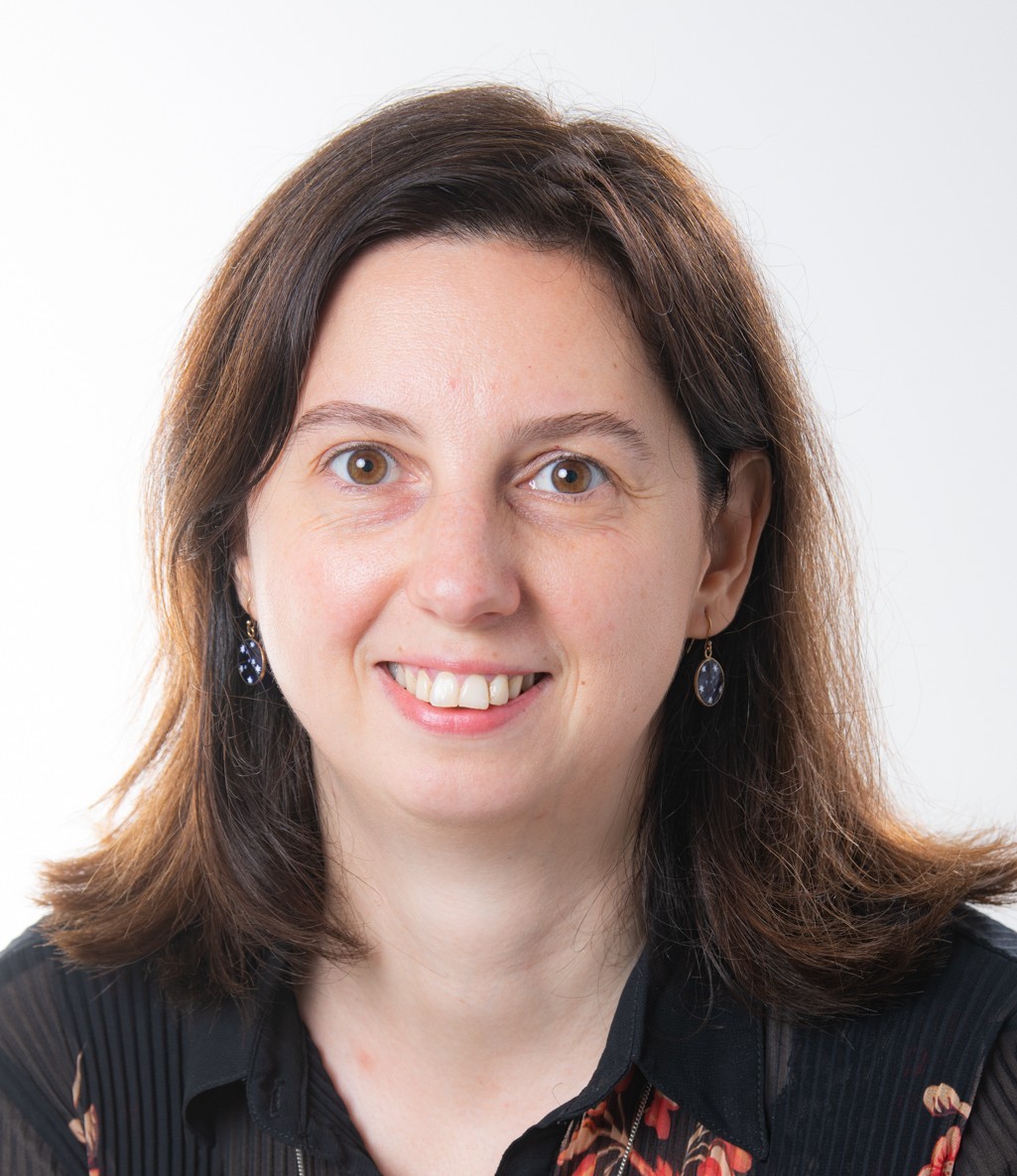
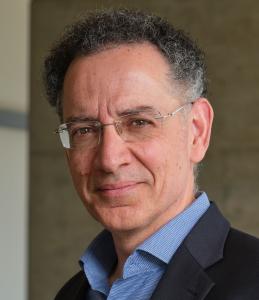
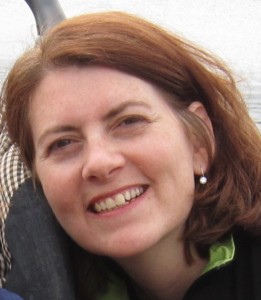
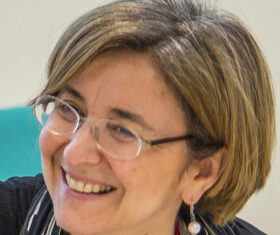
Idee Edalatishams is Faculty ESL Specialist at George Mason University's Writing Center, training consultants to support multilingual writers through consultations, workshops, and resource development. Her research explores multilingual identity and academic communication using corpus linguistics methodologies. Edalatishams investigates international graduate students' oral communication challenges and L2 pronunciation, developing evidence-based training programs. Her work bridges linguistic analysis with practical interventions in academic support services. Recent publications demonstrate interdisciplinary approaches to language education, including speech recognition technology evaluation and pandemic-induced shifts in writing center pedagogies. Her ongoing projects focus on inclusive support frameworks for diverse learner identities.
Jon A Bakos is an Associate Professor of TESL and Linguistics at the College of Arts & Sciences, Indiana State University . His work bridges sociolinguistics, ESL pedagogy, and dialectology, focusing on language acquisition, regional dialects, and innovative teaching methods. Ph.D. in English (Linguistics emphasis) from Oklahoma State University (2013) M.A. in Linguistics from Michigan State University (2008) B.A. in English and Linguistics from University of Michigan (2001) Bakos’s research explores dialect adaptation, sociolinguistic factors in language learning, and technology-driven pedagogy. His recent work includes studies on the 'naughty-knotty' vowel merger in Indiana and integrating gaming terminology into language education. His publications highlight interdisciplinary approaches combining corpus analysis and cultural studies. Key trends in his scholarship include sociolinguistic fieldwork, ESL/EFL curriculum innovation, and the role of media in language acquisition. His presentations span topics like Southern dialects in music, real-time dialect analysis, and psycholinguistic teaching strategies. Outstanding Supervisor of the Year Award (2017) Professing Excellence and Inspiring Instruction (2020) Mentioned in 2020 Destination Survey Recipient of a Faculty Conference Travel Grant (2024) Bakos has supervised students and collaborated on grants such as the CAS Faculty Fellow: Integrating Transferrable Skills into the Curriculum and led the development of the Center for Language Education and Research (2016). He actively participates in university governance and linguistic conferences, advocating for active-learning methodologies.
Iana Atanassova is Assistant Professor in Natural Language Processing at Université de Franche-Comté and Director of CRIT. As an Institut Universitaire de France member, she researches NLP methods for scientific document processing, semantic annotation, and uncertainty modeling in scholarly texts. Her recent work develops annotation frameworks for scientific uncertainty and multilingual reference analysis. She leads projects including the ANR InSciM initiative on modeling scientific uncertainty.
Mya Poe is Professor of English at Northeastern University's College of Social Sciences and Humanities, specializing in writing assessment, writing development, and antiracist pedagogy. An award-winning researcher, she serves as co-editor of Written Communication and the Oxford Brief Guides to Writing in the Disciplines series. Her work advocates against assessment practices that create barriers for marginalized students. Professor Poe teaches courses including Introduction to Writing Studies, Writing in Global Contexts, and Writing Pedagogy. Her research integrates justice-oriented approaches to assessment, multilingual writing support, and institutional equity reforms. She holds a PhD in English with a concentration in Composition and Rhetoric from the University of Massachusetts-Amherst. Her publications examine racial equity in academic assessment, medical knowledge production, and culturally sustaining workplace evaluation systems. Current projects develop frameworks for antiracist validation and justice-oriented assessment design in higher education.
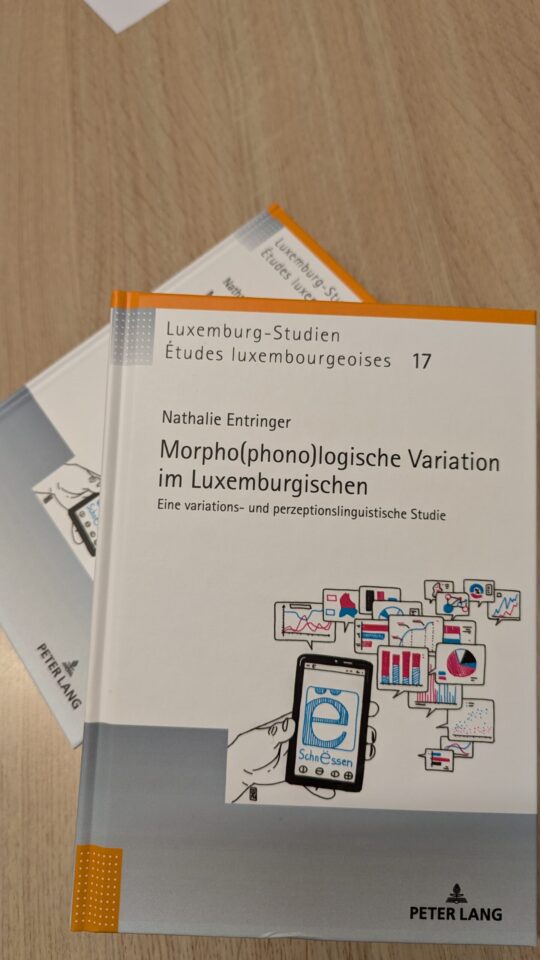
Prof. Peter GILLES is a Full Professor at the University of Luxembourg's Faculty of Humanities, Education and Social Sciences, leading research in Luxembourgish linguistics. His work focuses on sociolinguistics, speech technology, and language documentation, particularly regarding Luxembourgish's dialect diversity and low-resource language challenges. He co-leads projects like the Schnëssen app for crowd-sourced linguistic data and the Lux-ASR speech recognition system. His contributions include editing the Luxembourgish Studies series and publishing on topics like language variation and policy. He actively supervises PhD students and contributes to language preservation initiatives, such as the digital Luxembourgish Word Atlas. Research interests span phonetics, language contact, and multilingualism in Luxembourg. His work bridges theoretical linguistics with applied technologies, addressing both academic and societal needs. He collaborates internationally and serves on editorial boards, furthering Luxembourgish studies' global visibility.
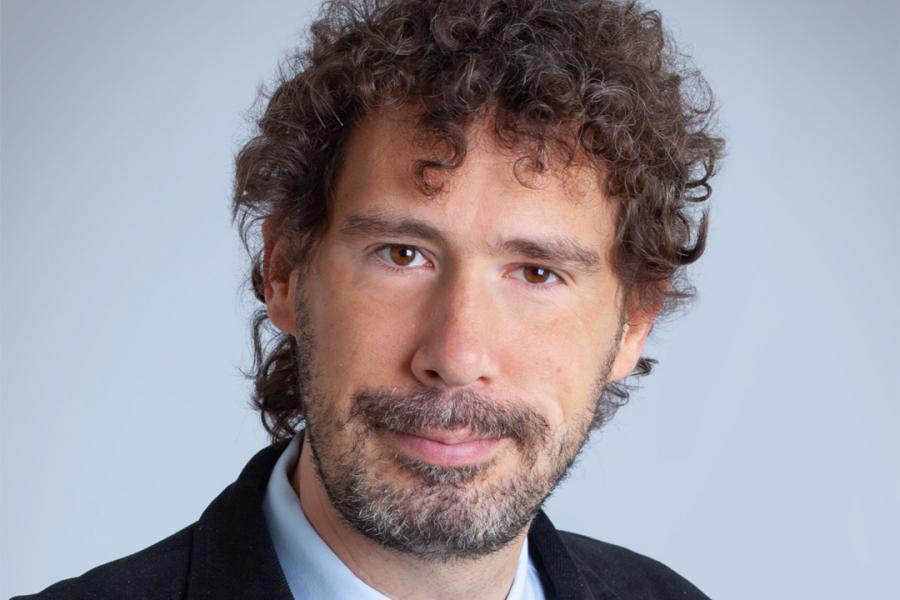
Tristan Miller is an Assistant Professor in the Department of Computer Science at the University of Manitoba, leading the Computational Linguistics at Manitoba (CLAM) Lab. His research focuses on computational linguistics, natural language processing, and humor analysis. He holds academic affiliations with institutions like the Austrian Research Institute for Artificial Intelligence (OFAI) and has contributed to projects like the JOKER Lab at CLEF. His work emphasizes lexical semantics, historical online corpora, and the computational detection/translation of wordplay. He organizes workshops on computational humor (CHum, JOKER) and serves as an editor for journals like Humor and European Journal of Humour Research . Key contributions include the JOKER corpus for multilingual wordplay analysis, tools like PunCAT for pun translation, and LaTeX classes for proposal formatting (Heria, SSHRC-Insight). His research bridges theoretical linguistics with practical NLP applications. He has held roles such as Senior Area Co-Chair at EMNLP 2025 and Faculty Advisor at ACL 2025. His funded projects include the FWF-funded "Computational PUN-DERSTANDING" and Horizon Europe proposal development initiatives.
Dr. Emmanuel Keuleers is an Associate Professor at Tilburg University's Tilburg School of Humanities and Digital Sciences (Department of Cognitive Science and Artificial Intelligence). His research focuses on natural language processing, psycholinguistics, and computational linguistics, with a particular emphasis on lexical processing, sentence representation learning, and the intersection of cognitive science and AI. He has contributed to projects like the LinguaPix database, which provides norms for picture-naming tasks, and has explored topics such as the role of context in sentence representations and the impact of segmentation algorithms on text classifiers. Keuleers has been recognized with awards including the Best Paper in Behavior Research Methods and an Invited Research Fellowship. He actively participates in academic activities, including conference presentations and serving on panels like the NWO Vidi Panel. His work bridges theoretical linguistics with practical applications in AI and cognitive modeling.
Tom Juzek is an Assistant Professor of Computational Linguistics at Florida State University (FSU), with a courtesy appointment in Scientific Computing. His research focuses on applying computational methods to linguistic questions, particularly AI-generated language, its impact on human language use, and model behavior analysis. Prior to academia, he worked in the tech industry. Education: M.A. in Phonetics, University of Bonn Ph.D. in Linguistics, University of Oxford His research interests include computational linguistics, natural language processing, corpus linguistics, and experimental/information-theoretic approaches. He co-organizes the SC Machine Learning Seminar and has been featured in national and international media, including Science Friday and Die Welt . Recent publications explore topics such as AI language patterns, syntactic acceptability datasets, and diachronic syntactic shifts. His work bridges theoretical linguistics with computational methods, emphasizing empirical validation and interdisciplinary collaboration. Mentorship & Teaching: Juzek advises the Computational Linguistics track in FSU’s Data Science Program and mentors students in the Undergraduate Research Opportunity Program. He teaches courses like AI-assisted Python programming for language data and research methods in linguistics. Labs & Collaborations: Engaged in collaborative projects on human-AI collaboration in detecting deepfakes and analyzing language model behavior. His lab focuses on developing computational tools for linguistic analysis.
Dr. Timotheos Papadopoulos is a Professor of Psychology at the University of Cyprus and founding member of the Center for Applied Neuroscience. He holds a PhD in Educational Psychology from the University of Alberta, Canada, and has held visiting professorships at universities in Norway, Canada, the UK, Finland, China, and elsewhere. His research focuses on neurodevelopmental disorders, particularly specific learning disabilities and attention deficit disorders, with an emphasis on cognitive intervention through digital media. He has secured over €10.5M in research funding, including leading the €4M EU MSCA ITN Neo-PRISM-C program (2019–2023). Key roles include Vice President (2012–2014) and President (2014–2016) of the University of Cyprus Psychology Department, and Member of the University Senate. Research Interests: Neurodevelopmental disorders, cognitive intervention programs, executive functions in ADHD, neurocognitive development, and cross-linguistic reading studies. His work spans EEG/eye-tracking studies, machine learning applications in neuroscience, and policy-driven educational interventions. Publications & Awards: Over 120 articles/chapters, including high-impact journals like Development and Psychopathology and Clinical Neurophysiology . Notable awards include the Cyprus 'Distinguished Researcher' (2019) and IARLD Fellow (2024). His research bridges cognitive science, education, and clinical practice, with international collaborations in Europe, North America, and Asia. Grants & Collaboration: Principal investigator in projects funded by EU Horizon 2020, Canadian SSHRC, and Cypriot agencies. Collaborations include the Hungarian Academy of Sciences Brain Imaging Center and the Multilingual Eye-Movement Corpus (MECO) initiative. Active in policy advising through roles like Cyprus National Representative for COST Action MultiplEYE. Labs & Teams: Heads the Center for Applied Neuroscience at UCY, leading multidisciplinary teams in neuroimaging, computational modeling, and educational technology. Current projects focus on AI-driven cognitive interventions and neurodevelopmental disorder diagnostics.
Leila Kosseim is a Professor in the Department of Computer Science and Software Engineering at Concordia University, co-directing the CLaC (Computational Linguistics @Concordia) lab. She holds a PhD from the University of Montreal (1995) and has conducted postdoctoral research at Druide informatique inc. and the RALI group. Her academic leadership roles include Vice-President (2017-2019), President (2019-2021), and Past-President (2021-2023) of the Canadian AI Association (CAIAC), and current Graduate Program Director for the PhD Programs in CSSE. Her research focuses on Natural Language Processing (NLP) and Artificial Intelligence , with particular emphasis on discourse analysis, computational linguistics, and text generation. Notable projects include automated analysis of argumentative essays, clinical trial inference, and meme persuasion detection. Her work integrates deep learning, neural networks, and transformer models to address challenges in text coherence, discourse parsing, and multilingual NLP. Leila has supervised 8 PhD and over 20 Master’s students, contributing to the next generation of computational linguists. Her CLaC lab has participated in multiple international challenges (SemEval, TREC, DEFT) and produced influential tools like TIMBERT and the Concordia NLG Surface Realizer.
Katie Ní Loingsigh is a Lecturer in the Department of Modern Irish at University College Cork (UCC). Her research focuses on Irish-language literature, phraseology, corpus linguistics, and digital humanities. She holds a BCL (Law and Irish), MA, and PhD, with her doctoral work involving a digital database of idioms from Fr. Peter O’Leary's writings. She has contributed to projects like the Corpus of Contemporary Irish and served as Project Coordinator of the Placenames Database of Ireland (Logainm.ie). She has taught at multiple institutions, including UCC, University of Galway, and DCU, and is co-editor of TEANGA , the Journal of the Irish Association for Applied Linguistics. Education: Bachelor of Civil Law (BCL) in Law and Irish Master of Arts (MA) Doctor of Philosophy (PhD) in Irish Language Studies Advanced Diploma in Lawyer-Linguistics and Legal Translation (Kings Inns) Her research interests include Irish literature, law and literature, Gaelic revival, phraseology, lexicography, and digital humanities. Recent work includes co-editing volumes on Irish lexicography, studies on Fr. Peadar Ua Laoghaire, and analyses of Irish-language idioms and cultural heritage. She has also explored the impact of Brexit on the Irish language and digital corpus methodologies. Awards: Teaching Hero Award (2021) Aurora Leadership Programme (2022) Erasmus+ Grant (2023) Her outreach includes coordinating summer schools on Irish syntax and phraseology, and she actively promotes Irish language revitalization through academic and community initiatives. She has served on committees such as the Research and Innovation Committee at CACSSS and the National Irish Language Planning Committee for West Muskerry.
Djamé Seddah is a senior researcher at INRIA Paris (Almanach team), previously holding a tenured associate professor position at Sorbonne University. His research focuses on natural language processing (NLP), particularly multilingual syntactic analysis, syntax-semantics interfaces, and language models for low-resource languages. He has developed influential models like CamemBERT and contributed to annotated corpora such as the Sequoia corpus and French Social Media Bank. Current work emphasizes ethical AI, including detecting harmful content and mitigating language model biases. Education: PhD in Natural Language Processing from Loria (Nancy, France), postdoc at DCU's GramLab (Dublin). Key achievements include defending an HDR in 2024 and leading projects like the BPI "Commun Numériques" initiative. Awards include the PSAI Prairie 2 Chair. Active in organizing conferences like SyntaxFest 2019 and shared tasks at IWPT. Research spans parsing user-generated content, sociologically aware language models (SALM), and collaborative work with institutions like LightOn and Software Heritage. His lab's work addresses challenges in dialectal languages, noisy data, and ethical AI applications.
Simonetta Montemagni is the Interim Director and Research Manager at the Institute of Computational Linguistics (ILC) of the National Research Council of Italy (CNR) in Pisa, leading the ItaliaNLP Lab. She specializes in computational linguistics and natural language processing, with a focus on corpus linguistics, dialectology, and NLP applications in education and legal domains. Her work includes developing machine-actionable resources such as the ParlaMint-IT corpus of parliamentary debates and advancing syntactic dependency treebank research. She has contributed to projects like the Great Dictionary of the Italian Language (GDLI) lemmarium, exploring quantitative trends in historical vocabulary networks and their educational implications. Montemagni’s research also addresses dialectometric studies of Tuscan dialects and the integration of NLP tools for improving readability assessments of health-related texts. Her research interests span computational methods for analyzing language variation, including phonetic and lexical patterns, as well as text simplification and automated knowledge extraction from school documentation. She has edited conference proceedings for events like CLiC-it and EVALITA, highlighting her role in advancing the field through collaborative initiatives. Her contributions often involve cross-lingual and typological analyses, leveraging dependency treebanks and multilingual resources to study syntactic and semantic phenomena. Montemagni is deeply involved in building domain-specific corpora and tools, such as the BioLexicon for biomedical text mining and frameworks like Text-2-Knowledge (T2K) for semantic indexing. Montemagni has collaborated on large-scale projects like the TrAVaSI initiative for historical Italian language resources and contributed to the MEG II experiment at CERN, though her primary focus remains linguistic research. She has pioneered the digitalization of dialectal resources such as the ALT-Web tool and explored the application of NLP in legal ontologies, educational settings, and sociological studies of language use.
Cass Dykeman is a Professor of Counseling at Oregon State University's College of Education. His research focuses on Artificial Intelligence integration in counseling, corpus linguistics, and English for Academic Purposes. He holds a PhD in Counselor Education from the University of Virginia and previously worked as a school counselor in Seattle. Education: PhD, Counselor Education, University of Virginia MEd, School Counseling, University of Washington BA, History & Education, Claremont McKenna College Research Interests: Dr. Dykeman explores AI applications in mental health, language patterns in counseling contexts, and cultural competency in education. His work often employs corpus linguistics to analyze social media, literature, and clinical texts. Grants & Funding: He has secured over $1.2 million in federal grants for K-12 career counseling initiatives. Recent studies address mental health disparities, psychedelics in therapy, and first responder burnout. Professional Roles: Member of PsyArXiv's Scientific Advisory Board, former President of WACES/WACE, and Editorial Board member for Journal of Counseling and Development . Additional Contributions: Authored two books and serves on CACREP accreditation teams. Conducted sabbatical research on Spanish language/culture at Spain's Pontifical University of Salamanca.
Dr. Robert Bianchi is an Associate Professor of Linguistics at VCUQatar, specializing in English language studies and sociolinguistics. He teaches undergraduate courses in Linguistics, Writing, Rhetoric, and Literature, while supervising MFA in Design students. His research focuses on bilingualism, code-switching, and the sociocultural dimensions of language use. B.A. (Hons) in Bilingual Studies, York University, Canada Certificate in Teaching English to Adults (CELTA), RSA/Cambridge M.A. in Linguistics, York University Ph.D. in Linguistics and Language Teaching, Lancaster University, UK His research explores the vitality of 3arabizi (Arabic in Latin script) in digital communication, its educational potential in K-12 systems, and corpus-based analysis of multilingual forums. Recent work addresses online learning challenges in Qatar and pandemic-era education innovations. He edits the Voices in Asia ELT journal and has presented globally on topics ranging from language policy in Palestine to virtual classroom dynamics. Publications span over two decades, with recent emphasis on digital pedagogy and language hybridity. His creative writing includes a novel exploring Middle Eastern identity through online interactions.