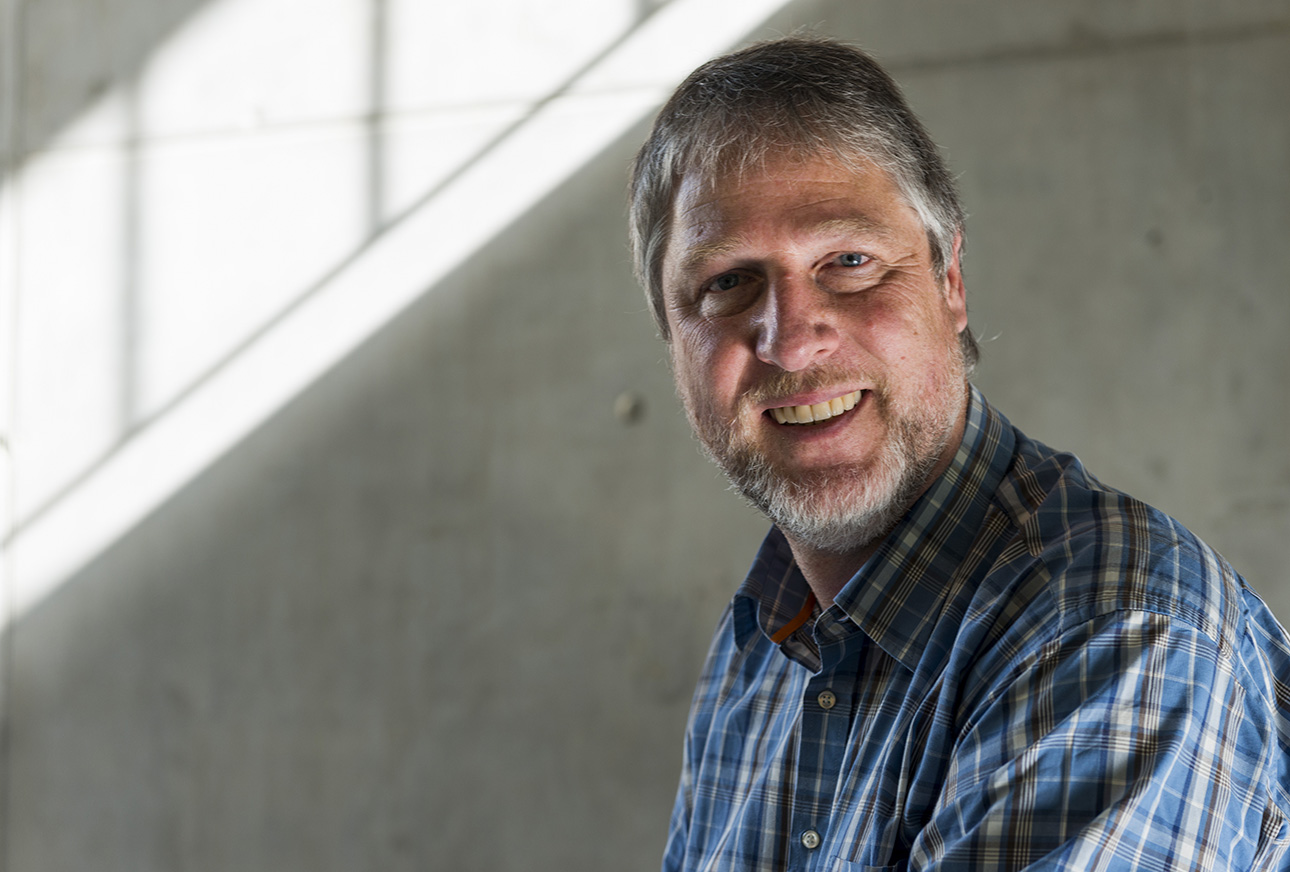
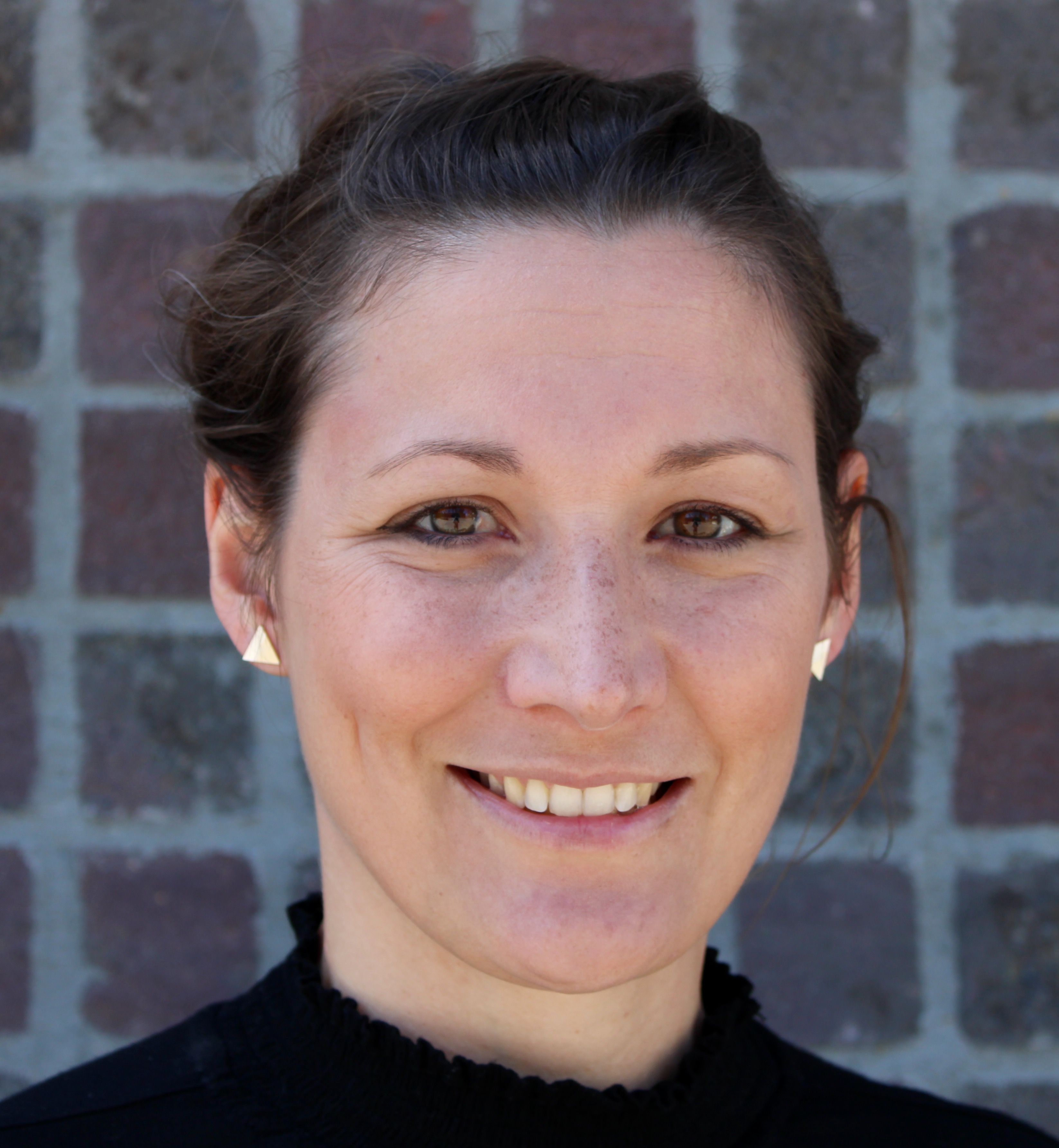
Professor Bernd Möbius is a leading academic in Phonetics and Phonology at the Department of Language Science and Technology, Saarland University. His research bridges phonetic theory with speech technology applications, focusing on text-to-speech systems, prosody modeling, and computational simulations of speech processes. Current research projects: DFG SFB 1102, C1: Information density and phonetic structure predictability DFG SFB 1102, C4: Slavic intercomprehension and surprisal theory (INCOMSLAV) Research Themes: Key areas include text-to-speech synthesis, speech prosody analysis, experimental methods in speech production/perception, information density in phonetics, and cross-linguistic studies of Slavic-Germanic languages. Scientific Contributions: Recent work explores Parkinson-induced dysarthria detection, breath noise acoustics, surprisal-driven speech behaviors, multilingual BERT models for idiomaticity, and perceptual consequences of acoustic adjustments.
Prof. Dr. Gülşen Eryiğit is a Professor at Istanbul Technical University within the Faculty of Computer and Informatics , Department of Artificial Intelligence and Data Engineering . She founded and directs the ITU Natural Language Processing Group , Turkey's leading team in Turkish-language NLP, and serves as Senior Action Editor for ACL RR , Director of ITU TÖMER (Turkish Language Teaching Center), and Co-Chair of the EU UniDive Cost Action WG3. Education: PhD in Computer Engineering from ITU (2007), MSc and BSc from ITU and Marmara University Research: Focuses on Natural Language Processing for Turkish, including dependency parsing , coreference resolution , multiword expressions , and language education technology Her recent work involves multilingual transfer learning , LLM applications for Turkish text simplification, and gamification for morphology education. She has received prestigious awards like the Siemens Excellence Award and TÜBİTAK's Above Threshold Award . Her research has produced 65+ publications and 29+ projects funded by EU, TÜBİTAK, and industry partners. Scientific Awards: Siemens Excellence Award (2007) Above Threshold Award (TÜBİTAK, 2015) Certificate of Appreciation (EU 7th Framework, 2012) Thank You Plaque (ITU, 2017) The ITU NLP Group under her leadership has developed Turkey's first licensed NLP software exported internationally. She collaborates with European institutions through COST actions and participates in ACL, CoNLL, and LREC conferences. Her lab focuses on language technology for Turkish , including sign language processing and social media normalization.
Prof. Anya Belz is Full Professor of Computer Science at Dublin City University's School of Computing and Science Lead at ADAPT Research Centre. A leading NLP researcher with PhD-level expertise, she specializes in natural language generation, evaluation methodologies, and multimodal systems. Recipient of multiple best paper awards and NAACL Test of Time Award nomination. Research innovations include foundational work on statistical language generation (deployed in weather forecasting systems), comparative evaluation frameworks, vision-language integration, and reproducibility quantification. Current EPSRC-funded ReproHum project coordinates 20 global labs studying evaluation consistency. Achievements : Developed industry-deployed generation systems for accessibility applications Pioneered cross-modal alignment techniques for image description Authored 100+ publications spanning generation, evaluation, and reproducibility
Jon Atle Gulla is a Professor at NTNU and Director of the Norwegian Research Centre for AI Innovation (NorwAI). He holds academic leadership roles, including former Head of the Department of Computer Science and Informatics at NTNU. His expertise spans Semantics, Language Technology, Recommender Systems, and AI-driven innovation. He has nearly 150 international publications and advised over 100 students across MSc, PhD, and postdoctoral levels. Education: MSc in Computer Science (1988), PhD in Computer Science (1993) from Norwegian Institute of Technology (NTH) MSc in Linguistics (1995), University of Trondheim MSc in Management (Sloan fellowship, 2003), London Business School Research interests focus on Semantics and Language Technology applied to Recommender Systems, Information Retrieval, and Text Analysis. He explores AI-based innovations in digitalization and entrepreneurship, advising industry on AI adoption and commercialization. Notable projects include Big Data collaborations with DNB, RecTech for news recommendation, and Trondheim Analytica analyzing political texts/social media. Publications emphasize AI applications in news recommendation, political text analysis, and Scandinavian language models. His work addresses ethical AI, copyright implications, and cross-lingual NLP challenges. Awards: Member of the Royal Norwegian Society of Arts and Sciences. Advising/grants: Supervised 30 PhD students and 70 MSc students. Involved in startups like Fast Search & Transfer (acquired by Microsoft) and Mito.ai/Strise.ai. Active in reviewing for journals like Data & Knowledge Engineering and conferences like ACL. Labs/teams: Leads NorwAI, co-founder of INRA and NOBIDS workshops. Collaborates with industry and academia on AI-driven solutions.
Sarah Ita Levitan is an Assistant Professor in the Department of Computer Science at Hunter College, CUNY, and a member of the doctoral faculty in both Computer Science and Linguistics PhD programs at the CUNY Graduate Center. She previously served as a Postdoctoral Research Scientist at Columbia University, where she completed her PhD in Computer Science in 2019 under Dr. Julia Hirschberg. Research Focus: Spoken Language Processing Natural Language Processing Paralinguistic Analysis Trustworthiness and Deception Detection Acoustic-Procedic and Lexical Feature Extraction Online Radicalization and Misinformation Recent Publications demonstrate expertise in analyzing speech and text for trust cues, deception detection, and mental health prediction. Her awards include grants from NSF, Google, and Columbia University fellowships. She leads the Hunter Speech Lab , mentoring PhD, MS, and undergraduate students in computational linguistics research. Scientific Awards and Grants: NSF EAGER Grant (2023) Google Cyber NYC Grant (2023) NSF AI Institute Grant (2023) Air Force Office of Scientific Research Grant (2020) Brown Institute Seed Grant (2020) Knight News Innovation Fellowship (2018) Teaching: Courses include Natural Language Processing (undergraduate/graduate), Computational Linguistics, Computer Theory, and advanced topics in spoken language processing at both Hunter College and Columbia University.
Erik Velldal is a Professor in the Language Technology Group (LTG) at the Section for Machine Learning , Department of Informatics, University of Oslo . With over 25 years of experience in machine learning and natural language processing (NLP), he leads the SANT project focused on sentiment analysis and contributes to major research initiatives including MediaFutures , NorwAI , and Integreat (Norwegian Center for AI Research). His work bridges linguistic theory and computational methods, emphasizing semantic modeling and uncertainty detection. Research interests include sentiment analysis , language modeling , event extraction , and machine learning applications to NLP. Recent publications address cross-domain sentiment classification , generative event analysis , and multilingual model adaptation . He co-developed the Norwegian Review Corpus (NoReC) and Norwegian Anaphora Resolution Corpus (NARC) , foundational resources for Norwegian NLP. His projects often involve collaboration with international institutions, reflected in publications at venues like ACL, COLING, and EMNLP. Current efforts focus on entity-level sentiment analysis , diagnostic datasets for Norwegian , and evaluating compositional generalization in language models. No public record of scientific awards or part-time appointments exists.
Malvina Nissim is a leading researcher in computational linguistics and NLP at the University of Groningen's Department of Artificial Intelligence, with a focus on multilingual modeling, bias mitigation, and human evaluation frameworks. Key Contributions : Developed CALAMITA (Italian LLM benchmark), IT5 models for Italian language processing, and ReproHum framework for NLP evaluation reproducibility Research Pillars : Multilingual reasoning consistency, perspective-based text analysis, and figurative language modeling Her work spans activation steering techniques, cross-lingual transfer learning, and the creation of specialized language resources like the EurekaRebus dataset and MAGPIE idiom corpus. She pioneered methods for gender bias measurement in BERT and developed the SocioFillmore tool for perspective visualization. Recent publications explore model uncertainty as MCQ difficulty proxy, Italian headline generation benchmarks, and multilingual multi-figurative language detection. She actively participates in teaching initiatives like the "NLP with Bracelets" workshop for Italian high school students. Scientific Awards : ACL Best Paper Award (2025) EMNLP Outstanding Reviewer (2023) EVALITA Leadership Recognition (2024) She advises PhD students in model bias analysis and has contributed to the development of the Dutch Abusive Language Corpus (DALC) and the ReproNLP reproducibility framework. Her collaborations span institutions in Italy, Netherlands, and international NLP communities.
Andrei Kutuzov is an Associate Professor in the Language Technology Group (LTG) within the Department of Informatics at the University of Oslo. He serves as the Norwegian on-site manager of the High-Performance Language Technology (HPLT) project and has made significant contributions to computational linguistics and natural language processing. His research primarily focuses on computational linguistics and natural language processing, with specialized expertise in semantic change detection, diachronically aware language models, distributional semantics, and large language models. Kutuzov has been instrumental in developing Norwegian language resources including NorBERT, NorELMo models, and the very large-scale NORA.LLM generative models. He created WebVectors, a web service for exploring neural distribution models for Norwegian and English texts. Analysis of his recent publications reveals a strong focus on semantic change modeling, multilingual dataset development, and Norwegian language technology. His work spans from theoretical linguistic analysis to practical applications in language modeling, with significant emphasis on low-resource and Nordic languages. Kutuzov's research demonstrates a consistent trajectory toward improving language models' understanding of semantic evolution and developing robust evaluation frameworks for Norwegian language processing. Norwegian Artificial Intelligence Research Consortium (NORA) award as Distinguished Early Career Researcher (2022) Kutuzov teaches several advanced courses including IN5550 - Neural Methods in Natural Language Processing (2019-2025) and IN3050 - Introduction to Artificial Intelligence and Machine Learning (2024-2025). He has received research funding through the HPLT project which focuses on developing high-performance language technologies. His laboratory work centers around the Language Technology Group at UiO, where he collaborates on developing Norwegian language resources and models, with particular emphasis on diachronic semantic analysis and multilingual capabilities.
Lisa Beinborn is a Professor for Human-Centered Data Science at the University of Göttingen, leading the Human-Centered Data Science group. Her research bridges natural language processing with cognitive science, focusing on multilingual models and interpretability. PhD in Computer Science (2016), Technische Universität Darmstadt MSc in Computational Linguistics (2010), Saarland University & Bolzano, Italy BSc in Computational Linguistics (2008), Saarland University & Barcelona, Spain Her research explores cognitive plausibility in NLP, analyzing how language models process language differently from humans. Key areas include multilingual model interpretability, semantic drift, eye-tracking, and readability prediction. Recent work examines input representation stability in neural models, cross-lingual transfer of complexity, and aligning language models with human cognitive patterns. Her team has presented findings at EMNLP, CoNLL, ACL, and CoLING. VENI Grant for "Interpretability of Transfer in Multilingual Models" Early Career Partnership by Royal Dutch Academy of Science "Most Interesting Paper" Award at BabyLM Challenge "Best Project Award" by Network Institute She has taught courses like Language as Data and Advanced NLP at University of Göttingen, VU Amsterdam, and TU Darmstadt. Her group collaborates with institutions like Gemeente Amsterdam and NT2 on multilingual text simplification and learner correction.
Nazli Goharian is a Clinical Professor of Computer Science at Georgetown University and Associate Director of the Information Retrieval Lab. She holds a PhD from Florida Institute of Technology and joined Georgetown in 2010 after industry experience and previous academic positions at Illinois Institute of Technology. Education: PhD Computer Science, Florida Institute of Technology (2001) MSc Computer Science, George Mason University (1995) BSc Computer Science, Dortmund University (1992) Her research spans information retrieval, text mining, and natural language processing with applications in health/medical domains. She focuses on developing computational methods for medical search, mental health analysis from social media, clinical text summarization, and adverse drug reaction detection. Her recent publications (2020-2016) predominantly focus on neural ranking models, transformer architectures for document retrieval, and clinical NLP applications. Notable trends include work on BERT-based re-ranking, zero-shot multilingual retrieval, and ontology-aware medical summarization. Awards & Honors: EMNLP 2017 Best Long Paper Award COLING 2018 Honorable Mention & Area Chair Favorite Julia Beveridge Award for Faculty (IIT, 2009) Multiple Teaching Excellence Awards (2002-2007) Research Leadership: She has supervised 6 PhD students to completion with placements at leading institutions. Secured over $500,000 in research funding from NSF, Adobe, and international partners. Founded the Semi-Annual Graduate Research Presentation Days at Georgetown and served as Program Chair for ECIR 2024. She leads the Information Retrieval Lab which focuses on developing novel algorithms for efficient document retrieval, cross-lingual search, and specialized applications in healthcare text analysis.
Hassan Sajjad is an Associate Professor in the Faculty of Computer Science at Dalhousie University, Halifax, Canada. He is also the Director of HyperMatrix, a research group focused on AI and deep learning. His work centers on Natural Language Processing, Safe and Trustworthy AI, interpretability, and robustness of language models. PhD - University of Stuttgart, Germany (2012) Masters - National University of Computer and Emerging Sciences, Pakistan (2007) BSc - National University of Computer and Emerging Sciences, Pakistan (2005) Hassan Sajjad's research focuses on making AI systems more interpretable, robust, and safe. He investigates how deep learning models, particularly transformers, encode linguistic and conceptual knowledge. His work spans language generation , model editing , interpretability , and generalization . He develops tools like NeuroX and NxPlain to analyze neuron-level behavior in NLP models. His research also extends to crisis informatics and multilingual NLP, especially Arabic and Urdu. The recent publications show a strong trend in analyzing and interpreting deep NLP models, with a focus on neuron interpretation , latent concept discovery , and model robustness . His work appears in top-tier venues like NeurIPS, ICLR, ACL, and EMNLP, indicating high impact in the AI and NLP communities. There is a clear emphasis on developing practical tools and frameworks for model analysis. No formal scientific awards are mentioned in the provided text. Hassan Sajjad mentors students and has fellowship opportunities available. While specific grants are not listed, his extensive publication record and leadership roles suggest active research funding. He advises students in AI, NLP, and deep learning, and collaborates widely across institutions. He leads the HyperMatrix research group at Dalhousie University, which focuses on AI, deep learning, and NLP. The group develops tools for model interpretation and works on safe and trustworthy AI. Collaborations extend to institutions like MBZUAI, NYU Abu Dhabi, and various international research centers.
Antoine Doucet is a Full Professor at the University of La Rochelle, where he teaches in the Computer Science department of the University Institute of Technology (IUT). He conducts his research at the Computer Science, Image and Interaction Laboratory (L3i) within the 'Images and Content' team, which he has led since 2015. He is also a member of the Franco-Vietnamese laboratory ICTLab and serves as Director of the ICT Department at the University of Science and Technology of Hanoi since 2016. His research focuses on information retrieval, natural language processing, text mining, and artificial intelligence, with emphasis on automatic analysis of text in all forms across languages. His work prioritizes generic methods that work across languages without relying on language-specific linguistic resources. This approach is particularly valuable for under-resourced languages and noisy texts from sources like social media or OCR output. As coordinator of the Horizon 2020 NewsEye project, he led efforts to improve access to European historical newspapers through semantic enrichment and advanced search capabilities. His research has practical applications in epidemic surveillance, document fraud detection, and historical content analysis. The NewsEye project involved 11 teams across Europe, including 3 national libraries and multiple research groups. Best paper award from IMIA Yearbook 2016 (among 1,272 candidates) Best paper award at HCI International with Ilona Nawrot Press coverage for ACL 2013 paper in major publications Recipient of French scientific excellence award (Prime d'Excellence Scientifique) Doucet actively supervises PhD and Master's students, with recent advisees including Chloé Artaud (Document fraud detection), Paul Martin (Photograph Time-Stamping), Ilona Nawrot (Temporal and Multilingual Text Analysis), and Gaël Lejeune (Multilingual Epidemic Surveillance). His research has been funded through multiple projects including ANR Digistory, AmeliOCR, PHC Nusantara, and USTH SWARMS. He has also coordinated significant European projects like NewsEye and Embeddia. At L3i, he leads a research group of approximately 40 persons focused on Images and Digital Content. His work bridges theoretical advances in multilingual text processing with practical applications in historical document analysis, epidemic surveillance, and document security.
Fernando Manuel Marques Batista is an Associate Professor at ISCTE – University Institute of Lisbon, Department of Information Science and Technology, and an integrated researcher at INESC-ID Lisbon. He serves as the Executive Coordinator of the Human Language Technologies (HLT) Scientific Area at INESC-ID and is a member of its Scientific Council. He previously held leadership roles including President of the Pedagogical Council of ISCTE-IUL (2017–2019) and member of its Standing Committee (2015–2017). Research Interests: Natural Language Processing Machine Learning Text and Speech Processing Sentiment and Emotion Analysis Hate Speech Detection Social Media Analytics Automatic Speech Recognition and Transcription His recent publications reflect a strong focus on applying NLP and machine learning to social media, with particular emphasis on hate speech detection, sentiment analysis, and user behavior modeling. He has also contributed significantly to speech processing, including punctuation restoration and prosody modeling, and to digital humanities through medieval text analysis. His work spans both technical innovation and real-world applications in tourism, finance, and public discourse. Scientific Recognition: Senior Member of IEEE (since 2016) Member of ISCA (International Speech Communication Association) Fernando Batista actively advises numerous PhD and Master’s students, supervising research in areas such as generative AI, hate speech detection, sentiment analysis, and economic forecasting. He has coordinated research projects like SPEDIAL and AppRecommender and is involved in organizing major conferences including PROPOR, EAMT, IPMU, and the Lisbon Machine Learning Summer School (LxMLS), where he has served in editorial and technical roles. Research Labs and Teams: He is a key member of the HLT@INESC-ID research group, contributing to its leadership and scientific direction. This group focuses on human language technologies, including speech processing, natural language understanding, and multilingual systems.
Michalis Vazirgiannis is a Professor at LIX, École Polytechnique in France, where he leads the Data Science and Mining group (DaSciM). He holds a degree in Physics and a PhD in Informatics from Athens University (Greece), and a Master's degree in AI from Heriot Watt University, Edinburgh (UK). His academic career spans multiple prestigious institutions including Fraunhofer and Max Planck MPI in Germany, INRIA/FUTURS in Paris, AUEB in Greece, Telecom-Paristech, ENS in France, Tsinghua and Jiaotong Shanghai in China, and Deusto University in Spain. Professor Vazirgiannis's research focuses on machine and deep learning methods for graph analysis, including community detection, graph clustering, node embeddings, and influence maximization. His work in text mining encompasses Graph of Words, word embeddings with applications to web advertising and marketing, event detection, and summarization. He has active collaborations with industrial partners in analytics and machine learning for large-scale data repositories across various application domains such as recommendations, meeting summarization, influence metrics for scientific and social networks, and predictive maintenance. His recent publications demonstrate a strong emphasis on Graph Neural Networks, multilingual NLP (particularly for French and Arabic), and applications of deep learning to diverse domains including social networks, legal text, and biomedical data. There's a clear trajectory toward developing more efficient, explainable, and specialized models that address real-world challenges in data analysis. ERCIM fellowship Marie Curie EU fellowship Tencent "Rhino-Bird International Academic Expert Award" (2017) Best Paper Award at IJCAI 2018 Best Paper Award at CIKM 2013 Professor Vazirgiannis has supervised 29 completed PhD theses and has attracted significant R&D funding from national and international sources, including research agencies and industrial partners such as Google, Airbus, Huawei, Deezer, BNP, and LVMH. He leads or has led several academic research chairs including DIGITEO (2013-15), ANR/HELAS (2020-25), and AXA (2015-2018). The DaSciM research group, which he leads at École Polytechnique, has extensive experience in real-world R&D projects involving large-scale data mining. The team maintains active collaborations with major industrial partners including AIRBUS, Google, BNP, Tencent, and Tradelab, working on cutting-edge machine learning projects. The group has co-organized major conferences such as ECML PKDD 2011 and ECML/PKDD 2017 and participates in the senior organization of AI and data mining events like AAAI and IJCAI.
Kasper Welbers is an Associate Professor at the Department of Communication Science, Faculty of Social Sciences, Vrije Universiteit Amsterdam. He holds additional appointments at the Network Institute and the Communication Choices, Content and Consequences (CCCC) research group. He is co-Director of The Societal Analytics Lab, Vice Chair of the Computational Methods Division at the International Communication Association (ICA), and a scientific representative of the OPINION COST Action network. His research focuses on computational communication science, journalism, and political communication, particularly exploring how news spreads and the role of gatekeepers in media systems. He develops open-source tools for research and advocates for reproducible computational methods. Education and Academic Background: While formal education details are not explicitly provided, his academic trajectory is evident through his faculty role and publications. Research Interests: Welbers combines methodological innovations with substantive research on news diffusion, media gatekeeping, and computational text analysis. His work addresses topics like dark platforms' agenda-setting roles, automated content analysis techniques, and the impact of platform policies on data donation studies. He emphasizes ethical research practices and open-source infrastructure development. Grants and Awards: He received the Faculty of Social Sciences Dissertation Award (2017) and Teacher Talent Award (2019), highlighting both research and pedagogical excellence. Labs and Collaborations: His work is anchored in The Societal Analytics Lab, fostering interdisciplinary research on societal challenges through computational methods. Collaborations span global networks like the OPINION COST Action, addressing cross-cultural media dynamics. Teaching: He teaches courses such as Computational Analysis of Digital Communication and contributes to curriculum development in AI ethics and data science for societal issues.