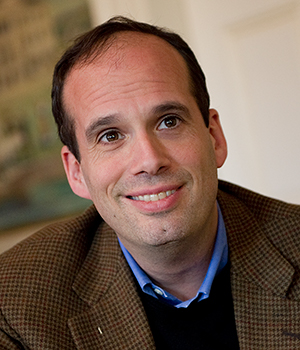
Dr. Muneeb Ahmad is a Senior Lecturer in Computer Science at Swansea University, specializing in human-centered robotics and adaptive interaction systems. His research integrates human-computer interaction principles with intelligent robotics to develop socially engaging systems. Research Focus: Dr. Ahmad's work explores trust dynamics, cognitive load measurement, and adaptive behaviors in human-robot interaction, with applications in education, healthcare, and assistive technologies. His key research themes include: Psychophysiological measurement of trust and cognitive load Cross-cultural adaptation in social robots Multimodal interaction systems Reinforcement learning for adaptive behaviors Ethical implications of social robotics Recent publications demonstrate innovations in robot design for elderly care, trust optimization algorithms, deception detection systems, and fair interaction frameworks. His methodological approaches combine machine learning with human-centered design principles. Dr. Ahmad actively contributes to the research community as General Chair of the International Conference on Human-Agent Interaction and Guest Editor for ACM Transactions in Human-Robot Interaction.
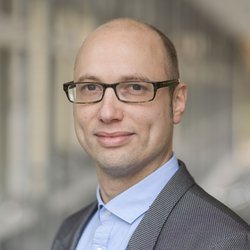
Amir Zeldes is an Associate Professor in the Department of Linguistics at Georgetown University, where he leads the Corpling@GU Corpus Linguistics lab. He serves as President of the ACL Special Interest Group on Annotation (SIGANN). His primary research focuses on computational models of discourse, including referentiality and discourse relations, leveraging multilayer corpus studies to advance NLP and linguistic theory. Zeldes holds a Ph.D. from Humboldt Universität zu Berlin, complemented by an M.A. and B.A. in linguistics from Humboldt and the Hebrew University of Jerusalem. His work emphasizes discourse analysis, coreference resolution, and annotation frameworks, with contributions to Universal Dependencies treebanks and discourse parsing benchmarks like DISRPT. Zeldes has authored influential texts such as Multilayer Corpus Studies (2018/2020), exploring methodologies for parallel linguistic analyses. His research bridges theoretical linguistics and computational tools, addressing challenges in discourse signaling, entity salience, and cross-linguistic NLP applications. Zeldes' lab develops open-source tools for corpus creation and annotation, fostering interdisciplinary collaboration in computational linguistics. His recent projects include advancing discourse relation parsing, LLM evaluation, and historical language restoration through RNN models. Despite no listed awards, his extensive grants and publications reflect significant academic impact in NLP and corpus linguistics.
Catherine Kim is a Postdoctoral Research Fellow at the School of Earth & Atmospheric Sciences. She focuses on marine science, particularly coral reef restoration and adaptation, leading projects like the Reef Restoration and Adaptation Program (Rubble and Decision Science sub-programs) alongside Professors Scott Bryan and Michael Bode. Her work includes predicting coral rubble dynamics on the Great Barrier Reef and developing a flood vulnerability index for Brisbane City with Dr Kate Saunders and Associate Professor Kate Helmstedt. She earned her PhD in marine science from the University of Queensland, where her research explored coral health and biodiversity in Timor-Leste. Dr. Kim’s research interests span coral reef ecology, geospatial analysis, and disaster risk assessment. She actively promotes STEM diversity through initiatives like R Ladies Brisbane and the Wonder of Science program. Notable achievements include a 2022 Queensland Women in STEM Awards Finalist recognition and grants totaling over AUD 100,000, including the Society for Conservation Biology Small Grant and the Elodie Sandford Explorer Award. Education: PhD (University of Queensland). Affiliations: Centre for Data Science, Coral Reef Ecosystems Laboratory, Brisbane Floods Hackathon leadership. Outreach: Co-organizer of Geospatial Community and R Ladies Brisbane, Young Science Ambassador (Wonder of Science). Her scientific contributions include advancing AI-driven coral reef monitoring and advocating for linguistically inclusive academic publishing. Current projects emphasize bridging geospatial science with environmental conservation to address climate change impacts.
Josefa Gómez Pérez is a Professor in the Department of Computer Science at Universidad de Alcalá. She holds a PhD in Computer Science from the same institution (2011), focusing on CAD tools for electromagnetic analysis of complex structures under supervision of Dr. Manuel Felipe Cátedra Pérez and Dr. Iván González Diego. Her research spans multiple areas including antenna design optimization, numerical methods for engineering problems, gamification in education, medical image analysis, and computer vision applications. She is affiliated with research groups such as the Climate Physics Group (CPG), Group of Advanced Numerical Techniques (GTNA), and TIFyC (Information Technologies for Training and Knowledge). Her work frequently integrates bio-inspired algorithms and web-based tools for solving engineering challenges. Key areas of contribution include developing simulation tools for radio propagation using OpenStreetMap data, optimizing antenna positioning with genetic algorithms, and enhancing educational engagement through gamified platforms. She has also explored interdisciplinary topics like class imbalance mitigation in medical AI and gender perspectives in engineering career choices. Josefa has authored numerous publications in top venues, with recent focus on AI-human interaction, 3D reconstruction techniques, and educational technology innovations. Notable tools she has developed include the NewFasant Suite, DSEXAMS automated questionnaire system, and LearningRlab educational package.
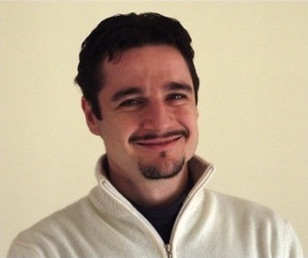
Kenneth David Mandl, MD is the Donald A. B. Lindberg Professor of Pediatrics at Boston Children’s Hospital and Professor of Biomedical Informatics at Harvard Medical School. He is Director of the Computational Health Informatics Program (CHIP) at Boston Children’s Hospital, a leading center for research in health data science and informatics. Institution: Boston Children’s Hospital School: Harvard Medical School, Faculty of Medicine Department: Department of Biomedical Informatics Academic Rank: Professor Dr. Mandl earned his MD from Harvard Medical School and an MPH from the Harvard School of Public Health, with clinical training in pediatrics and pediatric emergency medicine at Boston Children’s Hospital. He also completed fellowships in Clinical Effectiveness and Medical Informatics. His research focuses on leveraging artificial intelligence, electronic health records, and data interoperability standards (e.g., FHIR) to advance clinical care, public health surveillance, and learning health systems. Key interests include automated phenotyping, patient data access, ethical AI in medicine, and digital health innovation. He has led transformative initiatives such as the SMART Platforms and the Accessible Research Commons for Health (ARCH). The recent publications highlight a strong trend toward AI-driven clinical informatics, with work spanning explainable machine learning, generative AI for clinical notes, federated learning systems (e.g., Cumulus), and biosurveillance using NLP. His research bridges technical innovation with real-world implementation and policy, particularly in pediatric and population health contexts. Dr. Mandl has received several prestigious awards, including: Investing in Information Award (2004) Presidential Early Career Award for Scientists and Engineers (PECASE) (2005) Clifford Barger Award for Excellence in Mentoring (2008) Donald Lindberg Award for Innovation in Informatics (2014) As a principal investigator on multiple NIH-funded grants, including U01TR002623 and R01GM104303, he leads large-scale collaborative research efforts involving national consortia such as 4CE and SMART Cumulus Network. His work emphasizes open science, data sharing, and patient-centered innovation. While no current advisees are listed, his prior mentoring has been recognized institutionally. Dr. Mandl is actively engaged in advancing the field through leadership in research infrastructure, policy development for AI in healthcare, and the creation of scalable, interoperable digital health ecosystems.
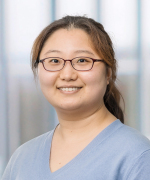
Lemei Zhang is a Postdoctoral Fellow at the Norwegian University of Science and Technology (NTNU) in the Department of Computer Technology and Informatics. Their work focuses on advanced machine learning techniques for recommendation systems and social media analysis. Research interests include Deep learning architectures for news recommendation Aspect-based sentiment analysis in multilingual contexts Temporal and graph embedding methods for social recommendation Contextual augmentation in session-based systems Time series modeling for user interest prediction Creation of large-scale datasets like Adressa for media analytics Recent publications demonstrate a trajectory from foundational work on news recommendation datasets (2016-2017) to increasingly sophisticated neural approaches incorporating attention mechanisms, multimodal fusion, and real-time graph analysis across ACM Transactions, Machine Learning, and Human-Computer Studies venues.
Lada Smirnova is a Lecturer in English for Academic Purposes at the Language Centre, Faculty of Arts, Humanities and Cultures, University of Leeds, where she has been serving since 2021. Her academic work bridges educational technology, language teaching, and sociocultural theory. Her research interests include: Sociocultural and Activity Theory in education Narrative methodology and teacher experience The impact of Generative AI on EAP teaching and learning Sustainable teacher development in transnational contexts Multilingual qualitative research approaches Her recent publications and ongoing projects reveal a strong focus on how AI and digital tools are transforming language education. She explores emotional and cognitive dimensions of teaching through concepts like perezhivanie and Galperin’s framework, emphasizing reflective practice and teacher agency. Her work often centers on Russian and transnational educational contexts, with a commitment to developing sustainable, dialogical models of teacher development. Her scientific contributions include a recent book with Peter Lang and editorial roles in key publications. She is actively involved in shaping discourse around AI in language classrooms through a guest-edited special issue of The European Journal of Applied Linguistics and TEFL . Lada supervises postgraduate research and welcomes PhD proposals in language teacher education. She has professional affiliations with ISCAR, BALEAP, xMCA, and BAAL, and her prior roles include positions at HSE University and institutions in Moscow and China. She is supported by a strong educational foundation, including a PhD and MA from the University of Manchester, and certifications from the University of Cambridge.
Dr. Jonathan Kantor is an Adjunct Assistant Professor of Dermatology at the Perelman School of Medicine, University of Pennsylvania. He is based in both the United Kingdom and the United States and is a leading figure in global dermatology, telemedicine, and AI-driven medical education. His work emphasizes equitable access to skin and cancer care through technological innovation and international collaboration. His research interests span a broad and impactful range, including telemedicine , artificial intelligence in dermatology , global health education , digital pathology , and surgical outcome measurement . He has developed validated tools such as the SCAR scale for scar assessment and the Oxford Pandemic Attitude Scale, demonstrating his expertise in psychometric instrument development. His focus on low-cost, high-technology solutions enables scalable implementation in resource-limited settings. The recent publications reflect a strong trend toward digital health innovation , global health equity , and pandemic response . His work integrates clinical dermatology with public health, technology, and education, often leveraging international datasets and collaborations. Themes include the use of 3D imaging, wireless transmission in pathology, AI applications, and scalable educational models. Scientific Contributions: Editor-in-Chief, Journal of the American Academy of Dermatology International Author of over 100 peer-reviewed manuscripts, book chapters, and abstracts Author/editor of four textbooks published by McGraw-Hill Founding editor of a major dermatology journal Dr. Kantor is deeply engaged in global health mentorship and education, particularly through the University of Pennsylvania’s Center for Global Health. He advises on international trainee programs and promotes year-out global health experiences. Though specific grant details are not listed, his projects suggest support for digital health innovation, telemedicine infrastructure, and global scale validation studies. His international research spans the UK, USA, and multiple low-resource regions. He leads initiatives in digital dermatology innovation, including telemedicine platforms, 3D imaging systems, and AI-integrated diagnostic tools. His team focuses on developing feasible, valid, and reliable methods for global application, such as multilingual translation and validation of clinical scales. These efforts are coordinated through academic and global health networks, emphasizing cross-border collaboration.
Dr. Sven Strobel is a researcher at the German National Library of Science and Technology (TIB), affiliated with Leibniz Universität Hannover. Since 2013, he has served as Product Owner for the TIB AV-Portal, a scientific video platform, and founded the "Agility in Libraries" Community of Practice to promote agile methodologies within library environments. His work bridges library science and digital technology development. His educational background includes: Linguistics and History studies at the University of Stuttgart Doctorate in Linguistics through an international graduate program Dr. Strobel's research focuses on digital video platform development for academic content, with specialization in agile project management methodologies adapted for library settings. His technical expertise spans software engineering for library applications, AI integration (particularly speech recognition), and knowledge management systems . He investigates process optimization within information institutions and the adaptation of Scrum frameworks to academic library contexts, emphasizing user-centered design and iterative development approaches. His publication history reveals an evolutionary trajectory of the TIB AV-Portal from basic video repository to sophisticated platform incorporating mobile access, data sovereignty features, AI-powered enhancements, and multilingual support. The publications demonstrate consistent focus on technical reliability, user experience optimization, and the practical application of agile development principles to meet researchers' evolving needs across disciplines. Dr. Strobel has established significant collaborative networks: Founder of the "Agility in Libraries" Community of Practice Regular contributor to international workshops on scientific video platforms Active participant in the TPDL (Time-Based Media and Persistent Digital Objects) community Key developer in TIB's Non-Textual Materials research group His laboratory work centers on advancing the technical capabilities of video-based scholarly communication infrastructure while ensuring alignment with academic workflows. This includes developing features for diverse research communities who utilize video for knowledge dissemination, from lectures and presentations to research data visualizations and experimental documentation, with particular attention to accessibility and long-term preservation.
Nicola Capuano is an Associate Professor at the Department of Information and Electrical Engineering and Applied Mathematics (DIEM) of the University of Salerno, Italy. He is a member of the SmartLearn research group at the Open University of Catalonia and has previously held academic roles at the University of Basilicata and technical positions at the University of Salerno. Current positions: Associate Professor (University of Salerno) since 2023 Former Associate Professor (University of Basilicata, 2022-2023) Former Researcher (University of Basilicata, 2019-2022) His research focuses on machine learning applications in education, including Artificial Intelligence for Education , Natural Language Processing , and Fuzzy Systems . He has pioneered zero-shot vulnerability detection using LLMs and developed novel graph-based approaches for misinformation analysis. Key projects include the ALICE adaptive learning system and SmartLearn research initiatives. Scientific contributions span 15+ peer-reviewed publications in IEEE, Springer, and Elsevier outlets. Recent work examines persuasive comment detection in social media and optimization techniques in fuzzy genetic algorithms. Best Paper Award recipient (2017) 2nd Best Paper Award (2008) Editorial roles: Associate Editor for 3 journals since 2019 Active in academic service, he chairs conference tracks (INCoS, AINA) and serves as independent evaluator for Horizon Europe projects. His teaching portfolio includes Software Engineering, Algorithms, and AI applications.
Ricardo Muñoz Martín is a Full Professor at the Department of Interpretation and Translation, University of Bologna (Italy). His academic career spans institutions including Universidad de Las Palmas de Gran Canaria, University of Granada, and University of California. He specializes in Cognitive Translation & Interpreting Studies, with expertise in translation technology, empirical research methods, and multilingual communication cognition. PhD in Hispanic Linguistics, University of California, Berkeley Diplomatura in Translation & Interpreting, Universidad de Granada Research interests integrate cognitive science with translation studies, focusing on process analysis, AI-assisted translation, and biometric metrics like heart rate variability. His work explores the indivisibility of translation acts and the evolution of empirical methodologies in the field. Recent publications emphasize quantitative empirical frameworks, cognitive load analysis in collaborative translation, and AI integration in interpreter training. Grants from Italy, Spain, Poland, and China support his research on translation technology and cognitive effort measurement. Co-director of the MC2 Lab (Cognitive Translation Summer School) Principal investigator in grants like "Big Sistah" (remote worker wellbeing) and "Attention, emotions and translation" He actively participates in international conferences, including keynote speeches at the 7th TTI Conference and panels at the 11th EST Congress.
Ion Androutsopoulos is a Professor in the Department of Informatics at Athens University of Economics and Business (AUEB), where he leads the AUEB NLP Group. With over 180 publications spanning three decades, he is a prominent figure in Natural Language Processing research, particularly known for his work bridging NLP with legal informatics, Greek language processing, and biomedical applications. His research interests focus on several interconnected areas of Natural Language Processing: Legal Informatics : developing NLP systems for legal document analysis, legal judgment prediction, and legal reasoning, with recent work including GreekBarBench and Archimedes-AUEB systems Greek Language Technology : creating specialized tools for Modern Greek processing, including GR-NLP-TOOLKIT and Greeklish transliteration systems Biomedical Text Mining : working on diagnostic captioning and medical image analysis through participation in ImageCLEFmedical challenges Financial NLP : developing systems like EDGAR-CRAWLER for financial document analysis and XBRL tagging His recent publications (2023-2025) show an increasing focus on Greek-specific NLP resources and practical applications of large language models in legal reasoning. His work often combines theoretical NLP advances with practical implementations, particularly through his leadership of the AUEB NLP Group which regularly participates in international evaluation campaigns. Professor Androutsopoulos has supervised numerous PhD students who have become active researchers in their own right, including John Pavlopoulos, Prodromos Malakasiotis, and Ilias Chalkidis. His collaborative network spans multiple institutions and disciplines, reflecting the interdisciplinary nature of modern NLP research.
Professor Julie Weeds is a faculty member at the School of Engineering and Informatics , University of Sussex. Her academic journey includes a DPhil in Natural Language Processing (2003), MPhil in Computer Speech and Language Processing (2000), and MA in Computer Science (1998). She has held positions including Postdoctoral Research Fellow (2003-2005, 2012-2016, part-time), Lecturer in Data Science (2016-present), and Professor of Artificial Intelligence (2023-present). MA Computer Science - Trinity Hall, Cambridge University (1995-1998) MPhil Computer Speech and Language Processing - Cambridge University (1999-2000) DPhil Natural Language Processing - University of Sussex (2000-2003) Her research spans Natural Language Processing , Machine Learning , and Computational Linguistics , focusing on semantic compositionality , vector representation analysis , and linguistic variation . Recent work applies NLP to dream reports , wildlife conservation , and mental health support . She leads grants related to hate speech analysis , suicide prevention , and illegal wildlife trade detection . Publications reveal trends in semantic entailment modeling , dream analysis using LLMs , and ecological informatics applications . Key themes include syntax-driven compositionality , multilingual modeling , and structure-aware paraphrase identification . Professor Weeds supervises research projects and teaches courses including Advanced Natural Language Engineering, Natural Language Processing, and Data Science methods. Collaborators include David Weir, Luca Bertolini, and Qi Peng, with affiliations to CASM Consulting LLP and Innovate UK projects.
Elisa Fernández Rei is a Professor in the Department of Galician Philology at the University of Santiago de Compostela. She has been affiliated with the Instituto da Lingua Galega (ILG) since 1991 and currently serves on the ILG Standing Committee. Her academic career spans over three decades with continuous contributions to Galician linguistics research and language documentation. Her educational background includes: Bachelor's degree in Galician Philology (1992) Doctorate/PhD in Galician Philology (2002) Professor Fernández Rei's research primarily focuses on Galician intonation and prosody, linguistic change, and language contact phenomena. She has made significant methodological contributions to dialectometric analysis of prosodic variation and has pioneered research on Galician-Portuguese prosodic boundaries. Her work bridges theoretical linguistics with practical applications for language preservation. Her recent publication trajectory reveals a strategic expansion from traditional phonetic research toward computational applications for the Galician language. While maintaining her core expertise in prosody and intonation, she has increasingly focused on developing language resources and technologies, particularly through the Nós project which addresses speech synthesis and recognition for Galician. This evolution demonstrates her commitment to applying linguistic theory to practical language technology development for minority languages. Professor Fernández Rei has served as principal investigator on multiple research projects including the Perceptual Study of Dialectal Prosodic Variation in Galician and the Prosodic Multimedia Atlas of the Romanesque Space (AMPER-Gal). She has been instrumental in developing the Computerized Oral Corpus of the Galician Language (CORILGA), creating valuable resources for linguistic analysis. She coordinates the Galician committee for the international AMPER project since 2003 and has been a member of the Editorial Board of Estudos de Lingüística Galega since its foundation in 2008, serving as secretary since 2018. Her leadership extends to the Nós project, which develops speech technologies specifically for the Galician language, addressing the digital gap for minority languages.
Yuning Ding is a PhD Student and Research Assistant in the junior research group 'EduNLP' at the Research Center CATALPA (Center of Advanced Technology for Assisted Learning and Predictive Analytics), FernUniversität in Hagen, since January 2022. Her work focuses on Natural Language Processing applications for educational technology, specifically developing systems for automatic essay scoring and generating formative feedback for learners and summative feedback for teachers. Her educational background includes: M.Sc. in Applied Cognitive and Media Science with Specialization in Cognition & Artificial Intelligence at University of Duisburg-Essen (2017-2019) B.Sc. in Applied Cognitive and Media Science at University of Duisburg-Essen (2014-2017) B.A. in Communications at University of International Relations, Beijing (2009-2013) Ding's research centers on leveraging NLP to enhance writing education through AI-driven assessment and feedback systems. Her work bridges computational linguistics and pedagogy, with particular emphasis on argument mining, cohesion analysis, and cross-lingual content scoring. She investigates how transformer models and multi-task learning can improve the reliability and educational value of automated writing evaluation, while addressing critical issues like fairness and adversarial vulnerability in scoring systems. Her research demonstrates how NLP can provide actionable insights for both students and educators in writing development. Analysis of her publication trends reveals a strategic progression from foundational work on content scoring and error analysis toward sophisticated integrated systems. Recent work emphasizes multimodal feedback generation, argument-cohesion integration, and cross-lingual transfer, with increasing focus on real-world implementation challenges including fairness, robustness, and user experience. Her research spans multiple languages and educational contexts, reflecting a commitment to globally applicable educational technology. Within CATALPA, Ding actively collaborates across disciplines through the center's vibrant knowledge-sharing culture. She participates in project presentations and colloquia that facilitate cross-pollination of ideas between computer science, linguistics, and educational theory. Her work on the DARIUS corpus and FEAT-writing system demonstrates tangible contributions to educational resource development and interactive learning environments.