Allan Greenleaf is Professor of Mathematics and Co-director of Graduate Studies at the University of Rochester's Department of Mathematics, School of Arts & Sciences. He received his AB/SM from the University of Chicago (1977) and PhD from Princeton University (1981), followed by an NSF Postdoctoral Fellowship at MIT. His research specializes in harmonic analysis and microlocal analysis applied to integral geometry and inverse problems. Recent work focuses on degenerate Fourier integral operators, X-ray transforms underlying CAT scanning, and transformation optics for invisibility/cloaking. Publications demonstrate consistent exploration of configuration sets, microlocal techniques in tomography/seismology, and quantum integrable systems. Awards: Sloan Research Fellowship (1990-91)
Betsy Stovall is a Professor of Mathematics at the University of Wisconsin–Madison and holds the Letters and Science Mary Herman Rubenstein Professor chair. She serves as the AMS Associate Secretary for the Central Section . Education : Not explicitly stated in provided text. Appointments : Regular faculty at UW–Madison since at least 2012 Organizer of graduate analysis seminars Research Interests : Stovall specializes in harmonic analysis , focusing on operators involving curvature, oscillatory integrals, and Fourier restriction phenomena. Her work intersects with partial differential equations (PDEs) through the study of dispersive equations and geometric analysis problems. Teaching : Complex Analysis (Math 623) - Fall 2021 Calculus III (Math 234) - Fall 2020 Graduate Analysis Seminar - Spring 2022 Organized UW Madison undergraduate summer school in Analysis (2018) Scientific Contributions : Sole or joint author of 15+ publications NSF RTG grant in Analysis and PDE Active in harmonic analysis seminars and educational initiatives Administrative Roles : AMS Associate Secretary Co-organizer of RTG/Student seminars Summer school director
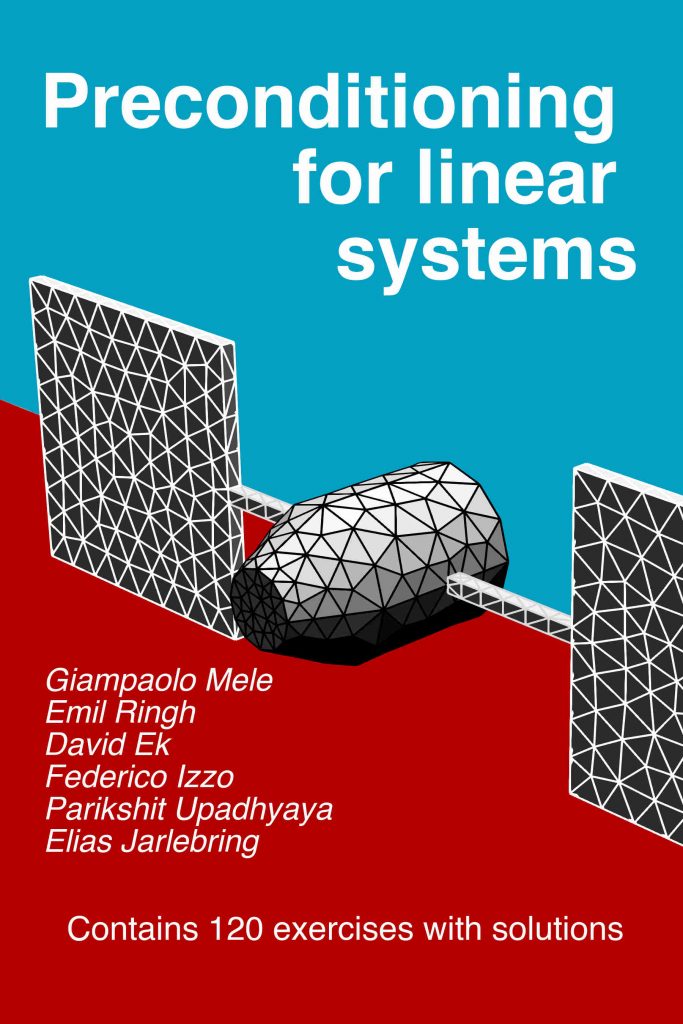
Elias Jarlebring is a Professor in Numerical Linear Algebra at the Department of Mathematics, KTH Royal Institute of Technology, Stockholm. He has held the position of Full Professor since 2021, following his tenure as Associate Professor (2013-2021) and Dahlquist Research Fellow (2011-2013). His research focuses on numerical analysis, numerical linear algebra, matrix computations, and scientific computing. Jarlebring develops linear algebra algorithms to solve problems from various fields including systems and control, acoustics, electromagnetics, data science, quantum mechanics, and quantum chemistry. He is a core developer of NEP-PACK, a scientific computing software package for nonlinear eigenproblems. His recent publications demonstrate significant contributions to computational methods for nonlinear eigenvalue problems, matrix functions, and parameterized linear systems. The research shows a clear trajectory toward increasingly complex applications in quantum computing, data science, and wave propagation problems. Project grant, Swedish research council (2019) Ruth och Nils-Erik Stenbäcks foundation, junior grant (2019) Göran Gustafsson Prize for junior researchers (2014) Project grant for junior researchers, Swedish research council (2014-2018) Professor Jarlebring has supervised numerous PhD students including Vilhelm Peterson Lithell, Gustaf Lorentzon, Siobhán Correnty, Parikshit Upadhyaya, Emil Ringh, Antti Koskela, and Giampaolo Mele. He has received multiple research grants from the Swedish Research Council and serves as editor for BIT Numerical Mathematics, Linear and Multilinear Algebra, NACO Numerical Algebra Control and Optimization, and CALCOLO. He is actively involved in the numerical linear algebra community as a member of ILAS (International Linear Algebra Society), GAMM Activity Group on Numerical Linear Algebra, and the Nordic Numerical Linear Algebra Association. He also contributes to open source projects, particularly in the Julia programming language ecosystem.
Camil Muscalu is a Professor of Mathematics at Cornell University, affiliated with the College of Arts and Sciences. His research focuses on harmonic analysis and partial differential equations, particularly exploring the interplay between Fourier series, singular integrals, and their applications in physics and number theory. He has authored influential works such as Classical and Multilinear Harmonic Analysis with Wilhelm Schlag. Education: Ph.D. in Mathematics from Brown University (2000). Research Interests: Harmonic Analysis Partial Differential Equations Fourier Analysis Operator Theory Functional Analysis Recent Articles: Highlighting contributions to multilinear operators, sparse domination techniques, and the helicoidal method, with applications to estimates for Schrödinger equations and Fourier restriction problems. Collaborations include work with Terence Tao, Christoph Thiele, and Cristina Benea. Advising: Supervised 10+ Ph.D. students, including notable alumni Eyvindur Palsson, Cristina Benea, and Itamar Oliveira. Editorial roles at Communications on Pure and Applied Analysis , Journal of Functional Analysis , and Mathematische Zeitschrift . Labs/Teams: Active in Cornell’s Analysis Seminar and Oliver Club, fostering collaborative research in harmonic analysis and related fields.
Xiaochun Li is a Professor of Mathematics at the University of Illinois at Urbana-Champaign, affiliated with the Department of Mathematics within the College of Liberal Arts & Sciences. His research focuses on Harmonic Analysis, with expertise in multilinear oscillatory integrals, Hilbert transforms along vector fields, and multilinear Carleson theorems. He earned his Ph.D. from the University of Missouri at Columbia in 2001. His recent work explores topics such as pointwise convergence of cone multipliers, Stein-Tomas restriction theorems, and polynomial Roth theorems. These studies bridge functional analysis, Fourier analysis, and operator theory, contributing to foundational advancements in mathematical analysis. No scientific awards or grants are explicitly listed in the provided materials. His research is supported through his academic appointment, and he maintains an active publication record in prestigious journals such as the Journal of Functional Analysis and Mathematische Annalen.
Rafał Latała is a distinguished Professor at the Institute of Mathematics, Faculty of Mathematics, Informatics and Mechanics, University of Warsaw, where he has held a full professorship since 2013. He is also a Corresponding Member of the Polish Academy of Sciences since 2016 and an AMS Fellow since 2013. His academic career spans over 25 years at the University of Warsaw, progressing from Instructor (1994-1997) to Assistant Professor (1997-2003), Associate Professor (2003-2012), and finally to his current position as Professor. Additionally, he held a part-time professorship at the Institute of Mathematics of the Polish Academy of Sciences from 2009-2012. His educational background includes a PhD in Mathematics from the University of Warsaw (1997) with a dissertation on estimation of moments of sums of independent random variables under the supervision of Professor Stanisław Kwapien, a Habilitation degree in Mathematics (2002), and the title of Professor awarded by the President of Poland (2009). He completed his MSc in Mathematics at the University of Warsaw in 1994. Latała's research focuses on the intersection of probability theory and geometric analysis, with particular expertise in convex geometry, functional analysis, asymptotic geometric analysis, and the theory of log-concave measures. His work bridges theoretical mathematics with applications in high-dimensional statistics and random matrix theory. He has made significant contributions to understanding moment inequalities, concentration phenomena, and the geometric structure of high-dimensional random objects. His recent work demonstrates increasing sophistication in handling complex relationships between different norms of random vectors and matrices. His publication record shows a consistent focus on probabilistic methods in geometric settings, with recent articles demonstrating advanced techniques for analyzing random matrices, log-concave measures, and canonical processes. The research trajectory reveals increasingly sophisticated methods for bounding norms and moments in high-dimensional spaces, with applications spanning theoretical mathematics to statistical learning theory. Kolmogorov Lecture 2024 Prize of the Foundation for Polish Science in mathematics, physics, and engineering sciences 2023 Orlicz Lecture 2023 Institute of Mathematics of the Polish Academy of Sciences Prize 2014 AMS Fellow since 2013 Foundation for Polish Science Grant Mistrz 2007-2011 Prime Minister Award for Habilitation Thesis 2003 Invited Speaker at International Congress of Mathematicians 2002 Latała has supervised five PhD students to completion (Rafal Meller, Marta Strzelecka, Jakub Wojtaszczyk, Radoslaw Adamczak, and Rafal Lochowski) and four MSc students (Maciej Bartczak, Dariusz Matlak, Tomasz Tkocz, and Marcin Lis). His editorial service includes positions at Probability Surveys (2024-26), The Annals of Probability (2015-20), and Studia Mathematica (2006-present). He has organized numerous international conferences including the High Dimensional Probability X conference in 2023 and served on various professional committees including the Central Commission for Academic Degrees and Titles.
David Hong is an Assistant Professor in the Department of Electrical and Computer Engineering at the University of Delaware. He holds a PhD from the University of Michigan, where he was an NSF Graduate Research Fellow, and previously served as an NSF Postdoctoral Research Fellow at the University of Pennsylvania. His research focuses on developing robust methods for analyzing heterogeneous and high-dimensional data, particularly through low-rank matrix and tensor techniques. Applications span medical imaging, radar systems, genomics, and astronomy. He emphasizes theoretical guarantees and practical algorithms for signal extraction and inverse problems. Education: PhD in Electrical Engineering and Computer Science (University of Michigan), NSF Postdoctoral Research Fellowship (University of Pennsylvania). Research Interests: Low-rank matrix/tensor methods, heterogeneous data analysis, unsupervised learning, and applications in healthcare, imaging, and sensor systems. His work addresses noise robustness, scalable algorithms, and real-world deployment challenges. Scientific Awards: Recipient of the NSF Postdoctoral Research Fellowship (2020) and NSF Graduate Research Fellowship (2015). Advising & Grants: Advisor to graduate students in machine learning and signal processing (no named advisees listed). Active NSF grant recipient for foundational and applied research in data science. Labs/Teams: Engaged in interdisciplinary collaborations through the University of Delaware's Center for Computational Research and Data Science initiatives.
Professor Guoyin Li is a faculty member at the School of Mathematics & Statistics , University of New South Wales (UNSW Sydney). He holds a Ph.D. from The Chinese University of Hong Kong (2007) and has been at UNSW since 2011, currently serving as Professor and Research Director. Research Interests His work spans optimization , variational analysis , and multilinear algebra , with applications in robust optimization , structural engineering , and machine learning . He specializes in nonconvex nonsmooth optimization , tensor eigenvalue problems , and exact semi-definite programming relaxations . Recent Publications His articles focus on robust optimization for structural design, nonlinear approximation techniques, and conic programming for uncertain data. Key journals include Foundations of Computational Mathematics , Mathematical Programming , and Computer Methods in Applied Mechanics and Engineering . Awards and Grants Fellow of the Australian Mathematical Society (2023) 2022 AustMS Medal 2024 Marguerite Frank Award ARC Discovery Grants (2021-2023, 2025-2027) ARC Research Hub Project (2017-2021) Professional Roles He serves on editorial boards of SIAM Journal on Optimization , Optimization Letters , and Journal of Optimization Theory and Applications , and has delivered plenary lectures at international conferences in Austria, Spain, and Canada.
Dr. Shulin (Stanley) Chen is a Lecturer at the University of Technology Sydney (UTS), specializing in antennas and applied electromagnetics. He holds a PhD from UTS (2019) and has held postdoctoral and visiting scholar positions at UTS and City University of Hong Kong. His research focuses on metasurfaces, reconfigurable antennas, and machine learning-driven design, supported by prestigious awards like the DECRA (2025) and IEEE AP-S Fellowship (2022). He serves as an Associate Editor for IEEE Transactions on Circuits and Systems II and has authored over 75 publications. His work spans advanced beam-forming antennas for 6G, frequency-controlled polarization systems, and intelligent metasurface design. Education: B.S. in Electrical Engineering, Fuzhou University (2012) M.S. in Electromagnetic Field & Microwave Technology, Xiamen University (2015) PhD in Electrical Engineering, UTS (2019) Research Interests: Metasurfaces for electromagnetic wave manipulation Reconfigurable antennas for 6G networks Machine learning in antenna design Joint communication and sensing systems Awards & Grants: DECRA (2025), TICRA-EurAAP Travel Grant (2022) Lead projects on intelligent redirecting surfaces and flood sensing (funded by Telstra, NSW Department of Planning, etc.) Labs & Teams: Active in UTS's Global Big Data Technologies Centre and collaborates with industry partners like XPOWER AI and TPG Telecom.
Dr. HanQin Cai is the Paul N. Somerville Endowed Assistant Professor in the Department of Statistics and Data Science at the University of Central Florida (UCF), also serving as Director of the Data Science Lab. He holds a joint appointment with the Department of Computer Science. His research focuses on theoretical and algorithmic foundations of mathematical optimization, data science, and machine learning, with emphasis on non-convex algorithms, adversarial attacks, signal/image processing, and deep learning integration. He has secured NSF grants totaling over $2.6M, including a $121K single-PI grant and a $2.49M co-PI grant. His work has been recognized with the UCF OSCaR Award (2025) and IEEE Senior Member status (2024). Education: PhD in Applied Mathematical and Computational Sciences from University of Iowa (2018), with M.S. in Mathematics (2014) and M.C.S. in Computer Science (2017). Previously served as a Postdoc at UCLA Mathematics Department under Dr. Wotao Yin. Research highlights include: query-efficient zeroth-order optimization, robust signal processing with corrupted data, adversarial attacks on neural networks, and tensor-based methods for high-dimensional data analysis. His recent publications explore advanced techniques in matrix recovery, tensor decompositions, and explainable AI. Grants & Awards: NSF DMS-2304489 (2022–2025), NSF DUE-2321986 (2024–2029), UCF OSCaR Award, IEEE Senior Membership. Labs & Teams: Directs UCF's Data Science Lab, collaborates across disciplines in statistics, computer science, and engineering.
Carlos Palazuelos Cabezón is a Professor in the Department of Mathematical Analysis and Applied Mathematics at the Faculty of Mathematical Sciences, Universidad Complutense de Madrid (UCM), with a joint affiliation at the Instituto de Ciencias Matemáticas (ICMAT). He holds a Ramón y Cajal contract and has been a Full Professor since 2024, following his role as Associate Professor from 2019 to 2024. His work bridges deep mathematical theory and quantum information science. Research Interests: His primary research lies at the intersection of functional analysis and quantum information theory. He investigates operator spaces and their applications to quantum entanglement, Bell inequalities, quantum channels, and nonlocal games. A second major line involves noncommutative harmonic analysis, particularly hypercontractivity in von Neumann algebras. His work is highly theoretical and appears in top mathematical and physics journals. Publication Trends: His recent publications demonstrate a consistent focus on the mathematical foundations of quantum information, particularly using tools from operator space theory and Banach space geometry to analyze quantum nonlocality, entanglement, and computational models. There is a strong trend toward solving foundational problems in quantum theory using advanced functional analysis. Scientific Awards: Premio Extraordinario de Doctorado (2008/2009) Doctorado Europeo Advising and Grants: While no specific students are listed, he is part of the MathQI research group and has likely mentored graduate students. He has been supported by prestigious postdoctoral and permanent research contracts in Spain, including the Juan de la Cierva and Ramón y Cajal programs, which are highly competitive grants for early-career and established researchers, respectively. Labs and Teams: He is a member of the MathQI research group (Mathematical Quantum Information) at UCM and is affiliated with ICMAT, a leading mathematics research institute in Spain. These affiliations provide a collaborative environment for interdisciplinary research in mathematical physics and quantum information.
Dr. Grey Ballard is an Associate Professor in the Department of Computer Science at Wake Forest University . He earned a B.S. in Math and Computer Science (2006), M.A. in Math (2008) from Wake Forest, and PhD in Computer Science (2013) from the University of California, Berkeley. He was a Truman Fellow at Sandia National Laboratories before joining Wake Forest. Research Focus: Ballard develops communication-optimal algorithms for high-performance computing , particularly in tensor decompositions , symmetric matrix computations , and nonnegative matrix factorization . His work combines numerical linear algebra with parallel algorithm design to reduce data movement costs in distributed systems. Publications demonstrate expertise in communication lower bounds , randomized tensor rounding , and visualization tools for parallel algorithms. He has contributed software packages such as TuckerMPI , GentenMPI , and PLANC for large-scale data compression and clustering. Scientific Awards: Wake Forest Excellence in Research Award NSF CAREER Award SIAM Linear Algebra Prize Three Conference Best Paper Awards (SPAA, IPDPS, ICDM) C.V. Ramamoorthy Distinguished Research Award (UC Berkeley) ACM Doctoral Dissertation Award – Honorable Mention Teaching: Courses include Introduction to Computer Science , Numerical Linear Algebra , and Parallel Algorithms . He has developed educational tools using the Thread-Safe Graphics Library to visualize parallel dynamic programming and collective communication.
Brian Street is a Professor in the Department of Mathematics at the University of Wisconsin-Madison . He specializes in partial differential equations, harmonic analysis, and geometric analysis, with a focus on subelliptic and multi-parameter singular integral theories. His work extends classical results like the Newlander-Nirenberg theorem and Frobenius theorem to quantitative and boundary settings. Research Highlights: Development of maximal subellipticity theory (2023), generalization of Calderón-Zygmund singular integrals to multi-parameter settings (2011–2013), and novel approaches to hypoelliptic and mixing flow problems. Publications: Authored a monograph on Multi-parameter Singular Integrals (Princeton University Press, 2012) and co-authored influential papers with leading mathematicians in functional analysis and PDEs. Methodologies: Employed techniques from ODEs, PDEs, and harmonic analysis, including wave equation propagation, non-isotropic Sobolev spaces, and diffeomorphism-invariant frameworks.
Ram Mohapatra is a Professor in the Department of Mathematics at the University of Central Florida (UCF), part of the College of Sciences. His research interests span mathematical analysis, operator theory, variational inequalities, approximation theory, cybersecurity, and fluid dynamics. He has published extensively on topics including inverse scattering problems, generalized inverses, and optimal control theory. His work often intersects with applications in engineering and data science. Recent research focuses on operator theory applications, tensor decompositions, and mathematical modeling of physical systems. He has contributed to advancements in frame theory, numerical radius studies, and cybersecurity methodologies. His academic activities include teaching undergraduate and graduate courses in mathematics, such as MAC 1105C and MAC 2311C, and maintaining active collaborations in interdisciplinary research areas. Professional contributions include over 150 peer-reviewed articles and editorial roles in mathematics journals. While no explicit awards are listed in the provided texts, his prolific publication record underscores his scholarly impact in applied and theoretical mathematics.
Lars Grasedyck is a Professor of Numerical Analysis at RWTH Aachen University. His research focuses on hierarchical matrices, tensor approximation, and numerical methods for partial differential equations and matrix equations. He has contributed to applications in biomedical engineering, particularly EEG/MEG inverse problems, and is involved in software development (HLIB, HLIB-pro). Education: Diploma and Ph.D. in Mathematics at Christian-Albrechts-Universität zu Kiel (1998, 2001), Postdoctoral work at Max Planck Institute, Leipzig (2002-2010). Research: Specializes in high-dimensional numerical methods, low-rank matrices, and tensors with applications in PDEs, uncertainty quantification, and biomedical modeling. Projects: Leads DFG-funded initiatives on adaptive tensor networks for parametric PDEs and tumor progression modeling. Advising: Supervises doctoral students including Thong Le, Maren Klever, and Dieter Moser. Software: Developed HLib and HLib-pro for hierarchical matrix computations. Conferences: Active in GAMM Fachausschuss Numerische Analysis, organizing workshops and symposia globally.