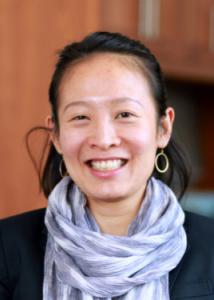
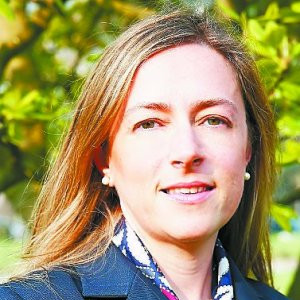
Stephen Jivraj is an Associate Professor in Quantitative Social Science at University College London's Department of Epidemiology and Public Health. With a PhD in Social Statistics from the University of Manchester, he leads research on inequalities using quantitative methods and serves as a member of the UCL Q-Step Centre. His expertise spans spatial inequality, life course epidemiology, and statistical methods for social sciences. His research examines neighborhood effects on health across the life course, ethnic density dynamics, and socioeconomic determinants of health using longitudinal datasets like UKHLS and ELSA. Work emphasizes geospatial modeling of deprivation, cross-national comparisons of welfare systems, and methodological innovations in measuring inequality. Publication analyses reveal consistent focus on multilevel modeling, residential mobility effects, and policy-relevant metrics for health disparities. Recent work expands to coastal health impacts and ethnic deprivation indices, showcasing methodological versatility in handling complex spatial and longitudinal data.
Andrea Cervone is a Professor at KU Leuven, specializing in power electronics and electrical engineering with a focus on solid-state transformers and power conversion systems. Based at the Thor Park 8310 campus in Genk, Belgium, Cervone conducts research at the intersection of medium voltage applications and power system integration. The research group is actively involved in multiple projects including the ADVANCED SOLID-STATE ELECTRONIC TRANSFORMER (ASSET) initiative and the Solid-State Transformers for Medium Voltage Applications PhD project supervised for Marina Vitali. Dr. Cervone's research interests span power electronics, solid-state transformers, medium voltage applications, electrical power systems, power converters, grid integration, electric drives, multiphase machines, DC-DC converters, and renewable energy systems. The work emphasizes practical applications in power distribution networks, with particular attention to harmonic analysis, stability considerations, and efficiency optimization in modern power conversion systems. Current research demonstrates strong focus on addressing challenges in grid integration of renewable energy sources and improving power quality in hybrid AC-DC networks. The publication record shows a clear trend toward solid-state transformer technology, with numerous papers on input-series-output-parallel configurations, harmonic compensation techniques, and stability analysis. Recent work has expanded into grid impedance estimation, DC data center power supplies, and modulation strategies for dual-port converters. The research consistently addresses practical engineering challenges in power conversion while maintaining strong theoretical foundations in control systems and power electronics. As an academic supervisor, Dr. Cervone currently mentors PhD student Marina Vitali on solid-state transformers for medium voltage applications. The research group maintains strong industry connections through collaborative projects focused on practical power electronics applications, particularly in the energy sector. The group's work spans both theoretical analysis and experimental validation of novel power conversion topologies.
Prof. Dylan Lu is a Professor and Head of Discipline for Electrical Power and Energy Systems at the School of Electrical and Data Engineering, University of Technology Sydney (UTS). He holds a Ph.D. in Electronic and Information Engineering from The Hong Kong Polytechnic University (2004). Previously, he served as academic staff at the University of Sydney from 2006 to 2016, progressing from Lecturer to Associate Professor. His research focuses on power electronics, renewable energy systems, and grid integration, with an emphasis on converter topologies, control techniques, and power quality solutions for microgrids and energy storage systems. Prof. Lu's academic leadership includes roles as Associate Editor for IEEE Transactions on Industrial Electronics and IEEE Journal of Emerging and Selected Topics in Power Electronics. He chairs the IEEE NSW Joint Chapter PEL/IES/IAS and is a Senior Member of the IEEE. His teaching contributions include coordinating Renewable Energy Systems studios and supervising graduate projects in areas like electro-thermal modeling of power devices and three-port DC-DC converter synthesis. Research highlights include advancements in cascaded H-bridge converters, battery management systems, and grid-connected inverter control strategies. His work addresses challenges in high-efficiency power conversion, renewable integration, and energy storage reliability. Current projects explore fault-tolerant converter designs and predictive control algorithms for electric vehicle chargers.
Associate Professor Yam Siwakoti holds a position at the University of Technology Sydney (UTS), leading research in power electronics and renewable energy systems. He has affiliations with the School of Electrical and Data Engineering and has collaborated with institutions like Fraunhofer ISE and the University of Oxford. Education: B.Tech in Electrical Engineering from National Institute of Technology, Hamirpur (2005) MEng in Electrical Power Engineering from Norwegian University of Science and Technology and Kathmandu University (2010) PhD in Electronic Engineering from Macquarie University (2014) Research focuses on high-efficiency power converters, multilevel inverters, and sustainable energy systems. Key interests include transformerless grid-connected inverters, battery management systems, and wide bandgap semiconductor applications. Notable achievements include the Friedrich Wilhelm Bessel Research Award (2022) and Green Talent Award (2016). He has supervised over 15 students and holds editorial roles in IEEE journals. His funded research projects focus on extending battery lifetimes and high-frequency magnetics design. Labs/Teams: Active in UTS' Power Electronics and Renewable Energy research groups, collaborating with industry partners like Re:Start on EV charging solutions.
Helani Kottage is a Research Fellow at the Australian National Centre for Ocean Resources and Security (ANCORS), University of Wollongong, within the Faculty of Business and Law. She holds an Associate Research Fellow position since August 2020 and currently serves as a Research Fellow from January 2024. Additionally, she acts as a Statistical Consultant for The Pacific Community (SPC) since August 2020. Her work bridges statistical methodologies with food systems and ocean resource management, focusing on multilevel data analysis and sustainable development in the Pacific region. Research interests include integrating statistical techniques like missing data imputation with food security challenges, particularly in Timor-Leste and the Pacific. Her recent publications address categorical data analysis and value chain frameworks for improved food system outcomes. She contributes to interdisciplinary projects, such as the ACIAR-funded grant (2023–2026) enhancing food system resilience in the region. Funding: Leading in the ACIAR grant on integrated food system analysis. Advising/Grants: Collaborates on projects linking statistical methods to development challenges, though specific student advisees are not listed. Labs/Teams: ANCORS serves as her primary research hub, focusing on ocean governance and sustainable resource management.
Friedrich Götz is an Associate Professor of Psychology in the Department of Psychology within the Faculty of Arts at the University of British Columbia. He holds a PhD (2021) and MPhil (2017) from the University of Cambridge and a BSc (2016) from the University of Konstanz. PhD, University of Cambridge (UK), 2021 MPhil, University of Cambridge (UK), 2017 BSc, University of Konstanz (Germany), 2016 Dr. Götz leads the Personality and Geographical Ambiance (PANGEA) Lab, focusing on geographical psychology and regional personality differences through interdisciplinary Big Data approaches. His research integrates social and personality psychology with behavioral science to examine real-world outcomes, including pandemic behavior, cultural shifts, and person-environment interactions. Additional interests span mobility/migration, wanderlust, courage, entrepreneurship, and experience sampling methods. He collaborates with TIME Magazine on large-scale surveys involving over 3 million participants. His publication trends reveal consistent contributions to top journals like Nature Human Behaviour and Journal of Personality and Social Psychology , with recent work emphasizing methodological rigor, geographical influences on behavior, and pandemic-related psychological responses. Key themes include spatial analysis techniques, personality-environment interactions, and the societal implications of psychological research. Rising Star Award (Association for Psychological Science), 2025 SAGE Emerging Scholar Award (Society for Personality and Social Psychology), 2025 Top 40 under 40 – Germany (CAPITAL Magazine), 2024 President’s New Researcher Award (Canadian Psychological Association), 2024 Best Dissertation Prize (German Psychological Society), 2021 Leading Scholar (Green College), 2021 Dr. Götz advises students through UBC's Psychology graduate programs and teaches undergraduate courses (PSYC 305A: Personality Psychology) and graduate courses (PSYC 528: Methods in Social Psychology and Personality; PSYC 569: Contemporary Conceptual Issues). His TIME Magazine collaboration represents a significant grant-adjacent initiative. The PANGEA Lab operates on principles of inclusivity and diversity, acknowledging its location on the unceded territory of the xʷməθkʷəy̓əm (Musqueam) people, and focuses on how humans and environments mutually shape each other.
Isabella Verdinelli is a dual-affiliated professor serving as Professor in Residence at Carnegie Mellon University's Department of Statistics (Dietrich College of Humanities and Social Sciences) and as Full Professor at Sapienza University of Rome's Department of Statistical Sciences. She splits her academic year between Pittsburgh (fall) and Rome (spring), maintaining active research collaborations at both institutions. Her education includes a Master's degree from University College London and a PhD from Carnegie Mellon University. Her career spans postdoctoral work, assistant/associate positions, and professorship roles since her student days in Rome. Verdinelli's research focuses on: Nonparametric and high-dimensional methods for uncovering latent structures in complex datasets Bayesian experimental design with applications in medicine and engineering Manifold/filament estimation and minimax convergence theory Monte Carlo Markov Chains and hypothesis testing using Bayes factors Multiple testing procedures (FDR control) Her publications demonstrate sustained focus on Bayesian methodologies, nonparametric inference, and optimization techniques. Recent work (2007-2010) emphasizes high-dimensional data structures and theoretical statistics, while earlier contributions center on experimental design and Bayesian model selection.
Professor Jens Beckmann is a leading academic in Educational Psychology at Durham University's School of Education, where he has held the position since 2011. Prior roles include Director of the Accelerated Learning Laboratory at the University of New South Wales and research positions at Yale University, the University of Sydney, and institutions in Germany. He is a Fellow of the Wolfson Research Institute at Durham. His research focuses on three core areas: Dynamic Testing (assessing intellectual potential), Complex Problem Solving (knowledge acquisition in dynamic systems), and Cognitive Flexibility (measuring adaptability and novel problem-solving abilities). He has developed innovative assessment tools, such as the Adaptive Computer-Based Learning Test Battery (ACIL), and contributed to frameworks like the MicroDYN simulation for problem-solving analysis. Beckmann has authored/co-authored numerous books and articles, including Managerial Problem Solving: Frameworks, Tools & Techniques and Zur Validierung des Konstrukts des intellektuellen Veränderungspotentials . His work bridges educational theory and practice, emphasizing the application of dynamic assessment in real-world settings. He serves on editorial boards for journals like Frontiers in Psychology: Cognitive Science and Journal of Dynamic Decision Making . His supervision includes postgraduate students exploring topics like language learning aptitude, self-regulation in online education, and cross-cultural educational practices. Key contributions include pioneering methods to measure cognitive flexibility and challenging traditional intelligence-testing paradigms. Current work addresses the impact of global crises (e.g., pandemic school closures) on educational outcomes and language development.
John Moriarty is a Lecturer in the School of Social Sciences, Education and Social Work at Queen's University Belfast. His research focuses on workplace wellbeing, mental health, and the impact of social roles on individuals' wellbeing. He leads modules such as Digital Society and Advanced Quantitative Methods, emphasizing technology's societal influence and statistical analysis techniques. His work addresses burnout, role clarity, and interventions for mental health in occupational settings. Research Interests: Workplace wellbeing and role ambiguity Mental health in healthcare/social care professions Impact of aging on workforce participation Informal caregiver and volunteer wellbeing Use of linked administrative data for policy insights Notable Projects: Principal Investigator in Northern Ireland Longitudinal Study (NILS) projects analyzing health and social care workforce wellbeing during the pandemic Collaborative studies on pandemic effects across UK healthcare professions Recognition: 2021 European Social Work Research Association Award for Outstanding Publication Engagement: Advisory roles in workforce wellbeing initiatives Public lectures on pandemic-related worker challenges Contributions to policy discussions on caregiver roles
Christian Leuprecht is the Class of 1965 Professor in Leadership at Queen's University, cross-appointed between the Department of Political Studies and the School of Policy Studies. He holds additional roles as Eisenhower Fellow at the NATO Defence College and Adjunct Research Professor at Charles Sturt University and Flinders University. His research focuses on security, defense, political demography, and federalism, with recent work addressing transnational crime, cybersecurity, and intelligence accountability. Leuprecht has authored 12 books and numerous articles, including groundbreaking studies on NATO's Enhanced Forward Presence and RCMP governance reforms. He received the Cowan Prize for Excellence in Research and is a member of the Royal Society of Canada's College of New Scholars. Leuprecht earned a PhD from Queen's University (2003), MA/BA from the University of Toronto (1998-1999), and a D.É.A. from Université Pierre-Mendès France (1997). He has held visiting positions at Yale, Flinders University, and multiple European institutions. His leadership roles include serving on NSERC's governing council (2015-2018) and as past-president of the International Sociological Association’s Research Committee 01 on Armed Forces and Conflict Resolution. His current projects at the Comparative National Security and Defence Lab explore social network analysis for counterterrorism, data analytics in security policy, and border integrity strategies. Leuprecht frequently testifies before parliamentary committees and advises governments on defense, policing, and cybersecurity. He leads editorial boards for journals like Armed Forces & Society and contributes regularly to Canadian national media on security issues.
Rachel Bacon, Ph.D., is a Research Fellow at the Center for Mind and Culture, affiliated with Pennsylvania State University’s Social Science Research Institute (SSRI). Her work focuses on the intersection of religion, demography, and social structures, with particular emphasis on secularization processes, caregiving dynamics in rural communities, and quantitative modeling techniques. She holds a Ph.D. and utilizes mixed-methods approaches to address complex societal challenges. Her research interests include analyzing religious ecologies, the impact of education on religious decline, and the challenges faced by rural caregivers of individuals with Alzheimer’s disease. She has pioneered the use of microsimulation models to forecast population dynamics and evaluate policy impacts, contributing to both demographic science and public health strategies. Bacon has published extensively on topics such as Amish settlement demographics, Norwegian secularization through auto-biographical studies, and the cost-benefit analysis of population modeling approaches. Her work on caregiving often integrates community-level data with individual experiences, emphasizing multi-level analytical frameworks. Supported by grants from the Eunice Kennedy Shriver National Institute of Child Health and Human Development (NICHD), her research bridges academic inquiry with practical applications in social policy and healthcare. She collaborates with institutions like the Population Research Institute (PRI) and has developed tools to assess rural caregiver needs, including validated survey instruments for diverse populations. Bacon’s contributions to demographic modeling are notable for addressing methodological gaps between cohort-component models and microsimulation techniques. Her interdisciplinary approach combines sociology, gerontology, and computational science to advance understanding of population trends and social structures.
Sy-Miin Chow is a Professor in the Department of Human Development and Family Studies at Pennsylvania State University and Director of the Quantitative Developmental Systems Methodology Core (Quantdev). She leads the Emotions and Dynamic Systems Lab, focusing on developing dynamical systems models to study emotion regulation and longitudinal data analysis in social sciences. Her work integrates Kalman filters, state-space models, and machine learning to understand complex behavioral processes. Dr. Chow holds a Ph.D. in Quantitative Psychology from the University of Virginia. Her research spans emotion dynamics, family systems, and health interventions, with recent emphasis on applying nonlinear methods to real-world datasets from ecological momentary assessments and wearable sensors. Key research interests include: dynamical systems modeling, emotion regulation mechanisms, intensive longitudinal data methods, and bridging computational theory with applied behavioral science. She has contributed novel frameworks for subgrouping heterogeneous time series and handling missingness in multilevel studies. Her methodological innovations have been applied to diverse topics such as adolescent social media use, maternal-infant interaction dynamics, and obesity intervention design. Current projects include advancing adaptive control systems for health applications and developing open-source tools for spatial data analysis from GPS tracking. Dr. Chow's work is supported by NIH grants and institutional funding through Penn State's Social Science Research Institute. She actively collaborates on large-scale initiatives like the Inner Lives of Healthy Babies Network (ILHBN), addressing challenges in harmonizing heterogeneous developmental datasets.
Tyler Renshaw is an Associate Professor and Director of Training for the School Psychology PhD Specialization at Utah State University (USU), within the Department of Psychology at the Emma Eccles Jones College of Education and Human Services. He holds a PhD in Combined Clinical, Counseling, and School Psychology from the University of California, Santa Barbara. His research focuses on improving school-based mental health services, youth and caregiver mental health, and mindfulness-based interventions. He previously served as faculty at Louisiana State University and has authored over 70 scholarly works cited 3,600+ times. Dr. Renshaw’s lab, the School Mental Health Lab, prioritizes equitable mental health services in schools. His work includes validating tools like the Student Subjective Wellbeing Questionnaire (SSWQ) and advancing evidence-based practices. He has received the Lightner Witmer Award (2017) and serves as an Associate Editor for the School Psychology Review. His research spans brief mental health screening tools, mindfulness interventions, and school climate effects. Collaborations with educators and mental health professionals aim to bridge research and practice gaps. He mentors PhD students and actively contributes to professional journals and policy discussions in school psychology.
Dr. James D. Stamey serves as Chairman and Professor of the Department of Statistical Science at Baylor University. He holds a B.S. in Mathematics from Northwestern State University (1995), an MBA from Baylor University (1997), and a Ph.D. in Statistics from Baylor (2000). His research focuses on applying Bayesian methods to imperfectly measured data, with applications in pharmaceutical research, epidemiology, economics, and political science. Recent work emphasizes correcting misreporting in healthcare and public health datasets, structural zeros in contingency tables, and cost-effectiveness analysis in clinical trials. He advises graduate students on pharmaceutical-related dissertation topics, blending academic rigor with real-world problem-solving. Dr. Stamey is actively involved in Baylor's academic and community life, including consulting services and departmental leadership. His publications span Bayesian modeling innovations, misclassification correction techniques, and interdisciplinary applications in healthcare and social sciences. He collaborates with industry partners on nonclinical trial methodologies and contributes to regulatory guidelines through working groups like the DIA/ASA-BIOP Nonclinical Bayesian Working Group. Dr. Stamey’s work bridges theoretical statistics with practical challenges in public health, economics, and biomedical research. Outside academia, he enjoys family activities, tennis, pickleball, and supporting Baylor athletics. His wife and two Baylor-educated sons are active members of their local Catholic community.
María Pilar Canedo Arrillaga is a Professor at the University of Deusto School of Law since 1998, specializing in European Union Law and Antitrust Law. She holds a Jean Monnet Chair in Transnational Trade Law and has served in administrative roles including Secretary of the Faculty of Law, Vice-dean of Academic Affairs, and Vice-dean of International Affairs. Her research focuses on EU Competition Law, the Area of Freedom, Security, and Justice, and legal challenges posed by globalization. Canedo has authored/co-authored over 72 publications and led 8 research projects, including principal investigator roles in projects on EU Economic Constitution and Transnational Trade Law implications. She has been recognized with the UD-Grupo Santander Award 2015 for her work in the EURECON project. Education: Completed her doctoral studies at Universidad Carlos III de Madrid. She has held visiting professorships at institutions such as Strasbourg University, Hamline University (Minnesota), and the University of San Francisco. Currently serves on the Spanish National Commission on Markets and Competition (CNMC) while on leave from her position at the Basque Antitrust Authority, where she previously acted as President. Research emphasizes transnational legal systems' structural implications, transnational trade finance regulation, and the interplay between public policy and competition dynamics. Her work spans case studies of EU antitrust rulings, analysis of contractual autonomy limits, and legal frameworks for data protection and consumer rights. She co-edited Textos Legales de Derecho Internacional Privado Español in three editions (2001–2003) and pioneered integrated training programs for competition law specialists through publications like Cómo formar abogados especialistas en derecho de la competencia (2012). Professional activities include directing the Erasmus Mundus Master in Transnational Trade Law and Finance, and leading the research group Different Implications of Transnational Law . Her grants and projects highlight institutional collaborations across Europe and North America, focusing on competitiveness, judicial cooperation, and legal modernization. Recent work explores decentralized competition policies and the role of public undertakings in EU services of general interest.