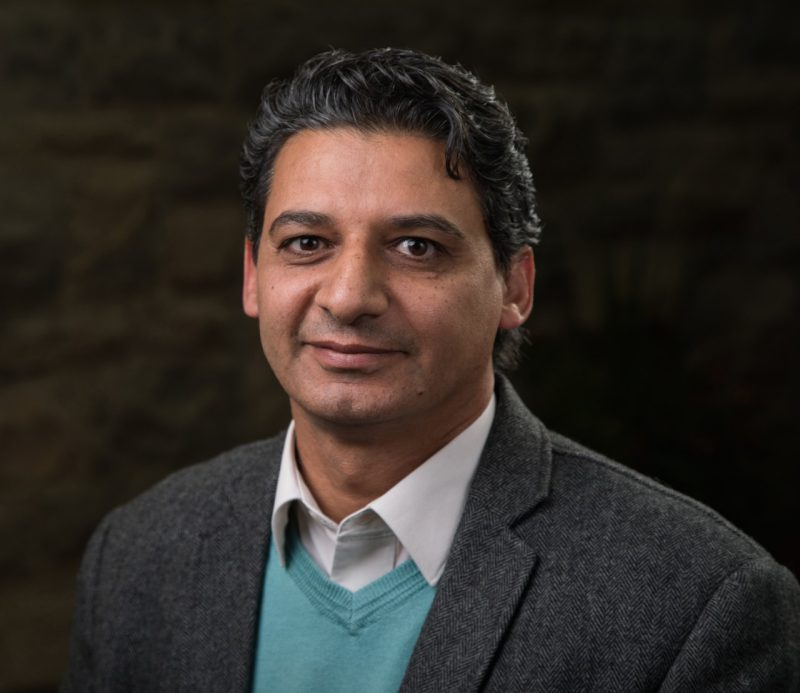
Jiawei Guo is a researcher at National Central University's Department of Electrical Engineering. His work spans multiple disciplines including machine learning, computer vision, and computational physics. Key affiliations: National Central University, Taoyuan, Taiwan Research focus: Neural network applications in energy systems, underwater depth estimation, and mobile app security His research integrates physics-informed neural networks for solving complex engineering problems and adversarial transformers for pattern detection in acoustic signals. Recent publications demonstrate expertise in 3D modeling , multimodal reasoning , and privacy-compliant software analysis . Article trends show strong emphasis on diffusion models for medical imaging, spatial-temporal analysis for Gaussian processes, and data pruning techniques for efficient computation. While no formal awards are listed, his collaborative work appears in top venues including ACL , ICML , and IEEE Access .
Amy Deng is an Assistant Professor at the Department of Mathematics and Computer Science, Eindhoven University of Technology (TU/e). Her research focuses on machine learning and data mining applications in social sciences and e-commerce, emphasizing explainable and robust AI techniques for temporal data analysis. She leads the Data Mining research group, contributing to advancements in graph neural networks, domain generalization, and societal event forecasting. Her work integrates causal reasoning, spatiotemporal modeling, and graph-based approaches to address challenges in event prediction and dynamic knowledge representation. Recent projects include developing adaptive normalization techniques for non-stationary time series and contrastive learning methods for graph homophily analysis. Research Interests: Machine Learning, Data Mining, Explainable AI, Temporal Data Analysis, Social Event Forecasting Labs/Teams: Data Mining Group at TU/e Education: Not explicitly listed in available texts, but affiliated with TU/e's academic programs in computer science and data science. Publications highlight contributions to graph neural networks (e.g., SimGCL), causal event modeling, and robust forecasting frameworks. She currently teaches courses on Generative AI Models, aligning with her research in advanced AI techniques.
Alison Ramage is a Reader in Applied and Industrial Mathematics at the University of Strathclyde's Department of Mathematics and Statistics. Her research focuses on numerical linear algebra, preconditioning techniques for partial differential equations, and applications in liquid crystal modeling, geotechnical engineering, and data assimilation. She holds prestigious fellowships from the Leverhulme Trust and EPSRC, and has led numerous grants and collaborations with industry partners like Hewlett-Packard and Oasys Ltd. Education: PhD in Preconditioned Conjugate Gradient Methods from the University of Bristol (1991), BSc from the University of St Andrews (1987). Research Interests : Numerical Linear Algebra, Scientific Computing, Preconditioning, Liquid Crystals, Data Assimilation, Computational Fluid Dynamics. Her work bridges theoretical mathematics with practical industrial applications, emphasizing efficient algorithms and iterative solvers. Grants and Awards : Multiple EPSRC grants, including a £43K Leverhulme Fellowship (2017) for data assimilation research. Active in editorial roles for SIAM journals and professional societies like SIAM and EMS. Academic Service : Long-standing roles in SIAM, including Board of Trustees and editorial boards. Organized international conferences and workshops on numerical analysis and applied mathematics. Labs/Teams : Co-developed the IFISS software package for incompressible flow simulations, collaborating with global researchers in numerical methods and data science.
Dr. Tekeda Ferguson is an Associate Professor in the Department of Epidemiology & Population Health at the Louisiana State University Health Sciences Center School of Public Health in New Orleans. She holds tenure and is a Full-Time faculty member. Her research focuses on chronic disease epidemiology, particularly the interplay between social determinants, alcohol use, and comorbidities in populations living with HIV. She leads the Comprehensive Alcohol Research Center Data Management and Analysis Unit and has active NIH funding for studies on alcohol’s role in chronic conditions. Education: PhD, Public Health (Epidemiology), University of Alabama Birmingham, 2007 MSPH, Public Health (Epidemiology), University of Alabama Birmingham, 1998 MPH, Public Health (Health Communications/Education), Tulane University, 1997 BS, Chemistry, Tulane University, 1996 NIH/NHLBI Cardiovascular Genetics and Epidemiology Fellowship, Washington University, 2016–2017 American Heart Association Tahoe Fellow in Epidemiology and Prevention, 2009 Research Interests: Multilevel analysis of social and environmental factors influencing chronic diseases, with emphasis on alcohol’s impact on cardiovascular health, diabetes, metabolic syndrome, and cancer in HIV populations. She also examines disparities in healthcare access and outcomes. Articles Trends: Her recent work highlights alcohol’s role in cardiometabolic dysfunction, neurocognitive impairment, and frailty among HIV patients. She explores geographic disparities in healthcare, such as distance to radiation therapy affecting breast cancer treatment choices. Her studies often integrate biomarkers (e.g., adipokines, microRNA) and population-level data to inform interventions. Awards/Fellowships: Cardiovascular Genetics and Epidemiology Fellow, NIH/NHLBI American Heart Association Tahoe Fellow Certified Health Education Specialist (CHES) Advising & Grants: Dr. Ferguson has secured NIH/NIAAA funding and leads studies on alcohol use interventions. She collaborates on projects like the ALIVE-Ex exercise trial and the WELL Program to reduce alcohol use among HIV patients. Her work spans academic and public health sectors, including roles with Louisiana’s Department of Health. Labs/Teams: Director of LSUHSC’s Comprehensive Alcohol Research Center Data Unit, contributing to interventional and observational studies on alcohol-related health outcomes.
Hamdy Mahmoud is a Collegiate Assistant Professor at Virginia Tech's Department of Statistics within the College of Science. He also serves as an Assistant Professor at Assiut University in Egypt. His academic journey includes a Ph.D. in Statistics from Virginia Tech (2014) under Inyoung Kim, an M.S. in Statistics from both Virginia Tech (2010) and Cairo University (2005), and a B.S. in Statistics from Cairo University (1996). His research focuses on semi/nonparametric regression models, change point detection, environmental statistics, and spatial/spatio-temporal analysis. Notable contributions include applications in environmental health and cardiovascular mortality studies. He has published extensively in journals like Computational Statistics & Data Analysis and Environmental Metrics . Teaching highlights include courses such as Applied Bayesian Statistics and Statistical Methods I/II at Virginia Tech. He has received awards including the Jesse C. Arnold Teaching Excellence Award (2012-2013) and induction into the Mu Sigma Rho Honor Society (2011). His work bridges statistical theory and practical applications in health sciences and environmental studies. Professional Memberships: American Statistical Association (ASA), International Biometric Society (ENAR) Recent Awards: Travel Fund Award (2014), Teaching Excellence nominations (2014) Dr. Mahmoud’s research trends emphasize robust statistical methods and their environmental and medical applications. His publications often address complex data structures through semi/nonparametric frameworks, with a focus on change point analysis and spatial-temporal modeling.
Prof. Marcelo Lobo Heldwein is a Professor and Director of the Chair of High-Performance Converter Systems at the Technical University of Munich (TUM), part of the TUM School of Engineering and Design. His research focuses on power electronic energy converters, addressing challenges in sustainable energy systems through topology design, modeling, and control. He holds a MSc from the Federal University of Santa Catarina (1999) and a PhD from ETH Zurich (2007). Prior to TUM, he was a professor at UFSC (2010–2022). His work emphasizes high-power converter systems, including grid integration, renewable energy, and advanced control strategies like model predictive control. Key contributions include novel topologies for DC transformers, thermal management in subsea systems, and robust control of offshore wind farms. Awards include the Petrobras Inventor Prize (2023) and best paper awards at IEEE conferences (2017, 2015, 2014). Publications span advanced converter design, fault-tolerant systems, and energy transition technologies. Research extends to practical applications like hydrogen electrolyzers and submarine cable systems. He leads a team advancing solid-state transformers and grid-forming converter technologies.
Overview Andreas Stathopoulos is a Professor in the Department of Computer Science at William & Mary. He specializes in numerical linear algebra, high-performance computing, and scientific computing. His research focuses on eigenvalue methods, iterative solvers, parallel algorithms, and applications in quantum chromodynamics (QCD) and materials science. He developed the PRIMME software package for large-scale eigenvalue problems. Education and Background While his formal education details are not explicitly listed, his academic trajectory aligns with typical roles in computational science, including advanced degrees in computer science or applied mathematics. Research Interests Numerical Linear Algebra: Eigenvalue methods, iterative solvers, preconditioning, and multigrid techniques. Scientific Computing: Applications in QCD, materials science, and kernel-based machine learning. Parallel Computing: Resource management, load balancing, and hybrid computing architectures. Teaching He teaches courses such as CSCI 243 (Discrete Structures), CSCI 653 (Analysis of Algorithms), and CS 780 (Big Data). He also contributed to interdisciplinary courses like UMSA (Undergraduate Modeling, Simulation, and Analysis). Students and Postdocs He has advised numerous PhD and MS students, including Yu Chen (2023), Lingfei Wu (2016), and Jesse Laeuchli (2016), as well as postdoctoral researchers like Konstantinos Liakos (2023–present) and Eloy Romero (2016–2020). Affiliations He collaborates with institutions such as DOE's Jefferson Lab and has contributed to software projects like PRIMME, which addresses large-scale eigenvalue problems in scientific computing.
Rui J. Lopes is an Associate Professor in the Department of Information Science and Technology at ISCTE – Instituto Universitário de Lisboa, where he has been a faculty member since 1997. He is also an Integrated Researcher and Coordinator of the Network Architecture and Protocols Group at the Institute of Telecommunications - IUL. He holds a PhD in Computer Science from Lancaster University (2005), a Master’s and Bachelor’s in Electrical and Computer Engineering from Instituto Superior Técnico, University of Lisbon. PhD in Computer Science – University of Lancaster (2005) Master’s in Electrical and Computer Engineering – Instituto Superior Técnico (1997) Bachelor’s in Electrical and Computer Engineering – Instituto Superior Técnico (1994) His research focuses on complex and dynamic systems, particularly multilayer hypernetworks, networked multimedia, and applications in sports performance analysis. He has made significant contributions to modeling team synergies in football using network science and optical tracking data. His work bridges computer science, network theory, and sports analytics, with a strong emphasis on real-world applications. His recent publications span high-impact journals in sports science, network science, and complex systems. Key themes include team coordination, temporal networks, performance modeling, and the application of information theory to sports. His research often integrates data-driven modeling with theoretical frameworks to uncover patterns in collective behavior. Guest Editorial: Advances in Tools, Techniques and Practices for Multimedia QoE (2015) Multiple publications in Sensors, Chaos, Solitons & Fractals, European Journal of Sport Science, and Sports Medicine High citation counts across Google Scholar (598), Scopus (282), and Web of Science (269) Rui J. Lopes has supervised over a dozen master’s students and five PhD candidates, three of whom completed with the highest grade. He has also contributed to academic leadership by directing the doctoral program in Complexity Sciences (2018–2020) and promoting internationalization programs such as Erasmus and IAESTE. His research is conducted primarily at the Institute of Telecommunications, where he leads a research group focused on network architectures and protocols. He is actively involved in interdisciplinary research, collaborating with experts in sports science, urban planning, and social systems. His work on syntgen, a system for generating temporal networks, and on protest modeling using agent-based simulations, highlights the breadth of his methodological expertise.
Dr. Gabrielle Samuel is a Lecturer in Environmental Justice and Health at King’s College London, affiliated with the Department of Global Health & Social Medicine and the School of Global Affairs. She co-directs the SHADE Research Hub, focusing on sustainability, health, AI, digital technologies, and the environment. Her research explores the ethical and governance challenges of digital health, genomics, and AI, emphasizing environmental sustainability and justice. She holds a PhD in Molecular Genetics and an MA in Bioethics. Research Interests: Environmental sustainability of health technologies, genomics ethics, AI ethics, research governance, and climate justice. She investigates how digital innovations impact planetary health while addressing equity concerns. Grants & Projects: Includes a Wellcome Fellowship on genomics sustainability, an EPSRC project on sustainable digital economies, and MRC grants studying neuroimaging and biobanking environmental impacts. She also contributed to the Heidelberg Agreement on Environmental Sustainability in Research Funding. Awards & Affiliations: Co-Editor of the Journal of Empirical Research on Human Research Ethics and Humanities & Social Sciences Communications. Member of Oxford’s Digital Environmental Sustainability Ethics and Clinical Ethics and Law in Society groups. Outreach: Engages in public debates on digital sustainability, including parliamentary consultations and media appearances (e.g., BBC Global News). Led exhibitions and workshops on AI ethics and environmental impacts at venues like Science Gallery London.
Andrea Ingeborg Riebler is a Professor in the Department of Mathematical Sciences at the Norwegian University of Science and Technology (NTNU). Her research focuses on Bayesian statistics, spatial modeling, disease mapping, and statistical software development. She is a leading contributor to the R-INLA framework for Bayesian hierarchical modeling and has developed packages like SUMMER and makemyprior for spatial-temporal analysis and prior elicitation. Her work bridges methodological advancements with applications in public health, demography, and epidemiology. Key research interests include spatial epidemiology, meta-analysis, and robust statistical modeling. She collaborates widely, particularly with researchers in geostatistics, computational statistics, and health sciences. Notable contributions include methods for small-area estimation in low/middle-income countries, cancer burden projections, and addressing positional uncertainty in geostatistical surveys. Her recent publications (2023–2025) emphasize scalable disease forecasting, mortality-based cancer incidence prediction, and improving DHS data analysis through positional adjustment. Teaching includes advanced computational statistics, survival analysis, and statistical modeling for biologists. Education: Doctoral dissertation work at NTNU (2021) focused on robust hierarchical models. Grants/Projects: Active in international health surveys (e.g., European Social Survey Health Inequalities Module). Labs/Teams: Collaborates with the NTNU Statistics Group and global health data initiatives.
Muhammad Akram is a Research Fellow (Biostatistician) at the Mary MacKillop Institute for Health Research (MMIHR), Australian Catholic University, Melbourne. He is affiliated with the Behaviour, Environment and Cognition Research Program, contributing to major international and national health research initiatives. His work bridges statistical methodology with public health applications, particularly in physical activity, built environment, and injury prevention. Research Interests: His expertise lies in applied statistical modelling , with a focus on time-series analysis and forecasting , predictive modelling , and multilevel modelling in health and environmental sciences. He has developed methods for short interrupted time series, cluster randomized crossover trials, and case-crossover designs, which are widely used in epidemiological and behavioral research. The recent publications reflect a strong trend in environmental and behavioral epidemiology , particularly in understanding how built environments influence physical activity across different populations and countries. His work often involves large-scale, multi-country datasets and advanced statistical techniques to model complex health behaviors and outcomes. Scientific Awards: Travel grant from the Faculty of Medicine, Nursing and Health Sciences, Monash University (ASC-2012) Advising and Grants: Muhammad Akram is provisionally accredited as an HDR Supervisor. He has contributed to several major funded projects, including the International Physical Activity and the Environment Network (IPEN) Adolescent Study (funded by NIH, US$2.8M), active travel research in Hong Kong (GRF, HK$744K), preschool physical activity (HK$118K), and the KIAMA PROJECT on underage drinking (ARC Future Fellowship, $931K). He collaborates with leading investigators such as Prof. Ester Cerin, Prof. Jim Sallis, and Prof. Sandra Jones. Labs and Teams: He is an integral member of the Behaviour, Environment and Cognition Research Program at MMIHR and maintains an ongoing adjunct affiliation with the Department of Epidemiology and Preventive Medicine at Monash University since 2015, where he previously worked from 2009 to 2014.
Prof. Dr. Martin Brunner is a full-time Professor for Quantitative Methods in Educational Sciences at the University of Potsdam (since 2017). He previously held positions as Professor for Evaluation and Quality Management in Education at Freie Universität Berlin (2012–2017) and Professor for Edumetrics/Psychometrics at the University of Luxembourg (2009–2012). His research focuses on cognitive and socio-emotional skills , large-scale assessments , and methodological advancements in meta-analysis , power analysis , and integrated data analysis . He served as Scientific Director of the Berlin-Brandenburg Institute for School Quality (2012–2017) and is affiliated with the Faculty of Human Sciences at the University of Potsdam. Education: PhD in Psychology (Humboldt University Berlin, 2006), MA in Psychology (University of Mannheim, 2002) Research Trends : His publications emphasize quantitative methodologies applied to educational data, including multilevel modeling , cluster-randomized trials , and cross-national comparisons . Recent works address nonlinear relationships between achievement and self-concept and meta-analytic techniques for complex survey data . Leadership & Collaborations : He leads a team at the University of Potsdam, including Dr. Lena Keller, Dr. Julia Kretschmann, and Dr. Sophie Stallasch. His career spans institutions like the Max Planck Institute for Human Development and the University of Luxembourg.
Dr. Arjan Markus is a tenured Assistant Professor at the Eindhoven University of Technology (TU/e) in the Department of Industrial Engineering and Innovation Sciences , specifically the Innovation, Technology Entrepreneurship & Marketing (ITEM) group. His research focuses on how collaboration networks and ecosystems influence innovation, using methods like econometrics , network analysis , and design science to examine dynamics from intraorganizational to multi-stakeholder levels. His work appears in journals such as Strategic Management Journal , Research Policy , and Social Networks . Ph.D. in Economics and Management, Copenhagen Business School Postdoctoral visitor, Wharton School, University of Pennsylvania Former Assistant Professor, Tilburg University He investigates innovation ecosystems across agrifood and R&I systems, including network symmetry in knowledge structures and patent approval dynamics . Current projects like REWIRE and COOPERATE address collaboration in circular agriculture and interregional knowledge ecosystems . Focus on Sustainable Development Goals (SDGs) related to zero emissions and smart cities Co-supervisor of seven Ph.D. candidates Scientific Awards : Best Reviewer Award, Academy of Management (2021) Code Re-farm Grant (2020) Diversity Fund TU/e (2019) ZonMW Sportinnovator Fase 1 (2020) He co-secures large-scale grants from Horizon Europe and NWO for projects like CUES and REWIRE , emphasizing collaboration improvement and ecosystem development . As an educator, he leads courses such as Strategic Management of Technology and Entrepreneurship in Action , having supervised over 40 master's theses and bachelor's projects.
Christoph Reisinger is a Full Professor of Applied Mathematics at the Mathematical Institute, University of Oxford, a position he has held since 2017 (previously Associate Professor from 2006-2017). He is a Fellow at St Catherine's College (since 2006) and an Associate Member of the Oxford-Man Institute of Quantitative Finance (since 2008). He serves as Director of Graduate Studies (Teaching) at the Mathematical Institute (2023-2026) and was Co-Director of the Centre for Doctoral Training on The Mathematics of Random Systems (2022/23). He is also a member of the Mathematical and Computational Finance Group (since 2006) and the Data Science Group (since 2018). Professor Reisinger's research lies at the intersection of stochastic modeling, computational mathematics, and machine learning. His work spans stochastic control, numerical analysis of nonlinear PDEs, mathematical foundations of reinforcement learning and deep learning, and computational finance. Current research focuses on approximation and reinforcement learning of stochastic control problems, mathematical analysis of neural networks, mean-field limits of particle systems, numerical approximation of high-dimensional SDEs and PDEs, and mathematical modeling of financial markets. His publication record shows a strong trend toward integrating machine learning with traditional computational finance methods. Recent work explores policy gradient methods for stochastic control, mean-field game theory applications to financial markets, and novel numerical schemes for McKean-Vlasov equations. His research bridges theoretical mathematics with practical applications in quantitative finance, particularly in option pricing, risk management, and market microstructure modeling. Professor Reisinger has supervised numerous doctoral students, many of whom have gone on to prestigious positions in academia and industry. His current PhD students include Boris Baros, William Gibson, Matthieu Meunier, Zihan Guo, Maria Olympia Tsianni, Filippo De Angelis, and Michael Giegrich. His past students include several who have received awards such as the Graduate Paper Competition First Prize and G-Research DPhil Prizes. He serves as Editor-in-Chief of the Journal of Computational Finance (since 2018) and holds associate editor positions at Applied Mathematics and Optimization (2022-2024), Applied Mathematical Finance (since 2018), and International Journal of Computer Mathematics (since 2012).
Professor Chris Sherlock is a Professor of Statistics at Lancaster University , affiliated with the School of Mathematical Sciences and the Department of Mathematics and Statistics . His research spans MCMC theory , methodology , and applications in epidemiology, ecology, and environmental science, with a focus on stochastic processes (SDEs, hidden Markov models) and spatial statistics . Key research areas : Non-reversible MCMC algorithms (e.g., Bouncy Particle Sampler), pseudo-marginal methods, and inference for reaction networks. Recent publications address flood risk estimation, scalable Bayesian learning, and clinical trial recruitment prediction using novel MCMC frameworks. He leads the Computational Statistics group (2019-present) and the MARS UG program (2024-present). Supervised PhD students have explored topics like extreme value theory, particle filters, and disease modeling. Collaborations include researchers such as Paul Fearnhead , Chris Nemeth , and Andrew Golightly , with EPSRC funding (EP/P033075/1) supporting non-reversible MCMC innovations.