Regine von KlitzingView profile
Professor
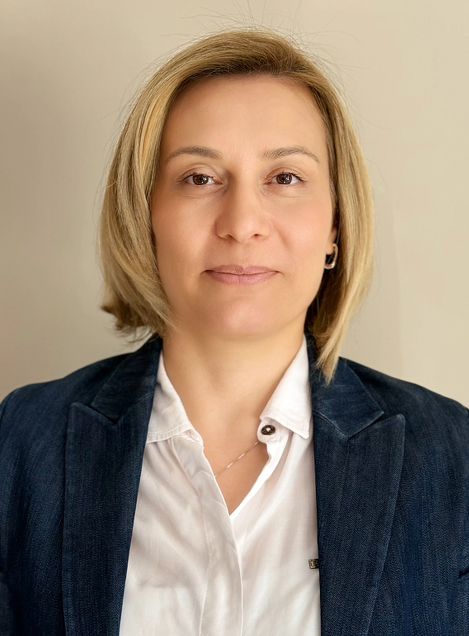
Professor Regine von Klitzing leads the Soft Matter at Interfaces research group at the Institute for Condensed Matter Physics at Technical University of Darmstadt. She serves as Vice Dean of the Department of Physics and is recognized for her pioneering contributions to the physics of complex fluids in soft confinement. Her work bridges physics, chemistry, biology, chemical engineering, and material science through interdisciplinary investigations of interfacial phenomena. Her research focuses on soft matter systems, particularly stimuli-responsive polymer coatings including polyelectrolyte multilayers, polymer brushes, and microgel layers, as well as thin liquid films, foams, and emulsions. She employs advanced characterization techniques such as AFM and scattering methods (neutrons, X-rays, light) to investigate these complex systems. Her group covers the entire research spectrum from synthesis of polymer systems to designing novel hybrid materials and developing specialized sample environments for both laboratory and large-scale facilities. Analysis of her recent publications reveals strong trends in interfacial phenomena, with particular emphasis on microgel systems, nanoparticle-polymer interactions, and advanced characterization techniques. Her work spans fundamental soft matter physics while addressing practical applications in materials science and sustainability. The research shows increasing integration of multiple characterization techniques to provide comprehensive understanding of complex systems. Gentner-Kastler Prize 2025 from the German and French Physical Societies for groundbreaking contributions to complex fluids physics, German-French cooperation, and mentoring ECIS Solvay Award 2023 for pioneering studies on foams stabilized with soft particles and polymers LEAF Bronze Certificate for sustainable laboratory practices Multiple student poster awards at prestigious conferences including DPG Spring-Meeting and Microgels2024 Professor von Klitzing actively mentors students at all levels, with several of her doctoral and master's students receiving recognition for their research. Her group maintains strong laboratory infrastructure with specialized equipment for investigating soft matter systems, including advanced microscopy and scattering capabilities. The research combines fundamental investigations with practical applications, particularly in sustainable materials development. The Soft Matter at Interfaces group operates state-of-the-art laboratories with specialized equipment for investigating interfacial phenomena. The team develops custom sample environments for in-house use and large-scale facilities, demonstrating technical innovation alongside scientific discovery. Their work on sustainable laboratory practices earned them the LEAF Bronze Certificate, reflecting commitment to environmental responsibility in research.