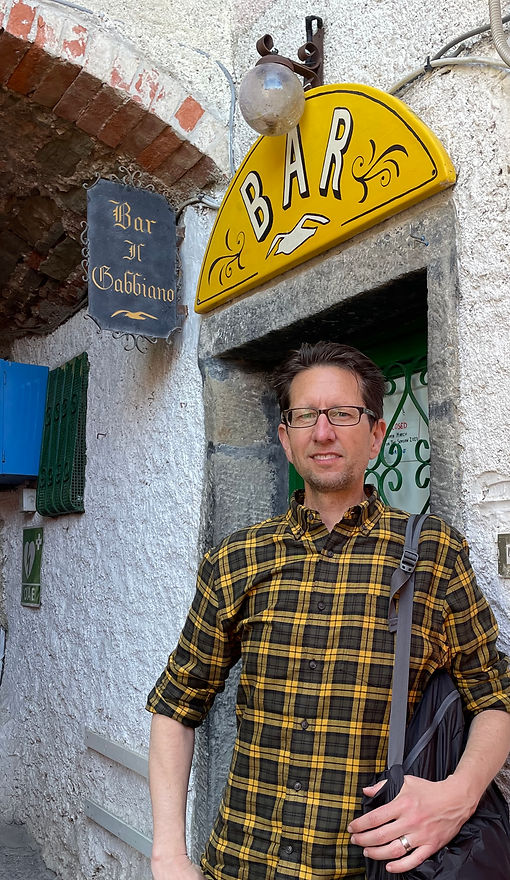
Rui J. LopesView profile
Associate Professor
Rui J. Lopes is an Associate Professor in the Department of Information Science and Technology at ISCTE – Instituto Universitário de Lisboa, where he has been a faculty member since 1997. He is also an Integrated Researcher and Coordinator of the Network Architecture and Protocols Group at the Institute of Telecommunications - IUL. He holds a PhD in Computer Science from Lancaster University (2005), a Master’s and Bachelor’s in Electrical and Computer Engineering from Instituto Superior Técnico, University of Lisbon. PhD in Computer Science – University of Lancaster (2005) Master’s in Electrical and Computer Engineering – Instituto Superior Técnico (1997) Bachelor’s in Electrical and Computer Engineering – Instituto Superior Técnico (1994) His research focuses on complex and dynamic systems, particularly multilayer hypernetworks, networked multimedia, and applications in sports performance analysis. He has made significant contributions to modeling team synergies in football using network science and optical tracking data. His work bridges computer science, network theory, and sports analytics, with a strong emphasis on real-world applications. His recent publications span high-impact journals in sports science, network science, and complex systems. Key themes include team coordination, temporal networks, performance modeling, and the application of information theory to sports. His research often integrates data-driven modeling with theoretical frameworks to uncover patterns in collective behavior. Guest Editorial: Advances in Tools, Techniques and Practices for Multimedia QoE (2015) Multiple publications in Sensors, Chaos, Solitons & Fractals, European Journal of Sport Science, and Sports Medicine High citation counts across Google Scholar (598), Scopus (282), and Web of Science (269) Rui J. Lopes has supervised over a dozen master’s students and five PhD candidates, three of whom completed with the highest grade. He has also contributed to academic leadership by directing the doctoral program in Complexity Sciences (2018–2020) and promoting internationalization programs such as Erasmus and IAESTE. His research is conducted primarily at the Institute of Telecommunications, where he leads a research group focused on network architectures and protocols. He is actively involved in interdisciplinary research, collaborating with experts in sports science, urban planning, and social systems. His work on syntgen, a system for generating temporal networks, and on protest modeling using agent-based simulations, highlights the breadth of his methodological expertise.