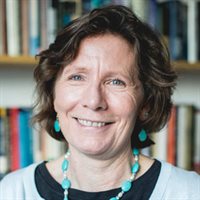
Karen E. Smith is Professor of International Relations at the London School of Economics and Political Science (LSE), specializing in EU foreign policy, genocide prevention, and UN multilateralism. She currently leads the Women in Diplomacy project at LSE IDEAS and served as Head of the IR Department (2019-2022). Recent research examines feminist foreign policy analysis, emotional dimensions of EU decision-making, and group politics in UN diplomacy. Her award-winning book Group Politics in UN Multilateralism (2020) won the ACUNS best book prize. She has supervised 21 PhD students to completion, with alumni in academia, international organizations, and government. Current teaching includes the graduate course 'The EU in the World'. Education: PhD (LSE), MA (Johns Hopkins SAIS). Key Awards: ACUNS Book Award (2020), Anna Lindh Award (2007), Royal Society of Arts Fellowship (2016) Grants: EU-funded network on EU-UN relations (2016-2019)
Professor Karen E. Smith is a leading scholar in European Union foreign policy studies at the London School of Economics and Political Science (LSE). She serves as a Professor in the Department of International Relations and directs the European Foreign Policy Unit. Her research focuses on EU foreign policy formulation, ethical foreign policy goals (human rights advocacy), genocide policy-making, and EU-UN relations. Notable contributions include work on feminist foreign policy frameworks, emotions in EU diplomacy, and mass atrocity prevention. She has held leadership roles including Head of the International Relations Department (2019–2022). Awards include the 2020 ACUNS Award for best UN-related book and Royal Society of Arts Fellowship (2016). Education: PhD in International Relations (LSE, 1996), MA from Johns Hopkins SAIS (1998), BA from Wellesley College (1987). Academic leadership includes co-editing the Palgrave Macmillan Global Foreign Policy Studies series and directing the LSE IDEAS Women in Diplomacy project. Recent projects analyze gender representation in diplomacy and EU responses to humanitarian crises. Teaching includes courses on EU global engagement and supervision of doctoral students in EU foreign policy areas. Key publications address EU-UN coalition politics, feminist policy impacts, and genocide designation strategies. Grants include EU-funded research networks on EU-UN relations (2012–2019) and contributions to the UN Prevention of Mass Atrocities Task Force (2012–2013). Her work bridges theoretical insights with policy-relevant analysis for global governance challenges.
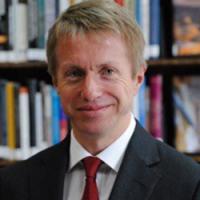
Professor John Nilsson-Wright is the Fuji Bank University Professor of Modern Japanese Politics and the International Relations of East Asia at the University of Cambridge, and a Fellow of Darwin College. He oversees the Japan and Koreas Programme at Cambridge’s Centre for Geopolitics and holds affiliations with institutions including Chatham House, the Sejong Institute, and the Korea Centre at the National University of Singapore. Read Politics, Philosophy, and Economics (PPE) at Christ Church, Oxford (1984–1987) Obtained an M.A. in International Relations at SAIS, Johns Hopkins University (U.S.) Completed D.Phil. in International Relations at St. Antony’s College, Oxford (1997) His research spans Cold War history, focusing on U.S.-Japan-Korea relations (1945–1960), and contemporary issues like regional security, alliance dynamics, and populism’s impact on East Asian and European politics. Recent publications address South Korean foreign policy innovation , UK Indo-Pacific strategy , and creative minilateralism in Asia . He also directs a monograph project on populism and identity politics across historical and modern contexts. Scientific recognition includes the Nakasone Yasuhiro Prize (2014) and the BIHG annual dissertation prize (1997) . He supervises graduate research on topics including regional diplomacy , multiculturalism in Japan and Korea , and China-North Korea relations . Key affiliations include leadership roles at Chatham House (2014–2016) and non-resident fellowships at the Sejong Institute, Vienna University’s Centre for North Korean Studies, and the Korea Centre at NUS.
Dr. Fabian Eichberger serves as a Charles & Katharine Darwin Research Fellow at Darwin College, University of Cambridge, and holds a fellowship at the Lauterpacht Centre for International Law. With a Dipl. Jur. from Bucerius Law School, MJur from Oxford, and PhD from Cambridge, he specializes in the intersection of state sovereignty and judicialization within international legal frameworks. His educational foundation includes: Dipl. Jur. (Bucerius Law School, Hamburg) MJur (University of Oxford, with exchange at Waseda University Tokyo) PhD (University of Cambridge, funded by W.M. Tapp Studentship and German Academic Scholarship Foundation) Eichberger's research centers on general international law with particular emphasis on dispute settlement mechanisms and state responsibility, while actively exploring international investment law, environmental law, and German public law dimensions. Current investigations examine how national security imperatives interact with climate change obligations through the lens of international courts' evolving authority. His scholarship consistently addresses the delicate balance between legal institutionalization and state-driven pushback against judicial encroachment. Analysis of his publication trajectory reveals increasing focus on jurisdictional boundaries of international courts, particularly regarding the ICJ's handling of non-appearance cases and incidental issues. His work demonstrates sophisticated engagement with investment arbitration reforms and the implications of 'nationality planning' in treaty claims, reflecting broader scholarly trends toward examining systemic tensions within international legal architecture. His scholarly recognition includes: Rosalyn Higgins Prize (2022) Prize for Best Article in International Dispute Resolution (2025) Eichberger maintains significant editorial influence as Associate Editor for International Law in Domestic Courts (OUP), building on prior leadership as General Editor of the Cambridge International Law Journal and Editor of Voelkerrechtsblog. His doctoral research received dual funding through Cambridge's W.M. Tapp Studentship and the German Academic Scholarship Foundation, establishing his early research trajectory. He actively contributes to the Lauterpacht Centre for International Law's research ecosystem, participating in initiatives examining the functional roles of international courts within contemporary global governance structures, with current work focusing on the forthcoming Edward Elgar Research Handbook on State Responsibility (2026).
Graham T. Allison, Jr. is the Douglas Dillon Professor of Government at Harvard Kennedy School, where he has taught for five decades. He previously served as the Founding Dean of Harvard's John F. Kennedy School of Government and as Director of the Belfer Center for Science and International Affairs until 2017. His career spans academia, government service, and international policy analysis, with significant contributions to national security studies and international relations. Dr. Allison's educational background includes: Davidson College Harvard College (B.A., magna cum laude, in History) Oxford University (B.A. and M.A., First Class Honors in Philosophy, Politics, and Economics) Harvard University (Ph.D. in Political Science) As a leading analyst of national security, Dr. Allison specializes in nuclear weapons policy, US-Russia relations, US-China relations, and decision-making processes in international crises. His research has profoundly influenced how scholars and policymakers understand great power competition and conflict prevention. He is particularly renowned for developing the concept of the "Thucydides Trap" to analyze the historical patterns when a rising power threatens to displace an established power. Dr. Allison's recent scholarly output demonstrates consistent focus on contemporary geopolitical challenges, particularly US-China strategic competition, nuclear weapons policy, and conflicts in the Middle East and Eastern Europe. His publications bridge academic rigor with policy relevance, often providing historical context to current crises while offering concrete recommendations for policymakers. The breadth of his work spans traditional academic journal articles, policy briefs, and commentary in major media outlets, demonstrating his commitment to engaging both scholarly and public audiences. Dr. Allison has received numerous prestigious awards for his contributions to national security: Defense Department's highest civilian award, the Defense Medal for Distinguished Public Service Distinguished Public Service Medal (awarded twice - first by Secretary Cap Weinberger and second by Secretary Bill Perry) Throughout his career, Dr. Allison has advised multiple presidential administrations, serving as Assistant Secretary of Defense in the Clinton Administration and Special Advisor to the Secretary of Defense under President Reagan. He has been a member of the Secretary of Defense's Advisory Board for every Secretary from Weinberger to Mattis. His work has been supported by significant sponsored projects including the "Russia Matters Web Portal" funded by the Carnegie Corporation of New York and programs to help students train for Russia-related jobs funded by the U.S. Russia Foundation. Dr. Allison has maintained strong connections with the Belfer Center for Science and International Affairs, which he directed until 2017 and which remains ranked as the "#1 University Affiliated Think Tank" in the world. Through the Belfer Center, he has fostered relationships with international security experts from around the world, particularly with Israeli security officials and analysts with whom he has collaborated extensively.
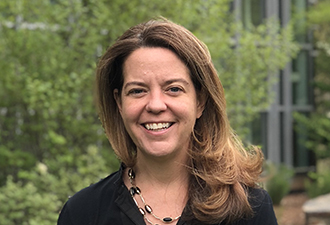
Rachel Brewster is the Jeffrey and Bettysue Hughes Distinguished Professor of Law at Duke Law School, specializing in international economic law, dispute settlement, and anti-corruption frameworks. She co-directs Duke's Center for International and Comparative Law and co-chairs the JD-LLM in International and Comparative Law Program. Her prior roles include Harvard Law School assistant professor, legal counsel at the U.S. Trade Representative, and affiliations at the University of Chicago, University of Hamburg, and University of St. Gallen. Education: BA and JD from the University of Virginia PhD in Political Science from the University of North Carolina - Chapel Hill Brewster’s research spans WTO law, the Foreign Corrupt Practices Act, ESG accountability, and international relations theory. She explores institutional design in trade and anti-corruption regimes, reputational dynamics in state compliance, and regulatory synergies between legal domains. Recent publications analyze corruption arbitration, transnational asset recovery, and ESG frameworks. Her work highlights the interplay between formal legal remedies and reputational incentives, as well as institutional reforms for global governance. Scientific Awards: John Patrick Hagan Award for Excellence in Undergraduate Teaching Brewster’s career bridges academia and policy, with contributions to the WTO’s Appellate Body debates, U.S. trade strategy, and multilateral coalition-building. She teaches courses in International Trade Law, Foreign Anti-Bribery Law, and Corporate-International Law intersections.
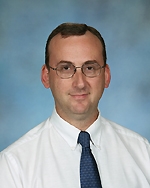
Brian Frederking is a Professor of Political Science at McKendree University, where he has held positions since 1990. He earned his Ph.D. from Syracuse University (1997), with earlier degrees from the same institution (M.A., 1993) and McKendree College (B.A., 1990). His research focuses on international organizations, collective security, conflict resolution, and foreign policy, with a particular emphasis on the United Nations Security Council and post-Cold War dynamics. Frederking has authored or co-authored multiple books, including Renegotiating the Liberal Order: Evidence from the UN Security Council (2023) and The United States and the Security Council: Collective Security since the Cold War (2007). His scholarly work bridges constructivist theory with empirical analysis of diplomatic discourse, security dilemmas, and international norms. He frequently collaborates with undergraduate students in research, including co-authored articles on nuclear proliferation and conflict resolution. His recent academic contributions include analyses of the Israel-Hamas conflict, transitional justice mechanisms, and the legitimacy of UN Security Council actions. Frederking has also engaged in public commentary through radio appearances on topics like the Iraq War and Middle East conflicts. He serves as editor of the Illinois Political Science Review and reviewer for numerous journals, reflecting his leadership in the field. Frederking advises McKendree's Model United Nations and Scholars journal, emphasizing experiential learning. His research datasets, such as the Collective Security Dataset, offer empirical tools for studying global governance. Despite no explicit mention of grants or labs, his work demonstrates sustained engagement with international political challenges.
Pedro Schilling De Carvalho is a Lecturer in Law at University College London's Faculty of Laws, specializing in Financial and Environmental Law. He holds a PhD in Law and Finance from the University of Cambridge, where he received a Cambridge International Scholarship, as well as an LLM in Commercial Law from Cambridge (supported by a Chevening Scholarship) and a LLB from the University of São Paulo, Brazil. His academic journey includes positions at: University of Cambridge (Research Affiliate, Judge Business School and Lauterpacht Centre for International Law) London School of Economics (Guest Lecturer) University of Edinburgh (Early Career Fellow in Financial Law and Regulation) Max Planck Institute for Comparative and International Private Law (Visiting Fellow) Harvard Law School (Visiting Fellow) Pedro's research focuses on financial regulation, corporate finance, environmental law, international economic law, and sustainable finance. His work explores regulatory diffusion in sustainable finance, international financial governance in multipolar contexts, and the intersection of corporate governance with environmental and social concerns. He has published in peer-reviewed journals such as the Journal of Financial Regulation and has been cited by institutions including the International Monetary Fund. His recent publications demonstrate a strong focus on sustainable finance frameworks, regulatory coordination across jurisdictions, and the evolving landscape of financial technology regulation globally. His work spans theoretical analysis of corporate governance models alongside practical regulatory frameworks for emerging financial technologies and sustainable investment. Pedro has received several prestigious awards and recognitions: Cambridge International Scholarship Chevening Scholarship Max Planck Institute & Cambridge Scholarship Certified peer-reviewer by the Equitable Growth, Finance and Institutions Global Practice He has actively contributed to policy development through written evidence to the UK Parliament Committee on the Future Relationship with the European Union, consultancy work for the World Bank Group's Legal Vice Presidency, the Green Climate Fund, and the Bill & Melinda Gates Foundation. His professional activities include being Co-Director of the UCL Centre of Law and the Environment, academic member of the European Corporate Governance Network, and member of the Leadership of the Commission on Arbitration and ADR at the International Chamber of Commerce. Pedro has extensive experience as both a transactional and dispute resolution lawyer, having worked with prominent law firms and served as Chief of Staff at the Commercial Law Chamber of the São Paulo Supreme Court.
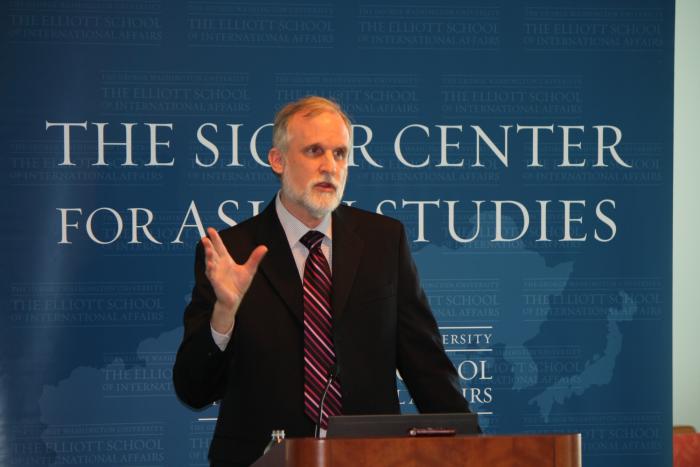
Bruce J. Dickson is a Professor of Political Science and International Affairs at The George Washington University's Elliott School of International Affairs, specializing in Chinese domestic politics, authoritarian regimes, and U.S.-China relations. He has been a full-time faculty member since 1993. Education: Ph.D. in Political Science from the University of Michigan His research examines the Chinese Communist Party's adaptability, economic reforms, state-society relations, and regime support mechanisms. He has authored influential books including The Dictator's Dilemma (2016) and The Party and the People (2021), analyzing authoritarian survival strategies in China. His recent publications focus on topics like tax consciousness in urban China, anti-corruption dynamics, and the CCP's institutional evolution. Articles appear in journals such as Asian Survey , China Quarterly , and Comparative Political Studies . Professor Dickson has received research grants from prestigious organizations including the National Science Foundation, Smith Richardson Foundation, U.S. Institute of Peace, and Woodrow Wilson International Center for Scholars. He serves as a frequent commentator on Chinese and Taiwanese politics for media outlets like CNN, NPR, BBC, and VOA.
Sophia Besch serves as a Senior Fellow in the Europe Program at the Carnegie Endowment for International Peace and teaches as an adjunct lecturer at Johns Hopkins School of Advanced International Studies (SAIS). Her expertise centers on European defense policy, with particular focus on transatlantic relations, German defense policy, and the EU's role in European security architecture. She frequently contributes to major policy discussions on European strategic autonomy and defense integration. Dr. Besch holds a doctorate in European Studies from King's College London, and additional degrees from Sciences Po Paris and the London School of Economics. Her academic background provides a strong foundation for her work analyzing European security challenges and transatlantic relations. Her research interests span European defense policy, international security, transatlantic relations, German foreign policy, and subsea infrastructure security. She has published extensively on European defense integration, the geopolitical implications of subsea cable infrastructure, and the evolving transatlantic security relationship. Her work often examines how European nations can enhance their defense capabilities while navigating complex relationships with the United States. Dr. Besch's recent publications reveal a strong focus on European strategic autonomy, particularly in the context of changing US commitments under potential Trump administration policies. She has produced significant work on subsea cable security, European conscription models, and German defense policy shifts following Russia's invasion of Ukraine. Her research consistently addresses how European nations can strengthen their defense capabilities while maintaining transatlantic cooperation. As a regular commentator in major media outlets including Foreign Affairs, Foreign Policy, and Politico, Dr. Besch has established herself as a leading voice on European security issues. She has served as an expert witness for the UK House of Commons Defence Select Committee, the German Bundestag EU Committee, and the European Parliament Subcommittee for Security and Defence. Dr. Besch has been affiliated with several prominent research institutions, including the Centre for European Reform (CER) in London and Berlin, the American Institute for Contemporary German Studies, and the Atlantic Council's Europe Centre. She is also a member of the Atlantik Brücke Young Leaders program, which fosters transatlantic dialogue and cooperation.
Sandra Lavenex is a Full Professor in the Department of Political Science and International Relations at the University of Geneva and Director of the Master in European Studies. She previously held positions at the University of Lucerne, University of Bern, and the College of Europe. University of Geneva: Faculty of Social Sciences Research Focus: International Governance, European Integration, Migration Policies, Democracy Beyond States Her research explores how EU policies on migration and asylum interact with global governance frameworks, with a particular emphasis on trade agreements, third-country participation, and crisis-driven policy changes. She leads major projects funded by the Swiss National Science Foundation and the European Commission, including Horizon Europe initiatives on migration governance and skills development. Recent publications highlight her work on preferential trade agreements as tools for migration control, business migration in Switzerland, and legitimacy challenges during the pandemic. She has supervised numerous doctoral students and contributed to edited volumes on regulatory states and regional migration governance. Scientific Awards : Elected member of Sachverständigenrat Migration und Integration (2024), an advisory body to the German federal government. Lavenex collaborates with postdoctoral researchers like Mariana Alvarado and Elisa Fornalé on projects such as Gs4s and FAiR. Her work bridges academic research with policy-making, particularly in EU-Switzerland relations and global migration regimes.
Simon J. A. Mason is a Senior Researcher and Head of the Mediation Support Team at the Center for Security Studies (CSS) at ETH Zurich. He has been working with the Mediation Support Project (MSP), a joint initiative between CSS and swisspeace supported by the Swiss Federal Department of Foreign Affairs (FDFA), since 2005. Additionally, he has been involved in the Culture and Religion in Mediation project (CARIM), also supported by the Swiss FDFA, since 2011. Mason is a member of the UN and OSCE mediation rosters and serves as a senior advisor in the Master of Advanced Studies ETH Mediation in Peace Processes program. Mason holds a doctorate in environmental science from ETH Zurich and is a trained mediator accredited by the Swiss Mediation Association SDM. His educational background combines scientific training with practical mediation expertise, allowing him to bridge technical and diplomatic aspects of conflict resolution. Mason's research focuses on the application of mediation in complex peace processes, with particular attention to contexts where religious and cultural factors significantly influence conflicts. His work explores how mediation can effectively address security arrangements and navigate the complex relationship between environmental factors, natural resources, and conflict dynamics. Through extensive field experience in regions including Afghanistan, Egypt, Ethiopia, Indonesia, Israel, Kenya, Libya, North Korea, Palestine, Sudan, and Zimbabwe, Mason has developed practical insights that inform his academic contributions to the field of peace mediation. Mason has been actively involved in designing and delivering specialized training programs, including co-organizing the Peace Mediation Course for the FDFA and serving as a trainer in the annual UN Ceasefire Mediation Course and the Religion and Mediation Course. His practical experience spans conflict contexts worldwide, where he has facilitated workshops on conflict analysis, dialogue, negotiation, and mediation for diverse stakeholders including UN, OSCE, IGAD, and EU institutions. As head of the Mediation Support Team at CSS, Mason leads a group dedicated to advancing the theory and practice of peace mediation. The team produces research, develops practical tools for mediators, and provides direct support to mediation processes worldwide. Under Mason's leadership, the team has established itself as a leading center for mediation expertise, particularly in the areas of ceasefire negotiation, religious dimensions of conflict, and the intersection of environmental factors with peace processes.
Dr. Ken Conca is a Professor of International Relations at American University’s School of International Service , specializing in global environmental governance , environmental peacebuilding , and water policy . His work bridges climate change adaptation , transboundary water management , and post-conflict recovery . Education : PhD (University of California, Berkeley), MS (University of Wisconsin-Madison), ScB (Brown University) Key Research Areas : Global environmental governance frameworks Water politics and conflict-cooperation dynamics Environmental peacebuilding in war-torn societies UN system’s role in climate and environmental security Scientific Recognition : Grawemeyer Prize, Sprout Award, Chadwick Alger Prize, Al-Moumin Environmental Peacebuilding Award Recent Publications : Focus on climate-water-conflict linkages , flexible governance models , and geoengineering ethics Teaching : Courses on global environmental politics, water governance, and doctoral dissertation advising
Prof. Noam Noked is an Associate Professor at the Faculty of Law, The Chinese University of Hong Kong, specializing in tax law and policy. He serves as Director of the Faculty’s Ph.D. and M.Phil. programs and is an Honorary Secretary of Hong Kong’s Joint Liaison Committee on Taxation. Education: Doctor of Juridical Science (S.J.D.), Harvard Law School LL.M. (requirements fulfilled, degree waived), Harvard Law School LL.B., Tel Aviv University Faculty of Law B.A., Accounting Department, Tel Aviv University Research Interests: Tax policy and international taxation Tax administration and compliance Law and economics intersections His work focuses on combating offshore tax evasion, mandatory disclosure rules, and aligning domestic tax frameworks with global minimum standards. Scientific Awards: Research Excellence Award (2023-24) Young Researcher Award, CUHK (2020) John M. Olin Prize for Best Paper in Law & Economics (2010) Research Grants: HK$481,000 General Research Fund (2023-2025): "New Ways to Compete: How Hong Kong Can Adapt to the New International Tax Order" HK$475,000 General Research Fund (2021-2023): "Mandatory Disclosure Rules: Development, Policy Analysis, and Implications for Financial Centers" HK$470,000 Early Career Scheme (2019-2021): "Regularization of Tax Noncompliance: Comparative Legal Analysis and Proposal for China"
Chiara Ruffa is a University Professor at the Centre for International Studies (CERI) , Sciences Po, Paris. Previously, she served as a Senior Lecturer at the Swedish Defence University and an Academy Fellow at Uppsala University's Department of Peace and Conflict Research. Her research focuses on multilateralism, peacekeeping operations, military cultures, and civil-military relations, with a micro-level analysis of field dynamics in conflict zones like Lebanon, Mali, and Afghanistan. Current affiliation: CERI, Sciences Po Prior roles: Swedish Defence University, Uppsala University Research themes: Peacekeeping, Multilateralism, Social Science Methodologies Her methodological expertise spans comparative qualitative methods, ethnography, and reflexivity in fieldwork. She has published extensively in journals such as European Journal of International Relations , Security Studies , and International Peacekeeping , co-authoring a critically acclaimed book shortlisted for the Conflict Research Society Best Book Award (2020). Scientific Awards & Grants: Fulbright Commission funding European Commission grants Swedish Research Council support Royal Swedish Academy funding 3rd ERGOMAS Prize (2018) Chiara Ruffa's work bridges empirical field studies with theoretical analyses of international security norms and their implementation in multilateral contexts.