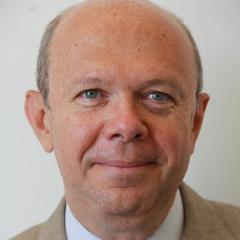
Ciprian Nicolae Radavoi is an Adjunct Associate Professor in the Department of Law at the Faculty of Arts and Society. His research focuses on Social Justice, Human Rights, Law & Society, Corporate Social Responsibility, and International Law. He contributes to UN Sustainable Development Goals through his interdisciplinary work. Education: PhD in Home Country Regulation on Overseas Investors’ Environmental Behavior (2014), Shanghai University of International Business and Economics Master's in A Paradoxically Successful Case of Chinese Migration (2008), Lund University Bachelor's in Law (1997), University of Bucharest Research Interests: Radavoi’s work bridges legal frameworks with societal challenges, particularly in rural communities’ rights, multilateral policy-making, and decolonizing legal education. His recent projects include Sustainable Transport Technology Stakeholder Consultations (2025–2026) as Principal Investigator. Advising & Grants: He leads a 2025–2026 project on transport technology stakeholder engagement, funded by a Research Software Company and Technology Company collaboration. His grants focus on safety improvement and driving behavior analysis.
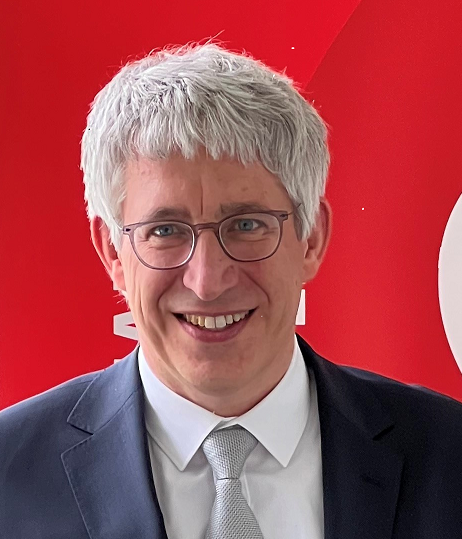
Ulrich Derpa serves as Professor of Public Law at the University of Public Administration and Finance Ludwigsburg since 2022, specializing in social law within the Advanced Administrative Service - Public Management program. His career spans judicial, administrative, and academic roles including service at the Würzburg Administrative Court (2019-2022), leadership positions at Main-Tauber-Kreis District Office (2008-2019), and European policy work at Baden-Württemberg's State Ministry (2004-2008). His academic foundation includes: Doctorate in Law (University of Mannheim, 2003) Second State Examination (Stuttgart, 2000) First State Examination (Mannheim, 1998) Legal studies across Mannheim, Tours, and Passau (1992-1998) Derpa's research critically examines intersections between public administration and legal frameworks, with particular expertise in social law applications. His work bridges theoretical EU law concepts with practical regulatory challenges in energy, healthcare, and regional governance, emphasizing implementation mechanisms for complex legal systems. This dual focus on doctrinal analysis and administrative pragmatism defines his scholarly contributions. Publication trends reveal an evolution from foundational EU law scholarship (2002-2009) toward applied policy guidance (2019), demonstrating consistent engagement with contemporary regulatory dilemmas. His output spans constitutional health law, renewable energy governance, and EU integration theory, consistently targeting practical administrative solutions while maintaining rigorous legal scholarship. No scientific awards are documented in available sources. Professional activities indicate extensive public sector mentorship through judicial and administrative leadership roles, though formal student advising details remain unspecified. Research appears intrinsically linked to governmental practice rather than externally funded academic grants. Current work centers on public management education within Germany's advanced administrative training system, focusing on social law applications for senior civil servants.
Kevin Pina is a Lecturer in the Department of Communication at California State University East Bay (CSUEB) in Hayward, CA. He is also a filmmaker, journalist, media consultant, and producer/director at Long Memory Productions. Pina serves as Senior Producer for the program Flashpoints on Pacifica Radio and frequently guest hosts programs on KPFA 94.1 FM in Berkeley, CA. His work focuses on socio-political issues in Haiti, including international interventions, economic challenges, and media representation. He founded the Haiti Information Project (HIP), an independent news source, and acts as a Country Expert for the Varieties of Democracy (V-Dem) project, a collaboration between the University of Notre Dame and the University of Gothenburg in Sweden.
David Skidmore is a Professor of Political Science at Drake University's College of Arts & Sciences. He has served as Director of the Principal Financial Group Center for Global Citizenship and the Nelson Institute for Diplomacy and International Affairs (2002-2017 and 2012-2017 respectively). Skidmore holds a Ph.D. from Stanford University and has taught at Hamilton College, the University of Notre Dame, and the Johns Hopkins-Nanjing University Center in China. He was a Fulbright Scholar at the University of Hong Kong (2010-2011). His research focuses on international political economy, American foreign policy, and international relations theory, particularly examining China's role in global development finance and the Belt and Road Initiative. He is completing two books on China's competitive convergence in global development finance and a research handbook on American foreign and security policy. Skidmore has authored/co-authored six books, including The Unilateralist Temptation in American Foreign Policy and a textbook on international political economy. His work appears in journals like Political Science Quarterly and Foreign Policy Analysis , and he co-hosted the podcast 'US-China: Searching for Common Ground.' He has also contributed to media outlets such as Fortune and The Des Moines Register . His academic leadership includes directing Drake's Curriculum and First Year Seminar programs. Awards: Fulbright Scholar (2010-2011) Skidmore's current projects include analyzing China's global development strategies and U.S. foreign policy dynamics, reflecting his long-standing engagement with international relations and policy analysis.
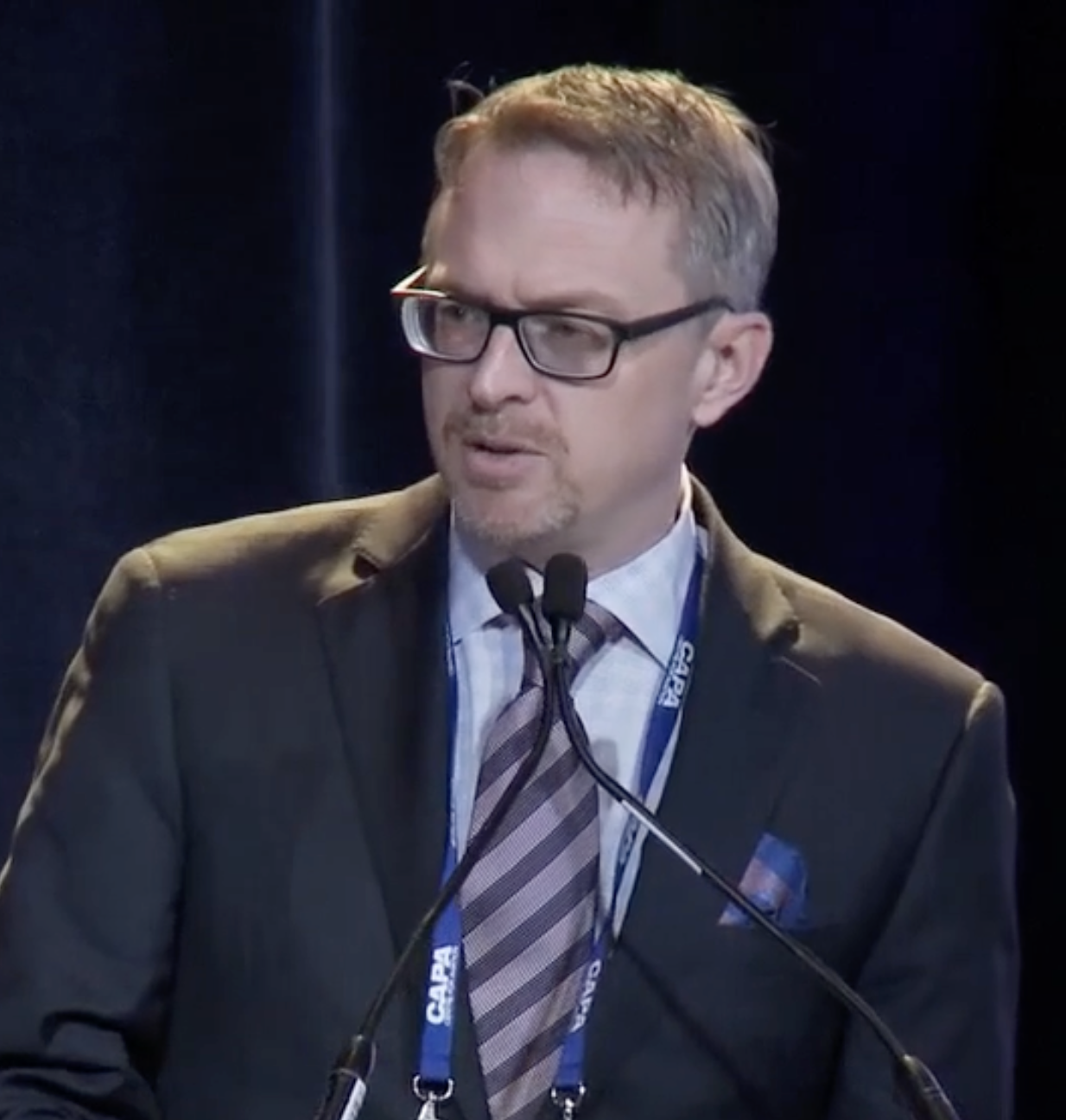
David Timothy Duval is a Professor in the Faculty of Business and Economics at the University of Winnipeg. He previously served as an Associate Professor at the Otago Business School in New Zealand. His expertise lies in the economic and legal regulation of commercial air transport. He currently serves as a Member of the Board of Directors at the Winnipeg Airports Authority, chairing the Governance Committee. Before academia, he worked as an analyst at Longwoods International. Education Background: Ph.D./Advanced Qualifications (Not explicitly stated in text) Previous academic roles at Otago Business School (New Zealand) Research Interests: His work examines the intersection of air transport policy, legal frameworks, and tourism economics. Key themes include aviation governance post-COVID-19, air service liberalization in Asia-Pacific, and post-disciplinary approaches to tourism studies. He integrates economic analysis with geopolitical perspectives to address challenges in global aviation networks. Recent Trends in Publications: His articles explore topics such as post-pandemic aeropolitics, tourism-transport interdependencies, and the role of digital innovation in e-tourism. He emphasizes global governance structures and sustainable practices in aviation and tourism sectors. Awards & Grants: No specific awards or grants are mentioned in the provided text. Advising & Collaboration: No formal advisees listed, but his research collaborations include co-authors like J. Macilree and A. Schiff. His work often addresses policy-oriented research for government agencies. Labs/Teams: Affiliated with the University of Winnipeg’s Business and Administration programs but no specific lab/team names are mentioned.
Teemu Häkkinen is an Adjunct Professor (part-time) at the Department of History and Ethnology , Faculty of Information Technology , University of Jyväskylä. His research focuses on parliamentary history, conceptual history, defense-related attitudes, and the role of the United Nations in transnational crises. He examines foreign and defense policy decision-making in British, Finnish, and Swedish contexts, emphasizing democratic deliberation and historical memory's impact on contemporary security frameworks. Key research projects include the Comprehensive and Cognitive Security and Strategic Intelligence (CCSSI) group, which explores digital-age security challenges, and the KILPI project developing educational programs on cognitive and information psychological security. His work bridges historical analysis with modern security issues, particularly Finland's NATO membership process and cognitive resilience against information warfare. Publications (2020–2024) analyze NATO doctrines, citizen perceptions during Finland's NATO accession, wargaming in defense training, and UN legitimacy in post-Ukraine invasion contexts. His articles frequently appear in journals like Kosmopolis , European Conference on Cyber Warfare and Security proceedings, and Keskisuomalainen . He collaborates with researchers in strategic intelligence, cybersecurity, and political psychology. Grants and lab affiliations include the Cognitive Security Research Group (CSRG), which investigates information warfare and societal resilience. His work highlights the interplay between historical narratives and contemporary security policies, advocating for democratic transparency in defense decision-making.
Denita Cepiku is a Professor at the Department of Business Administration and Management, Sapienza University of Rome, specializing in Public Administration and Governance. She holds academic roles in both Bachelor's and Master's programs, teaching courses like Public Management and Strategic Policy Analysis. Her research focuses on governance frameworks, public sector reforms, austerity management, and co-production in public services, with a particular emphasis on network governance, strategic foresight, and policy implementation challenges in transitional economies. Her work bridges theoretical governance concepts with practical applications, analyzing case studies across diverse regions including Italy, Pakistan, Canada, and Albania. Key themes include the evolution of public involvement in infrastructure projects, leadership dynamics in collaborative networks, and the design of effective performance information systems. She has contributed to global debates on achieving UN health-related Millennium Development Goals through co-production mechanisms and exploring healthcare management reforms in transitional contexts. Dr. Cepiku's studies also address financial sustainability strategies for public organizations during austerity periods, leadership challenges in networked governance systems, and the interplay between bureaucratic traditions and modern public management approaches. Her interdisciplinary approach integrates comparative analyses of public administration reforms, emphasizing the gap between academic research and practical policy implementation.
Ana Lara Gómez is a Lecturer at the University of Cantabria and a postdoctoral researcher in the 'ECONPOINT' research group, led by Professors Judith Clifton and Daniel Díaz Fuentes. Her academic career is deeply rooted in the study of European integration and International Financial Institutions, with a focus on evaluating these institutions and analyzing the economic policy implications of various funding alternatives. Dr. Gómez holds a degree in Economics with a specialization in International Economics, a Master's in Economics of International Trade and European Integration, a second Master's in Economics, and a PhD with international mention in Economics. Her academic excellence has been recognized with several prestigious awards including the Enrique Fuentes Quintana Award (FUNCAS) for the best doctoral thesis in social sciences (2018/2019), the Outstanding Doctorate Award from the University of Cantabria (2020), and the Social Council of the University of Cantabria Award for the best doctoral thesis in economic and social sciences (2019). Dr. Gómez's research expertise extends to international trade, cohesion policy, and the impact of international financing. Her work bridges theoretical economic frameworks with practical policy applications, particularly in the European context. She has demonstrated a strong commitment to understanding how financial institutions shape economic development and integration processes across Europe, with particular attention to the role of multilateral development banks and their impact on regional economic disparities. Her methodology combines quantitative analysis with institutional and policy evaluation, providing nuanced assessments of complex economic phenomena. Her publication record reveals a clear evolution from traditional European integration studies toward contemporary sustainability challenges. Early work focused on European financial architecture and the role of institutions like the European Investment Bank, while her most recent publications address green transition pathways and the social impacts of environmental policies at the municipal level. This progression demonstrates her ability to connect foundational economic analysis with emerging policy priorities while maintaining methodological rigor across diverse research domains. Dr. Gómez's scientific achievements have been recognized through multiple prestigious awards: Enrique Fuentes Quintana Award (FUNCAS) for the best doctoral thesis in social sciences (2018/2019) Outstanding Doctorate Award from the University of Cantabria (2020) Social Council of the University of Cantabria Award for the best doctoral thesis in economic and social sciences (2019) Competitive postdoctoral scholarship from the Cantabria Parliament and the University of Cantabria (2019) Dr. Gómez has secured substantial research funding through numerous competitive projects including 'Greenpaths' (Horizon Europe), 'EIBURS' (funded by the European Investment Bank), 'CITADEL' (H2020 project), and a Santander Financial Institute project on global banking history. She has been deeply involved in Jean Monnet educational initiatives at the University of Cantabria since 2015, contributing to European Economic Policy curriculum development across multiple modules. Her international research experience includes a visiting researcher position at the University of Costa Rica in 2018, where she collaborated with experts in international financial institutions. As a key contributor to the 'ECONPOINT' research group at the University of Cantabria, Dr. Gómez works within a multidisciplinary environment focused on economic policy analysis and European integration studies. Her research intersects with teams working on European financial architecture, green transition policies, and regional development strategies, enabling cross-pollination of ideas between traditional economic analysis and contemporary sustainability challenges. This collaborative framework supports her ongoing investigation into the intersection of financial institutions, regional development, and environmental policy implementation.
Tina Ambos is a Full Professor of International Management and Director of the Institute of Management at the University of Geneva, a role she has held since 2015. Previously, she served as a professor at the University of Sussex (Director of Research & Knowledge Exchange) and held the chair of International Management at Johannes Kepler University Linz (Austria). She earned her Ph.D. and Venia Docendi (Habilitation) in Business Administration from WU Vienna, alongside a Magister degree in Philosophy from the University of Vienna. Her research focuses on global strategy, innovation, and multinational corporations, with an emphasis on subsidiary initiatives, knowledge management, and strategic decision-making. She has collaborated with multinational firms and startups, publishing in top journals like Organization Science and Journal of International Business Studies . Ambos is also the Academic Director of the International Organizations MBA (IO-MBA) program. Her editorial roles include Associate Editor for Long Range Planning (2015–present) and membership on editorial boards of Journal of International Business Studies , Management International Review , and others. Recent research explores innovation in international organizations, agile scaling, and addressing global challenges like sustainability. Key contributions include studies on subsidiary autonomy, headquarters-subsidiary dynamics, and the role of attention in multinational management. Her work bridges academic rigor with practical insights for executives navigating complex global environments.
Karlīs Bukovskis serves as Director of the Latvian Institute of International Affairs (LIIA) and holds an Associate Professor position at Riga Stradins University. His career spans academic research, policy advisory roles with Latvian ministries, and prominent media commentary on geopolitical affairs. He previously held positions as a visiting Fulbright Scholar at Johns Hopkins University SAIS (2021) and Associate Researcher at the European Council on Foreign Relations (2017-2021). His academic credentials include: Doctoral degree (Dr. sc. pol.) in International Politics from Riga Stradins University Master's degrees from the University of Latvia and University of Helsinki Studies at the University of Trier Bukovskis' research centers on European Union integration dynamics, international political economy, and geopolitical security challenges. His work examines EU institutional evolution, monetary policy frameworks, and the interplay between domestic politics and international relations in Eastern Europe. He frequently analyzes how global power shifts impact small states like Latvia within multilateral frameworks. Analysis of his 2023-2025 publications reveals consistent focus on Russia-Ukraine war implications, transatlantic security realignments, and maritime law governance. His commentary spans from Middle Eastern diplomacy to Baltic security, demonstrating interdisciplinary expertise connecting economic policy with military strategy. The recurring theme is sovereignty preservation in contested geopolitical spaces. Scientific recognition: Fulbright Scholar award enabling research at Johns Hopkins University SAIS Beyond academia, Bukovskis developed Latvia's work program during its 2015 Council of the EU Presidency and co-hosts a political economy program on Latvian Radio 1. His policy contributions bridge scholarly analysis with practical governance, particularly in EU integration and security policy formulation for small states.
Dr Jae Sundaram is a Reader in Trade & Maritime Law at the University of Buckingham’s School of Law (Faculty of Computing, Law and Psychology). He holds an LLB from India, an LLM in Maritime Law from Southampton, and is a dual-qualified solicitor (England & Wales) and advocate (India). His academic roles include course coordinator for LLM programs like International Trade and Maritime Law, and module leader for Commercial Law in LLB programs. He has visiting positions in Cyprus (CIIM) and France (University of Rennes as Erasmus Professor). Research focuses on Maritime Law, International Trade Law, Conflict of Laws, TRIPS Agreement’s impact on access to medicines, and international law on weaponry use. His 2018 monograph Pharmaceutical Patent Protection and World Trade Law addresses global healthcare challenges. He co-authored the 2022 Model Commonwealth Free Trade Agreement and published WTO Law and Policy: A Political Economy Approach in 2022. Teaching spans undergraduate and postgraduate levels, with expertise in Financial Crime, Anti-Money Laundering Laws, and World Trade Law. Current projects include a private international law textbook (due 2024). His work bridges legal theory with policy, emphasizing global governance challenges.
Dana Zartner is a Professor in Global Studies and Adjunct Professor at the School of Law at the University of San Francisco (on leave until Spring 2025). Her scholarship examines environmental justice, rights of nature, and international legal frameworks, with emphasis on indigenous land protection and corporate accountability. Awards include the Provost’s Award for Collaborative Leadership (2023) and College of Arts and Sciences Collective Achievement Award (2022). Research Impact: Integrates comparative legal analysis with activism, supporting indigenous communities like the Amah Mutsun Tribal Band and contributing to UN forums on indigenous rights. Publications analyze legal strategies for ecosystem protection and environmental advocacy.
Gian Luca Burci is a Senior Visiting Professor of International Law at the Graduate Institute of International and Development Studies in Geneva, Switzerland. He concurrently serves as Director of the joint LLM in Global Health Law and Governance program with Georgetown University Law School and Academic Adviser to the Global Health Centre at the Graduate Institute. Additionally, he holds a Visiting Professor and Senior Scholar role at Georgetown University's O’Neill Institute for National and Global Health Law. His professional background includes 18 years (1998–2016) at the World Health Organization (WHO), where he served as Legal Counsel and contributed to landmark initiatives such as the Framework Convention on Tobacco Control and revisions to the International Health Regulations. Earlier roles included work at the UN Legal Office (1989–1998) and the International Atomic Energy Agency (1998–1999). Prof. Burci’s expertise spans public international law, international organizational law, and global health governance. His courses focus on international legal frameworks, advocacy strategies, and global health law. He has authored/co-authored seminal works including The World Health Organization (2004) and edited major collections on global health law. He sits on the editorial board of the International Organization Law Review and co-founded the Interest Group on International Health Law within the European Society of International Law. His academic contributions emphasize legal dimensions of global health crises, WHO institutional reform, and multilateral health governance. His research highlights intersections between international law, health emergencies, and human rights, particularly in contexts like pandemic responses (e.g., Ebola, H1N1) and public health partnerships. Prof. Burci has advised on WHO’s pandemic preparedness, legal aspects of health emergencies, and WHO reform initiatives. His interdisciplinary work bridges legal scholarship with practical policy-making in global health, reflecting over three decades of engagement in international organizations and academic research.
Dawid BASTIAT-JAROSZ is a Research Fellow at the Geneva Graduate Institute and Co-Director of its Master of Advanced Studies (MAS) in Sustainable Finance and Development. He serves on the European Commission's Platform on Sustainable Finance and has extensive experience in development finance and regional development for public and non-governmental organizations. Education: Ph.D. in International Relations and Political Science, Geneva Graduate Institute of International and Development Studies Research Interests intersect sustainable finance, political economy, and geopolitical strategy. His work examines the alignment of financial systems with sustainability goals, the role of political narratives in financial markets, and the economic implications of international sanctions. The European Platform on Sustainable Finance underscores his influence in shaping EU-wide sustainable finance policies. Key Article Trends include analyses of sustainable investing efficacy, political narrative impacts on markets, and economic sanctions frameworks targeting Russia and Iran. These works bridge finance, development, and geopolitical dynamics. Professional Engagement spans roles at the Centre for Finance and Development , where he contributes to research on financial systems and development, and his ongoing advisory role to energy companies on sustainable transition strategies.
Associate Professor Emma Aisbett is an academic at the Australian National University (ANU), holding dual roles as Associate Professor in the ANU College of Law's School of Law and Associate Director (Research) for the ANU Grand Challenge: Zero-Carbon Energy for the Asia-Pacific. Her work bridges international economic law, political economy, and climate policy. She specializes in trade-related climate policy, international investment agreements, and green industrial strategies, contributing to policy frameworks for renewable energy exports and zero-carbon transitions. Her research focuses on embedded emissions accounting, green hydrogen trade, and regulatory frameworks for renewables-based trade. She advises governments and international bodies like the OECD and UNCTAD, and collaborates on projects such as the Renewable Energy Policy and Governance in Asia-Pacific program. Emma leads the Climate Economics and Policy group and contributes to initiatives like the Hydrogen Fuels and Renewable Metal Refining programs. Her recent articles address certification systems for embedded emissions, market failures in green hydrogen, and policy designs for trade liberalization aligned with climate goals. She advocates for interdisciplinary research to tackle complex energy and climate challenges, emphasizing Australia’s role in exporting zero-carbon technologies and policies to the Asia-Pacific region. Emma’s work integrates legal, economic, and technical perspectives, aiming to create equitable and sustainable energy systems. She actively engages in policy consultations, such as submissions on Australia’s bilateral investment treaties and the Future Made in Australia Bill, ensuring research informs real-world decision-making.