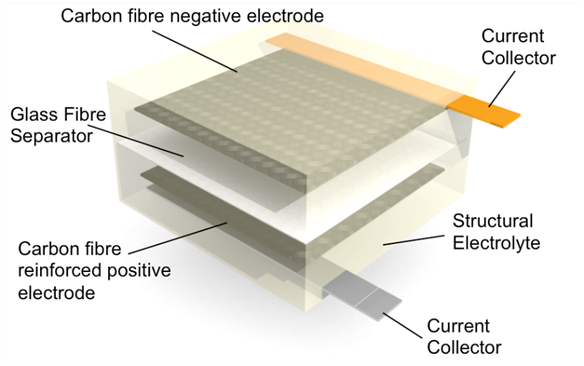
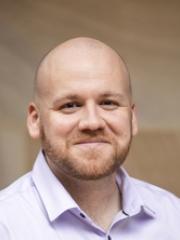
Professor Dan Zenkert is a faculty member at Kungliga Tekniska Högskolan (KTH) in the Department of MATERIAL AND STRUCTURAL MECHANICS. He earned his M.Sc. (Aeronautics) and Ph.D. (Lightweight Structures) from KTH, becoming a docent (D.Sc.) in 1996, associate professor in 1998, and full professor in 2001. His research focuses on multifunctional composite materials, particularly carbon fiber-based systems for energy storage (structural batteries), shape-morphing composites, integrated sensing, and energy harvesting. Collaborations with Electrochemistry and Polymer Chemistry groups drive innovations in structural batteries, where materials simultaneously bear mechanical loads and store energy. He teaches courses on lightweight structures and composite mechanics. Research highlights include structural battery design using laminated carbon fiber electrodes, piezo-electrochemical sensing via Li-ion intercalation, and shape-morphing composites through electrochemical actuation. Recent work explores electrolyte optimization, LiFePO₄-coated electrodes, and long-term performance of multifunctional systems. Publications span over 30 years, with contributions to journals like Composites Science and Technology and Advanced Energy & Sustainability Research . His teaching includes roles as examiner and course responsible for programs like Fibre Composites and Future Sustainable Aviation. Personal interests include fly-fishing, motorcycle riding, and basketball coaching. Scholarly contributions include over 130 peer-reviewed articles and book chapters, with active involvement in conferences like ICCM and ECCM.
Xin Ning is an Assistant Professor in the Department of Aerospace Engineering at the University of Illinois at Urbana-Champaign (UIUC), where he also holds appointments in the Materials Research Laboratory. Previously, he served as an Assistant Professor at Pennsylvania State University from 2018 to 2023. His academic journey includes postdoctoral research at UIUC and California Institute of Technology (Caltech). Educated at Caltech, he earned a Ph.D. in Aeronautics in 2015 and an M.S. in Aeronautics in 2010. His research focuses on soft electronics for aerospace engineering , bio-inspired aerospace structures , in-space manufacturing and assembly , and multifunctional space structures . These interests drive innovations in lightweight, adaptive, and multifunctional materials and systems for aerospace applications. For instance, his work explores bio-inspired cellular materials for aircraft wings and bistable composite booms for deployable structures. He has been recognized with several honors, including the 2022 Young Investigator Award from the Office of Naval Research, 2019 Haythornthwaite Foundation Research Initiation Award, 2015 William F. Ballhaus Prize from Caltech, and the 2012 Dow-Resnick Fellowship. In addition to research, Professor Ning teaches courses such as AE 323: Applied Aerospace Structures and AE 498: Space Structures . While specific grants are not detailed here, his work has been supported through awards like the ONR Young Investigator grant. He collaborates with the Materials Research Laboratory at UIUC and engages in interdisciplinary projects involving soft electronics and bio-inspired engineering.
Dr. Xiong Yi is an Assistant Professor at the School of System Design and Intelligent Manufacturing (SDIM) at Southern University of Science and Technology (SUSTech) in Shenzhen, China. He leads the Computational Design and Fabrication (CoDeFab) research group, focusing on the integration of computational design methods with advanced manufacturing technologies, particularly in the field of additive manufacturing. Dr. Xiong has established himself as a leading researcher in computational design for additive manufacturing, with a strong international research background spanning Europe and Asia. Dr. Xiong's educational journey includes: Doctor of Science (DSc) in Engineering Design and Production from Aalto University, Finland (2012-2016) Master of Science (MSc) in Machine Automation from Tampere University of Technology, Finland (2010-2012) Bachelor of Engineering (BEng) in Mechanical Engineering from Hubei University of Technology, China (2006-2010) Dr. Xiong's research primarily focuses on computational design and fabrication methodologies, with particular emphasis on design for additive manufacturing (DfAM), intelligent manufacturing systems, and smart materials. His work bridges the gap between theoretical design principles and practical manufacturing constraints, developing novel approaches for the production of complex engineered products. He has pioneered research in continuous fiber-reinforced composite additive manufacturing, developing innovative process planning and optimization techniques that enable the production of high-performance structural components. His research in electrothermally controlled origami and 4D printing of smart materials represents cutting-edge work at the intersection of materials science, mechanical engineering, and computational design. Dr. Xiong's recent publications reveal a strong focus on continuous fiber-reinforced composites, with significant contributions to 4D printing, metamaterials, and intelligent process planning. His work integrates computational design with manufacturing constraints, creating novel approaches for topology optimization, toolpath planning, and structural design that consider both performance requirements and manufacturability limitations. The research demonstrates increasing sophistication in materials science applications, particularly in programmable materials and multi-functional structures. Dr. Xiong has received multiple prestigious awards for his research contributions, including: Best Presentation Award at the 24th Chinese Conference on Mechanisms and Machine Science (IFToMM CCMMS2024) Best Presentation Award at the International Conference on Frontiers of Additive Manufacturing Research (RAAM 2024) Best Paper Award at the International Conference on Design for 3D Printing (ICD3DP 2023) PhD Scholarship from Aalto University (2016) Research Travel Grant from the International Association for Vehicle System Dynamics (IAVSD) (2013) National Scholarship from the Ministry of Education (2008) As a dedicated educator and mentor, Dr. Xiong serves as a PhD supervisor at SUSTech and has successfully guided students who have gone on to pursue advanced studies and careers at prestigious institutions including Hong Kong Polytechnic University, Beihang University, DJI Innovations, and Singapore's A*STAR research institute. His research is supported by multiple competitive grants, including key projects from the National Key R&D Program of China, the National Natural Science Foundation of China, and provincial and municipal funding agencies. Dr. Xiong also serves on the editorial board of the Journal of Engineering Design and as a guest editor for Composites Communications, contributing to the advancement of his field through scholarly service. Dr. Xiong leads the CoDeFab research group, which maintains a strong collaborative culture focused on 'design leading manufacturing, manufacturing driving design, and digital-intelligent integration.' The group has developed several advanced manufacturing platforms, including multi-axis continuous fiber-reinforced composite additive manufacturing systems, smart composite additive manufacturing platforms, and multifunctional soft matter open manufacturing platforms. With a focus on practical applications and innovation, the CoDeFab group actively collaborates with industry partners and has established a joint laboratory to bridge academic research with industrial implementation.
Devid Maniglio is an Associate Professor at the Department of Industrial Engineering, University of Trento. His research focuses on bioengineering, biomaterials, and tissue engineering, with a particular emphasis on bioprinting, surface modification, and functional materials. He has contributed to advancements in silk fibroin and hydrogel-based systems for medical applications. Research Interests Bioengineering for personalized medicine Biomaterials and surface engineering 3D bioprinting and tissue regeneration Molecular imprinting and biosensors Drug delivery and cell encapsulation Teaching Diagnostic and therapeutic technologies for personalized medicine Engineered materials for precision medicine Fundamentals of biomedical technologies Functional surfaces laboratory Labs & Collaborations Devid Maniglio is affiliated with the Functional Surfaces Laboratory at the University of Trento, collaborating with researchers such as Stefano Rossi and Flavio Deflorian. His work integrates interdisciplinary approaches in biomedical engineering and sustainable medical technologies.
Mitch Dunn serves as an Advance Queensland Industry Research Fellow within the School of Mechanical and Mining Engineering at The University of Queensland, affiliated with the Centre for Advanced Materials Processing and Manufacturing (AMPAM). His research integrates materials science with electromagnetic applications, focusing on functional composites for aerospace and defence systems. Educational background: PhD in Mechanical Engineering (2018), The University of Queensland Bachelor of Engineering (Honours) (2011), The University of Queensland Research interests center on three interconnected domains. First, functional composite antenna structures for aerospace applications including load-bearing antennas and hypersonic vehicle systems. Second, nondestructive testing methodologies using nonlinear ultrasonics for damage detection in composites. Third, hybrid composite material development with emphasis on thermoset-thermoplastic systems and cost-effective manufacturing. His work bridges theoretical modeling with industry-driven applications, particularly in defence technology. Publication trends reveal consistent focus on composite material characterization (85% of works), with growing emphasis on RF-composite integration (40% of recent works). Key methodological approaches include nonlinear ultrasonics (65% of publications), finite element analysis (50%), and experimental validation of multifunctional structures. Key recognition: Advance Queensland Industry Research Fellowship Dunn actively supervises research projects including functional composite antennas for UAVs and hypersonic vehicle antenna systems. Current funding includes National Intelligence Discovery Grants for compact multi-mode antennas (2025-2027) and Advance Queensland grants for hypersonic vehicle antennas (2025-2028). Past projects include Defence Materials Technology Centre initiatives on functional antenna structures and high-temperature sub-assemblies. As part of the UQ Composites group within AMPAM, Dunn collaborates on industry technology development projects focused on functional composite materials and conformal antenna structures, with strong links to defence and aerospace sectors.
Dr. Xiangyang Dong is an Associate Professor at Arizona State University's School of Manufacturing Systems and Networks. He serves as a member of the graduate faculty in Manufacturing Engineering, Materials Science and Engineering, Mechanical and Aerospace Engineering, and Systems Engineering. His research focuses on multifunctional composites and ceramics, particularly structural power composites that combine mechanical load-bearing and energy storage capabilities. His work is supported by NSF, AFOSR, DOE, and industry partners. He holds prestigious awards including the NSF CAREER Award and the Ralph E. Powe Junior Faculty Enhancement Award. Education: PhD in Mechanical Engineering from Purdue University. Research Interests: Multifunctional composites, additive manufacturing, structural batteries, ceramics, and machine learning modeling. His group develops advanced materials and processes for applications in robotics, energy storage, and aerospace. Recent innovations include UV-assisted coextrusion deposition for structural batteries and laser-based additive manufacturing of transparent ceramics. Scientific Awards: NSF CAREER Award (202?), Ralph E. Powe Award (202?). Advising & Grants: Active Ph.D. and PostDoc openings in materials science, mechanics, and manufacturing. His projects address energy-efficient manufacturing and multifunctional material design. Courses taught include Materials and Manufacturing Processes and graduate research supervision. Labs/Teams: Directs the Dong Research Group, advancing additive manufacturing and materials modeling through interdisciplinary approaches.
Jonathan Acheson is a Senior Lecturer in Mechanical Engineering at Ulster University's School of Engineering, where he also serves as the Placement & Employability Coordinator. His academic journey includes a 1st class honours degree in Biomedical Engineering from Ulster University (2014) followed by a PhD from Queen's University Belfast (2018) focusing on polymer-clay nanocomposite thin films for bone tissue scaffold applications. Position: Senior Lecturer in Mechanical Engineering Institution: Ulster University, School of Engineering Location: Belfast campus, BT15 1AP Research focus: Bioactive and multifunctional coatings for biomaterial applications External role: UKRI Early Career Forum Member (since February 2022) Dr. Acheson's research expertise centers on the development of organic/inorganic coatings and novel biomaterials for biomedical devices, primarily focusing on bone-related applications. His work spans bioactive inorganic coatings for magnesium alloys, development of inorganic nano-composite coatings for tissue scaffolds, optimization of mechanical properties of porous structures, and cell co-culture studies on interconnected structures. His research directly contributes to UN Sustainable Development Goals in health and wellbeing. Analysis of his recent publications reveals a strong focus on magnesium alloy-based implant technologies, with particular emphasis on corrosion control through calcium phosphate coatings. His work bridges materials science, biomedical engineering, and clinical applications, with increasing emphasis on 3D printing technologies for customized medical devices. The progression of his research shows an evolution from fundamental coating characterization to increasingly complex multi-functional biomaterial systems. Outstanding Teaching Visit Award (2022) - Recognizing educational management and teaching program excellence in China Distinguished Education Excellence - Early Career Educator Award (2021) Dr. Acheson has successfully supervised over 20 undergraduate final year projects and 3 MSc projects. His current research is supported by significant funding including an EPSRC grant as Principal Investigator for 'Multi-doped Calcium-Phosphate coatings for resorbable magnesium alloy implant applications' (2023-2026) and a Royal Society grant for 'Ion release profiles from Calcium Phosphate coated resorbable Magnesium implants' (2023-2025). He also contributes as a Co-Investigator on the EPSRC-funded 'Multi-User Vector Network Analysis (VNA) Facility Core Equipment' project.
Francesca Stazi is a Full Professor at the Department of Materials, Environmental and Urban Science and Engineering, College of Engineering, Marche Polytechnic University. Her research focuses on sustainable building technologies, thermal performance optimization, indoor air quality, and occupant behavior in educational and heritage buildings. Research Areas: Sustainable Building Design, Energy Efficiency, Thermal Comfort, Building Envelope Systems, Occupant Behavior Modeling Contact: f.stazi@univpm.it | Via Brecce Bianche 60131 Ancona Recent Publications (2024-2025) Indoor Air Quality improvement using multifunctional finishes Sustainable façade design with self-shading modules Mechanical ventilation impact in heritage school buildings Data-driven HVAC automation in university spaces Thermal performance of ventilated walls with novel materials Her work bridges experimental testing with numerical modeling for energy-efficient solutions in Mediterranean climates.
Ahmad Amiri serves as an Assistant Professor in both the Chemical Engineering and Mechanical Engineering departments within the College of Engineering & Natural Sciences at The University of Tulsa. His academic career is dedicated to pioneering research in advanced energy storage systems and multifunctional materials, with a strong emphasis on practical applications in sustainable energy and corrosion resistance. Dr. Amiri's educational journey includes dual Ph.D. degrees in Mechanical Engineering: one from Texas A&M University (2022) and another from the University of Malaya (2017), along with foundational studies culminating in a Master of Science in Chemical Engineering from Ferdowsi University of Mashhad (2011). Ph.D., Mechanical Engineering, Texas A&M University, College Station, 2022 Ph.D., Mechanical Engineering, Faculty of Engineering, University of Malaya, 2017 M.Sc., Chemical Engineering, Ferdowsi University of Mashhad, 2011 His research spans advanced energy storage technologies including lithium-ion, lithium-metal, sodium-ion, and zinc-ion batteries, alongside supercapacitors and hybrid systems. He leads innovations in structural batteries that integrate energy storage with load-bearing capabilities, stretchable energy storage for flexible electronics, and corrosion-resistant materials. His work encompasses the full innovation pipeline from material synthesis to integrated mechano-electrochemical characterization, with additional focus on water treatment technologies, multifunctional composites, and vitrimer-based self-healing systems. Analysis of Dr. Amiri's 15 most recent publications (2024-2025) reveals concentrated efforts on overcoming critical energy storage challenges. Key trends include ultra-low-temperature electrolytes for lithium-ion batteries, structural zinc-ion supercapacitors, and self-healing vitrimer coatings for corrosion protection. His work increasingly integrates nanomaterials like MXenes and graphene derivatives across diverse applications from agricultural biomaterials to advanced tribological coatings, demonstrating a highly interdisciplinary approach bridging battery chemistry, materials science, and environmental engineering. Dr. Amiri's scientific contributions have been recognized with numerous prestigious awards: Top 2% scientists (Most-Cited Scientists) by Stanford University & Elsevier (2020-2024) Faculty Development Summer Fellowship, The University of Tulsa (2024) Top Cited Article Award – Wiley (Carbon Energy), Wiley Publishing (2024) Interdisciplinary Energy Research Award, The University of Tulsa (2024) Outstanding Charles Crawford Award, Texas A&M University (2021) Graduate Summer Research Grant Award, Texas A&M University (2020) Bright Spark Award (full scholarship for Ph.D. studies in Malaysia, 2014-2017) Top MSc Thesis National Award, Sharif University of Technology (2012) Top University-Researcher Award, Ferdowsi University of Mashhad (2011) As principal investigator of the Multifunctional Energy Storage Lab, Dr. Amiri mentors graduate students in cutting-edge research while securing competitive funding for projects spanning battery innovation, corrosion science, and sustainable materials. His lab's collaborative framework integrates expertise from chemical engineering, mechanical engineering, and materials science to address real-world energy challenges through industry and national laboratory partnerships. The Multifunctional Energy Storage Lab operates as a dynamic research hub focused on rapid synthesis and manufacturing of advanced energy storage devices. Current initiatives include structural batteries serving dual purposes as load-bearing components and power sources, stretchable hybrid supercapacitors for wearable electronics, and vitrimer-based self-healing coatings. The lab maintains state-of-the-art facilities for material characterization, electrochemical testing, and 3D printing of advanced polymers, driving innovation in sustainable energy solutions.
Xin Ning is an Assistant Professor of Aerospace Engineering at The Pennsylvania State University. His research focuses on lightweight structural design, biomimetic engineering, and multifunctional materials for aerospace applications. He holds a Ph.D. in Aeronautics from Caltech, where he developed shape-adaptive solar concentrators under Prof. Sergio Pellegrino. Prior to Penn State, he held postdoctoral positions at the University of Illinois (advisor: Prof. John A. Rogers) and Caltech. Education: B.Eng., Aircraft Design & Engineering, Beihang University (2009) M.S., Aeronautics, Caltech (2010) Ph.D., Aeronautics, Caltech (2015) Research Interests: Xin's work integrates origami-inspired mechanics, metamaterials, and smart composites to create ultra-lightweight structures. Key areas include: Bistable composite booms for space deployment Origami electromagnetic systems Self-deployable electronic skins Bio-inspired wing structures Articles Trends: Recent work emphasizes multifunctional materials and adaptive systems, with 2023-2025 papers focusing on space-qualified structures, origami-based sensors, and biomimetic designs. Over 70% of his 2020+ publications address structural optimization under extreme conditions. Awards: ONR Young Investigator Award (2022) Haythornthwaite Award (2019) William F. Ballhaus Prize (2015) Multiple Caltech teaching/research awards Advising & Labs: Current students include Yao Yao (materials/aero) and Mitansh Doshi (aero). Former advisees include Samuel Schulman (M.S. 2021). His lab develops deployable space structures and smart composite systems through collaborations with NASA and the Air Force.
Andreas Schueler is an Adjunct Professor at École Polytechnique Fédérale de Lausanne (EPFL) in the School of Architecture, Civil and Environmental Engineering (ENAC). His research focuses on nanostructured materials for solar energy conversion, thin film technologies, and optical/electronic properties of thin films, with applications in optical selective absorber coatings, antireflection coatings, colored solar collectors, and solar glass facades. Education: Physics studies at University of Freiburg (Germany), MSc in Physics from University of Michigan (USA), PhD from University of Basel (Switzerland). Teaching: Courses include Physique du Bâtiment II, Building Technology III/IV, and urban sustainability topics. His research spans computational biology methods (e.g., Rosetta software), particle physics (B meson decays, CP violation, lepton universality), and materials science for multifunctional structures. Publications from 2018-2023 cover topics in high-energy physics experiments and solar material applications. Advising: Mentored PhD students Federico Turci, André Kostro, and others. Affiliated with EPFL ENAC groups SAR-GE and SCI-ENAC-AS, focusing on solar technology integration in architecture.
Professor Damiano Pasini is affiliated with the Department of Mechanical Engineering at McGill University, with associate memberships in the Department of Bioengineering and Department of Biomedical Engineering. His research focuses on solid mechanics, structural optimization, and fabrication of architected materials (mechanical metamaterials) with extreme properties for aerospace and medical applications. Expertise in mechanical metamaterials and 3D printing Research on plant tissue mechanics (Selaginella lepidophylla) Applications in bone replacement implants and soft robotics Key methodologies: experiments, theory, simulations Research areas include topology optimization and defect tolerance in additive manufacturing
Peter Göransson is a Professor at the Royal Institute of Technology (KTH) in Stockholm, Sweden, affiliated with the School of Engineering Sciences, Department of Aeronautical and Vehicle Engineering. His research focuses on numerical modeling of coupled acoustic and vibration phenomena, with a particular emphasis on finite element modeling of dissipative mechanisms and efficient computational methods for highly damped, layered structures. He serves as an examiner for the Degree project in technical acoustics (SD211X) and as course coordinator and teacher for Numerical Methods for Acoustics and Vibrations (SD2175). Dr. Göransson's research spans over three decades, beginning with groundbreaking work in the early 90s on the Noise Attenuation for Launchers project (funded by ESA estec), which resulted in 3D large-scale models for ARIANE 4 and 5 with satellites' dynamic properties included. He has participated in more than 10 EU research projects, including the ASANCA projects which developed a full-scale 3D model of a Saab 340 aircraft cabin, and the BRAIN project which advanced elastoacoustic modeling of fibrous porous materials. In 2006, he expanded his research to sustainable design through the Center for ECO2 Vehicle Design, focusing on multifunctional structural components optimized for contradictory requirements like structural load-bearing capacity combined with acoustic performance at minimal weight, complexity, cost, and environmental impact. His most recent research directions include inverse methods for characterizing anisotropic solid materials, micro-to-macro-based modeling of poroelastic cellular materials, acoustic metamaterials based on modified cell geometries, topology optimization of structures under multifunctional constraints, and life cycle-based energy optimization methods. His publication record shows a clear progression from fundamental computational methods to applied research with increasing emphasis on sustainability and multifunctional design. The articles demonstrate expertise spanning computational acoustics, structural dynamics, metamaterials, and sustainable vehicle design, with particular strength in wave propagation analysis, parameter identification techniques, and optimization of complex multilayer structures. ESA-funded Noise Attenuation for Launchers project (early 90s) EU-funded ASANCA projects (full-scale aircraft cabin modeling) EU-funded BRAIN project (elastoacoustic modeling) Center for ECO2 Vehicle Design (established 2006) COST Action DENORMS participation Dr. Göransson has established himself as a leading researcher in computational vibroacoustics, with significant contributions to both theoretical developments and practical applications in aerospace, automotive, and sustainable design. His work bridges fundamental computational methods with real-world engineering challenges, particularly in noise and vibration control for complex systems. He continues to push the boundaries of computational methods for acoustics and vibrations while increasingly focusing on sustainable design methodologies and novel metamaterials for vibration and noise control applications.
Yunzhi Peter Yang is a Professor of Orthopaedic Surgery at Stanford University, with courtesy appointments in Materials Science and Engineering and Bioengineering. His research focuses on biomaterials, tissue engineering, and regenerative medicine, particularly in bone repair and implant design. He leads the Peter Yang Lab, advancing innovations in bioactive implants, 3D bioprinting, and vascularized tissue constructs. Education: Postdoctoral Fellowships in Biomaterials (University of Texas Health Science Center, 2003; West China University of Medical Sciences, 1999), Ph.D. in Biomedical Engineering (Sichuan University, 1997), M.E. and B.S. in Inorganic Materials (Sichuan University, 1995/1992). Research emphasizes functional biomaterials for orthopaedic applications, including collagen composites, injectable hydrogels, and functionally graded implants. His work integrates 3D bioprinting and vascularization strategies to enhance bone regeneration and implant performance. Key contributions include bioactive implants for osteonecrosis treatment, hybrid tissue engineering constructs, and methodologies for additive manufacturing. His articles span biomaterial design, surface engineering, and clinical applications in orthopaedics and dentistry. Contact: yppang@stanford.edu | Shriram Center, Stanford, CA.
Professor Guglielmo Aglietti is a leading academic at the University of Surrey , holding the position of Professor and Royal Academy of Engineering / SSTL Research Chair in Space Engineering . He serves as the Director of the Surrey Space Centre and Programme Leader for the MSc in Space Engineering . His affiliations include the Spacecraft Structures and Mechanisms Group within the Surrey Space Centre. University: University of Surrey School: Faculty of Engineering and Physical Sciences Department: Surrey Space Centre Research Group: Spacecraft Structures and Mechanisms Group Email: g.aglietti@surrey.ac.uk His research spans spacecraft structures and mechanisms , microvibrations , deployable systems , and active space debris removal . He has led major international projects such as the RemoveDebris and AlSat-1N missions, contributing significantly to space sustainability and technology transfer. His work integrates theoretical modeling, experimental validation, and industrial application, particularly in vibration control and finite element analysis. The recent publications reflect a strong focus on microvibration mitigation , space debris removal technologies , deployable structures for nanosatellites , and advanced stochastic finite element methods for spacecraft modeling. These works demonstrate a consistent trend toward improving spacecraft reliability, precision, and mission success through innovative mechanical design and rigorous testing methodologies. His scientific honors include: Fellow of the Royal Academy of Engineering (FREng) Chartered Engineer (CEng) Fellow of the Royal Aeronautical Society (FRAeS) Royal Academy of Engineering Research Chair Prof. Aglietti has secured research funding from ESA , UK Space Agency , EPSRC , TSB , and Royal Academy of Engineering . He has led experimental space missions including RemoveDebris (demonstrating net and harpoon capture of debris) and InflateSail (drag sail de-orbiting). He also conducts extensive consultancy for major aerospace firms such as SSTL , Airbus Defence and Space , and Lockheed Martin . He leads a multidisciplinary research group of approximately 90 members at the Surrey Space Centre and oversees educational initiatives in space engineering. His leadership in mission development and technology demonstration underscores his role in bridging academic research with real-world space applications.