Prof. Dr. Ferdinand Evers is a Chair of Computational Condensed Matter Theory at the Institute of Theoretical Physics , University of Regensburg. His research spans quantum transport , spintronics , molecular electronics , and many-body localization , with a focus on ab initio and DFT-based modeling of nanostructures and low-dimensional systems . Key Research Areas: Quantum transport in molecular junctions Spin-orbit coupling and chiral effects Multifractality at quantum phase transitions Electronic structure of topological materials Ultrafast laser-driven electron dynamics Anderson localization and disorder Recent Article Trends (2021–2024): High-harmonic generation in topological insulators Spin-selective transport in chiral systems Mechanical torque in molecular rotors Self-consistent GW methods for molecular electronics Quantum interference in graphene nanoribbons Teaching: Lecturer for Theoretical Physics I-IV , Advanced Quantum Mechanics , and Scientific Perspectives courses at the University of Regensburg Focus on statistical mechanics , quantum transport , and computational nanoscience
Steve Boker is a Professor of Psychology at the University of Virginia, directing the Human Dynamics Laboratory and the LIFE Academy. His research focuses on quantitative psychology, structural equation modeling (SEM), and dynamical systems analysis for longitudinal and time series data. Dr. Boker has pioneered methods like Differential Structural Equation Modeling (dSEM) , Latent Differential Equations (LDE) , and the Windowed Cross-Correlation (WCC) method. He co-developed the widely used OpenMx SEM software framework and invented the RAMpath method for path diagram analysis. Key Research Areas: Dyadic conversation dynamics, adaptive systems in addiction, motion symmetry in social interactions, maternal-infant coupling, and resilience modeling through longitudinal data. Awards & Honors: 2024 Distinguished Researcher Award (UVA) 2020 Saul Sells Award for lifetime achievement in multivariate psychology Fellow, American Psychological Association Fellow, Association for Psychological Science His methodological contributions span over 150 publications, with recent work emphasizing nonlinear dynamics, surrogate data validation, and complexity metrics like the Tangle index for short time series analysis.
Sebastian Schulz is an Associate Professor at the University of Waterloo, specializing in advanced photonics research. His work focuses on nanophotonics, plasmonics, and metasurfaces, particularly exploring epsilon-near-zero (ENZ) materials and their applications in optical sensors, integrated photonics, and augmented reality systems. He is affiliated with the Quantum Nano Centre (QNC 4601), indicating a strong involvement in cutting-edge nanotechnology research. His research interests encompass nonlinear optical phenomena, metamaterials design, and the development of novel optical components such as flexible holographic metasurfaces and tunable photonic devices. Schulz has contributed significantly to understanding the coupling dynamics between ENZ materials and plasmonic structures, as well as the optimization of photonic crystal waveguides for low-loss signal transmission. Recent work includes advancements in temperature-controlled polymer-based lasers, high-throughput speckle spectrometers, and dynamically tunable optical systems. His publications frequently address the integration of nonlinear effects and nanostructured materials to achieve breakthroughs in optical performance metrics like time-bandwidth product limits. While no specific grants or awards are explicitly listed, his prolific output in top-tier photonics journals underscores his influential role in the field. Schulz collaborates on interdisciplinary projects at the intersection of materials science and optical engineering, driving innovations in sensor technologies and next-generation photonic systems.
Rui Manuel Teixeira Santos Dias is a Postdoctoral Fellow in Finance at the State University of Feira de Santana (Brazil) , affiliated with the Department of Exact Sciences. His work bridges finance, econophysics, and sustainability, focusing on market efficiency, cryptocurrency dynamics, clean energy investments, and commodity market interdependencies. Education : PhD in Management (University of Évora, Portugal), DEA in Financial Economics (University of Extremadura, Spain) Research Themes : Cryptocurrency markets, sustainable finance, portfolio optimization, oil-currency nexus, and behavioral finance His recent articles analyze multifractal efficiency in green investing, cross-market contagion, and the role of precious metals as safe havens in clean energy portfolios. Publications span journals like Fractals , PLOS ONE , and Energy Procedia , with a strong emphasis on quantitative and econophysics approaches. No explicit scientific awards are mentioned in the provided data.
Roland Ketzmerick is a Professor of Computational Physics at Technische Universität Dresden since 2002, with a Max Planck Fellow position at the Max Planck Institute for the Physics of Complex Systems (2010–2020). He was spokesperson for the DFG Forschergruppe FOR760 on Scattering Systems with Complex Dynamics (2010–2013). His research focuses on quantum chaos in mixed systems, power-law trapping in Hamiltonian systems, Floquet systems , Hamiltonian ratchets , mesoscopic physics , fractal spectra , and Bloch electrons in magnetic fields . His work bridges classical and quantum dynamics, exploring tunneling, wavefunction statistics, and nonequilibrium phenomena. His publications demonstrate a strong emphasis on chaotic resonance states , dynamical tunneling , multifractal analysis , and quantum transport in complex systems. Recent articles (2022–2025) address dielectric cavities, ultracold atom entanglement, and 4D Hamiltonian structures. Scientific Awards : Otto-Klung-Prize (1999)
Michael Benzaquen is a CNRS Research Scientist and accredited research director (HDR) based at École Polytechnique, where he founded and currently holds the Chair of Econophysics & Complex Systems. He is affiliated with LadHyX (UMR CNRS 7646), a research laboratory focused on hydrodynamics and complex systems at the intersection of physics, economics, and social sciences. Dr. Benzaquen's research spans multiple interdisciplinary fields, with primary interests in: Statistical physics of complex systems Hydrodynamics at interfaces Econophysics and quantitative finance Socio-physics and behavioral modeling Applications of physics to economics and social sciences Physical approaches to market microstructure and price formation His work demonstrates a unique methodology applying physical principles to understand complex phenomena in financial markets, social dynamics, and ecological systems. Dr. Benzaquen has made significant contributions to understanding market impact, price formation, and the statistical properties of economic systems from a physics perspective, while also maintaining strong research in fundamental fluid dynamics and interfacial phenomena. Analysis of Dr. Benzaquen's extensive publication record reveals a consistent trend toward interdisciplinary integration, with recent work increasingly bridging statistical physics, econophysics, and complex systems theory to address real-world problems. His publications span from fundamental research on ship wakes, liquid crystals, and thin films to applied studies in quantitative finance, ecological economics, and social dynamics, demonstrating remarkable breadth while maintaining methodological coherence through statistical physics approaches. As an accredited research director (HDR), Dr. Benzaquen supervises PhD students and postdoctoral researchers, leading an active research group focused on econophysics and complex systems. His group maintains strong collaborations across disciplines and regularly publishes in high-impact journals spanning physics, finance, and interdisciplinary sciences. The group's work is supported by various research funding sources enabling ambitious projects at the intersection of physics and social sciences. Dr. Benzaquen's laboratory at LadHyX brings together researchers from diverse backgrounds including physics, mathematics, economics, and computer science to tackle complex problems using quantitative approaches. His research has practical applications in financial market regulation, ecological conservation, and materials science, reflecting the real-world impact of his interdisciplinary methodology.
Hari Sundar is an Associate Professor in the Department of Computer Science at Tufts University, holding the Ada Lovelace Associate Professorship. Previously, he served as an Associate Professor at the Kahlert School of Computing, University of Utah. His research focuses on developing parallel algorithms for computational sciences and high-performance computing, addressing challenges in biosciences, geophysics, computational fluid dynamics, and computational relativity. He leads efforts in adaptive mesh refinement, geometric multigrid methods, and scalable scientific computing frameworks like Dendro-GR for numerical relativity. Education: Ph.D. in Computer Science from the University of Pennsylvania (2009), and a Bachelor of Engineering from the University of Delhi (2000). Postdoctoral work at the Oden Institute, University of Texas at Austin. Research Interests: Parallel algorithms, high-performance computing architectures, computational relativity (binary black hole simulations), multiphase flow modeling, and domain-specific languages for scientific computing. His work emphasizes scalability and efficiency on modern supercomputers. Key Contributions: Development of the Dendro-GR platform for gravitational wave simulations, scalable PDE solvers, and GPU-optimized algorithms for phonon transport and genomic sequence alignment. His recent work includes advancements in gravitational waveform modeling for LISA space missions and thermodynamically consistent two-phase flow simulations. Grants & Collaborations: Active in NSF-funded projects on computational relativity, multiphase flow algorithms, and scalable PDE solvers. Collaborates across disciplines in astrophysics, materials science, and bioinformatics.
Maria Christina Mariani is a Professor and Department Chair in the Department of Mathematical Sciences at the University of Texas at El Paso (UTEP). Her interdisciplinary research bridges mathematics with applications in public health, geophysics, physics, and finance, with a focus on developing novel mathematical models for complex data analysis. Dr. Mariani earned her Ph.D. in Mathematics from the University of Buenos Aires in 1992, where she received an Outstanding dissertation award. She also holds an M.S. in Physics (1996) and an M.S. in Mathematics (1987), both from the University of Buenos Aires with highest honors. Her research interests span Applied Mathematics, Nonlinear partial differential equations, Stochastic differential equations, Machine Learning techniques, Mathematical Finance, Mathematical Physics, and Numerical Methods. She has developed mathematical models for medical data analysis (particularly breast cancer, heart disease, and prostate cancer), seismic and explosive data, and financial markets. Her work emphasizes the development of mathematical models to enhance understanding of medical data and extreme events in various phenomena. Dr. Mariani's recent research focuses on applying machine learning and stochastic models to complex data sets across multiple domains. Her work demonstrates consistent innovation in developing novel algorithms for medical diagnosis and prognosis, analyzing seismic data, and modeling financial markets using Levy processes, Ornstein-Uhlenbeck models, and wavelet techniques. She has mentored numerous students throughout her career, including PhD candidates, MS students, and post-doctoral researchers, demonstrating her commitment to academic development and knowledge transfer. Dr. Mariani has served as Department Chair and holds the Shigeko K. Chan Distinguished Professor title in Mathematical Sciences, reflecting her significant contributions to the field and institution.
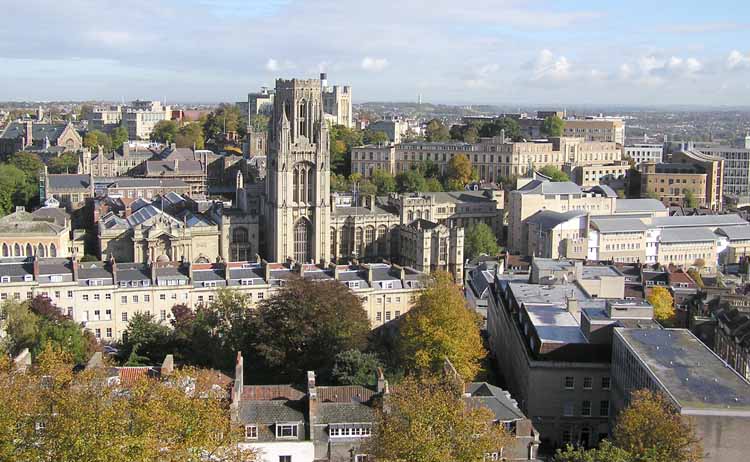
Thomas Jordan is a Lecturer in the ergodic theory group within the Department of Mathematics at the University of Bristol. Previously, he worked as a research assistant at Warwick University and completed his PhD under Mark Pollicott. His research focuses on dimension theory of dynamical systems, particularly examining self-similar and self-affine sets, multifractal analysis, thermodynamic formalism, and Fourier transforms of measures. His primary research interests include: Dimension theory of dynamical systems Self-similar sets and fractals Self-affine sets Multifractal analysis Thermodynamic formalism Fourier transforms of measures Ergodic theory Thomas Jordan's publications reveal a consistent focus on geometric and measure-theoretic aspects of dynamical systems, with particular emphasis on dimensional properties of fractal sets. His work demonstrates strong collaborative relationships with researchers including Mark Pollicott, Michał Rams, Jonathan Fraser, and Henna Koivusalo across numerous publications spanning two decades. He has organized significant academic events including: Projection and Slicing Theorems in Fractal Geometry conference (Bristol, June 2014) Special session of the 2016 BMC on ergodic theory (Bristol, April 2016) Probability, Analysis and Dynamics workshops (2018, 2022) Thermodynamic formalism workshop at ICMS (June 2018) Workshop on affine and overlapping iterated function systems (Bristol, May 2022) Thomas Jordan serves as a key contact for the One Day Ergodic Theory Meetings series, a collaborative effort between multiple UK universities funded by the London Mathematical Society. He teaches first year analysis (Analysis A) and dynamical systems courses at the University of Bristol.
Soumya Bera is an Associate Professor in the Department of Physics at the Indian Institute of Technology Bombay (IIT Bombay). His research focuses on theoretical condensed matter physics, integrating computational approaches to study quantum systems. Key research interests include quantum simulation of novel phases of matter, topological phases, many-body localization, and non-equilibrium dynamics. Current research topics emphasize quantum phase transitions, quantum criticality, and the interplay of topology, disorder, and interactions. His work often explores these themes through quantum information theory and Floquet systems. Notable contributions include studies on disorder-induced delocalization, Chern-Hopf insulators, and Floquet thermalization. Publications span topics like quantum Hall criticality, graphene disorder effects, and many-body localization dynamics. His work frequently appears in high-impact journals like Phys. Rev. B and SciPost Phys., with a focus on disordered systems and quantum critical phenomena. While no explicit awards or grants are listed here, his prolific publication record underscores sustained contributions to condensed matter theory. His research group actively investigates quantum matter under non-equilibrium conditions and topological material properties.
Domenico Cicchella is an Associate Professor in the Department of Science and Technology at the University of Sannio, Italy, specializing in Geochemistry and Volcanology (GEO/08). With over two decades of academic experience, he has established himself as a leading researcher in environmental geochemistry, particularly in soil and water contamination studies in the Campania region of southern Italy. His research interests span multiple critical areas of environmental geochemistry: Urban and regional geochemical mapping Heavy metal and potentially toxic element (PTE) analysis in soils Environmental risk assessment methodologies Application of advanced statistical techniques to geochemical data Water pollution monitoring and assessment Integration of compositional data analysis with machine learning approaches Geochemical background determination Analysis of his publication record reveals a strong focus on developing innovative methodologies for environmental assessment, particularly through the "Campania Trasparente" project - a comprehensive multimedia monitoring initiative. His work increasingly incorporates advanced data analysis techniques including compositional data analysis, multivariate statistics, and machine learning applications to address complex environmental challenges in urban and regional settings. His research spans from fundamental geochemical studies to practical applications for environmental management and public health protection. Professor Cicchella maintains an active research profile with numerous collaborations across Italy and internationally, contributing significantly to our understanding of environmental contamination patterns and developing practical approaches for risk assessment and management. His work has appeared in leading journals including Journal of Geochemical Exploration, Applied Geochemistry, and Science of the Total Environment, demonstrating both academic rigor and practical relevance to environmental challenges.
Lamine M. Mili is a Professor in the Bradley Department of Electrical and Computer Engineering at Virginia Tech. His expertise spans power systems, signal processing, and robust estimation theory. He holds an IEEE Fellowship (2016) for contributions to robust state estimation in power systems. Mili's research focuses on advancing methodologies for power system reliability, control, and integration of renewable energy sources. His work includes studies on dynamic state estimation, nonlinear dynamics, bifurcation theory, and quantum computing applications. He has contributed extensively to resilience engineering and computational social science in power systems. Mili’s recent articles address challenges in smart grids, quantum circuit error prediction, and multifractal signal analysis in EEG. His research often combines advanced statistical techniques with real-world grid data, emphasizing robustness and adaptability in dynamic environments. Education: Ph.D., University of Liège, 1987 M.S., University of Tunis, 1983 B.S., Swiss Federal Institute of Technology, Lausanne, 1976 Research Interests: Power system stability and control State estimation and robust filtering Quantum computing for power systems Resilience and cyber-physical-social systems Nonlinear dynamics and bifurcation analysis His recent publications reflect a focus on hybrid power systems, probabilistic methods, and data-driven approaches for grid optimization. The 2025 articles highlight advancements in photovoltaic state estimation, quantum error prediction, and robust modulation techniques. Mili’s work often bridges theoretical models with practical grid applications, emphasizing uncertainty quantification and real-time monitoring.
Richard Dansereau is a Professor and Associate Dean (Graduate Studies) in the Department of Systems and Computer Engineering at Carleton University, part of the Faculty of Engineering and Design. He holds a Ph.D. from the University of Manitoba and is a Professional Engineer (P.Eng.) and Senior Member of IEEE. His research focuses on signal processing, including biomedical applications, compressive sensing, medical imaging, and fractal complexity analysis. He has led the Signal Processing and Machine Learning Lab and advised numerous PhD students in areas like PET image reconstruction and drone detection through Riemannian geometry. His academic roles include serving as Clerk of Senate and Academic Editor for IET Signal Processing. Key research contributions span deep learning for compressive sensing (e.g., DEQ-based networks), cervical cell segmentation, and biomedical signal processing. Over 150 publications highlight his work on topics like PET-MRI fusion, audio-visual speech enhancement, and radar systems. Collaborations include projects on cardiac PET imaging and drone detection algorithms. Awards include the IEEE Senior Member designation. His teaching spans courses such as Digital Signal Processing, Wavelets, and Biomedical Systems across Carleton and the Georgia Institute of Technology.
Kimberlee Kearfott, Sc.D., is a Professor in the Department of Nuclear Engineering and Radiological Sciences at the University of Michigan. Her primary affiliation is with the College of Engineering, and she holds an additional role as Affiliate Faculty in Biomedical Engineering (BME). Her research focuses on radiation protection, nuclear medicine, medical physics, and biomedical imaging. Key areas include radon gas dynamics, dosimetry techniques, environmental radiation monitoring, and the development of radiation-aware technologies like drones and weather stations. Her work spans theoretical and applied domains, including algorithm development for anomaly detection in radon time series data, advanced imaging systems, and radiation source mapping. She has contributed to the design of cost-effective radiation measurement instruments and systems for real-time environmental monitoring. Notable projects include the creation of an Intelligent Radiation Awareness Drone and a Low-cost Radiation Weather Station. Dr. Kearfott’s expertise also extends to radiation safety protocols, quality control in dosimetry calibration, and the application of machine learning to thermoluminescent dosimeter analysis. Her research has addressed critical issues such as earthquake prediction through radon gas analysis and sterilization techniques for SARS-CoV-2-contaminated equipment. Her laboratory focuses on interdisciplinary projects at the intersection of nuclear engineering, biomedical sciences, and environmental science. Collaborations involve both academic and industrial partners, emphasizing practical solutions for radiation-related challenges in healthcare, environmental safety, and homeland security.
Dr. Raoul Bongers is an Assistant Professor at the Faculty of Medical Sciences, University of Groningen, affiliated with the SMART Movements research group. His expertise focuses on action-perception learning, motor control, and rehabilitation technologies, particularly in upper limb prosthetics and serious game applications for prosthesis training. He investigates motor variability and coordination dynamics using advanced methodologies like Uncontrolled Manifold analysis and multifractal analyses. His research emphasizes the development of clinical tools such as IMU-based calibration algorithms and virtual reality environments to improve prosthetic control and rehabilitation outcomes. Collaborations span biomechanics, neuroscience, and medical engineering, addressing challenges in prosthetic design, user adaptation, and clinical assessment. Bongers has contributed to over 139 publications, with recent work exploring task-specific serious game training, IMU sensor calibration reliability, and motor learning dynamics in novel control tasks. His work aligns with UN Sustainable Development Goals related to health and innovation. Professional activities include keynote lectures on motor control and participation in interdisciplinary research networks. Laboratory affiliations include SMART Movements, where research integrates ecological psychology and dynamical systems theory to advance rehabilitation technologies and motor learning understanding.