Neil Hester is an Assistant Professor at the University of Waterloo. His research focuses on social psychology, particularly in areas such as stereotyping, racial bias, moral psychology, and person perception. He investigates how social judgments are formed, influenced by factors like appearance, political affiliation, and cultural context. His work addresses topics ranging from police decision-making biases to the perception of abstract entities like 'God.' Hester's research employs experimental methods and cross-cultural analyses to uncover universal and variable patterns in social cognition. His studies often highlight how stereotypes and biases operate in everyday judgments, with implications for law enforcement, policy, and social equity. His recent work includes examining racial disparities in policing, the moral condemnation of ambiguous actions, and the intersectionality of multiple social identities. While no specific educational background or awards are listed, his publications reflect a strong commitment to understanding systemic social dynamics through empirical research.
Romain Rumpler is an Associate Professor at the Department of Vehicle Engineering and Technical Acoustics, KTH Royal Institute of Technology. His research focuses on numerical methods and modeling for coupled acoustics and vibration applications, including finite element modeling, design optimization, and acoustic metamaterials. He leads initiatives in transportation noise, such as noise impact assessment and traffic strategies. He is affiliated with the Centre for Eco2 Vehicle Design and has been funded by the Swedish Research Council, FORMAS, VINNOVA, and European programs like Shift2Rail and CIVITAS. His teaching includes courses like Building Acoustics and Community Noise and Noise and Vibration Control . Education: PhD in Vehicle Engineering and Technical Acoustics, KTH Royal Institute of Technology (2012) Research Interests: His work spans efficient finite element methods, acoustic material design, and urban noise mitigation. He develops experimental-numerical approaches for noise assessment and contributes to eco-friendly vehicle design through projects like the EU VAMOR initiative. Recent efforts include metamaterials for sound insulation and real-time noise mapping techniques. Articles Trends: Romain's publications emphasize transportation noise analysis, structural acoustics, and computational methods. Key themes include noise detection algorithms, parametric model reduction, and material characterization for vibration suppression. His work bridges theoretical models with practical applications in urban planning and vehicle engineering. Awards: 2022 Supervisor of the Year Award (Centre for Eco2 Vehicle Design) Grants & Advising: Funded projects include VR, FORMAS, and EU grants. He advises students on acoustic metamaterials and noise control, with a focus on sustainable transportation solutions. His team collaborates on agent-based noise impact models and low-frequency vibration mitigation. Labs & Projects: Associated with Digital Futures initiatives (DIRAC, GEOMETRIC, SENZ-Lab) and the Centre for Eco2 Vehicle Design. His work supports eco-efficient vehicle design and smart traffic strategies to reduce environmental impact.
Aggelos Bletsas is a Full Professor in the Department of Electrical and Computer Engineering at Rutgers University. Previously, he held academic positions at the Technical University of Crete, where he served as Assistant Professor (2009–2014), Associate Professor (2014–2018), and Full Professor (2018–2024). His research focuses on scalable wireless communication, sensor networks, RFID systems, energy harvesting, and low-power IoT devices. He leads projects on batteryless backscatter sensors for precision agriculture and ambient-powered inference networks. Education: Ph.D. in Media Arts & Sciences (MIT, 2005) M.Sc. in Media Arts & Sciences (MIT, 2001) Diploma in Electrical & Computer Engineering (Aristotle University of Thessaloniki, 1998) Research interests include wireless sensor networks , RFID localization , signal processing for communication , and energy harvesting . His work emphasizes ultra-low-power, low-cost sensors deployable in agriculture and environmental monitoring. Key contributions include commodity-radio-based RFID localization and smartphone-readable backscatter sensors. Honors include IEEE Fellow (202?), IEEE Communications Society Distinguished Lecturer (2022–2024), and multiple best paper awards. His students have won IEEE VTS/AES Greek Chapter Best Thesis Awards (2012, 2013) and ComSoc Student Competition prizes. He serves as Area Editor for IEEE Transactions on Wireless Communications and is a top-2% global scientist per Stanford rankings. Advising and grants: Supervised over 15 students, with notable advisees listed in 'students'. His research has received ERC Starting Grant (A rating) and industry collaborations. Active in IEEE committees and conference organization. Labs and teams: Co-director of WINLAB (Wireless Information Network Laboratory) at Rutgers, focusing on wireless systems and IoT. Collaborates with industry partners on RF energy harvesting and backscatter communication prototypes.
Sascha Göbel is a Researcher at the Hertie School's Data Science Lab. He holds a PhD in Political Science from the University of Konstanz and previously served as a postdoctoral researcher at Goethe University Frankfurt. His work bridges digital technologies and political processes, focusing on computational methods to analyze political behavior, public opinion, and legislative dynamics. He co-developed the Comparative Legislators Database (CLD), a widely used resource for political data, and has published on topics such as social identification via conjoint experiments, citizen responses to international conflicts, and the interplay between voting and social media participation. Research Interests: Application of data-intensive computational approaches in political science Digital governance and information technologies in politics Social identity measurement using innovative experimental designs Legislative behavior analysis through integrated datasets Recent Work Trends: Recent publications explore urban/rural consciousness divides, Ukraine crisis public opinion dynamics, and methodological advancements in measuring multidimensional social identities. His work often combines experimental methods with large-scale computational analysis. Labs & Teams: Core contributor to the Hertie School Data Science Lab and co-developer of the Comparative Legislators Database (CLD), collaborating with institutions like Goethe University and Mannheim University.
Athanasios Liavas is a Professor at the Technical University of Crete (TUC), School of Electrical and Computer Engineering (ECE), where he has served as Department Chair (2009-2011) and Vice Chair (2011-2013). He holds a Diploma (1989) and PhD (1993) in Computer Engineering and Informatics from the University of Patras. His career includes postdoctoral research at the Institut National des Télécommunications (1996-1998) as a Marie Curie Fellow, and academic roles at the University of Ioannina and the University of the Aegean before joining TUC in 2004 as Associate Professor. He has been a Professor since 2009. His research focuses on Signal Processing for Communications , Information Theory , and Telecommunications , with recent emphasis on tensor decomposition techniques for biomedical signal analysis and machine learning applications. He leads the Telecommunications Laboratory and teaches courses such as Digital Communication Systems II and Wireless Communication Systems. He served as an Associate Editor for the IEEE Transactions on Signal Processing (2005-2009) and was a member of the IEEE SP COM Technical Committee (2006-2011). His recent work includes advancements in nonnegative tensor completion, parallel algorithms for large-scale tensor factorization, and generalized canonical correlation analysis for multi-subject fMRI data. These contributions address challenges in high-dimensional data reconstruction and brain imaging signal processing, leveraging stochastic optimization and distributed computing frameworks. Liavas has authored over 80 peer-reviewed articles, with key contributions in IEEE journals and conferences. His research spans theoretical signal processing, algorithm design, and practical implementations for telecommunications and biomedical engineering.
Andrea Galassi is a Junior assistant professor (RTD-A) at the University of Bologna's Department of Computer Science and Engineering (DISI), part of the Language Technologies Lab led by Paolo Torroni. He holds a PhD in Computer Science and Engineering from the University of Bologna (2021), with a dissertation on integrating deep neural networks and symbolic knowledge. His postdoctoral research included roles at Stanford, Imperial College London, and the Humane-AI-Net European project on ethical AI. He also served as an Adjunct Professor at the University of Bologna. His research focuses on Machine Learning, Natural Language Processing (NLP), and neuro-symbolic techniques applied to argument mining, legal text analysis, and ethical AI. Notable projects include the FAIR initiative (developing scalable AI techniques), CLAUDETTE, PRIMA, and ADELE legal analytics projects, and StairwAI's horizontal matchmaking services. He is an expert in argument mining for judicial decisions and automated analysis of privacy policies. Galassi has taught over 300 hours of courses, ranging from foundational computer science to advanced NLP topics. He holds National Scientific Qualification for Associate Professor in Computer Engineering (ASN 2023-2025). His recent work emphasizes ethical AI applications, misinformation detection, and AI-driven legal systems, with publications in areas like cross-lingual legal benchmarking (LEXTREME) and subjectivity detection in news media. He leads projects on AI for social impact, including chatbots for asylum seekers and privacy-preserving dialogue systems. His lab participates in CLEF challenges on news credibility and legal argumentation analysis, demonstrating expertise in collaborative AI frameworks and real-world societal applications.
Rakesh is a Professor in the Department of Mathematical Sciences at the University of Delaware (UD), part of the College of Arts & Sciences. He holds a BA(Hons) and MA from the University of Delhi, India, and a PhD from Cornell University, USA. His research focuses on inverse problems for hyperbolic partial differential equations (PDEs), including the Fixed Angle Scattering Problem, Backscattering Problem, and Inversion of the Spherical Mean Value Operator. He has also contributed to dynamical systems, geometry, probability, and economics. Education: BA(Hons) in Mathematics, University of Delhi MA in Mathematics, University of Delhi PhD in Mathematics, Cornell University His research emphasizes theoretical and applied aspects of inverse problems, such as uniqueness, stability, and inversion techniques for hyperbolic PDEs. Recent work includes contributions to formally determined inverse problems in Lorentzian and Riemannian geometries. Earlier research included studies on the spherical mean value operator and one-dimensional hyperbolic inverse problems. His publications span over 30 years, addressing topics like wave equation inverse problems, dynamic pricing models, and spectral analysis of Brownian motion. He has been on sabbatical for 2025. Rakesh collaborates internationally, with notable co-authors including Mikko Salo, Gunther Uhlmann, and Paul Sacks. His work bridges pure and applied mathematics, with applications in physics, engineering, and economics.
Virginia Newcombe is an Associate Professor at the University of Cambridge's School of Clinical Medicine, Department of Medicine, and an academic consultant in Neurosciences, Trauma Critical Care, and Emergency Medicine at Addenbrooke's Hospital. Her work bridges clinical practice and neurotrauma research with a focus on evidence translation. Her educational background includes: Medical training at the University of Queensland, Australia (University Medal recipient) Masters in Epidemiology at Wolfson College, Cambridge (Commonwealth Scholarship) PhD in Neuroimaging and Traumatic Brain Injury (Gates Cambridge Scholarship) Her research centers on traumatic brain injury across the severity spectrum, utilizing advanced neuroimaging (MRI/CT) and biomarkers to improve prognostication and understand recovery trajectories. She develops AI tools for lesion detection, investigates traumatic vascular injury mechanisms, and correlates neurocognitive outcomes with imaging findings. A key focus is improving mild TBI outcomes through patient-co-designed digital health interventions. Recent publications demonstrate evolving emphasis on biomarker validation (GFAP, proteomics), multimodal neuromonitoring, and clinical guideline development (NICE, NIH-NINDS). Emerging trends include AI-driven medical image analysis, federated learning for privacy-preserving research, and longitudinal studies of employment outcomes and recovery patterns in international cohorts like CENTER-TBI. Her scientific recognitions include: NIHR Advanced Fellowship Academy of Medical Sciences / The Health Foundation Clinician Scientist Fellowship University Medal (University of Queensland) She actively translates evidence into practice through contributions to the NICE Head Injury Guidelines Update and UK Concussion Guidelines for Grassroots Sport. Her NIHR-funded research leverages the CENTER-TBI consortium (20 countries) to characterize TBI as a disease continuum and identify optimal clinical interventions. Current projects include developing automatic lesion detection systems using AI and co-designing a digital health app for mild TBI patients. Based in the Department of Medicine's Division of Anaesthesia, she collaborates extensively with Addenbrooke's Hospital clinicians and the CENTER-TBI study group, maintaining strong ties to Wolfson College where she progressed from Junior Research Fellow to Fellow.
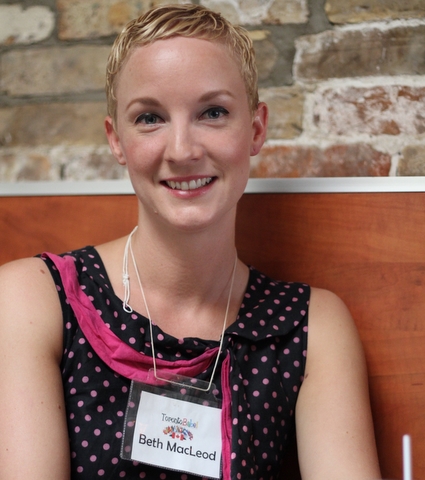
Beth MacLeod is an Associate Professor in the School of Linguistics and Language Studies at Carleton University. She holds degrees from the University of Waterloo (BMath) and the University of Toronto (MA & PhD in Linguistics). Her research focuses on phonetic variation, with three core areas: phonetic imitation (how speakers adapt their pronunciation), sociophonetics (social meaning in speech sounds), and second language acquisition of phonetics and phonology. She explores how these phenomena intersect with sound change, dialect acquisition, and listener perception. MacLeod has supervised research on diverse topics including Spanish stop voicing contrast, attitudes toward Toronto's pronunciation, and the Canadian Shift in Ottawa English. She currently leads a Canada Foundation for Innovation (CFI) grant ($107,188) examining language use across lifespans and collaborates on a Social Sciences and Humanities Research Council (SSHRC) grant ($65,299) analyzing phonetic imitation. Her work bridges laboratory phonetics with sociolinguistic theory, emphasizing individual variation in speech perception-production links. Recent presentations include investigations of vowel centralization in Spanish (LabPhon19, 2024) and co-articulation in Laurentian French (ICPhS, 2023). Her research highlights interdisciplinary methods, combining acoustic analysis with articulatory data to understand speech production and perception dynamics.
Sara Lu Riggs is an Associate Professor at the University of Virginia, based in Olsson Hall with a dedicated lab in Olsson Hall 002A. Her research focuses on human factors in complex environments, including aviation, healthcare, and manufacturing, addressing challenges like task sharing, attention management, and interruption management through cognitive ergonomics and systems engineering. She explores multimodal displays to mitigate data overload, adaptive interfaces responsive to user needs, and cognitive limitations such as change blindness. Her work has been funded by the National Science Foundation (NSF), Agency for Healthcare Research and Quality (AHRQ), Air Force Office of Scientific Research, and NIH, totaling over $6 million in grants. Notable achievements include the NSF CAREER Award and the 2016 APA Briggs Dissertation Award. Recent research emphasizes tactile displays, real-time gaze sharing in UAV teams, and AI-driven decision support systems. Her lab develops tools like the MoiréTag for tangible interactions and GUIs to streamline eye-tracking data analysis. Key contributions include advancing adaptive display designs, quantifying collaborative strategies in UAV operations, and improving healthcare workflows through human-centric technologies. She actively investigates how workload transitions affect team performance and situational awareness, with applications in both industrial and medical settings.
Ken M. L. Yiu is a Professor in the Department of Computing at Hong Kong Polytechnic University , Faculty of Engineering. He received his PhD and Bachelor's degree from the University of Hong Kong in 2006 and 2002, respectively, and was previously affiliated with Aalborg University (2006–2009). He is a leading researcher in databases, with a focus on spatiotemporal data, query processing, and multidimensional data management. PhD, University of Hong Kong (2006) Bachelor of Computer Engineering, University of Hong Kong (2002) His research interests lie at the intersection of database systems and spatial analytics. He investigates efficient indexing, query optimization, and privacy-preserving techniques for large-scale spatial and temporal datasets. His recent work explores learned index structures, GPU-accelerated query processing, and high-dimensional data retrieval. He has made significant contributions to spatial query processing, trajectory analytics, and location-based services. The trends in his recent publications (2021–2025) reflect a strong focus on high-performance database systems, including GPU acceleration (GHive), perfect hashing on GPUs (GPH), and learned cardinality estimation. His work increasingly integrates machine learning with traditional database techniques, as seen in AlayaDB for LLM inference and learning-based query optimization. He also continues to advance core database problems such as spatial indexing, trajectory analysis, and similarity search. SSTD 2025 10-Year Impact Award Ken Yiu has successfully led multiple competitive research projects funded by the Hong Kong GRF, including grants on learned index structures (2024–2026), smart memory for vector data mining (2021–2023), and efficient spatial data management (2017–2019). He has supervised numerous PhD and MPhil students, many of whom now hold academic positions (e.g., Bo Tang at SUSTech, Yu Li at HDU) or work in top tech companies (e.g., Huawei, Alibaba). His professional service is extensive, including roles as PI for major grants, area chair (ICDE 2024), and program committee member for top conferences like SIGMOD, VLDB, and ICDE. He is actively involved in research groups and projects related to database systems, particularly in spatiotemporal data management and efficient query processing. His lab collaborates closely with students and co-supervisors like Bo Tang on topics such as trajectory mining, spatial indexing, and learned databases. The research group maintains strong ties with international institutions and contributes to major open problems in database performance and scalability.
Gabor Peli is a University Professor in the Department of Sociology at Gáspár Károli Reformed University, where he continues an extensive academic career rooted in organization theory, computational social science, and logical formalization. He previously held research and faculty positions at prestigious institutions including Utrecht University, the University of Groningen, the University of Amsterdam, and the HUN-REN Social Science Research Center. He is an external member of the Hungarian Academy of Sciences (MTA), elected in 2016, and holds a DSc in Sociology. His educational background includes an MA in mathematics-physics and sociology from Eötvös Loránd University (ELTE), followed by doctoral degrees in 1995 (CSc) and 2010 (DSc) from the Hungarian Academy of Sciences. His research interests span organization theory, organizational ecology, computational modeling, political space analysis, and the application of symbolic logic to social sciences. He has made significant contributions to understanding market partitioning, organizational niches, and the dynamics of institutional adaptation. The most recent publications highlight a strong trend toward interdisciplinary research, combining sociology with computational methods, cognitive science, and mathematical modeling. His work frequently employs logical formalization and agent-based simulations to explore organizational and political dynamics. Articles from the last decade appear in top journals such as American Journal of Sociology , Administrative Science Quarterly , PLOS ONE , and Industrial and Corporate Change , reflecting both theoretical depth and methodological innovation. Ipolyi Arnold Research Organization Award (OTKA, 2013) External Member, Hungarian Academy of Sciences (2016) Peli has actively contributed to academic governance, serving on educational committees at ELTE, Utrecht University, and the MTA Social Science Research Center. He has supervised doctoral students, notably César García-Díaz, and served on numerous PhD defense committees across Europe. He has also participated in international guest lectures and workshops at institutions such as Stanford, Berkeley, Yale, and Durham University. His work is affiliated with the Computational Social Science (CSS-RECENS) research group, emphasizing his commitment to data-driven and formal approaches in the social sciences.
Rachel Milliken is an active researcher in the School of Pharmacy, specializing in innovative drug delivery systems with a focus on 3D printing technologies. Her work bridges pharmaceutical science and food technology, particularly exploring cacao-based formulations for therapeutic applications. Her research interests center on pharmaceutical 3D printing , with particular expertise in cacao-based drug delivery systems , nutrient carrier optimization , and formulation printability . Milliken's work investigates how food-pharmaceutical interfaces can enhance drug delivery, focusing on improving printability through additives like soy lecithin while maintaining palatability and therapeutic efficacy. Her research has significant implications for personalized medicine and novel dosage form development. Analysis of her publication trends reveals a strong focus on translational pharmaceutical technology , moving from theoretical printing concepts to practical applications in drug delivery. Her work consistently bridges food science and pharmaceuticals, with particular emphasis on making drug delivery more patient-friendly through familiar food matrices like chocolate. The research shows increasing media attention, with multiple news outlets covering her team's work on immune-boosting cacao formulations. Milliken has been involved in significant research collaborations, particularly with Professor Dimitrios Lamprou's group, resulting in multiple high-impact publications and substantial media coverage. Her work on 3D printed cacao-based formulations generated 21 media coverage items and significant academic attention with 122 Mendeley readers. Her laboratory work focuses on advanced pharmaceutical manufacturing , specifically developing and optimizing 3D printing techniques for drug delivery systems. The research team has established expertise in creating biocompatible dosage forms using food-grade materials, with particular attention to maintaining therapeutic efficacy while improving patient acceptability through familiar delivery matrices.
Ewa Skowronek is a Professor at the Department of Regional Geography and Tourism , part of the Maria Curie-Skłodowska University in Lublin, Poland. She is affiliated with the Faculty of Earth Sciences and Spatial Management and serves as a board member of PECSRL (Permanent European Conference for the Study of the Rural Landscape) since 2023. Her academic roles include editorial leadership of Annales UMCS sec. B (2019–2023) and representation in UMCS Senate committees. Current Roles: Professor, Department of Regional Geography and Tourism, UMCS PECSRL Board Member Editorial Board, Annales UMCS Research Interests focus on cultural landscape transformations in Polish-Ukrainian borderlands, tourist landscape dynamics , sustainable tourism , and cultural heritage utilization . She explores socio-economic-environmental interdependencies in regions like Lubelskie and Roztocze, emphasizing landscape perception , tourism product innovation , and borderland development . Recent Publications (2024–2025) address European rural landscapes , geocultural site development , and protected area management in Roztocze. Key trends include post-pandemic tourism , heritage-based strategies , and landscape-tourism interrelations across Poland and Greece. Projects include transboundary tourism development (Eastern European Pearls, Bike Like Roztocze), biosphere reserve documentation (Transboundary Roztocze Biosphere Reserve), and regional branding initiatives (Lublin Region Natural Brands). She has collaborated on EU-funded programs (EFRR, EFS) and national grants, focusing on tourism space evaluation , health tourism , and social tourism demand . Leadership Roles encompass quality assurance committees (UMCS Doctoral School), peer review activities, and representation in academic senates. Her h-index metrics (Google Scholar: 12, Scopus: 8, Web of Science: 8) reflect substantial contributions to tourism and landscape geography.
Angela Carollo is a Researcher at the Max Planck Institute for Demographic Research (MPIDR) in Rostock, Germany, affiliated with the Laboratory of Fertility and Well-Being. Her work focuses on developing advanced statistical methodologies for demographic analysis, particularly in survival and event-history models with multiple time scales. Her research interests span demography, statistics, and population health, with emphasis on: Survival analysis and competing risks modeling Event-history frameworks with multidimensional time Fertility dynamics and family transitions Mortality patterns and health outcomes Statistical software development for demographic applications Carollo's publication record demonstrates consistent innovation in handling complex demographic data structures. Her recent work shows strong trends toward interdisciplinary collaboration (spanning statistics, gerontology, and public health) and methodological rigor in modeling time-dependent phenomena. Key contributions include the TwoTimeScales R package and novel approaches to hazard smoothing across multiple temporal dimensions, applied to critical demographic questions like partnership transitions and mortality prediction. No scientific awards were documented in the source material. Her collaborative research involves extensive work with international teams across Europe, though no formal student advising or grant management details were provided. Current projects include dissertation work on "Multiple Time Scales in Survival and Event-History Models" within the Laboratory of Fertility and Well-Being. Carollo operates within MPIDR's Laboratory of Fertility and Well-Being, which investigates how demographic processes like fertility and partnership transitions interact with individual well-being across the life course, leveraging advanced statistical techniques for population-level insights.