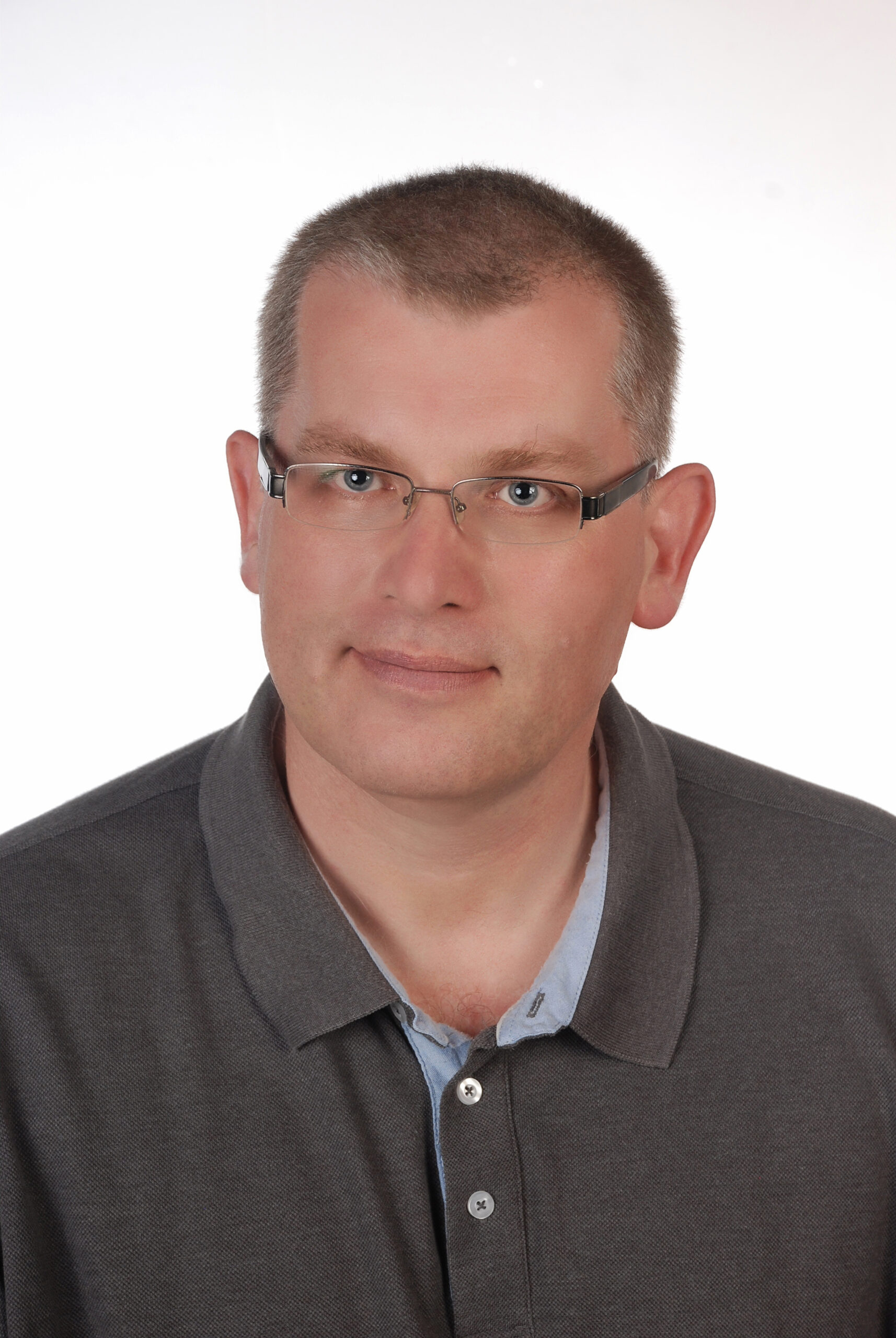
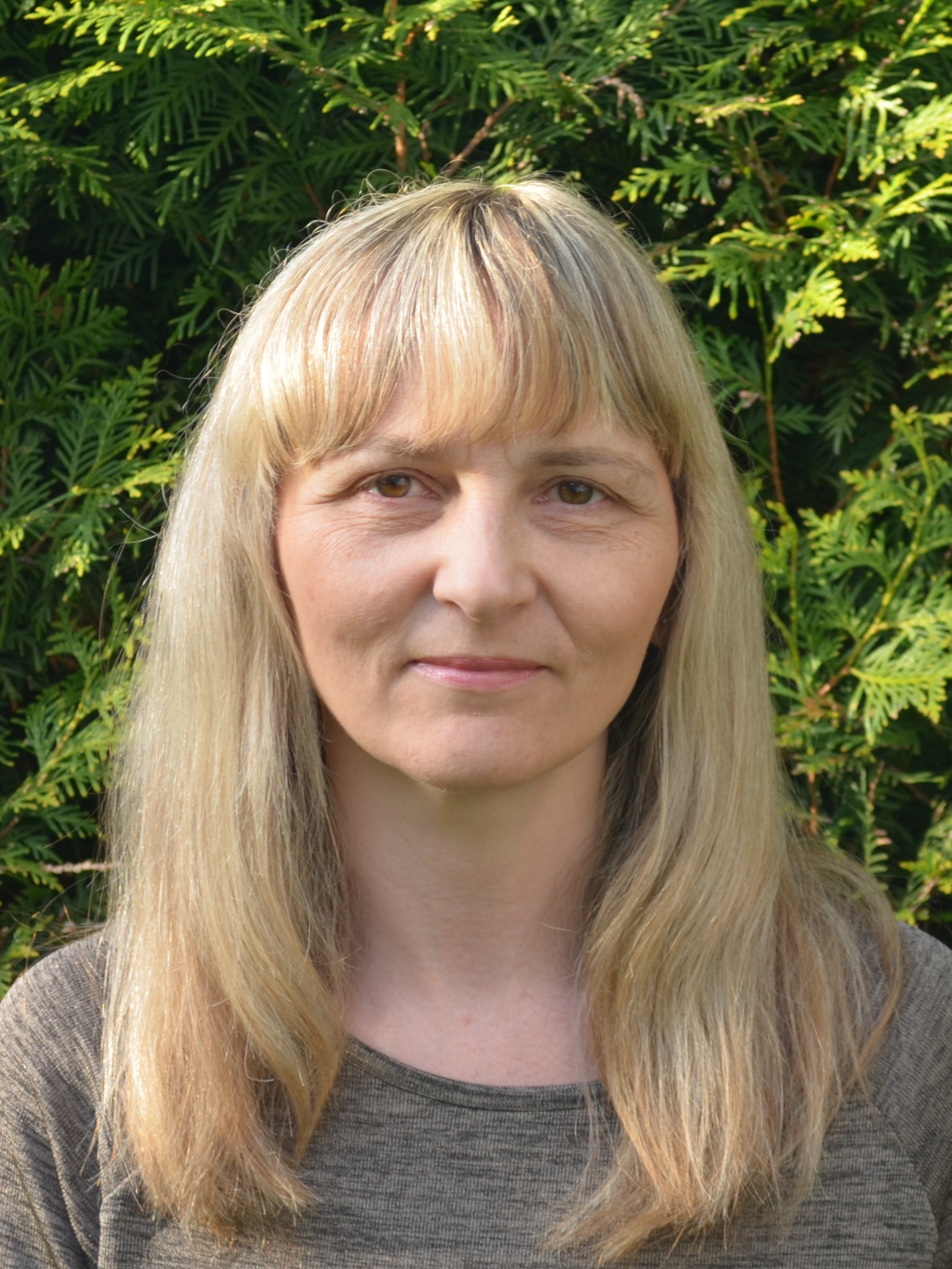
Dr. Emilia Mielniczuk is an academic researcher at the Department of General Psychology , Faculty of Social Sciences , John Paul II Catholic University of Lublin (KUL). Her scholarly work focuses on affect , emotional contagion , personal resources , and their impact on entrepreneurial psychology , innovative behavior , and relationship satisfaction . Research trends from her publications highlight: 1) scale development for measuring state hope , implicit affect , and goal realization ; 2) multilevel studies linking workplace affect to employee innovation ; 3) methodological contributions on common method bias and cross-cultural validation of psychological instruments. She actively participates in international collaborations with institutions like Erasmus University Rotterdam , UNED Madrid , and Sapienza University of Rome . Her work has been supported by grants from the National Science Centre Poland and KUL, including projects on entrepreneurial success , affective well-being , and prosocial activities .
Elżbieta Gołata is a Professor at the Department of Statistics within the Institute of Informatics and Quantitative Economics at Poznań University of Economics and Business . She serves as Chair of the Committee on Demographic Studies of the Polish Academy of Sciences (since 2020) and Deputy Chairwoman of the Government Population Council (since 2024). Previously held the position of Vice-Rector for Research at her university (2016–2024). Research Interests: demographic change, population aging, census methodology, labor market analysis, statistical data quality Teaching: contributes to Small Area Estimation (SAE) education Collaboration: works with Grażyna Dehnel's research group and international institutions Research Trends cover: Comparative fertility analysis across Poland and diaspora communities Population aging patterns in Visegrad countries Census methodology evolution (traditional vs administrative data) Labor market inequality by disability status, gender, and age Urban demographic changes and suburbanization impacts Statistical education challenges for SAE techniques Academic Contributions include: 42+ publications with 154+ citations Leadership in demographic studies and policy councils Co-organizer of major statistical congresses Development of multidimensional statistical analysis methods Focus on Polish-German demographic comparisons Advocacy for census data credibility and transparency
Adam Depta is a researcher at the Institute of Management under the Faculty of Organization and Management at Lodz University of Technology. His primary research focuses on multidimensional statistical analyses across management, engineering, healthcare, and social sciences. Key areas include econometric methods in economic analyses, risk assessment in capital markets, quality of life measurements, and healthcare system challenges. He actively participates in professional societies such as the Polish Statistical Society and the Classification and Data Analysis Section (SKAD). His work integrates statistical methodologies with practical applications in organizational management, environmental health, and education technologies. Research interests emphasize quantitative approaches to understand consumer behavior, healthcare outcomes, and workplace dynamics. Recent studies explore the impact of environmental pollutants on athlete performance, e-learning effectiveness in Polish universities, and patient safety in primary care. He also investigates factors influencing employee and student well-being in remote work and academic settings. Dr. Depta contributes to interdisciplinary projects, including process optimization in manufacturing and quality control systems. His professional affiliations include membership in the Polish Teachers' Union and the Carpathian Scientific and Educational Society, reflecting his commitment to academic collaboration and educational improvement.
Prof. Andrzej Dudek is a faculty member at the Department of Econometrics and Informatics, Wrocław University of Economics – Jelenia Góra Branch. His research focuses on advanced data analysis methodologies, including symbolic data analysis, machine learning applications, and statistical modeling. Dudek has contributed to the development of R packages such as IFMCDM and mdsOpt, which support multi-criteria decision making and multidimensional scaling. His work addresses challenges in outlier detection, clustering, and predictive modeling across domains like tourism, healthcare, and finance. Recent studies explore consumer behavior shifts during the pandemic, AI-driven medical modeling, and robust regression techniques for noisy data. Key research areas include econometric modeling, computational statistics, and the integration of machine learning with traditional statistical methods. Dudek’s interdisciplinary approach spans from theoretical algorithm development to practical applications in industry and public health. He actively contributes to academic conferences and publishes in leading journals, demonstrating expertise in both methodological innovation and real-world problem-solving.
Dr. Marta Kuc-Czarnecka is a Professor and Vice-Dean for Organization of Studies at Gdańsk University of Technology's Faculty of Management and Economics. She holds a PhD in Economics from Nicolaus Copernicus University (2015) and has extensive postgraduate training in Geography, Scandinavian Studies, and Quantitative Methods. Her academic roles include Deputy Head of the Department of Statistics and Econometrics, AMBA Accreditation Proxy, and Board Member of the European Master in Official Statistics. Education: PhD in Economic Sciences, Nicolaus Copernicus University (2015) Postgraduate studies in Geographic Information Systems (University of Gdańsk, 2021) Postgraduate studies in Norwegian Language (University of Gdańsk, 2016) MSc in Quantitative Methods in Management (2010) Her research focuses on sustainable development , social convergence , and spatial econometrics , with emphasis on multidimensional statistical analysis and policy evaluation. She has authored over 38 publications and contributed to projects like Eurofound's Social Convergence analysis. Awards: Rector’s Awards for organisational achievements (multiple) Best Paper/Poster Awards at national conferences (2014) Labs/Teams: Co-founder of Rethinking Economics Gdańsk Member of European Regional Science Association and other professional bodies
Jolanta Jóźwik is an Assistant Professor at the Department of Spatial Management , Institute of Socio-Economic Geography and Spatial Management , within the Maria Curie-Skłodowska University in Lublin . Her academic responsibilities include teaching spatial planning-related subjects and leading research initiatives in settlement geography and socio-economic development since 2018. PhD in Spatial Management (2023, UMCS) MSc in Spatial Management (2017, Cracow University of Technology) BSc in Spatial Management (2016, University of Life Sciences in Lublin) Her research focuses on urbanization criteria, spatial development dynamics, and landscape shaping. Key areas include: Municipal status assignment mechanisms Socioeconomic development of communes Ecological stability assessment Public space design evaluation Rural tourism development Recent publications address urban status determination (2024), ecological stability (2021), and municipal square design (2021), reflecting her expertise in Polish urban-rural spatial dynamics. She contributes to regional development through grants like "Wypracowanie rozwiązań służących przeciwdziałaniu migracji osób młodych..." (2024-2027) and earlier projects on urban status assignment. Distinguished Doctoral Dissertation (2023) Active in Polish Geopolitical Society (since 2024) Teaching areas include Spatial Planning , Economic Geography , and Real Estate Management , with fieldwork components in economic geography. She serves as a mentor for student committees and participates in academic governance.
Janusz Hołyst is a Professor at the Center of Physics in Economics and Social Sciences, Faculty of Physics, Warsaw University of Technology. His research focuses on complex systems, social network analysis, and computational models of collective behavior. He leads the research team Zespół Fizyki w Ekonomii i Naukach Społecznych . Key areas include structural balance dynamics, opinion formation, and interdisciplinary applications of statistical physics. Recent work explores polarization, misinformation, and emotional dynamics in online communities. Over 200 publications span topics from multiplex networks to source localization in complex systems. Education: Not explicitly listed but inferred through academic career. Research interests emphasize bridging physics and social sciences, with contributions to models of group behavior, network hierarchies, and computational sociology. His work highlights critical phenomena in social systems and applications of agent-based simulations. Collaborations include studies on collective emotions, cyberemotions, and the impact of digital media on societal dynamics. Articles often analyze network structures, phase transitions in social models, and methodological advancements in source localization. His team’s projects address real-world challenges like misinformation spread and systemic risk in supply chains. Recipient of grants for supercomputing simulations of social systems and computational science initiatives. Advised numerous theses (names not listed here) focusing on interdisciplinary applications of physics.
Bogdan Chmieliński is an Assistant Professor at the Chair of Administrative Law and Security Sciences within the Faculty of Law and Administration at the University of Warmia and Mazury. His work focuses on security studies, administrative law, and social sciences, particularly in the context of local communities and regional governance. He has published extensively on topics including traffic safety, gambling behaviors, and military deployment impacts in Poland. Role: Assistant Professor Institution: University of Warmia and Mazury Department: Chair of Administrative Law and Security Sciences Research Interests: Security policy, local governance, risk assessment, community safety His research spans multidimensional security analysis, with emphasis on geospatial and demographic factors. Current trends include studies on local border traffic , student gambling , and military-civilian interactions . His publications reflect a strong focus on the Warmia and Mazury region, integrating legal frameworks with social science methodologies to address public safety, security education, and policy implementation. Key subtopics include traffic incident modeling , community resilience , and regional socioeconomic security . Notable collaborations include institutional research on promoted theses (179) and citations within Polish academic networks. His work often combines qualitative analysis with empirical data collection to address regional security challenges.
Elżbieta Majewska is an Assistant Professor at the University of Białystok's Faculty of Economics and Finance, affiliated with the Department of Business Studies Division of Quantitative Methods. She specializes in financial econometrics, quantitative methods in finance, and sustainable development analysis. Her research focuses on stock market dynamics, crisis periods, entropy-based methods, and policy evaluation. Dr. Majewska has extensively analyzed European and global stock markets, particularly regarding market integration, liquidity, and crisis impacts. Her work integrates statistical techniques like Principal Component Analysis, entropy algorithms, and volatility modeling to address complex financial phenomena. Her publications emphasize multi-criteria analysis for sustainability, crisis identification, and financial stability. She has contributed to understanding market turbulence, informational efficiency during pandemics, and the implications of tax policies. While no specific grants or awards are listed, her active publication record reflects ongoing research in quantitative finance and policy analysis.
Dr. Małgorzata Markowska is a Professor at the Department of Regional Economy, Wrocław University of Economics – Jelenia Góra Branch. Her research focuses on regional economic development, labor market dynamics, and EU policy analysis. She specializes in multidimensional data analysis techniques, including clustering algorithms, classification systems, and dynamic structural decomposition. Key research themes include: Regional economic resilience to crises Labour market transformations in EU regions Innovation strategies in Central European economies Digital economy impacts on consumer behavior EU policy effectiveness evaluation Recent work emphasizes post-pandemic economic shifts, rural e-commerce adaptation, and energy sector AI applications. She frequently collaborates on cross-country comparisons within the European Union. Publications span over 50 peer-reviewed articles (2013–2025), with focus areas including: Regional classification methodologies Gender employment disparities Smart specialization strategies Climate change mitigation in energy systems No academic awards or grants explicitly listed in the provided materials.
Mariusz Topolski is a Professor at the Department of Computer Systems and Networks, Faculty of Computer Science and Telecommunications, Wrocław University of Science and Technology. He received his habilitated doctor degree in Computer Science in 2024 and has been actively contributing to research and teaching in machine learning, data analysis, and optimization. He is a member of multiple research teams including the Machine Learning Team (ZUM), Advanced Data Analysis Methods Team, and Metaheuristics Team. Education: Habilitated Doctor in Computer Science, Wrocław University of Science and Technology, 2024 PhD in Technical Sciences (Computer Science), Wrocław University of Science and Technology, 2008 Master's and Engineering Degree in Technical Physics (Biomedical Engineering), Faculty of Fundamental Problems of Technology, Wrocław University of Science and Technology, 2003 His research interests include machine learning, pattern classification, feature extraction, explainable AI, multi-objective optimization, and data mining. His work applies advanced computational techniques to real-world problems in medicine, construction, pharmaceuticals, and logistics. He has developed novel methods in PCA modification, feature selection, and signal analysis, particularly for diagnostic applications in neurology and oncology. The recent publications reflect a strong trend in applying machine learning and optimization to medical diagnostics and industrial risk modeling. Key areas include PCA-based classification, multi-objective feature selection, and hybrid signal processing techniques. His interdisciplinary work bridges computer science with healthcare and civil engineering, demonstrating the versatility of AI in solving complex, multi-domain challenges. Scientific Awards: Degree of Habilitated Doctor in Computer Science (awarded February 28, 2024) Mariusz Topolski has led and participated in numerous national and international research projects, including collaborations with Jagiellonian University Collegium Medicum, Medical University of Warsaw, Gdańsk Medical University, and foreign institutions such as the National Mining University of Ukraine and Fundación ICIL in Spain. He supervises diploma theses and contributes to academic training through workshops and lectures. He is also engaged in industrial applications, developing optimization and machine learning methods for supply chain logistics. Research Teams: Machine Learning Team (ZUM) Advanced Data Analysis Methods Team Metaheuristics Team Computer Networks Team Teaching Team
Dr. Wojciech Roszka is a Lecturer at the Department of Statistics, Poznan University of Economics. He serves on the Committee for Periodic Evaluation of Academic Teachers and contributes to the Polish Statistical Association as a member of the Audit Committee of the Poznan Branch. Current academic affiliation: Poznan University of Economics Primary role: Lecturer in Statistics Committee memberships: Academic Evaluation, Polish Statistical Association Audit Research interests focus on: Academic productivity patterns and systemic inequalities Gender disparities in scientific collaboration and publication Spatial microsimulation and statistical data integration Longitudinal analysis of research careers His publication trends reveal sustained attention to productivity classification, statistical methodology, and socio-economic factors in science, with recent work expanding into environmental transcriptomics and longitudinal faculty evaluation frameworks. Other roles : Office location: Building C, Room 404 Contact: 61 854 36 85
Kazimierz Choroś is a Professor at the Department of Applied Informatics , Faculty of Information and Communication Technology , Wrocław University of Science and Technology. He held leadership roles as Deputy Director of the Institute of Informatics (2008-2014) and Deputy Dean of the Faculty of Computer Science and Management (2016-2020). Research interests: digital image/video processing, content-based video indexing, computer animations, multimedia systems, web systems analysis, and information systems design. Organizer and Chair of the International Conference on Multimedia & Network Information Systems (MISSI 2022) Chair of Special Session WebSys 2020 at ICCCI 2020 Other activities: Since 1993, member and former President (1993-2002) of the SAGE Association (Polish Graduates of French Grandes Ecoles). Since 1982, member of the Polish Numismatic Society, author of dozens of numismatic publications, and Editor-in-Chief of Wrocławskie Zapiski Numizmatyczne (2003-present). Contact: Email: kazimierz.choros@pwr.edu.pl Phone: +48-71.320.3799 Office: Building D2, Room 201/1 Address: Wrocław University of Science and Technology, Wyb. Wyspiańskiego 27, 50-370 Wrocław, Poland
Agnieszka Batko-Szwaczka serves as Assistant Professor in the Department of Geriatrics at the Faculty of Health Sciences in Katowice, Medical University of Silesia. Her academic career spans nearly two decades since obtaining her doctorate in 2005, with promotion to assistant professor in 2023. She maintains active clinical and research engagement through the Geriatrics Clinic at Górnośląskie Centrum Medyczne in Katowice. Her research focuses on critical geriatric domains including aging processes, health status assessment in elderly populations (particularly those aged 80+), body mass index correlations, and survival rate analyses. Specialized expertise encompasses cohort studies of independent-living elderly, prevalence investigations of age-related conditions, and gender-specific health patterns in Polish populations. Current work emphasizes longitudinal analyses of geriatric syndromes and their impact on health outcomes. Analysis of her 28 publications reveals consistent focus on Polish elderly cohorts with strong emphasis on epidemiological methods. Key trends include multi-center collaborations examining blood pressure dynamics, nutritional status, and functional independence metrics. Her work bridges clinical geriatrics with public health perspectives, frequently utilizing population-based data from Silesia region. Dr. Batko-Szwaczka has successfully supervised two doctoral theses, demonstrating commitment to academic mentorship. Her research program includes epidemiological investigations supported by institutional resources at Medical University of Silesia, though specific grant details aren't documented in the source material.
Grażyna Dehnel is an Assistant Professor at the Department of Statistics within the Institute of Informatics and Quantitative Economics at Poznań University of Economics. She earned her doctorate in 1999 and became a Professor Assistant in 2010, focusing on statistical methodologies and their applications in economics. Current affiliation: Poznań University of Economics Department: Statistics Discipline: 25% Economics and Finance, 75% Management and Quality Studies Her research centers on small area statistics , robust estimation , and indirect methods for economic analysis. She specializes in integrating register and survey data for microenterprise studies and social cohesion metrics. Recent publications highlight applications of dynamic relative taxonomy to assess EU strategies, wage estimation models, and social cohesion in Polish and Visegrad regions. Her work bridges statistical theory with practical economic challenges. Dehnel has supervised 3 promoted theses and contributed to 46 publications. She participates in international collaborations and conferences, though specific awards are not detailed in the provided texts.