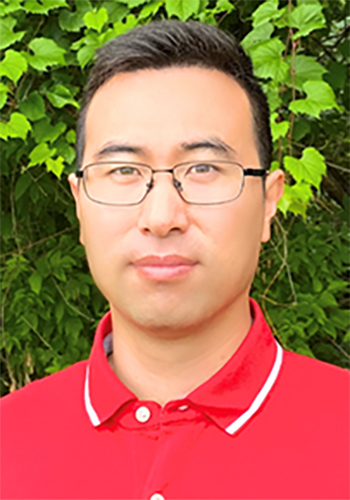
Dr. Raymond Hsieh is a Professor at the Department of Criminal Justice, Pennsylvania Western University California. His academic journey includes a B.S. in Forensic Science from Central Police University (Taiwan), M.S. in Information Technology from Rochester Institute of Technology (NY), and a Ph.D. in Information Communication Technology and Computer Mediated Communication from SUNY Buffalo. His research focuses on digital forensics, AI applications in forensic science, and big data analysis. He has authored foundational texts like Cognitive Mapping & Comparison and Intelligence and Security Informatics , and co-authored works with Dr. Henry Lee. Dr. Hsieh’s expertise extends to editorial reviewing for journals in information science and cybersecurity. He actively participates in international conferences and provides consultation to police departments globally. His certifications include computer forensic examination, forensic video analysis, and signal processing in audio/video forensics. He teaches courses blending theory with practical engagement, earning praise for his dynamic teaching methods. His current research explores AI and Deepfake technology’s role in forensic science. He emphasizes staying updated on forensic technology advancements while mentoring students and contributing to professional development programs at PennWest.
Matthew Williams, PhD, is an Assistant Professor and Associate Chair in the Department of Biomedical Engineering at Case Western Reserve University's Case School of Engineering. He holds dual affiliations with the School of Engineering and the School of Medicine. His research focuses on neuroprosthetics, rehabilitation engineering, and biomedical standards education. Key areas include developing advanced prosthetic control systems, improving mobility for individuals with disabilities, and integrating standards into engineering curricula. Williams' work combines biomechanical analysis, neural signal processing, and clinical validation. He has pioneered methods for 4-DoF prosthetic hand control using synergy-inspired algorithms and explored metabolic efficiency in variable impedance prosthetic knees. His studies on stroke rehabilitation and upper limb support systems have advanced understanding of motor recovery pathways. Recent publications emphasize interdisciplinary approaches, including moot court exercises for standards education and co-curricular industry partnerships. His device development spans biomimetic prosthetic hands, head/neck EMG interfaces for tetraplegia patients, and gait analysis tools for amputee populations. Awards and recognitions are not explicitly listed in the provided materials, but his prolific publication record (2002-2024) indicates sustained research impact. Teaching responsibilities include biomedical engineering standards courses and co-curricular programs. Labs and teams associated with his work likely involve collaborations between engineering and medical disciplines, though specific lab names aren't mentioned. Current research trends focus on closing the gap between prosthetic innovation and clinical implementation through rigorous testing and user-centric design.
Ernest K. Lai is Professor in the Department of Economics at Lehigh University's College of Business. He joined Lehigh in 2009 after earning a PhD from the University of Pittsburgh, following undergraduate and master's degrees at The Hong Kong University of Science and Technology and The University of Hong Kong. His research focuses on strategic communication between conflicting parties using game theory and laboratory experiments. He has published extensively in top journals like Journal of Economic Theory , Games and Economic Behavior , and Journal of Health Economics , covering topics such as mediated communication, confirmatory bias in health decisions, and multidimensional cheap talk. His work bridges theoretical models with empirical validation through behavioral experiments. Selected trends in his publications include: (1) exploring how communication credibility influences strategic outcomes, (2) analyzing information transmission in political and economic contexts, and (3) investigating behavioral biases in health and market decisions. His collaborations span researchers like Andreas Blume, Wooyoung Lim, and Joseph Tao-yi Wang.
Christopher L. Barrett is the Executive Director of the Biocomplexity Institute and Distinguished Professor of Computer Science at the University of Virginia. He holds a joint appointment in the School of Engineering and Applied Science. His interdisciplinary work spans computational science, dynamical networks, and AI-driven modeling. He leads large-scale research initiatives for federal agencies and has advised organizations like the Department of Defense and the European Commission. Education: Ph.D. in Bioinformation Systems (Caltech, 1985), Post-Ph.D. in Aerospace Experimental Psychology (U.S. Navy, 1986) Awards: 2021 Virginia Academy of Science Award, Jubilee Professorship (Chalmers University, 2012–2013), Distinguished International Professor (Royal Institute of Technology, 1997–1998) Research focuses on multi-scale systems, including RNA evolution, pandemic modeling, and sociotechnical infrastructure resilience. His work bridges computational methods with real-world problems like disaster preparedness and vaccine distribution strategies. He has published over 100 articles and holds seven patents. Recent publications emphasize agent-based frameworks for migration modeling, genomic surveillance, and HPC-driven epidemic analysis. His interdisciplinary approach unifies mathematical, biological, and social science methods to address complex global challenges.
Dr. Binod Bhattarai is a Lecturer (equivalent to Assistant Professor in the US) in the School of Natural and Computing Sciences at the University of Aberdeen, UK. He is also an Honorary Lecturer at University College London and a Co-founder and Adjunct Research Scientist at NAAMII, Nepal. Dr. Bhattarai heads the Multimodal Learning Lab, a cross-border initiative between the University of Aberdeen and NAAMII, Nepal. His educational background includes a PhD in Computer Science from Universite de Caen, France, and previous work experience as a Senior Research Fellow at University College London, a Postdoctoral Research Associate at Imperial College London, and a Data Scientist at Telenor Group, Norway. Dr. Bhattarai's research focuses on developing robust and interpretable machine learning algorithms that can reason across complex, heterogeneous data. His work spans multiple domains including surgical videos, medical imaging, and low-resource languages, with applications in healthcare, energy, and global agriculture. He follows a core philosophy of building AI that is not only powerful but also trustworthy and explainable, with a belief that true intelligence lies in the ability to seamlessly integrate diverse data sources. His publications demonstrate strong trends in multimodal learning, particularly in medical applications. A significant portion of his recent work focuses on gastrointestinal image analysis, out-of-distribution detection in medical contexts, and federated learning approaches for healthcare data. His research often bridges computer vision, natural language processing, and medical imaging to create practical AI solutions for healthcare challenges. Best Paper Award Finalist, MIUA 2025 Runner-up, ARCADE Challenge, MICCAI 2023 Google Cloud Research Innovator, 2022 Outstanding Reviewer Award, BMVC, 2021 Winner FetReg Endoscopic Vision Challenge at MICCAI 2021 Outstanding Reviewer Award, BMVC, 2019 Best Student Paper Award of Image, Video and Multidimensional Signal Processing, ICASSP, 2016 Best Paper Award Runner up, ACM ICVGIP, 2016 DAAD Postdoc Net-AI-Fellow, 2020 (top 22 out of 192) Dr. Bhattarai actively mentors PhD students and research assistants through the Multimodal Learning Lab. Current PhD students include Jardin Ruari (Assessing AI algorithms for Capsule Endoscopy) and Krit Duangprom (Surgical Tool and Hand Pose Estimation). His lab has successfully guided numerous researchers who have gone on to PhD programs at prestigious institutions including MILA, Dartmouth College, University of Utah, and RIT. He has secured multiple research grants including a Co-PI role for "Non-constrast CT Head Image Analysis" funded by The Ronald Sutton Academic Trust (30.8K GBP, 2024-27), and a PI role for "Frontiers Seed Funding" by the Royal Academy of Engineering (20K GBP, 2023-2024). The Multimodal Learning Lab, which Dr. Bhattarai heads, is a cross-border initiative between the University of Aberdeen and NAAMII, Nepal. The lab focuses on developing robust and interpretable machine learning algorithms that can reason across complex, heterogeneous data. Current research projects include explainable anomaly detection in GI endoscopy, surgical vision world models, multimodal federated learning, surgical data science, and synthetic data generation. The lab operates with a global research pipeline that fosters talent and innovation across borders.
Simona Sbranna is a postdoctoral researcher at the Institute of Linguistics – Phonetics , University of Cologne, specializing in second language acquisition, prosody, and interactional fluency. Her work focuses on the multidimensional aspects of L2 development, including emotional and multimodal feedback signals. Education: MA in Modern Languages and Literatures (University of Salerno, 2018), PhD in Linguistics (University of Cologne, 2023). Key Research Areas: L2 prosodic competence, backchannel signals, gaze behavior, interactional fluency, and the emotional dimensions of language learning. Publications: 15+ peer-reviewed articles and book chapters examining prosody, fluency, and multimodal communication in L1 and L2 contexts. Her recent work explores the integration of quantitative metrics for assessing L2 interactional fluency, including vocal feedback and eye gaze patterns. She has developed training programs for German language learners based on her research findings. Notable awards include the IPA PhD Thesis Award (2024) and the Franco Ferrero Award (2022). She has received multiple scholarships from a.r.t.e.s., Mercator Institute, and DAAD. Simona teaches courses on second language learning theories and laboratory phonology at the University of Cologne. She collaborates with international institutions and participates in conferences like Speech Prosody and AISV. Labs & Teams: She works within the Skills and Structures in Language and Cognition research project, focusing on prosodic and interactional aspects of language acquisition.
Joaquim Bruna Floris is a Professor in the Department of Mathematics at Universitat Autònoma de Barcelona (UAB). He has held leadership roles including Director of the Mathematics Department (1998–2002) and Director of the Mathematical Consultancy Service (1999–2002). His academic career began with a Degree in Mathematics from Universitat de Barcelona (1975) and a PhD in Mathematical Sciences from UAB (1978). He has been affiliated with UAB since 1975 in various capacities, including teaching and research roles. His research focuses on complex analysis, harmonic functions, and functional analysis, with contributions to topics like Hardy spaces, holomorphic functions, and singular integrals. He has led 14 research projects funded by institutions such as the Spanish Ministry of Education and the European Commission, exploring areas from function theory to signal processing fundamentals. Recent publications (2015–2024) emphasize calculus applications, geometric formulas, and financial mathematics. His work bridges pure and applied mathematics, with pedagogical contributions to undergraduate education through materials like the multidimensional fundamental theorem of calculus.
Shuchin Aeron is an Associate Professor in the Department of Electrical and Computer Engineering at Tufts School of Engineering, with joint appointments in the Departments of Computer Science and Mathematics. He holds a Ph.D. from Boston University (2009) and completed postdoctoral research at Schlumberger Doll Research, focusing on borehole acoustic signal processing. His research spans statistical signal processing, machine learning, compressed sensing, and information theory, with applications in geophysics, bioengineering, and imaging. Aeron has authored over 175 publications and holds patents in acoustic signal processing. He received the NSF CAREER Award (2016) and is a Senior Member of the IEEE. Educations: Ph.D., Electrical Engineering, Boston University, 2009 M.S., Electrical Engineering, Boston University, 2004 B.Tech., Indian Institute of Technology, 2002 Research Interests: Statistical signal processing (SSP), inverse problems, compressed sensing, information theory, convex optimization Machine learning applications in geophysical signal processing, imaging, and bioengineering His work emphasizes optimal sampling and recovery of multidimensional signals, with contributions to compressed sensing architectures and generative models for particle physics experiments. He leads NSF-funded projects on data science and domain generalization, and collaborates with industry partners like Schlumberger and Mitsubishi Electric Research Labs. Awards: NSF CAREER Award (2016) Mitsubishi Electric Research Lab Research Gift (2015) Grants and Funding: NSF HDR TRIPODS (2019–2023) AFOSR: Enabling Trusted Human-Like Artificial Teammates (2018–2023) NSF: Optimal Sampling and Recovery for Multilinear Signals (2013–2016) Aeron teaches advanced courses in probabilistic systems analysis, information theory, and machine learning. He directs the Tufts Data Science undergraduate and graduate programs, and serves on editorial boards of journals including Frontiers in Signal Processing and IEEE Transactions on Geoscience and Remote Sensing .
Shaul Mukamel is the Chancellor Professor of Chemistry at the University of California, Irvine (UCI), with affiliations at the Freiburg Institute for Advanced Studies (FRIAS) in Germany. He holds a Ph.D. from Tel Aviv University (1976) and has held faculty positions at Rice University, the Weizmann Institute, and the University of Rochester. His research focuses on developing computational techniques for ultrafast laser spectroscopy, probing electronic and vibrational dynamics in molecules, and applying these to biophysical systems like protein folding, photosynthetic complexes, and semiconductor nanostructures. He is a recipient of prestigious awards including the Sloan, Dreyfus, Guggenheim, and Alexander von Humboldt Fellowships, and is a Fellow of the American Physical Society and Optical Society of America. Research Interests: His work spans nonlinear optical spectroscopy, attosecond X-ray techniques, quantum coherence in photosynthetic systems, and entangled photon-based spectroscopy. He has pioneered methods for analyzing multidimensional optical signals and simulating energy transfer pathways in biological complexes. Grants & Funding: Supported by NIH, NSF, DOE, and Petroleum Research Fund grants for studies on molecular relaxation, nonlinear optical phenomena, and single-molecule spectroscopy. Awards: OSA Lippincott Award (2015), APS Plyler Prize (2008), and numerous fellowships. His textbook Principles of Nonlinear Optical Spectroscopy (Oxford, 1995) is a seminal reference in the field.
Professor Cynthia H.Y. Fu is a Professor of Affective Neuroscience and Psychotherapy at King's College London, affiliated with the Institute of Psychiatry, Psychology and Neuroscience. She leads the Centre for Affective Disorders and holds an honorary consultant role in the National Affective Disorders Tertiary Clinic and OPTIMA Bipolar Disorders Service. Her research focuses on biomarker identification for mood disorders, AI-driven treatment prediction, and neuromodulation therapies, particularly transcranial direct current stimulation (tDCS). Professor Fu's work emphasizes personalized approaches integrating psychoanalytic perspectives with neuroscience. Education and Roles: She oversees the MSc in Clinical Psychotherapy program and contributes to editorial roles at Brain Research Bulletin . She is a member of the British Association for Psychopharmacology and Institute of Psychoanalysis. Research Interests: Biomarkers, treatment prediction, neuromodulation (tDCS), psychoanalysis, and AI applications in mental health. Her COORDINATE-MDD consortium leverages machine learning to analyze neuroimaging data for treatment response prediction. Publications and Grants: Over 200 publications in journals like Nature Medicine and Journal of Affective Disorders . Funded by NIHR, NIMH, Wellcome Trust, and others. Recent studies explore home-based tDCS efficacy, driver cognitive load via biometric sensors, and global affective neuroscience. Collaborations: Leads international consortia (ENIGMA, COORDINATE-MDD) and global studies on depression heterogeneity. Involved in multidisciplinary projects linking neuroimaging with clinical outcomes and genetics.
Robert Miller holds the Professorship for Psychological Methodology at the Department of Psychology, Humboldt University of Berlin. His academic work centers on advancing methodological rigor in psychological science through interdisciplinary approaches bridging statistics, neuroscience, and digital technology. Miller's research program integrates core domains including stress physiology (using cortisol biomarkers), digital health application development, and psychometric instrument validation. He pioneers methods for high-dimensional data analysis in "large-p, small-n" scenarios, Bayesian evidence generation frameworks, and meta-psychological standardization of research protocols. His work consistently emphasizes ecological validity through comparisons of laboratory versus real-world settings. Publication trends reveal Miller's strategic focus on methodological innovation across stress measurement and digital health. His recent work demonstrates increasing integration of signal processing techniques (e.g., wavelet transforms) with psychological assessment, alongside cross-national validation studies of stress biomarkers. A distinctive pattern involves translating complex statistical models into practical tools for clinical outcome assessment while maintaining rigorous psychometric properties.
Shun Cao is an Assistant Professor in the Department of Information Science Technology at the University of Houston. His research spans complex systems, agent-based modeling, and data-driven decision-making, with applications in transportation, sports analytics, and organizational behavior. Affiliation: Department of Information Science Technology, University of Houston Academic Rank: Assistant Professor Contact: scao7@central.uh.edu Shun Cao's research interests include: Agent-Based Modeling Complex Social Systems Leadership Dynamics Sports Analytics Data-Driven Decision-Making Manufacturing Process Optimization His scholarly contributions focus on modeling collective behaviors in traffic systems, analyzing team dynamics in sports, and understanding leadership emergence through conversational interruptions. He also explores data-driven approaches to manufacturing process optimization using machine learning techniques. Shun Cao teaches courses in production operations (TLIM 4341) and social systems modeling (TLIM 4397). His work integrates computational methods with real-world applications, as evidenced by his Google Scholar profile.
Dr. Leah Reid is an Assistant Professor of Composition at the University of Virginia , where she teaches courses in composition and technology. Her work bridges music composition , electroacoustic music , and sound art through explorations of timbre, space, and perception. D.M.A. and M.A. in Music Composition, Stanford University B.Mus, McGill University Reid’s research focuses on the perceptual modeling of timbre and its applications in creating immersive soundscapes. She has developed a multidimensional timbre model to explore relationships between reverberant space and timbre , often using interactive sound installations and electroacoustic techniques . Her recent articles/compositions emphasize spectral density , timbral transformation , and spatial audio design . Reid is a Vice President of the International Alliance for Women in Music (IAWM), Vice President for Programs and Projects for the Society of Electroacoustic Music in the United States (SEAMUS), and Artistic Director of the Boston New Music Initiative (BNMI). She has received commissions from ensembles including Accordant Commons , Jack Quartet , and Yarn/Wire , with presentations at international festivals such as ICMC , ManiFeste , and Tilde New Music Festival . 2022 Guggenheim Fellowship American Prize in Composition Pauline Oliveros Award (IAWM) Fellowships from MacDowell, Yaddo, and Copland House Her collaborative projects and educational outreach highlight her engagement with emerging composers and technology-driven music . Reid’s works are published by Ablaze Records, New Focus Recordings, and BabelScores, reflecting her influence in contemporary acousmatic and electroacoustic circles.
Professor Skye McDonald is a leading Clinical Neuropsychologist at the University of New South Wales (UNSW), School of Psychology, with over 170 peer-reviewed publications focusing on social cognition and brain injury rehabilitation. She leads the national Centre of Research Excellence in Brain Recovery 'Moving Ahead,' addressing psychosocial rehabilitation after traumatic brain injury. McDonald holds a BSc (Honors, First Class) from Monash University, an MSc in Clinical Neuropsychology (First Class Honors) from the University of Melbourne, and a PhD from Macquarie University. With 10 years of clinical experience working with individuals with acquired brain disorders prior to her academic career, she brings significant practical insight to her research. Her research program centers on understanding how the brain processes emotions and social cognition following injury, particularly how social signal interpretation breaks down after brain trauma. McDonald is an active member of the Australasian Society for the Study of Brain Impairment and serves as a core member of PsycBITE, a database cataloging evidence-based treatments for brain injury disorders. Her work spans multiple methodologies including neuroimaging, behavioral experiments, and clinical intervention development, with recent emphasis on telehealth assessment tools, cross-cultural emotion perception, and biopsychosocial frameworks for apathy. Professor McDonald's publications reveal a consistent trajectory examining social cognition assessment and rehabilitation across diverse populations including traumatic brain injury patients, dementia populations, and cross-cultural contexts. Her recent work has expanded into developing and validating brief assessment tools like the Brief Assessment of Social Skills (BASS) and implementing group-based social cognition interventions such as SIFT IT. The temporal pattern of her publications shows increasing focus on ecological validity, cross-cultural considerations, and implementation science in neuropsychological rehabilitation. As a respected leader in her field, McDonald contributes to professional discourse through her extensive publication record and leadership roles. Her work bridges clinical practice and research, with particular emphasis on translating findings into practical assessment tools and rehabilitation protocols that address real-world challenges faced by individuals with brain injuries and their families. Professor McDonald maintains an active research program with numerous current projects examining emotion recognition, social disinhibition mechanisms, and culturally adapted assessment tools. Her work on the Vietnamese Montreal Cognitive Assessment demonstrates her commitment to global applicability of neuropsychological instruments, while her leadership in the Australian Traumatic Brain Injury Initiative reflects national recognition of her expertise.
Dr. Mihajlo Novakovic is a researcher at the Biomolecular NMR Group (Institute of Biochemistry, ETH Zurich). His work focuses on advancing NMR spectroscopy techniques for structural and dynamical studies of labile biological systems, particularly RNA-protein interactions in SARS-CoV-2 and glycan structures. Primary Affiliation: ETH Zurich, Institute of Biochemistry Specialization: Sensitivity-enhanced NMR experiments, biomolecular condensates, and RNA structural biology. Research Highlights : Developed LLPS REDIFINE for characterizing multicomponent condensates without labeling. Optimized Hadamard magnetization transfer for studying labile protons in SARS-CoV-2 RNA. Engineered cross-polarization schemes to improve heteronuclear NMR transfers involving labile protons. Explored glycan flexibility and signal resolution challenges through integrative NMR approaches. Publication Trends : His recent work emphasizes RNA structure , protein-RNA interactions , glycan dynamics , and advanced NMR methodologies , particularly for SARS-CoV-2-related systems.