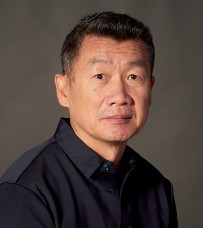
Shi Li is a Senior Lecturer in the School of Humanities, Arts, and Social Sciences at the University of New England, specializing in Chinese language instruction and cross-cultural studies. His research examines gratitude development in children towards parents and intercultural dynamics, with qualifications spanning English education, history, business administration, and a PhD. He teaches Chinese language courses at all levels, contemporary Chinese culture, and calligraphy. Research interests center on family education and cultural studies, particularly addressing issues of filial piety and entitlement in aging societies globally. Grants include a 2016 Visiting Research Fellowship at Sapienza University of Rome.
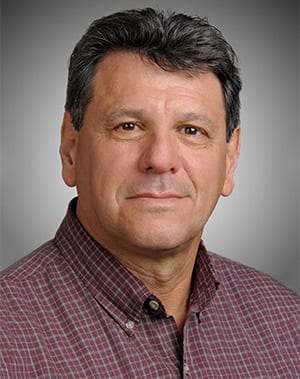
Professor Andres Campiglia develops sustainable analytical methods for environmental, forensic, and food science applications at UCF's Chemistry Department. Research includes non-destructive forensic fiber analysis, phosphorous sensing for water/urine testing, organic food authentication, and petroleum pollution tracking in Gulf ecosystems. Methodologies emphasize green chemistry principles and multidimensional analytical approaches. Current projects focus on PAH analysis in biological matrices, microplastic contaminant interactions, and chemometric profiling for drug trafficking networks.
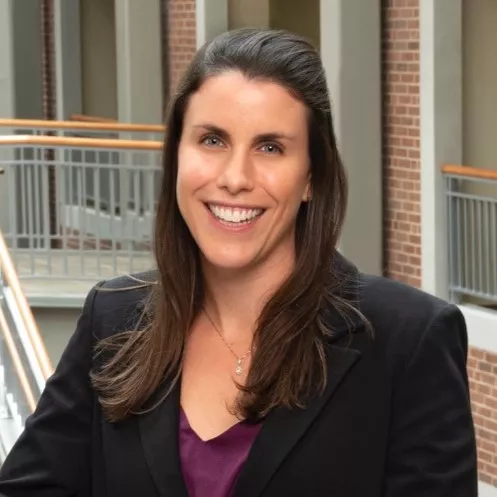
Christina Hymer is an Assistant Professor in the Management & Entrepreneurship department at the Haslam College of Business, University of Tennessee, Knoxville. She holds a Ph.D. in Organizational Behavior/Human Resources from the University of South Carolina and a B.S. in Industrial and Labor Relations from Cornell University. Education: Ph.D., Business Administration, University of South Carolina (2021) B.S., Industrial and Labor Relations, Cornell University (2012) Her research focuses on professional identity, work arrangements, and how workers navigate challenges to their identity while finding meaning at work. She teaches courses on management principles and performance management. Prior to academia, she worked as a human capital consultant at Deloitte Consulting. Her recent publications explore topics like intersectionality in the workplace, religion’s role in entrepreneurial investing, and multidimensionality in research methodologies. These studies reflect her interdisciplinary approach to organizational behavior and management theory. Awards: Promising Researcher Award (Darla Moore School of Business, 2020) PhD Student Spotlight (Darla Moore School of Business, 2020) Co-PI for Darla Moore School Research Grant (2019) Hymer’s work bridges academic research with practical insights from her industry experience, emphasizing equity, power dynamics, and human capital strategies. She contributes to the academic community through peer-reviewed publications and grants.
Kyle A. Caudle is a Professor of Mathematics at the South Dakota School of Mines and Technology, holding a Ph.D. from George Mason University, an M.S. from Salve Regina University, and a B.A. from Western State College. His research spans forecasting, tensor analysis, and anomaly detection, with applications in engineering and data science. Caudle develops computational tools for time series forecasting, tensor decomposition, and graph representation learning. He created software packages like Flow Field, rTensor2, and LTAR, published on CRAN. His interdisciplinary projects include collaborations with NIST and Naval Surface Warfare Centers on surface ship maintenance and anomaly detection. Publications emphasize multilinear algebra, temporal forecasting, and machine learning. Recent work advances tensor factorization for high-dimensional data, hierarchical graph networks, and deep generative models. Awards include the 2015 Peter Holmes Prize for innovative statistics teaching and accreditation as a Professional Statistician (ASA, 2013). He mentors graduate students and co-developed the Ph.D. in Data Science.
Randy C. Hoover is a Professor and Assistant Department Head in the Computer Science and Engineering department at South Dakota Mines. He directs the Mines Machine Learning and Intelligent Systems Lab (MMLIS-L), focusing on multilinear systems theory, forecasting methods, and subspace learning. His research bridges machine learning, tensor analysis, and dynamical systems. Research expertise includes high-dimensional data modeling, time-series forecasting, and pattern recognition, with applications spanning computer vision, cybersecurity, and fluid dynamics. His work frequently employs tensor decomposition and advanced statistical methods to solve complex multidimensional problems. Articles demonstrate consistent focus on tensor-based machine learning innovations, with recent emphasis on time-series forecasting and anomaly detection. Earlier works establish foundations in multilinear algebra applications for pattern recognition. Teaching covers signal processing, embedded systems, and dynamic systems. Education includes a BS and MS from Idaho State University and a PhD from Colorado State University.
Jeremy Lise is a Professor in Cornell University's Department of Economics and Research Consultant at the Federal Reserve Bank of Minneapolis. His research examines labor market dynamics, wage inequality, household economics, and policy evaluation. Education: Ph.D. from Queen's University (2006) M.A. from McMaster University (1999) B.A. from University of Guelph (1998) Research focuses on matching models in labor markets, human capital accumulation, intra-household resource allocation, and minimum wage impacts. Current projects investigate multidimensional skill sorting, wage distribution dynamics, and employment effects of disability legislation. Publications demonstrate methodological innovation in structural econometrics, with applications to inequality measurement and policy evaluation. Recent work includes studies of minimum wage impacts in Twin Cities and employment effects of the Americans with Disabilities Act. Awards include: Carter-Schwab Professorship C.A. Curtis Prize SSHRC Doctoral Fellowship Advising: Supervised 20+ PhD students now placed at leading institutions including University of Chicago, Federal Reserve Board, and international universities. Teaches graduate courses in labor economics and quantitative labor market models.
Philippe G Schyns is a Professor of Psychology and Dean of Research Technology at the School of Psychology & Neuroscience, University of Glasgow. He holds a Ph.D. in Cognitive Science from Brown University and is a Fellow of the Royal Society of Edinburgh. His research focuses on the neural mechanisms of visual categorization, particularly face, object, and scene recognition, with an emphasis on dynamic facial expressions and cultural influences on emotion perception. His work integrates computational models, neuroimaging, and behavioral studies to explore how the brain processes visual information. Key contributions include studies on the neural pathways for emotion categorization and the cultural specificity of facial expressions. He has also contributed to advancements in robotics and wearable technology through multimodal sensing research. His articles frequently address topics like neural network equivalence to DNN models, pre-frontal cortex guidance in categorization, and social perception biases. Awards include his Royal Society of Edinburgh Fellowship. He collaborates widely, including with experts in neuroscience, robotics, and computer science.
Lauren Brown is an Assistant Professor of Gerontology at the University of Southern California’s Leonard Davis School of Gerontology, holding the Edward L. Schneider, MD, Chair in Gerontological Research. Her work focuses on biopsychosocial processes of aging, particularly the challenges faced by Black Americans in maintaining health and well-being as they age. She investigates stress exposure, appraisal, and resilience, challenging traditional research methods to better represent Black aging experiences. Education includes a PhD in Gerontology from USC (2018), an MPH in Health Systems Management from Tulane (2010), and a BS in Health Promotion and Business Law from USC (2008). She completed an NIA Postdoctoral Fellowship at the University of Michigan (2018–2020). Research priorities include racial disparities in aging, biomarkers of aging in diverse populations, and ethical implications of genomic research in Black communities. Her approach combines quantitative methods with community-based data to drive policy changes impacting Black communities. She emphasizes destigmatizing STEM fields for underrepresented groups through her teaching. Dr. Brown’s affiliations include chairing the committee to Enhance Excellence and Diversification of Mentored Research Training. Her work critiques measurement frameworks and sampling practices to ensure accurate depictions of Black aging experiences. Her 15+ recent publications analyze topics like historical trauma’s biological impacts, employment discrimination effects, and intersectional pathways to cognitive health. Though no specific awards are listed, her academic leadership and research contributions highlight her impactful career.
Monique D. A. Kelly is an Assistant Professor in the Department of Sociology at Michigan State University (MSU), affiliated with the College of Social Science. She holds a PhD from the University of California, Irvine (2019). Her research focuses on racial and ethnic stratification in the Anglophone Caribbean, particularly examining how multidimensional race impacts socioeconomic outcomes, public opinion, and national identity. She employs quantitative methods to analyze issues like colorism, socioeconomic wellbeing (e.g., household amenities, homeownership), and the role of racial ideologies in shaping inequality. Her work challenges conventional paradigms of race in the Americas, emphasizing the diversity within the Black diaspora and informing social policy. She is core faculty at MSU’s Center for Latin American and Caribbean Studies (CLAS), contributing to interdisciplinary research and international studies programs. Education: PhD in Sociology, University of California, Irvine, 2019 Research Interests: Dr. Kelly’s research bridges racial inequality, socioeconomic analysis, and Caribbean studies. She investigates how racial categories and skin color influence wealth, education, and housing in countries like Jamaica and Trinidad and Tobago. Her work also addresses the persistence of colorism and its intersection with colonial legacies, advocating for evidence-based policy to address systemic disparities. Publications: Her articles, including studies on colorism, racial dynamics, and Caribbean inequality, highlight methodological innovations and regional-specific analyses. Recent work emphasizes comparative studies to contextualize racial stratification across Anglophone Caribbean nations. Affiliations: Core faculty at CLAS, MSU, where she collaborates on Latin American and Caribbean-focused initiatives. Engages with international studies programs to expand global sociological perspectives.
Adam Meade is a Professor and Coordinator of the Industrial-Organizational Psychology Program at North Carolina State University's Department of Psychology. His expertise spans psychometrics, survey methodology, and personality assessment. He focuses on improving measurement techniques in organizational and psychological research, particularly in reducing bias and enhancing data quality in high-stakes assessments. Dr. Meade's work emphasizes practical applications of psychological science in workplace settings, including counterproductive work behaviors and the design of effective assessment tools. His research explores topics such as response formats, careless responding in surveys, and the utility of multidimensional item response theory (IRT). He has contributed to the development of the 'mirt' R package for IRT analyses and has published extensively on measurement invariance, differential item functioning, and the viability of crowdsourcing in survey research. Notable contributions include studies on forced-choice response formats, the impact of response order on Likert scales, and the application of social psychology principles to improve survey engagement. His work bridges theoretical advancements with real-world organizational challenges, particularly in human resource management and talent assessment.
Professor Daniel Hruschka is affiliated with the School of Human Evolution and Social Change at Arizona State University. His research focuses on evolutionary anthropology, public health, and cultural evolution, addressing topics such as BMI variation, socioeconomic disparities, and the impact of social networks on health behaviors. His work explores the intersection of cultural diversity and health outcomes, including studies on food insecurity, wealth indices, and the influence of social relationships on body mass index (BMI). Recent projects include developing tools for integrating complex data categories and analyzing the relationship between altitude and BMI in low- and middle-income countries. While no specific academic awards are mentioned, his contributions to understanding cultural and biological factors in human behavior have been published widely in peer-reviewed journals. He has advised no listed students, and his research collaborations may involve interdisciplinary teams focusing on global health and evolutionary science.
Anandi Mani is Professor of Behavioural Economics and Public Policy at the Blavatnik School of Government, University of Oxford. She is a leading scholar in development economics, with a focus on the behavioural dimensions of poverty, gender inequality, and public policy. Her research has been widely published in top-tier journals and featured in major media outlets such as the BBC, The New York Times , and The Guardian . She holds affiliations as a Research Affiliate at Ideas42 (Harvard University), a Fellow at the Centre for Comparative Advantage in the Global Economy (CAGE) at the University of Warwick, and a Member of the Institute for Advanced Study at Princeton. Professor of Behavioural Economics and Public Policy, Blavatnik School of Government, University of Oxford Research Affiliate, Ideas42, Harvard University Fellow, CAGE, University of Warwick Member, Institute for Advanced Study, Princeton Member, World Economic Forum Global Council on the Future of Behavioral Sciences Her research explores how scarcity—particularly financial scarcity—affects cognitive bandwidth and decision-making, drawing on field studies with sugarcane farmers in India and drought-affected farmers in Brazil. She investigates how poverty creates a 'scarcity mindset' that impairs long-term planning and perpetuates cycles of disadvantage. Her work also examines gender gaps in political participation, showing how women are underrepresented not only in elected office but in the preparatory stages of political engagement such as networking and civic involvement. The body of her recent publications reveals a strong trend toward integrating behavioural insights into development policy, with a focus on designing interventions that account for cognitive limitations under scarcity. Her articles span topics including cash transfer programs, stigma among sex workers, household investment decisions, and the psychological effects of poverty. This body of work underscores a consistent theme: structural inequalities are not only economic but cognitive and social, requiring multidimensional policy responses. Her scientific recognition includes participation in the World Economic Forum at Davos and membership in its Global Council on Behavioral Sciences. Her research has influenced public discourse on poverty, with features in The New York Times and BBC programs like The Why Factor , which highlighted her findings on how scarcity damages decision-making. Programme participant, World Economic Forum 2017, Davos Member, Global Council on the Future of Behavioral Sciences, WEF Anandi Mani advises on policy-relevant research and has collaborated extensively with international organizations and think tanks such as the International Growth Centre and Ideas42. She teaches courses in development economics, behavioural economics, and public policy at both undergraduate and graduate levels. Her work continues to shape the understanding of how psychological factors interact with economic conditions to influence individual and societal outcomes. She leads research on interventions that smooth income volatility and reduce cognitive load among the poor, and her lab collaborates with policymakers to scale evidence-based solutions. Her team emphasizes experimental methods and real-world applicability, often working in low- and middle-income countries to test and refine public policies.
Eunae Han is an Assistant Professor in the Counseling and Special Education department at the University of Texas at El Paso. Her work bridges clinical practice and research, emphasizing feminist approaches, trauma-informed care, and social justice advocacy. Prior to her academic role, she practiced as an EMDR-trained counselor in South Korea for three years. Dr. Han actively contributes to editorial boards of the Journal of Counseling and Development and Measurement and Evaluation in Counseling and Development , reflecting her commitment to advancing scholarly discourse in counseling fields. Her research focuses on dismantling systemic barriers in mental health through multicultural and intersectional lenses, particularly addressing women's mental health, dis/ability awareness in education, and crisis intervention methodologies. She also explores innovative teaching strategies like photovoice techniques to enhance research skills among counseling students at Hispanic-serving institutions. Dr. Han’s current projects include validating culturally adapted measurement tools, such as the Spanish version of the Machismo Measure for Mexican men with domestic violence histories. Key themes in her writing include feminist fourth-wave research frameworks, the role of rumination in posttraumatic growth, and addressing institutional oppression faced by Black women in academia. She advocates for counselor educators to incorporate anti-oppressive practices in training programs, emphasizing reflective cultural audits to strengthen social justice competencies.
Dr. Sarah Coundouris is a Research Fellow at the School of Psychology, Faculty of Health, Medicine and Behavioural Sciences, The University of Queensland. She was awarded her PhD in May 2022 and is currently employed as a Postdoctoral Research Fellow on an ARC Discovery Project led by Professor Julie Henry, focusing on prospective memory function across the adult lifespan. Her primary research interests include Social Cognition (capacity to perceive and interpret social information), Prospection (envisioning and preparing for the future), and Lifespan Ageing . Her early work centered on cognitive changes in Parkinson's disease, while her recent research examines cognition in normal adult ageing. She has published in top-tier journals including Psychological Bulletin , Neuroscience and Biobehavioral Reviews , and British Journal of Clinical Psychology . Analysis of her recent publications reveals a strong focus on cognitive aging, social frailty, and emotion processing across the lifespan. Her work frequently employs meta-analytic methods and examines real-world applications of cognitive research, particularly in healthcare and aging contexts. Key trends include the investigation of stereotype threat, self-compassion interventions, and the neural underpinnings of age-related cognitive changes. Dr. Coundouris is actively supervising multiple postgraduate students across diverse projects including virtual reality applications for cognitive assessment, social frailty in aging populations, and healthcare framing effects on ageism. She serves as an associate advisor on four doctoral projects and one master's thesis, collaborating with researchers including Professor Julie Henry and Dr. Sarah Grainger. She is currently involved in the ARC Discovery Project 'Mapping children's foresight capacities' (2025-2028) and contributes to research examining cognitive decision-making in older adults, particularly regarding financial choices and social wellbeing.
Associate Professor Michael Stewart is affiliated with the Faculty of Science at the University of Sydney, specializing in statistical modeling and computational statistics. His research focuses on mixture models, extremes of stochastic processes, and feature selection for data analysis. Mixture Models Extremes of Stochastic Processes Density Estimation Feature Selection Michael's recent work explores Bayesian hypothesis testing with diffuse priors, sparse gamma scale mixture detection, and variational discriminant analysis. His research aligns with the Faculty of Science's focus on data and decisions, precision health, and complex systems. His applications span environmental science (soil microbiology), public health (HIV treatment efficacy, firearm policy), and computational statistics. Michael supervises PhD student Hao CHEN and has contributed to interdisciplinary projects in mathematics, health, and ecology. Grant: Exploring relationships in day-to-day data (2016) Grant: Multiscale protein identification methods (2008) Michael's publications reflect collaborations in environmental science, biostatistics, and statistical software development. He has advised students in statistical methodologies and applied research.