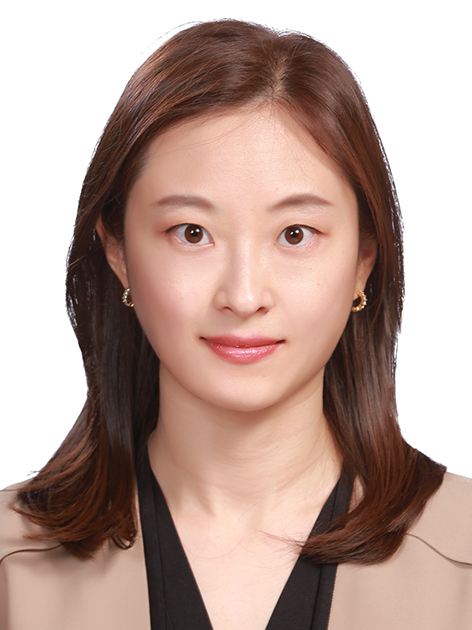
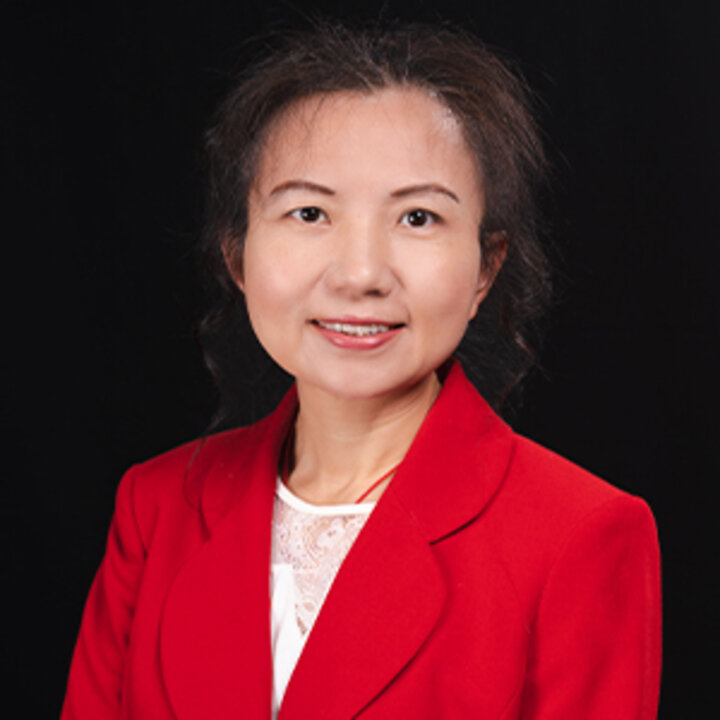
Blanca Cecilia Zuluaga Díaz is a Professor and director of the Doctoral Program in Business Economics at Icesi University, Cali, Colombia. She holds a Ph.D. and Master's in Economics from Katholieke Universiteit Leuven and a Bachelor's from Universidad del Valle. Labor Market : Analyzed through discrimination, gender, and ethnicity lenses Poverty Reduction : Focused on multidimensional poverty and child labor Gender Studies : Explored motherhood penalties and women's autonomy Her recent journal articles span 10 years, with 2023 publications on employment policy and public choice. Trends include poverty measurement (2022), conditional cash transfers (2022), Afro-Colombian women's education outcomes (2021), and gender/data science (2020). She has published in journals like Social Indicators Research , International Journal of Educational Development , and Journal of Community Health . Blanca leads research teams at Icesi University and collaborates with institutions like CAF-Banco de Desarrollo de América Latina y el Caribe. Her work intersects economics with behavioral and social indicators, and she has contributed to public policy analysis through lecture notes and datasets.
Dr. Soo Hyun Cho serves as an Associate Professor in the Department of Family and Consumer Sciences within the College of Health & Human Services at California State University, Long Beach. Her academic expertise centers on financial behavior, family economic well-being, and cross-cultural financial socialization, with significant contributions during the pandemic era. Her educational foundation includes: Ph.D. in Family Resource Management (2009), The Ohio State University M.S. in Family Resource Management (2005), Korea University B.S. in Home Economics Education (2003), Korea University Dr. Cho's research critically examines financial stress and its ripple effects on mental/physical health, particularly through pandemic-related studies. Her work in behavioral economics investigates how cultural contexts shape financial literacy and decision-making, while her cross-cultural comparisons reveal nuanced differences in financial behavior between Eastern and Western populations. She employs innovative methodologies including experimental designs and longitudinal analyses to explore links between economic insecurity, psychological resilience, and life satisfaction. Her publication trajectory (2020-2025) demonstrates escalating focus on pandemic-induced financial behaviors, with recurring themes of health-economic intersections, student loan decision-making, and racial/ethnic disparities in financial systems. Methodologically, she bridges quantitative rigor with real-world applicability through collaborations across public health and economics disciplines. Her accolades reflect scholarly impact: Multi-Disciplinary Research Award (2020-21) for data-driven social science modeling Best Paper Award (2022) from Family & Consumer Sciences Research Journal Outstanding Professional in Research Award (2017) Faculty Stipend Award for Ethics Research (2019-20) As an educator, Dr. Cho has adapted curricula for pandemic-era challenges in Family and Consumer Sciences education, receiving recognition as Outstanding Advisor (2017). Her research program demonstrates consistent external validation through competitive university grants and high-impact publications in top-tier journals like Journal of Consumer Affairs and Journal of Financial Therapy.
Gary Leal is Research Professor and Professor Emeritus of Chemical Engineering at the University of California, Santa Barbara , within the Robert Mehrabian College of Engineering. A member of the National Academy of Engineering and a Fellow of the American Physical Society, AIChE, Society of Rheology, and American Academy of Arts & Sciences, he has spent decades investigating the dynamics of complex fluids including polymer solutions, emulsions, foams, and liquid-crystalline polymers. Education: B.S. Chemical Engineering, University of Washington, 1965 M.S. Chemical Engineering, Stanford University, 1968 Ph.D. Chemical Engineering, Stanford University, 1969 Research Interests: Leal's current work centers on microstructure–flow coupling in complex fluids. Using a blend of large-scale computation and advanced experimental techniques (many unique to his laboratory), his group studies coalescence, thin-film stability, surfactant effects, nanoparticle-laden interfaces, and the nonlinear rheology of entangled polymers and liquid-crystalline systems. A strong emphasis is placed on quantitative prediction of macroscopic properties from molecular and mesoscale physics. His recent publications reveal sustained leadership in shear banding , flow-induced concentration fluctuations , and orientation imaging via Rheo-SANS. Collectively these works advance the multiscale modeling of soft materials undergoing industrial processing flows and provide diagnostic tools to fingerprint microstructural evolution in real time. Honors & Awards: Bingham Medal (Society of Rheology, 2001) Fluid Dynamics Prize (American Physical Society, 2002) G.I. Taylor Medal (Society of Engineering Science, 2015) Fellow of APS, AIChE, Society of Rheology, AAAS National Academy of Engineering Member since 1987 Dozens of named lectureships including Batchelor, Mason, Lacey, Finlayson, and more Grants & Teams: While specific grant numbers are not cited, Leal has continuously led large, multi-investigator projects—evidenced by NASA Group Achievement Awards, NSF/DOE citations in articles, and extensive experimental facilities. His team operates a multifaceted laboratory coupling rheometry, microfluidic four-roll mills, custom tensiometers, and neutron/x-ray scattering beamlines, maintaining collaborations with national laboratories and international centers for soft-matter research.
Ling Lin Harris serves as Assistant Professor of Accountancy in the School of Accountancy at the College of Business, University of Nebraska-Lincoln. Previously, she held faculty positions at the University of Illinois and University of South Carolina. Education: Ph.D. in Accountancy, University of Illinois at Urbana-Champaign Master of Accounting Science, University of Illinois at Urbana-Champaign Master in Teaching English as a Second Language, University of Illinois at Urbana-Champaign Her research examines judgment and decision-making processes of managers and investors through behavioral experiments, focusing on strategic corporate behavior, linguistic patterns in financial disclosures, and reporting ethics. She integrates psychological frameworks with accounting theory to analyze how stakeholders interpret financial information under uncertainty. Recent publications span top-tier journals including Accounting, Organizations and Society and Journal of Business Ethics , revealing critical insights about earnings management motivations, gender pay transparency effects, and cognitive biases in financial judgment. Her work consistently bridges accounting with behavioral economics and ethics. Scientific Awards: University-wide Excellent Teacher Award, University of Illinois Alfred G. Smith Award for Excellence in Teaching, Moore School of Business, University of South Carolina (2018) Dr. Harris teaches financial accounting to MBA and undergraduate students, earning a College of Business Distinguished Teaching Award nomination at UNL (2021). She has secured continuous research funding including UNL's Emergency Research Gap Funding (2021) and multi-year College of Business grants (2020-2024), alongside prior support from the University of South Carolina (2015-2018). Her service includes American Accounting Association reviewing and UNL committee leadership in grade appeals and inclusive excellence initiatives.
Professor Janaina Mourao-Miranda is a Professorial Research Associate in the Department of Computer Science at University College London's Faculty of Engineering Sciences. She is affiliated with the Centre for Medical Image Computing (CMIC) and leads the Machine Learning and Neuroimaging Lab (MLNL), accessible at http://www.mlnl.cs.ucl.ac.uk. Her research program focuses on developing and applying machine-learning models to investigate complex relationships between neuroimaging data and multidimensional descriptions of mental health disorders. Specifically, she explores whether we can learn about underlying brain mechanisms of mental disorders from these relationships, better stratify patient groups based on these relationships, and combine information from clinical assessments with different neuroimaging modalities to build better diagnostic and prognostic models of mental health disorders. Professor Mourao-Miranda's work spans multiple disciplines including Neurosciences, Artificial Intelligence, Machine Learning, Computational Neuroscience, Biological Psychology, Clinical and Health Psychology, and Pattern Recognition. Her recent publications demonstrate a strong emphasis on multivariate analysis of brain imaging data, advanced techniques for handling incomplete datasets, and developing interpretable machine learning models specifically designed for clinical applications in mental healthcare. Her key scientific contributions include: Developing novel machine learning approaches specifically tailored for neuroimaging analysis Investigating fundamental brain-behavior relationships in mental health disorders Creating innovative methods for patient stratification based on multimodal data integration Advancing statistical techniques for handling incomplete clinical datasets Pioneering interpretable AI models that bridge the gap between computational methods and clinical practice Professor Mourao-Miranda teaches a specialized module on Applied Artificial Intelligence for the MSc programs in AI for Biomedicine and Healthcare and AI for Sustainable Development at UCL, where she shares her expertise in applying artificial intelligence to solve real-world healthcare challenges and contribute to sustainable development goals.
Peggy Chekroun is a full Professor in the Department of Psychology at University Paris Nanterre, where she has held faculty positions since 2004. She currently serves as Director of the Parisian Laboratory of Social Psychology (LAPPS) and Director of the Doctoral School 'Knowledge, Language, Modeling' (ED 139). Her academic journey includes completing her Doctorate in experimental social psychology from Blaise Pascal University in 2002, followed by her Habilitation to Direct Research from University of Paris Nanterre in 2010. Professor Chekroun's research focuses on social influence processes and the emotional, behavioral, and cognitive consequences of threats from the social environment. Her work particularly examines contextual threats to the self, prosocial behaviors, the need to belong, conformity and social exclusion, and stereotypes and stereotype threat. She employs both experimental and field methodologies to investigate how social dynamics shape individual behavior and cognition. Her recent publication record demonstrates a strong focus on contemporary social issues, with numerous studies examining pandemic responses, social identity dynamics, and political attitudes. Analysis of her 59 publications reveals consistent themes around group dynamics, emotional responses to social threats, and the cognitive mechanisms underlying social influence. Her work frequently employs cross-cultural and multi-site methodologies, reflecting a commitment to methodological rigor and generalizability. As Director of LAPPS, Professor Chekroun leads a research team focused on Social Psychology of Behaviors and Cognitions. She serves as Associate Editor for Psychologie Française and maintains active collaborations with researchers across multiple countries, as evidenced by her numerous international co-authored publications. Her research has garnered significant attention with 97,391 reads and 948 citations across ResearchGate.
Sofia von Humboldt is an Associate Professor and Researcher at ISPA-Instituto Universitário, where she is affiliated with the William James Center for Research (WJCR). She also holds a post-doctoral position at the University of Alberta, demonstrating her international academic engagement. As a clinical and health psychologist with extensive experience working with older adults, her work bridges academic research and practical applications in gerontology. Dr. von Humboldt's educational background includes: PhD in Psychology from ISPA-Instituto Universitário (2009-2014) Master's in Psychology from ISPA-Instituto Universitário (2004-2006) Her research focuses on critical aspects of aging, particularly sexual well-being, adjustment to aging, mental health, and cross-cultural studies with older populations. Through a multidimensional lens, she examines how older adults navigate physical, psychological, and social challenges associated with aging. Her work often employs qualitative methodologies to capture nuanced experiences of older adults across different cultural contexts, particularly comparing Portuguese, Spanish, Mexican, and Slovenian populations. This cross-cultural approach reveals how societal norms, family values, and healthcare systems influence aging experiences and well-being outcomes. Dr. von Humboldt's scientific contributions have been recognized with several prestigious awards: Investigador de Mérito (Meritus Researcher) at the 10th National Congress of Health Psychology (2014) Best Presentation Award at the 20th European Congress of Psychiatry (EPA) (2012) As an academic mentor, Dr. von Humboldt has guided numerous students and early-career researchers in gerontology and health psychology. Her extensive publication record (over 750 publications) demonstrates significant research productivity and impact. She has secured funding for multiple cross-national studies examining aging experiences across different cultural contexts, with particular emphasis on Portuguese-speaking countries and their European and Latin American counterparts. Her collaborative approach is evident in her work with researchers from diverse institutions globally. At the William James Center for Research, Dr. von Humboldt leads a vibrant research team focused on aging well across multiple dimensions. The team employs mixed-methods approaches to investigate how older adults maintain quality of life, navigate health challenges, and sustain meaningful relationships in later life. Their current projects include examining the impact of the COVID-19 pandemic on older adults' mental health, exploring sexual well-being across cultures, and developing interventions to promote successful aging.
Dr. Matt Wallace is an Associate Professor and Reader in Social Inequality at the University of Salford 's School of Health & Society , where he leads research at the Centre for Research on Inclusive Society (CRIS) . He is concurrently a Visiting Researcher at Stockholm University's Demography Unit (SUDA) in Sweden. Wallace secured a prestigious €1.3 million ERC Starting Grant as Principal Investigator for the PARA-MOR project (2024-2029), examining migrant health longevity disparities across Europe. His prior work includes NIH-funded research at France's INED and Swedish Research Council-funded projects on intergenerational mortality. His interdisciplinary research integrates: Core themes : Migrant health disparities, mortality paradoxes, COVID-19 inequities, and social determinants Methodologies : Advanced quantitative analysis of multinational registry data, cohort studies, and demographic modeling Policy domains : Integration frameworks, healthcare access, and equity-focused public health interventions Recent publications demonstrate strong focus on mortality differentials among migrant populations, with 73% of last 15 articles (2021-2025) examining migrant health and 40% analyzing COVID-19 impacts. Longitudinal registry studies dominate (67%), primarily using Scandinavian data. Emerging themes include second-generation health disadvantages and methodological critiques of mortality metrics. Honors & Funding : European Demographer of the Year Award (Population Europe/Allianz) ERC Starting Grant (€1.3M, Horizon Europe) Swedish Research Council Grant (£360,000) He leads doctoral training in health inequity research and migrant studies, supervising PhD candidates through CRIS and Salford's Health & Society programs. His lab employs spatial epidemiology and demographic decomposition techniques using multinational administrative datasets.