Dr. Hyunjung Shin is an Associate Professor in the Department of Curriculum Studies at the University of Saskatchewan's College of Education. Her work focuses on applied linguistics, EAL education, and critical pedagogy. She holds a Ph.D. from the University of Toronto (2010) in Curriculum, Teaching and Learning, with a specialization in Second Language Education. Her research explores topics such as transnational student experiences, neoliberalism in education, refugee language policies, and identity formation. Notable awards include the Government of Canada Post-doctoral Research Fellowship (2010-2011) and the BAAL International Scholarship (2010). Shin's publications challenge dominant narratives in language education, emphasizing critical perspectives on multilingualism and globalization. She has presented widely, including a TEDx talk on diversity in 2019. Her work integrates participatory action research and ethnographic methods to address systemic inequities.
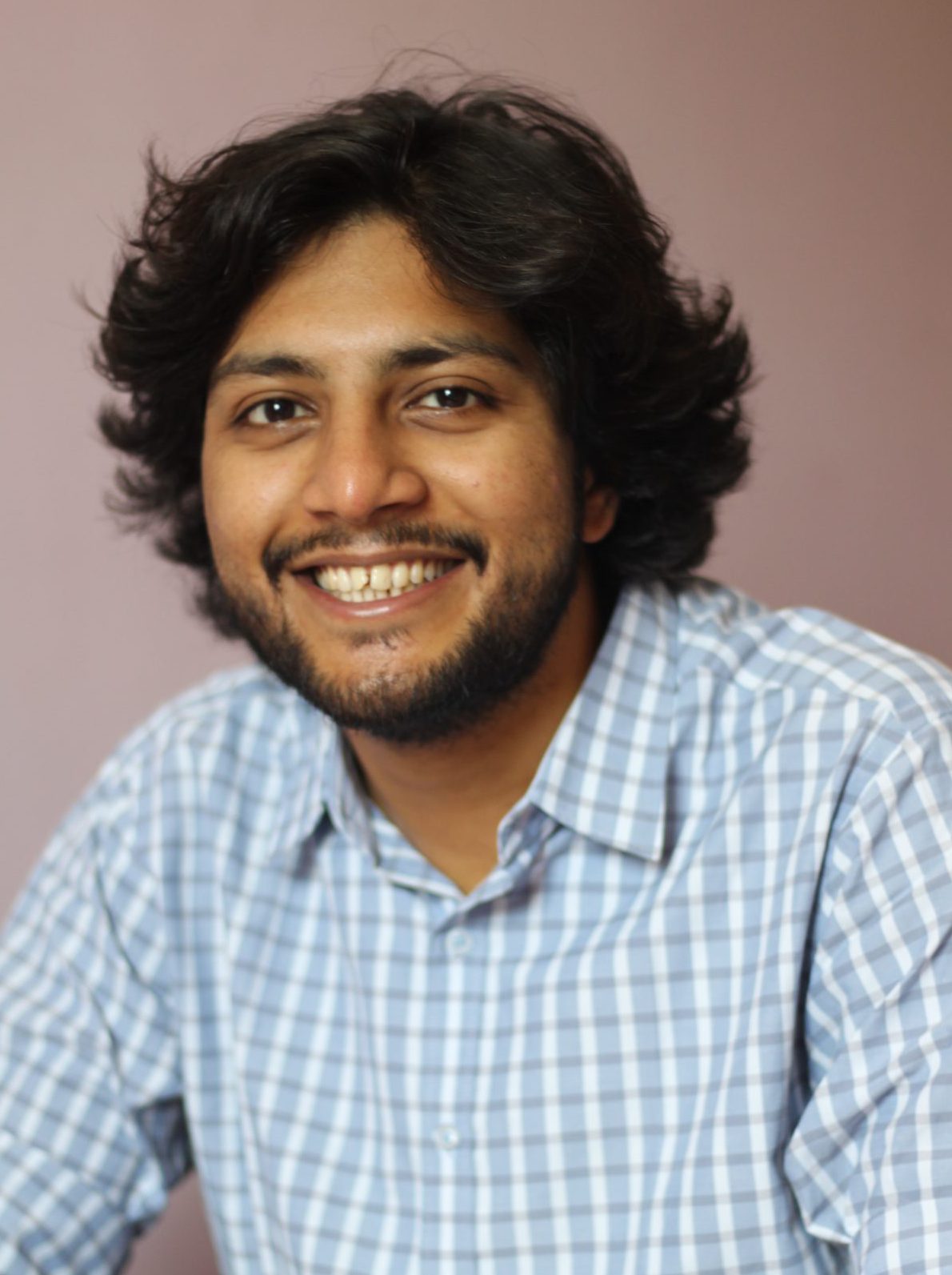
Utathya Chattopadhyaya is an Assistant Professor in the Department of History at the University of California, Santa Barbara, specializing in Modern South Asian and British Imperial History with intersecting interests in the Indian Ocean World, Global History, and Commodity History. His research combines critical materialist and anti-imperial frameworks to analyze colonial agrarian frontiers, intoxicant commodities, and social dynamics of caste, class, and gender. He teaches undergraduate and graduate courses including commodity histories, South Asian public culture, and historical methods. Ph.D., University of Illinois, Urbana-Champaign (2018) His recent publications focus on cannabis regulation, colonial political economy, and multispecies entanglements in imperial contexts. He has received prestigious fellowships from the American Council of Learned Societies, UC Humanities Division, and the Mellon Foundation. Chattopadhyaya co-teaches interdisciplinary courses on topics such as race, colonialism, and cannabis history, contributing to emerging scholarship in Science, Technology, and Society (STS) and decolonial studies. Chattopadhyaya's research clusters around British imperialism's material impacts, particularly in eastern Bengal's agrarian transformations and intoxicant commodity systems. His work synthesizes historical methods with critical plant studies and gender analysis, producing innovative insights into colonial governance and resistance. He actively engages with graduate students in comparative history and Indian Ocean World studies. "Ganja and the Godhead" (2024) - Colonial cosmologies and cannabis "Colonial Capitalism" (2024) - Economic structures of empire "Bodies that Cohere" (2023) - Gender analysis in colonial contexts Key awards include the Margaret T. Getman Service to Students Award (2024), Regents Humanities Fellowship (2022-23), and ACLS Fellowship (2021-22). His scholarly activities intersect with research clusters in Science, Technology and Society; Race, Blackness and Abolition; and Global Antiquity.
Brendan T. O'Connor is an Associate Professor at the College of Information and Computer Sciences, University of Massachusetts Amherst, where he directs the SLANG Lab and serves as Associate Director of the Computational Social Science Institute. His research bridges statistical machine learning and natural language processing with social science applications, particularly using text data from news and social media to understand societal patterns. His work focuses on developing text analysis methods to answer social science questions in domains like political science and sociolinguistics. Current collaborative projects include combating misinformation, analyzing bias in news coverage, and developing tools for clinical discourse assessment using large language models. O'Connor's publications demonstrate a consistent focus on computational social science, with recent work exploring multilingual analysis, legal discourse patterns, and sociolinguistic variation. His methodological contributions span coreference resolution, event extraction, and argument mining. At UMass, he contributes to multiple research centers including the Computational Social Science Institute, UMass NLP group, and Centers for Data Science and Intelligent Information Retrieval. He teaches graduate seminars in natural language processing and maintains active collaborations across disciplines.
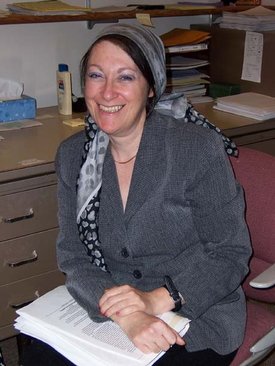
Barbara Applebaum is a Professor in the Department of Cultural Foundations of Education at Syracuse University's School of Education. She specializes in social justice pedagogy, white complicity, and moral education. Her research focuses on addressing systemic inequities in education through critical whiteness studies and epistemic justice frameworks. Education: Ph.D. in Moral and Multicultural Education, University of Toronto (1994) M.A. in Moral Development & Education, Hebrew University of Jerusalem (1990) B.A. in Philosophy/Education, Hebrew University of Jerusalem (1987) Research Interests: Applebaum's work examines white educators' moral responsibility, willful ignorance in educational contexts, and strategies to dismantle complicity in racial hierarchies. She critiques liberal discourses that obscure systemic racism and advocates for vigilant humility in pedagogy. Teaching: Recent courses include 'Critical Whiteness Theory and Education' and 'Epistemic Injustice in Education.' She prioritizes curricula that center marginalized voices and challenge dominant narratives. Service: Serves on Syracuse University's Senate committees, including the Provost’s Advisory Council for Tenure and Promotion. Editorial roles include the Studies in Philosophy and Education and Whiteness and Education . Labs/Teams: Engaged in collaborative projects with the Complicity Network and the Philosophy of Education Society, focusing on ethical pedagogy and social justice advocacy.
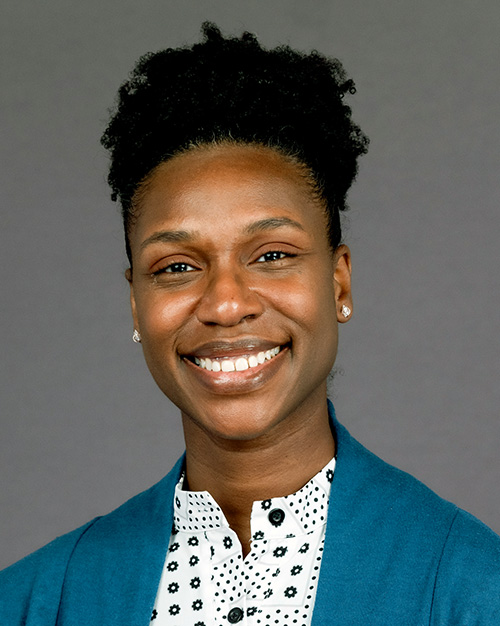
Kelly K. Ivy, Ph.D. is an Assistant Professor at the University of the District of Columbia (UDC) in the College of Arts and Sciences. Specializing in culturally responsive math teaching and urban STEM education, she contributes to teacher self-efficacy research and curriculum development. Her work bridges academic inquiry with practical applications in K-12 and higher education contexts. Doctor of Philosophy in Mathematics Education, University of Maryland, College Park Master of Education in Curriculum & Instruction, Trinity Washington University Bachelor of Science in Mathematics, Secondary Education Professional Minor, Howard University Dr. Ivy’s research focuses on urban STEM education , culturally responsive pedagogy , and equitable mathematics instruction . She emphasizes teacher self-efficacy and interdisciplinary literacy, particularly in linguistically diverse classrooms. Her publications highlight strategies for improving STEM outcomes for African American students and reflective practices in culturally relevant teaching. Recent publications (2019–2024) span topics including equitable teaching , Black female STEM perspectives , and curriculum innovation . These works employ qualitative research methods and stress cultural relevance in urban settings. Faculty Scholar of Promise Award, UDC’s College of Arts and Sciences (2024) Dr. Ivy serves as Co-Project Manager for the Katherine G. Johnson Math Teacher Training Institute (2025–Present) and has participated in the Maryland Collaborative for Research in Urban STEM Education (2020–23). Her advocacy for Black students in STEM includes presentations at national conferences and media engagements.
Soojin Oh Park is an Assistant Professor in the Learning Sciences & Human Development department at the University of Washington College of Education. Her research focuses on equity-driven improvements in early childhood education, family literacy engagement with Dual Language Learners (DLLs), and culturally grounded parenting practices. Ed.D., Human Development and Education, Harvard University M.Ed., Educational Policy and Analysis, Harvard University M.S.Ed., Learning, Teaching, and Literacies, University of Pennsylvania B.A., Psychology, University of Pennsylvania Park’s interdisciplinary work combines qualitative, quantitative, and mixed-methods approaches to address gaps in early childhood education (ECE) and parenting, emphasizing: Family literacy engagement for DLLs’ language and literacy development Culturally sustaining pedagogy to amplify family strengths Equity-oriented reforms in ECE systems and policies Her publications span topics like heritage language maintenance, culturally responsive assessment, and the impact of immigration policy on child development, often utilizing advanced methodologies such as machine learning. Awards include the SRCD Federal Policy Fellowship and Best Article of the Year from the Journal of School Psychology. Outstanding Research Paper Award (Korean American Educational Research Association) Distinguished Paper Award (Washington Educational Research Association) Best Article of the Year Award (Journal of School Psychology) Emerging Scholar Fellowship (National Research Center on Hispanic Children and Families) Park leads projects such as FAMILY (Fathers And Mothers Investing in Learning of Young Children) and BASECAMP (Bolstering Asian Students in Early Childhood by Advancing Multilingual Pedagogies). She teaches courses on language and literacy learning, bilingual development, and parenting impacts on early education.
Roxane de la Sablonnière is a Full Professor in the Department of Psychology at the University of Montreal, affiliated with the Faculty of Arts and Sciences. She directs the CSI—Laboratory on Social Change and Identity and is a member of the CÉCD—Centre for the Study of Democratic Citizenship and the CIRCA—Interdisciplinary Research Centre on the Brain and Learning. Her research focuses on social change, cultural identities, intercultural relations, and the psychological impacts of crises like the COVID-19 pandemic. She has advised over 20 graduate students and led numerous research projects funded by agencies such as the Fonds de recherche du Québec (FRQ) and the Social Sciences and Humanities Research Council (SSHRC). Education & Research Focus : Her work examines how rapid societal changes affect individuals, particularly in contexts of immigration, policy shifts (e.g., multiculturalism, secularism), and Indigenous communities. Recent studies include longitudinal analyses of pandemic-related behaviors, identity integration processes, and the role of cognitive strategies in managing conflicting identities. Grants & Collaborations : She leads projects like "S'engager pour mieux aller!" (FRQS-funded) and contributes to strategic networks such as the Centre pour l'Étude de la Citoyenneté Démocratique (CÉCD). Her research integrates psychology with sociology, leveraging mixed methods (e.g., text mining, longitudinal tracking) to address societal challenges. Labs & Teams : As CSI director, she oversees projects on social change dynamics and identity reconstruction. Her work bridges academic and applied domains, influencing policy debates on integration, public health, and community resilience.
Lesli Hoey is an Associate Professor of Urban and Regional Planning at the University of Michigan’s Taubman College of Architecture and Urban Planning. She serves as Director of Doctoral Studies and researches the intersection of food systems, public health, environmental policy, and social justice, with fieldwork in Michigan (since 2012) and Bolivia (since 2007). Doctorate and Master's in City and Regional Planning, Cornell University Bachelor's in Psychology, Earlham College Her work focuses on translating food systems policy into scalable, sustained action, emphasizing equity, climate resilience, and multisectoral collaboration. She examines urban agriculture, sustainable diets, land redistribution, and circular nutrient economies via urine-diversion practices. Recent articles highlight her policy analysis in food systems, including emissions reduction in university food services, diversifying agriculture for environmental and social benefits, and institutionalizing food justice in global contexts. NIH Grant for Health Equity Research (2024) MLK Spirit Award Honoree (2022) Dr. Hoey teaches courses on food systems planning, low-income country development, and program evaluation. She is an external evaluator for international projects in education, rural development, and local food initiatives.
Guofang Li is a Professor in the Department of Language and Literacy Education at the Faculty of Education, affiliated with the Centre for Early Childhood Education & Research (CECER). Her work centers on bilingual development and literacy education within multicultural contexts, particularly focusing on Chinese-Canadian communities. Her research interests include: Early bilingual development Family literacy practices Early literacy instruction methodologies Early education for minority learners Teacher education for multilingual classrooms Analysis of her 2021-2025 publications reveals a concentrated focus on Chinese-Canadian children's bilingual development, examining home literacy environments, digital technology impacts, and pandemic-related disruptions. She consistently advocates for equity-focused approaches in superdiverse educational settings, emphasizing translanguaging practices and critical perspectives on linguistic justice. Scientific Awards: No awards explicitly mentioned in source materials Advising and Grants: No specific student names or grant information provided in source materials Labs and Teams: Centre for Early Childhood Education & Research (CECER): An interdisciplinary hub facilitating collaborative research between academics, educators, and community partners focused on advancing evidence-based early childhood education practices through longitudinal studies and community-engaged projects.
Dr. Elaine Richardson is a Professor of Literacy Studies in the Department of Teaching and Learning at The Ohio State University. Her work focuses on African Diasporic literacies, discourse studies, and gender studies. She holds a B.A. and M.A. from Cleveland State University and a Ph.D. from Michigan State University. B.A. and M.A., Cleveland State University Ph.D., Michigan State University Her research explores language, literacy, and discourse practices in Afro-diasporic communities, with emphases on sociolinguistics and critical discourse analysis. She co-edited key texts like Understanding African American Rhetoric and Hiphop Literacies , and her outreach includes youth empowerment projects. Notable awards include the Cleveland State University Distinguished Alumni Award (2007) and Fulbright Scholar Award (2004). Her work bridges academia and community through projects like cultural literacy initiatives and hip hop education networks.
Dr. Vera J. Lee is Clinical Professor and Department Chair of Teaching Learning and Curriculum at Drexel University. Her scholarship examines literacy development, educational equity, and family engagement in multilingual communities. Research encompasses: Cultural brokering in school-family communication Critical literacy practices in K-12 education Digital/information literacy frameworks Technology-mediated language learning Publications develop models like the I-LEARN framework for information literacy instruction and 'Three Bridges' approach for culturally responsive family engagement. Recent collaborations investigate civic education policy in international contexts and multimodal writing in urban preschools. As co-editor of 'Advancing Culturally Responsive and Socially Just Approaches to Multilingual Family-School Partnerships' (2023), she advances equity-focused engagement frameworks.
Faith Maina is a Professor in the Department of Curriculum & Instruction at Texas Tech University (since 2015). Previously, she served as a Professor at the State University of New York, Oswego (2000–2015), where she also directed the McNair Post-Baccalaureate Program. She holds a Ph.D. from the University of British Columbia (Canada), an M.A. from Trent University (Canada), and a B.Ed. from Kenyatta University (Kenya). Her research focuses on cultural and linguistic diversity in classrooms, culturally responsive teaching, and preparing diverse learners for STEM careers. Key areas of expertise include social justice in education, multicultural curriculum integration, and teacher empowerment through action research. Maina has authored and edited works such as Nurturing Reflexive Practice in Higher Education (2014) and contributed to studies on Kenyan educational contexts, gender dynamics, and community-based research. She has received prestigious awards, including the Carnegie African Diaspora Fellowship (2018) and Fulbright Scholar (2011).
Nicholas Ng-A-Fook is a Full Professor in the Faculty of Education at the University of Ottawa, where he has served as former Associate Dean of Graduate Studies and Director of Teacher Education and Indigenous Teacher Education Programs. His work is deeply engaged with the Truth and Reconciliation Commission's 94 Calls to Action, working in partnership with Indigenous communities and school boards to disrupt colonialism, systemic racisms, and inequalities in educational curricula. Dr. Ng-A-Fook's educational background includes a Ph.D. in Curriculum and Instruction from Louisiana State University (2006), an M.A. in Education (Multicultural Education) from York University (2001), a Graduate Diploma in Education (Secondary Science and History) from the University of Western Sydney (1998), and a B.A. in Classical Studies from the University of Ottawa (1996). His research interests span Curriculum Studies, History of Education (particularly oral history), Life-writing research (autobiography and narrative inquiry), Critical Youth Studies (focusing on first-generation immigrant and Indigenous youth), Community-based research, and Contemporary perspectives in philosophy, science and technology including AI, genomic education, and anti-racist science education. Dr. Ng-A-Fook approaches his work as a curriculum theorist who draws on life writing research methodologies to co-create culturally responsive, relevant, and relational curriculum with educators. Dr. Ng-A-Fook's publications reveal a strong focus on reconciliation education, decolonizing curriculum, and addressing systemic racism in educational contexts. His work increasingly engages with digital technologies and artificial intelligence from a critical, decolonial perspective, examining how these technologies intersect with historical and ongoing colonial structures. His research shows a clear evolution toward more interdisciplinary work connecting curriculum studies with Indigenous knowledge systems, technology studies, and social justice movements. Among his notable honors are the 2024 Coutts Prize, the Ted T. Aoki Distinguished Service Award (2018), and the R.W.B. Jackson Award for an outstanding article in the Canadian Journal of Education. He also serves as Director of the EdCan Network and was Past-President of the Canadian Society for the Study of Education. As a supervisor, Dr. Ng-A-Fook currently mentors several graduate students including Melissa Daoust, Lisa Ambaye, Bahareh Samsamiardekani, and Madelaine McCracken. He created the FooknConversation podcast to address educational challenges with colleagues, community activists, artists, education leaders, teachers, and politicians, and maintains the Canadian Curriculum Theory Project website as a resource for his research.
Ronja Sczepanski is an Assistant Professor at the Centre for European Studies and Comparative Politics (CEE) at Sciences Po. Her research explores the intersection of national and European identities, focusing on how political perceptions, social sorting, and behavioral processes drive identity change. Specializes in identity formation through political events like referenda Analyzes neighborhood effects and ethnic diversity on identity dynamics Investigates political party framing of social groups Her recent work examines how differentiated integration impacts EU policy compliance and validates open-source machine translation for text analysis. She teaches courses on European integration at institutions including ETH Zurich and the University of Cologne. Recipient of the PolMeth Europe Best Poster Award (2023) Published in journals like Comparative Political Studies and European Union Politics
Rika Hanamitsu is a Professor at the School of Social Sciences, Waseda University, where she teaches courses related to intercultural communication studies. She holds a Doctor of Philosophy degree from Waseda University and is also affiliated with the Center for International Education and the Global Education Center at the university. Education: Doctor of Philosophy from Waseda University Affiliations: Center for International Education, Global Education Center Her research focuses on intercultural communication and applied linguistics, particularly examining how cultural stereotypes, identities, and communication styles are represented in media and literature. She has conducted extensive research on Allen Say's works and their cultural implications, analyzing how they depict multicultural experiences and identity formation. Professor Hanamitsu's educational activities include teaching various courses including 'Seminar III (Intercultural Communication Studies)', 'Exploring Cultures through Film', 'Inter-Cultural Communication', 'Freshman Seminar', and 'Intercultural Communication' in both fall and spring semesters of 2025. Her teaching emphasizes the use of films as educational tools for intercultural understanding and literacy development. She has participated in overseas activities such as attending the Summer Institute of Intercultural Communication at Hope College, University of Michigan in 2002. Her social activities include intercultural communication training using games to develop communication skills, which she has conducted since 2011. International Presentations: 35th IBBY World Congress (2016), Summer Institute of Intercultural Communication (2002) Domestic Conferences: Japan Association for Language Education & Technology, Japan Association of College English Teachers, Japan Society of English Usage and Style Research Projects: Cultural Comparison of Conflict Scenes in Movies and Their Treatment (2005)