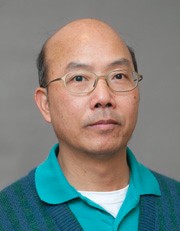
Wen-Ben Jone is an Associate Professor at the University of Cincinnati 's Department of Electrical Engineering & Computing Systems. He previously held positions as Assistant/Associate Professor at New Mexico Institute of Mining and Technology and Visiting Associate/Full Professor at National Chung-Cheng University, Taiwan. His research focuses on VLSI system design, low-power circuits, and fault-tolerant testing methodologies. He has advised over 70 graduate students and authored/co-authored numerous papers in top-tier journals and conferences. Education : PhD: Case Western Reserve University (Computer Engineering, 1987) MS: National Chao-Tung University (Computer Engineering, 1981) BS: National Chao-Tung University (Computer Science, 1979) Research Interests : Reliable VLSI design and testing Low-power and fault-tolerant circuits Many-core processor architectures Parallel computing and debugging tools Awards : 2003 IEEE Donald G. Fink Prize Paper Award 2008 Best Paper Award (International Symposium on Low-Power Electronics) 2012 Best Paper Award (VLSI Design, Automation & Test) Grants : $390k NSF Grant (CCF-0541103) for cache optimization techniques His work emphasizes practical solutions in VLSI testing and reliability, with a focus on low-power strategies and resilient system design.
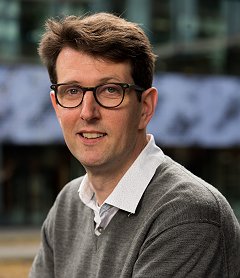
Christoph Kessler is a Professor and Head of the Software and Systems (SAS) division at the Department of Computer and Information Science (IDA), Linköping University, Sweden. He leads the Programming Environment Laboratory’s research group focusing on compiler technology, parallel computing, and heterogeneous systems. His work includes the development of tools like OPTIMIST, PARAMAT, and SkePU, and he has contributed over 100 publications in journals and conferences. He holds a PhD from the University of Saarbrücken and a Habilitation from the University of Trier. Research interests span parallel programming, compiler optimization, and energy-efficient scheduling for heterogeneous systems. He has secured a 30M SEK grant from SSF for the ASTECC project, advancing adaptive software for edge-cloud computing. Notable contributions include frameworks for GPU-based systems and methodologies for optimizing resource allocation on many-core architectures. His team’s work emphasizes practical applications in high-performance computing, including tools for course management (StASy) and energy-aware scheduling algorithms. The SAS division, under his leadership, focuses on software engineering and computer systems research with strong industry collaboration.
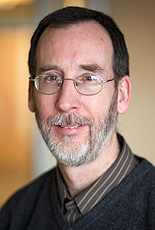
Ali José Mashtizadeh is an Associate Professor at the Cheriton School of Computer Science, University of Waterloo. His research focuses on operating systems, distributed systems, and storage, with expertise in system reliability, network optimization, and concurrent programming. Education: Ph.D., Computer Science, Stanford University (2017) M.S., Computer Science, Stanford University (2017) M.Eng., Electrical Engineering and Computer Science, MIT (2007) B.S., Electrical Engineering, MIT (2006) His research centers on designing scalable and reliable systems, with recent publications exploring TCP network frameworks, in-memory data persistence, and microsecond-scale scheduling. Key themes include optimizing tail latency, neutralization-based memory reclamation, and fault-tolerant distributed services. His articles consistently demonstrate innovations in low-latency networking, operating system architecture, and cloud infrastructure, with recent emphasis on serverless benchmarks and processor customization. No scientific awards or advising relationships are detailed in the provided materials.
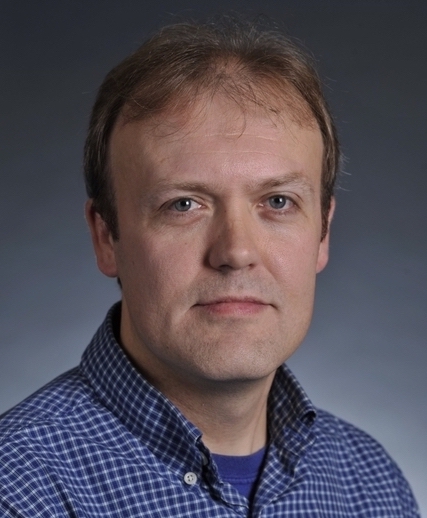
Andy D. Pimentel is a Full Professor at the University of Amsterdam, where he chairs the Parallel Computing Systems (PCS) group within the Systems and Networking Lab at the Informatics Institute. His work focuses on the design, programming, and run-time management of multi-core and multi-processor computer systems, with particular attention to performance, power/energy consumption, system dependability, and design productivity. His academic background includes: PhD in Computer Science, 1998, University of Amsterdam MSc in Computer Science, 1993, University of Amsterdam Professor Pimentel's research spans multiple critical areas in modern computing systems. His primary interests include multi-core embedded systems, system-level design and simulation, design space exploration, performance and power analysis, system dependability, hardware/software co-design, run-time resource management, and Edge AI. His work addresses the growing challenges of making computer systems faster, more sustainable, energy efficient, reliable, and secure in an era of increasing computational demands and climate concerns. The PCS group he leads performs research on the modeling, analysis and optimization of extra-functional aspects of computing systems, which play a pivotal role in their work. An analysis of Professor Pimentel's recent publications reveals a strong focus on edge computing, distributed AI, and energy-efficient system design. His work bridges theoretical computer architecture with practical implementation challenges, particularly in the context of resource-constrained environments. Key trends include the adaptation of AI models for edge devices, thermal management in advanced architectures, and optimization of multi-core systems for both performance and energy efficiency. His research increasingly addresses sustainability concerns in computing, reflecting broader industry and academic priorities. His notable scientific achievements include: IEEE CEDA Outstanding Service Recognition Award DATE Fellow Award Professor Pimentel has served in numerous leadership roles in the academic community, including as General Chair of Design Automation and Test in Europe (DATE) 2024, Vice General Chair of IEEE/ACM Embedded Systems Week 2025, and General Chair of IEEE/ACM Embedded Systems Week 2026. He has secured significant research funding for projects related to sustainable computing, edge AI, and multi-core system design. His professional service includes board membership with the ICT Research Platform Nederland (IPN) since 2020 and leadership roles in major conferences such as DATE, Embedded Systems Week, and SAMOS. The Parallel Computing Systems group he chairs is a vibrant research team within the Systems and Networking Lab at the Informatics Institute. The PCS group focuses on the challenges of modern computing systems, particularly addressing the extra-functional aspects like performance, power consumption, and system dependability. Their work is highly relevant to current technological challenges in edge computing, sustainable systems design, and the integration of AI into resource-constrained environments.
David H. Albonesi is a Professor in the Computer Systems Laboratory at Cornell University's School of Electrical and Computer Engineering. His research focuses on power-efficient computer architectures, including reconfigurable systems, accelerator design for deep learning, smart buildings, and silicon nanophotonics interconnects. He has held leadership roles in major conferences like ISCA and MICRO, and serves on editorial boards for IEEE Computer and IEEE Micro. Research interests span adaptive architectures for dynamic power management, sparse matrix/tensor accelerators, and energy-efficient smart building systems. His work bridges hardware-software co-design, emphasizing phase-aware resource allocation and energy minimization. Awards include the IEEE Fellow distinction, NSF CAREER Award, and multiple teaching accolades from Cornell. Over 30 years of industry-academic collaboration has led to innovations in GALS microarchitectures, clustered multi-threaded processors, and thermal-aware scheduling. Key contributions include the CuttleSys reconfigurable multicore framework, MatRaptor sparse matrix accelerator, and foundational work in silicon photonics for on-chip interconnects. Patents cover dynamic core power management and adaptive microprocessor designs.
Professor Jon Kerridge is a distinguished academic at the School of Computing, Edinburgh Napier University, where he has made significant contributions to parallel programming, software systems, and database applications. With a career spanning several decades, he has published extensively in the field of computer science and has supervised numerous PhD students. BSc, MSc, PhD Fellow of the British Computer Society (FBCS) Chartered IT Professional (CITP) Fellow of the Higher Education Academy (FHEA) Chartered Engineer (CEng) Professor Kerridge's research primarily focuses on parallel programming models, particularly through his work on the Groovy Parallel Patterns Library and Communicating Sequential Processes (CSP). His research spans multiple domains including software engineering, database systems, and interdisciplinary work in neuroscience related to dyslexia. He has also made significant contributions to pedestrian movement modeling and evolutionary algorithms. His publications demonstrate a consistent focus on practical software engineering solutions for parallel and distributed systems. The research trajectory shows progression from foundational work in computer architecture education in the 1980s through database systems in the 1990s-2000s to modern parallel programming frameworks. His interdisciplinary work connecting computer science with visual processing in dyslexia represents an innovative application of computational approaches to neuroscience problems. Fellow of the British Computer Society (FBCS) Chartered IT Professional (CITP) Fellow of the Higher Education Academy (FHEA) Chartered Engineer (CEng) Professor Kerridge has supervised several PhD students to completion, including Kevin Chalmers (Investigating communicating sequential processes for Java to support ubiquitous computing) and Robert Kukla (A software framework for the microscopic modelling of pedestrian movement). His research has been supported by Edinburgh Napier University funding, with applications ranging from healthcare systems to pedestrian flow optimization. He is a key member of the Centre for Algorithms, Visualisation and Evolving Systems at Edinburgh Napier University, where his work continues to influence both theoretical and applied aspects of computing.
Rich West is a Professor in the Department of Computer Science at Boston University, with a secondary affiliation in Electrical and Computer Engineering. He joined BU in 2000 after earning his PhD from Georgia Tech. His research focuses on real-time and embedded systems, operating systems, and resource management, leading the development of the Quest real-time OS and its separation kernel, Quest-V. His work emphasizes safety, predictability, and efficiency in systems like IoT devices and automotive/avionics applications. Education: PhD, Computer Science, Georgia Institute of Technology (2000) MS, Computer Science, Georgia Institute of Technology (1998) MEng, Microelectronics and Software Engineering, University of Newcastle-upon-Tyne (1991) Research Interests: Rich's work spans real-time operating systems, embedded systems design, multicore resource management, kernel architecture, hardware-software co-design, and secure separation kernels. He emphasizes practical applications, such as autonomous drones, automotive systems, and IoT devices. His lab develops systems like Quest-V for predictable execution and FlyOS for drone avionics. Awards and Recognition: Outstanding Paper Award at ECRTS 2020 Best Student Paper Award at RTAS 2017 Nominated for Best Paper Award at EMSOFT 2021 Best Paper Award at RTAS 2022 (FlyOS) Advising and Labs: He advises numerous PhD/MSc students on real-time systems, embedded computing, and safety-critical software. His lab collaborates on projects like the Quest OS, ModelMap automotive frameworks, and drone control systems (FlyOS). He also leads the BOSS, RTCC, and iBench research groups.
Antonia Zhai is an Associate Professor in the Department of Computer Science and Engineering at the University of Minnesota. She holds a Ph.D. in Computer Science from Carnegie Mellon University (2005), an M.A.Sc. in Computer Engineering from the University of Toronto (1998), and a B.A.Sc. in Computer Engineering from the University of Toronto (1996). Her office is located at 6-205 Kenneth H. Keller Hall, Minneapolis, MN. Her research focuses on developing novel compiler optimizations and computer architecture features to enhance both performance and non-performance aspects of computing systems. Key interests include: Thread-level speculation for parallel processing Multicore architecture optimization Hardware/compiler co-design for security and reliability Dynamic performance tuning in heterogeneous systems High-speed network packet processing architectures Her publications demonstrate sustained focus on parallel computing, compiler optimizations, and hardware security, with recent work expanding into network function virtualization and cache-side channel attack detection. She leads the High-Performance Computing and Compilers (HPCC) group and organizes the weekly HPCC seminar series focused on architectures and compilers. She has advised 12+ graduate students including 8 PhD graduates now at companies like AMD, NVIDIA, and Oracle. Significant research grants include: NFLambda: NFV Framework (NSF 2021-2025) Dynamic Binary Translation (NSF 2015-2019) In Vivo Software Monitoring (NSF 2009-2014) Embedded Fault Detection (NSF 2009-2014)
Dr. Frank Soboczenski is a Lecturer in the Department of Computer Science at the University of York, with an affiliate scientist position at King's College London supported by the NVIDIA GPU Grant Program. His research spans multiple domains including healthcare, space research, and quantum machine learning applications. He serves as a STEM scientist for NASA's and NOAA's GLOBE program and is actively involved in various NASA initiatives including the Frontier Development Lab. Dr. Soboczenski's primary research interests include Transformers and Large Language Models, Machine Learning with focus on Uncertainty Quantification and Explainability, and advanced applications of Quantum Machine Learning in Healthcare/Biomedicine and Space Research domains. His work on the RobotReviewer project applies Deep Learning and Natural Language Processing to healthcare. Previously, he has worked in Human-Computer Interaction, Cyber-Security, and Real-Time Systems in cooperation with organizations including the German Police Force, GCHQ, Rapita Systems, INRIA, Barcelona Supercomputing Center, and Airbus. His recent publications demonstrate a strong focus on applying machine learning techniques to healthcare informatics and space research, with particular emphasis on systematic reviews, clinical decision support, atmospheric retrieval for exoplanets, and medical data analysis. His work bridges the gap between theoretical AI advancements and practical applications in critical domains. NASA TechLeap Prize - Quantum Machine Learning NASA/NOAA/U.S. Department of State Outstanding Efforts to Mentor and Support Students (2019-present) NASA Frontier Development Lab AI Research Award of Merit Data Samaritan Award Steely Eyed Operator Award NASA Kennedy Space Center OsirisREx launch invitation SpaceApps 3M Thesis Competition UK National Winner (2013) Deggendorf Institute of Technology Robotics Challenge Award Dr. Soboczenski actively mentors students, as evidenced by his NASA/NOAA award for mentoring. His research is supported by the NVIDIA Corporation through the GPU Grant Program. He serves on multiple program committees including NeurIPS (2019-present), AAAI (2019-present), and various specialized workshops at major AI conferences. He is also involved in organizing NASA Space Apps challenges and serves on the NASA GeneLab Analysis Working Group on AI/ML. As an active member of the academic community, Dr. Soboczenski participates in numerous professional organizations including the NASA Nancy Grace Roman Spacecraft Science Working Group, NASA Technosignatures research group, IBM Quantum Researchers Program, PolarAI Research Group of the ACM, Huggingface BigScience Team, International Astronomical Union, and several others focused on AI and space research.
Cristina Stângaciu is a Lecturer at the Department of Computer and Information Technology, Politehnica University of Timisoara. Her research focuses on embedded systems, real-time systems, IoT, and energy-efficient computing. She has contributed to mixed criticality task scheduling and wireless sensor networks. PhD in Real-Time Systems (2015) Scientific Secretary of Department Involvement in projects: Bright Cityscapes - Synthia, CloudPUTing, TEEFIOS Her research interests span real-time task scheduling, embedded operating systems, and smart sensing systems. Recent work explores IoT security and multicore scheduling techniques. Key article trends include real-time scheduling frameworks, IoT protocol optimization, and energy-efficient embedded systems. Topics like lightweight cryptography and CAN FD improvements are prominent in her 2024-2025 publications. Merit Diplomas (2021, 2022) Merit Awards 2025 As advisor to PhD students, she contributes to advancements in real-time systems through grants and collaborative projects like SCMUPT 2025. Her work integrates practical and theoretical aspects of sensor networks and cloud platforms.
Mohammad Zubair is a Professor in the Department of Computer Science at Old Dominion University's College of Sciences, specializing in high performance computing, digital libraries, autonomic computing, and peer-to-peer networks. His work bridges scientific computing and information systems with significant federal and industry collaborations. Education: Ph.D. in Computer Science, Indian Institute of Technology Delhi (1987) B.S. in Electrical & Electronics Engineering, University of Delhi (1981) Research Interests: Dr. Zubair's expertise centers on high performance computing for scientific applications and large scale data analytics. He develops scalable algorithms for scientific simulations (e.g., particle physics, structural health monitoring) and advances digital library systems through autonomic computing, collaborative classification, and metadata extraction. His work integrates parallel computing with domain-specific challenges in finance, physics, and digital preservation. Publication Trends: His recent publications (2017-2008) show strong focus on GPU-accelerated scientific computing (particle colliders, structural monitoring) and computational finance (binomial option pricing), while maintaining digital library research in collaborative classification and metadata extraction. The work increasingly addresses energy efficiency in cloud systems and leverages parallel architectures from multicore CPUs to GPUs. Scientific Awards: IBM Faculty Award (2006) IBM Faculty Award (2005) Grants and Funding: Dr. Zubair has secured over $800,000 in research funding since 2004, including projects like 'Design AMD Impl Scalable Opt Kernels for Lrg Sc Simu USN Fund3d On Emer' ($24,890, 2017-2018), 'Graduate Research Award Program On Public Sector Aviation Issues' ($35,519, 2016-2018), and foundational digital library work with the Library of Congress and NASA. He frequently collaborates with K. J. Maly and R. Mukkamala on autonomic systems and metadata extraction. Labs and Teams: His research integrates with ODU's high performance computing initiatives and digital library projects, particularly through collaborations with federal agencies (NASA, Library of Congress) and industry partners like IBM. Current work focuses on GPU-accelerated scientific simulations and energy-efficient cloud management systems.
Iñaki Vazquez Gomez is a Lecturer and Researcher at the University of Deusto , affiliated with the College of Engineering and Department of Computing, Electronics and Communication Technologies . He holds a PhD in Computer Science and Artificial Intelligence (University of Deusto and Lancaster University) and served as Director of Deusto Institute of Technology (2020-2023). His research focuses on Reinforcement Learning , Internet of Things , and Cognitive Robotics , with applications in human-robot interaction and ambient intelligence. Member of European Internet of Things Council Founder of technology startups Editorial board member of International Journal of Ambient Computing and Intelligence His 15 most recent publications (2005-2024) span themes of Autonomous Systems , Context-Aware Computing , and Smart Environments , with subtopics including semantic device communication, adaptive positioning algorithms, and collaborative robotics architectures. 2024: Adaptive Robot Behavior via Reinforcement Learning 2021: Gesture Recognition for Resource-Constrained Devices 2015: Context-Aware Service Matching in AAL Scientific honors include: X Premio UD-Banco Santander de Investigación (2015) Sexenio de Investigación (2018-2025) Profesor Doctor de Universidad Privada (2009-2025) He supervised PhD students like Asier Gonzalez Santocildes and Ignacio Fidalgo Astorquia, while leading grants such as AI-Driven Cognitive Robotics (2021-2024) and Quantum Technologies (2021-2022). His work includes developing middleware for smart spaces and founding the Sentient Things project for self-adapting environmental systems.
Georgios Keramidas is an Assistant Professor in Computer Architecture at the Department of Informatics, Aristotle University of Thessaloniki . He also holds an Adjunct Professor position at the Hellenic Open University and collaborates with institutions like the University of Peloponnese and University of Patras . Research Interests : Computer Architecture, Memory Systems, Multicore/GPU Design, Low-Power Techniques, Fault-Tolerant Systems His work focuses on cache optimization , energy-efficient computing , and security-aware memory design . Key contributions include DVFS frameworks , reuse-distance prediction , and non-deterministic cache mechanisms . Recent article trends highlight innovations in computation-in-memory , IoT platform components , and security/low-power co-design . Patents on image compression and GPU optimization reflect practical applications of his research. Academic Network : Collaborates with institutions including University of Patras , University of Manchester , and TU Dresden
David Black-Schaffer is a Professor at Uppsala University's Department of Information Technology, specializing in computer systems research. As of 2023, he serves as Dean of Research for the Faculty of Science and Technology. His work bridges software and hardware innovations to enhance data movement efficiency in computer systems, with applications commercialized through a startup and integrated into industry standards like OpenCL. Black-Schaffer earned his PhD in Electrical Engineering from Stanford University in 2008, focusing on many-core processor programming. His career spans roles at Apple Inc. (contributing to OpenCL standards), postdoctoral research at Uppsala University, and academic progression from assistant to full professor (2010–2017). He has held leadership roles including Head of the Division of Computer Systems (2022) and department representative on the faculty Advisory Committee for Research (2021). His research spans computer architecture, memory systems, parallel programming, and simulation techniques. Recent publications (2024–2020) explore garbage collection, cache optimization, memory contention, NUMA systems, and instruction scheduling. Key trends include software-hardware co-design for power efficiency, reuse-aware data placement, and machine learning for performance modeling. Knut & Alice Wallenberg Foundation: Wallenberg Academy Fellowship Prolongation (2020–2025), Wallenberg Academy Fellow (2016–2021) Swedish Research Council (VR): Project Grant (2019–2024), Young Researcher Grant (2015–2018), Framework Grant (2012–2017) European Research Council: ERC Starting Grant (2017–2022) Teaching Awards: Uppsala Engineering and Science Student Union Pedagogical Prize (2012), Uppsala University Pedagogical Prize (2016), Uppsala Technical Physics Students' Teaching Award (2019) Other Grants: ScalableLearning flipped classroom project (2012–2020), Arm Ltd. collaborations on memory system designs He pioneered flipped-classroom teaching through the ScalableLearning project, impacting over 80,000 students. His research is conducted in collaboration with institutions like Arm Ltd., with past contributions to Apple's OpenCL implementation and UPMARC research center.
Luciano Ost is a Senior Lecturer and Programme Director of the Computer and Electronic Engineering (CEE) Programme at the University of Leicester. He holds a Ph.D. in Computer Science from Pontifical Catholic University of Rio Grande do Sul (PUCRS), Brazil (2010). His research focuses on enhancing reliability, security, and performance of embedded and life-critical systems through innovative hardware/software co-design approaches. Key areas include fault tolerance in neural networks, radiation effects on embedded systems, and real-time control systems. Prior to Leicester, he worked at the University of Montpellier II (France) as an assistant professor and research assistant. He has authored/co-authored over 100 papers and two books, with notable contributions to soft error reliability assessment frameworks (e.g., SOFIA, gem5-FIM) and embedded system security solutions like BIDS for in-vehicle networks. His research spans topics like FPGA-accelerated intrusion detection (BNN-based), radiation resilience in IoT edge devices, and compiler optimization impacts on multicore reliability. He has conducted extensive studies using Geant4 simulations and virtual platforms for fault injection analysis.