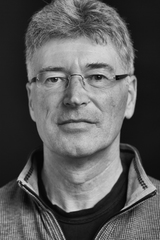
Geoffrey Nelissen is an Assistant Professor in the Department of Mathematics and Computer Science at Eindhoven University of Technology. He holds additional roles as a Research Scientist and Investigador Auxiliar at INESC TEC (Portugal), contributing to interdisciplinary research in real-time systems. His work focuses on schedulability analysis, parallel task execution, and real-time communication protocols, with applications in embedded systems and multicore architectures. Research Interests: Real-Time Scheduling Response Time Analysis Multi-core and Parallel Systems Time-Sensitive Networking (TSN) Formal Verification Recent work emphasizes schedule abstraction frameworks, memory contention analysis, and deterministic communication protocols. His research has received recognition through multiple best paper awards including ICESS 2021 and RTAS 2022. He actively contributes to conferences like RTSS and ECRTS while teaching courses on Real-Time Systems and Operating Systems. Collaborations span European institutions with focus on embedded systems, autonomous driving, and safety-critical applications. Current projects explore holistic approaches to WCRT analysis and resilient real-time communication architectures.
Tiziano De Matteis is an Assistant Professor in the @Large Research group at Vrije Universiteit Amsterdam's Faculty of Science, Department of Computer Systems. He also holds an affiliation with the Network Institute. His research focuses on overcoming post-Moore architecture challenges through parallel and distributed computing, high-performance systems, energy efficiency, and FPGA applications. Previously, he was a PostDoc at ETH Zurich's SPCL Group and earned his MSc/PhD from the University of Pisa. Education PhD in Computer Science, University of Pisa MSc in Computer Science, University of Pisa Research Interests Post-Moore architectures for distributed ecosystems Energy-aware parallel computing High-level abstractions for parallel software development FPGA-based hardware acceleration Data stream processing and distributed systems Recent Research Trends Recent work emphasizes: Data center risk analysis and sustainability Optimizing microservices and distributed scheduling LLM model offloading to NVMe storage Python-based data-centric programming productivity GPU interconnect performance in supercomputing Grants & Projects Participates in the EU-funded 'Extreme and Sustainable Graph Processing' project (2023-2025), exploring scalable graph algorithms and energy-efficient computing systems. Teaching Accelerator-Centric Computing Ecosystems Computer Organization Distributed Systems Systems Seminar
Simon Rommel is an Assistant Professor in the Department of Electrical Engineering at Eindhoven University of Technology (TU/e), specializing in Terahertz Systems and Quantum & Terahertz Systems. He holds a PhD from the Technical University of Denmark (2017) and prior degrees from the University of Stuttgart, Aston University, and Scuola Superiore Sant’Anna. His research focuses on converged mm-wave/THz radio and optical links, 5G/6G systems, quantum key distribution (QKD), and advanced optical fibers. He leads the QKD testbed development under Quantum Delta and QTe initiatives. Key projects include QCINed (National Quantum Communication Infrastructure), HiCONNECTS (Heterogeneous Integration), and ALLEGRO (Secure Networks). Rommel has received awards such as the 2023 EuCNC/6G Summit Best Student Paper and 2021 OECC Best Student Paper. His work spans 155+ publications, with recent articles addressing quantum-resistant TLS, polarization mitigation in optical fibers, and 5G/6G fronthaul architectures. He also contributes to editorial roles in journals like Frontiers in Future Transportation and scientific activities including 5G-MOBIX events.
J.C. van de Pol is a full-time Professor at Aarhus University with expertise in formal methods and model checking. He is affiliated with the Computer Science department and has a strong focus on algorithms, automaton models, and multicore systems. His work includes the development and application of model checkers, timed automata, and formal verification tools. His research interests span the theoretical and practical aspects of formal verification in computer science. He contributes to the advancement of model checking techniques and their application to complex, timed systems. His work bridges algorithmic theory with real-world software verification challenges. He is associated with the Formal Methods and Tools (EEMCS-CS-FMT) group at the University of Twente (UTwente) and the Digital Society Institute. He can be reached at his email j.c.vandepol@utwente.nl or via phone at +31 53 489 3017.
Prof. A.D. Pimentel holds a full professorship at the Informatics Institute of the University of Amsterdam, leading the Parallel Computing Systems (PCS) group within the Systems and Networking Lab. His research focuses on multi-core and multi-processor systems, emphasizing performance, energy efficiency, dependability, and productivity in system design and runtime management. He earned his PhD and MSc in Computer Science from the University of Amsterdam in 1998 and 1993, respectively. Current roles: Chair of PCS group, Board member of Advanced School for Computing and Imaging (ASCI), and ICT Research Platform Nederland (IPN) Teaching: Courses on Multi-core Processor Systems, Embedded Software, and Architecture Research interests span edge AI, sustainable computing, and system-level modeling. Recent work includes innovations in energy-efficient scheduling, thermal management in 3D-stacked systems, and adaptive CNN inference at the edge. Over 25 years of contributions to embedded systems design space exploration and hardware/software co-design have been recognized through awards like the IEEE CEDA Outstanding Service Award (2025). Awards: IEEE DATE Fellow (2025), NWO Knowledge & Innovation Covenant grant lead Active in conference organization, serving as General Chair for Embedded Systems Week (2026) and Design Automation and Test in Europe (DATE 2024). Engages in cross-disciplinary projects like improved secure semiconductor evaluation (ISSE) and energy labeling for digital services.
Daniele Bonetta is an Assistant Professor in the Department of Computer Science at Vrije Universiteit Amsterdam and holds an ancillary role as a Medewerker (Employee) at Eindhoven University of Technology since June 2020. His primary affiliation is with the Faculty of Science, where he contributes to the Network Institute as well. His research focuses on optimizing virtual machines, parallel programming models, and dynamic compilation techniques, with a particular emphasis on multicore systems and distributed computing environments. Bonetta has also been involved in teaching advanced courses such as Advanced Network Programming and contributes to the Accelerator-Centric Computing Ecosystems program. His research interests are centered around improving the performance of managed runtimes, including virtual machine optimization, dynamic taint analysis, and efficient data processing in polyglot environments. He has explored topics such as speculative optimizations for JSON data access, columnar array storage transformations, and scalable solutions for virtual memory oversubscription. His work frequently addresses challenges in distributed systems, cloud computing, and cross-language program analysis. Bonetta’s recent publications (2023-2025) highlight advancements in transparent scale-out mechanisms for virtual memory, automated supernode generation in interpreters, and dynamic query engines embedded in polyglot runtimes. His contributions to the field include both theoretical frameworks and practical implementations, often leveraging the GraalVM and Truffle frameworks for polyglot execution. While no formal awards are listed, his extensive publication record (47+ outputs) demonstrates significant scholarly impact. His teaching portfolio includes courses on network programming and systems architecture, reflecting his dual focus on both theoretical research and applied computer science education.
Jan-Peter Nap serves as an External employee in the BIOS Applied Bioinformatics group at Wageningen University & Research, holding a doctoral engineering title (dr.ir.). His interdisciplinary work bridges computational biology and sustainable energy systems through 123 research outputs including 71 articles, 17 reports, and 12 book chapters. Research Focus: His primary investigations span plant genomics (gene regulation in root nodule development, Solanaceous genome analysis), bioinformatics tool development (pyPaSWAS for GPU-accelerated sequence alignment), and renewable energy systems (economic/environmental analysis of bio-power-to-methane conversion). This tripartite approach integrates molecular biology with environmental engineering and high-performance computing. Publication Trends: Recent work (2017-2020) demonstrates dual specialization: computational biology publications focus on sequence alignment algorithms and plant phenotyping metadata standards, while energy research examines methane production feasibility. Both strands emphasize practical implementation with measurable environmental benefits and Levelised Cost of Energy metrics. Supervision & Projects: He co-supervised two major PhD projects: Low-cost high performance biocomputing (2013-2019) developing GPU-accelerated genomic analysis tools Solanaceous genome bioinformatics (2010-2014) examining gene family relationships in crop plants Research Infrastructure: As core member of BIOS Applied Bioinformatics, he contributes to Wageningen's computational biology ecosystem focusing on agricultural applications, with demonstrated impact through 17+ Scopus citations for his renewable energy work and adoption of phenotyping data standards.
Frank de Boer is a researcher at Centrum Wiskunde & Informatica (CWI), Amsterdam , focusing on formal methods , concurrency theory , and software verification . His work bridges theoretical foundations with practical applications in object-oriented programming and parallel systems. Key research areas: Separation logic for heap reasoning Behavioral subtyping and history-based verification Active objects and actor models Concurrency and deadlock analysis Selected scientific recognition: Best Paper (ESSOC 2017) Bronzen Achievement Award (Trust4All 2008) Forum-Architectuurprijs (Archimate 2008) Recent publications (2025–2021) emphasize footprint logic, history-based reasoning, and formal verification of concurrent systems. Collaborations span institutions in The Netherlands, Germany, and China, with applications to Java collections, multicore memory systems, and transition system models.
Andy D. Pimentel is a Full Professor at the University of Amsterdam, where he chairs the Parallel Computing Systems (PCS) group within the Systems and Networking Lab at the Informatics Institute. His research focuses on multi-core and multi-processor computer systems, with emphasis on design, programming, and run-time management. Dr. Pimentel earned his PhD in Computer Science in 1998 and MSc in Computer Science in 1993, both from the University of Amsterdam. His educational background laid the foundation for his extensive work in computer architecture and embedded systems. His research interests span a wide range of topics including multi-core embedded systems, system-level design and simulation, design space exploration, performance and power analysis, system dependability, hardware/software co-design, run-time resource management, and Edge AI. His work consistently addresses the extra-functional aspects of computing systems such as performance, energy consumption, and system dependability, while also considering the productivity of designing and programming these complex systems. Analyzing his recent publications reveals a clear trajectory toward sustainable and efficient computing systems. His work has evolved from foundational research in embedded systems design space exploration to cutting-edge research in Edge AI, distributed deep learning, and energy-efficient computing. His publications demonstrate strong interdisciplinary connections between computer architecture, artificial intelligence, and sustainable computing. IEEE CEDA Outstanding Service Recognition Award DATE Fellow Award Professor Pimentel has held significant leadership roles in the academic community, serving as Chair of the Board for the Advanced School for Computing and Imaging (ASCI) since 2021, and as a Board member of ICT Research Platform Nederland (IPN) since 2020. He has organized major conferences including serving as General Chair for Design Automation and Test in Europe (DATE) 2024 and IEEE/ACM Embedded Systems Week 2026. His extensive service to the community demonstrates his leadership in the field of computer architecture and embedded systems. At the University of Amsterdam, Professor Pimentel leads the Parallel Computing Systems group, which investigates the design, programming, and run-time management of multi-core and multi-processor systems. The group's research emphasizes modeling, analysis, and optimization of performance, power/energy consumption, and system dependability, while also focusing on improving the productivity of designing and programming these complex systems.
Dr. Ahmed Dorrah is an Assistant Professor in the Department of Applied Physics and Science Education at Eindhoven University of Technology (Netherlands). He leads research in light-matter interaction, structured light, and flat optics, focusing on meta-optics for applications in remote sensing, micromanipulation, and optical communications. Previously, he was a Postdoctoral Researcher at Harvard University (2019–2024) and earned his PhD (2019) and MASc (2015) from the University of Toronto. His work integrates nanophotonics with quantum materials and advanced imaging techniques. Research Interests: His studies span the design of next-generation metasurfaces, 3D holography using curved light sheets, and high-efficiency structured light generation. Recent publications (2023–2025) highlight breakthroughs in bilayer metasurface fabrication, Mueller matrix imaging, and AI-driven holography techniques. His work is driven by creating compact, scalable optical systems with applications in wearable tech, satellite communications, and biological microscopy. Education & Career: Dorrah holds a BASc from Cairo University (2011). He has held visiting scholar roles at Lawrence Berkeley National Lab (USA) and the University of the Witwatersrand (South Africa). He currently oversees the Photonics and Semiconductor Nanophysics group and contributes to the Eindhoven Hendrik Casimir Institute. Funded PhD positions are available through TU/e's vacancies portal. Awards: No specific awards listed, but his research has been published in top-tier journals like Science Advances , Nature Communications , and Light: Science and Applications . He mentors students in photonics, nanophysics, and applied optics, emphasizing interdisciplinary collaboration with engineering and AI groups. Labs & Teams: Active in the Photonics and Semiconductor Nanophysics (PSN) group, his lab develops metasurface-based tools for optical manipulation and imaging. Collaborations include TU/e's Eindhoven Artificial Intelligence Institute (EAISI) and international partners in quantum materials research.