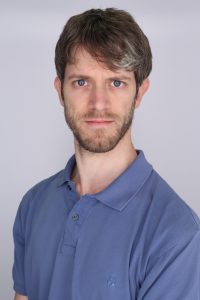
Nicola Peserico is a Research Professor in the Department of Electrical & Computer Engineering at the University of Florida, affiliated with the College of Engineering. His primary research focus is on Integrated Optical Circuits and Silicon Photonics, with an emphasis on heterogeneous integration, hardware for Machine Learning/Neural Networks, and biosensing applications using integrated photonics. Education: Ph.D. (2018), M.S. (2014), and B.S. (2011) in Telecommunication Engineering from Politecnico di Milano. His research explores cutting-edge photonic technologies for accelerating neural networks, including Fourier-based convolution operations, reconfigurable circuits for solving PDEs, and energy-efficient optical interconnects. Recent work highlights advancements in photonic-electronic ICs, thermal management in photonic systems, and overcoming bottlenecks in memory and compute architectures. His publications emphasize photonic tensor cores, joint transform correlators, and silicon photonics integration for AI acceleration. Notable contributions include roadmap analyses for neuromorphic photonics and innovative packaging strategies for photonic neural network accelerators. No scientific awards or grants are explicitly listed in the provided texts. His advising record is not documented here. Labs/Teams: His work is part of broader efforts in photonic computing and AI hardware acceleration at the University of Florida, leveraging silicon photonics for next-generation computing systems.
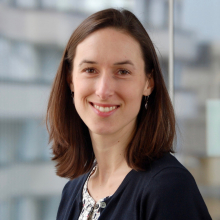
Christine Tardif is an Assistant Professor in the Department of Biomedical Engineering and the Department of Neurology and Neurosurgery at McGill University. As head of the McConnell Brain Imaging Centre lab at the Montreal Neurological Institute, she develops advanced MRI techniques for in-vivo brain imaging, focusing on quantitative mapping of myelin and cortical microstructure. Her work spans methodological innovation (e.g., multi-modal biophysical modeling) and translational applications across preclinical (7 Tesla) and clinical (3 and 7 Tesla) systems. Undergraduate: B.Eng. in Computer Engineering, McGill University (2004) Master's: M.Sc. in Bioengineering, Imperial College London (2006) PhD: Biomedical Engineering, McGill University (2011) Her research explores myelin dynamics in health and disease, emphasizing its role in neural conduction, brain plasticity, and cognitive functions. The lab investigates dysmyelination in psychiatric disorders (e.g., bipolar disorder) and neurodegenerative conditions (e.g., multiple sclerosis) using relaxometry , magnetization transfer , and diffusion-weighted imaging . Recent methodological work includes 3D MERMAID sequences for motion-insensitive diffusion imaging and optimization of magnetization transfer saturation maps. Current projects integrate ultra-high field MRI with histological validation in preclinical models (e.g., marmoset brain sections), aiming to bridge microstructural metrics with macro-scale brain function. Applications span Alzheimer's disease risk assessment via white matter alterations, synaptic density mapping in psychosis, and cortical laminar differentiation studies.
Mahsa Derakhshani is a Senior Lecturer (equivalent to Associate Professor) in Digital Communications at Loughborough University's Wolfson School of Mechanical, Electrical and Manufacturing Engineering. She leads research in the Signal Processing and Networks Research Group (SPNRG) and serves as an Associate Editor for the IET Signal Processing Journal. Her academic journey includes a PhD from McGill University (2013), followed by postdoctoral roles at the University of Toronto and Imperial College London. Key awards include the Royal Academy of Engineering/The Leverhulme Trust Research Fellowship (2020-21) and NSERC Postdoctoral Fellowships (2015-2017). Research interests focus on digital communications, machine learning for signal processing, wireless networks, and reinforcement learning applications. Recent work addresses challenges in satellite communications, OTFS modulation, and opto-physiological monitoring. She has authored over 70 publications spanning topics like NOMA systems, MIMO optimization, and edge-assisted live streaming. Education: PhD (McGill, 2013), MSc (Sharif University, 2008), BSc (Sharif University, 2006) Affiliations: IEEE Senior Member, IET Member, Fellow of the Higher Education Academy Grants & Funding: Leverhulme Trust, Royal Academy of Engineering, NSERC Labs/Teams: Active in SPNRG and collaborates on projects involving 5G/6G networks, satellite systems, and biomedical signal processing. Current research emphasizes AI-driven solutions for communication networks and wearable health monitoring technologies.
Dr. Swati Chandna is a Senior Lecturer at the School of Computing and Mathematical Sciences, Birkbeck, University of London. She holds an honorary position as an Honorary Lecturer in Statistics at University College London (UCL) from January 2023 to January 2026. She earned her PhD in Statistics from Imperial College London in 2013. Her research focuses on statistical modeling, network analysis, and bioinformatics, with notable contributions to stochastic networks, single-cell genomic data analysis, and complex-valued signal processing. Teaching responsibilities include modules such as Bayesian Methods, Analysing Data, Statistical Analysis, and Project Applied Statistics. She serves as Admissions Tutor for Graduate Certificate and Diploma in Statistics for Data Science and as School Ethics Lead at Birkbeck. Her work bridges theoretical statistics with practical applications in genomics, environmental modeling, and biomedical research. Dr. Chandna’s recent research explores topics like covariate-driven network estimation, stochastic modeling of genomic data, and bootstrap techniques in source separation. Her publications reflect interdisciplinary collaboration across statistics, computer science, and life sciences.
Archontis Politis is an Assistant Professor in the Department of Computing Sciences at Tampere University's Faculty of Information Technology and Communication Sciences. His research focuses on signal processing, machine learning, and their applications in audio engineering, particularly in spatial audio, sound source separation, and parametric audio coding. He explores topics such as Ambisonics, reverberation control, and neural network-based approaches for audio processing. His work emphasizes spatial audio reproduction, including six degrees of freedom (6DOF) rendering, microphone array processing, and efficient compression techniques for higher-order Ambisonics. He also investigates sound event localization and detection, leveraging machine learning for real-world acoustic scenarios. His contributions span theoretical advancements in spherical harmonics and practical implementations of spatial audio systems. Recent research highlights include developing datasets for music source separation, improving synthetic-to-real generalization in classical music, and creating neural encoding models for irregular microphone arrays. His methodologies often integrate deep learning with traditional signal processing to address challenges in multi-speaker environments and dynamic acoustic scenes.
Professor Dan Sievenpiper is a faculty member at the University of California San Diego (UCSD) in the Jacobs School of Engineering, Department of Electrical and Computer Engineering. He joined UCSD in 2010 and leads the Applied Electromagnetics Group. His research focuses on artificial media, electromagnetic structures, and antennas, with applications in metamaterials, plasma physics, and topological insulators. He has over 200 publications and 80 patents, and has held roles including Vice Chair of the ECE Department and membership in the UCSD Admissions Committee. Education: B.S. and Ph.D. in Electrical Engineering from UCLA (1994 and 1999) Research Interests: His work spans artificial media, metamaterials, non-reciprocal devices, and time-modulated surfaces. Recent innovations include photonic topological insulators and plasma-based systems. His group explores applications in antennas, wireless communication, and biomedical neuromodulation. Awards: URSI Isaac Koga Gold Medal (2008) IEEE Fellow (2009) John D. Kraus Antenna Award (2019) Advising & Labs: He supervises a dynamic group of graduate students and postdocs, with over 30 alumni in academia and industry. The Applied Electromagnetics Group collaborates with institutions like HRL Laboratories and the Air Force Research Lab. Service: Past roles include Associate Editor of IEEE Antennas and Wireless Propagation Letters, and Chair of the IEEE Antennas and Propagation Symposium (2017).
A. Stephen Morse is the Dudley Professor of Electrical & Computer Engineering at Yale University. He has been affiliated with Yale since 1970 and holds memberships in prestigious organizations such as the National Academy of Engineering and the Connecticut Academy of Science and Engineering. His research focuses on control systems, including hybrid systems, network science, multi-agent coordination, and sensor networks. He has received numerous awards, including the Bellman Control Heritage Award (2013) and the IEEE Technical Field Award (1999). Morse earned his BSEE from Cornell University, MS from the University of Arizona, and PhD from Purdue University. His work emphasizes logic-based switching, vision-based control, and distributed algorithms for autonomous systems. He has contributed to foundational papers on multi-agent consensus and formation control, as well as sensor network localization. Current projects include swarming dynamics and reactive control strategies for autonomous vehicles. His scientific contributions span over 200 publications, with recent work addressing distributed control algorithms, climate impact modeling, and game-theoretic network analysis. Morse advises graduate students like Ming Cao and Jia Fang, and his research group explores cutting-edge topics in systems theory and robotics.
Herbert Buchner is a researcher affiliated with the University of Cambridge in the Information Engineering Division , focusing on Machine Learning for Signal Processing and Human-Machine Interfaces . Research Interests : Acoustic scene analysis, biomedical interfaces, haptic systems, wave-domain adaptive filtering, and sensor networks. Applications : Speech recognition, wavefield synthesis, active noise control, and full-duplex communication systems. His work explores TRINICON (a framework for broadband adaptive MIMO filtering), blind source separation, and wave-domain filtering, emphasizing theoretical rigor and real-time implementation. Key Awards : Best Paper Award at ITG Conference on Speech Communication (2008) Best Student Paper Award at IEEE Intl. Workshop on Acoustic Echo and Noise Control (2001) Publications highlight 15 recent articles in areas like: Wave-Domain Adaptive Filtering Blind Source Separation for Convolutive Mixtures Robust Extended Multidelay Filters Multichannel Acoustic Echo Cancellation Active Room Compensation Biomedical Signal Processing
Konrad Kowalczyk is an Associate Professor at AGH University of Science and Technology in Krakow, Poland, where he heads the Signal Processing Group within the Faculty of Computer Science, Electronics and Telecommunications. With extensive international experience from institutions including Queen's University Belfast, Stanford University, and Fraunhofer Institute, he has established himself as a leading researcher in audio and speech signal processing. His academic journey includes B.Eng. and M.Sc. degrees from AGH University (2005), a Ph.D. from Queen's University Belfast (2009), and a Habilitation in ICT from AGH University (2020). B.Eng. and M.Sc. in Electronics and Telecommunications, AGH University of Krakow (2005) Ph.D. in Electronics, Queen's University Belfast, UK (2009) Habilitation (D.Sc.) in Information and Communication Technology, AGH University of Krakow (2020) Kowalczyk's research spans multiple cutting-edge areas in audio processing, with particular focus on speech and audio signal processing enhanced by machine learning techniques. His work integrates deep neural networks with traditional signal processing methods to address challenges in array signal processing , speech enhancement , and speaker recognition . The research group he leads explores innovative applications in distributed signal processing for IoT , acoustic event detection , and spatial audio rendering , bridging theoretical advances with practical implementations. His recent publications demonstrate a clear trend toward integrating deep learning with traditional signal processing techniques, particularly in speaker diarization, source separation, and robust speech recognition. The research increasingly focuses on real-world applications requiring reverberation-robust processing , distributed microphone array systems , and end-to-end neural architectures that can operate in challenging acoustic environments. There's a noticeable shift toward more complex, integrated systems that combine multiple signal processing tasks. Stanislaw Staszic Medal for best graduate of AGH (2005) IEEE Best Student Paper Contest finalist (2007) AES Student Technical Paper Award winner (2008) Best Student Paper Award at IWAENC conference (2014) Best Paper Awards at IEEE SPA conferences (2016, 2019) Polish Ministry of Science Scholarship for Distinguished Young Scientists (2016-2019) Prime Minister Award for outstanding scientific achievements (2020) As Principal Investigator, Kowalczyk leads multiple significant research projects including "Acoustic Intelligence" (2024-2028) funded by National Science Center, and "Deep extraction for robust speech recognition" (2023-2028). He has successfully secured funding from prestigious programs including First TEAM from the Foundation for Polish Science, and EU FP7 projects. His research group actively supervises Ph.D., M.Sc., and B.Eng. students, with strong connections to international institutions including Aalto University and IEEE Signal Processing Society. The research output includes numerous journal publications, conference papers, patents, and software implementations that have advanced the field of audio signal processing. Kowalczyk leads the Signal Processing Group at AGH University, which focuses on developing innovative solutions for speech and audio processing challenges. The group maintains strong collaborations with international institutions including Aalto University (Finland), and participates in European research initiatives. Their work spans theoretical development through practical implementation, with applications ranging from medical voice assistants to distributed acoustic sensor networks.
Luis Antonio Azpicueta Ruiz is an Associate Professor in the Department of Signal Theory and Communications at Carlos III University of Madrid. He leads research in the Signal Processing and Learning Group (GTSA) and Machine Learning for Data Science (ML4DS) group, focusing on interdisciplinary applications spanning acoustics, telecommunications, and machine learning. Research Interests: His work bridges signal processing theory with practical applications in environmental acoustics, adaptive filtering systems, and machine learning. Key research themes include: Advanced adaptive filtering architectures for nonlinear systems Distributed estimation in sensor networks Acoustic echo cancellation and room equalization Psychoacoustic evaluation methods Machine learning applications in noise monitoring and sound analysis Research Projects: Principal investigator for multiple funded projects including: Diagnóstico del ruido de chorro en aeronaves (AEI, 2022-2025) LearnINg FLow and Noise Dynamics via AI (COMUNIDAD DE MADRID, 2024-2026) BODYinTRANSIT - Sensory-driven Body Transformation (EUROPEAN COMMISSION, 2022-2026) Aprendizaje Automático para análisis Big Data (MINISTERIO DE ECONOMÍA, 2018-2021)
Dr. Ali Sadaghiani is an Associate Professor in Surface Engineering and an Anniversary Fellow at the University of Birmingham, affiliated with the Department of Mechanical Engineering in the School of Engineering. He leads the Smart Research Group, focusing on advancing phase-change heat transfer and interfacial transport phenomena for sustainable energy and water solutions. PhD in Thermofluidics, Sabanci University, 2019 MSc in Mechatronics Engineering, Sabanci University, 2015 BSc in Mechanical Engineering, Iran University of Science and Technology, 2012 His research lies at the intersection of thermal-fluid engineering and material science, with a strong emphasis on boiling, condensation, evaporation, and freezing. He develops advanced engineered surfaces to enhance heat transfer efficiency in applications such as electronic cooling, battery thermal management, solar desalination, and anti-icing systems. His work integrates experimental methods (e.g., micro-PIV, Raman spectroscopy), multiscale modeling (CFD, MD), and surface modification techniques. His recent publications and projects reflect a consistent focus on sustainable technologies, including solar-driven interfacial evaporation, hydrogen-powered propulsion systems, and solid-state battery thermal regulation. He has led and contributed to multiple Horizon Europe and national research initiatives such as Triathlon, ARISE, MicroFlowTec, and BioAFC, demonstrating strong interdisciplinary collaboration and innovation. ERC Starting Grant laureate Anniversary Fellow Dr. Sadaghiani actively supervises PhD students and welcomes applicants interested in phase-change heat transfer, surface engineering, AI-driven material design, and sustainable thermal systems. He has secured significant research funding and continues to develop scalable solutions for next-generation energy and water technologies.
Bruce Wiggins is an Associate Professor in Audio Engineering at the College of Science and Engineering. His research focuses on spatial audio technologies, including Ambisonics, binaural auralization, and 3D audio systems. Notable projects include the GASP guitar system and WHAM webcam-based head-tracked audio solutions. He has contributed to advancements in microphone array calibration, speaker array modeling, and virtual reality audio integration. His work bridges theory with practical applications in music technology and acoustic engineering. Education: PhD in Audio Engineering (2004). Research Interests: Ambisonics, spatial audio capture and reproduction, 3D audio for virtual reality, binaural rendering, and innovative musical instrument design. His work emphasizes practical implementations such as the GASP guitar system and calibration tools for low-cost microphone arrays. Article Trends: Recent publications address virtual stereo microphone techniques (2024), dynamic electrical systems (2024), and browser-based 3D audio (2023). Earlier work explores head-tracking algorithms (2016–2020) and acoustic modeling for domestic environments (2017). Grants/Advising: No explicit grants listed. Advising details unavailable but has collaborated with numerous researchers on projects like WHAM and GASP. Labs/Teams: Active in interdisciplinary teams developing spatial audio tools and instruments, including collaborations on virtual reality auralization and ambisonic guitar systems.
Prof. Dr.-Ing. André Jakob is a faculty member at Berlin University of Technology , affiliated with the Department VII - Electrical Engineering - Mechatronics - Optometry. His academic role spans teaching and research in digital signal processing, audio technology, and acoustics. Digital Signal Processing Audio Technology Acoustics Active Noise Control His research focuses on active noise control , simulation of moving sound sources , and audio signal processing , with applications in robotics, building acoustics, and medical devices. Publications include advancements in anti-noise window systems , sound source localization , and acoustic measurement techniques . His recent work explores real-time auralization for educational robotics and nonlinear acoustic modeling with neural networks. The 15 most recent articles demonstrate a consistent focus on acoustic simulation , active control systems , and sound propagation modeling , with conference contributions at DAGA, NAG-DAGA, and international acoustics events. Topics range from dental drill noise reduction to active sound design in musical instruments , reflecting interdisciplinary applications. He supervises numerous Master's and Bachelor's theses in areas like real-time signal processing, deep learning for sound recognition, and virtual acoustics. His lab at TU Berlin explores multi-loudspeaker systems , acoustic beamforming , and active noise cancellation for both industrial and consumer applications.
Dr Tianning Li is a Lecturer in Computing at the University of Southern Queensland's School of Mathematics, Physics and Computing. Affiliated with the School of Agriculture and Environmental Science, their research focuses on biomedical engineering, signal processing, and machine learning applications in clinical settings. Dr Li holds a PhD from USQ, an MAccFin from Adelaide, and a BISM from Nanjing. Core research interests include EEG signal analysis for anesthesia monitoring and epilepsy detection, with emphasis on developing novel signal processing techniques like spectral entropy analysis, synchroextracting transforms, and federated learning approaches. Their work bridges machine learning innovations with clinical diagnostics, addressing challenges in real-time medical signal interpretation and healthcare data efficiency. Recent publications (2021-2025) emphasize advancements in anesthesia depth assessment algorithms, seizure prediction methodologies, and lossless signal compression. Research trends reflect a strong focus on integrating neural networks (CNN-LSTM, 1D CNN) with traditional signal analysis frameworks to enhance clinical decision-making accuracy. No scientific awards are listed, but Dr Li maintains active research collaborations through affiliations with multiple departments. Supervision activities are not detailed in available records, though their work likely involves student contributions to biomedical computing projects. ORCID: 0000-0001-5142-8654 .
Eunhee Kim is a Professor in the Department of Defense Systems Engineering at Sejong University. She holds a Ph.D. in Mechanical Engineering from KAIST and has extensive industry experience in radar systems development. 1995 B.S. in Precision Engineering, KAIST 1997 M.S. in Mechanical Engineering, KAIST 2004 Ph.D. in Mechanical Engineering, KAIST Her research focuses on Radar Systems , Waveform Design , and MIMO Radar signal processing. She has contributed to projects involving space object tracking, airborne radar systems, and automotive radar optimization. Recent publications highlight her work on Machine Learning integration for Energy Forecasting and advanced MIMO Array Designs for improved radar resolution. She leads the Defense Radar Technology Laboratory, specializing in Phased Array Radar and Broadband Noise Radar systems. Patents include vehicle camouflage netting and RF-based positioning systems. Collaborations with agencies like Agency for Defense Development and companies such as LIG Nex1 and Hanwha Systems are prominent in her career.