Damian Murphy is Professor of Sound and Music Computing at the University of York's AudioLab. As Director of XR Stories, he leads research on immersive audio technologies, virtual acoustics, and interactive storytelling. His research focuses on: Virtual acoustic modeling and room simulation Immersive audio for XR applications Soundscape evaluation through auralisation Machine learning for environmental sound analysis Audio heritage reconstruction Recent publications demonstrate innovative applications of computational acoustics, including Fourier neural operators for wave equation solving, hearables for augmented audio experiences, and historical acoustic reconstructions. His work bridges technical audio research with creative applications. Murphy leads major projects including 'XR Stories' (AHRC), 'The Past Has Ears' (AHRC/EU), and 'SIGN: Screen Industries Growth Network'. He has secured over £20m in research funding and published 200+ works. As visiting lecturer at KTH Stockholm, he specializes in spatial audio and acoustics.
Jon Fagerström is a Visiting Professor at the Department of Information and Communications Engineering, Aalto University. His work focuses on advanced audio signal processing techniques, particularly in velvet noise applications, artificial reverberation, and feedback delay networks. He contributes to the UN Sustainable Development Goal of Quality Education through his academic research in sound engineering. Academic Affiliation: Aalto University Department: Information and Communications Engineering Primary Research Areas: Audio Signal Processing, Acoustics, Sound Synthesis, Virtual Reality Audio Research trends in his publications include innovations in reverberation modeling , decorrelation techniques , and velvet noise applications across audio engineering, VR sound environments, and music technology. Collaborations with researchers like Niko Meyer-Kahlen, Sebastian Schlecht, and Vesa Välimäki highlight his work in feedback delay networks and binaural audio processing.
Professor Andrew Lewis is an esteemed academic and composer at Bangor University , serving as Professor of Composition and Associate Dean of Research in the School of Language, Culture and the Arts. His work bridges electroacoustic composition , music technology , and sonic art , with a focus on sound materiality and technological mediation. He actively supervises PhD students in composition, emphasizing acoustic music and technology-integrated performance . Education: PhD in Composition (University of Birmingham, 1991) PGCE in Music Education (Birmingham City University, 1991) BMus (Hons) (University of Birmingham, 1984) Fellow of the Learned Society of Wales (2024) Research Interests center on acousmatic music , data sonification (e.g., climate change in Two Lakes ), and cultural-aesthetic inquiry (e.g., Lexicon on dyslexia). His compositions often explore perception-cognition dynamics and technology’s role in musical identity . Recent Articles span acousmatic and instrumental-electronic hybrid works , reflecting trends in spatial audio , environmental data translation , and historical instrument reimagining . Collaborations with institutions like the BBC National Orchestra of Wales and grants from the Wellcome Trust and AHRC highlight his interdisciplinary impact. Scientific Awards Elected Fellow, Learned Society of Wales (2024) PRIX CIME 2023 (International Confederation of Electroacoustic Music) Leverhulme Research Fellowship (2016) Destellos Prize (Mar del Plate, Argentina, 2017) Prix International de Composition Électroacoustique KLANG! (2018) Advising & Grants include supervision of 6 PhD projects (e.g., Exploring Engagement in Technologically Mediated Music ) and leadership in 4 funded initiatives like the Wellcome Trust Lexicon project and AHRC Spatial Audio grant . Labs & Teams include directing Electroacoustic WALES , a collective of composers promoting electroacoustic music, and contributing to Bangor University’s Electroacoustic Music Studios .
Dr. Bracha Laufer is a senior lecturer at the School of Electrical Engineering , part of the Iby and Aladar Fleischman Faculty of Engineering at Tel Aviv University. Her research focuses on acoustic source localization, speech signal processing, and machine learning techniques for audio engineering. Her recent work explores conformal prediction and manifold-based approaches for robust source localization, deep learning architectures for sound source separation, and simplex geometry in multichannel signal analysis. These publications highlight interdisciplinary applications of machine learning and statistical methods in acoustics. Dr. Laufer's research integrates Bayesian inference , probabilistic graphical models , and uncertainty quantification to address challenges in adverse acoustic environments. She has contributed to advancements in multi-microphone speaker localization and speech inpainting .
Bruce DENBY is a Professor at Sorbonne University specializing in speech processing, telecommunications, and indoor localization. His research spans multiple disciplines including computer science, physics, and environmental science with significant contributions across these fields. His primary research interests include: Silent Speech Interfaces and speech restoration technologies Indoor localization using wireless networks and GSM fingerprints Telecommunications and signal processing Environmental modeling of road dust and air pollution Machine learning applications in speech recognition Dr. DENBY's research trajectory shows evolution from early work in high energy physics to speech processing and wireless communications, with recent publications (2022-2025) demonstrating continued innovation in WiFi analytics, client density mapping, and future speech interfaces. His work increasingly integrates deep learning techniques while maintaining focus on practical applications, particularly for speech restoration and privacy-preserving network analysis. Notable scientific achievements: Chester Sall Award Paper (2012) for work on FPGA-based FM broadcast receivers Significant contributions to the Silent Speech Challenge benchmark with deep learning approaches Development of the NORTRIP model for road dust emissions Highly cited work on Silent Speech Interfaces (over 500 citations) Dr. DENBY has secured research funding across multiple domains, collaborating with institutions across Europe. His work demonstrates strong interdisciplinary connections between speech technology, wireless communications, and environmental science, with applications ranging from assistive technologies to urban air quality management.
Lou Kilger serves as Professor of composition and sound design for digital media at KreativInstitut.OWL since 2023 and holds a teaching position in sound direction at State University of Music Trossingen since 2020. An active composer with works premiering at prestigious venues including the Donaueschingen Music Festival and Munich Biennale, he bridges artistic creation with technical innovation in digital media environments. His educational background includes: Concert exam in composition from Cologne University of Music and Dance (2020-2022) Master in Sound Direction from University of Music and Performing Arts Frankfurt (2019) Master in Electronic Composition from Cologne University of Music and Dance (2017) Bachelor of Music Design from State University of Music Trossingen (2011) Professor Kilger's research centers on intermedia composition where digital media, sound design, and music informatics converge. He creates environments where 'things that are unimaginable on your own suddenly become tangible' through team-oriented approaches. His work explores states between reality and virtuality using binaural audio, mobile platforms, and glitch aesthetics, often incorporating biological metaphors and fluid dynamics. Projects like the mei-friend Editor demonstrate his commitment to advancing musicological markup standards while maintaining artistic innovation. His creative output shows clear progression from audiovisual miniatures (2013-2017) to complex intermedia systems (2021-2024), with increasing emphasis on digital space composition and audience interaction. Recent works like 'smonize' (2024) and 'nournimity' (2023) feature multichannel sound, bio-inspired design, and virtual reality elements, reflecting his focus on 'being between reality and virtuality.' While no formal awards are listed, his SWR commission for Donaueschingen Music Festival 2024 represents significant recognition. Key projects include: Musicological Markup in the mei-friend Editor (released January 2025) Internship program at KIO providing cross-disciplinary research exposure (2024) Live Coding Meetups fostering technical-artistic collaboration Professor Kilger actively supervises students through teaching positions at two institutions and integrates them into live projects. His funding includes the SWR commission and mei-friend Editor development, supporting team-oriented approaches where students collaborate with specialized colleagues. He emphasizes practical experience in 'artistic, compositional and technical production fields,' preparing students for careers at the intersection of art and technology. Though no formal lab name is specified, his work operates within KreativInstitut.OWL's research ecosystem focused on digital media production. The environment fosters collaboration across disciplines, with students and researchers contributing to intermedia projects that combine composition, sound design, and emerging technologies in team-oriented settings.
Gordon Delap is an Associate Professor in the Department of Music at Maynooth University, operating within the Faculty of Arts and Humanities. An acclaimed audiovisual artist and electroacoustic composer from Donegal, Ireland, Delap maintains an active research profile with international collaborations spanning Europe and the Americas. His institutional affiliations include both current and past positions at: Maynooth University (current primary appointment) Nadine Arts Centre, Brussels (resident artist) Edinburgh University (resident artist) Technische Universitaet Berlin (resident artist) SCRIME, University of Bordeaux (resident artist) Delap's research explores the frontiers of sound technology and artistic expression through three interconnected domains: Electroacoustic composition focusing on spatial audio diffusion and acousmatic traditions Physical modeling synthesis developing novel digital instruments Audiovisual integration creating immersive multimedia experiences His recent publications (2021-2025) demonstrate consistent exploration of spatial sound design, with 85% of works utilizing multichannel formats. Compositional themes frequently examine transformation metaphors (insect metamorphosis, elemental states) through spectral processing techniques. Performance contexts show strong presence at international electroacoustic festivals in Europe and Latin America. Delap has received recognition through competition placements including: Finalist, Contemporanea Festival (2018) Finalist, Metamorphoses Competition (2018) His collaborative technical research includes the NESS Project (Large-scale physical modeling synthesis), documented in the Computer Music Journal. Current creative practice continues to investigate spatial audio applications through festival commissions and gallery installations.
Margherita Brillada is a sound artist, radio maker, and researcher currently pursuing her PhD at the Academy of Creative and Performing Arts (ACPA) at University of Leiden with a practice-oriented research project entitled 'Re-thinking Radio Art: Community Radio and WebRadio.' She serves as a research associate and external teacher at the Institute of Sonology at the Royal Conservatoire of The Hague, part of the University of the Arts The Hague. Her work bridges artistic practice and academic research through initiatives like BUG Radio and the On Air - On Site Radio Art Festival. Brillada's research focuses on re-conceptualizing radio as an exhibition space for experimental sound art, exploring the socio-political dimensions of radio as a medium that connects communities. Her practice involves field recording, soundscape composition, and the creation of immersive listening experiences that bring attention to current social themes. She pays particular attention to the urban soundscape and the anthropogenic presence in public spaces, emphasizing the role of the disembodied and acousmatic voice in the electroacoustic context. Her recent artistic output shows a consistent exploration of radio as both medium and message, with projects spanning sound walks, radio operas, electroacoustic compositions, and community-based sound initiatives. These works demonstrate her commitment to investigating the boundaries between physical and virtual spaces, abstraction and storytelling, and individual expression and community engagement. Konrad Boehmer Prize (2021) for Master's thesis 'Radio Art as an Expression of Social Relatedness' As a researcher and educator, Brillada has conducted workshops at the Institute of Sonology and various international festivals, sharing her expertise in radio art practices. Her work with community radio projects highlights her belief in radio's potential as a public-social space for artistic engagement and community connection. Through her multifaceted practice, she continues to explore how sound and radio can serve as tools for social reflection, community building, and artistic innovation.
SungYoung Kim is an Associate Professor in the Department of Electrical and Computer Engineering Technology within the College of Engineering Technology at Rochester Institute of Technology (RIT). His academic work focuses on spatial audio, immersive sound systems, and virtual/augmented reality audio applications, with a research career spanning over a decade of consistent publication and innovation. Dr. Kim's research spans multiple areas of audio engineering and perception. His work investigates how humans perceive spatial audio, develops techniques for more realistic immersive sound reproduction, and creates training methods to improve auditory spatial abilities. He has made significant contributions to understanding the role of height channels in multichannel audio systems, developing methods for personalized spatial audio through head-related transfer functions (HRTFs), and creating augmented reality applications for auditory training. His recent publications demonstrate particular expertise in binaural rendering with head-tracking, automatic audio panning systems, and neurofeedback training applications for auditory spatial attention. His research has practical applications across virtual reality, gaming, music production, and hearing rehabilitation. Recent work includes developing assessment systems for sound localization using Unity and AWS, creating augmented reality auditory training games for hearing-impaired individuals, and investigating the impact of customized interaural time differences on first-person shooter gaming performance. Dr. Kim's publications show a clear progression from fundamental research on spatial audio perception to increasingly applied work with real-world implementation. Japan Society for the Promotion of Science (JSPS) International Fellowships for Research in Japan (L18521), 2018 AES 138th Student Design Competition Silver Award (with Imamura Hidetaka) U.S. Patent US8320590B2 for 'Device, Method, Program, and System for Canceling Crosstalk when Reproducing through Plurality of Speakers Arranged around Listener' (2012) Dr. Kim has secured significant research funding, including grants from Yamaha Corporation totaling over $145,000 for the period 2022-2025, and previously received $179,878 from the Department of Defense for research from 2019-2022. His lab maintains strong industry connections, particularly with Yamaha Corporation, and has extensive international collaborations with researchers in Japan and South Korea. Dr. Kim actively mentors graduate students, as evidenced by his numerous publications with student co-authors across various audio engineering venues, often listing students as first authors to highlight their contributions. Dr. Kim's research group works at the intersection of audio engineering, human perception, and emerging technologies. The lab develops novel audio reproduction techniques, creates assessment tools for sound localization, and explores applications of spatial audio in virtual environments. Recent projects include the development of W-Ambisonics for immersive music reproduction, auditory augmented reality systems that estimate room-specific acoustical materials, and neurofeedback training applications that change oscillatory activity in the parietal cortex related to auditory spatial attention. His work bridges theoretical audio research with practical implementation in real-world applications.
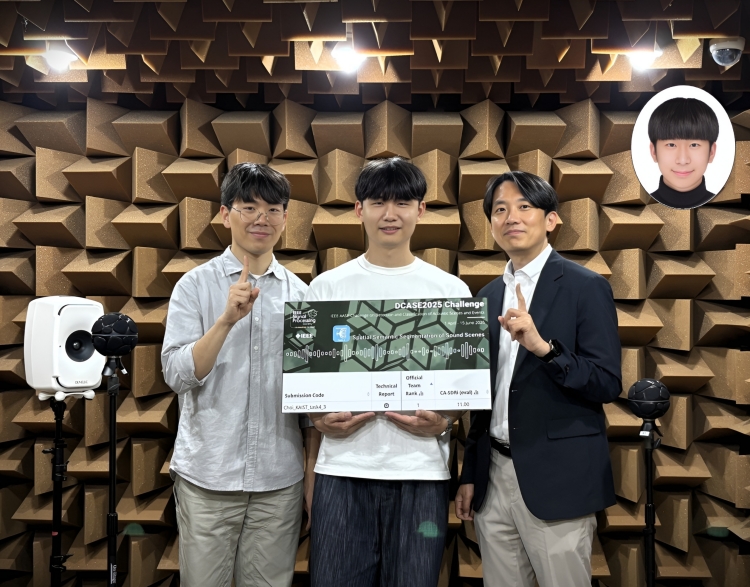
Professor Jeong-Woo Choi is a faculty member in the Department of Electrical Engineering at Korea Advanced Institute of Science and Technology (KAIST), specializing in cutting-edge audio artificial intelligence research. His work bridges electrical engineering and machine learning with applications in industrial monitoring and immersive media technologies. His primary research focuses on Audio Signal Processing and Sound Source Separation , developing next-generation AI systems capable of isolating and classifying complex soundscapes. Key areas include spatial semantic segmentation of acoustic scenes, multichannel signal analysis, and transformer-based neural architectures for abnormal sound detection in drones, factory pipes, and border surveillance systems. His team pioneers techniques mimicking human auditory processing through waveform analysis and directional cues. Professor Choi's team secured first place in the 2025 IEEE DCASE Challenge against 86 global competitors, achieving unprecedented 11 dB performance in sound separation metrics. This breakthrough enables advanced applications in AR/VR spatial audio editing and industrial anomaly detection. His scientific recognition includes: First place in 'Spatial Semantic Segmentation of Sound Scenes' at IEEE DCASE Challenge 2025 He actively mentors graduate researchers including PhD candidate Kwon Young-hoo and Master's student Kim Do-hwan. His lab operates under significant funding from South Korea's National Research Foundation (Mid-career Researcher Support Project), Ministry of Education (STEAM Research Project), and Defense Acquisition Program Administration (Future Defense Research Center). The research team maintains KAIST's leadership in audio AI through their specialized laboratory within the Electrical Engineering department, recently developing the world's highest-performance sound separation model combining Transformer and Mamba architectures.