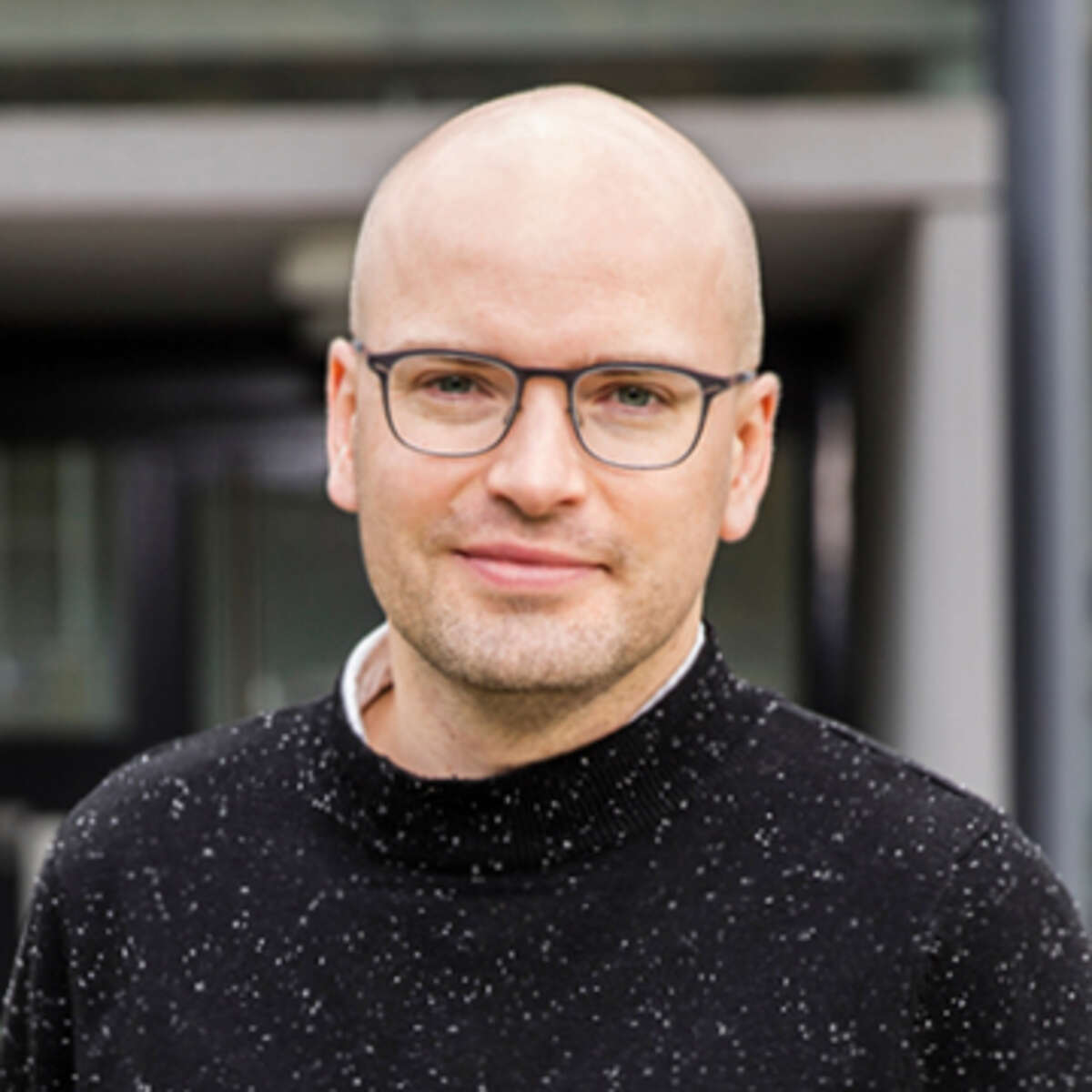
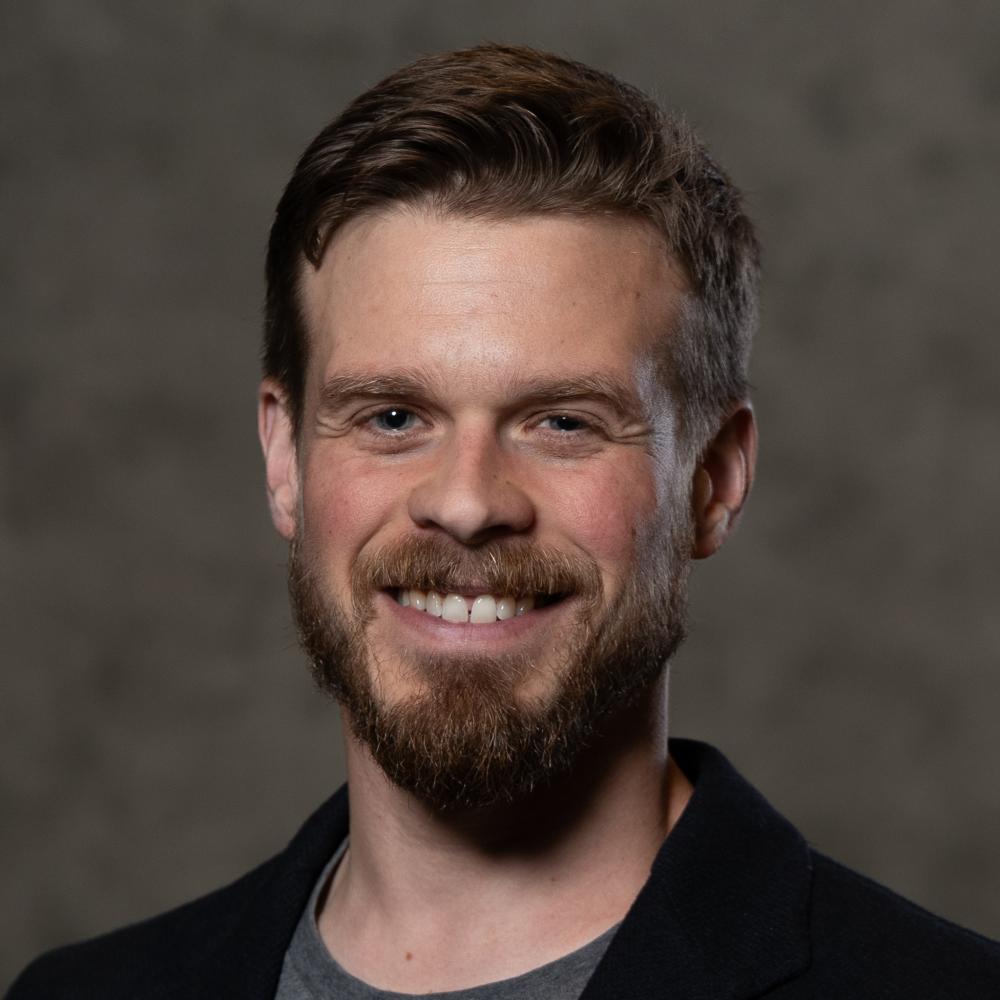
Prof. Knut Drescher is an Associate Professor at the Biozentrum, University of Basel , leading a research group focused on bacterial biofilms , swarming , and microbial multicellularity . Previously, he served as a Professor of Biophysics and Max Planck Research Group Leader at Philipps-Universität Marburg (2015-2021) and conducted postdoctoral research at Princeton University. Research Interests: Physical and biological mechanisms of biofilm formation Cell-cell interactions in microbial communities Antibiotic resistance in biofilms Hydrodynamics of bacterial swarms Evolution of cooperation in multispecies biofilms Development of bioimaging software (BiofilmQ, BacStalk) Scientific Awards: 2023: SNSF Consolidator Grant 2019: Heinz Maier-Leibnitz Prize (DFG), VAAM Research Prize, IUPAP Young Scientist Prize 2016: ERC Starting Grant Advising & Grants: Advises PhD and Master's students in microbiology, biophysics, and bioinformatics Secured major grants from ERC , HFSP , and DFG
Dana Pe'er is a Professor and Chair of the Computational and Systems Biology Program at the Sloan Kettering Institute (SKI) of Memorial Sloan Kettering Cancer Center. She is also an Investigator of the Howard Hughes Medical Institute and holds the Alan and Sandra Gerry Endowed Chair. Dr. Pe'er leads an interdisciplinary research group that combines advanced genomics approaches with machine learning to address fundamental questions in biomedical science, with particular focus on cancer biology, developmental biology, and immunology. Dr. Pe'er earned her PhD from Hebrew University in Jerusalem, Israel. Her academic journey includes a postdoctoral fellowship with George Church at Harvard Medical School. Before joining Memorial Sloan Kettering Cancer Center in 2016, she held faculty positions at Columbia University. Dr. Pe'er's research focuses on understanding cellular plasticity, the consequences of intra-tumor heterogeneity, cancer evolution and metastasis, and the mechanisms by which regulatory circuits go awry in disease. Her lab combines single-cell and spatial profiling technologies with machine learning approaches to investigate gene regulation, cellular plasticity, and cell-cell communication in the contexts of cancer, immunity, and development. They are particularly interested in how organisms develop from a single cell to generate diverse cell types, how epigenetic control rewires during development, and how cells communicate to execute multicellular responses. Analysis of Dr. Pe'er's recent publications reveals a strong focus on developing computational methods for single-cell and spatial genomics data analysis. Her work spans cancer types including pancreatic, prostate, colorectal, and breast cancer, with emphasis on tumor heterogeneity, metastasis mechanisms, and cellular plasticity. A significant portion of her research involves creating novel algorithms and tools like CellRank, REUNION, and SEACells that enable researchers to extract meaningful biological insights from complex genomic datasets. 2023 Class of 2023 Inductee - American Academy of Cancer Research (AACR) Academy 2023 Innovator Award - International Society for Computational Biology (ISCB) 2021 Fellow - International Society for Computational Biology (ISCB) Howard Hughes Medical Institute Investigator (2021) 2019 Ernst W. Bertner Memorial Award - University of Texas MD Anderson Cancer Center 2016 Lenfest Distinguished Faculty Award - Columbia University 2014 Director's Pioneer Award - National Institutes of Health 2014 Overton Prize - International Society for Computational Biology (ISCB) Dr. Pe'er is known for her dedicated mentorship approach, describing herself as "a mama bear" who cares deeply about her trainees while expecting independence, innovation, and hard work. She mentors numerous PhD students and postdocs in her lab. Her HHMI Investigator award provides approximately $9 million over seven years, enabling ambitious research directions. She also collaborates extensively with the Single-cell Analytics and Innovation Lab (SAIL) at MSK to generate new data from emerging technologies, working closely with wet-lab collaborators at MSK and beyond to apply computational methods to cutting-edge datasets across multiple disease areas. The Pe'er Lab is an interdisciplinary group of computational biologists with diverse backgrounds ranging from pure mathematics to clinical medicine. They work closely with wet-lab collaborators to apply their computational methods to cutting-edge datasets across cancer, immunology, and developmental biology. The lab is described as open, supportive, collaborative, and fun, with access to world-class facilities at the Sloan Kettering Institute. Dr. Pe'er's work continues to push the boundaries of computational biology and cancer research, with the ultimate goal of developing more effective, personalized therapies for cancer patients.
Kunihiko Kaneko is a Professor at the Niels Bohr Institute, University of Copenhagen, with a distinguished career in theoretical biophysics and complex systems. He received his PhD and MSc in Physics from the University of Tokyo, and has held leadership roles at the Universal Biology Institute and Center for Complex Systems Biology. PhD Physics, 1984 - University of Tokyo MSc Physics, 1981 - University of Tokyo His research spans five primary areas: Universal Biology, Evolutionary Constraints, Ecosystem Dynamics, Neural Cognition, and Universal Anthropology. He has published extensively on multi-level consistency principles, dimensional reduction in biological systems, and reciprocity between robustness and plasticity across scales. Recent publications show strong focus on microbial ecosystems (2025), evolutionary game theory (2025), neural modular architectures (2024), and dimensional reduction in cellular systems (2024). His work bridges physics and biology through dynamical systems theory applied to diverse phenomena from protocells to human societies.
Professor David Ackerley (Victoria University of Wellington) is a leading microbiologist and enzyme engineer specializing in directed evolution of bacterial enzymes for biotechnological applications. As Biotechnology Programme Director since 2006, he lectures in foundational courses like BTEC101 and BTEC201. Academic rank: Professor of Biotechnology Institutional affiliation: Victoria University of Wellington Research focus areas: Microbial Biotechnology, Drug Discovery, Synthetic Biology His research employs Darwinian evolutionary principles to engineer enzymes with enhanced activities, particularly targeting non-ribosomal peptide synthetases and nitroreductases for antibiotic development and cancer therapy. Recent work explores metagenomic domain substitution in pyoverdine biosynthesis and Purpuramine R from marine sponges. Key publications demonstrate innovations in metagenomic library construction , CRISPR screening for regeneration genes, and structural characterization of engineered enzymes. His team has developed NTR 2.0 , a high-efficacy nitroreductase for targeted cell ablation. Current research projects include: Clean solutions from dirty genes: Plastic-degrading enzyme discovery Engineering enzymes for CAR T-cell-chemotherapy synergy Repurposing niclosamide against Gram-negative superbugs Grants from the Health Research Council of New Zealand, Royal Society of New Zealand, and Cancer Society of NZ support his work. Collaborations span biomedical research, synthetic biology, and environmental applications.
Professor Jochen J. Brocks is a faculty member at the Research School of Earth Sciences (RSES) at the Australian National University (ANU). He holds a PhD in Organic Geochemistry from the University of Sydney (2002) and a Diplom Chemie (~MSc Chemistry) from the University of Freiburg, Germany. His research focuses on Paleobiogeochemistry, using molecular fossils (biomarkers) to study ancient ecosystems and evolutionary processes, including the origin of life and the emergence of complex organisms. He is particularly interested in the conditions that led to the appearance of multicellular life and the role of primary producers in mass extinctions, as well as the potential existence of a 'lost world' of complex life in Earth's early oceans. He previously served as a Junior Fellow of the Harvard Society of Fellows (2001–2004). His research group, Brocks Geobiology, explores topics such as the molecular signatures of early organisms, the geochemical record of ancient oceans, and the preservation mechanisms of organic matter in sedimentary deposits. Brocks collaborates on projects like the biogeochemistry of salt lakes and the analysis of Precambrian rocks to trace microbial diversity. Education: PhD (Organic Geochemistry, University of Sydney, 2002), MSc (Chemistry, University of Freiburg, Germany). His research interests span the intersection of organic geochemistry and paleontology, with a focus on applying biomarker analysis to understand Earth's history. Recent work includes studies on the environmental aftermath of Snowball Earth glaciations, the origins of Dickinsonia as an early animal, and the preservation of ancient biomolecules in extreme conditions like evaporites and concretions. Brocks has contributed to significant debates in the field, such as reinterpreting steroid biomarkers to challenge early animal evolution timelines and identifying novel preservation mechanisms for plant fossils. His work often integrates experimental geochemistry with field studies, particularly in northern Australia and Mauritania, to explore the co-evolution of life and Earth's systems. Awards: Junior Fellow of the Harvard Society of Fellows (2001–2004). He supervises multiple research projects, including those investigating the Velkerri Formation and the McArthur River deposit. Brocks also collaborates on initiatives like the Sedimentary Geochemistry and Paleoenvironments Project, which synthesizes global data to inform Earth history. His lab work emphasizes the development of analytical techniques to distinguish syngenetic biomarkers from contaminants in ancient samples.
Dr Juliet Coates is an Associate Professor in Plant Molecular Genetics at the University of Birmingham, School of Biosciences, working part-time. Her research focuses on plant development, evolution, and cell biology, particularly the transition of plants to land. She advocates strongly for inclusion and diversity in academia, holding roles such as Quality Assurance and Enhancement (QAE) lead and APP lead. She earned her PhD from University College London and undergraduate degree from the University of Cambridge, specializing in Natural Sciences. Her teaching spans undergraduate and postgraduate levels, including courses on plant science, molecular genetics, and communication skills. Recent research projects include investigating submergence tolerance in seaweeds, MYB93 protein function in Arabidopsis and tomatoes, and DELLA proteins in moss. She has been awarded the University of Birmingham’s Excellent Practice Award and a Royal Society-Leverhulme Trust fellowship. Coates collaborates widely, including with artists and on public engagement projects like the 'Kelp Road' exhibition. Key roles: QAE Lead, APP Lead, Equality & Diversity Champion Research Themes: Plant evolution, environmental adaptation, and molecular genetics Grants: BBSRC, Gatsby Foundation, EU-Marie Skłodowska Curie Outreach: STEM ambassador, author of popular science, radio features
Ben Larson is an Assistant Professor in the Department of Biological Sciences at Rensselaer Polytechnic Institute (RPI), affiliated with the Center for Biotechnology and Interdisciplinary Studies (CBIS). His research bridges biological physics, cell biology, and evolutionary principles to study complex cellular behaviors without nervous systems. BA in Physics, Reed College (2012) Postbaccalaureate Research Fellow, NIH NHLBI (2012-2014) PhD in Biophysics, UC Berkeley (2019) Postdoctoral Scholar, UCSF (2019-2024) Research Focus: The Larson Lab applies interdisciplinary tools from physics and computation to investigate sensorimotor activity in unicellular organisms like Euplotes , exploring how cells achieve sophisticated behaviors through cytoskeletal dynamics and finite-state mechanisms. Key themes include cellular decision-making, evolutionary biophysics, and multicellular morphogenesis. Scientific Awards: 2013 Orloff Science Award 2016-2019 NSF Graduate Research Fellowship 2016 Society of General Physiology Scholar 2020-2023 Merck Postdoctoral Fellowship 2022 Porter Prize for Research Excellence (ASCB)
Dr. Patrick Keeling is a Professor in the Department of Botany at the University of British Columbia (UBC), affiliated with the Biodiversity Research Centre and the Faculty of Science. He holds a Canada Research Chair Tier 1 in Microbial Diversity and Evolution. His research focuses on the molecular evolution and cell biology of eukaryotes, particularly protists, emphasizing their diversity, genomic adaptations, and roles in ecosystems. Key projects include studying endosymbiotic events, apicomplexan parasites, and the genomic evolution of microbial eukaryotes. Affiliations: Department of Botany, Biodiversity Research Centre, Faculty of Science (UBC) Research Interests: Protistology, microbial diversity, endosymbiosis, genome evolution, phylogenetics, and comparative genomics Dr. Keeling’s lab investigates protist taxa such as apicomplexans, dinoflagellates, and chlorarachniophytes, with a focus on their metabolic pathways, organelle evolution, and ecological roles. Recent work includes uncovering coral-infecting parasites, analyzing microbial symbioses, and exploring the origins of multicellularity. His team employs genomic, transcriptomic, and microscopy-based approaches to address evolutionary questions. Awards: Canada Research Chair Tier 1 (2021–present). Scientific contributions span over 200 publications, emphasizing protist diversity, parasite evolution, and endosymbiotic mechanisms. His lab hosts students and collaborates globally on marine and microbial research projects. Labs/Teams: The Keeling Lab at UBC, part of the Biodiversity Research Centre, integrates molecular, genomic, and ecological methods to study microbial eukaryotes. Collaborations include studies on coral symbionts, dinoflagellate evolution, and protistan microbiomes.
Prof. Dr. Arne Traulsen is a Scientific Member and Director of the Department of Theoretical Biology at the Max Planck Institute for Evolutionary Biology in Plön, Germany. He leads interdisciplinary research integrating biology, physics, mathematics, and computer science to study evolutionary dynamics, particularly in cancer evolution, metaorganisms, and population structure. His work often involves collaborations with clinicians, experimentalists, and bioinformaticians. Education: Diploma in Theoretical Physics (2002) Doctorate from Kiel University (summa cum laude, 2005) Research Interests: Arne’s research focuses on evolutionary game theory, finite populations, group selection, mathematical models for cancer , and population structure . His team explores how mutations accumulate, how cooperation evolves, and how eco-evolutionary dynamics shape biological systems. Recent work connects chaotic turnover in ecosystems and evolutionary responses to treatment with broader biological questions. Scientific Awards: Postgraduate Grant of Studienstiftung des Deutschen Volkes Postdoc Grant of Deutsche Akademie der Naturforscher Leopoldina Emmy-Noether Grant of Deutsche Forschungsgemeinschaft Young-Scientist Award for Socio- and Econophysics (2012) Advising and Collaborations: While specific student names are not listed, Arne has hosted numerous research groups and mentored interdisciplinary teams. His work spans collaborations with institutions like Kiel University , the CRC 1182 Metaorganisms , and global researchers in evolutionary biology and computational modeling .
Prof. Dr. Christian Kost is a Professor in the Department of Ecology at the University of Osnabrück. His research focuses on the molecular and ecological mechanisms underlying cooperative interactions between organisms, particularly metabolic cross-feeding in bacteria. He leads the Experimental Ecology and Evolution group, investigating how cooperation evolves and its physiological consequences. Key research topics include the evolution of cooperation, synergistic coevolution, microbial community dynamics, bacterial multicellularity, and phenotypic heterogeneity. Methodologies employed include experimental evolution, synthetic ecology, genomics, microscopy/microfluidics, and theoretical modeling. Recent work highlights obligate cross-feeding’s role in expanding bacterial metabolic niches and the prevalence of reciprocity in mutualistic interactions. Kost’s lab has published influential studies on microbial symbiosis, including landmark papers in Nature Ecology & Evolution and Current Biology . Current projects explore ecological interaction networks, predator-prey dynamics (e.g., ciliate-bacteria), and synthetic microbial communities. The lab actively collaborates with international researchers and employs cutting-edge techniques like omics profiling and individual-based modeling (e.g., McComedy tool development). Recent lab additions include bachelor students Karmen Lohstroh, Pía-Kathleen Habekost, and Finn Dinnus. Kost’s work bridges theoretical and experimental approaches, aiming to define principles governing microbial cooperation and its ecological significance.
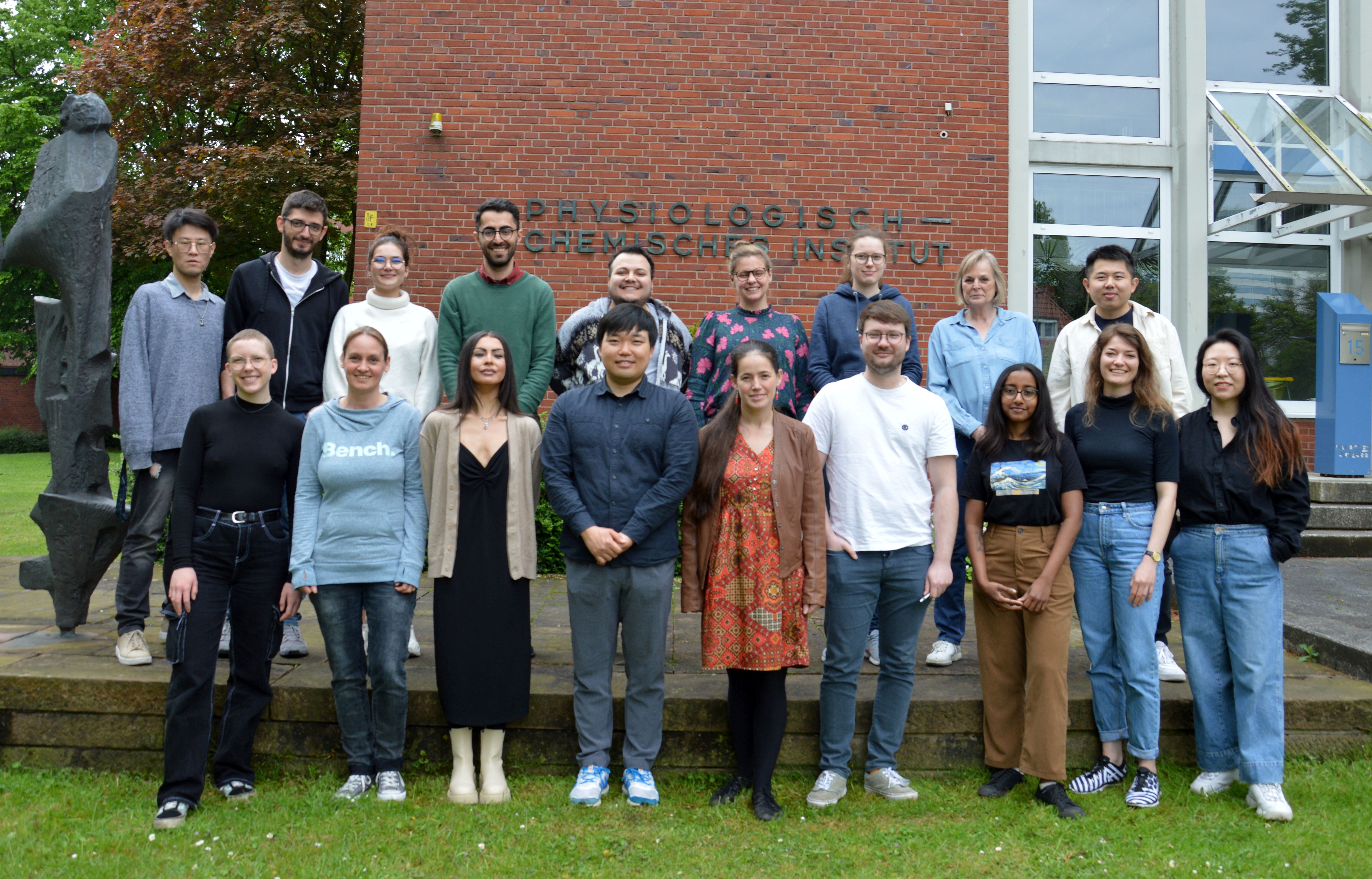
Seraphine V. Wegner is a Full Professor at the Institute of Physiological Chemistry and Pathobiochemistry within the Medical Faculty of the University of Münster. She leads an active research group focused on the spatiotemporal control of cell-material and cell-cell interactions using visible light. Her work bridges synthetic biology, cell biology, and photochemistry to create innovative approaches for tissue engineering and minimal cellular systems. Dr. Wegner's educational background includes a PhD from the University of Chicago (2005-2010) and undergraduate studies at Middle East Technical University in Turkey (2002-2005). Her career path has taken her through prestigious institutions including the Max Planck Institutes in Mainz and Heidelberg, where she established her independent research before joining the University of Münster as a Full Professor in 2019. Her research spans several interconnected areas including light-controlled minimal cellular systems, photoswitchable cell-cell interactions for tissue engineering, light-controlled cell-material interactions, and engineering designer biofilms with light. These research themes share a common thread of using light as a non-invasive tool to precisely control biological processes with high spatial and temporal resolution. Dr. Wegner's publication record shows consistent high-impact output across leading journals in cell biology, synthetic biology, and materials science. Her recent work demonstrates increasing sophistication in multi-color light control systems and applications in both fundamental biological questions and potential therapeutic approaches. ERC Consolidator Grant (2024): LIGHTHOUSE - Light as a signal for nonchemical cell-to-cell communication ERC Starting Grant (2018): ARTIST - Artificial cell-cell interactions for light switchable cell organization and signaling Young Leaders in Science Program, Schering Foundation (2016) MaxSynBio Independent Group Leader, BMBF/MPG (2015) Her research group actively collaborates across disciplines, with projects spanning from fundamental biophysics of cell adhesion to potential medical applications in tissue engineering and bacterial therapeutics. Dr. Wegner has established herself as a leader in the emerging field of optogenetic control of multicellular systems.
Maja Adamska is an Associate Professor and ARC Future Fellow at the Australian National University (ANU) in the Research School of Biology. She serves as Associate Director of Education and Head of the Biology Teaching and Learning Centre. Her primary research affiliation is with the Division of Biomedical Science and Biochemistry, where she leads the Adamska Group focused on the genomic and evolutionary basis of animal development. She is based in Room 2.022, Level 2, Linnaeus Building at ANU. Dr. Adamska studied biology with a focus on embryology and evolutionary biology at Jagiellonian University in Krakow, Poland. She completed her PhD in Germany working with Eva Bober and Thomas Braun on homeobox genes in inner ear development using vertebrate models from medaka fish to mice. Her postdoctoral work included research at the University of Michigan in Miriam Meisler's laboratory studying mouse mutants for limb patterning, followed by work at the University of Queensland with Bernie Degnan analyzing developmental signaling pathways in the sponge Amphimedon queenslandica. She was a group leader at the Sars International Centre for Marine Molecular Biology in Bergen, Norway from 2007-2015 before joining ANU in 2015. Her research addresses fundamental biological questions about how complex animals develop from single cells and how the first multicellular animals evolved from single-cell ancestors. She uses calcareous sponges to investigate the evolutionary origins of key developmental processes including germ layer segregation and axial patterning. Her work spans multiple areas including evolutionary developmental biology, comparative genomics, and the study of major transitions in animal evolution such as the emergence of multicellularity and morphological complexity. Her research has revealed surprising similarities between sponge and higher animal embryonic development, challenging traditional views of animal evolution. Analysis of Dr. Adamska's recent publications shows a strong focus on sponge and coral biology, with increasing attention to conservation and sustainability issues related to marine ecosystems. Her work combines molecular, genomic, and evolutionary approaches to understand fundamental biological processes, with particular emphasis on gene regulatory networks, developmental signaling pathways, and the genomic basis of morphological complexity in early-branching animals. ARC Future Fellow (since 2017) h-index of 32 with 3,990 citations according to Scopus Multiple research grants including ARC Centre of Excellence for Integrated Coral Reef Studies (2014-2021) Dr. Adamska supervises research on multiple projects including coral regeneration, molecular mechanisms of developmental signaling pathways in sponges, identification of target genes for developmental transcription factors, skeleton formation in corals and sponges, and sponge and coral microbiomes. She also serves as Convenor for BIOL2174 and has developed innovative educational approaches including the Digital Marine platform for blended learning in marine biology. Her research group, the Adamska Group, focuses on the genomic and evolutionary basis of animal development, using calcareous sponges as model organisms to gain insights into the evolutionary origins of complex developmental processes. The group collaborates with international researchers across multiple institutions to advance understanding of early animal evolution and development.
Kenneth Wertheim is a Lecturer in the Data Science AI and Modelling Centre (DAIM) at the University of Hull, part of the Faculty of Science and Engineering. They hold a PhD in bioengineering from the University of Southampton and have held roles at the University of Nebraska-Lincoln and the EU-funded PRIMAGE project. Their research focuses on systems biology, computational oncology, and applied artificial intelligence. Education: MEng in Chemical Engineering (Imperial College London), MS in Chemical Engineering (Columbia University), and PhD in Bioengineering (University of Southampton). Notable international experiences include internships in Argentina and Hong Kong, and an exchange year in Australia. Research emphasizes mathematical modelling of biological systems, particularly neuroblastoma and immune responses. Recent work includes developing therapeutic strategies for childhood cancers and AI-driven facial recognition systems. Key achievements include the 2020 Mensa Foundation award for a virtual immune system project impacting over 140,000 global members. Active in advocacy and yoga instruction, they teach courses in artificial intelligence, data science, and numerical methods. Supervises projects and collaborates on interdisciplinary initiatives like the PRIMAGE oncology research consortium.
Associate Professor Maja Adamska is a Group Leader and Associate Professor in the Research School of Biology at the Australian National University (ANU). She leads Program 3 in the ARC Centre of Excellence for Coral Reef Studies and has held previous roles as a Group Leader at the Sars International Centre for Marine Molecular Biology in Norway. Her research focuses on the evolutionary origins of developmental processes in animals, particularly using calcareous sponges as model systems. Adamska's work bridges developmental biology, genomics, and evolutionary biology, investigating topics such as germ layer segregation, axial patterning, and major transitions in animal evolution like the emergence of multicellularity. Education & Career: Bachelor's/Master's in Biology at Jagiellonian University (Kraków, Poland) PhD in Developmental Biology at the University of Cologne (Germany) Postdoctoral research at the University of Michigan and University of Queensland ARC Future Fellow at ANU since 2017 Research Interests: Genomic basis of morphological complexity Evolutionary origins of developmental processes Sponge and coral genomics Regeneration mechanisms in marine organisms Key Contributions: Discovered conserved developmental pathways in sponges Advanced understanding of sponge-metazoan divergence Contributed to the Amphimedon queenslandica genome project Awards: ARC Future Fellowship (2017–present) Lab & Collaborations: Adamska Group (Genomic and Evolutionary Basis of Animal Development) Collaborations with global marine biology networks
Verena Carvalho is a Lecturer in the Department of Microbiology at the University of Massachusetts Amherst. With a Ph.D. in Marine Microbiology from the University of Bremen, Germany (2011), her research focuses on large sulfur bacteria, microbial ecology, and biogeochemical processes in marine and extreme environments. Department: Microbiology Email: vcarvalho@umass.edu Location: 306 Morrill Science Center IVN Her work explores the physiology, genome plasticity, and ecological roles of giant sulfur bacteria like Achromatium oxaliferum and Beggiatoaceae. This includes studies of calcium carbonate dynamics, sulfur cycling, and adaptation mechanisms in hydrocarbon seeps, Arctic sediments, and salt marshes. She employs single-cell sequencing and field experiments to investigate microbial community interactions and their environmental impacts. Key article trends highlight her expertise in microbial biogeochemistry, sulfur cycling, and extremophile adaptation. Publications span topics such as intracellular calcite formation, denitrification processes, and evolutionary complexity in giant bacteria.