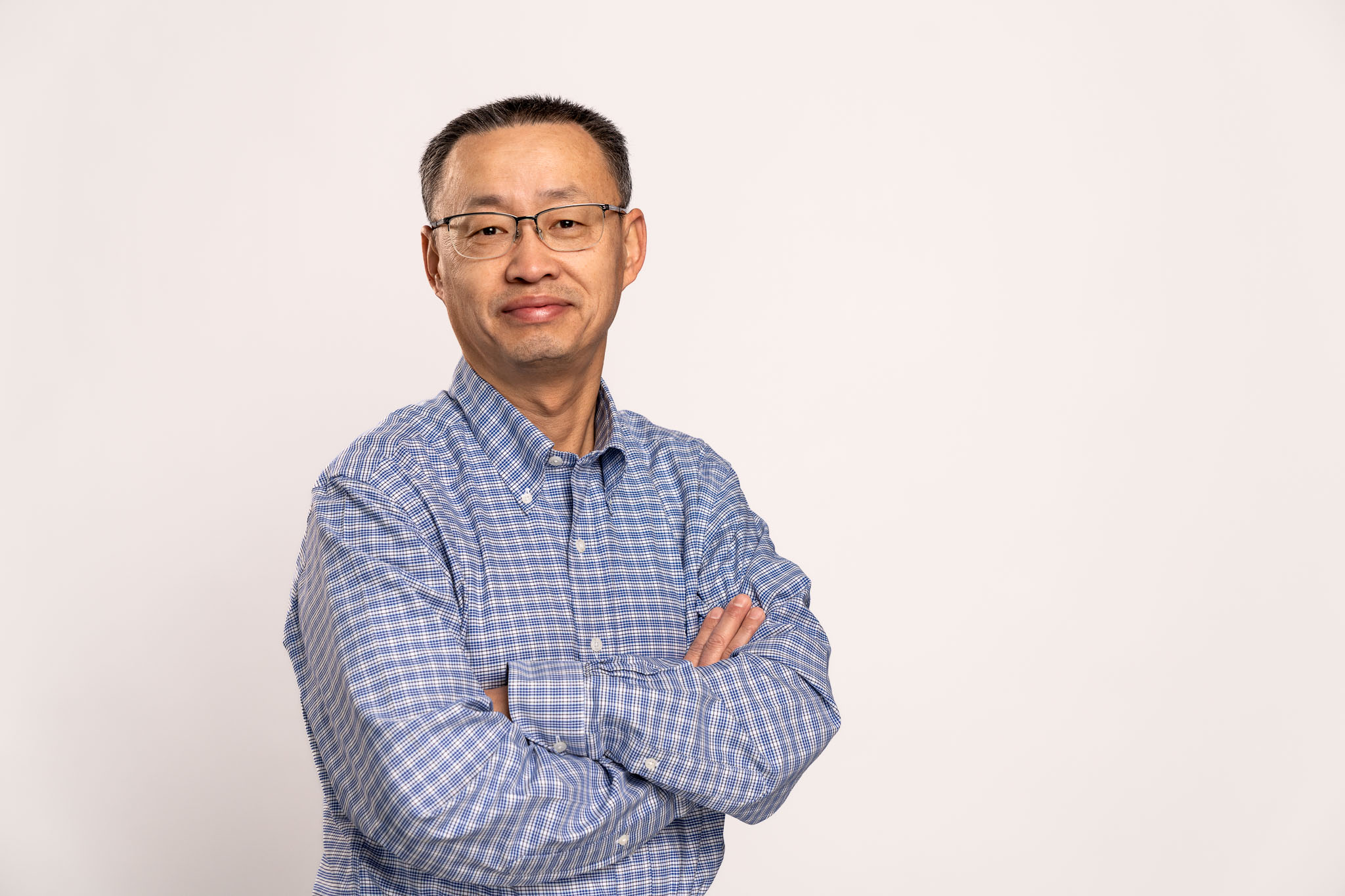
Erman Acar is an Assistant Professor for Explainable AI in Finance at the University of Amsterdam, affiliated with the Socially Intelligent Artificial Systems (SIAS) group at the Informatics Institute (IvI) and the Cognition, Language and Computation (CLC) lab at the Institute of Logic, Language and Computation (ILLC). His research focuses on Neuro-Symbolic AI architectures that integrate machine learning with symbolic approaches (logical or causal) to enhance reasoning and explainability in single/multiagent scenarios, applied to financial services. Education : PhD in Computer Science (University of Mannheim, 2017), MSc in Computational Logic (TU-Wien/TU-Dresden, 2012). Previous Roles : Postdoctoral researcher at VU Amsterdam (2018-2021), Leiden University (2021-2022). Research Trends : His recent work emphasizes causal discovery via meta-reinforcement learning, aligning with his Neuro-Symbolic AI and XAI themes. A PhD position (2022) highlights his focus on deploying these approaches for fairness and transparency in fintech. Teaching : Co-teaches the course Interpretability & Explainability in AI (University of Amsterdam, 2023) and leads the AI4Fintech initiative. Labs & Teams : Collaborates with the SIAS group (IvI), CLC lab (ILLC), and the upcoming AI4Fintech hub in Amsterdam.
Franco ZAMBONELLI is a Full Professor in the Department of Engineering Sciences and Methods at the University of Modena and Reggio Emilia. He holds positions in both the Reggio Emilia and Modena campuses, offering courses such as Software Engineering and Distributed Artificial Intelligence. His research focuses on IoT, pervasive computing, multiagent systems, and self-organization in distributed systems, with applications in smart cities, healthcare, and mobility. He leads projects like FLUIDWARE (PRIN 2017) and CONNECARE (H2020), exploring adaptive IoT systems and integrated healthcare solutions. ZAMBONELLI is an IEEE Fellow, ACM Distinguished Scientist, and member of the Academia Europaea. His work bridges theory and practice, emphasizing software engineering methodologies for IoT and agent-based systems. Education: Not explicitly detailed in provided texts. Research Grants: FLUIDWARE (2019-2022), CONNECARE (2016-2019). His research interests include causal discovery in pervasive environments, reinforcement learning for cybersecurity, and digital twin technologies. He contributes to editorial boards of journals like ACM Transactions on Autonomous and Adaptive Systems and IEEE Technology and Society Magazine. His teaching spans software engineering, distributed AI, and IoT-oriented methodologies. The Agents and Pervasive Computing Lab (agentgroup.unimore.it) is a focal point for his experimental work. Professional memberships include IEEE, ACM, and the Italian Association for Artificial Intelligence. Recent achievements include successful final reviews for CONNECARE and advancements in fluidware programming paradigms.
Simina Brânzei is an Associate Professor in the Department of Computer Science at Purdue University. She joined Purdue in Spring 2018, after postdoctoral positions at Hebrew University of Jerusalem and the Simons Institute for the Theory of Computing at UC Berkeley. Her research spans theoretical computer science and artificial intelligence, focusing on algorithmic game theory, computational complexity, fair division, and the intersection of dynamical systems with optimization. PhD in Computer Science from Aarhus University (2015), advised by Peter Bro Miltersen Undergraduate and Master's degrees from University of Waterloo Research Interests : Her work addresses algorithmic game theory, fair division, market and auction design, learning dynamics, and computational complexity. She explores how strategic behavior, fairness, and dynamics interact in resource allocation problems, with applications to economics and multiagent systems. Publication Trends : Recent articles examine lower bounds for local search algorithms, fair division protocols, market equilibrium computation, and learning in competitive environments. Her work often bridges theoretical computer science with economic models, emphasizing mathematical rigor and interdisciplinary applications. Scientific Awards : NSF CAREER Award IBM Ph.D. Fellowship Google Anita Borg Memorial Scholarship Advising and Grants : She mentors graduate students in theoretical computer science and algorithmic game theory. Her research is supported by grants from NSF and prior funding from IBM and Google during her PhD.
Tim Finin is a Professor in the Computer Science and Electrical Engineering department at the University of Maryland, Baltimore County (UMBC), where he serves as Director of the UMBC Center for Artificial Intelligence and holds the Willard and Lillian Hackerman Chair in Engineering. With over 50 years of experience, his research focuses on knowledge graphs, natural language processing, machine learning, and applications to information systems security and social media. Education: Ph.D. in Computer Science from the University of Illinois (1980), M.S. in Computer Science (1977), and S.B. in Electrical Engineering (1971) from MIT Current Roles: Director, UMBC Center for AI; Hackerman Chair; Professor, UMBC Previous Roles: Adjunct Associate Professor at University of Pennsylvania; positions at Unisys, JHU HLT CoE, and MIT AI Lab Research Interests: Dr. Finin's work spans Knowledge graphs and semantic web technologies Natural language processing for cybersecurity Machine learning for data assimilation Privacy and security in distributed systems Social media analysis Quantum computing applications Recent Grant Trends: His funded research includes projects on knowledge graph optimization, AI cybersecurity, semantic manufacturing standards, and quantum machine learning. Grants from DoD, NSF, NIST, and industry partners like IBM and Google demonstrate his interdisciplinary impact. Scientific Honors: ACM Fellow (2018) AAAI Fellow (2013) IEEE Technical Achievement Award (2009) UMBC Presidential Research Professor (2012) Fellow, Foundation for Intelligent Physical Agents (1997) Academic Leadership: Dr. Finin has chaired UMBC's Computer Science department, served on the Computing Research Association board, and held editorial roles including Editor-in-Chief of the Journal of Web Semantics (2005-2016).
Munindar P. Singh is the SAS Institute Distinguished Professor of Computer Science at North Carolina State University . He serves as a core faculty member in the Science of Security Lablet and contributes to initiatives in responsible computing and ethical AI . His research spans artificial intelligence , software engineering , and computing ethics . Education: Ph.D. in Computer Sciences from University of Texas at Austin (1993) B.Tech. in Computer Science and Engineering from Indian Institute of Technology, Delhi (1986) Research Focus: Dr. Singh's work centers on trustworthy AI and sociotechnical systems , with key contributions in Multiagent systems and BDI architectures Defensive cyberdeception using hypergame theory Normative systems for blockchain applications Equitable transportation systems via AI Service-oriented computing and protocol engineering Scientific Recognition: Fellow of AAAI , IEEE , and ACM Recipient of NSF CAREER Award and multiple industry awards Editor-in-Chief of ACM Transactions on Internet Technology Grant Activities: Currently leading several major NSF-funded projects including: SCC: Serving Households in Food Insecurity ($2.018M) RI: Foundations of Ethics for Multiagent Systems ($500K) Science of Security Lablet ($3.65M)
Leszek Rutkowski is a Professor at the Institute of Computer Science within the Faculty of Computer Science at AGH University of Science and Technology in Kraków, Poland. His primary research focuses on fuzzy systems, control theory, and optimization with significant applications in algorithmic trading and pattern formation dynamics. His research program centers on developing advanced fuzzy control frameworks for complex systems, particularly addressing security challenges in networked environments and optimizing financial trading strategies under uncertainty. Key contributions include novel approaches to Turing pattern control in reaction-diffusion systems, reinforcement learning for multi-agent consensus, and volatility-dependent Forex trading models using multi-criteria optimization. His work consistently bridges theoretical control mechanisms with practical implementations in stochastic and constrained environments. Analysis of his recent publications (2021-2025) reveals three dominant research thrusts: (1) Security-oriented fuzzy control for cyber-physical systems under DoS attacks, (2) Bifurcation analysis and pattern dynamics in fractional-order neural networks, and (3) Interpretable algorithmic trading systems leveraging belief-plausibility uncertainty models. His publications demonstrate increasing integration of reinforcement learning with traditional control theory, particularly in multi-agent coordination problems. Scientific awards: No awards were documented in the provided information sources. Advising and grants: No doctoral students or research grants were explicitly listed in the available materials. Laboratories and teams: Research appears to be conducted within the Institute of Computer Science framework, though specific laboratory names or team structures were not mentioned in the sources.
Professor Jinjun Shan is a Full Professor of Space Engineering and former Department Chair (2018-2023) in the Department of Earth and Space Science and Engineering at York University's Lassonde School of Engineering. An internationally recognized expert in dynamics, control and navigation, he joined York University as an Assistant Professor in 2006, was promoted to Associate Professor in 2011, and became a Full Professor in 2016. Dr. Shan received his B.Eng., M.Eng., and Ph.D. degrees from Harbin Institute of Technology, China, in 1997, 1999, and 2002, respectively. Before joining York, he was a Post-Doctoral Fellow at the University of Toronto Institute for Aerospace Studies (2003-2006) and a Research Assistant at City University of Hong Kong (2002-2003). His research focuses on dynamics, control and navigation, autonomous systems, multi-agent systems, smart materials and structures, space instrumentation, active vibration control, and orbit dynamics. Dr. Shan has made significant contributions to national and international space missions including NEOSSat and has attracted over $5 million in research funding from governmental agencies and industry partners. His laboratory, the Spacecraft Dynamics Control and Navigation Laboratory (SDCNLab), which he founded in 2006, conducts cutting-edge research in space engineering. Dr. Shan's extensive publication record includes over 200 peer-reviewed journal and conference papers, with his most recent work focusing on multi-agent formation control, autonomous vehicle decision-making, quadrotor control systems, and smart material applications. His research shows a clear progression from fundamental dynamics and control theory toward increasingly complex multi-agent systems and real-world applications in autonomous vehicles and space engineering. Fellow of Canadian Academy of Engineering (CAE) Fellow of Engineering Institute of Canada (EIC) Fellow of American Astronautical Society (AAS) Associate Fellow of AIAA Alexander von Humboldt Research Fellowship JSPS Fellowship Lassonde Educator of the Year Award (2022) Named in Stanford's list of world's top 2% researchers Dr. Shan has successfully mentored numerous graduate students and post-doctoral fellows, with current advisees working on cutting-edge projects in multi-agent systems, UAV control, and smart materials. His research is supported by substantial funding from NSERC, CSA, and industry partners. As the founding director of SDCNLab, he has built a comprehensive research facility for spacecraft dynamics, control, and navigation, recently expanding to include autonomous unmanned vehicle research through a CFI JELF award. His laboratory continues to make significant contributions to both theoretical advancements and practical applications in space engineering and autonomous systems.
Juan Bazerque Giusto is a Visiting Assistant Professor at the Department of Electrical and Computer Engineering, University of Pittsburgh, within the Swanson School of Engineering. He holds a B.Sc. in Electrical Engineering from Universidad de la República (Uruguay), and M.Sc. and Ph.D. degrees from the University of Minnesota. His research focuses on machine learning, stochastic optimization, and networked systems, with emphasis on reinforcement learning, swarm robotics, and power systems optimization. Education: B.Sc., Electrical Engineering, Universidad de la República, 2003 M.Sc., Electrical and Computer Engineering, University of Minnesota, 2010 Ph.D., Electrical and Computer Engineering, University of Minnesota, 2013 His work bridges theoretical advancements in optimization and signal processing with practical applications in robotics, energy systems, and wireless networks. Notable contributions include multiagent systems for mobile infrastructure, safe reinforcement learning algorithms, and sparse kernel-based methods for signal recovery. Publications: Over 15 peer-reviewed articles in IEEE Transactions and top conferences, emphasizing interdisciplinary research in reinforcement learning, distributed optimization, and cognitive networks. Recent work explores networked robotics and energy-efficient datacenter management. Awards: University of Minnesota Master Thesis Award (2009-2010) Best Paper Award at ICCRON 2007 Professional Experience: Previously served as Assistant Professor at Universidad de la República (Uruguay) before relocating to the U.S. in 2022.
Kostas Vlachos is an Assistant Professor in the Department of Computer Science and Engineering at the University of Ioannina, Greece. He has been in this position since 2014, following prior teaching roles at the University of Thessaly (2007–2013). He is a member of the Information Processing and Analysis (I.P.AN.) research group and actively supervises PhD, MSc, and diploma students in robotics and control systems. PhD, School of Mechanical Engineering, National Technical University of Athens, 2004 MSc, Interdepartmental Postgraduate Program in Automation Systems, National Technical University of Athens, 2000 Diploma in Electrical Engineering, Technical University of Dresden, Germany, 1993 His research focuses on robotics and control, with emphasis on microrobotics , haptic mechanisms , medical simulators , and autonomous navigation . He has made significant contributions to over-actuated marine platforms, reinforcement learning for navigation, and tactile robotic systems. His work bridges mechanical engineering and computer science, particularly in intelligent robotic control. The 15 most recent publications highlight a strong trend in autonomous marine robotics , multi-agent reinforcement learning , and intelligent control systems . Key themes include energy-efficient control, obstacle avoidance, sensor fusion, and learning-based navigation. The research spans from theoretical control design to real-world implementation in unmanned surface vehicles and microrobots. Best Student Paper Award, 9th Hellenic Conference on AI (SETN 2016) Vlachos has supervised over 30 students at various levels and has participated in multiple national and European research projects in robotics and automatic control. His teaching includes courses such as Computational Mathematics, Robotics, and Robotic Systems. He collaborates extensively with researchers like E. Papadopoulos and K. Blekas. He leads research within the Information Processing and Analysis (I.P.AN.) group, focusing on intelligent perception and control of robotic systems. His lab works on mobile manipulators, haptic devices, mini-robots, and marine platforms, integrating simulation (ROS/Gazebo) with real-world experimentation.
Maryam Kamgarpour is a Tenure Track Assistant Professor at École Polytechnique Fédérale de Lausanne (EPFL), School of Engineering. She previously held faculty positions at the University of British Columbia and ETH Zürich. Her work bridges stochastic control , multiagent learning , and game theory , focusing on safety-critical systems. Education: PhD in Engineering from UC Berkeley, BSc in Applied Science from University of Waterloo. Research Interests: Control under uncertainty, game theory, mechanism design, mixed-integer optimization, and applications to transportation, robotics, power grids, and healthcare. Her recent publications emphasize safe reinforcement learning , multirobot coordination , and stochastic trajectory planning , with applications to aircraft navigation and energy systems. She has received the European Union ERC Starting Grant, NASA High Potential Individual Award, and IEEE Transactions on Control of Network Systems Outstanding Paper Award. Scientific Awards: ERC Starting Grant (2016-2021) NASA High Potential Individual Award (2010) NASA Excellence in Publication Award IEEE Outstanding Paper Award (2022) PhD Students: Jordan Philip Christopher Maddux Anna Maria Ni Tingting Ren Kai Salizzoni Giulio Schlaginhaufen Andreas Vaishampayan Saurabh Dilip Vallat Gabriel Rémi Former EPFL student: Guo Baiwei
Distinguished Professor Jie Lu AO is an internationally renowned scientist in computational intelligence at the University of Technology Sydney, where she serves as Associate Dean (Research Excellence) in the Faculty of Engineering and Information Technology and Director of the Australian Artificial Intelligence Institute (AAII), the largest AI hub in Australia with 35 researchers and 230 PhD students. She has been a Professor at UTS since 2007 after serving as Associate Professor from 2004-2006. Professor Lu earned her PhD from Curtin University, Perth, Australia. Her research focuses on computational intelligence with significant contributions to fuzzy transfer learning, concept drift, data-driven decision support systems, and recommender systems. She has developed machine learning models, intelligent recommender systems, and AI-driven decision support systems through collaborations with industry partners including Optus, Sydney Trains, Domain Holdings Australia Ltd, and Workforce Health Assessors Transport NSW. Her recent publications demonstrate a strong focus on addressing challenges in non-stationary environments, out-of-distribution detection, multi-stream concept drift, and applying AI to healthcare applications such as stroke risk prediction and cancer risk assessment. She has pioneered approaches combining traditional AI techniques with large language models for more robust and explainable systems, particularly in legal case recommendation and women's health applications. Officer of the Order of Australia (AO) IEEE Fellow, IFSA Fellow, Australian Computer Society Fellow Australian Laureate Fellow in AI and Industry Laureate Fellow in AI-for-Health UTS Chancellor's Research Medal for Research Excellence (2019) IEEE Transactions on Fuzzy Systems Outstanding Paper award (2019, 2022) Australian Most Innovative Engineer award (2019) NeurIPS 2022 Paper Award Australasian AI Distinguished Research Contribution Award (2022) Australian NSW Premier Prize on Excellence in Engineering (2023) Professor Lu has supervised 60 PhD students to graduation and serves as Editor-In-Chief for Knowledge-Based Systems journal. She has secured 47 ARC grants and over 110 industry projects since 2017, with funding from ARC Discovery projects, ARC Laureate Fellowships, and industry partners. Her leadership has established UTS as a leading center for AI research in Australia, with significant impact across multiple sectors including transportation, telecommunications, healthcare, and education. As Director of the Australian Artificial Intelligence Institute, Professor Lu has built a thriving research ecosystem that bridges academic research with practical industry applications. Her work on concept drift and transfer learning addresses fundamental challenges in adapting machine learning models to changing environments, with direct applications to real-world problems requiring continuous learning and adaptation.
Faruk Polat is a Professor of Computer Science at the Department of Computer Engineering, College of Engineering, Middle East Technical University (METU) in Ankara, Turkey. He has been serving at METU since 1994, progressing from Assistant Professor (1994-1996) to Associate Professor (1996-2002) and then to full Professor (2002-present). He received his B.S. in Computer Engineering from METU in 1987, followed by M.S. and Ph.D. degrees from Bilkent University in 1989 and 1994 respectively, with a visiting scholar period at the University of Minnesota (1992-1993). His primary research interests include Artificial Intelligence, Reinforcement Learning, Multiagent Systems, Markov Decision Processes, and Partially Observable Markov Decision Processes. His work significantly contributes to computational biology applications, particularly in gene regulatory network modeling, and to multiagent path finding in virtual simulations and computer games. He has published extensively in top-tier journals and conferences, with recent publications extending into 2025. Professor Polat has supervised numerous graduate students who have gone on to successful careers in academia and industry, including positions at Meta, Google, Apple, Microsoft, and various universities. His research group continues to be highly active, with current PhD students working on reinforcement learning, multiagent path planning, and gene regulatory networks. His scientific contributions span multiple domains, with a clear trajectory from foundational work in multiagent systems to increasingly sophisticated applications in computational biology and autonomous systems. His recent publications indicate continued innovation in reinforcement learning techniques, particularly in handling partial observability and complex path planning problems. NATO Science Scholar at University of Minnesota (1992-1993) Member and Team Leader/Deputy Team Leader of National Informatics Olympiad Group (1995-2011) Professor Polat has advised numerous PhD and Master's students who have secured positions at leading technology companies and academic institutions worldwide. His research has been supported by grants including Tubitak 1001 Project (Grant No. 115G086). His work bridges theoretical advances in artificial intelligence with practical applications in computational biology and autonomous systems.
Associate Professor Wei-Yu Chiu is an academic at Deakin University, affiliated with the Faculty of Science, Engineering and Built Environment/School of Information Technology. His research spans system optimization, multi-objective optimization, evolutionary computation, machine learning, and control theory, with applications in smart energy systems, control systems (bilinear matrix inequality), and robotics (warehouse automation). His work focuses on smart energy systems (demand response), control systems (bilinear matrix inequality), and robotics (warehouse automation). He actively supervises Masters and PhD students and seeks postdoctoral collaborators through the Deakin Fellowship. Recent publications (2023–2026) emphasize multiagent reinforcement learning for microgrid resilience, energy-efficient textile manufacturing with deep transfer learning, and bilinear matrix inequality optimization for control systems. Topics include blockchain-enabled energy trading, path planning in robotics, and risk-constrained battery utilization. Education: PhD in Mathematics, National Tsing Hua University, Hsinchu, Taiwan Collaborations are centered on multirobot systems, transactive energy, and synthetic data generation for energy networks.
Dr. A.J. Vermeulen is a Professor of Mathematical Economics & Game Theory at Maastricht University, affiliated with the Department of Quantitative Economics in the School of Business and Economics. His research focuses on game theory, economic modeling, and strategic interactions in various contexts such as cooperative and non-cooperative games, algorithmic approaches, and applications in economics and operations research. His academic contributions span topics like graph-restricted games, behavioral strategies, strategic rationing, and multiagent learning in dynamic environments. He frequently collaborates with researchers such as János Flesch, Mathijs Stevens, and others. His work often appears in top-tier journals such as Games and Economic Behavior and Mathematics of Operations Research . Dr. Vermeulen is also involved in academic leadership, as evidenced by his role in the Graduate School of Business and Economics at Maastricht University.
Nicola Gatti is an Associate Professor in Computer Science and Artificial Intelligence at the Department of Electronics, Information and Bioengineering, Politecnico di Milano. He serves as Co-director of the Observatory Artificial Intelligence of Politecnico di Milano and holds board positions at the Italian National Laboratory of Artificial Intelligence and Intelligent Systems (CINI AIIS) and the Italian Association for Artificial Intelligence (AIxIA). His research spans the intersection of Computer Science, Microeconomics, Optimization, and Machine Learning, with specific focus on Algorithmic Game Theory, Mechanism Design, and Online Learning. He has made significant contributions to areas including negotiation, security games, equilibrium computation, sponsored search auctions, online advertising, election manipulation, and regret minimization in economic problems. Gatti's recent publications demonstrate strong trends in applying game-theoretic and learning approaches to practical problems in advertising, contract design, and constrained decision making. His work frequently appears in top AI venues including AAAI, AAMAS, NeurIPS, and ICML, reflecting his standing as one of the most prolific AI researchers in Italy. He has received notable recognition including being awarded as the best Italian young researcher on Artificial Intelligence in 2011 by AIxIA. His research is supported through competitive projects like PRIN2017 Algadimar and industrial collaborations with companies including lastminute.com, DoveVivo, MMM group, AdsHotel, Analisi e Valore, and the Italian Navy. In addition to his research, Gatti is actively involved in education, teaching courses on Systems Informatics, Economic and Computation, Data Intelligence Application, and specialized industry courses on Online Machine Learning and Algorithmic Game Theory for companies including lastminute.com, Niuma, and Ferrari GES Scuderia F1. Since 2018, he has chaired the Honours Programme in Scientific Research in Information Technology at Politecnico di Milano.