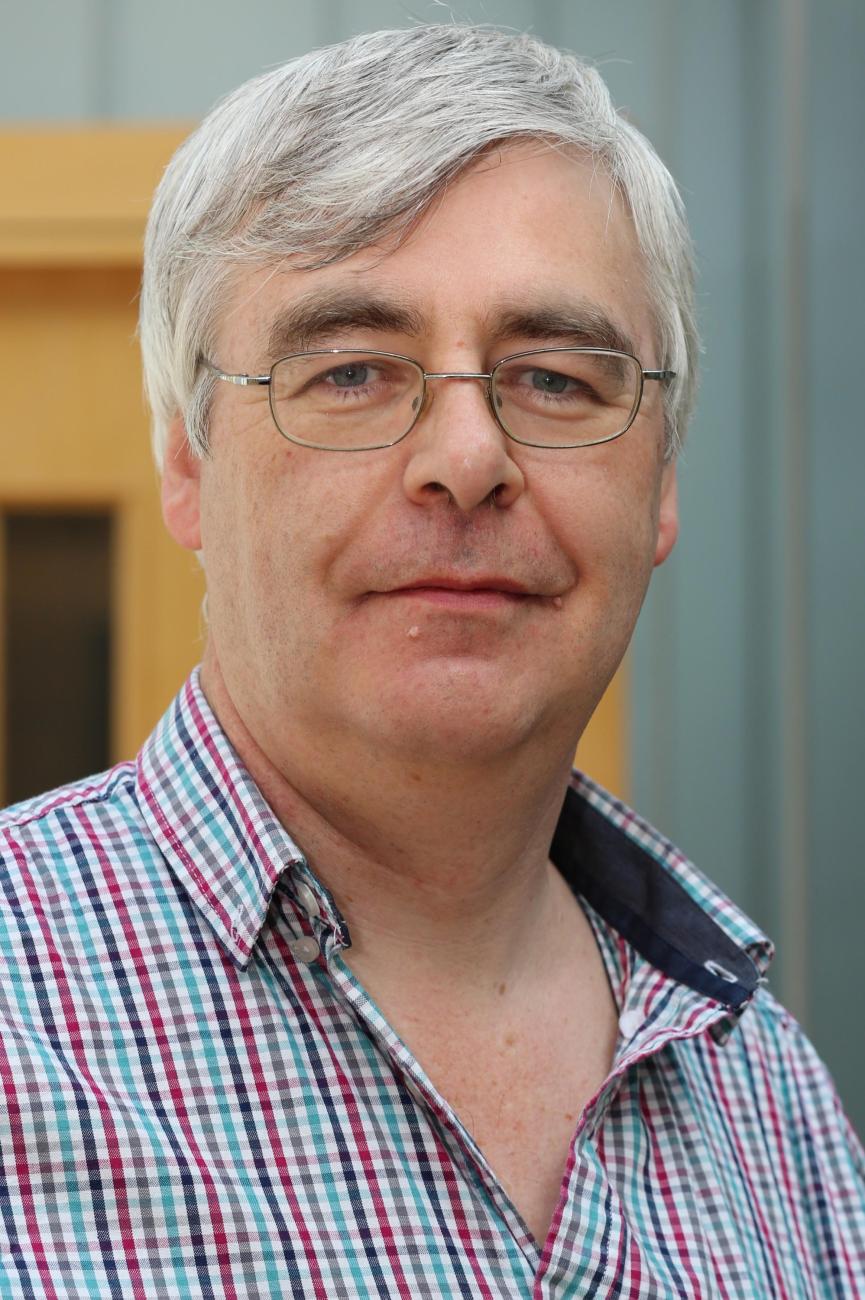
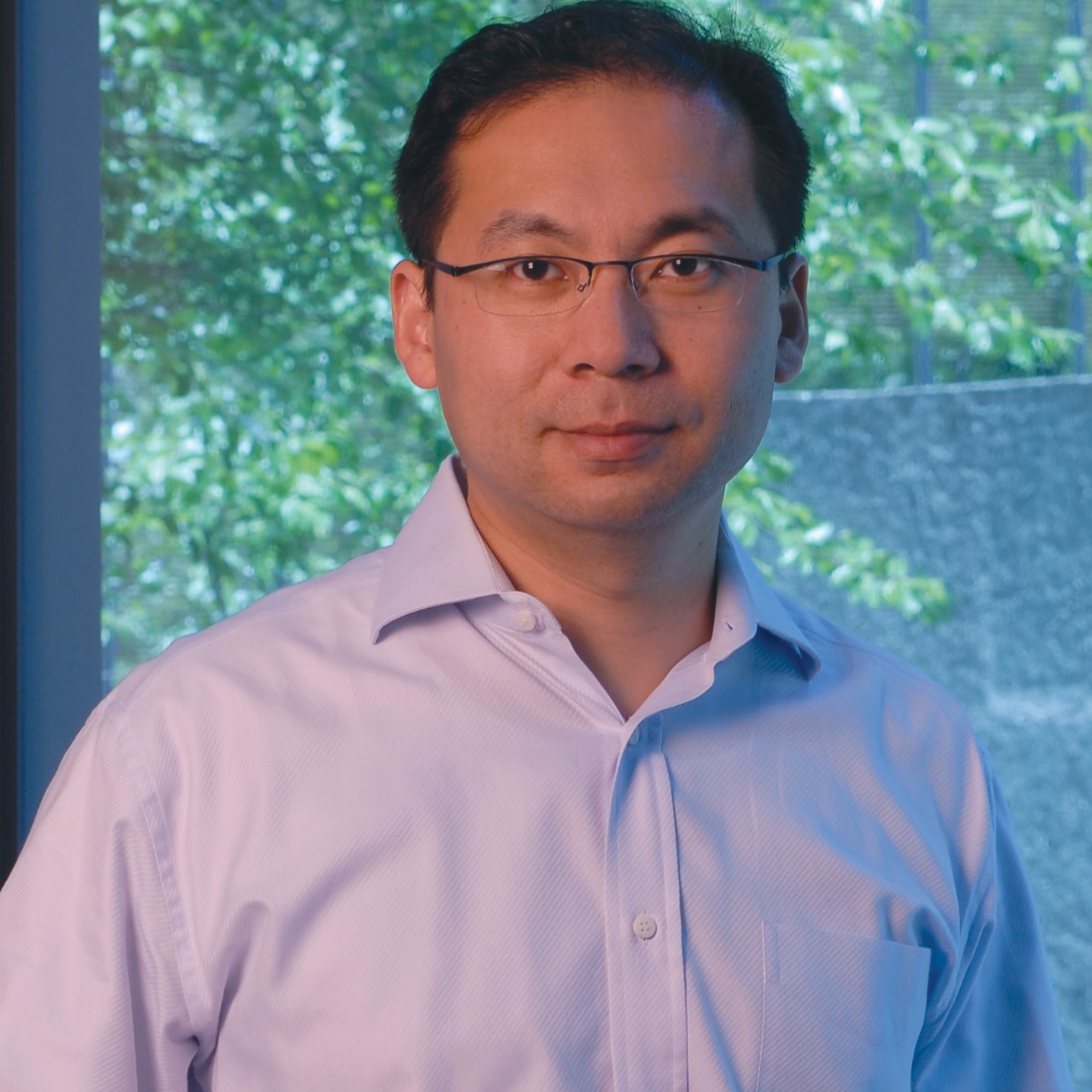
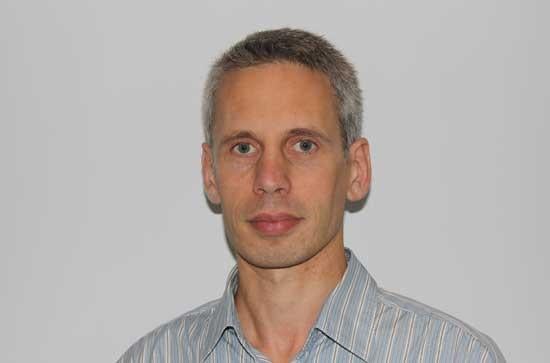
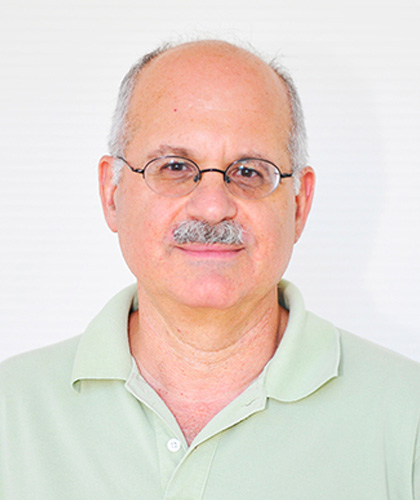
Dr. David Sinclair is an Associate Professor and Year Head in the School of Computing at Dublin City University, affiliated with the Dependable Systems, Software Engineering, and Security research groups. His research spans formal methods, distributed systems, real-time systems, and AI applications in strategic games. Teaching responsibilities include foundational and advanced courses: CSC1018 Logic CSC1048 Computability & Complexity CSC1098 Compiler Construction CSC1141 Concurrent Programming CSC1049 Third Year Project supervision His publications demonstrate strong focus on real-time systems, motion prediction, and immersive technologies, with recent work exploring AI-driven virtual environments and light field processing. Research consistently addresses computational efficiency and formal verification challenges.
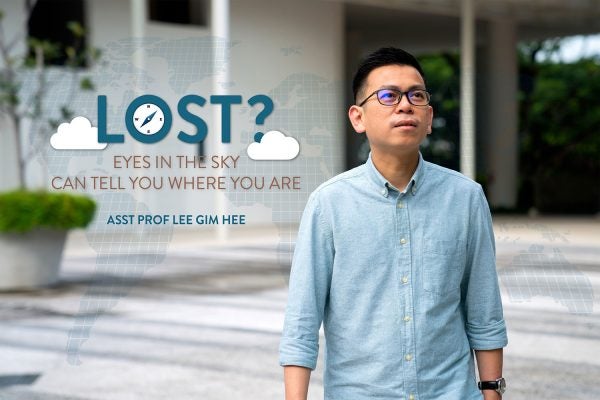
Gim Hee Lee is an Associate Professor at the Department of Computer Science, National University of Singapore (NUS) School of Computing. He heads the Computer Vision and Robotic Perception (CVRP) Laboratory and holds affiliations with the NUS Graduate School for Integrative Sciences and Engineering (NGS) and the NUS Institute of Data Science (IDS). Previously, he was a researcher at Mitsubishi Electric Research Laboratories (MERL) in the USA and worked at DSO National Laboratories in Singapore. Education Dr.sc. in Computer Science from ETH Zurich M.Eng. in Mechanical Engineering from National University of Singapore B.Eng. in Mechanical Engineering (1st Class Honors) from National University of Singapore Research Interests Professor Lee's research focuses on Computer Vision , Robotic Perception , and Machine Learning , with specialization in dynamic 3D scene reconstruction, event camera applications, and cross-view geo-localization. His work bridges theoretical advances with real-world applications in autonomous systems and augmented reality, particularly through neural scene representations and geometric computer vision techniques. Scientific Awards Faculty Teaching Excellence Award (AY 2018/19 and AY 2017/18) CVPR 2014 Doctoral Consortium Travel Award Finalist for IROS 2012 Best Paper Award Finalist for IROS 2012 Best Video Award Advising and Service Professor Lee serves as Associate Editor for IJCV and has held Area Chair positions for major conferences including CVPR, ICCV, ECCV, and NeurIPS. He chaired Program Committees for 3DV 2022 and served as Demo Chair for CVPR 2023. His research on the Cross-View Matching Network (CVM-Net) demonstrated real-time ground-to-aerial geo-localization in moving vehicles, establishing a benchmark for subsequent research in this field. Laboratories He leads the Computer Vision and Robotic Perception (CVRP) Laboratory at NUS, which develops cutting-edge solutions for 3D scene understanding, event-based vision, and robotic navigation. The lab's work includes acquiring high-quality datasets for dynamic scene reconstruction and advancing neural representations for real-world applications.
Dr. Takebumi Itagaki serves as a Senior Lecturer in Communications and Computer Technologies within the Electronic and Electrical Engineering Department at Brunel University London's College of Engineering, Design and Physical Sciences. He holds the position of Programme Manager for the Brunel-CQUPT Transnational Education program and serves as TNE-CQUPT Manager. His international research leadership is exemplified by his role as coordinator of the ITU-T Focus Group on Audio Visual Accessibility – Working Group D. Dr. Itagaki earned his academic credentials through a BEng from Waseda University (Japan), a Postgraduate Diploma from City University London, and a PhD in Engineering/Music from Durham University (UK) in 1998. His professional affiliations include membership in IEEE, IET, and the Audio Engineering Society. His research program spans digital television systems (DVB, ISDB), digital signal processing, parallel processing architectures, computer music, and computer architecture. Recent work demonstrates significant expansion into IoT applications for disaster management and healthcare analytics. His research methodology consistently bridges theoretical signal processing with practical implementation in broadcast and communication systems. Analysis of his publication record reveals an evolution from foundational work on transputer networks and granular synthesis in the 1990s to contemporary applications in digital television accessibility, mobile broadcast technologies, and IoT systems. His work maintains consistent focus on multimedia systems while adapting to emerging technological landscapes and societal needs. Dr. Itagaki has secured significant research funding through multiple EU projects including SAVANT (as prime contractor and administrative coordinator), INSTINCT (as project manager), and DTV4All (as coordinator). His current research portfolio includes ICT collaboration between China and Europe, with particular emphasis on IoT techniques for disaster prediction and climate change mitigation. His research group IEHS (Integrated Electronic Health Systems) works at the intersection of communication technologies and healthcare applications, developing systems for emergency response and medical diagnostics. The group's work on the Emergency TeleOrthoPaedics m-health system demonstrates practical implementation of wireless communication links for specialized medical care.
Kai Han is an Assistant Professor at The University of Hong Kong's School of Computing and Data Science, where he directs the Visual AI Lab. His research focuses on computer vision, machine learning, and artificial intelligence with specific interests in open-world learning, 3D vision, generative AI, and foundation models. He aims to achieve principled visual understanding and build reliable AI systems that close the intelligence gap between machines and humans. Dr. Han's research interests span multiple areas in visual AI, with particular emphasis on developing methods for open-world visual understanding. His work addresses fundamental challenges in category discovery, visual correspondence, 3D reconstruction, and generative modeling. He has made significant contributions to novel category discovery, open-set recognition, and visual correspondence problems, with his AutoNovel framework being particularly influential in the field. His current research explores the intersection of generative models and visual understanding, particularly focusing on how foundation models can be leveraged for comprehensive visual analysis. His publication record demonstrates a clear evolution from traditional computer vision problems toward more challenging open-world scenarios and generative approaches. Early work focused on 3D reconstruction of transparent and mirror surfaces, while more recent publications explore category discovery, visual correspondence, and generative AI. The trend shows increasing focus on foundation models, large language model integration with vision systems, and creating more robust visual understanding systems that can handle real-world open-set scenarios. Best Paper Runner-Up Award at CVPR Workshop on Continual Learning in Computer Vision, 2022 Outstanding Reviewer for ICCV 2021 (top 5%) Outstanding Reviewer for CVPR 2021 Outstanding Reviewer for CVPR 2020 Travel Award, ICLR 2020 Doctoral Consortium Travel Grant, ICCV 2017 Dr. Han actively mentors PhD students and postdocs, with numerous students appearing as first authors on his publications. His lab has secured multiple funding opportunities including HKU-PS, HKPFS, PGS, HKU-BICI, and HKU-ASTRI scholarships. He serves as Area Chair for major conferences including CVPR 2026, ICLR 2026, and AAAI 2026, demonstrating his standing in the research community. His lab, the Visual AI Lab, focuses on creating robust visual understanding systems that can handle real-world scenarios beyond closed-set recognition.
Jianbo Shi is a Professor in the Department of Computer and Information Science at the University of Pennsylvania . He leads research in computer vision with additional interests in artificial intelligence and machine learning . Key projects: First Person Vision , Human Recognition , Image Segmentation , Medical Imaging Developed Normalized Cuts algorithm for image segmentation Research Interests : Focus on first-person vision for social interaction modeling, human behavior analysis through motion and pose estimation, and advanced segmentation techniques using spectral graph theory. His work bridges AI with robotic applications and medical imaging solutions. Scientific Contributions : Received IEEE Longuet-Higgins Prize (2007) NSF CAREER Award (2005) for foundational work in vision algorithms Academic Legacy : Advised 12+ PhD students including Stella Yu (Computational Models of Perceptual Organization) and Katerina Fragkiadaki (Multi-Granularity Human Interaction Models) Developed CIS581 (Computer Vision & Computational Photography) and CIS580 (Machine Perception) courses Software Contributions : Created publicly available Normalized Cuts MATLAB code for image segmentation and data clustering applications.
Mårten Sjöström is a Professor in Signal Processing at Mid Sweden University, where he serves as the highest representative of the research subject Computer and System Sciences and is part of the managerial group of the Department of Information and Communication Systems (IKS). He leads the Realistic 3D research group and has extensive experience in both academic and industrial settings. His educational background includes a Master of Science from Linköping University (Applied Physics and Electrical Engineering, 1992), a Technical Licentiate degree from the Royal Institute of Technology, Stockholm (Signal Processing, 1998), and a PhD from Ecole Polytechnique Federale de Lausanne (Modelling of Non-linear Systems, 2001). He obtained his Docent degree (Associate Professor) in 2008 and Professor's degree in Signal Processing in 2013. His primary research focuses on Multi-Dimensional Signal Processing with emphasis on System Modelling and Identification. He has successfully applied these techniques to Image and Video Processing, Multi-media Communications, and currently specializes in Multi-Scopic 3D and Light Field Technology including capture, processing, coding, and presentation/visualization. His work spans theoretical foundations to practical implementations across various application domains. His recent publication record demonstrates a clear trajectory toward advanced light field and 3D imaging technologies, with significant contributions to compression algorithms, depth estimation techniques, quality assessment metrics, and telepresence applications. His research bridges theoretical signal processing with practical industrial implementations, particularly in remote operation, mining applications, and immersive visualization systems. Best Paper Award at MMEDIA 2013 Quality Reviewer Award at ICME 2013 Professor Sjöström has supervised an extensive number of doctoral and licentiate students, with numerous current PhD candidates expected to complete their degrees in 2025. His teaching portfolio covers a wide range of subjects including Applied Signal Processing, Automatic Control, Computer Hardware and Architecture, and specialized PhD courses in Video Processing and Realistic 3D. He has led numerous research projects both current and completed, including IMMERSE, PLENOPTIMA, and various initiatives in 3D video technology and visualization. As founder and head of the Realistic 3D research group, he directs activities focused on synthesis and capture of 3D images and video, rendering techniques for virtual perspective views, system modeling for 3D capture and presentation, coding of 3D content, quality metrics and assessments, and remote control and measurement systems. The group maintains strong industrial collaborations across multiple sectors.
Joohee Kim is an Associate Professor in the Department of Electrical and Computer Engineering at Illinois Institute of Technology, where she has been since 2009. She directs the Multimedia Communications Laboratory and focuses on research funded by U.S. Federal Agencies and the Korean Government. Education: Ph.D., Electrical and Computer Engineering, Georgia Institute of Technology (2003) M.S., Electrical Engineering, Yonsei University (1993) B.S., Electrical Engineering, Yonsei University (1991) Research interests include image/video signal processing, computer vision, machine learning, multimedia communication, and real-time 3D reconstruction . Her work spans applications in autonomous systems, robotics, and advanced driver assistance systems, emphasizing low-complexity algorithms and efficient coding techniques. Her recent articles highlight advancements in pedestrian detection via deep learning, 3D reconstruction fusion methods, and optimized depth map coding. These contributions address challenges in real-time systems, energy efficiency, and robust transmission over wireless networks. Awards: None explicitly listed. Grant Activity: Active in federal and international funding for projects like low-delay distributed video coding and error-resilient transmission. Advising: No students listed, though lab leadership implies mentorship roles. Labs/Teams: Director of the Multimedia Communications Lab, collaborating on 3D imaging, video coding, and intelligent systems integration.
Dr. Abhijit Mahalanobis is an Associate Professor at the University of Central Florida (UCF), affiliated with the Center for Research in Computer Vision (CRCV). Previously, he served as a Senior Fellow at Lockheed Martin and held academic positions at the University of Arizona and the University of Maryland. He earned his B.S. from UC Santa Barbara (1984) and M.S./Ph.D. from Carnegie Mellon University (1985/1987). His research focuses on computational sensing, imaging systems, and automatic target recognition (ATR). Notable contributions include work on correlation filters, compressive sensing, and 3D imaging. He has published over 170 papers, holds four patents, and co-authored a book on pattern recognition. Dr. Mahalanobis has received prestigious awards such as the IEEE Fellow (2015), OSA Fellow (2004), and SPIE Fellow (1997). He has been honored with the Lockheed Martin NOVA Award (2005), Scientist of the Year (2006), and Innovator of the Year (1999). He has served on editorial boards for journals like Applied Optics and Pattern Recognition , and chairs for OSA and SPIE conferences. His research spans topics including infrared target detection, compressive sensing architectures, and deep learning for target recognition. The CRCV lab, under his leadership, develops advanced algorithms for defense and surveillance applications.
Enrique S. Quintana-Ortí is a Professor at the Technical University of Valencia and Jaume I University , Spain, specializing in Computer Science of Systems and Computers . His work bridges High-Performance Computing (HPC) , Parallel Computing , and Deep Learning , with a focus on optimizing Matrix Algorithms for modern architectures. Key research areas: Quantized Inference , GEMM-Based Convolutions , GPU Acceleration , and Performance Portability across ARM, RISC-V, and NVIDIA processors. Recent projects include RED-SEA (European interconnect solutions), GreenLightningAI (decoupled AI systems), and Ginkgo (GPU-based linear algebra frameworks). His publications (2023–2025) emphasize edge computing , mixed-precision techniques , and energy-efficient AI . Collaborative efforts span institutions like Xilinx , Fujitsu , and co-authors such as Adrián Castelló , Héctor Martínez , and Francisco D. Igual .
Rudi Villing is an Associate Professor and Programme Director for Robotics & Intelligent Devices at Maynooth University's Department of Electronic Engineering, Faculty of Science & Engineering. He is actively affiliated with the Hamilton Institute and the Assisting Living and Learning (ALL) Institute at Maynooth University. Dr. Villing holds a first class honours B.Eng. in Electronic Engineering from Dublin City University and a PhD in Engineering from NUI Maynooth. Prior to his academic career, he spent 10 years working in the telecommunications software industry, specializing in Telecommunications Management Networks and software systems architecture. His primary research focuses on autonomous mobile robotics , systems for health and wellbeing , and applications of real-time intelligent systems . With expertise spanning system design, real-time embedded software, machine learning, autonomous behavior, signal processing, communications, and psychoperception, his work bridges theoretical research with practical applications. His recent publications demonstrate strong activity in robot vision, assistive robotics for elderly care, and computational healthcare applications, particularly in Parkinson's disease rehabilitation through the BeatHealth project. Dr. Villing's scientific contributions have been supported by funding from: Science Foundation Ireland Enterprise Ireland Irish Research Council European Commission As Programme Director, he plays a key leadership role in robotics education while maintaining an active research program. His work consistently translates theoretical concepts into practical implementations, particularly evident in his research on gait rehabilitation systems and quality control applications in food engineering. His recent publications show increasing interdisciplinary work at the intersection of robotics, healthcare, and food science. Dr. Villing is deeply involved with the Hamilton Institute and the ALL Institute, contributing to interdisciplinary research initiatives focused on intelligent systems with real-world impact. His laboratory work emphasizes practical robotics applications that address tangible human needs, especially in healthcare contexts where technology can improve quality of life for vulnerable populations.
Pierre-Henri CONZE is an Enseignant-Chercheur (Lecturer-Researcher) at IMT Atlantique, part of the Data Science Department (DSD). His research focuses on medical image segmentation, deep learning applications in healthcare, and AI-driven solutions for clinical decision support. He holds a PhD in Signal and Image Processing from INSA de Rennes (2014) and an HDR (Accreditation to Supervise Research) from Université de Bretagne Occidentale (2024). Roles: Academic researcher, developer of AI tools for medical imaging. Affiliations: IMT Atlantique, LaTIM (Medical Information Processing Lab), collaboration with hospitals like CHRU Brest. Research Interests: Medical image analysis, deep learning for tumor segmentation, longitudinal disease progression prediction, and AI in oncology. His work bridges computer vision techniques with clinical needs, addressing challenges like imperfect annotations, sparse datasets, and multi-modal fusion. Publications: Recent articles focus on liver resection planning, cerebrovascular segmentation, and uncertainty quantification in lung cancer. His work emphasizes practical clinical impact, with applications in treatment response assessment and image quality enhancement. Labs/Teams: Active in LaTIM and collaborates with institutions like the Centre Hospitalier Régional Universitaire de Brest (CHRU Brest). His research often involves interdisciplinary teams combining engineering, medicine, and data science.
Jewon Lee is a researcher with a focus on interdisciplinary domains spanning Electrical Engineering , Robotics , Signal Processing , and Computer Science . Their work includes collaborations with co-authors like Joon-Young Jung and Sang Woo Kim on fault diagnosis for permanent magnet synchronous machines, IQ data compression methods, and video streaming optimizations. Publications highlight expertise in sensor technology, telecommunications, and machine learning model efficiency. Research interests are diverse, encompassing sensor design , fault detection in electric motors , adaptive video streaming , and large language model (LLM) optimization . These areas are reflected in their contributions to journals such as IEEE Transactions on Industrial Electronics , Sensors , and IEEE Access , as well as conferences like ICTC and ICUFN. Their recent work on LLaMA-3.2-Vision and knowledge graphs indicates an expanding role in Computer Science and Open Science initiatives, aligning with global efforts like the National Research Data Infrastructure (NFDI) . Despite active contributions, specific awards, educational background, and student advising details are not publicly documented in the provided sources.
Prof. Marcus Magnor is a full Professor of Computer Science at Technische Universität Braunschweig (TU Braunschweig), leading the Computer Graphics Lab. He also holds an adjunct professorship in Physics and Astronomy at the University of New Mexico, USA. His academic journey includes a BA in Physics from Würzburg University (1995), an MS from the University of New Mexico (1997), and a PhD in Electrical Engineering from Erlangen University (2000). He completed his habilitation in Computer Science at Saarland University in 2005, earning the venia legendi qualification. His research focuses on visual computing, encompassing image formation, analysis, synthesis, and perception. Key areas include computer graphics, vision, computational photography, astrophysics visualization, and optics. He has pioneered work in multi-view video coding, free-viewpoint video, and planetary nebulae reconstruction. Prof. Magnor has organized over 20 international conferences and workshops, including VMV 2023 and the Symposium on Visual Computing and Perception. He serves on editorial boards for journals like Computer Graphics Forum and has held leadership roles such as CS Department Chair at TU Braunschweig (2015–2019). Awards include the Wissenschaftspreis Niedersachsen and recognition as a Fulbright Scholar. His outreach includes popular science lectures on topics like digital image manipulation and 3D cinema technology.
Larry Davis is a Professor in the Department of Computer Science and the Institute for Advanced Computer Studies (UMIACS) at the University of Maryland. He is affiliated with the Computer Vision Laboratory of the Center for Automation Research, where he previously served as head from 1981-1986. His research focuses on visual surveillance, human movement analysis, and advanced computer vision systems such as the Keck Laboratory for the Analysis of Visual Movement. Established in 1998, the Keck Lab uses a 64-camera array to study 3D human motion tracking and shape recognition. His work spans projects like codebook-based background subtraction for surveillance and clothing appearance models for persistent tracking. He leads interdisciplinary research on laser beam propagation through atmospheric turbulence and has secured significant grants, including a $4M Multidisciplinary Research Initiative contract. His recent publications emphasize AI-driven solutions for media forensics, generative models, and adversarial attacks on vision systems. Research contributions include innovations in neural rendering (FlexNeRF), personalized clothing compatibility frameworks, and systems for detecting deepfakes and video tampering. His work bridges theoretical advancements with real-world applications in security, healthcare, and retail technology.
Thomas Pock is a Professor of Computer Science at Graz University of Technology, holding the AIT Stiftungsprofessur for Mobile Computer Vision. He is affiliated with the Institute for Computer Graphics and Vision (ICG) within the Faculty of Computer Science and serves as a principal scientist at the Austrian Institute of Technology (AIT), Center for Vision, Automation & Control. He leads the Vision, Learning and Optimization (VLO) research group, which focuses on mathematical modeling and optimization in computer vision. His research interests lie at the intersection of computer vision, image processing, and mathematical optimization. Specifically, he develops mathematical models for computer vision and efficient convex and non-smooth optimization algorithms , particularly for mobile scenarios. His recent work increasingly integrates variational methods with deep learning, especially in solving inverse problems in imaging such as medical reconstruction and deblurring. The trends in his recent publications show a strong emphasis on deep learning for inverse problems , variational networks , and learned optimization . His group explores how to combine classical mathematical models with data-driven deep learning approaches to achieve stable, interpretable, and high-performance solutions in image reconstruction and processing. His scientific achievements have been recognized with several prestigious awards: START Prize, Austrian Science Fund (FWF), 2013 German Pattern Recognition Award, DAGM, 2013 ERC Starting Grant, European Research Council, 2014 Thomas Pock actively mentors students and leads a research group of 10 PhD students and 2 postdocs. He has secured significant research grants, including the ERC Starting Grant, which supports his foundational work. He is also engaged in scientific communication, giving invited talks at international venues such as SIAM and co-organizing the IMAGINE One World seminar series to foster global collaboration in imaging and inverse problems. He leads the Vision, Learning and Optimization (VLO) group at the Institute for Computer Graphics and Vision. The group develops mathematical models and efficient algorithms for computer vision and image processing, with a focus on mobile applications. The team includes multiple PhD students and postdoctoral researchers and has produced notable software and publications in top venues.