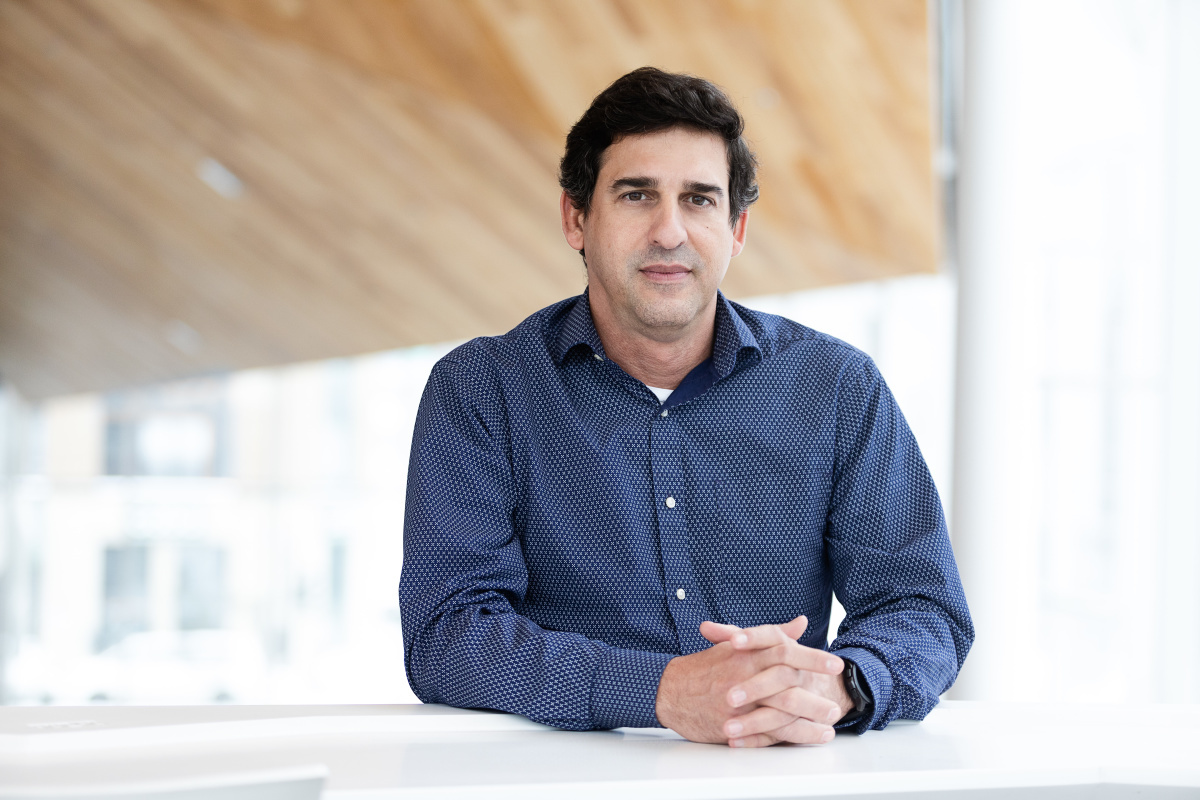
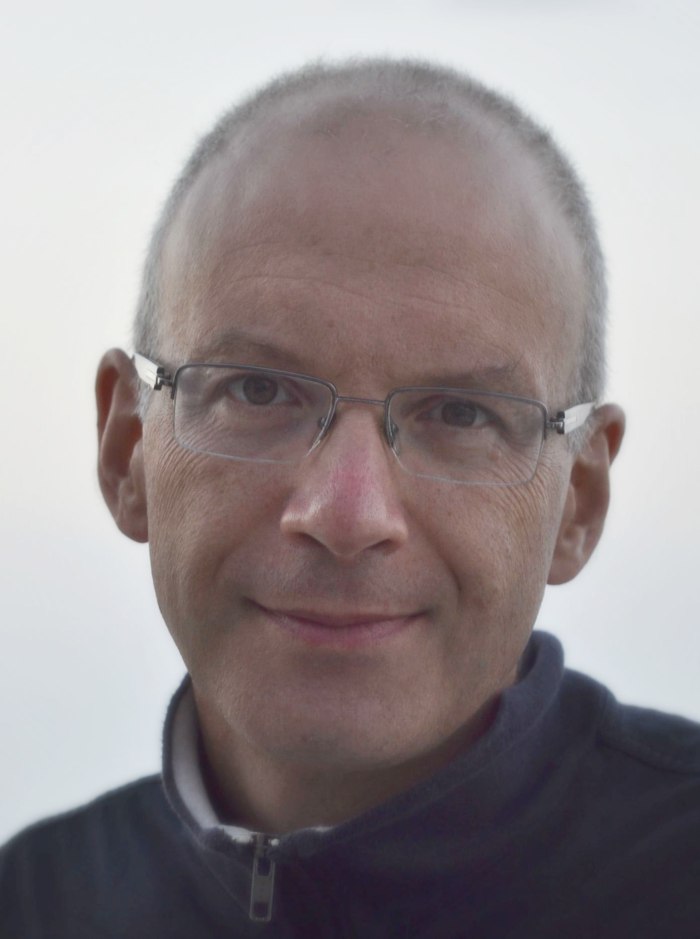
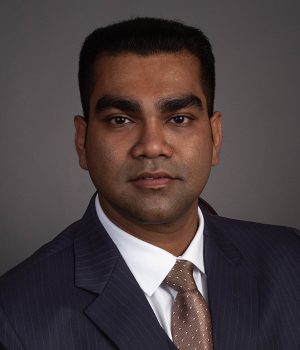
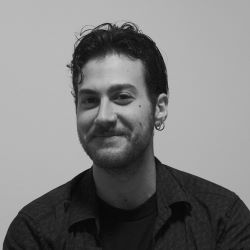
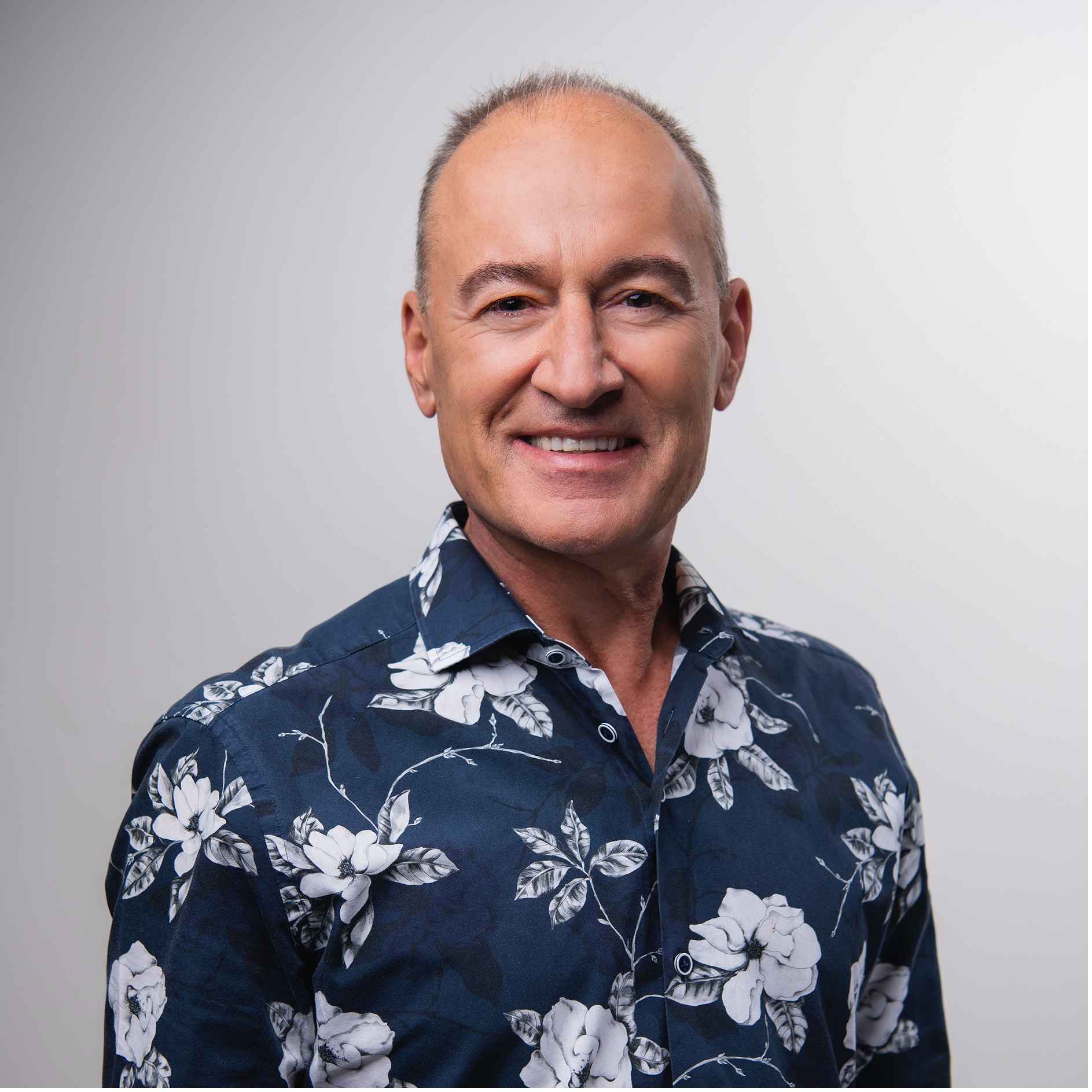
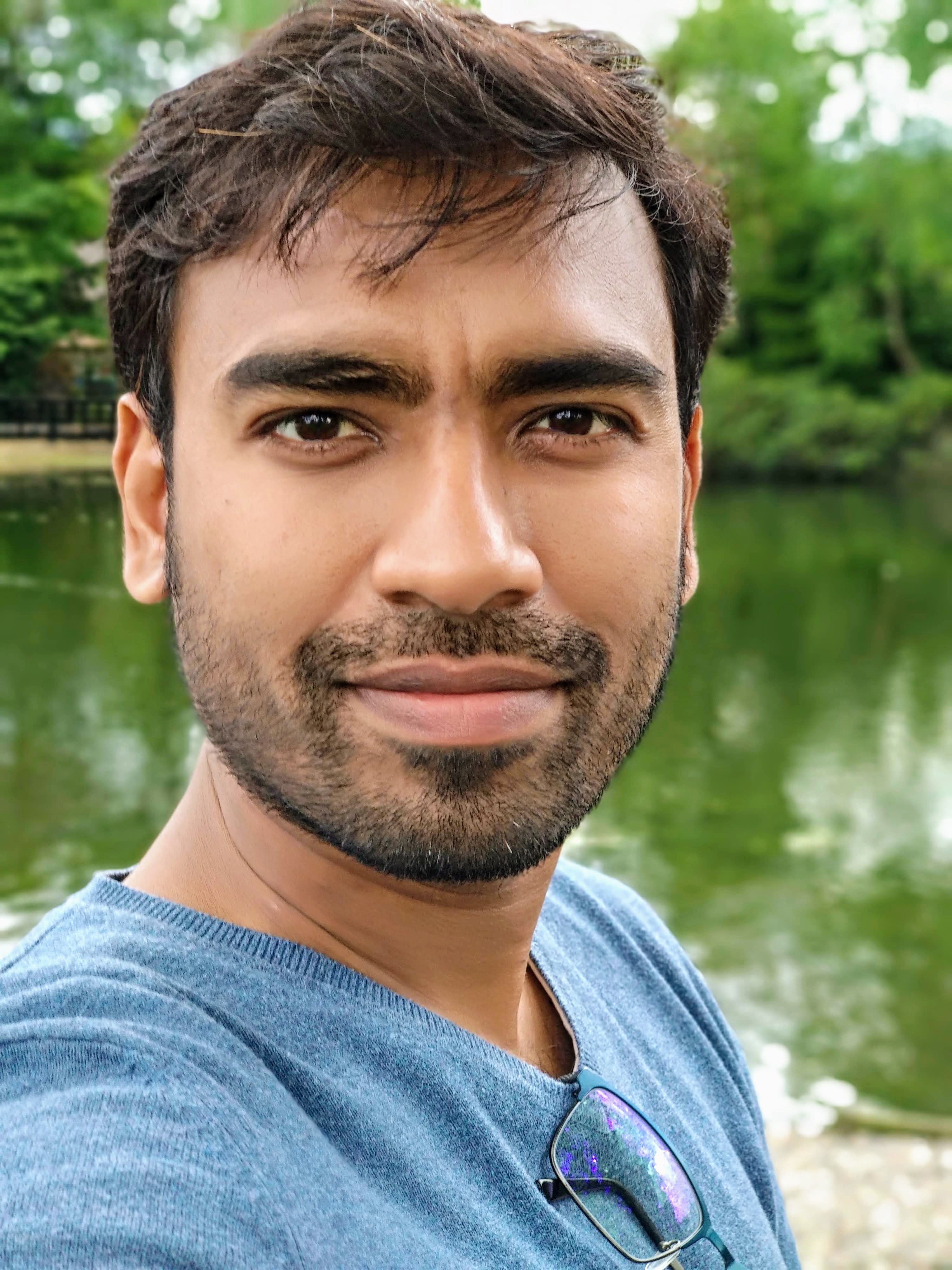
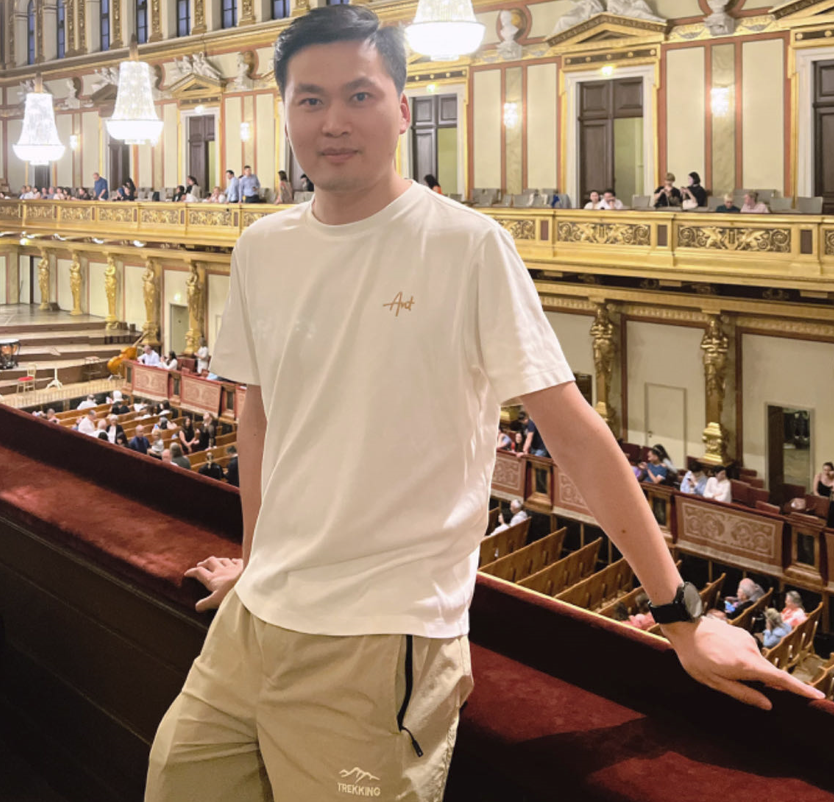
Dr. Yunzhong Hou is a Research Fellow at the School of Computing, The Australian National University (ANU), where he collaborates with Prof. Tom Gedeon and Dr. Liang Zheng. He holds a PhD in Computer Science from ANU (2019–2023) and a Bachelor's in Electronic Engineering from Tsinghua University (2014–2018). His research focuses on computer vision and deep learning, particularly in multiview detection, sensor optimization, and efficient AI systems. Education: PhD in Computer Science, ANU (2019–2023) Bachelor of Electronic Engineering, Tsinghua University (2014–2018) Research Interests: Multi-view detection and tracking Active vision and sensor optimization Efficient AI systems His work spans topics such as camera configuration optimization for pedestrian detection, deep learning for color quantization, and multi-camera systems. He has contributed to projects like the socioeconomic impact analysis of water reforms and privacy-preserving perception for robotics. Hou serves as a reviewer for top conferences (CVPR, ICCV) and journals (TPAMI, TIP). His research emphasizes scalable solutions for real-world applications, including drone vision control and edge computing optimizations. Current projects include machine learning for socio-economic analysis and privacy-aware robotic perception.
Dr. Mai Bui is a Lecturer at the Deutsches Herzzentrum München (German Heart Center Munich), affiliated with the Chair of Computer Science Applications in Medicine under Prof. Nassir Navab. Her research focuses on integrating advanced computer vision and deep learning techniques into medical applications, particularly in surgical robotics, image-guided interventions, and medical augmented reality. She has contributed to critical areas like catheter tracking, pose estimation, and real-time medical imaging analysis. Dr. Bui teaches multiple courses including Computer Aided Medical Procedures , Medical Augmented Reality , and Introduction to Surgical Robotics . Her work emphasizes low-dose imaging solutions and robust navigation systems for minimally invasive procedures. She collaborates with interdisciplinary teams at labs such as DHM, IFL Lab, and NARVIS Lab to advance translational research in medical AI. Her recent publications highlight innovations in adversarial networks for pose refinement, lightweight camera localization systems, and multimodal inference in ambiguous medical scenes. These contributions address core challenges in surgical navigation and medical device tracking.
Carlos Vázquez is a Professor at the Department of Software Engineering and IT, École de technologie supérieure (ÉTS). He holds a B.Eng. and M.Sc. from ISPJAE, Cuba, and a Ph.D. from INRS, Montreal. His research focuses on computer vision, medical imaging, 3D reconstruction, and immersive video technologies. He co-leads the Summit Tech Research Chair in Immersive and Interactive Video and is affiliated with the Multimedia Research Laboratory (LABMULTIMEDIA) and the Open Innovation Laboratory in Health Technologies (LIO-ÉTS). His expertise includes stereoscopic imaging, multi-view video coding, and GPGPU programming. Notable research axes are software systems, multimedia, cybersecurity, and health technologies. He has supervised numerous doctoral and master’s theses, including works on 3D spine reconstruction, personalized femur modeling, and immersive video compression. Key contributions include advancements in medical imaging analysis, 3D reconstruction from biplanar radiographs, and efficient video coding for virtual reality. His work bridges clinical applications and engineering, with implications in surgical planning, patient rehabilitation, and multimedia systems optimization.
George Drettakis is a Senior Researcher at INRIA Sophia-Antipolis and leads the GRAPHDECO research group. He has held professorial roles at institutions including MIT, University of Reims, University of Toronto, and École Normale Supérieure. His research focuses on rendering for computer graphics and sound, with emphasis on image-based rendering, perceptual rendering, and audio-visual cross-modal effects. He has also explored interactive illumination, shadows, relighting, and generative models. Current Students: G. Kopanas (Neural Rendering), N. Violante (Generative Models), A. Petitjean (co-supervised), Y. Poirier-Ginter (co-supervised), P. Panantonakis (starting fall 2023). Postdoctoral Researchers: A. Gauthier at INRIA. His recent work includes 3D Gaussian Splatting , Diffusion-based Relighting , and Neural Radiance Fields . He has received the Eurographics Outstanding Technical Contributions Award (2007) and was named an Eurographics Fellow . He manages projects like ERC Advanced Grant FUNGRAPH and has participated in H2020 EMOTIVE , ANR SEMAPOLIS , and CROSSMOD . His group collaborates internationally and has hosted researchers from institutions such as UC Berkeley, Imperial College London, and TU Wien.
Olivia Wiles is a Senior Researcher at DeepMind, focusing on adversarial robustness, distribution shift, and computer vision. She earned her DPhil from the University of Oxford under Andrew Zisserman in the Visual Geometry Group (VGG), following a Computer Science degree at the University of Cambridge. Her work spans view synthesis, self-supervised learning, and robust model design. Education : DPhil (Oxford), Computer Science (Cambridge) Key Collaborators : Georgia Gkioxari, Justin Johnson, Richard Szeliski (FAIR), Andrew Zisserman Current Role : Senior Researcher at DeepMind Her research emphasizes adversarial robustness , 3D reconstruction , and self-supervised learning , with notable contributions to view synthesis (SynSin), image matching (Co-Attention), and robustness under distribution shifts. Publications at CVPR, NeurIPS, and ECCV highlight her work in generative models, physical prediction, and multi-view geometry. Scientific Awards : Best Poster, BMVC 2017 Best Paper, NeurIPS ML Safety Workshop 2022 Outstanding Reviewer, ECCV 2020, ICCV 2020/2021 Olivia contributes to academia via community service, including roles as Area Chair (CVPR, ICCV) and reviewer for top-tier conferences (NeurIPS, SIGGRAPH) and journals (PAMI). Her Google Scholar profile reveals ongoing work in unsupervised physics modeling , GANs , and intuitive physics from visual data.
Aritra Dutta is an Assistant Professor at the AI Initiative of the University of Central Florida (UCF), primarily affiliated with the Department of Mathematics and secondarily with the Department of Computer Science. He also holds an affiliation with the Pioneer Centre for AI (P1), Denmark. His research focuses on optimization (stochastic/nonconvex), distributed computing (including federated learning), numerical linear algebra, machine learning, low-rank approximation, and computer vision applications such as image/video analysis and object detection/tracking. Dr. Dutta’s work emphasizes interdisciplinary approaches, blending mathematical rigor with computational efficiency. He actively seeks Ph.D. students and postdocs with strong foundations in mathematics (optimization, linear algebra) or computer science (ML, distributed systems), prioritizing candidates with publication records in top-tier venues. His teaching includes courses in applied mathematics and computational methods. His research outputs span communication-efficient distributed learning frameworks, convergence analysis of optimization algorithms, and vision transformer architectures. Notable projects include GAEA (geolocation-aware conversational models) and MAVREC (multi-view aerial visual recognition). Postdoc opportunities: Open for exceptional candidates. Labs/Initiatives: UCF AI Initiative (UCF Aii), UCF Center for Research in Computer Vision (CRCV). Grants: Competitive research assistantships with tuition support.
Giorgos Bouritsas is a machine learning scientist and postdoctoral fellow at the Archimedes AI unit / Athena Research Center, affiliated with the Department of Informatics and Telecommunications at the National and Kapodistrian University of Athens. He also serves as an adjunct lecturer at NCSR Demokritos. His research focuses on Geometric and Graph Deep Learning, with contributions spanning theoretical foundations of graph/geometric neural networks and generative modeling of graph/geometric data. His educational background includes a PhD in computer science from Imperial College London (2023), supervised by Prof. Michael Bronstein and Prof. Stefanos Zafeiriou, and an MEng in electrical and computer engineering from the National Technical University of Athens (2017). Dr. Bouritsas' research interests encompass Geometric Deep Learning, Graph Neural Networks, Weight Space Learning, Self-Supervised Learning, and Machine Learning applications in biology and chemistry. His work intersects with areas such as computer vision, network science, and physics, with publications in leading conferences (NeurIPS, CVPR, ICCV, ECCV) and journals (TPAMI). His recent publications demonstrate trends in geometric deep learning, graph neural networks, and applications in bioinformatics and computer vision. His research on Scale Equivariant Graph Metanetworks was accepted for an oral presentation at NeurIPS 2024, highlighting his contributions to advancing the theoretical foundations of graph neural networks. Outstanding reviewer award, NeurIPS '21 Outstanding reviewer award, NeurIPS '23 Outstanding reviewer award, ICML '22 Outstanding reviewer award, ICML '24 Dr. Bouritsas regularly engages in educational activities, teaching postgraduate courses such as Deep Learning at the MSc in AI program at NCSR Demokritos. He also provides academic service as a reviewer for major machine learning conferences and journals. His current work at Archimedes AI centers on weight space learning, with applications in automating machine learning processes and predicting ML model behavior.
Markus Gross is a Professor of Computer Science at ETH Zurich, where he founded the Computer Graphics Laboratory in 1994. He also serves as the Chief Scientist of the Walt Disney Studios and Director of DisneyResearch|Studios, a position he has held since 2008. His work bridges academia and industry, with research that has been applied in Hollywood films, sports broadcasting, and medical applications. Professor Gross received his Master of Science in electrical and computer engineering and his Ph.D. in computer graphics and image analysis from Saarland University in Germany in 1986 and 1989. His research spans multiple domains of computer graphics and visual computing. Early in his career, he pioneered point-based graphics techniques that offered alternatives to traditional triangle-based rendering pipelines. More recently, his work has focused on digital humans, AI characters, and machine learning applications for visual computing. His research has led to significant practical applications, including the Medusa capture system used in Hollywood films, the blue-c immersive telepresence system, and the Liberovision technology now used by major sports broadcasters. Analysis of his recent publications reveals a strong focus on neural rendering techniques, particularly around Gaussian splatting and diffusion models. His work increasingly integrates AI with traditional computer graphics methods, with applications in digital humans, medical visualization, and video processing. Many papers demonstrate practical applications in film production, medical treatment planning, and interactive systems. Professor Gross has received numerous prestigious awards throughout his career: 2024 Eurographics Gold Medal 2021 Steven Anson Coons Award for outstanding creative contributions to computer graphics 2019 Technical Achievement Award from the Academy of Motion Picture Arts and Sciences 2013 Karl Heinz Beckurts-Preis 2013 Konrad-Zuse-Medaille für Informatik 2013 Technical Achievement Award from the Academy of Motion Picture Arts and Sciences 2012 Academy Sci-Tech Oscar award for Wavelet Turbulence Professor Gross has mentored numerous Ph.D. students throughout his career, with 20 Ph.D. students contributing to his blue-c project alone. His research has been supported by significant funding from both academic and industry sources, enabling the creation of multiple startups including Cyfex, Novodex, LiberoVision, Dybuster, and Animatico (acquired by Nvidia in 2022). He leads the Computer Graphics Laboratory at ETH Zurich and DisneyResearch|Studios, fostering collaboration between academic research and practical industry applications. His teams have developed groundbreaking technologies that have impacted film production, sports broadcasting, medical visualization, and educational technology.
Dr. Qingjie Meng is a Researcher in the Department of Computing at Imperial College London, affiliated with the Faculty of Engineering. Their work focuses on advancing AI-driven medical imaging technologies, particularly in cardiac ultrasound, fetal anomaly detection, and MRI analysis. Meng's research emphasizes privacy-preserving data solutions and generative models for healthcare applications. Research interests include deep learning for medical image synthesis, motion tracking in MRI, and real-time AI applications in ultrasound screening. Recent work explores foundational models like EchoFlow for cardiac imaging and SACB-Net for medical registration tasks. Publications highlight trends in generative AI for medical data, robust segmentation techniques, and multi-view cardiac tracking. Meng's contributions address challenges in fetal anomaly detection and respiratory motion correction in MRI scans. No awards or advising roles are explicitly listed in the provided text. Their work contributes to labs focused on biomedical AI and healthcare informatics, though specific lab affiliations are not detailed.
Rahul Mourya is a Lecturer in Computer Science at the Faculty of Science and Engineering , University of Wolverhampton, UK. He joined in October 2023 and is affiliated with the Digital Innovations and Solution Centre (DISC) , which focuses on fundamental and applied research with societal and economic impact. PhD & MSc in Computer Science (Signal/Image/Vision) from Université Jean Monnet Saint-Etienne, France BEng in Electronics & Telecommunications from University of Pune, India His research develops foundational tools for machine learning, computer vision, inverse problems , and signal/image processing , with applications in autonomous systems, robotics, and sensor networks . Teaching includes computational mathematics, robotics engineering, and deep learning modules. Collaborations span institutions like Heriot-Watt University, Telecom ParisTech, and interdisciplinary projects in underwater acoustics and astronomical imaging. Current research explores measurement-consistent neural networks and optimization algorithms for inverse problems.
Dr Wencheng Yang is a Senior Lecturer in Computing at the School of Mathematics, Physics and Computing , University of Southern Queensland. He holds a PhD in Computing from UNSW, an MSc from Korea, and a BMgmt from Wuhan University of Technology. His research spans multiple domains including machine learning security , biometric authentication , privacy-preserving systems , and IoT applications . Education : BMgmt (Wuhan University of Technology), MSc (Korea), PhD (UNSW) Yang’s work emphasizes privacy and security in AI systems, particularly in biometric authentication (e.g., fingerprint, face, ECG) and IoT security. His recent publications focus on model inversion attacks , homomorphic encryption , and federated learning for healthcare applications. Key trends include secure face-swapping , Alzheimer’s disease prediction , and anti-forensic detection . His research has been cited 3378 times, with 1458 total downloads and 31 monthly views. While no explicit scientific awards are listed, his interdisciplinary work bridges computer science , healthcare , and cryptography . Current projects include privacy-preserving frameworks for implantable medical devices and military health systems .
Hyuk-Jae Lee is a prominent researcher in computer architecture and hardware acceleration for deep learning systems, with an extensive publication record spanning over two decades. His work primarily focuses on hardware implementations for video processing, memory systems, and neural network acceleration. Through numerous collaborations with researchers at Korean institutions (particularly with Hyun Kim, Chae-Eun Rhee, and Xuan Truong Nguyen), Lee has established himself as a leading figure in circuit design for AI applications. Lee's research interests center around computer architecture, hardware acceleration, deep learning systems, video coding and compression, memory systems, and image processing. His work demonstrates a consistent focus on bridging the gap between theoretical algorithms and practical hardware implementations, with particular emphasis on optimizing performance and efficiency for real-world applications. His recent work shows a strong shift toward accelerating large language models and transformer-based architectures, reflecting current trends in AI hardware. Analysis of Lee's recent publications (2023-2025) reveals a clear research trajectory toward solving memory bandwidth and computational efficiency challenges in modern AI systems. His work spans the spectrum from low-level circuit design to high-level system architecture, with particular strength in memory systems optimization and hardware acceleration for neural networks. The consistent publication record in top-tier IEEE journals demonstrates sustained research productivity and impact in the field. Throughout his career, Lee has collaborated extensively with a core group of researchers, suggesting stable research teams and laboratories focused on hardware acceleration. His publications in IEEE Transactions on Circuits and Systems, IEEE Transactions on Computers, and IEEE Transactions on Video Technology indicate recognition by multiple relevant academic communities.
Ujjwal Bhattacharya is affiliated with the Indian Statistical Institute, India. His primary research focuses on computer vision, machine learning, and document analysis with a strong emphasis on multimodal perception systems and deep learning applications. He has published extensively in top-tier venues like ICPR, ICDAR, CVPR, and BMVC, contributing to advancements in autonomous driving, image processing, and privacy-aware machine learning. His work spans from developing robust pedestrian detection systems using multimodal sensors to enhancing degraded document image processing through domain adaptation and advanced neural architectures. Recent contributions include semi-supervised 3D object detection frameworks and privacy-preserving clustering techniques. Key research areas include: Multimodal sensor fusion for autonomous systems Deep learning for document analysis and OCR Privacy-aware metric learning Efficient neural network compression techniques Image enhancement and restoration His publication trends reflect a focus on solving real-world challenges in autonomous driving, degraded document processing, and privacy-sensitive machine learning applications.
Arash Mohammadi is an Assistant Professor in the Department of Electrical and Computer Engineering at Concordia University, Montreal, Canada. He holds a PhD from the University of Toronto (2015) and was formerly affiliated with Amirkabir University of Technology, Iran. His research bridges signal processing, artificial intelligence, and biomedical applications. Research Interests: Signal and image processing for healthcare (e.g., lung cancer detection, ECG analysis) Machine learning for smart grids and cyber-physical systems AI in mobile edge computing and 6G networks Transformer and diffusion models for medical and motion data Federated and efficient deep learning for edge devices His recent publications (2021–2025) in top venues like IEEE TSP, ICASSP, and AAAI demonstrate a strong focus on applying cutting-edge AI—especially vision transformers, Mamba architectures, and diffusion models—to critical domains such as medical diagnostics, gesture recognition, and network security. Trends include multimodal fusion, uncertainty quantification, and efficient model design. Scientific Contributions: Developed novel frameworks like NYCTALE and MIXCAPS for lung nodule malignancy prediction Introduced CacheMamba and TEDGE-Caching for edge network optimization Advanced EMG-based gesture recognition using hybrid and transformer models Contributed to cybersecurity in smart grids via attack detection models He actively advises students and collaborates with researchers such as Konstantinos N. Plataniotis and Jamshid Abouei. He has contributed to special issues on neurorehabilitation and AI for COVID-19 diagnosis. His work often involves interdisciplinary teams and real-world applications in healthcare and smart infrastructure.
Hu Cao is a postdoctoral research associate at the Chair of Robotics, Artificial Intelligence and Real-Time Systems (Prof. Alois Knoll) at the Technical University of Munich (TUM) . Holding a Ph.D. from TUM, his research bridges autonomous driving , robotic grasping , medical image analysis , and dense prediction (classification, detection, segmentation). Education : Ph.D. from TUM Hu's work explores: Autonomous Driving : Perception under adverse conditions, multi-sensor fusion, and risk-based safety models Robotic Grasping : Vision-language integration for 6D pose estimation Medical Imaging : Transformer-based segmentation techniques (e.g., Swin-Unet) His recent publications include 15+ works at top venues like CVPR , ICCV , IEEE TPAMI , and IEEE TIV , with 6052+ Google Scholar citations . Notably, Swin-Unet ranks among the top 3 most cited ECCV papers in 5 years, and his work on event-based autonomous driving perception was featured in IEEE Xplore Innovation Spotlight . Editorial roles include: Associate Editor for Visual Intelligence and Frontiers in Neurorobotics Editorial Board member of Artificial Intelligence and Autonomous Systems (AIAS) Topic Editor for Frontiers in Robotics and AI and Frontiers in Neuroscience He has reviewed for 20+ top journals (e.g., Nature Computational Science , IEEE TRO ) and served on program committees for NeurIPS , CVPR , ICCV , and MICCAI .