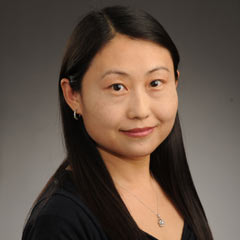
Dongli Zhang is a Professor in the Department of Information, Technology, and Operations at Fordham University's Gabelli School of Business. Research focuses on climate change impacts, quality management, and supply chain strategies, with empirical studies spanning environmental sustainability, organizational performance, and cross-cultural business practices. Publications utilize quantitative methods such as visual analytics, regression modeling, and contingency frameworks. Articles investigate topics like greenhouse gas effects on quality of life (2024), supply chain compliance (2024), ambidextrous strategy (2017), and quality management customization (2014). Trends show interdisciplinary integration of environmental science, operations, and strategic management.
Dr. Cindy L. Bethel is the Billie J. Ball Endowed Professor in Engineering and Director of the Social, Therapeutic, and Robotic Systems (STaRS) Lab in the Department of Computer Science and Engineering at Mississippi State University. Currently serving as NSF Program Director (CISE/IIS Human-Centered Computing), she was previously a Fulbright Senior Scholar in Australia. Research applications focus on: Robotic therapy support (PTSD, trauma victims) Information gathering from children Law enforcement/military support SWAT team integration She has secured $9.7M in research funding from NSF, DoD, and industry partners. Recent publications address socially assistive robotics, HRI privacy concerns, and therapeutic robot design. Her STaRS Lab develops technologies like Therabot™ for mental health support and interfaces for tactical robots. Education includes Ph.D. from University of South Florida (2009), NSF Postdoctoral Fellowship at Yale, and specialized training in child-robot interaction. She has received numerous honors including IEEE Senior Membership and selection as one of the 'World's 50 Most Renowned Women in Robotics'.
Vasileios Chasanis is a researcher at the Department of Computer Science & Engineering, University of Ioannina, specializing in machine learning applications for video analysis, summarization, and surveillance systems. His work bridges theoretical algorithms with practical implementations in multimedia processing. Educational background: Diploma in Electrical and Computer Engineering, Aristotle University of Thessaloniki (2004) PhD in Computer Science, University of Ioannina (2009) His research focuses on Machine Learning and Computer Vision with emphasis on video structure analysis and real-time processing . Core methodologies include support vector machines , spectral clustering , and multi-view feature extraction for tasks like shot boundary detection, key-frame extraction, and scene segmentation. Recent work extends to clinical data mining and tourism technology applications. Publication trends show consistent innovation in video summarization algorithms and efficient feature extraction , with increasing interdisciplinary applications in healthcare and tourism. His 2023 work demonstrates expansion into web-based augmented reality systems for tourism destinations. Scientific recognition: Best Scientific Paper Award at ICPR 2014 for key-frame extraction research Research funding includes EU-cofunded projects: PENED 2003 (machine learning for video analysis), ARTreat FP7 (clinical decision support), and ongoing VIDEOSUM (video storage/summarization platform). Collaborates extensively with the IP AN Group at University of Ioannina. He co-developed the VideoSum platform—a comprehensive system for video storage, processing, and summarization—integrating spectral clustering and temporal analysis techniques for industrial applications in media management.
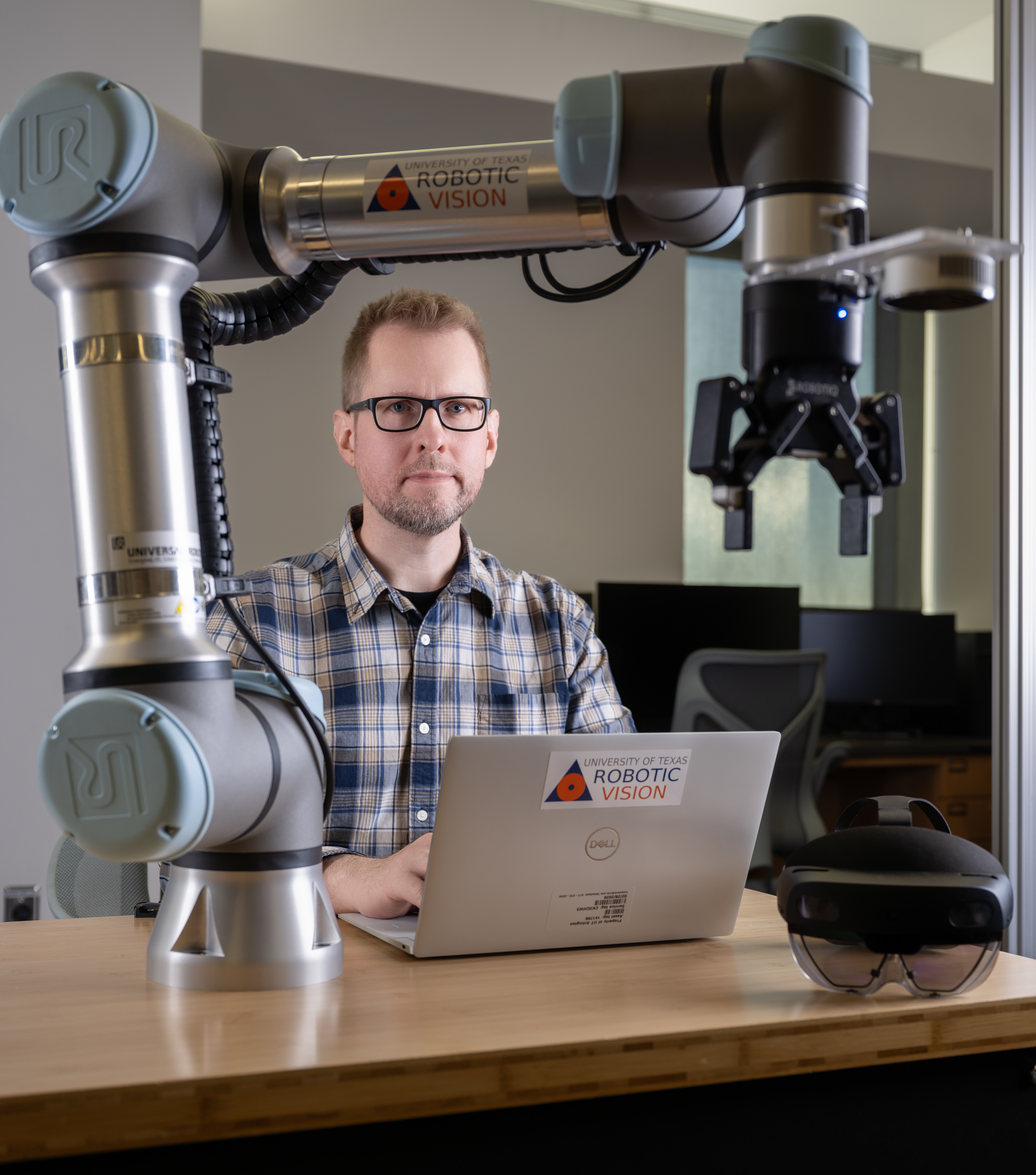
William J. Beksi is an Assistant Professor at The University of Texas at Arlington's Department of Computer Science and Engineering, and director of the Robotic Vision Laboratory. His research focuses on robotics, computer vision, and machine learning, with applications in autonomous systems, agricultural robotics, and event-based vision. PhD, MS in Computer Science (University of Minnesota) BS in Mathematics and Computer Science (Stevens Institute of Technology) Dr. Beksi develops algorithms for robot perception and autonomy, emphasizing topological data analysis, control barrier functions, and 3D reconstruction. His work has been sponsored by NSF, USDA, DoD, and industry partners. Recent publications (2023-2025) span event-based vision, agricultural robotics, 3D vision, and safety-critical systems. Key trends include polynomial path planning for deception, edge-informed contrast maximization, and semi-supervised active learning frameworks. ONR Summer Faculty Fellow (2022-2024) NSF CRII Award (2020) IEEE Senior Member UTA CSE Rising Star Research Award (2024) Dr. Beksi advises PhD students in robotics and computer vision, including recipients of UTA Dissertation Fellowships and DoD SMART scholarships. His lab collaborates with institutions like krtkl, AFRL, and NSWCDD on projects ranging from UAV collision avoidance to lunar robotics.
Dr. Sangwook Park is a Professor of Physics at the University of Texas at Arlington, where he has served since 2010, progressing from Assistant Professor to Associate Professor and finally to Professor in 2021. His research focuses on high-energy astrophysics, particularly X-ray observations of supernova remnants, neutron stars, and the interstellar medium. Dr. Park received his PhD in Physics with emphasis in Astrophysics from Purdue University in 1998, followed by postdoctoral work at NASA Goddard Space Flight Center and Pennsylvania State University. His undergraduate degree is in Computer Science from Illinois Institute of Technology (1992), with a minor in Physics. Dr. Park's research centers on observational astronomy using X-ray telescopes to study the aftermath of stellar explosions. His work primarily investigates supernova remnants including SN 1987A, Kepler's SNR, Tycho's SNR, and others in our galaxy and the Magellanic Clouds. Through high-resolution spectroscopy with Chandra and other X-ray observatories, he has made significant contributions to understanding ejecta dynamics, nucleosynthesis, and shock physics in these cosmic laboratories. His research has revealed detailed kinematic structures of supernova ejecta, metal distributions in remnants, and the interaction between supernova shocks and surrounding interstellar material. His work often bridges theoretical models with observational data to refine our understanding of stellar evolution and explosive phenomena. Analysis of Dr. Park's recent publications shows a consistent focus on supernova remnants, particularly SN 1987A, with increasing multi-wavelength approaches combining X-ray, infrared, and radio observations. His work has evolved from basic imaging to sophisticated kinematic and spectral analyses, increasingly incorporating data from newer observatories like JWST alongside traditional X-ray facilities. A notable trend is the detailed study of dust formation and destruction in supernova environments, connecting high-energy processes with the evolution of interstellar material. His research demonstrates a progression from single-observatory studies to complex multi-messenger investigations that provide comprehensive views of supernova remnants. Dr. Park has received numerous prestigious awards and grants throughout his career: Multiple NASA Chandra Guest Observer grants (2004-2024) PI NASA Chandra Multi-Cycle Guest Observer (2021-2023) PI NASA NuSTAR Guest Observer (2017) Faculty Development Leave awards (2017-2018, 2024-2025) Multiple NASA Suzaku and XMM-Newton observation grants Dr. Park has been an active mentor to numerous graduate students, serving as Dissertation Committee Chair for at least eight PhD students and as committee member for many others. His research has been consistently supported by substantial NASA and NSF funding, with recent grants totaling over $500,000 for projects studying supernova remnants like Kepler's SNR and SN 1987A. He has established himself as a leading expert in X-ray studies of supernova remnants, frequently collaborating with international teams and serving on review panels for major observatories. His service includes committee work within his department and university, as well as extensive peer review activities for journals and funding agencies.
Jasmine Lam is the Maritime Chair Professor at the Department of Technology, Management and Economics, Technical University of Denmark (DTU), specializing in maritime logistics, supply chain resilience, and sustainable energy systems. She holds editorial roles in Transportation Research Part D , Maritime Policy & Management , and Transportation Research Part E . Her research focuses on green shipping corridors, energy transition strategies, and AI-driven maritime systems. Recent work includes studies on hydrogen fuel in shipping, post-pandemic supply chain resilience, and port logistics innovation with the 6th-generation port model. Lam actively collaborates globally, addressing challenges in maritime safety, ammonia bunkering, and decarbonization. She supervises PhD projects and advocates for data-driven solutions in port energy systems and vessel traffic management. Research Interests: Maritime sustainability, risk analysis, AI in transportation, and energy policy. Activities: Keynote speaker at international conferences, guest lectures on decarbonization and supply chain strategies. Her publications emphasize interdisciplinary approaches, integrating machine learning, big data analytics, and environmental science to transform maritime industries. Current trends in her work highlight the strategic shift towards renewable energy integration in ports and adaptive systems for volatile shipping markets.
Dr. Edward Anstead is a Lecturer in the Department of Computing at Goldsmiths, University of London, and co-director of undergraduate studies. He joined the university in September 2016, focusing on software engineering, programming, and HCI in teaching. His research explores collaborative group interactions with technologies, particularly in shared media contexts like television and e-learning tools. Education: BSc Computer Science (Hons), University of Leicester (2005) MSc Human Centred Computer Systems, University of Sussex (2009) PhD in Many-Screen Viewing from University of Nottingham (2016) Research interests include HCI, group practices with distributed devices, and ethical data collection. He has contributed to gamification in programming education and auto-graded tools for diverse students. Notable publications include work on TV companion apps, digital assessment, and multiscreen viewing behaviors. His research emphasizes practical applications in education and collaborative media consumption.
Konstantinos Derpanis is an Associate Professor in the Department of Electrical Engineering & Computer Science at York University. He holds a BSc (Honours) in Computer Science from the University of Toronto (2000), an MSc and PhD in Computer Science from York University (2003, 2010). His doctoral work earned the CIPPRS Doctoral Dissertation Award 2010 Honourable Mention. Prior to York, he served as Associate Professor at Ryerson University (2012–2020) and was a postdoctoral researcher at the GRASP Laboratory, University of Pennsylvania (under Prof. Kostas Daniilidis). He currently serves as an Associate Editor for IEEE TPAMI and Area Chair for AAAI 2021, ICRA 2021, CVPR 2021, and ICCV 2021. His research focuses on computer vision with emphasis on motion analysis, human motion understanding, and applications in image processing and machine learning (including deep learning). Key interests include generative models, neural radiance fields, and vision-language systems. His work bridges theoretical advancements and practical applications in computational photography, 3D reconstruction, and AI-driven perception. Education: BSc (Honours), Computer Science, University of Toronto, 2000 MSc (Computer Science, York University, 2003, supervised by Prof. John Tsotsos & Prof. Richard Wildes) PhD (Computer Science, York University, 2010, supervised by Prof. Richard Wildes) Awards: CIPPRS Doctoral Dissertation Award 2010 Honourable Mention His recent research trends highlight contributions to neural radiance fields (NeRF), generative models, and vision-language systems. He explores techniques for robust scene representation, image/video editing via text instructions, and cross-modal retrieval. His work also addresses challenges in sensor fusion, temporal alignment, and interpretable AI. Dr. Derpanis has no listed grants or advisees in the provided texts but maintains active roles in academic service and conference organization.
Dr. Zhengming Ding is Assistant Professor of Computer Science at Tulane University, specializing in computer vision and transfer learning. His research develops algorithms for domain adaptation, zero-shot learning, and multi-view data analysis applied to biometrics and healthcare. Key contributions include marginalized learning frameworks for cross-domain recognition and generative models for zero-shot classification. His work appears in top venues like CVPR, ICCV, and IEEE TPAMI. Dr. Ding teaches algorithms and computer vision courses. He has organized tutorials on multi-view learning at major conferences and serves as Associate Editor for IEEE Transactions on Image Processing.
Anin Puthukkudy is a dedicated Atmospheric Physicist affiliated with the University of Maryland Baltimore County (UMBC) as an Assistant Research Scientist at the Earth and Space Institute (GESTAR II). His primary focus is aerosol measurement and instrumentation, with expertise in remote sensing techniques using multi-angle polarimeters. He holds a Ph.D. in Atmospheric Physics from UMBC (2021), a Master's (2016), and a Bachelor's in Engineering Physics from NIT Calicut (2013). His research emphasizes aerosol property retrieval using instruments like HARP2 and AirHARP, alongside algorithm development for aerosol and ocean color inversion. Key contributions include pre-launch calibration of AirHARP, HARP2 on-orbit performance analysis, and neural network-based radiative transfer models. He has authored/co-authored over 20 peer-reviewed articles and presented at major conferences like AGU and IAC. Anin has secured awards including the CIDER2024 grant and travel fellowships. He leads projects on HARP2 aerosol retrieval algorithms, instrument calibration, and HPC cluster development for data analysis. Beyond academia, he is an active reviewer for journals like Remote Sensing of Environment and contributes to open-source tools like the NASA PACE Data Reader. His technical skills span programming (Python, MATLAB), instrument design, and remote sensing algorithms. He is committed to advancing climate science through cutting-edge remote sensing technologies.
Chinwe Ekenna is an Associate Professor in the Department of Computer Science at the University at Albany, State University of New York (SUNY) and directs the Robotics, Algorithm and Computable Systems (RACS) Laboratory . She serves as a faculty advisor for UAlbany's ACM-W chapter , promoting women in robotics and STEM. PhD in Computer Science from Texas A&M University (2016) MSc in Computer Science from Covenant University, Nigeria (2008) BSc in Computer Science from Covenant University, Nigeria (2006) Her research focuses on intelligent motion planning for robotics and proteins, integrating machine learning to enhance planning efficiency and accuracy. Key areas include computational biology , robotic navigation , and topological modeling . Her recent publications explore transformer-based motion planning , attention mechanisms for molecular analysis , and discrete Morse theory for robotics . These works bridge artificial intelligence , robotics , and biomedical applications . As a leader, she organized the Meet the Women in Robotics Workshop at RSS 2019, funded by the National Science Foundation. Her teaching includes courses in theory of computation and algorithms . At the RACS Laboratory , her team investigates path planning , adversarial robustness , and robotics in dynamic environments , emphasizing interdisciplinary collaboration and innovation.
Frank Shih is a Professor of Computer Science at the New Jersey Institute of Technology (NJIT). His research focuses on image processing, deep learning, medical imaging, and cybersecurity , with applications in healthcare, agriculture, and transportation. He holds a Ph.D. in Electrical and Computer Engineering from Purdue University (1987), an M.S. from Stony Brook University (1984), and a B.S. from National Cheng Kung University (1980). His work includes developing novel techniques for medical image enhancement (e.g., X-ray contrast improvement), crop freshness assessment via deep learning, and robust defense against adversarial attacks in neural networks. He has also pioneered methods in land cover segmentation, drug toxicity prediction, and real-time vehicle counting systems. Shih’s research integrates interdisciplinary approaches, combining computer vision with domain-specific challenges in healthcare, agriculture, and infrastructure monitoring. His laboratory focuses on advancing AI-driven solutions for real-world problems, including automated diagnosis systems and secure image processing frameworks.
Zhi Wei is a Distinguished Professor of Computer Science at the New Jersey Institute of Technology (NJIT). His research integrates computational methods with biological data to address challenges in cancer genomics, immune system modeling, and drug interaction prediction. He holds a Ph.D. in Bioinformatics from the University of Pennsylvania (2008), M.S. in Computer Science from Rutgers University (2004), and B.S. in Computer Science from Wuhan University (2000). Key research interests include single-cell analysis, multi-omic data integration, machine learning applications in genomics, and viral oncogenesis mechanisms. His work has led to tools like GigaAssay for high-throughput mutagenesis assays and MONTAGE for detecting mosaic copy number variations. Current projects focus on tumor heterogeneity, immune checkpoint blockade therapies, and AI-driven game strategy optimization. Publications emphasize computational methodologies (e.g., scDILT framework for single-cell data integration) and translational research in cancer immunotherapy response prediction. He has advised numerous interdisciplinary studies but no specific student names listed. Funding and grants focus on NIH-supported projects in genomic medicine and bioinformatics. Laboratory work involves collaborations with medical institutions to translate computational findings into clinical applications, particularly in melanoma and glioma therapies. His lab develops open-source tools for processing spatial transcriptomics and virome analysis in oncology.
Dr. Xiaojing (Jane) Yuan is a Professor in the Department of Engineering Technology at the University of Houston’s Cullen College of Engineering. She specializes in biomedical signal processing, intelligent systems, and wireless sensor networks. Her research focuses on applications in health informatics, disease management, and sensor network optimization. Education Ph.D. in Robotics and Automation, Tulane University (2003) M.S. in Computational Intelligence, Tulane University (2002) M.S. in Computer-Aided Automation, University of Science and Technology of China (1997) B.S. in Electrical Engineering, Hefei University of Technology (1994) Research Interests Dr. Yuan’s work spans biomedical signal/image processing, intelligent system modeling, and distributed sensor networks for health monitoring. She develops algorithms for skin cancer detection and wireless sensor network protocols for chronic disease management. Her lab, the Intelligent Sensor Grid and Informatics Lab, integrates hardware and software solutions for real-world applications. Grants & Projects Principal Investigator (PI) of projects totaling over $200k in funding, including grants from NASA, NSF, and the Texas Emerging Technology Fund Co-PI for interdisciplinary initiatives like the NSF NeTS-NOSS program and NASA’s ISHM testbed Labs & Teams Director of the Intelligent Sensor Grid and Informatics Lab and advisor for the International Society of Automation (ISA).
Qiang Cheng is an Associate Professor at the University of Kentucky with joint appointments in the Division of Biomedical Informatics and the Stanley and Karen Pigman College of Engineering. His research bridges computational methods with biomedical applications, focusing on machine learning, data mining, and AI-driven solutions for precision medicine. Research interests center on developing novel algorithms for biomedical data analysis, including tabular data processing, gene expression modeling, drug response prediction, and temporal pattern recognition in healthcare contexts. His work frequently integrates deep learning architectures with domain-specific challenges in omics and clinical informatics. Recent publications demonstrate strong focus on generative models (diffusion networks, autoregressive architectures), efficient learning methods (sparse attention, lightweight networks), and biological applications (circadian rhythm prediction, molecular generation). Methodological innovations consistently target high-dimensional biomedical data challenges through multi-view learning, tensor decomposition, and causal inference frameworks.