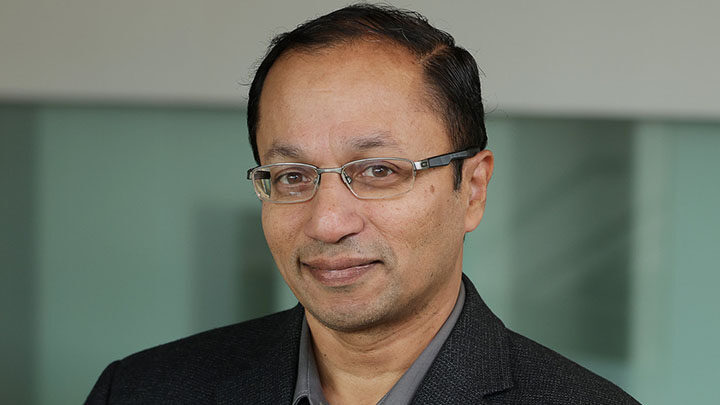
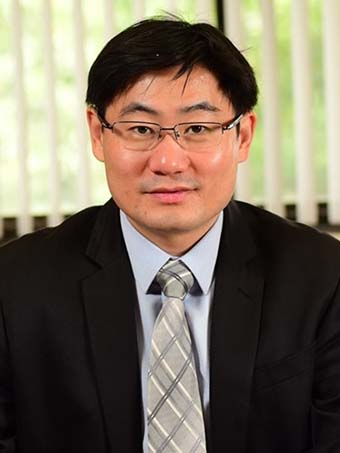
Deva Kannan Ramanan is a Professor at the Robotics Institute of Carnegie Mellon University , focusing on computer vision , machine learning , and human-centered robotics . His work bridges neurorobotics and visual perception , with applications in autonomous driving and 4D reconstruction . Research Topics Computer Vision 3-D Vision and Recognition Visual Servoing Neurorobotics Human-Centered Robotics Graphics & Creative Tools His recent publications in CVPR , ICRA , and ICCV emphasize 4D human reconstruction , neural rendering , and vision-language models for autonomous systems. He serves as General Chair of CVPR 2027 and Program Chair of CVPR 2018 , with IARPA funding for aerial-ground rendering (2023-2027). Current students include PhD candidates Sally Chen, Kangle Deng, and Zhiqiu Lin, while past advisees like Arun Vasudevan and Olga Russakovsky now hold positions at Amazon and Meta respectively.
Stephen Licht is an Associate Professor of Ocean Engineering and Graduate Director at the University of Rhode Island's College of Engineering, where he directs the Robotics Laboratory for Complex Underwater Environments (R-CUE). His research focuses on developing maritime robots capable of operating in dynamic and unpredictable environments through biologically inspired propulsion, distributed pressure sensing, model-based optimal control, and compliant underwater manipulation technologies. Ph.D. in Oceanographic and Mechanical Engineering from MIT/WHOI Joint Program (2008) B.S. in Mechanical Engineering from Yale University (1998) Former Senior Research Scientist at iRobot and Senior Robotics Engineer at Vecna Robotics Current Research Affiliate with MIT Department of Mechanical Engineering Former Visiting Faculty at Libera Università di Bolzano (2019-2020) Dr. Licht's research spans marine robotics with emphasis on biologically inspired propulsion systems that provide high authority and bandwidth thrust, nonlinear attitude control for maneuvering in dynamic conditions, compliant underwater manipulation technologies, and unmanned aerial monitoring of coastal structures. His work bridges mechanical engineering principles with oceanographic applications to create more capable underwater robotic systems that can operate in complex marine environments. His recent publications demonstrate a strong trend toward soft robotics applications for deep-sea exploration, with particular focus on jamming grippers and neutrally buoyant manipulation systems. The research also shows increasing integration of additive manufacturing techniques for field-deployable solutions and computational methods for autonomous systems operating in challenging marine environments. His work spans fundamental control theory, mechanical design, and practical field applications. Dr. Licht has secured significant research funding as both Principal Investigator and Co-Principal Investigator from major organizations including the Office of Naval Research, NOAA, NSF, and various university collaborations. His grants focus on advancing unmanned underwater vehicle technology, soft robotics for deep-sea applications, and coastal monitoring systems. Active mentor to numerous graduate and undergraduate students in Ocean Engineering Successful track record of student placements at organizations including Jaia Robotics, Scripps Institution of Oceanography, FORSSEA Robotics, and government research labs Collaborates with researchers at MIT, WHOI, University of Connecticut, University of Maine, and international institutions Licht leads the R-CUE lab which develops innovative solutions for underwater robotics challenges, with particular expertise in biomimetic propulsion, soft robotics for deep-sea applications, and autonomous systems for environmental monitoring. The lab maintains strong industry connections with OceanGate Inc. and FabNewport, and engages with local educational institutions through outreach programs with Roger Williams Middle School.
Hao Su is an Associate Professor in the Department of Computer Science and Engineering at University of California, San Diego . He serves as Chairman & CTO of Hillbot Inc , and leads the SU Lab which focuses on building autonomous systems that learn actively in physical environments. His affiliations include the Institute for Learning-enabled Optimization at Scale , Artificial Intelligence Group , Contextual Robotics Institute , Halicioğlu Data Science Institute , and Center for Visual Computing . As a researcher in Computer Vision, Robotics, and Neural Geometry , he has made significant contributions to 3D foundation models, reward-free world models, diffusion policy frameworks, and GPU-accelerated simulation environments. His 2024-2025 publications include advancements in hand-eye calibration, dynamic mesh reconstruction, and multi-stage robotic manipulation. His scientific awards include: Frontiers of Science Award (2025) TPAMI Young Research Award (2025) NSF CAREER Award (2023) ACM SIGGRAPH Best Doctorate Thesis Honorable Mention (2019) He has served as Program Chair for CVPR 2025 and Area Chair for ICLR 2022 and NeurIPS 2023 , while previously serving as Publication Chair for 3DV 2016 and Program Committee for SIGGRAPH Asia Workshops .
Dr. Guillermo Amador is an Assistant Professor in the Experimental Zoology department at Wageningen University & Research. His research focuses on understanding how animals interact with complex environments through locomotion, adhesion, and fluid dynamics. He investigates biological systems like insects, plants, and marine organisms to inspire bio-engineered solutions for robotics, microfluidics, and material science. Amador received his PhD in Mechanical Engineering from Georgia Institute of Technology (USA), followed by postdoctoral research at the Max Planck Institute for Intelligent Systems (Germany) and a Marie Sklodowska-Curie fellowship at TU Delft (Netherlands). His expertise spans biophysics, biomaterials, and biomechanics, with a focus on self-cleaning mechanisms and bioadhesion. He collaborates with the 4TU consortium on Dutch Soft Robotics to develop bio-inspired designs. His work bridges fundamental biology with engineering applications, emphasizing interdisciplinary approaches to solve challenges in robotics and environmental science. Amador teaches courses including Biomimetics and Functional Zoology , integrating his research into education. His research highlights include studies on cuttlefish suction cups, stick insect adhesion, and pollen transport mechanisms in pollinators.
William Chueh is a Professor in the Departments of Materials Science and Engineering and Energy Science & Engineering at Stanford University. He serves as Director of the Precourt Institute for Energy and Faculty Director of the Energy Innovation and Emerging Technologies Program. His research focuses on redox-active materials for energy storage, conversion, and carbon-neutral energy cycles. Education: PhD, Materials Science, Caltech (2010) BS, Applied Physics, Caltech (2005) Research Interests: Energy storage and conversion systems (batteries, fuel cells, electrolyzers) Multi-scale electrochemical and chemical reaction dynamics Materials design rules for redox-active solids Thermodynamic frameworks for sustainable energy Publication Trends: His work spans fundamental materials synthesis, electrochemical characterization, and modeling of redox reactions. Key themes include solar thermochemical cycles, ceria-based systems for CO2/H2O conversion, and advanced battery technologies. Scientific Honors: Outstanding Young Investigator Award (MRS, 2018) Camille Dreyfus Teacher-Scholar Award (2016) Sloan Research Fellowship (2016) CAREER Award (NSF, 2015) Advising: He advises students in energy technologies, materials science, and electrochemistry, including doctoral and master’s candidates. Contact: wchueh@stanford.edu
Olga Sorkine-Hornung is a Professor of Computer Science at ETH Zurich and head of the Institute of Visual Computing. She leads the Interactive Geometry Lab, focusing on theoretical and practical advancements in digital content creation, geometry processing, and shape modeling. Current position: ETH Zurich, Department of Computer Science Previous roles: Courant Institute (NYU), Technical University of Berlin Education: BSc and PhD from Tel Aviv University, postdoc at TU Berlin Her research spans shape representation, digital fabrication, computer animation, and fundamental geometry processing. Key contributions include Laplacian surface editing, as-rigid-as-possible deformation, and generalized winding numbers. She works on applications in VR, AR, and autonomous systems. Awards include Test of Time Awards (2024), ACM Fellow (2020), ERC Consolidator Grant (2020), and EUROGRAPHICS Young Researcher Award (2008). She has supervised numerous students and co-developed software libraries like libigl and Instant Meshes . Co-chair roles for SIGGRAPH, Eurographics, and Pacific Graphics Editorial board member for ACM Transactions on Graphics and other journals Keynote speaker at VMV, CVPR, and SIAM conferences Her work bridges mathematical rigor with practical implementation, advancing computer graphics and geometry processing through intuitive algorithms that maintain surface detail while enabling efficient computation.
Gianluca Iaccarino is a Professor of Mechanical Engineering at Stanford University and the Robert Bosch Chairholder. He serves as Director of the PSAAP Center and leads large-scale computational research initiatives in uncertainty quantification, exascale computing, and multiphysics simulations. His academic journey includes a PhD in Mechanical Engineering from Politecnico di Bari (2005), postdoctoral work at Stanford's Center for Turbulence Research, and progression from Research Engineer to full Professor. Education : PhD (Politecnico di Bari), MS/BS in Aeronautical Engineering (University of Naples) Research : Computational engineering, turbulence modeling, uncertainty quantification, biomedical fluid dynamics, and exascale-ready algorithms Publications : 15+ recent articles focus on turbulence modeling, data-driven simulations, and uncertainty quantification across diverse applications in aerospace, biomedical, and energy systems Awards : PECASE (2010), APS Fellow (2019), multiple best paper awards (AIAA, ASME), Terman Fellow (2007) Students : Advises doctoral and master's students in mechanical engineering and computational methods Leadership : Director of PSAAP Center (2014-present), Chair of Mechanical Engineering Department (2024-present)
Prof. Stefan Leutenegger is a tenure-track Assistant Professor at Technische Universität München (TUM), leading the Machine Learning for Robotics group within the TUM School of Computation, Information, and Technology. Previously, he held roles as Senior Lecturer (2018–2021) and Lecturer (2014–2018) at Imperial College London's Dyson Robotics Lab, where he founded the Smart Robotics Lab. He earned his PhD (2014) from ETH Zurich, focusing on autonomous solar-powered aircraft navigation, and holds BSc (2006) and MSc (2009) in Mechanical Engineering from ETH Zurich. His research centers on mobile robotics, particularly enabling robots (e.g., drones) to perceive and navigate complex environments using machine learning and sensor data fusion. Key focus areas include SLAM, event-based vision, 3D reconstruction, and autonomous exploration. He has pioneered algorithms like BRISK (2011), OKVIS (2014), and ElasticFusion (2016), advancing real-time robotics perception. Notable Awards: Imperial College President's Award (2018), Best ECCV Paper (2016), ETH Medal for Dissertations (2015). Labs: TUM's Machine Learning for Robotics Group, Imperial's Smart Robotics Lab. Publications: Over 100 papers, including seminal works in CVPR, ECCV, and Robotics: Science and Systems. Current projects include DigiForests (forest inventory via robotics), aerial additive manufacturing, and object-centric semantic mapping. His work bridges theory and practice, with applications in autonomous drones, construction robotics, and human-robot interaction.
Derek W Hoiem is a Professor in the Siebel School for Computing and Data Science at the University of Illinois Urbana-Champaign, where he has been a faculty member since 2009. His research focuses on computer vision and related areas, and he is also the co-founder and Chief Science Officer of Reconstruct, an AI-based construction technology company. His educational background includes: PhD in Robotics, Carnegie Mellon University (2007) Beckman Postdoctoral Fellowship (2008) Prof. Hoiem's research spans computer vision, with a focus on object recognition, scene understanding, and graphics. His work also extends to mobile robotics and 3D scene reconstruction. He has made significant contributions in areas such as visual recognition, 3D modeling, and the application of computer vision in construction monitoring. His recent publications (2023-2025) demonstrate a strong focus on advancing multimodal understanding, particularly in region-based representations, 3D vision, and neural radiance fields. There is a clear trend towards integrating language and vision, improving efficiency in neural networks, and applying computer vision to real-world problems such as construction progress monitoring. His scientific awards and honors are extensive and include: IEEE Fellow (2022) University Scholar (2022) Koendrink Prize (2022) Dean's Award for Excellence in Research, Associate Professor (2021) Campus Distinguished Promotion Award (2015) Best Paper Award: IEEE Winter Conference on Applications in Computer Vision (WACV) (2015) CW Gear Junior Faculty Award (2014) IEEE PAMI Young Researcher Award (2014) Dean's Award for Excellence in Research, Assistant Professor (2014) Sloan Research Fellowship (2013) Intel Early Career Faculty Honor Program Award (2012) NSF CAREER Award (2011) ACM Doctoral Dissertation Award, Honorable Mention (2008) Carnegie Mellon University SCS Distinguished Dissertation Award (2008) Best Paper Award: IEEE Computer Vision and Pattern Recognition (CVPR) (2006) Prof. Hoiem has secured significant research funding, including an NSF CAREER award and an Intel Early Career Faculty award. He is also actively involved in technology transfer, having co-founded Reconstruct where he serves as Chief Science Officer. His teaching excellence is reflected in multiple "List of Teachers Ranked as Excellent" awards spanning from 2010 to 2021. Prof. Hoiem leads a research group at UIUC focused on computer vision and 3D scene understanding. Additionally, he co-founded and serves as Chief Science Officer at Reconstruct, which develops AI-based solutions for construction monitoring.
Chris Atkeson is a Professor at the Robotics Institute of Carnegie Mellon University. His research focuses on achieving human-level competence in machines through humanoid robotics and human-aware environments. He explores machine learning techniques such as reinforcement learning, nonparametric methods, and memory-based learning to develop robots capable of complex tasks like manipulation, locomotion, and perception. His work emphasizes bridging the gap between simulation and real-world applications (sim2real transfer), with contributions to tactile sensing (e.g., FingerVision), dynamic walking control, and human-robot collaboration. Notable projects include participation in the DARPA Robotics Challenge with Team WPI-CMU, where his team developed reliable humanoid behavior for disaster response scenarios. Atkeson’s research spans robotics, computer vision, and control systems, with a focus on enabling robots to perceive, learn, and act in unstructured environments. His recent work includes advancements in 3D scene capture, soft robotics, and energy-based planning for compositional tasks.
John Oakey is a Professor and Graduate Coordinator in the Department of Chemical and Biomedical Engineering at the University of Wyoming, with additional affiliations to the INBRE Program, Molecular and Cellular Life Sciences Program, and Materials Science and Engineering Program. Education Postdoctoral Fellow, Center for Engineering in Medicine, Massachusetts General Hospital & Harvard Medical School (2007–2010) Ph.D. Chemical Engineering, Colorado School of Mines (2003) M.S. Chemical Engineering, Colorado School of Mines (1999) B.S. Chemical Engineering, Penn State University (1997) Research Interests Oakey’s laboratory integrates fluid dynamics, colloidal science and materials science to understand how biological systems behave under flow, on surfaces and within complex 3-D geometries. A unifying theme is the use of microfabrication and microfluidics to create new diagnostic, prognostic and therapeutic platforms. Current thrusts include: Heterogeneous biomaterials: self-assembled particulate tissue scaffolds whose mechanical and transport properties can be temporally programmed. Inertial microfluidics: exploiting lift forces for membrane-free particle sorting, enrichment and diagnostics. Multi-temporal analysis by flow cytometry: development of closed-loop, high-throughput microfluidic cytometers for longitudinal single-cell studies. Publication Trends From 2025 back to 2010, Oakey’s articles reveal a consistent trajectory that marries fundamental physics (microtubule mechanics, inertial focusing) with translational applications (cell encapsulation, tissue scaffolds, drug delivery). Recent work (2023-2025) increasingly targets injectable granular hydrogels, single-cell therapeutic delivery and sustainable carbon-sequestering living materials, demonstrating an evolution from microscale transport phenomena to macroscopic biomedical and environmental impact. Scientific Awards No named awards are listed in the supplied text. Advising & Coordination Roles As Graduate Coordinator for the Department of Chemical and Biomedical Engineering, Professor Oakey oversees graduate program development and student mentoring. While no individual students are named, his role implies active supervision of M.S. and Ph.D. advisees in chemical and biomedical engineering. Laboratory & Teams The Oakey Research Group operates from the Energy and Environmental Research Building (EERB 435A) at the University of Wyoming. The lab enjoys R1-level research infrastructure and collaborates broadly with the Wyoming INBRE network, the Molecular and Cellular Life Sciences Program, and the Materials Science and Engineering Program.
Prof. Dr. Jörg E. Drewes is a Full Professor and Chair at the Research Institute for Urban Water Management, Technical University of Munich (TUM), Germany. He also serves as Academic Program Director for Environmental Engineering at TUM and is a co-founder of Waterloop Solutions GmbH. His work spans advanced water treatment technologies, wastewater reuse, and environmental health surveillance. Affiliations : TUM, Colorado School of Mines, King Abdullah University of Science and Technology, UNSW Water Research Centre Research focuses on advanced oxidation processes , membrane fouling mitigation , micropollutant removal , and wastewater epidemiology for public health. His team develops integrated systems for water-energy-food nexus applications and graphene oxide-based treatment solutions. Recent publications address PFAS remediation , UVC-LED pre-treatment for biofouling control, and GIS-based wastewater surveillance models . Awards include the Bayerische Staatsmedaille (2023) and William Dunbar Medal (2022). 2023 : Bayerische Staatsmedaille 2022 : William Dunbar Medal 2018 : IWA Fellow He leads the Nexus@TUM initiative and contributes to EU water resilience strategies. Collaborations include projects in Germany, China, India, and Spain, focusing on climate-resilient water systems and resource recovery .
Dr. Krishnan Mahesh is a Professor at the University of Michigan with joint appointments in Mechanical Engineering and Naval Architecture and Marine Engineering. He serves as Director of the Center for Naval Research and Education and leads the Computational Fluids Laboratory, where he develops advanced numerical methods for simulating multi-physics turbulent flows. Education: Ph.D. (1996), M.S. (1990) from Stanford University, B.Tech (1989) from IIT Bombay Leadership: Director, Center for Naval Research and Education (2022-present) His research focuses on high-fidelity simulations of turbulent flows with applications in marine propulsors, multiphase systems, cavitation, hydroacoustics, superhydrophobic surfaces, biofouling, fluid-structure interaction, and flow stability. His group develops the MPCUGLES software for unstructured grid simulations on parallel computing platforms. Recent work examines cavitation dynamics , tip vortex flows , and roughness-induced transition in complex marine and aerospace systems. His 15 most recent articles demonstrate expertise in LES/DNS of multi-physics flows, with emphasis on marine propulsion, bubble collapse, and turbulent noise prediction. Scientific Honors: 2021 AIAA Best Paper Award 2018 Fulbright Scholar 2017 Marine Propulsors Symposium Best Paper 2011 APS Fellow 2010 Taylor Award for Distinguished Research He mentors numerous graduate students and postdoctoral fellows, with collaborative projects spanning jet in crossflow analysis, gas turbine simulations, and shock-turbulence interactions. His research receives funding from ONR, NSF, and international naval programs.
Professor CHEN Wei (National University of Singapore) holds the Provost's Chair Professorship (2023-2026) and serves as Vice-Dean (Research) with joint appointments in the Departments of Chemistry and Physics. His research focuses on molecular-scale interface engineering for 2D materials-based devices and interface-controlled nanocatalysis in energy/environmental applications. PhD in Material Science, NUS (2004) Lee Kuan Yew Research Fellow (2006-2008) Established Surface and Interface Lab (2009) Director, NUS Research Institute (Fuzhou) His work on 2D optoelectronic memory (Nat. Comm. 2018), Kagome lattice design (Nano Lett. 2020), and single-atom catalysis (Nat. Comm. 2021) has been recognized by multiple high-impact publications and the Clarivate Highly Cited Researcher status (2017-2021). Awards include the NRF Investigatorship (2023) , Mitsui Chemicals-SNIC Industry Award (2020) , and Singapore Young Scientist Award (2012) . Grants from NUS, Singapore MOE, CREATE/CRP programs, and A*STAR support his exploration of interface engineering for neuromorphic computing and energy-efficient nanocatalysts . Current projects include monolayer blue phosphorus synthesis and solid electrolyte interphase engineering for lithium batteries.
Wojciech Matusik is a Professor of Electrical Engineering and Computer Science at MIT's Computer Science and Artificial Intelligence Laboratory (CSAIL). He leads the Computational Design and Fabrication Group and is a member of the Computer Graphics Group. His research spans computer graphics, robotics, and AI-driven manufacturing, with a focus on computational design, tactile sensing, and material science. Matusik holds a PhD in Computer Science from MIT (2003), an MS from MIT (2001), and a BS from UC Berkeley (1997). His work includes groundbreaking projects like differentiable cloth simulation (DiffCloth), AI-enhanced molecular design, and tactile sensing gloves. He has received prestigious awards such as the MIT TR35 (2004), DARPA Young Faculty Award (2012), and Ruth and Joel Spira Teaching Award (2014). Matusik teaches courses on computer graphics, machine learning, and computational fabrication at MIT. Key research themes include: Robotics: Robotic assembly, tactile interaction, and soft robotics Graphics: 3D holography, procedural material generation Manufacturing: Additive fabrication, topology optimization His recent articles explore AI-driven molecular synthesis, holographic displays, and tactile-enabled VR systems. Matusik collaborates on open-source tools like the WiReSens tactile platform and Simit language for sparse systems.