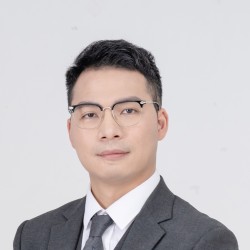
Pieter Simoens is an Assistant Professor at Ghent University and affiliated with the imec research institute. He works at the intersection of distributed artificial intelligence, edge computing, and collective intelligence, with a focus on AI applications for resource-constrained environments and robotic systems. His research explores innovative approaches to machine learning deployment in heterogeneous infrastructures, task planning for IoT-integrated robotics, and modeling collective decision-making processes. He has contributed to frameworks like DIANNE for distributed deep learning and developed methods for cognitive modeling in reinforcement learning scenarios. With over 100 publications, his recent work spans adaptive neural networks, privacy-preserving surveillance, UAV hyperspectral data analysis, and computational fairness in AI systems. He leads research initiatives within the Internet Technology and Data Science Lab (IDLab) and contributes to educational programs in software engineering and applied machine learning. Responsible for courses on software engineering, mobile development, system design, and applied machine learning Active in edge computing and neuromorphic algorithms research Develops AI solutions for robotics, surveillance, and industrial IoT applications
Dr. Yinglong He is a Lecturer in Automated Electrified Transport (AcT) Systems at the School of Mechanical Engineering Sciences, University of Surrey, UK, and an Honorary Assistant Professor at the School of Engineering, University of Birmingham. His research focuses on intelligent transportation systems, energy management, vehicle dynamics, and AI-driven optimisation. He has held positions including Postdoctoral Research Associate at the University of Cambridge and Technology Expert at the European Commission's Joint Research Centre (JRC). Research interests include autonomous vehicle control, traffic simulation, hybrid/electric vehicle dynamics, and sustainable transport solutions. Notable contributions include advancing microscopic traffic models for automated vehicles and optimising energy systems for hybrid powertrains. His work integrates machine learning, multi-agent systems, and data-driven approaches to address challenges in transport decarbonisation and safety. Recent publications highlight advancements in hybrid vehicle dynamics simulation, lithium-air battery modelling, and energy mapping of urban buildings. He has received the Chinese Government Award for Outstanding Self-Financed Students (2022) and is a Fellow of the Institute for Sustainability (IfS). His expertise spans interdisciplinary collaborations in automotive engineering, energy systems, and smart infrastructure.
Gwenn Englebienne is an Assistant Professor at the Digital Society Institute and Human Media Interaction group of Utrecht University. Their research focuses on Artificial Intelligence, Computer Vision, and Human-AI Interaction, with applications in robotics, health, and social computing. They have contributed to over 80 research outputs since 2007, emphasizing embodied AI, social robotics, and explainable machine learning. Research interests span activity recognition, teleoperation systems, and ethical AI design. Notable work includes developing GNN-based group detection algorithms and evaluating chatbot reliability through automated question-answering frameworks. Their studies often bridge technical innovation with human-centered design, such as measuring embodiment via pupil dilation or addressing asymmetry in video-conferencing interactions. Key collaborations include work on social robotics, telepresence systems, and health monitoring using ambient sensors. Publications span conferences like IDA, CogMI, and LREC-COLING, reflecting interdisciplinary impact. A dataset on robot social positioning behavior is publicly accessible via 4TU.Centre for Research Data. Current work explores semi-supervised domain adaptation, spiking neural networks, and the psychological dimensions of AI trustworthiness. They lead initiatives in the Digital Society Institute to align technological advancements with societal needs.
Prof. Heiner Igel is a Professor at the Department of Earth and Environmental Sciences, Ludwig-Maximilians-Universität (LMU) München. His research focuses on seismology, planetary geophysics, and structural health monitoring, leveraging advanced numerical methods and sensor technologies. He leads projects involving multi-component seismic measurements, seismic wave modeling, and planetary exploration instruments. Key research areas include rotational ground motion analysis, nonlinear seismic wave propagation, and subsurface imaging for Earth and planetary bodies. His work integrates cutting-edge numerical techniques like discontinuous Galerkin methods and Markov Chain Monte Carlo sampling for earthquake dynamics and material parameter inversion. Prof. Igel’s contributions include the NEPOS project for planetary seismic networks and collaborations with instruments like ROMY (Ring Laser Gyroscope). His studies span bridge monitoring, lunar subsurface exploration, and environmental seismology, emphasizing interdisciplinary applications of geophysical data.
Haijian Sun is an Assistant Professor at the University of Georgia's School of Electrical & Computer Engineering. His research focuses on advanced wireless communication systems, including 5G/6G networks, federated learning, mobile edge computing, and physical layer security. He explores cutting-edge topics like reconfigurable intelligent surfaces (RIS), hybrid active-passive symbiotic radio systems, and UAV-enabled communication. His work integrates machine learning and optimization techniques to address challenges in channel modeling, energy efficiency, and network security. Recent projects include autonomous agricultural monitoring via drones and energy-harvesting sensors, as well as secure IRS-VLC communication strategies. Publications highlight innovations in dynamic wireless charging for electric vehicles, graph-based phishing detection, and radio radiance field modeling. While no specific awards are listed, his contributions reflect significant engagement with industry-relevant 6G research. Research collaborations involve digital twin networks, IoT systems, and smart grid applications. His team develops practical solutions for real-world communication challenges, emphasizing both theoretical rigor and deployable technologies.
Dr. Narcisa Pricope is Professor of Geography and Geospatial Science in the Department of Geosciences at Mississippi State University (MSU) and concurrently serves as Associate Vice President for Research in MSU’s Office of Research and Economic Development. Previously, she spent a decade at the University of North Carolina Wilmington (UNCW) where she founded and directed multiple high-profile programs, including the NSF-funded Coastal UAS Observatory and the USGIF-accredited Geospatial Intelligence certificate. Education PhD in Geography (minor Environmental Engineering), University of Florida, 2011 MSc in Geosciences, Western Kentucky University, 2006 BA in Geography and English, Babeș-Bolyai University, Cluj-Napoca, Romania, 2004 Research Interests Dr. Pricope is a land-systems scientist who integrates geospatial modelling, remote sensing, and unoccupied aerial systems (UAS) to investigate complex socio-ecological interactions at the food-water-energy nexus. Her work emphasizes understanding environmental variability and human vulnerability to land degradation, drought, and climate change, with a strong commitment to community-engaged research across dryland regions in eastern and southern Africa, Peru, Nepal, and coastal/inland North America. Key methodological thrusts include: Advanced machine-learning and geostatistical analytics Multi-scale remote sensing (satellite, airborne, UAS) Topobathymetric LiDAR for coastal and inland water management GeoAI and geospatial intelligence capacity building Research Trends from Recent Publications Across more than 50 peer-reviewed articles, Dr. Pricope’s recent work demonstrates a pronounced focus on global drying trends, precision mapping of coastal and inland ecosystems, and the deployment of machine-learning techniques to tackle environmental challenges such as salinity intrusion, vegetation classification, and heavy-metal contamination. A strong policy-oriented thread is evident, with several 2024–2025 publications calling for urgent adaptive solutions to aridification and integrating climate policy with disaster planning. Scientific Awards 2022 UNCW Graduate Faculty Mentor Award 2022 Discere Aude Mentorship Award 2021 UNCW College of Arts and Sciences Research Award Grants & Strategic Initiatives Dr. Pricope has secured funding from NSF, NASA, NOAA Sea Grant, USAID, World Bank, Global Environment Facility, NCDOT and NGA, among others. At MSU she leads strategic initiatives in climate resilience, GeoAI programming, and university-wide research support. Laboratories & Teams She previously directed the NSF-funded UNCW Coastal UAS Observatory and oversaw the FAA Collegiate Training Initiative in UAS, positioning UNCW as a national hub for geospatial intelligence education and research. At MSU, she continues to foster interdisciplinary collaboration across geosciences, engineering, and social sciences.
Yifan Sun is an Assistant Professor in the Department of Computer Science at William & Mary, leading the Scalable Architecture Lab. He holds a Ph.D. in Electrical and Computer Engineering from Northeastern University (2020). His research focuses on GPU architecture, simulation tools, and multi-GPU system design. Recent work includes TrioSim (a lightweight DNN workload simulator) and NetCrafter (optimizing multi-GPU network traffic). He has published extensively at top venues like ISCA, MICRO, and IEEE Vis. Educations: Ph.D. in Electrical and Computer Engineering, Northeastern University (2020); M.S. and B.S. not explicitly stated but implied through academic progression. Research Interests: Developing explainable architecture tools, improving simulation frameworks (Akita/MGPUSim), and addressing challenges in wafer-scale GPU design. His work bridges hardware-software co-design with visualization techniques to enhance human understanding of complex architectures. Grants: Awarded NSF CCRI and CRII grants for simulation-as-a-service and explainable architecture projects. Collaborations include UVA, NUS, and Northeastern University. Labs/Teams: Scalable Architecture Lab (SARCHLAB), focusing on GPU systems, simulation, and visualization. Active in organizing workshops and GitHub repositories (e.g., https://github.com/sarchlab).
Dr. J Krishnan is a Reader in Biological & Chemical Information Processing Systems at the Department of Chemical Engineering, Imperial College London, within the Faculty of Engineering. He holds affiliations with multiple interdisciplinary centers including the Centre for Process Systems Engineering, Institute of Systems and Synthetic Biology, and the Industrial Biotechnology Hub. His career includes roles as Lecturer and Senior Lecturer at Imperial College (2006–present), and prior research at Johns Hopkins University (2001–2005). He earned his PhD from Princeton University (2000) and B.Tech from IIT Madras (1994). His research focuses on systems-level analysis of biological and chemical information processing, combining mathematical modeling, computational tools, and collaborations with experimentalists in cell biology, synthetic biology, and biomedical engineering. Key areas include cellular communication networks, gene regulatory systems, and the application of engineering principles to biological systems. He also explores non-biological analogues, such as traffic systems and control engineering. His work on traffic systems emphasizes machine learning applications for anomaly detection, congestion prediction, and autonomous vehicle integration. Recent articles highlight developments in real-time traffic control strategies, CAV impact analysis, and hybrid neural network models for early congestion detection. His contributions span transportation economics, sensor data fusion, and game-theoretic models for public-private collaboration in travel information markets. Collaborative efforts extend to tool development for systems biology and synthetic biology, leveraging interdisciplinary approaches to bridge natural sciences and engineering. His affiliations reflect a commitment to translational research in chemical biology, process systems engineering, and molecular science.
Lynne Grewe serves as a Professor in the Department of Computer Science at California State University, East Bay, where she maintains active research and teaching responsibilities with current office hours and contact information. Her work bridges theoretical computer science with real-world applications across healthcare, education, and emergency response domains. Her research portfolio centers on three interconnected thrusts: Medical Technology : Development of computer vision systems for stroke detection through facial pattern analysis (StrokeChange), infrared-based disease monitoring, and assistive navigation tools for the visually impaired (Seeing Eye Drone) Educational Innovation : Creation of multimodal systems like ULearn that detect student frustration using deep learning, alongside community college partnerships to broaden participation in computing Sensor Fusion Applications : Integration of multi-modal data for disaster response, infrastructure monitoring, and mobile health platforms using advanced machine learning techniques Publication analysis reveals consistent evolution toward real-time, deployable systems—particularly mobile health applications and educational tools—while maintaining foundational work in sensor fusion. Her 2020-2024 output shows increasing emphasis on healthcare applications (40% of recent work) and educational technology (25%), often combining computer vision with mobile platforms. Grewe demonstrates significant commitment to educational equity through the Faculty in Residence program, collaborating with community colleges to prepare underrepresented students for computing careers. Her Google partnership and focus on practical applications indicate strong industry engagement, though specific grant details aren't documented in source materials. Current projects suggest ongoing expansion into in-situ health monitoring and AI-driven educational support systems.
Ana Dyreson is an Assistant Professor in Mechanical and Aerospace Engineering at Michigan Technological University and Associate Research Director at the Center for Innovation in Sustainability & Resilience (CISR). She leads the Great Lakes Energy Group, focusing on climate change impacts on electric power systems , energy transitions in cold climates , and thermal power plant modeling . Her work bridges solar photovoltaic design , electricity grid operational modeling , and the energy-water nexus . Education : PhD in Mechanical Engineering, University of Wisconsin–Madison (2018) MS in Mechanical Engineering, Northern Arizona University (2014) BS in Engineering Mechanics, University of Wisconsin–Madison (2011) Research emphasizes climate-resilient energy systems , particularly solar energy in cold climates and grid-scale modeling . Her 2025-2022 publications investigate snow mitigation on PV panels , heat pump adoption , floating solar-hydropower hybrids , and climate stressor impacts on thermoelectric plants . She develops inclusive teaching methods and advises on renewable energy deployment through initiatives like the Tech Forward Initiative on Sustainability and Resilience . Her team collaborates on multisector dynamics and energy-water-climate research in the Great Lakes region.
Professor Cormac J. Sreenan is a full professor in Computer Science at University College Cork (UCC), leading the Mobile & Internet Systems Lab (MISL) since 1999. He previously served as Head of School (2019-2021) and Head of Department (2015-2018 and 2000-2004). His research focuses on wireless sensor networks, multimedia networking, IoT, and adaptive video streaming. He has published over 200 peer-reviewed papers and holds 9 patents. He is a Science Foundation Ireland Principal Investigator and a Fellow of both the British Computer Society (2005) and the Irish Academy of Engineering (2022). Education: PhD from the University of Cambridge Computer Laboratory Member of Christ's College, Cambridge Research Interests: Wireless sensor networks and fault-tolerant designs Next-generation computer networks and IoT infrastructure Adaptive video streaming and QoE optimization Network security and technology transfer Grants & Collaborations: Principal Investigator on SFI grants including the €1M ENABLE project Collaborations with Irish companies and international agencies Experience in technical due diligence and expert witness roles Labs & Teams: Directs the Mobile & Internet Systems Lab (MISL), a multidisciplinary research group focused on mobile and multimedia network systems.
Lamine M. Mili is a Professor in the Bradley Department of Electrical and Computer Engineering at Virginia Tech. His expertise spans power systems, signal processing, and robust estimation theory. He holds an IEEE Fellowship (2016) for contributions to robust state estimation in power systems. Mili's research focuses on advancing methodologies for power system reliability, control, and integration of renewable energy sources. His work includes studies on dynamic state estimation, nonlinear dynamics, bifurcation theory, and quantum computing applications. He has contributed extensively to resilience engineering and computational social science in power systems. Mili’s recent articles address challenges in smart grids, quantum circuit error prediction, and multifractal signal analysis in EEG. His research often combines advanced statistical techniques with real-world grid data, emphasizing robustness and adaptability in dynamic environments. Education: Ph.D., University of Liège, 1987 M.S., University of Tunis, 1983 B.S., Swiss Federal Institute of Technology, Lausanne, 1976 Research Interests: Power system stability and control State estimation and robust filtering Quantum computing for power systems Resilience and cyber-physical-social systems Nonlinear dynamics and bifurcation analysis His recent publications reflect a focus on hybrid power systems, probabilistic methods, and data-driven approaches for grid optimization. The 2025 articles highlight advancements in photovoltaic state estimation, quantum error prediction, and robust modulation techniques. Mili’s work often bridges theoretical models with practical grid applications, emphasizing uncertainty quantification and real-time monitoring.
Blake N. Johnson is a Professor in the Grado Department of Industrial and Systems Engineering at Virginia Tech. He holds a B.S. (2008) from the University of Wisconsin-Madison, a Ph.D. (2013) in Chemical Engineering from Drexel University, and completed a postdoc at Princeton University (2013-2015). His research focuses on smart manufacturing, biosensing, and autonomous materials science, with notable contributions in 3D bioprinting and theory-guided machine learning for biosensor optimization. He has received prestigious awards including the NSF CAREER Award (2022) and SME Outstanding Young Manufacturing Engineer Award (2020). Key professional roles include: Professor, Virginia Tech (2025–present) Associate Professor, Virginia Tech (2022–2025) Assistant Professor, Virginia Tech (2015–2022) Research interests span biosensors, biomanufacturing, and machine learning-driven material discovery. His lab develops innovative solutions for medical diagnostics, tissue regeneration, and sustainable materials. He teaches courses such as ISE 5984 (Additive Manufacturing) and ISE 2204 (Manufacturing Processes). Notable achievements include pioneering work on 3D-printed anatomical nerve regeneration pathways and developing high-throughput platforms for hydrogel characterization. Media highlights include coverage of his NSF CAREER Award and breakthroughs in biosensor reliability.
Dr. Srikanthan Ramesh serves as an Assistant Professor in the School of Industrial Engineering and Management within Oklahoma State University's College of Engineering, Architecture and Technology. Since establishing the Advanced Materials and Additive Manufacturing Laboratory in August 2022, he has led interdisciplinary research at the intersection of materials science, physical phenomena, and advanced manufacturing technologies, with applications spanning healthcare, aerospace, and electronics sectors. His educational foundation includes a Ph.D. in Mechanical and Industrial Engineering from Rochester Institute of Technology (2022) and an M.S. in Industrial and Manufacturing Systems Engineering from Iowa State University (2017). This academic background enables his innovative approach to manufacturing science. Dr. Ramesh's research program focuses on biological and micro-scale additive manufacturing (bio-AM), specializing in biomaterial development for tissue engineering and regenerative medicine. His work integrates computational fluid dynamics, machine learning, and real-time process monitoring to achieve precise control over mechanical, biological, and electrical properties of manufactured structures. He develops experimental tools and process frameworks for droplet-based and extrusion-based AM systems, with particular emphasis on wound healing applications and space-compatible microelectronics. Analysis of his 14 publications from 2020-2025 reveals a strong trajectory toward AI-driven manufacturing solutions, with increasing emphasis on multi-objective Bayesian optimization for bioink design, aerosol jet printing process refinement, and bioprinted tissue construct development. His recent work demonstrates sophisticated integration of machine learning with physical manufacturing processes to solve complex biomedical challenges. His scientific recognition includes: Doctoral Dissertation Pitch Competition (Runner-up), IISE, 2021 Best Oral Presentation, Graduate Showcase, Rochester Institute of Technology, 2019 Gilbreth Memorial Fellowship, IISE, 2018-2019 Wakonse College Teaching Fellowship, Iowa State University, 2018-2019 Graduate Research Excellence Award, Iowa State University, 2017 Best Overall Oral Presentation, Nano@IAstate, Iowa State University, 2017 Dr. Ramesh currently leads significant research initiatives including as Principal Investigator for an NSF REU Site on Additive Manufacturing and Cybersecurity ($464,606, 2025-2028) and a NASA EPSCoR Travel Grant for aerosol jet printing in space missions (2024-2025). As Co-PI on an NSF grant for Privacy-aware Collaborative Design in additive biofabrication ($599,981, 2025-2028), he develops frameworks for mass personalization in medical applications while addressing data security challenges. These projects support his lab's mission to advance manufacturing science through rigorous experimentation and computational innovation. The Advanced Materials and Additive Manufacturing Laboratory operates as a collaborative hub where Dr. Ramesh directs research teams in developing novel biomaterials, optimizing printing processes, and creating functional prototypes for wound dressings, liver tissue models, and space-rated microelectronics. The lab's interdisciplinary approach combines expertise in materials characterization, computational modeling, and machine learning to push the boundaries of what's possible in additive manufacturing for critical applications.
Radu Grosu is a Professor at Technische Universität Wien (TU Wien), leading the Forschungsbereich Cyber-Physical Systems . His research focuses on Cyber-Physical Systems (CPS), Machine Learning, and autonomous robotics, with notable contributions to neural network architectures like Liquid Time-Constant Networks (LTC) and their applications in robotics and medical imaging. He is affiliated with the Network Lab and has supervised numerous PhD and Master's students, including Sebastian Michael Bittner, Daniel Scheuchenstuhl, and Sophie Neubauer. His work spans topics such as reinforcement learning, autonomous driving, and IoT ecosystems. Recent projects include developing robust AI systems for healthcare and robotics, such as tumor delineation using PET imaging and neuromorphic IoT architectures for smart villages. Grosu has published extensively on CPS, with over 146 contributions across peer-reviewed journals and conferences. His research emphasizes bridging theory and practice, addressing challenges in safety, scalability, and real-time control in autonomous systems. Key research interests include robotic perception, neural network robustness, and CPS/IoT integration. He has pioneered methods like DeepSTL for translating temporal logic requirements into neural network training objectives and developed frameworks like NimbleAI for neuromorphic sensing-processing systems. His team also explores distributed control algorithms for multi-agent systems, such as flocking drones and formation control using relative distance measurements. Recent work examines the generalization properties of deep filters in CNNs and quantum-classical reinforcement learning models for game AI. Grosu has advised over 20 students on topics ranging from deep learning in wafer defect analysis to bio-inspired neural circuits for auditable autonomy. His lab collaborates on interdisciplinary projects, such as applying AI to battery health estimation and prostate cancer diagnostics. He actively contributes to academic communities, editing special issues on AI in healthcare and CPS resilience, and has organized summer schools on CPS and IoT systems.