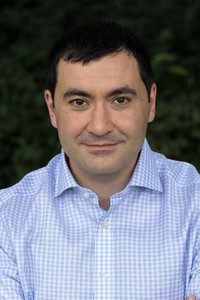
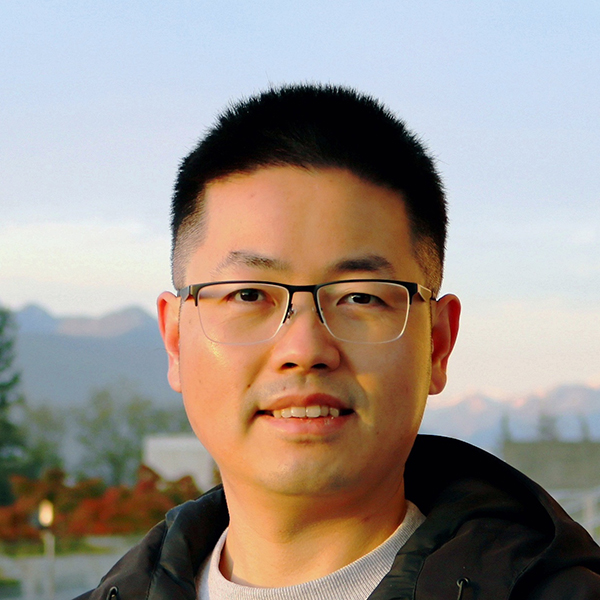
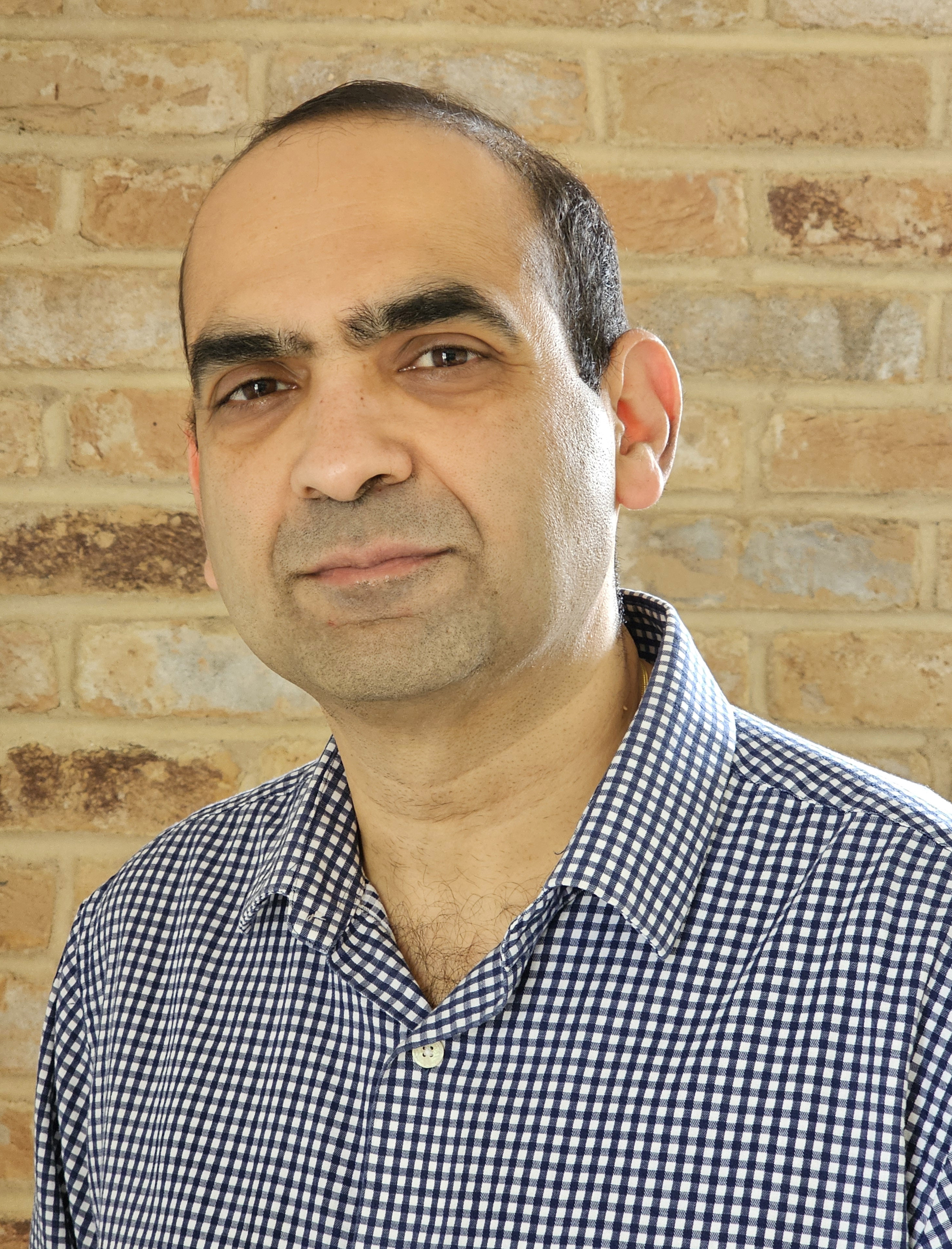
Keunhyun (Keun) Park is an Assistant Professor of Urban Forestry at the University of British Columbia (UBC), affiliated with the Department of Forest Resources Management . He also holds an Adjunct Professor position at Utah State University in the Department of Landscape Architecture and Environmental Planning. Education: BSc and MSc in Landscape Architecture from Seoul National University; PhD in Urban Planning and Design from the University of Utah Research Lab: Faculty lead of the Urban Nature Design Research Lab ( under_lab ) His research focuses on designing healthy, just, and resilient cities through urban nature , with particular emphasis on: Environmental justice and equitable access to urban green spaces Human behavior in public spaces using drone/sensor/VR technology Smart growth urban design impacts on public health and ecological systems Recent publications demonstrate expertise in GIS applications , pedestrian behavior analysis , and urban planning across 20+ studies from 2013-2025. Collaborations include the Vancouver Park Board , Metro Vancouver , and Wasatch Front Regional Council .
Tim Baarslag is a Senior Researcher and leader of the Intelligent and Autonomous Systems group at CWI (Centrum Wiskunde & Informatica), a Part-Time Professor of Mathematics of Cooperative AI at Eindhoven University of Technology (TU/e), and an Associate Professor at Utrecht University. Additionally, he holds visiting roles as a Scholar at MIT, Associate Professor at Nagoya University of Technology, and Fellow at the University of Southampton. His research focuses on enabling autonomous systems to collaborate through joint decision-making, with applications in smart energy trading, the Internet of Things, and autonomous vehicles. Education: MSc in Mathematics (cum laude), Utrecht University BSc in Computer Science (cum laude), Utrecht University PhD in Automated Negotiation, Delft University of Technology (2014, cum laude) Tim Baarslag investigates foundational theories for cooperative artificial intelligence, particularly in automated negotiation. His work includes developing algorithms for multi-deal coordination, optimizing bidding strategies with reservation values, and creating frameworks like Genius and NegoLog to evaluate automated negotiators. He explores how AI can balance efficiency and fairness in complex, real-world scenarios such as procurement and energy trading. Recent research trends highlight his development of NegoLog, a Python-based negotiation framework with advanced analytics, and his work on multi-deal negotiation protocols. He also investigates preference uncertainty in user-agent interactions and designs optimal concession strategies for risk-seeking agents with high reservation values. Scientific Awards: Cor Baayen Young Researcher Award Academic Pioneer by Elsevier Young Talent by The Financial Daily Science Talent by New Scientist Tim Baarslag leads the Intelligent and Autonomous Systems group at CWI and organizes the International Automated Negotiating Agent Competition. He is involved in the ACM Future of Computing Academy, The Young Academy, and the Netherlands Academy of Engineering. His work is supported by the NWO Vidi grant COMBINE, focusing on coordinating multi-deal bilateral negotiations. Labs & Teams: Intelligent and Autonomous Systems group, CWI EAISI and Combinatorial Optimization groups, TU/e ACM Future of Computing Academy The Young Academy Netherlands Academy of Engineering
John E. Taylor is the Frederick Law Olmsted Professor and Associate Chair for Faculty Development and Research Innovation at the Georgia Institute of Technology's School of Civil and Environmental Engineering within the College of Engineering. His research focuses on the intersection of human and engineered networks, with particular emphasis on creating resilient infrastructure systems that serve society's needs while creating more livable communities. Taylor's research interests span multiple domains including Smart City Digital Twins , Urban Infrastructure Resilience , Network Dynamics , and Building-Occupant Interaction . His work examines how human behavior, infrastructure systems, and environmental factors interact during normal operations and extreme events. He has developed innovative approaches to understanding urban systems through the lens of network theory and computational modeling. His publication record demonstrates consistent contributions to the fields of urban analytics and infrastructure resilience, with a recent focus on digital twin technologies for urban systems. Taylor's work shows a clear trajectory toward increasingly sophisticated integration of AI, network science, and civil infrastructure engineering to address complex urban challenges. His research has particular relevance for cities facing climate change impacts and seeking to build more equitable and resilient communities. Taylor leads the Network Dynamics Lab at Georgia Tech, where he mentors PhD students and postdoctoral researchers. His lab has produced significant work on human-infrastructure interaction, particularly during disasters and extreme events. The lab's research combines computational modeling, data analytics, and field studies to understand and improve urban systems. His work has been applied to real-world challenges including river emergency response systems, urban heat exposure forecasting, and disaster response optimization. Taylor has collaborated with city officials and agencies to implement systems that have demonstrable community benefits, such as the AI-enabled camera system for drowning prevention on the Chattahoochee River and crime reduction systems using mobile cameras guided by AI algorithms.
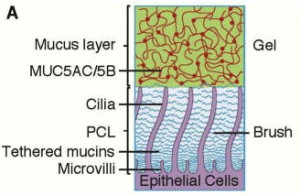
Michael Rubinstein is the Aleksandar S. Vesic Distinguished Professor in the Thomas Lord Department of Mechanical Engineering and Materials Science at Duke University. He also holds professorships in Physics, Biomedical Engineering, and Chemistry. His research spans polymer theory, computer simulations, and the application of these principles to biological systems, particularly mucus biophysics. Dr. Rubinstein earned his Ph.D. from Harvard University in 1983. His educational background in polymer physics has formed the foundation for his extensive research career spanning several decades. Dr. Rubinstein's research focuses on developing simple physical models of soft matter and biological systems ranging from polymeric elastomers and gels to extracellular matrix and mucus in human lungs. His work encompasses several key areas: Mucus Research: Investigating airway surface layer properties and their relationship to respiratory diseases like cystic fibrosis Polymer Entanglements: Studying the dynamics of entangled polymers including ring-linear blends and bottle-brush polymers Reversible Networks: Developing theories for interpenetrating elastomers and gels with both permanent and reversible components Charged Polymers: Extending scaling theory to describe complexes of oppositely charged polymers Analysis of Dr. Rubinstein's recent publications (2023-2025) reveals a strong focus on advanced polymer systems with applications in biomedicine and materials science. His work bridges fundamental polymer physics with practical applications, particularly in understanding mucus biophysics for respiratory diseases and developing novel polymer networks with self-strengthening and adaptive properties. Key themes include chromatin organization, hydrogel mechanics, fracture behavior in polymer networks, and topological constraints in ring polymers. Dr. Rubinstein has received several notable awards including the Nelson W. Taylor Award from Penn State University (2022), a University Distinguished Professorship from Duke University (2020), and recognition from the Royal Society of Chemistry (2019). Dr. Rubinstein leads an active research group (the Rubinstein Lab) that extensively collaborates with experimental, computational, and theoretical groups at Duke and worldwide. His lab combines theoretical modeling, computer simulations, and experimental validation to advance understanding of soft matter systems. While specific grant information isn't detailed in the provided text, his numerous high-impact publications suggest substantial research funding supporting his work. The Rubinstein Lab focuses on several interconnected research thrusts including mucus biophysics, self-assembly of amphiphilic systems, reversible networks and gels, polymer entanglements, and charged polymer systems. The lab employs a multi-pronged approach combining theoretical modeling, computer simulations, and experimental collaborations to develop fundamental understanding of soft matter systems with applications to biomedical challenges.
Professor Lyudmila Mihaylova is a distinguished academic at the University of Sheffield's School of Electrical and Electronic Engineering, where she holds the position of Professor of Signal Processing and Control. She has established herself as a leading researcher in the fields of signal processing, Bayesian methods, and autonomous systems, with significant contributions to particle filtering techniques for intelligent transportation systems. Her work bridges theoretical developments with practical applications across multiple domains including transportation, healthcare, and industrial automation. Prof. Mihaylova's research interests center on nonlinear filtering, sequential Monte Carlo methods, statistical signal processing, and sensor data fusion. Her work spans both theoretical advancements and practical implementations, with particular focus on high-dimensional problems including vehicular traffic flow estimation, image processing, and localization in sensor networks. She has extensive experience with various image modalities such as optical, thermal, LIDAR, SAR, and hyperspectral imaging. Her group actively develops novel methods for autonomous intelligent systems focusing on sensing, tracking, decision making, and machine learning applications. Analysis of Prof. Mihaylova's recent publications reveals a strong trend toward uncertainty quantification in machine learning models, particularly for safety-critical applications. Her work increasingly integrates traditional signal processing techniques with modern deep learning approaches, with applications spanning sewer inspection robotics, medical diagnostics (particularly sleep apnea detection), UAV swarm tracking, industrial manufacturing, and autonomous vehicle systems. A significant portion of her recent research focuses on developing robust methods that can handle incomplete or outlier-corrupted data while providing reliable uncertainty estimates. Among her notable professional achievements: President of the International Society of Information Fusion (ISIF) Senior member of the IEEE Signal Processing Society Associate Editor for IEEE Transactions on Aerospace and Electronic Systems Associate Editor for Elsevier Signal Processing Journal Prof. Mihaylova has successfully mentored numerous PhD students and postdoctoral researchers, many of whom have gone on to prominent academic and industry positions. Her research has been supported by major funding bodies including EPSRC, EU, MOD/DSTL, and industry partners, with recent projects including 'Protecting Environments with UAV Swarms' (InnovateUK, 2022-2024), 'ShiRAS: Towards Safe and Reliable Autonomy in Sensor Driven Systems' (NSF-EPSRC, 2019-2023), and 'Confident safety integration for Cobots' (Lloyd's Register Foundation, 2019-2020). Her research group follows a collaborative approach with the philosophy 'We share knowledge, we grow.' Prof. Mihaylova maintains active research collaborations with institutions worldwide and has held previous academic positions at Lancaster University (2006-2013) and University of Bristol (2004-2006), along with research visiting positions at the University of Ghent, Katholic University of Leuven, and the Bulgarian Academy of Sciences.
Omar Rifki is an Associate Professor (Maître de Conférences) specializing in combinatorial optimization and artificial intelligence applications. His research bridges theoretical computer science with practical logistics challenges, focusing on routing problems, process mining, and machine learning integration for complex decision systems. His core research interests include phase transitions in NP-hard problems, vehicle routing optimization under time constraints, and healthcare process modeling. Rifki's work demonstrates a consistent pattern of integrating reinforcement learning with traditional optimization techniques to solve large-scale real-world problems in transportation and logistics, with particular emphasis on spatio-temporal data effects and collaborative systems. Analysis of his 15 publications (2019-2025) reveals three dominant research thrusts: (1) Fundamental studies of combinatorial problem hardness using phase transition frameworks, (2) Practical applications of deep reinforcement learning in vehicle routing and taxi assignment, and (3) Healthcare process optimization through advanced process mining techniques. His work consistently addresses scalability challenges in real-world implementations while maintaining theoretical rigor. No scientific awards were documented in the provided materials. His collaborative work with researchers like Christine Solnon and Thierry Garaix indicates active participation in European operations research communities, though specific grant details remain unreported. Rifki's research shows increasing integration of graph theory and machine learning in transportation applications, particularly evident in his Lyon City case studies on autonomous ride-sharing systems.
Fred Feinberg is the Joseph and Sally Handleman Professor of Marketing and Professor of Statistics (by courtesy) at the University of Michigan, where he is also an Affiliated Faculty member of the Center for the Study of Complex Systems. His work integrates advanced Bayesian methods with large-scale marketing data to illuminate how people make choices under uncertainty. Education Ph.D., Sloan School of Management, Massachusetts Institute of Technology (1989) Doctoral program in Mathematics, Cornell University (1983–84) S.B. Mathematics & S.B. Philosophy, Massachusetts Institute of Technology (1983) Research Focus Feinberg’s scholarship centers on discrete choice models that leverage real-world decisions to infer latent attributes such as demographics, product appeal, and socioeconomic status. Methodologically, he employs Hierarchical Bayes (HB) models and cutting-edge MCMC algorithms to handle massive data sets, while theoretically he advances dyadic utility theory and optimal search under uncertainty. Applications span click-through behavior, menu-based choice, online dating preferences, spatial marketing, and consumer reactions to intangible or aesthetic product features. Recent empirical studies explore the wearout versus weariness effects of online advertising, the impact of data breaches on consumer behavior, and dynamic pricing for digital media subscriptions. Across these projects, Feinberg couples rigorous statistical innovation with actionable managerial insights, bridging marketing science, operations, and engineering. Scientific Awards & Leadership Joseph and Sally Handleman Endowed Professorship Past President, INFORMS Society for Marketing Science Departmental Editor, Production and Operations Management Former Co-Editor, Marketing Science Co-author (with T. Kinnear & J. Taylor) of the textbook Modern Marketing Research: Concepts, Methods, and Cases Grants & Collaborations While explicit grant lists are not provided, Feinberg’s prolific publication record in top-tier journals (e.g., Journal of Marketing Research , Marketing Science , Management Science ) and editorial board service imply sustained external funding and interdisciplinary partnerships, particularly with operations, engineering, and computer-science groups. Laboratories & Teams Feinberg is formally affiliated with the Center for the Study of Complex Systems (CSCS) at the University of Michigan, where he collaborates on network-based choice frameworks and large-scale behavioral data analytics. He maintains active ties to the Ross Marketing faculty and the Department of Statistics, fostering joint workshops and doctoral training initiatives.
Serge Belongie is a Professor at the Department of Computer Science (DIKU) at the University of Copenhagen, where he holds dual affiliations with the Pioneer AI research section and the Image Analysis, Computational Modelling, and Geometry section. His academic position places him at the forefront of interdisciplinary research connecting computer vision with language models, geospatial analysis, and cultural understanding. Professor Belongie's research program encompasses several critical domains in modern artificial intelligence: Advanced computer vision and image analysis techniques Vision-language model integration and multimodal systems 3D point cloud processing and semantic segmentation Geospatial representation learning for environmental applications Fine-grained object recognition and detection Cultural context understanding in AI systems His recent publication record reveals a sophisticated trajectory toward developing precise control mechanisms for vision-language models, with applications spanning forensic analysis, cultural heritage preservation, and social media understanding. The research demonstrates increasing sophistication in handling cultural context and enabling fine-grained manipulation of visual content through natural language interfaces. Professor Belongie maintains an active research group producing significant scholarly output, with over 280 research publications documented in his academic profile. His work is supported by research funding that enables cutting-edge exploration in multimodal AI systems with practical societal impact. He plays a key role in the Pioneer AI center at the University of Copenhagen, which focuses on advancing artificial intelligence through interdisciplinary collaboration and innovative research approaches that bridge theoretical computer science with real-world applications.
Prof. Dr. Matthias Weidlich is a faculty member at Humboldt University of Berlin within the Institute of Computer Science under the Faculty of Mathematics and Natural Sciences . His research focuses on Process Mining , Complex Event Processing , and Data Privacy with applications in Business Process Management and Scientific Workflows . Research Interests: Business Process Management and Process Mining Complex Event Processing and Stream Data Analysis Data Privacy and Security in Process Systems Scientific Workflow Systems and User Behavior Heterogeneous Network Embeddings Algorithm Design and Optimization Recent Publications (2023-2025) demonstrate expertise in: Efficient stream processing techniques Privacy-preserving process mining frameworks Scientific workflow analysis tools Graph neural network applications Multi-modal data integration Adaptive querying systems Contact: Office: Unter den Linden 6, 10099 Berlin Phone: 030 2093-41277 Email: matthias.weidlich@hu-berlin.de Web: hu.berlin/data
Mikail Rubinov serves as Assistant Professor of Biomedical Engineering (primary appointment), Computer Science, Psychiatry, and Psychology at Vanderbilt University's School of Engineering. His interdisciplinary work bridges computational neuroscience, network science, and clinical applications. His research focuses on integrative statistical models of large-scale neural data , exploring brain network organization across species and scales. Key interests include evolutionary principles of brain networks, transcriptomic basis of neural individuality, information transfer in neural systems, and neuropsychiatric connectivity phenotypes. The Rubinov Lab develops computational frameworks for analyzing complex neural systems and integrates neuroscientific knowledge with multi-omics data. Recent publications reveal strong trends in network neuroscience methodology development (circular analysis frameworks, unbiased sampling techniques) and translational applications (epilepsy networks, autism spectrum connectomics, gut-brain axis interrogation). His work increasingly incorporates transcriptomic data with neuroimaging at biobank scale. NIH Grant Writing Workshop (June 2022) NIH Workshop Short Talks (April 2023) Rubinov actively mentors graduate and undergraduate students across Biomedical Engineering and Computer Science. His lab maintains collaborations with UCSF, HHMI Janelia Research Campus, Weizmann Institute, and international neuroscience consortia. Current projects include integrative models of large-scale neural data and transcriptomic basis of neural individuality. The Rubinov Lab operates within Vanderbilt's Department of Biomedical Engineering with extensive cross-school collaborations. Technical resources include GitHub repositories for constraint network models (cnm-code), volumetric segmentation (voluseg), and brain connectivity toolboxes.
Lingyang Chu is an Assistant Professor at McMaster University's Department of Computing and Software, previously serving as a postdoc fellow at Simon Fraser University under Jian Pei. He earned his Ph.D. in Computer Science from the University of Chinese Academy of Sciences. Research interests span data mining , machine learning , and statistics , with focus on trustworthy AI (privacy, interpretability, security, robustness, fairness), federated learning , and graph-based machine learning . His work includes scalable data mining on large graphs and deploying systems like personalized federated learning on Huawei Cloud's Harmony OS devices. Publications emphasize adversarial attacks, medical AI, graph robustness, and federated learning frameworks. His advising record includes 28 mentees across Ph.D., M.Sc., and internship levels. Scientific achievements include Best paper candidate at ICME'13 Best demo award at ICMR'13 Academic service roles include: Program Committee: NeurIPS, SIGKDD, CVPR, ICML, and 12+ other top-tier conferences Journal Reviewer: IEEE TKDE, ACM Transactions on KDD, and 8+ journals Editorial Board: ACM Transactions on KDD (Associate Editor) Grant Reviewer: Hong Kong RGC Labs/teams: Maintained open-source ALID algorithm (VLDB'15) for dominant cluster detection, demonstrating technical leadership in scalable graph mining
Marco Serafini is an Assistant Professor in the Department of Computer Science at the University of Massachusetts Amherst, affiliated with the College of Information and Computer Sciences (CICS). He leads the DREAM Lab (Data systems Research for Exploration, Analytics, and Modeling) and is part of the Center for Data Science. Prior to UMass, Serafini worked as a Senior Scientist at the Qatar Computing Research Institute (QCRI) and held a postdoctoral fellowship at Yahoo! Research in Barcelona. He earned his PhD in Computer Science from TU Darmstadt (Germany), where his thesis was recognized through nominations for best thesis awards across German, Swiss, and Austrian computer science societies. His research focuses on the intersection of database systems, distributed systems, and data science, emphasizing scalable architectures for big data analytics and machine learning. Key areas include computation pushdown in cloud DBMSs, graph neural network training systems, and efficient graph pattern matching. His work addresses challenges in tail latency mitigation, resource optimization, and transparent scaling of ML models. Serafini has contributed to influential systems like Arabesque (for distributed graph mining), E-Store (elastic partitioning), and Aion (event-time stream processing). He has been awarded an NSF CNS Core grant to advance scalable GNN training. His publications span top venues such as ACM SIGOPS, VLDB, and ICDE, reflecting his expertise in both theoretical foundations and practical system implementations. Professional recognition includes thesis nominations from major computer science societies and sustained contributions to open-source projects in distributed computing. Serafini advises students through the DREAM Lab, focusing on preparing the next generation of data systems researchers.
Claire Acevedo is an Assistant Professor in the Department of Mechanical and Aerospace Engineering at the University of California San Diego (UCSD), affiliated with the Jacobs School of Engineering. Her lab, the Fracture and Fatigue of Skeletal Tissues Laboratory (F² Lab), focuses on understanding mechanisms of deformation, fracture, and biological responses in skeletal tissues and biomaterials across molecular to macro scales. She holds a Ph.D. from the Swiss Federal Institute of Technology Lausanne (EPFL) and completed postdoctoral research at UC San Francisco and UC Berkeley/Lawrence Berkeley National Laboratory. Dr. Acevedo’s research is funded by the National Science Foundation (NSF), National Institutes of Health (NIH), and the Advanced Light Source. Her work bridges biomechanics, materials science, and high-energy X-ray physics to address bone fragility in aging and diabetes. Key projects include investigating collagen cross-linking effects on bone mechanics and developing novel imaging techniques like deep learning-enhanced synchrotron micro-CT. Education: Ph.D., Swiss Federal Institute of Technology Lausanne (EPFL) Postdoctoral Research: UC San Francisco & UC Berkeley/Lawrence Berkeley National Lab Previous Faculty Position: University of Utah (Mechanical Engineering) Recent contributions include the NSF CAREER Award for studying fracture mechanisms in fragile bones and an NIH R21 grant to explore collagen-level diabetes impacts. Her lab collaborates with the University of Utah Tanner Dance Program to develop K-12 educational initiatives linking dance with biomechanics. Publications span topics like synchrotron imaging innovations, diabetes-induced bone fragility, and collagen nanomechanics. Students in her lab have contributed to advancements in fatigue testing, cross-link analysis, and imaging algorithms. Awards: NSF CAREER Award (2024) NIH R21 Grant (2023) Alice L. Jee Award (2022) Nikon Small World Image of Distinction (2024) The F² Lab hosts a dynamic team with ongoing projects on glycemic effects, synchrotron techniques, and biomaterial design. Future work emphasizes translating findings into clinical fracture prevention strategies and educational outreach.
Nan Marie Jokerst is the J. A. Jones Distinguished Professor of Electrical and Computer Engineering at Duke University's Pratt School of Engineering and Executive Director of the Duke Shared Materials Instrumentation Facility. She previously served as Chair of the Duke Academic Council (2014-2015) and Associate Dean for six years. B.S. in Physics, Creighton University (1982) M.S.E.E., University of Southern California (1984) Ph.D. in Electrical Engineering, University of Southern California (1989) Her research spans chip-scale photonic sensing systems , III-V thin-film lasers on silicon , metamaterials , and heterogeneous integration . She develops optical systems for medical diagnostics, environmental monitoring, and security applications through the Jokerst Laboratory, which combines optical system design, optoelectronic device development, and semiconductor fabrication expertise. Her recent publications show strong focus on terahertz strain mapping using metamaterials, multi-pixel tissue characterization for cancer margin detection, and microfluidic sensing platforms with embedded photodetectors. Key trends include advancing non-destructive structural monitoring and miniaturized biomedical diagnostics through novel photonic integration techniques. IEEE Fellow (2003) Optica Fellow (2001) NSF Presidential Young Investigator Award IEEE Third Millennium Medal IEEE/HP Harriet B. Rigas Medal USC Viterbi School Alumni Award She has advised numerous graduate students in photonic device research and secured major grants including the NSF National Nanotechnology Coordinated Infrastructure ($6M, 2015-2021) and NNCI: North Carolina Research Triangle Nanotechnology Network ($20M, 2020-2026). Her leadership extends to co-founding Triangle Women in STEM and serving on the National Academies Board on Global Science and Technology. The Duke Shared Materials Instrumentation Facility under her direction provides critical cleanroom and characterization resources for interdisciplinary research.
Vikram Deshpande is a Professor in the Department of Engineering at the University of Cambridge, UK, where he has been employed since 2010. He also maintains significant international connections, having served as a Visiting Professor at the Technical University of Eindhoven (2009-2017) and previously holding positions at the University of California, Santa Barbara and Brown University. His research spans multiple disciplines within solid mechanics and materials science, focusing on fundamental mechanisms that govern material behavior across different scales. His research interests encompass Mechanobiology , where he explores cellular organization mechanisms; Solid mechanics with applications to impact and failure; Data-driven mechanics approaches; Microarchitectured solids including mechanical metamaterials; Fluid-structure interaction in impact scenarios; Chemo-mechanics of battery materials; and Dislocation mechanics for understanding material deformation. His work uniquely bridges fundamental physics with practical engineering applications, particularly in developing materials with tailored mechanical properties. The analysis of his recent publications reveals a strong focus on mechanical metamaterials, cellular mechanics, and electro-chemo-mechanical phenomena in energy storage systems. His research demonstrates a consistent pattern of addressing fundamental scientific questions while maintaining strong connections to practical engineering applications, particularly in materials design, protective systems, and energy technologies. His publications frequently combine experimental approaches with sophisticated modeling techniques across multiple scales. 2024 Zdeněk P. Bažant Medal for Failure and Damage Prevention 2023 Fellow, Royal Academy of Engineering and International Member US National Academy of Engineering 2022 Warner T. Koiter Medal and William Prager Medal 2022 European Research Council (ERC) Advanced Grant 2021 Gili Agostinelli Prize and IIT Bombay Distinguished Alumnus Award 2020 Fellow, Royal Society of London and Rodney Hill Prize Professor Deshpande has served on numerous editorial boards including the Journal of the Mechanics and Physics of Solids (current Associate Editor), Modelling and Simulation in Materials Science and Engineering, and Proceedings of the Royal Society A. He chairs the Royal Society Sectional Committee 4 and serves on the Advisory Board of the European Mechanics Society EUROMECH. His leadership extends to directing the International Conference on Fracture and chairing the EUROMECH Mechanics of Materials Conference committee. His research group at Cambridge, accessible through cambridgesolidmechanics.co.uk, focuses on developing fundamental understanding of material behavior to enable the design of next-generation engineering materials.