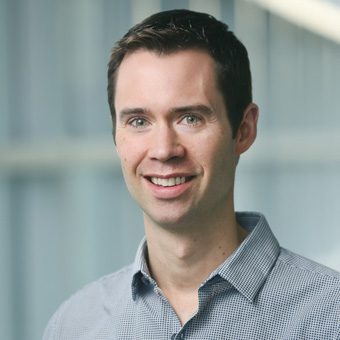
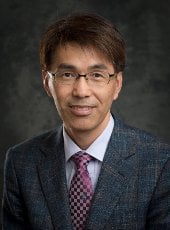
Lauri Rautkari is an Associate Professor in the Department of Bioproducts and Biosystems at Aalto University, Finland. His research focuses on water interactions in biomaterials, particularly wood, with an emphasis on developing advanced analytical methods for water vapor sorption, creating novel low-sorption materials, and investigating hygroscopicity and fungal decay resistance in modified wood systems. Research Highlights: Gas-phase ozone treatment for improved wettability, thermal and chemical wood modification, hyperspectral imaging for moisture prediction, bioinspired coatings for fungal protection, and interlaboratory studies on sorption data quality. Recent Publications: Key contributions to understanding lignin's role in moisture interactions, acetylation reversibility, and the impact of fungal degradation on heat-treated wood. The trend in his publications reflects a strong focus on hygroscopicity, chemical modification techniques (acetylation, melamine-formaldehyde impregnation), advanced imaging methods (hyperspectral, neutron scattering), and the development of sustainable wood-based materials for construction and acoustic applications. Collaborative interlaboratory efforts dominate his work, ensuring standardized methodologies for moisture analysis.
Maria Garlock is the Daniel Tsui Professor in Engineering at Princeton University, serving as Co-Director of the Program in Architecture and Engineering and Head of Forbes College. Her roles also include membership in the Executive Committee of the Council on Science and Technology, Associated Faculty in the School of Architecture, and Associated Faculty in the Program in Latin American Studies. Garlock holds a PhD in Structural Engineering (Lehigh University, 2002), an MS in Civil Engineering (Cornell University, 1993), and a BS in Civil and Environmental Engineering (Lehigh University, 1991). Her research focuses on resilient structural design for extreme hazards like fires, earthquakes, and storm surges. She explores both isolated and cascading multi-hazard scenarios while also analyzing historical structural designs (e.g., Félix Candela’s thin-shell concrete umbrellas) and improving STEM education for non-technical majors through innovative teaching methods, including MOOCs and scale model exhibitions. Recent work emphasizes coastal defense systems using hyperbolic-paraboloid forms and steel-concrete girder performance under shear stress. Garlock has received notable honors including the ASCE SEI Fellowship (2016 T.R. Higgins Lectureship), President’s Award for Distinguished Teaching (2012), and the Emerson Electric Co. Faculty Advancement Award (2006). In education and grants, she teaches courses like Structures and the Urban Environment and Advanced Design of Steel/Concrete Structures , and has secured government funding for STEM literacy initiatives. Her research collaborations include the BRITE Pivot project and studies on Cuba’s historic National School of Ballet domes. She also leads efforts in deploying kinetic umbrellas as flood barriers and advancing probabilistic models for fire fragility in multi-hazard contexts. Garlock’s work bridges engineering and art, exemplified by her preservation studies of Candela’s architectural masterpieces and pedagogical innovations that emphasize creativity in structural design.
Michael Hagan is a Professor of Physics at Brandeis University, affiliated with the Martin A. Fisher School of Physics. His research focuses on understanding the physical principles governing assembly and dynamic organization in biological and biomimetic systems. He employs computational and theoretical methods, including machine learning, to study viral capsid assembly, bacterial microcompartments, and active matter systems. His work bridges length and time scales to elucidate emergent behaviors in nonequilibrium systems. Education: PhD in Physics from the University of California, Berkeley (2003). His group, the Hagan Lab, collaborates with experimentalists and has received funding from the DOE, NSF, Keck Foundation, and NIH. Key areas include viral genome assembly optimization, bacterial microcompartment formation, and the dynamics of active nematics. Recent studies explore defect-ordered phases, phase separation in active colloids, and programmable self-assembly of geometric structures. Research interests span biophysics, soft condensed matter, and computational modeling. His lab's work has implications for synthetic biology, drug design, and material science. Collaborations with experimental groups (e.g., Z. Dogic's lab) have led to discoveries in active matter dynamics and biomimetic systems.
Erik Scheme is an Associate Professor in the Department of Electrical and Computer Engineering at the University of New Brunswick (UNB), and serves as Associate Director of the Institute of Biomedical Engineering (IBME). He holds a PhD and is a Professional Engineer (PEng). His roles include advising the Dr. J. Herbert Smith Centre for Technology Management and Entrepreneurship, emphasizing innovation in biomedical technologies and healthcare systems. His research focuses on advanced human-machine interaction through biomedical engineering, with a strong emphasis on myoelectric prosthetics, wearable sensors, and machine learning applications. Key areas include improving neuroprosthetic control via incremental learning, gait analysis using underfoot pressure sensors, and developing robust EMG-based gesture recognition systems. His work bridges clinical needs with technological innovation, addressing challenges in rehabilitation, activity monitoring, and user-centric design. Recent publications highlight advancements in adaptive control systems, sensor fusion, and ethical data practices in healthcare. His contributions span both theoretical frameworks (e.g., self-supervised learning models) and applied technologies (e.g., gold-plated 3D-printed electrodes). Dr. Scheme collaborates across disciplines, integrating robotics, signal processing, and clinical validation to create impactful solutions. His lab, affiliated with IBME, actively explores emerging areas like exhaled breath analysis for disease detection and federated learning in healthcare data analytics.
William Parnell is a Professor of Applied Mathematics at the University of Manchester's School of Mathematics. His research focuses on continuum mechanics, metamaterials, and industrial composites, with applications in soft tissue mechanics and acoustic wave manipulation. He leads the Mathematics of Waves and Materials (MWM) group and co-founded the Manchester Materials Modelling Centre (M3C). He has held roles including EPSRC Fellowship 'NEMESIS' (2014-2019) and its extension, contributing to transformative materials science. Education: BSc Mathematics (First Class), University of Bristol (1996-1999) MSc Mathematical Modelling and Scientific Computing (Distinction), University of Oxford (1999-2000) PhD in Applied Mathematics, University of Manchester (2001-2004) His research interests span elastic wave propagation, cloaking, and viscoelastic modeling. He has pioneered hyperelastic cloaking techniques and developed mathematical methods for metamaterials. His work contributes to UN Sustainable Development Goals related to advanced materials and digital innovation. Key achievements include the 2019 Whitehead Prize and over 80 publications. His grants include funding for microstructured material design and collaborations with Thales UK and the National Physical Laboratory. Grants & Awards: EPSRC Fellowships (NEMESIS and extension) Whitehead Prize (2019) Labs/Teams: MWM Group (focusing on waves and materials) M3C (Manchester Materials Modelling Centre)
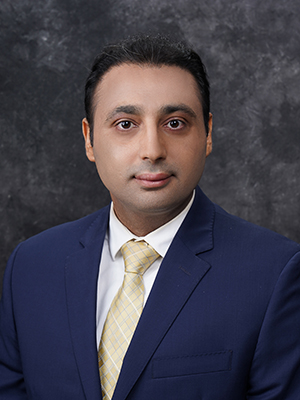
Amir Asadi is an Associate Professor in the Department of Engineering Technology and Industrial Distribution at Texas A&M University, holding the Corrie & Jim Furber '64 Faculty Fellow position. His research focuses on scalable manufacturing of multifunctional composites, structural energy systems, and advanced materials design. He leads the Polymer Composites Advanced Manufacturing (PCAM) Lab, which explores bottom-up fabrication techniques and additive manufacturing processes. Asadi holds a Ph.D. in Mechanical and Manufacturing Engineering from the University of Manitoba (2013), an M.S. in Mechanical Engineering from Iran University of Science & Technology (2006), and a B.S. in Mechanical Engineering from the same institution (2004). His work bridges molecular-level interactions with macroscale material performance, targeting applications in aerospace, e-mobility, and energy storage. Key research interests include structural battery/supercapacitor composites, additive manufacturing of polymer composites, and fast-rate manufacturing of thermoplastics. He has pioneered methods like supercritical CO₂-assisted atomization and cellulose nanocrystal-enabled interface tailoring to enhance composite performance. Asadi has received the NSF CAREER Award (2022) and has been an invited speaker at major conferences such as the Brazilian Conference on Composite Materials (2021) and Chalmers University’s “Materials for Tomorrow” event (2020). His lab’s innovations aim to revolutionize lightweight, multifunctional materials for industrial sectors. His research outputs include over 50 peer-reviewed articles, covering topics from nanocomposite interfaces to 3D-printed structural batteries. He collaborates with industry partners like the Air Force Research Lab and focuses on translating lab-scale innovations into scalable manufacturing solutions.
Curt Bronkhorst is the Harvey D. Spangler Professor of Engineering and Professor of Applied Mechanics in the Department of Mechanical Engineering at the University of Wisconsin-Madison. He received his B.S. in Mechanical Engineering and Mathematics (1985), M.S. (1988), and Ph.D. (1991) in Mechanical Engineering from the Massachusetts Institute of Technology. His career includes roles as Senior Scientist at Weyerhaeuser (1991–2002) and Scientist/Project Leader at Los Alamos National Laboratory (2002–2019) before joining UW-Madison. He leads the Army Research Laboratory's Center for Extreme Events in Structurally Evolving Materials and contributes to the Theoretical and Computational Mechanics of Materials Group . PhD (1991) - Massachusetts Institute of Technology MS (1988) - Massachusetts Institute of Technology BS (1985) - University of Wisconsin-Madison Bronkhorst's research focuses on theoretical and computational mechanics of materials , particularly under extreme conditions. Key themes include: Coupled thermo-mechanical deformation Finite elasticity and dislocation slip plasticity Deformation twinning and phase transformations Pore nucleation and adiabatic shear banding Brittle-to-ductile transition mechanisms Multi-scale modeling of damage evolution His 2025–2023 publications emphasize data-driven modeling , void nucleation , and machine learning integration in EBSD analysis. Recent work explores gradient nanostructured metals and low-grain polycrystal stress heterogeneity . 2019: Harvey D. Spangler Professorship 2012: DOE Defense Programs Award (Implosion Predictive Capability) 2009: DOE Outstanding Mentor Award 2007–2008: Los Alamos Distinguished Performance Awards Fellow, American Society of Mechanical Engineers Member, Phi Kappa Phi and Tau Beta Pi Honor Societies Bronkhorst serves as Associate Editor for the International Journal of Plasticity and president of Northland Partners, LLC. He is affiliated with UW-Madison's Nuclear Engineering & Engineering Physics and Materials Science & Engineering departments. No formal advisees are listed, but his computational framework has been adopted in grants like the DMREF collaborative research on grain-interface design.
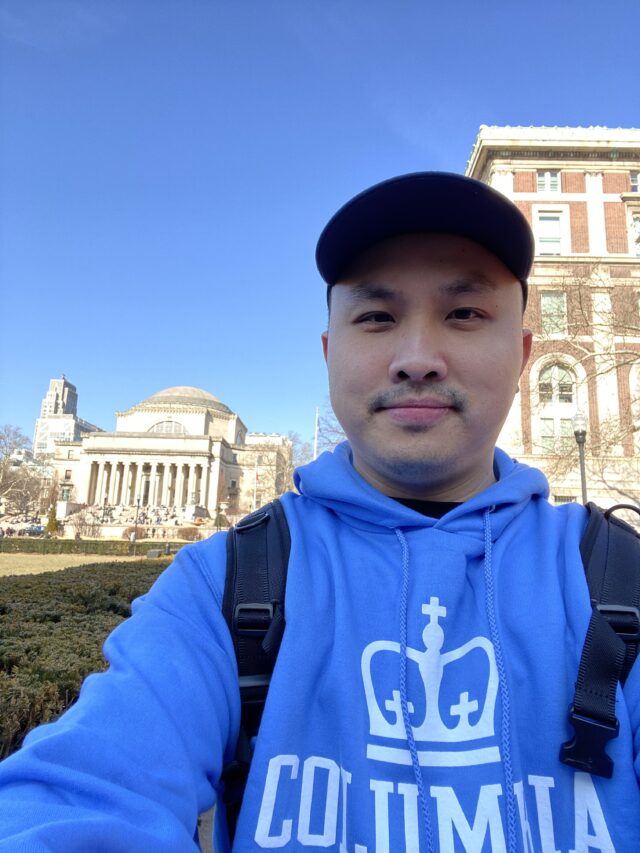
Tianyi Lin serves as an Assistant Professor in the Department of Industrial Engineering and Operations Research (IEOR) at Columbia Engineering, Columbia University, a position he assumed in 2024. He holds dual affiliations as a verified Data Science Institute (DSI) Member and an Affiliated Member of both the Financial and Business Analytics Center and the Foundations of Data Science Center. His academic credentials include: Ph.D. in Electrical Engineering and Computer Science, UC Berkeley Postdoctoral Researcher, Laboratory for Information & Decision Systems (LIDS), MIT (2023-2024) M.S. in Operations Research, UC Berkeley M.S. in Pure Mathematics and Statistics, University of Cambridge B.S. in Mathematics, Nanjing University Dr. Lin's research spans optimization theory , game-theoretic models , and machine learning algorithms , with emphasis on nonconvex minimax problems , variational inequalities , and data science applications . His work bridges theoretical guarantees with practical implementations in high-dimensional settings, particularly focusing on convergence properties and computational efficiency in complex systems. Analysis of his 15 most recent publications (2022-2025) reveals dominant themes in high-order optimization methods , no-regret learning in games , and optimal transport algorithms . His contributions demonstrate consistent innovation in developing doubly optimal algorithms for monotone games, spectral regularization techniques for policy optimization, and structure-driven approaches for nonconvex problems, reflecting strong interdisciplinary connections between operations research, computer science, and applied mathematics. No scientific awards or honors were documented in the provided source material. Information regarding student advising and research grants remains unspecified in the current documentation, though his center affiliations suggest active participation in collaborative research initiatives. Dr. Lin maintains significant interdisciplinary engagement through his affiliations with Columbia's Data Science Institute and specialized research centers, positioning his work at the intersection of theoretical optimization and real-world data science applications.
Jim W Evans is a Professor of Physics & Astronomy and Mathematics at Iowa State University, and a Faculty Scientist at the Ames Laboratory (USDOE). His research focuses on non-equilibrium statistical physics and multi-scale modeling of nanoscale systems, including metallic nanoclusters, epitaxial thin films, catalytic surface reactions, and nanoporous materials. Evans holds a B.Sc. (Hons) in Mathematics from the University of Melbourne (1975) and a Ph.D. in Mathematical Physics from the University of Adelaide (1979). He has authored over 360 publications and maintains editorial roles at journals like Nanomaterials and Surface Science . His research interests span: Stability and dynamics of metallic nanocrystals Coarsening mechanisms in epitaxial films Reaction-diffusion systems and non-equilibrium phase transitions Interfacial catalysis and nanoporous transport phenomena Recent work includes: Real-time KMC simulations of nanocrystal intermixing Thermodynamic modeling of intercalated metal systems Statistical mechanics of surface dynamics Honors include APS Fellowship (2002), APS Outstanding Referee (2015), and an h-index of 58 (Google Scholar). He leads DOE-funded projects on exascale software for catalysis modeling and intercalation chemistry in layered materials.
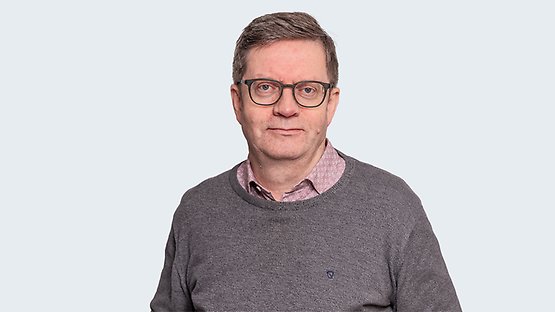
Roland Larsson is a Professor and Head of Subject in Machine Elements at Luleå University of Technology, Sweden. His research focuses on Tribology, particularly lubrication regimes (boundary to elastohydrodynamic), contact mechanics, surface roughness effects, and applications in rolling element bearings, clutches, hydraulic systems, tires, and sports equipment. He has supervised over 20 doctoral and licentiate students, contributed to advanced courses, and developed teaching methods like Flipped Classroom and Constructive Alignment . Education: Ph.D. (1996, Luleå University of Technology), Docent (2001), M.Sc. in Mechanical Engineering (1988). Research: Central themes include elastohydrodynamic lubrication, surface roughness in contact interfaces, and sustainable lubricants. His work explores water-based lubricants, ionic liquids, and glycerol mixtures. Publications: Recent articles (2025) investigate water-based lubricants' film formation, ski-snow friction dynamics, and tribochemical properties of green lubricants. Earlier works (2024-2023) cover micropitting, wear models, and multi-scale contact analysis. Awards: Recipient of multiple tribology awards including ASME Best Paper, Nordea's Vetenskapliga Pris, and Venture Cup North. He has held leadership roles at Luleå University, including Dean and Vice-Dean of the Faculty of Engineering Board. Collaboration: Active in international research networks as peer-reviewer, faculty opponent, and external examiner. His post-doctoral work includes affiliations with Leeds University and SKF Engineering Research Centre.
Jim Crutchfield is a Distinguished Professor of Physics at the University of California, Davis, where he also serves as Director of the Complexity Sciences Center. He holds additional affiliations as President and Scientific Director of the Art & Science Laboratory in Santa Fe, External Faculty at the Santa Fe Institute, General Member of the Telluride Science Research Center, and Visiting Scholar at the Redwood Center for Theoretical Neuroscience. His work bridges physics, computation, and complex systems. Education: B.A. summa cum laude in Physics and Mathematics, University of California, Santa Cruz (1979) Ph.D. in Physics, University of California, Santa Cruz (1983) Crutchfield's research centers on computational mechanics , a framework he pioneered to quantify how natural systems store, process, and transmit information. His interests span nonlinear dynamics, evolutionary dynamics, information engines, quantum computation, and pattern discovery. He explores how structure emerges in complex systems, from cellular automata to biological evolution and neural networks. His recent work focuses on thermodynamic computing, causal inference, and the physics of intelligence. His publications reveal a consistent focus on the interplay between information, energy, and computation in physical systems. Themes include the thermodynamics of information engines, causal architecture in time series, emergent organization, and intrinsic computation in quantum and classical domains. These works span disciplines such as physics, computer science, biology, and cognitive science. Scientific Recognition: Postdoctoral Fellow, Miller Institute for Basic Research in Science IBM Postdoctoral Fellow, Condensed Matter Physics Distinguished Visiting Research Professor, Beckman Institute Bernard Osher Fellow, San Francisco Exploratorium NSF Graduate Fellow UCB Chancellor’s Fellow Crutchfield has advised over two dozen PhD students in physics, computer science, and mathematics, contributing significantly to the next generation of complexity scientists. He has led major interdisciplinary initiatives, including NSF-funded museum exhibits and workshops on network dynamics, collective cognition, and evolutionary dynamics. He has also been active in public discourse through talks, films, and publications on the philosophy of complexity. He leads research groups exploring the dynamics of learning, pattern discovery, and distributed intelligence, often in collaboration with institutions like the Santa Fe Institute and Caltech. His work continues to shape the theoretical foundations of complex systems science.
Amrita Basak serves as an Associate Professor in the Department of Mechanical Engineering within the College of Engineering at Pennsylvania State University. Her research focuses on advancing metal additive manufacturing technologies, particularly for gas turbine applications. She maintains her laboratory in 233 Reber Building at University Park, PA. Her primary research interests center on laser-based additive manufacturing processes including Laser Powder Bed Fusion (L-PBF) and Laser Directed Energy Deposition (LDED). Specific expertise spans nickel-based superalloys, melt pool dynamics, microstructure-property relationships, fatigue behavior of additively manufactured components, and AI-driven process optimization. Her work addresses critical challenges in thermal distortion control, surface roughness effects, and high-temperature performance of turbine components. Analysis of her recent publications reveals strong emphasis on integrating machine learning with experimental methods to optimize additive manufacturing processes. Key trends include Gaussian process regression for melt pool modeling, Bayesian optimization for thermal management, reinforcement learning for parameter control, and multi-fidelity modeling approaches. Her research bridges fundamental materials science with practical engineering applications in aerospace and energy sectors. Scientific Awards: NSF CAREER Award (2024) for gas turbine research DARPA Young Faculty Award (2022) for multi-laser additive manufacturing Materials Research Institute Roy Award (2023) Professor Basak actively mentors graduate students including R. Pal, N. Menon, and A. Kushwaha who appear as first authors on multiple publications. Her research is supported by significant grants including NSF CAREER funding, Office of Naval Research grants (2024), and DARPA funding. Current projects include 'On-Demand 3D Printing of Food-Grade Biopolymer-Encapsulated Ferrate(VI) for Individualized and Equitable Access to Drinking Water' and metal additive manufacturing research for gas turbine hot section components.
Vera Popovich is a researcher in the Department of Mechanical Engineering at Delft University of Technology and a member of Team Vera Popovich. Her work focuses on advanced manufacturing techniques and material behavior analysis. Education: MSc in Engineering (implied PhD) Her research spans additive manufacturing, microstructure engineering, and material degradation mechanisms: Specializes in additive manufacturing processes and their impact on material microstructure. Investigates hydrogen embrittlement in high-strength steels. Pioneers texture control for corrosion resistance in NiTi alloys. Studies fatigue crack propagation in bi-material systems. Recent publications highlight computational modeling of grain structures, interface mechanics in wire-arc additive manufacturing, and advanced characterization techniques for material degradation. She contributes to editorial activities as an editor for Applied Sciences . Scientific Awards: 2012 Poster Prize: X-ray diffraction stress analysis in silicon solar cells She collaborates on projects like the Rhizome initiative (2021-2022) for off-Earth habitat robotics and participates in public engagement, including a 2023 media feature on Delft's 3D-printing lab.
Alfio Grillo is a Full Professor at the Department of Mathematical Sciences (DISMA) of Politecnico di Torino, with research interests in biomechanics, continuum mechanics, and mathematical physics. His expertise spans classical mechanics and multiscale modeling of biological tissues. Research Focus: Grillo's work integrates analytical mechanics with nonholonomic constraints, fractional calculus applications, and multiscale modeling of growth/remodeling phenomena in biological systems. Recent articles emphasize poroelasticity, viscoelastic composites, and bi-phasic material behavior. Scientific Contributions: Editorial roles in leading journals since 2014 Member of INdAM-GNFM since 2009 Recipient of National Scientific Qualification in 2017 €128,609 PRIN grant for multiscale biological modeling Academic Leadership: Supervises PhD students in Civil Engineering, Mathematics, and Mathematical Engineering. Teaches advanced courses in Differential Varieties, Variational Methods, and Porous Media Mechanics.
Dr. Youngchul Ra is an Associate Professor in the Department of Mechanical and Aerospace Engineering at Michigan Technological University. He holds a PhD from MIT (1999) and degrees from Seoul National University. His expertise includes computational fluid dynamics (CFD), combustion modeling, chemical kinetics, and alternative fuel research. His work focuses on advanced combustion strategies like Gasoline Compression Ignition (GCI), engine CFD code development, and high-performance computing. Education: PhD in Mechanical Engineering, Massachusetts Institute of Technology (1999) Masters and Bachelors in Mechanical Engineering, Seoul National University Research Interests: Developing multi-component fuel models for real-world applications Optimizing six-stroke GCI engines with advanced valve technologies Reducing emissions via combustion control and injection strategies Parallel computing techniques for large-scale engine simulations Recent work emphasizes oxygenated fuels in GCI engines and parametric studies of combustion efficiency. His CFD models are validated against experimental data for accuracy. His research has led to advancements in low-temperature combustion and emission reduction without explicit awards listed. He collaborates on engine design optimization and fuel formulation projects.